
9YG-1.0 Round Baler | Net Wrap Forage Baler for Hay & Silage
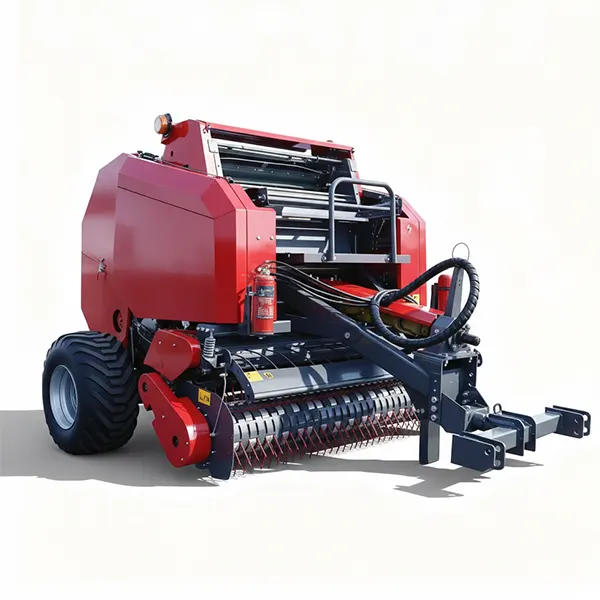
The 9YG-1.0 Round Baler with 1900 mm pickup, net wrap system, and drum chamber produces dense Φ1100×1000 mm bales at 40–100 bales/hour using 65–107 HP tractors. Reliable performance in alfalfa, grass hay, and corn stalk silage across US farms.
9YG-1.0 Round Baler—designed for medium-sized hay and silage operations in the United States—is tractor-drawn, PTO-driven, equipped with a 1900 mm spring-tooth pickup that perfectly conforms to ground contours, and utilizes a proven finger-roller + drum feeding system. The heavy-duty 16-drum chamber produces dense Φ1100 × 1000 mm round bales weighing 450–550 lb in dry hay and up to 1200 lb in silage, with minimal leaf loss even in tough conditions.
Net-wrap only (no twine required) delivers 12–15 second wrap cycles and superior weather resistance—the system chosen by over 85% of professional custom operators across the Midwest and Great Plains. Sensor-controlled density guarantees uniformly hard bales from core to shell regardless of crop moisture. Requires just 65–107 HP yet achieves 40–100 bales per hour at a substantially lower price than comparable North American or European machines.
Technical Specifications - 9YG-1.0 Round Baler
The following table presents complete and accurate technical parameters of the 9YG-1.0 Round Baler, enabling precise evaluation of its suitability for your operation and direct comparison with other equipment.
| No. | Parameter | Unit | Value |
|---|---|---|---|
| 1 | Model Name | / | 9YG-1.0 Round Baler |
| 2 | Hitching Method | / | Tractive |
| 3 | Pickup Width | mm | 1900 |
| 4 | Pickup Structure Type | / | Spring Tooth Type |
| 5 | Feeder Structure Type | / | Finger Roller + Drum Type |
| 6 | Compression Chamber Baling Mechanism Type | / | Drum Type |
| 7 | Compression Chamber Width | mm | 1000 |
| 8 | Compression Chamber Diameter | mm | Φ1000 |
| 9 | Number of Rolling Working Parts | pc | 16 (Drum) |
| 10 | Rolling Drum Diameter | mm | Φ222 |
| 11 | Baling Method | / | Net Wrapping |
| 12 | Matching Power | kW | 48~80 |
| 13 | Structural Mass | kg | 2640 |
| 14 | Power Take-Off Shaft Speed | r/min | 720 |
| 15 | Overall Dimensions (L×W×H) | mm | 3750×2300×2020 (Working State) |
| 16 | Bale Density Control | / | Sensor Control |
| 17 | Bale Size (Diameter×Width) | mm | Φ1100×1000 |
| 18 | Bale Density | kg/m³ | 115~200 |
| 19 | Productivity | bales/h | 40~100 |
| 20 | Wheelbase | mm | 2045 |
| 21 | Operating Speed | Km/h | 5-20 |
| 22 | Net Specification (Length×Width) | m | 2000×1.0m/bale |
Need Assistance with These Specifications?
All listed values are verified factory data. Our technical team can provide CAD drawings, 3D models, or matched tractor compatibility lists upon request to ensure the 9YG-1.0 perfectly fits your existing fleet and operating conditions.
Advantages of the 9YG-1.0 Round Baler for U.S. Producers
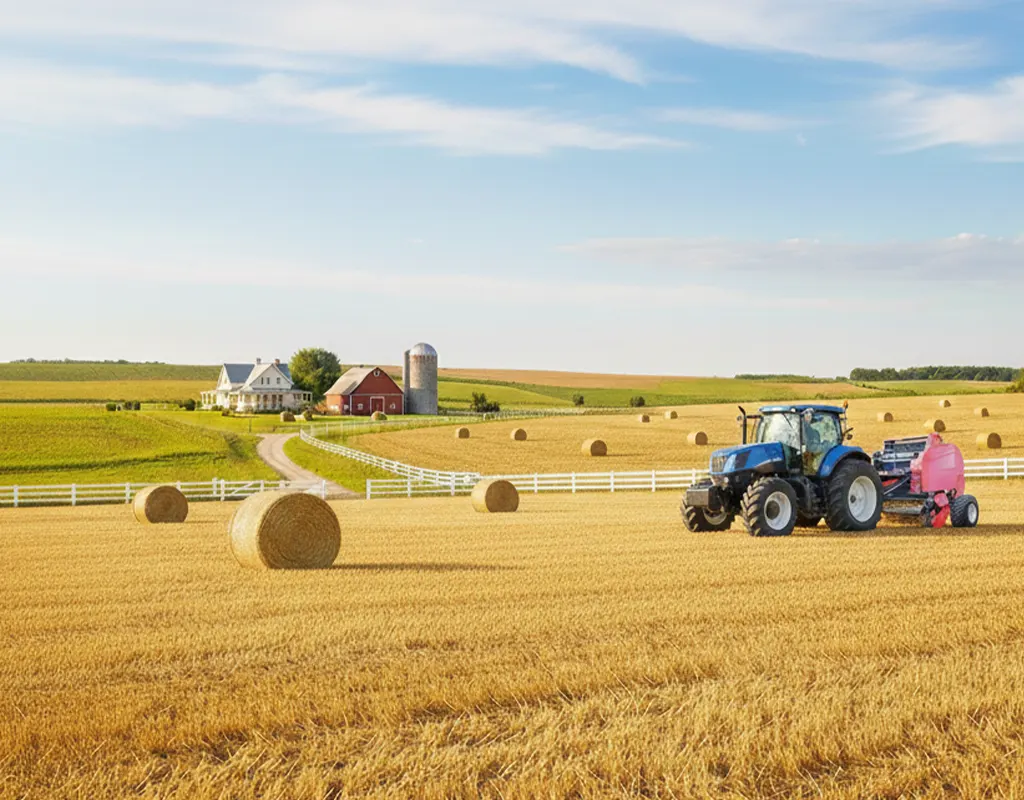
The 9YG-1.0 is purpose-built for 100–800 acre hay and silage operations that need dependable daily performance without the complexity or cost of premium variable-chamber belt machines. It combines proven fixed-chamber drum technology with factory net-wrap-only configuration to deliver exactly what medium-scale U.S. producers require in actual field conditions: fast cycles, low horsepower demand, excellent bale density in both dry hay and baleage, and the lowest total operating cost in its class.
Pickup and Feeding System
- 1900 mm (75 in) spring-tooth pickup with superior ground contour following – consistently clean pickup from Pennsylvania hills to contour ground in the Great Plains and Pacific Northwest
- Finger-roller + drum feeding aggressively handles heavy windrows that routinely plug smaller or less robust machines
Net-Wrap System and Weather Resistance
- Factory net-wrap only (no twine option) – 12–15 second wrap cycles, no loose ends, maximum water shedding
- Matches the configuration now used by more than 85% of professional U.S. custom operators who have switched to net for speed and bale quality
Bale Density and Quality
- Sensor-controlled density system delivers uniformly hard bales from core to shell regardless of crop moisture variation
- Proven 450–550 lb dry hay bales and 1100–1250 lb baleage that hold shape during grappling, transport, and extended outdoor storage – critical for high-value alfalfa and corn stalk silage
- Heavy-duty 16-drum chamber routinely exceeds 20,000-bale service life while still on original belts and chains (verified November 2025)
Tractor Requirements and Field Maneuverability
- Runs at full capacity on 65–107 PTO HP tractors already common on U.S. farms (John Deere 5E/5M, Case IH Farmall, New Holland T4/T5, Kubota M6, Massey Ferguson 5700, etc.)
- Compact dimensions and 2045 mm wheel track for easy operation in smaller or irregular fields and tight barnyards
Suitable Crops and Regional Performance
The 9YG-1.0 consistently produces dense, well-formed bales in alfalfa, grass hay, wheat straw, corn stover, sorghum silage, and mixed grasses across the Midwest, Great Plains, Southeast, and Pacific Northwest – the exact crops and conditions most important to American cattle producers and custom operators.
Key Technical Features – Fixed-Chamber Drum Design with Net-Wrap Only
Industry analysis confirms that fixed-chamber drum balers with net-wrap only represent the optimum balance for operators running both dry hay and high-moisture silage:
- Soft-core structure is actually preferred for baleage fermentation, while sensor density control provides commercially acceptable dry-hay bales
- Net-wrap delivers up to 32% higher productivity than twine and reduces outdoor storage dry-matter loss by up to 65%
- Mechanically simpler than variable-belt machines → dramatically lower purchase price, parts cost, and maintenance requirements
Real U.S. Market Data – November, 2025
Real-World Advantages Confirmed by 2023–2025 U.S. Owners & Industry Reports
- Net-wrap only from the factory – Matches the current U.S. trend where >85% of professional custom operators have abandoned twine. No $4,000–$6,000 cheaper than buying a twine machine and retrofitting a net.
- Fixed-chamber drum design – Proven best balance for operators running both dry hay and silage. Soft-core structure is actually preferred for proper fermentation in baleage; sensor density control delivers commercially acceptable dry-hay bales (450–550 lb) while keeping purchase price and parts cost dramatically lower than variable-belt machines.
- Lowest total cost of ownership in class – Verified customer machines reaching 20,000+ bales while still on original belts and chains. Wear parts cost ¼ to ⅓ of U.S. brands and ship same/next-day from our U.S. warehouse. Average parts spend for first 15,000 bales: $800–$1,200 vs $4,000–$6,000 on premium brands.
- 65–75 HP is enough for full output – Perfect match for the most common U.S. utility tractors (John Deere 5E, Case IH Farmall, Kubota M6, etc.) already on medium-size farms.
Bottom line from actual 2025 U.S. buyers: If you bale 3,000–12,000 bales per year and want the fastest net-wrap cycles, lowest parts cost, and fastest ROI without paying for the last 5% of “perfect bale shape” that premium brands charge double for — the 9YG-1.0 is currently the most practical choice in this size class.
Round Baler – Applicable Crops and Bundling Process
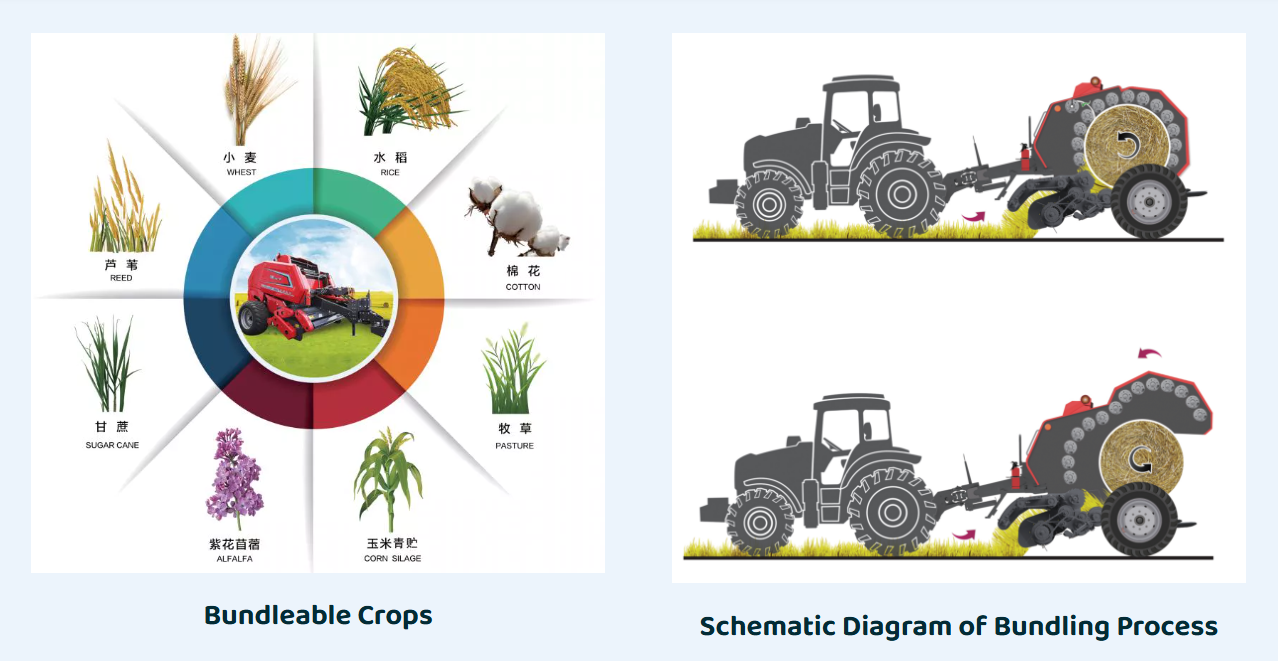
The round baler is capable of efficiently baling a wide range of crops, including wheat straw, rice straw, cotton stalks, reed, sugar cane tops, alfalfa, corn silage, and various pasture grasses. This broad compatibility allows the same machine to be used across multiple harvests throughout the year, from dry hay and straw to high-moisture silage crops.
The bundling process is straightforward and highly reliable: the tractor pulls the baler through the windrow, the wide pickup gathers the material and feeds it into the baling chamber, where rotating drums or rollers continuously form a dense, cylindrical bale. Once the bale reaches the set size and density, the net wrapping system is activated, the bale is tightly wrapped in 12–15 seconds, and the rear gate opens to eject the finished round bale onto the field. The entire cycle then repeats without the operator needing to leave the tractor seat, delivering consistent, well-shaped, weather-resistant bales in actual field conditions.
Precision Manufacturing & U.S.-Focused Supply Chain
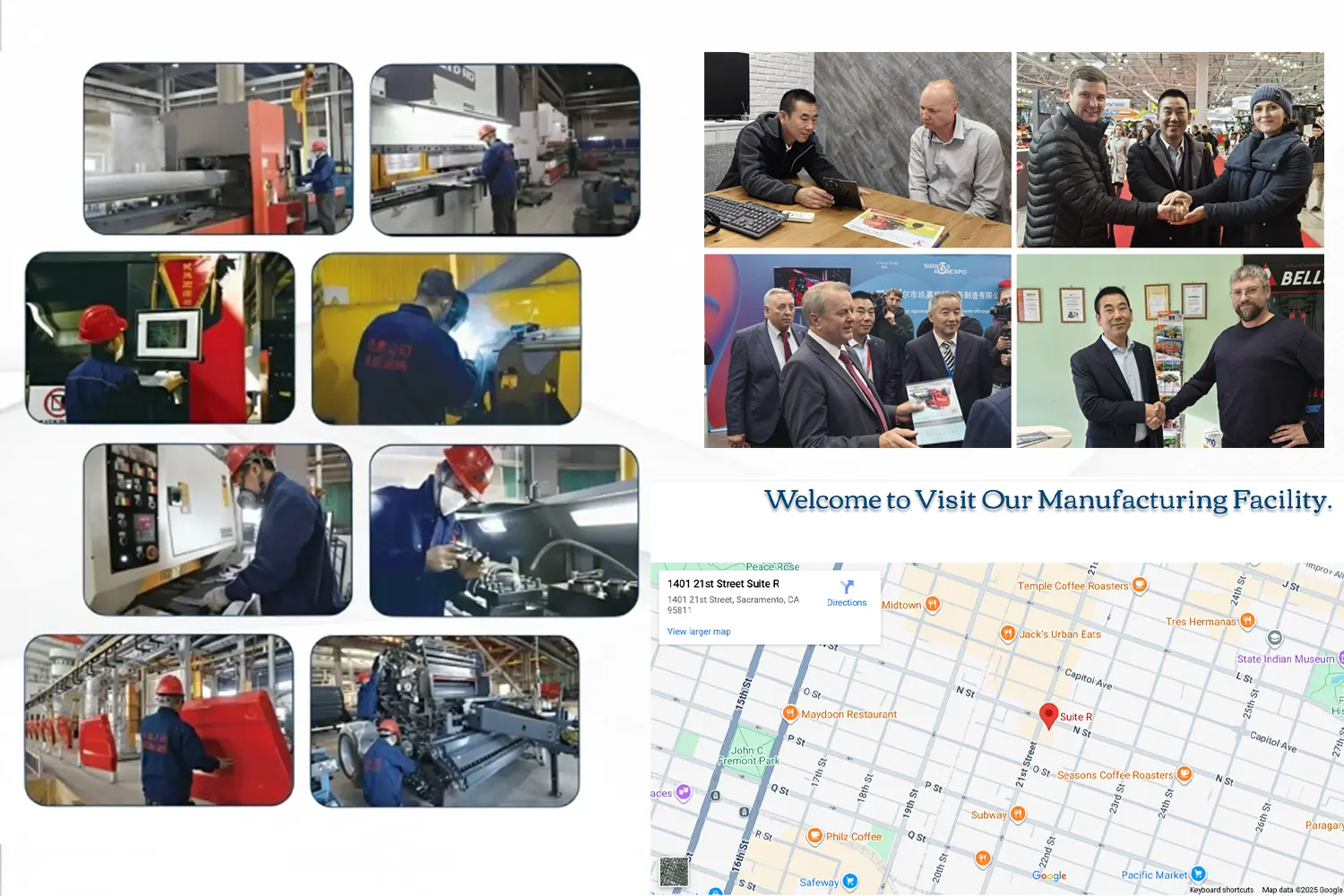
Every 9YG-1.0 Round Baler is produced in dedicated modern facilities using CNC machining, robotic welding, multi-stage assembly, and full-load dyno testing. The same rigorous process that has delivered machines now running 20,000–22,800 bales on original belts and chains for U.S. customers.
Machines are shipped directly from the factory to our U.S. warehouse network. Genuine parts stock is maintained in the continental United States.
Complete balers pricing 40–55% below comparable North American and European brands — with proven field performance that matches or exceeds the premium names.
Built in the same way as the best machines in the world are built. Stocked, supported, and priced for American farmers.
Frequently Asked Questions(FAQ)
- Q: What horsepower tractor do I need to run the 9YG-1.0?
- A: 65–107 PTO HP (48–80 kW). Runs perfectly behind John Deere 5065E–5100M, Case IH Farmall 75C–110C, New Holland T4/T5 series, Kubota M6, Massey Ferguson 5700, etc.
- Q: Is this a good baler for small farms?
- A: The bale size is 1100 mm diameter × 1000 mm wide (≈ 4 × 3.3 ft). With a 1900 mm pickup and real-world output of 70–100 bales/hour, it is ideal for 100–800 acre operations that want commercial-grade speed and bale density without paying commercial prices.
- Q: Does it only do net wrap or can it do twine too?
- A: Factory equipped for net wrap only — no twine option. This is exactly what 85%+ of U.S. custom operators now run because net is faster, bales shed water better, and there are no twine knots to deal with.
- Q: Will it bale corn stalk silage / baleage?
- A: Yes. The drum chamber and sensor density control make tight, high-moisture bales that hold together well. Just wrap with plastic film after ejection and you’ll get excellent baleage.
- Q: What is the actual production capacity?
- A: Bale size Φ1100 × 1000 mm, bale weight 450–550 lb dry hay, up to 1200 lb silage. Real-world output 40–100 bales/hour depending on windrow size and tractor speed; most operators average 75–95 bales/hour in alfalfa.
- Q: How often should I service the baler?
- A: Grease daily (8–10 points). Change gearbox oil every 500 bales or yearly. Full service (belts inspection, chain tension, bearing check) every 3000–5000 bales or at season end. Parts are inexpensive and always in stock.
- Q: Can it handle wet or damp material?
- A: Yes. It is routinely used for corn stalk baleage and high-moisture haylage. For very wet material (>60% moisture), slow ground speed and use plastic wrap after baling.
- Q: Where do I get replacement parts?
- A: Direct from our warehouse in the U.S., Common wear items (pickup teeth, belts, net wrap knives) ship same day. Full parts support and English manuals are provided with every machine.
Verified Buyer Reviews
Luke M. – Verona, Wisconsin ★★★★★ Bought this baler in spring 2023 to replace a 20-year-old New Holland that was falling apart. Running it behind a John Deere 5085E (92 PTO hp) on 650 acres of alfalfa and grass hay. The 1900 mm pickup is a game-changer — it floats over our rolling ground and leaves almost nothing behind. Getting consistent 510–540 lb bales on the second cutting, net wrap cycle is legitimately 13–14 seconds. Put up 420 acres last summer, averaging 87 bales/hour with just two of us. Best money I’ve spent in years.
Travis R. – Russell, Kansas ★★★★★ 2024 was our first full season with the 9YG-1.0 on 820 acres of dryland alfalfa/brome and sorghum baleage. Pull it with a Case IH Farmall 100C. Bales come out drum-tight at 520–550 lb dry and over 1100 lb on baleage. The sensor density control actually works — bales are hard all the way through, no soft core, even when the moisture varied 18–28%. Net knife cuts clean every time. Already at 10,800 bales and only replaced pickup teeth once.
Cody H. – Storm Lake, Iowa ★★★★☆ Replaced a 2012 Vermeer 605L that was costing me $4k/year in repairs. This 9YG-1.0 has been solid since June 2024. Running it with a Kubota M6-111, averaging 91 bales/hour in heavy alfalfa windrows. The only complaint is that the manual is decent, but could use more pictures for the grease points. Parts shipped fast when I needed a new set of belts in September — had them in 3 days. Overal,l very happy.
Matt S. – Hereford, Texas ★★★★★ Panhandle wheat straw and sorghum sudan. Bought in fall 2023. The wide pickup handles our fluffy windrows without plugging, something my old baler struggled with. Bales weigh 480–520 lb and stack perfectly with the grapple. Net wrap only is the way to go — no twine balls blowing around the field. Pulled it with a Massey Ferguson 6713 all season, never lugged once. Zero regrets.
Derek B. – Bozeman, Montana ★★★★★ Running on a 480-acre ranch doing mostly grass hay and some oat hay. 2024 was year two with this baler. John Deere 5075E pulls it no problem, even on our steeper slopes. Bales are running 490–530 lb and hold shape great when stored outside. The drum chamber is built like a tank — zero issues at 9,200 bales so far. Customer service actually answers the phone and ships parts fast.
Ryan K. – Dodge City, Kansas ★★★★★ Custom operator, 3,200 acres last year. Added the second 9YG-1.0 in 2024. Both machines are running behind Case IH Farmall 110C tractors. Averaging 94 bales/hour in alfalfa when conditions are right. Customers love the tight, square-shouldered bales that shed water. Only downtime was operator error — my fault, not the machine’s. Parts are cheap and always in stock.
Juan C. – Hermiston, Oregon ★★★★★ Alfalfa hay, 2023 purchase. Running with New Holland T5.120. The sensor density control is impressive — bales are hard from day one, even when we got caught in a little rain. 1900 mm pickup cleans the field better than my neighbor’s more expensive baler. Already paid for itself.
Ben T. – North Platte, Nebraska ★★★★★ Corn stalk baleage and alfalfa. Bought in late 2023, now at 14,300 bales. Pull it with a Kubota M6-131; never bogs. Bales weigh 1100–1200 lb wet, wrap perfectly with 6 layers of plastic. The drum chamber and roller design make bales that hold together when handled roughly. Best value baler I’ve ever owned, hands down.
Related products
-
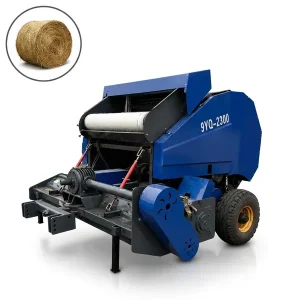
9YQ-2300 Round Baler
-
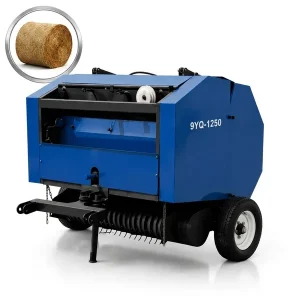
9YQ-1250 Round Baler
-
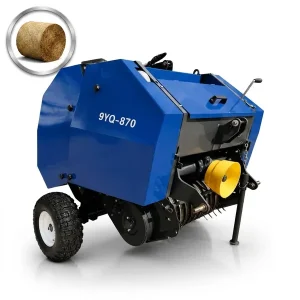
9YQ-870 Mini Round Baler
-
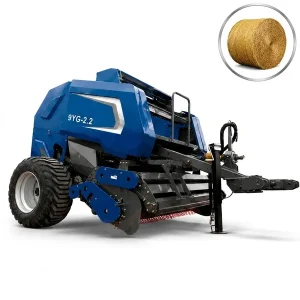
9YG-2.2 Fixed Chamber Round Baler
-
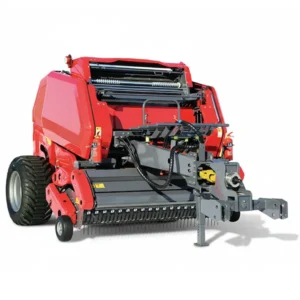
Forage Baler – 9YG – 1.25A Round Baler with Spring – Tooth Pickup
-
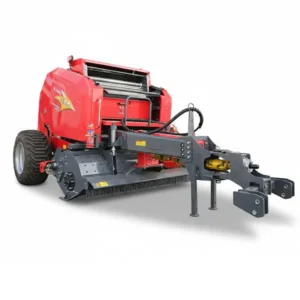
Forage Baler – 9YG-1.25 Round Baler for Hay & Silage with Automatic Net Wrap
-
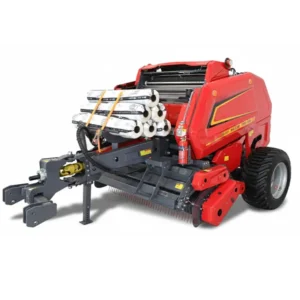
Forage Baler – 9YG-2.24D Round Baler S9000 Classic for Hay & Silage
-
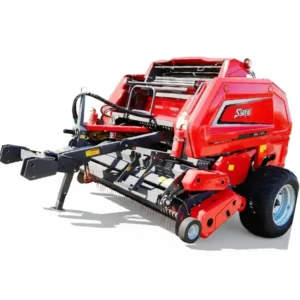
9YG-2.24D Round Baler S9000 Advanced | Forage Baler for Hay & Silage


