Technical Selection Guide · 9YF Series · Updated August 2026
Square Baler Pickup Width Guide
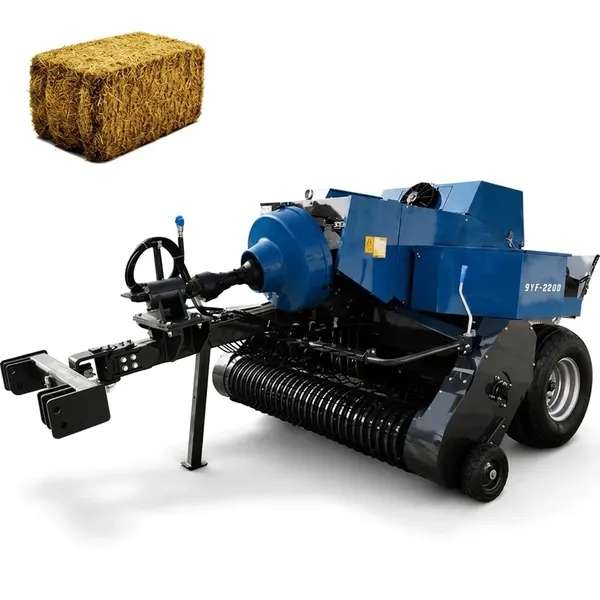
Square baler pickup width must be matched to the windrow width your mowing and raking equipment produces. A pickup that is too narrow leaves crop strips on each side of the windrow — reducing bale volume per pass and lowering field efficiency. The 9YF series offers three pickup widths: 1700 مم (9YF-1700), 1900 مم (9YF-1900) and 2200 مم (9YF-2200, 9YF-2200S, 9YFS-2.2). This guide shows how to determine the right width for your mower, raker and crop combination.
Covers: how pickup width is determined · windrow width matching · mower and raker sizing · crop-specific windrow recommendations · consequences of mismatched width · model selection table
Quick Answer
Choose baler pickup width so it equals or slightly exceeds your windrow width after raking. Windrow width is typically 60–80% of the mower swath width. A mower cutting 2.4m wide, raked to a 1.6m windrow, requires the 1700mm or 1900mm pickup. A mower at 3.0m wide producing a 2.0m windrow needs the 2200mm pickup. Wider pickup is always better than narrower — a too-narrow pickup leaves crop on the ground; a too-wide pickup simply passes over empty ground between windrows.
How Pickup Width Determines Field Efficiency
The pickup reel on a square baler spans the full width of the declared pickup width and rotates to sweep crop upward into the machine. For the pickup to function at full efficiency, the windrow must fit within the pickup width — with the crop positioned under the active tine section from one side to the other. When the windrow is narrower than the pickup, the outer tines pass over bare ground and productivity remains high. When the windrow is wider than the pickup, the outer edges of the windrow are never contacted by the tines and the crop is left in the field as two narrow strips alongside each picked-up bale.
These uncontacted strips represent lost yield and additional labour — either accepting the crop loss or making additional passes over the field with a rake to consolidate the strips into the main windrow. In commercial hay production where maximising captured yield per pass is directly tied to revenue, a correctly matched pickup width is a precision operational requirement, not a rough guide.
How to Calculate the Windrow Width Your Equipment Produces
Windrow width is determined by two steps: the mower cuts a swath of a defined width, and the rake consolidates that swath into a windrow that is typically 60–80% of the original swath width. The final windrow width is what must be matched to the baler pickup width.
Windrow Width Calculation
الخطوة 1: Find your mower cutting width (from the mower spec sheet or manual)
الخطوة الثانية: Multiply by 0.65–0.75 (typical rake consolidation ratio) to estimate windrow width
الخطوة 3: Compare the windrow width to the baler pickup width — pickup should be equal to or greater than windrow width
مثال: 2.7m mower × 0.70 = 1.89m windrow → requires 1900mm or 2200mm pickup. A 1700mm pickup would miss approximately 190mm of crop on each side of this windrow.
| Mower Swath Width |
Estimated Windrow Width (after raking) |
Minimum Pickup Needed |
Recommended Model |
| 1.8–2.1 m (small mower) |
1.2–1.6 m |
1,700 mm |
9YF-1700 |
| 2.1–2.5 m (standard compact mower) |
1.4–1.9 m |
1,700–1,900 mm |
9YF-1700 or 9YF-1900 |
| 2.4–2.8 m (standard mower) |
1.6–2.1 m |
1,900–2,200 mm |
9YF-1900 or 9YF-2200 |
| 2.7–3.2 m (wide-cut mower) |
1.8–2.4 m |
2,200 mm |
9YF-2200 / 2200S / 2.2 |
| 3.0–4.0 m (double-windrow or wide-cut) |
2.0–2.8 m |
2,200 mm |
9YF-2200 / 2200S / 2.2 |
Crop-Specific Windrow Width Recommendations
The ideal windrow width as a proportion of pickup width varies by crop. The key variable is drying rate — fine-stem crops that dry slowly benefit from narrower windrows (which dry faster through the core) while coarse-stem crops that dry quickly can be raked to wider windrows without core moisture problems at baling time.
Bermudagrass Hay (Southeast)Windrow at 60–70% of pickup width
Fine stems and high overnight re-wetting in SE conditions make narrow windrows essential for adequate core drying. Form windrows at 60–70% of pickup width — a 2,200mm pickup should receive a 1,320–1,540mm windrow. This narrower-than-maximum width significantly improves core drying speed and reduces the risk of baling above 17% core moisture in the narrow afternoon window available in summer conditions.
Alfalfa (1st and 2nd cut)Windrow at 75–85% of pickup width
Alfalfa dries faster than fine-stem grasses and can tolerate a wider windrow without core moisture problems. Wider windrows increase bale volume per pickup pass. At 75–85% of pickup width: a 2,200mm pickup handles a 1,650–1,870mm windrow. First-cut alfalfa raked at 80% of pickup width produces a denser windrow that keeps the baler working efficiently with less gap time between bale charges.
Timothy and Orchard Grass HayWindrow at 70–85% of pickup width
Northern cool-season grasses tolerate moderate windrow widths. Wider windrows are acceptable in sunny conditions with low overnight dew; narrower windrows are preferable in humid conditions or during overcast curing periods. Avoid raking when surface moisture is below 20–25% — the seed heads of dry timothy shatter during rake tine contact and this leaf loss is irreversible.
Wheat / Barley StrawWindrow at full pickup width
Dry straw is already at optimal moisture at harvest and is not subject to the drying-rate concerns of hay crops. Rake straw to the full pickup width to maximise material volume per pass. A wide straw windrow increases bale volume and reduces the number of passes needed to clear a field. The light, uniform nature of dry straw is very forgiving of windrow width — the pickup handles full-width straw windrows efficiently without the core moisture risk that would disqualify a full-width hay windrow.
What Happens When Pickup Width Is Mismatched
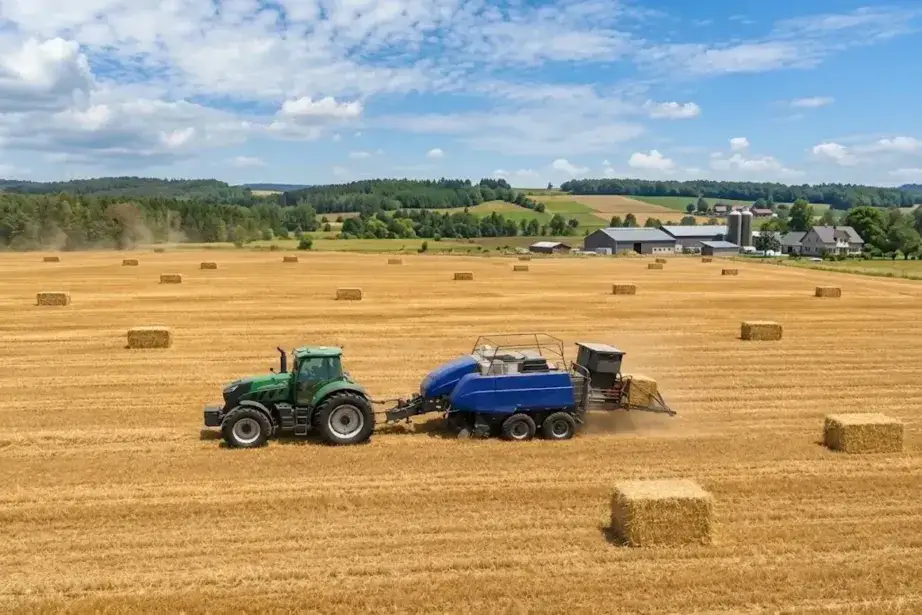
Pickup Too Narrow (Windrow Wider Than Pickup)
The outer edges of the windrow are never contacted by the tines. Two strips of uncontacted crop remain on the field after each baling pass. These strips represent yield loss — in high-value alfalfa at $180 per tonne, each 100mm of windrow strip on both sides of a 1km windrow equates to approximately 15–20kg of uncollected hay. Over a season, narrow pickup relative to windrow width can represent 5–12% total yield loss if the strips are not gathered by an additional rake pass. Additional rake passes add compaction, fuel and labour cost.
Pickup Too Wide (Windrow Narrower Than Pickup)
No practical problem. The outer tines pass over bare ground on each side of the windrow and are essentially idle during those passes. The machine produces bales at slightly lower volume per unit length of windrow because fewer tines are actively feeding — but this does not cause any mechanical issue. A wider-than-needed pickup provides a useful margin for windrows that are slightly uneven in width along their length.
The practical guidance: when in doubt between two pickup widths, choose the wider one. The cost of a too-wide pickup is a marginal efficiency reduction; the cost of a too-narrow pickup is measurable yield loss and additional field passes.
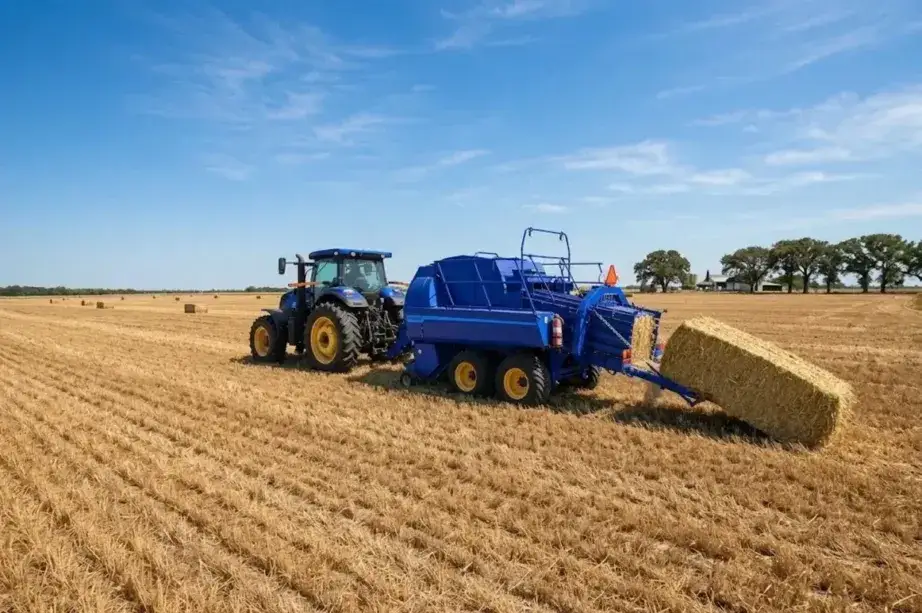
9YF Model Pickup Width Comparison and Selection Guide
| نموذج |
عرض الالتقاط |
Optimal Windrow Range |
Recommended Mower Width |
Best Operation Scale |
| 9YF-1700 |
1,700 mm |
1,000–1,700 mm |
1.8–2.3 m |
Small farms, hobby operations, under 30 acres |
| 9YF-1900 |
1,900 mm |
1,200–1,900 mm |
2.0–2.7 m |
Small-medium farms, 20–60 acres, 50HP tractor |
| 9YF-2200 |
2,200 mm |
1,400–2,200 mm |
2.4–3.2 m |
Medium-commercial operations, 40–150+ acres, standard hay crops |
| 9YF-2200S |
2,200 mm |
1,400–2,200 mm |
2.4–3.2 m |
Same width as 9YF-2200 — model choice driven by crop type, not width |
| 9YFS-2.2 |
2,200 mm |
1,400–2,200 mm |
2.4–3.2 m |
Commercial export operations, dual-shredder / fan system for ash control |
PTO Driveshaft Length and Pickup Width — Why They Are Linked
When switching between 9YF models of different pickup widths, the tractor-to-baler hitch geometry changes — and with it, the operating PTO shaft angle and extension range. A driveshaft correctly specified for the 9YF-1700 may operate outside the safe angle range when fitted to the wider 9YF-2200. Always verify shaft length and CV joint angle rating when upgrading pickup width. Full specification and sizing guide: PTO driveshaft length and CV joint angle specification for hay balers.
Frequently Asked Questions — Square Baler Pickup Width
Can I use a 9YF-2200 on narrow windrows from a small mower?+
Yes — a 2,200mm pickup operating on a 1,200mm windrow from a small mower works without any mechanical problem. The outer 500mm of tines on each side simply pass over bare ground. The bale volume is somewhat lower because less material enters per unit distance of travel. Productivity is reduced compared to a matched windrow width, but there is no yield loss as long as all crop was consolidated into the narrow windrow by the rake. The 9YF-2200 is often a better long-term investment than a 9YF-1700 even on current small acreage, because when the operation grows or a wider mower is added later, the 2,200mm pickup is already the correct width without any equipment change.
My current 9YF-1700 leaves a strip of hay on both sides of the windrow. What is causing this?+
The windrow is wider than the 1,700mm pickup. The tines only contact material within the 1,700mm span — anything outside this width passes under the machine without being picked up. There are two solutions: (1) adjust the rake to produce a narrower windrow within 1,700mm, which is possible but may increase the number of windrows and raking passes required; or (2) upgrade to the 9YF-1900 or 9YF-2200 to match the actual windrow width your mowing and raking equipment produces. Measure the actual windrow width before making a decision — some operations find their windrow is only slightly wider than 1,700mm and the rake adjustment is straightforward. Others find the windrow is consistently 2,000mm+ and a pickup width upgrade is the correct long-term solution.
Does pickup width affect how fast I can bale?+
Yes — indirectly. A wider pickup captures more material per unit distance of travel, which means bales are completed more quickly (more material per pass) and the machine operates at its efficient full-bale-per-pass rate. A narrow pickup on a wide windrow produces incomplete-width passes that result in the same field coverage rate (metres per hour) but lower material throughput — fewer kilograms per metre of windrow captured per pass. The effective bale output per hour is lower from a mismatched (too-narrow) pickup because each pass contains less hay. A correctly matched pickup width is one of the factors that determines whether a baler reaches its rated productivity.
What is a double-windrow rake and does it change the pickup width I need?+
A double-windrow rake combines two adjacent mower swaths into a single windrow — effectively doubling the material volume per windrow compared to a single-swath rake. The combined windrow is typically 2.0–2.8m wide when formed from two 2.4–3.0m mower swaths. A double windrow almost always requires the 2,200mm pickup to capture the full combined windrow width. Operations using a double-windrow rake to improve baling efficiency (more material per pass, fewer baling passes) should confirm the 9YF-2200 or above is in use before switching from single to double windrows, or the efficiency gain is partly lost to uncaptured outer windrow strips.
Can I check the required windrow width without a measuring tape in the field?+
Yes — after a baling pass, look at the field surface behind the machine. If you see two distinct strips of hay left on each side of the pickup path, the pickup is too narrow. If the field surface is clean with no crop strips visible, the pickup width is sufficient for that windrow. This visual inspection takes seconds and confirms in-field whether the equipment is matched. To measure actual windrow width accurately: step out the width of the windrow at a representative section — one large step is approximately 750–850mm depending on stride, so a two-step windrow is approximately 1.5–1.7m wide. A tape measure gives the most accurate result in under one minute.
Does the pickup height adjustment affect the effective width?+
Pickup height does not affect the nominal pickup width. The tine arc extends to the same width at any pickup height setting. However, pickup height does affect the percentage of the windrow base that is actually lifted — a pickup set too high misses the bottom 30–50mm of a mat-lying windrow, reducing total material capture even when the width is correctly matched. For mat-lying material (corn stover, rice straw, very flat bermudagrass windrows): set the pickup as low as the field surface conditions allow while maintaining minimum tine clearance from the ground (typically 15–25mm). For clean upright windrows (hay standing in a dome shape): a higher pickup setting is acceptable.
If I plan to upgrade my mower next season, should I buy the pickup width for my current or future mower?+
Buy for the future mower if the upgrade is confirmed within 1–2 seasons. The baler is a longer-lived investment than the mower — a correctly sized baler for your planned equipment combination will serve you well for 10–20+ seasons. A baler sized for your current small mower may be constraining from the day a wider mower is added. The cost difference between the 9YF-1700 and 9YF-2200 is the only financial consideration — if budget allows the 9YF-2200, buy it now for the current and future equipment configuration. If budget is the constraint, the 9YF-1700 is a sound entry point with the understanding that a windrow width mismatch will develop when the mower is upgraded.
Is wider always better when comparing the 9YF-1700, 9YF-1900 and 9YF-2200?+
In terms of pickup width alone — yes, wider is better or equivalent in all practical scenarios. A wider pickup never reduces performance; it either matches the windrow exactly or passes over the outer ground without impact. However, the three models also differ in HP requirement, HP minimum and price — these factors may make the 9YF-1700 or 9YF-1900 the better choice even when the 9YF-2200 would be a valid pickup-width option. A 40HP compact tractor operator whose windrows are 1.4m wide is well-served by the 9YF-1700 in all dimensions — the 2,200mm model at 99HP minimum provides no useful benefit for that operation. Match the full set of specifications (HP, width, crop, scale) rather than optimising pickup width in isolation.
Not Sure Which Pickup Width Your Windrows Require?
Tell us your mower swath width, raker type and primary crop and we will confirm which 9YF square baler pickup width is the correct match for your equipment combination.
شركة أمريكا إيفر-باور لمعدات بالات العلف المحدودة · 1401 شارع 21، جناح R، سكرامنتو، كاليفورنيا 95811
المحرر: Cxm