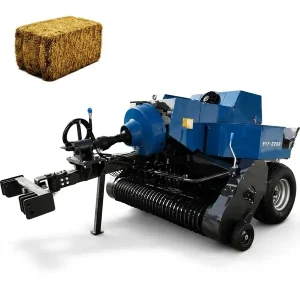
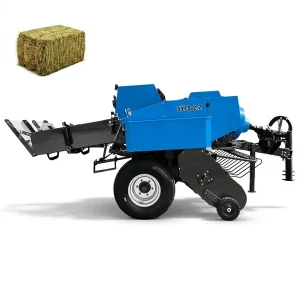
Empacadora de balas cuadradas 9YF-2200S
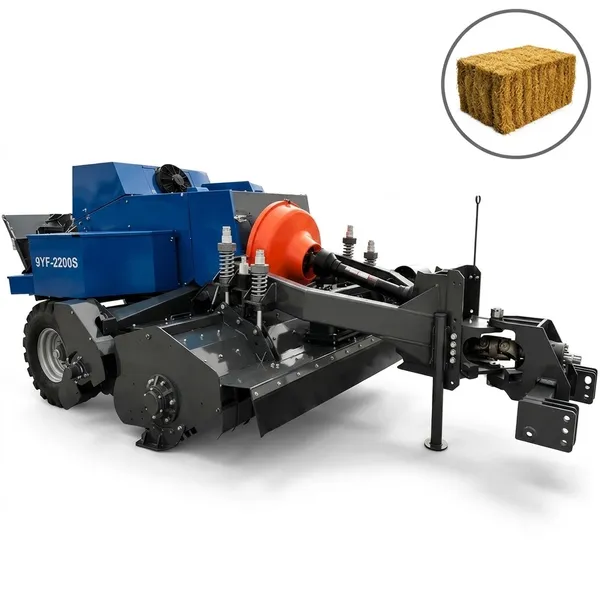
El 9YF-2200S mejora el modelo básico 9YF-2200 con tres características que cambian lo que la máquina puede hacer: un Recogida con garra de martillo para cultivos en pie y tumbados, un mecanismo de trituración individual incorporado para tallos densos de maíz y sorgo, y un pantalla táctil a color portátil para el monitoreo de pacas en tiempo real. En ≥73,5 kW (≥99 CV) Mediante toma de fuerza, procesa trigo, arroz, rastrojo de maíz, tallos de algodón, sorgo, alfalfa y forraje fresco en una plataforma de recogida de 2200 mm y una paca de 460 × 360 mm.
- ✦ Recogedor de garras de martillo: maneja material de cultivo de pie, atascado y enredado.
- ✦ Mecanismo de trituración único: trituración eficiente de tallos duros de maíz y sorgo.
- ✦ Pantalla táctil a color portátil: monitorización completa del ciclo de empacado desde la cabina.
- ✦ Recogida de 2200 mm · Paca de 460 × 360 mm · 2 anudadores tipo D
- ✦ 2350 kg · 6240 × 2760 × 1700 mm · Empacado automático con cuerda
Empacadora cuadrada 9YF-2200S: Tres mejoras que cambian la gama de cultivos.
¿Qué cambios presenta el modelo 9YF-2200?
La 9YF-2200 es una máquina fiable para hileras limpias de paja de trigo, heno de pasto y forraje estándar en terrenos llanos. Cuando el cultivo cambia (rastrojo de maíz en un campo compactado por el tráfico, tallos de sorgo demasiado rígidos para la compresión estándar, cultivos en pie tras un vendaval o alfalfa en etapa de corte con tallos aún gruesos), el recogedor de dientes de resorte y la cámara de compresión sin trituración estándar alcanzan sus límites. La 9YF-2200S soluciona directamente cada una de estas limitaciones.
Sustituye las púas de resorte por mayales giratorios con garras que desprenden activamente el material de la superficie del suelo, recuperando cultivos en pie, atascados y enredados que un sistema de púas de resorte no recoge. El modelo 9YF-2200S puede empacar directamente en condiciones de campo donde el modelo estándar requeriría un rastrillado previo.
Una etapa de trituración entre el alimentador y la cámara de compresión rompe los tallos duros y gruesos antes de que entren en el émbolo. Los tallos de maíz y sorgo comprimidos enteros dejan canales huecos y zonas de baja densidad en la paca; los tallos triturados se comprimen uniformemente en toda la sección transversal de la paca, lo que produce una mayor densidad y una mejor estabilidad de la forma de la paca para su almacenamiento y alimentación.
El panel táctil portátil monitoriza el ciclo de empacado en tiempo real (número de pacas, densidad, estado del equipo) sin que el operario tenga que mirar la máquina en el campo. En la 9YF-2200, el operario estima la finalización del empacado mediante el tacto y el sonido. En la 9YF-2200S, la pantalla muestra con precisión en qué punto del ciclo se encuentra la empacadora, lo que permite una gestión más consistente de la velocidad de avance y una detección más temprana de irregularidades en la alimentación.
9YF-2200S: Un vistazo rápido
Especificaciones técnicas
| # | Artículo | Unidad | Especificación |
|---|---|---|---|
| 1 | Nombre del modelo | — | Empacadora de balas cuadradas 9YF-2200S |
| 2 | Método de enganche | — | Remolcado / Montaje central |
| 3 | Ancho de recogida | mm | 2,200 |
| 4 | Estructura del selector | — | Tipo garra de martillo |
| 5 | Estructura de alimentación | — | Mecanismo de alimentación con horquilla |
| 6 | Mecanismo de trituración | — | Trituradora de una sola etapa |
| 7 | Tipo de anudador | — | Tipo D |
| 8 | Número de anudadores | piezas | 2 |
| 9 | Sección de la cámara de empacado (Ancho × Alto) | mm | 460 × 360 |
| 10 | Método de empacado | — | Empacado automático de cuerdas |
| 11 | Sistema de control | — | Pantalla táctil a color portátil |
| 12 | Rango de potencia compatible | kW / HP | ≥73,5 kW (≥99 CV) |
| 13 | Dimensiones generales (L×An×Al) | mm | 6.240 × 2.760 × 1.700 |
| 14 | Peso de la máquina | kilogramo | 2,350 |
Aplicaciones para cultivos: mayor variedad que cualquier empacadora cuadrada estándar.
Tallos resistentes y condiciones de campo difíciles
El mecanismo de recogida y trituración con garra de martillo hace de la 9YF-2200S la opción adecuada cuando el material vegetal es demasiado duro, enredado o denso para una máquina estándar de dientes de resorte. El rango de humedad objetivo para el empacado es: forraje de leguminosas y gramíneas 17–23%; rastrojo de arroz, trigo y maíz 10–23%; contenido de humedad del suelo 12–25%; pendiente máxima de 8 grados.
- ▸rastrojo de maíz — La trituradora rompe los tallos enteros antes de la compresión, produciendo fardos densos y bien formados a partir de un material que se comprime mal sin un procesamiento previo.
- ▸Tallos de sorgo — El sistema de recogida con garras de martillo y la trituradora simple manejan la estructura rígida y de tallo grueso de los residuos de sorgo que atascan las empacadoras que no trituran.
- ▸Trigo o cebada tumbada y en pie — Los mayales con garras de martillo recuperan la paja aplastada y enredada que las pinzas de dientes de resorte no recogen en la superficie del suelo.
- ▸Tallos de algodón — La trituradora gestiona el material leñoso del tallo que presentan los tallos de algodón, que los tallos intactos en una cámara estándar no comprimen de manera uniforme.
Forraje fresco y seco
La 9YF-2200S empaca alfalfa, trébol, heno de pasto y forraje mixto en condiciones frescas y secas. Después de cortar y acondicionar con una rastrillo de corteLa etapa de trituración mejora la densidad de las balas de alfalfa de tallo grueso: el tallo triturado se compacta de manera más uniforme que los tallos enteros en la cámara de 460 × 360 mm, lo que resulta especialmente notable en los cortes múltiples de densos cultivos de alfalfa en su máximo crecimiento.
- ▸Alfalfa (seca y fresca) — La trituradora mejora la uniformidad de la longitud del tallo para lograr una densidad de bala uniforme; humedad objetivo 17–23% para balas envueltas en cuerda.
- ▸Forraje mixto de gramíneas y leguminosas — maneja de manera más uniforme el grosor variable del tallo de los pastos mixtos después del desmenuzado.
- ▸paja de arroz — El diseño de garra de martillo recupera la hilera plana y enredada después del arrozal de forma más completa que el diseño de dientes de resorte en las mismas condiciones.
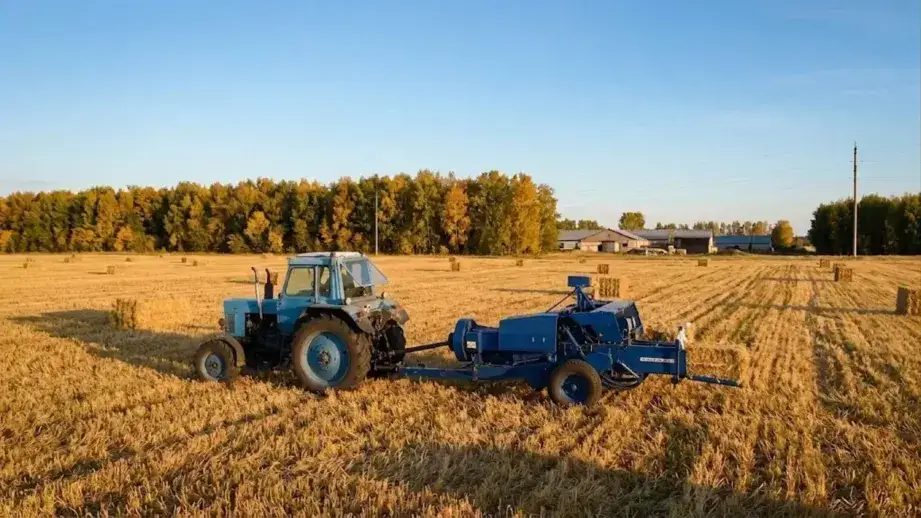
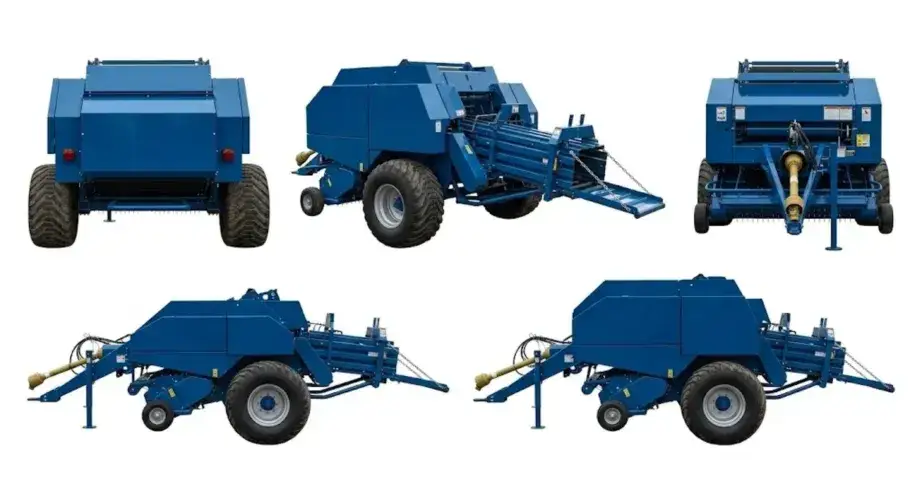
Características principales del 9YF-2200S
Mecanismo de trituración simple: cómo afecta a la calidad de las balas.
La trituradora de la 9YF-2200S utiliza una estructura de trituración y desmenuzamiento de una sola etapa ubicada entre el alimentador y la entrada de la cámara de compresión. Los tallos duros —maíz completamente seco, sorgo con un contenido de humedad de 10–15%, tallos de algodón maduros— ingresan a la trituradora y se rompen y desmenuzan antes de llegar al émbolo. El producto desmenuzado posee varias propiedades que mejoran el rendimiento de las balas:
- ✦Mayor densidad de balas — El material triturado llena la sección transversal de 460 × 360 mm sin los canales huecos que dejan los tallos enteros; el peso promedio de la bala por unidad de longitud aumenta considerablemente.
- ✦Mayor estabilidad en la forma de las balas — Una paca de densidad uniforme mantiene su sección transversal rectangular durante la manipulación, el transporte y el apilamiento; las pacas de tallo entero con secciones huecas se deforman bajo carga.
- ✦Mejor palatabilidad del alimento — El rastrojo de maíz y sorgo triturado es más apetecible para el ganado que el material de tallo entero; el tallo roto expone los nutrientes internos y reduce el comportamiento de selección que muestra el ganado con los tallos enteros.
- ✦Mejor descomposición de campo — En el caso de los rastrojos que se devuelven al campo en lugar de utilizarse como forraje, el material triturado se descompone más rápido en el suelo que los tallos enteros, lo cual es relevante para las explotaciones que venden algunas balas de rastrojo y devuelven el resto.
Control y monitorización mediante pantalla táctil
La pantalla táctil a color portátil de la 9YF-2200S muestra el estado actual de la paca, el número de pacas y el estado de funcionamiento del equipo en tiempo real. En la 9YF-2200, el operador se basa en su experiencia y en el indicador de carga de la toma de fuerza del tractor para determinar si la paca se está formando correctamente, ya que no hay visibilidad directa de la cámara de empacado. En la 9YF-2200S, la pantalla táctil muestra al operador exactamente lo que sucede en la cámara en cada punto del ciclo de empacado, lo que permite una detección más rápida de irregularidades en la alimentación, problemas de sincronización del anudador o variaciones de densidad que indican un cambio en la densidad de la hilera.
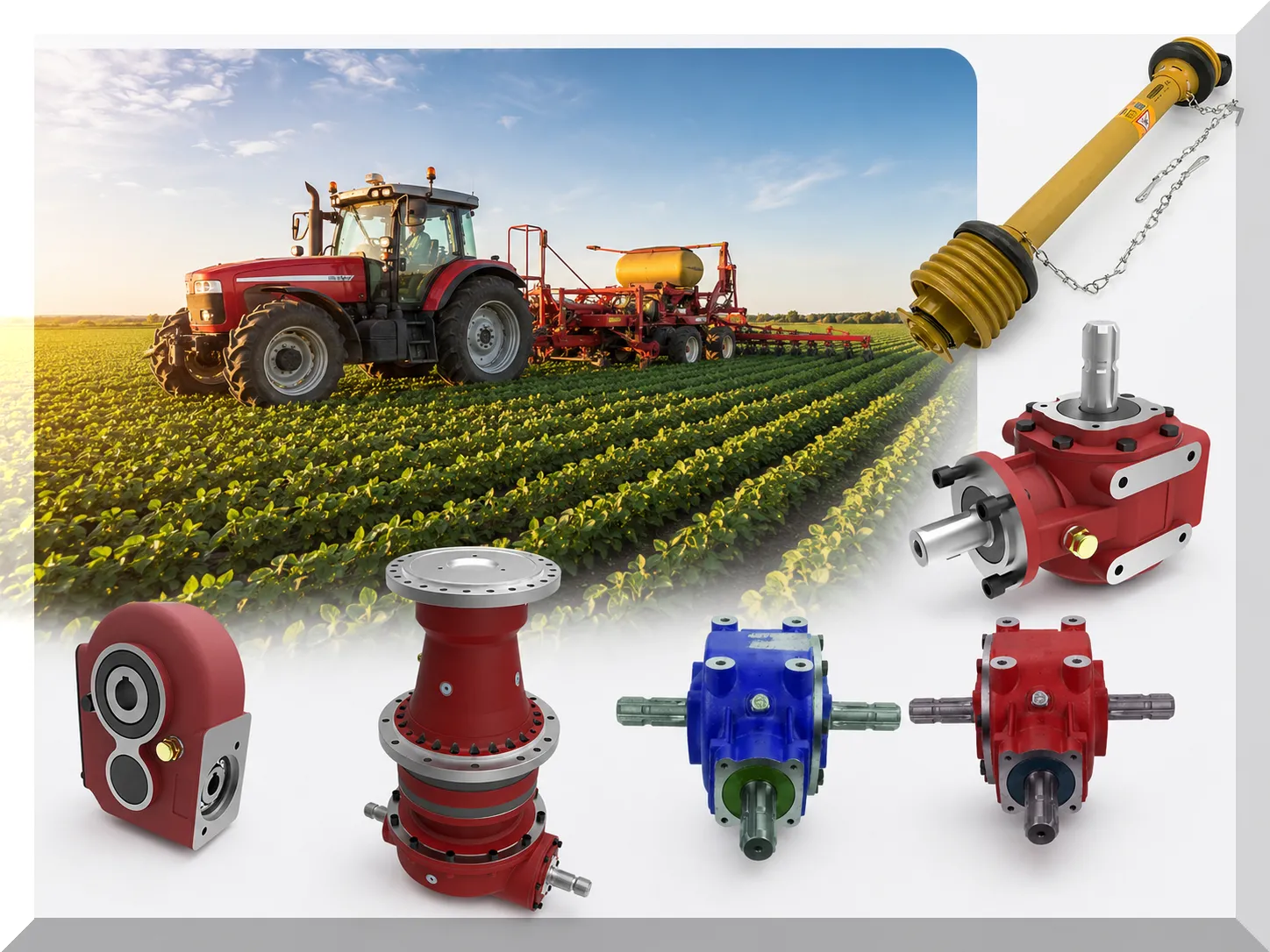
El sistema funciona en dos modos: automático y manual, lo que permite al operador trabajar con automatización completa en condiciones consistentes y tomar el control directo cuando las condiciones del cultivo requieren una gestión más precisa. Las especificaciones del eje y acoplamiento de la toma de fuerza en el nivel de potencia ≥73,5 kW de esta máquina se tratan en el Guía de especificaciones del eje de la toma de fuerza (PTO) de la caja de cambios agrícola — relevante al buscar componentes de transmisión de repuesto o al verificar la compatibilidad del acoplamiento.
9YF-2200S vs 9YF-2200: ¿Cuándo merece la pena actualizar?
Elija el 9YF-2200S cuando...
Comparación de la serie de empacadoras de balas cuadradas completas
| Modelo | Recogedor | Desfibradora | Control | Potencia mínima | Peso |
|---|---|---|---|---|---|
| 9YF-2200 | Diente de resorte | Ninguno | Mecánico | 40 CV | 1.950 kg |
| 9YF-2200S ◀ Este modelo | Garra de martillo | Soltero | Pantalla táctil | 99 CV | 2.350 kg |
| 9YFS-2.2 | Garra de martillo | Doble + Ventilador | Mecánico | 99 CV | 2.350 kg |
Ver el completo Gama de empacadoras cuadradas para comparar los tres modelos.
Consejos de funcionamiento para el 9YF-2200S
Configuración de la trituradora y ajustes específicos para cada cultivo.
El ajuste de la separación de la trituradora afecta tanto la longitud de la trituración como el consumo de energía. Para la paja seca de trigo y arroz, una separación mayor produce una trituración adecuada con menor consumo de energía. Para el rastrojo seco de maíz y sorgo, una separación menor produce una trituración más completa del material duro del tallo, a costa de una mayor carga en la toma de fuerza (TDF). Verifique que su tractor tenga suficiente potencia en la TDF con el ajuste de separación que está utilizando para el cultivo en el campo antes de realizar una pasada completa.
Gestión de campo de recogida de garras de martillo
- Altura del suelo:Ajuste la altura de recogida para que entre en contacto con la parte superior de la hilera, no con el suelo. Las púas con forma de martillo generan un impacto significativo; al hacerlas pasar por el suelo, se acelera el desgaste de las púas y se contaminan las pacas con tierra, lo que reduce la palatabilidad y la calidad del forraje.
- Límite de pendiente:La 9YF-2200S está diseñada para pendientes de hasta 8 grados. En terrenos más inclinados, la distribución del material en la cámara se vuelve irregular y la calidad de la forma de la paca disminuye. No la utilice en pendientes que superen el máximo indicado.
- Inspección de dientes:Inspeccione todas las púas del martillo al inicio de cada sesión. Las púas agrietadas o astilladas reducen el rendimiento de la recogida y pueden provocar desequilibrios en la vibración. Reemplace las púas dañadas de inmediato en lugar de continuar la sesión con púas deterioradas.
- Uso de la pantalla táctil:Utilice la pantalla táctil para controlar la uniformidad de la alimentación entre las secciones de la hilera. Un cambio repentino en la velocidad de formación de pacas —ya sea más rápido o más lento que en la sección anterior del mismo campo— indica una variación en la densidad de la hilera que podría requerir un ajuste de la velocidad de avance para mantener la densidad de pacas deseada.
Preguntas frecuentes — Empacadora de pacas cuadradas 9YF-2200S
Lo que dicen los clientes sobre el 9YF-2200S
La trituradora fue la única razón por la que compré este modelo en lugar del 2200 estándar. Mis pacas de rastrojo de maíz de la máquina anterior eran inconsistentes: pesadas en un extremo, ligeras en el otro, y perdían su forma después de dos semanas apiladas. La trituradora 9YF-2200S solucionó ese problema por completo. El peso de las pacas es uniforme de principio a fin y las pilas mantienen su forma correctamente. La pantalla táctil también me permite detectar los cambios de densidad antes que antes: puedo ver cuándo estoy llegando a una sección más ligera y ajustar la velocidad sin tener que esperar a que una paca ligera me indique que algo ha cambiado.
Cultivamos sorgo y, desde que adquirimos esta máquina, la recuperación de los residuos de cosecha se ha convertido en una nueva fuente de ingresos. Nuestra antigua empacadora producía pacas de sorgo irregulares y blandas que los distribuidores de piensos no compraban, debido a su gran variabilidad. La 9YF-2200S tritura los residuos de sorgo, comprimiéndolos en pacas firmes y uniformes, y su sistema de garras recupera el material que antes quedaba en el campo. Utilizamos un tractor de 115 CV, lo que nos proporciona suficiente espacio libre con la trituradora en funcionamiento en las zonas más densas.
Cambié de una empacadora de pacas redondas a la 9YF-2200S porque mis clientes de caballos prefieren pacas cuadradas pequeñas que puedan manipular y apilar en su establo sin necesidad de una cargadora. La trituradora de esta máquina marca una diferencia notable en la alfalfa de tallo grueso: las pacas del tercer y cuarto corte son tan densas y compactas como las del primer corte, mientras que sin triturar los tallos son demasiado gruesos para comprimirlos uniformemente al final de la temporada. La pantalla táctil me resultó desconocida al principio, pero después de un día me acostumbré a usarla.
Los tallos de algodón y el trigo tumbado eran los dos problemas que necesitaba solucionar. La empacadora de garras de martillo maneja las secciones de trigo tumbado que mi anterior empacadora dejaba en el campo, y la trituradora hace que las pacas de tallos de algodón sean mucho más uniformes. Una observación práctica: las púas de la empacadora de garras de martillo se desgastan más rápido que las púas de resorte en el material de tallos de algodón; incluyo en mi presupuesto la inspección y el reemplazo de las púas cada temporada. La pantalla táctil proporciona datos útiles sobre el conteo de pacas para hacer un seguimiento del rendimiento del campo en comparación con los albaranes de entrega. En general, representa una mejora significativa con respecto a una empacadora cuadrada estándar para operaciones con cultivos mixtos de tallos.
Obtenga el 9YF-2200S para su operación.
Indíquenos sus principales cultivos, la potencia de su tractor y las limitaciones de rendimiento que experimenta actualmente con su empacadora. Verificaremos si la 9YF-2200S es la adecuada y le proporcionaremos información actualizada sobre precios, plazos de entrega y detalles del envío.
Obtén precios y disponibilidad
America Ever-Power Forage Baler Equipment INC. · 1401 21st ST STE R, Sacramento, CA 95811
Información adicional
| Editor | Cxm |
|---|