Guía de funcionamiento · Todos los modelos 9YF · Velocidad según el cultivo y la hilera
Guía de velocidad de operación de la empacadora cuadrada
La velocidad de avance es la variable más importante que controla el operador durante el empacado, incluso más que la densidad o la altura de recogida. La velocidad determina la cantidad de cultivo que procesa la máquina por unidad de tiempo, la uniformidad con la que se llena la cámara en cada carrera del émbolo y si el peso de la paca se mantiene constante o varía considerablemente en el campo. Esta guía proporciona objetivos de velocidad específicos para cada tipo de cultivo y hilera común, y explica con precisión qué sucede cuando la velocidad es demasiado alta o demasiado baja.
Temas que abarca: Toma de fuerza vs. velocidad de avance · Velocidad según el cultivo · Interpretación de las señales de la máquina · Aproximación a las cabeceras · Interacción entre velocidad y densidad · Efectos del viento
Velocidad de la toma de fuerza frente a velocidad de avance: dos controles completamente independientes.
La idea errónea más común en el funcionamiento de las empacadoras de balas cuadradas es que la velocidad de avance y la velocidad de la toma de fuerza (TDF) están vinculadas, es decir, que al avanzar más rápido la máquina funciona a mayor velocidad. Son independientes. La velocidad de la TDF viene determinada por las RPM del motor del tractor y se mantiene en 540 rpm, independientemente de si la máquina se desplaza a 4 km/h o a 8 km/h. La velocidad de avance solo controla la cantidad de cultivo que se entrega al recogedor por unidad de tiempo; no afecta la velocidad de activación del émbolo, la velocidad de los atados ni la velocidad de funcionamiento del alimentador.
Esta distinción es importante porque significa que reducir la velocidad de avance nunca disminuye la calidad del funcionamiento del mecanismo: el émbolo, el alimentador y el anudador siguen funcionando al mismo ritmo. Solo reduce el volumen de cultivo que llega a la entrada por minuto. Si se reduce la velocidad de 7 a 5 km/h en una sección de hileras densas, la máquina continúa funcionando exactamente al mismo ritmo; simplemente procesa un menor volumen de cultivo por minuto, produciendo pacas más ligeras más lentamente en lugar de pacas más densas al mismo ritmo.
Velocidad de la toma de fuerza: se ajusta una vez y se mantiene constante.
Ajuste el motor del tractor para que la toma de fuerza (TDF) funcione a 540 rpm antes de entrar al campo. Mantenga esta configuración durante toda la sesión; nunca reduzca la velocidad de la TDF para intentar frenar la máquina. El mecanismo requiere la velocidad máxima de la TDF para una correcta sincronización del anudador. Por debajo de 500 rpm, la ventana de sincronización del anudador se desajusta y comienzan a producirse ataduras defectuosas.
Velocidad de avance: variable, ajustada continuamente.
La velocidad de avance es el control operativo principal durante toda la sesión. Ajústela continuamente según la densidad de la hilera, la información sobre el peso de las pacas y las señales de carga de entrada. La velocidad de operación correcta varía sección por sección dentro del mismo campo, dependiendo de la uniformidad de la hilera.
Recomendaciones de velocidad según el tipo de cultivo y de hilera.
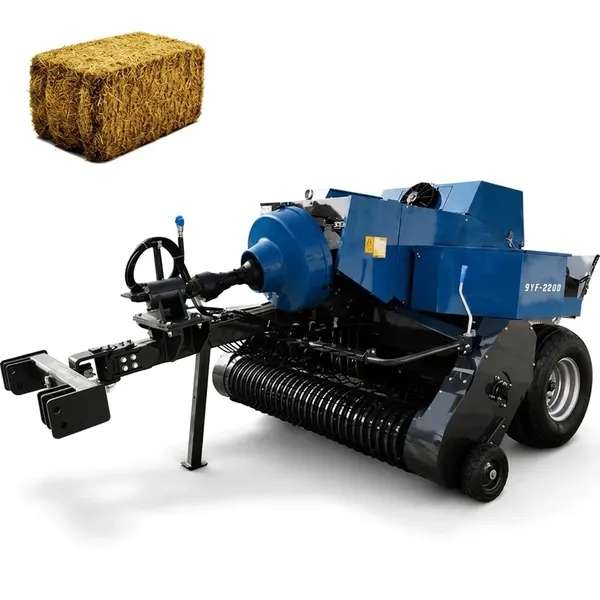
| Tipo de cultivo/hilera |
9YF-1700 / 1900 |
9YF-2200 |
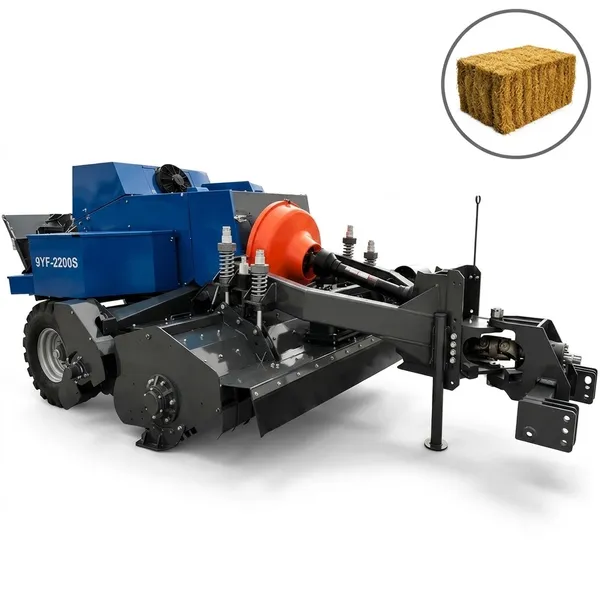
9YF-2200S / 9YFS-2.2 |
Restricción clave |
| Paja seca (trigo, cebada) |
6–8 km/h |
6–8 km/h |
6–8 km/h |
Material ligero: la velocidad está limitada por el peso objetivo de la bala, no por el riesgo de obstrucción. |
| Heno de pasto estándar |
5–7 km/h |
5–7 km/h |
6–8 km/h |
Condición de funcionamiento más común. Ajustar dentro del rango según la densidad de la hilera. |
| Alfalfa — 2.º/3.er corte |
4–6 km/h |
5–7 km/h |
5–7 km/h |
La hilera de material es más delgada que la del primer corte, lo que permite mantener una velocidad mayor sin que se produzcan atascos. |
| Alfalfa — primer corte, pie completo |
3–5 km/h |
4–6 km/h |
5–7 km/h |
Alta densidad, riesgo de obstrucción. El modelo triturador permite una mayor velocidad gracias a una mejor entrada de aire. |
| Paja de arroz (esteras) |
3–5 km/h |
4–6 km/h |
4–6 km/h |
El material compacto requiere tiempo para que las púas se enganchen; una velocidad menor mejora la recuperación. |
| Tallo de algodón (previamente triturado) |
3–4 km/h |
3–5 km/h |
4–6 km/h |
Material de tallo duro: riesgo de obstrucción en la entrada incluso cuando está pretriturado. Es esencial trabajar a baja velocidad. |
| Heno de pasto bermuda (estados del sureste) |
5–7 km/h |
5–8 km/h |
6–8 km/h |
Los tallos cortos y finos se compactan bien; se tolera una mayor velocidad si la hilera tiene un ancho uniforme. |
Interpretación de las señales de la máquina: lo que la empacadora le dice sobre la velocidad.
Demasiado rápido: cuatro señales de alerta
SEÑAL 1
Se observa material en la entrada entre las carreras del émbolo. Observe la abertura de entrada entre ciclos de empacado. El cultivo debe eliminarse por completo en cada pasada; no debe acumularse material residual en la garganta. Cualquier acumulación visible indica que el alimentador no puede seguir el ritmo de suministro de cultivo. Reduzca la velocidad inmediatamente.
SEÑAL 2
Las balas procedentes de secciones densas de hileras son significativamente más ligeras que las procedentes de secciones delgadas. La cámara de empacado se queda parcialmente sin forraje durante las secciones más densas porque la velocidad de avance supera la capacidad del alimentador; en realidad, la empacadora está omitiendo material en lugar de consumirlo, lo que paradójicamente produce pacas más ligeras en las secciones de hileras más densas.
SEÑAL 3
La velocidad de la toma de fuerza fluctúa en la consola del tractor. El motor del tractor se esfuerza por soportar la mayor carga de cultivo; la velocidad de la toma de fuerza disminuye en cada carrera de compresión del émbolo. Esto altera la sincronización del anudador y aumenta el riesgo de que el atado se produzca incorrectamente, a la vez que indica que la velocidad de avance está en o por encima del límite de seguridad para la combinación actual de potencia del tractor y densidad de hilera.
SEÑAL 4
El galope de la empacadora: golpes rítmicos e irregulares provenientes del área del émbolo. El émbolo golpea alternativamente cargas de cultivo grandes y pequeñas, síntoma de una carga de entrada irregular debido a una velocidad de avance demasiado variable en relación con la frecuencia del ciclo del émbolo. Reduzca la velocidad a un valor constante de 20–25% por debajo de la velocidad actual.
Demasiado lento: dos señales de alerta
SEÑAL A
Las balas resultantes son consistentemente mucho más ligeras de lo que debería producir la configuración de densidad. A muy baja velocidad de avance, cada émbolo comprime una carga delgada; la cámara nunca se llena por completo antes de que la rueda dentada active los anudadores. Las balas son cortas y ligeras, independientemente de la densidad seleccionada. Aumente la velocidad de avance en incrementos de 0,5 km/h hasta que el peso de la bala alcance el objetivo.
SEÑAL B
La producción de pacas por hora está muy por debajo del rango esperado para el tamaño del campo y la densidad de la hilera. Si el campo permite una mayor velocidad sin obstrucciones, trabajar demasiado despacio supone un desperdicio de la ventana de buen tiempo disponible. Calcule la cantidad real de pacas por hora y compárela con la tabla de producción; si está por debajo de 75% del rango esperado para esa hilera, considere si es seguro aumentar la velocidad.
Velocidad y densidad de la paca: la relación directa
Al aumentar la velocidad de avance con la misma tensión del resorte, se reduce directamente el peso promedio de la paca; esta es una de las relaciones más consistentes y predecibles en el funcionamiento de la empacadora. Cuando aumenta la velocidad, se entrega más forraje por unidad de tiempo, pero cada carrera del émbolo solo captura el forraje acumulado en la entrada desde la última carrera. A mayor velocidad, la entrada se llena más rápido, lo que significa que el émbolo se activa a intervalos más cortos; sin embargo, la carga por carrera no es necesariamente mayor y, en la práctica, el efecto de saturación de la entrada a mayor velocidad suele generar cargas ligeramente menos consistentes que a velocidad moderada.
Implicación práctica: si aumenta la velocidad para mejorar la producción por hora, pero el peso de la paca cae por debajo del objetivo, tiene dos opciones. Primero: aumentar el ajuste de tensión de densidad para compensar; esto requiere mayor fuerza en el émbolo para mantener el peso de la paca a mayor velocidad, lo que aumenta la carga sobre el mecanismo y el tractor. Segundo: volver a la velocidad anterior; esta suele ser la opción correcta, a menos que esté muy por debajo del umbral de obstrucción y el tractor tenga suficiente reserva de potencia.
Una guía aproximada sobre la relación velocidad-densidad en heno de pasto estándar: aumentar la velocidad de avance de 5 a 7 km/h con la misma tensión suele reducir el peso promedio de la paca entre 10 y 181 TP5T, dependiendo de la uniformidad de la hilera. Para mantener el mismo peso de la paca al aumentar la velocidad, la tensión de densidad debe incrementarse aproximadamente entre 15 y 201 TP5T, y el hilo del anudador debe estar clasificado para el peso potencialmente mayor de la paca que esta combinación puede producir en secciones densas.
Gestión de la velocidad en los cabos: la aproximación es fundamental.
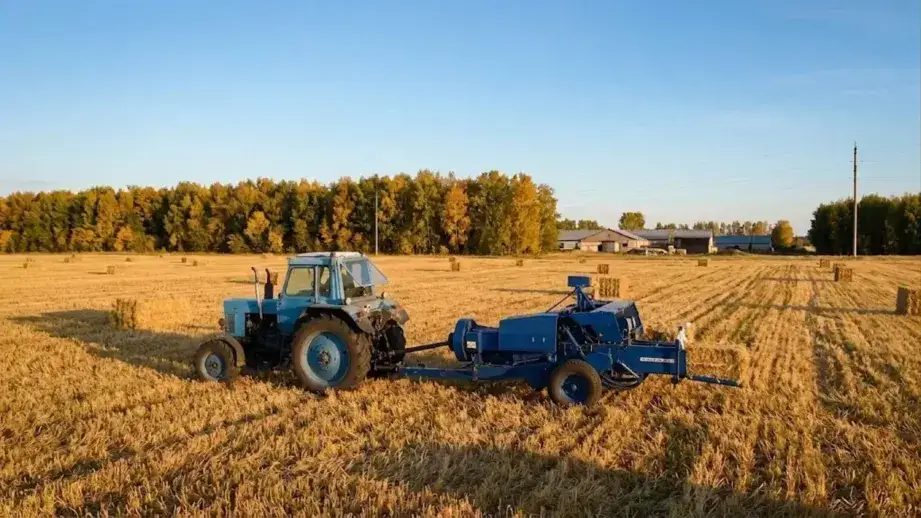
Los cabeceros provocan atascos desproporcionados y problemas de calidad de las balas porque: el operador se centra en el giro y a menudo entra en la hilera del cabecero a una velocidad inadecuada; las hileras de los cabeceros suelen acumular más material de cultivo procedente de múltiples pasadas y son más densas que las hileras del campo; y la empacadora pasa de una carrera recta a una curva, cambiando momentáneamente la geometría de entrega del cultivo.
ACERCARSE
Comience a reducir la velocidad de avance entre 10 y 15 metros antes del final de la hilera, no al final de la misma. Esto permite que la máquina entre en la sección de cabecera a una velocidad de operación de 50 a 60 TP5T, lo que proporciona al alimentador y a la entrada la capacidad necesaria para manejar la hilera más densa de la cabecera sin riesgo de obstrucción.
PROMONTORIO
Mantenga una velocidad reducida al pasar la paca de cabecera. No acelere durante el giro. La sección de cabecera suele tener entre 3 y 8 metros de ancho; complete la paca de cabecera a velocidad reducida antes de comenzar a acelerar para entrar en la siguiente hilera.
ENTRADA DE FILA
Reacelere hasta alcanzar la velocidad de operación solo después de que la máquina esté completamente alineada con la siguiente hilera principal del campo, no durante el giro. Acelerar durante el giro suele provocar que la máquina entre en la hilera principal a una velocidad excesiva en los primeros 10 metros, antes de que el operador pueda reaccionar a la densidad de la hilera.
Efectos del viento en la velocidad de funcionamiento
Las condiciones de viento cruzado durante el empacado modifican la densidad efectiva de la hilera de forma predecible: el lado de barlovento de la hilera es más denso (debido a la cosecha arrastrada por el viento desde la franja adyacente) y el lado de sotavento es más delgado. Al entrar en una hilera con viento cruzado a 45 grados, el recogedor se acopla primero al lado de barlovento, que es más denso, en cada hilera, lo que genera una sobrecarga constante en el mismo punto en cada pasada.
En caso de viento cruzado persistente superior a 20 km/h: reduzca la velocidad de avance entre 15 y 201 TP5T con respecto a la velocidad de operación en días tranquilos para ese tipo de cultivo y hilera. La reducción de velocidad permite que la entrada tenga más tiempo para despejar el material más denso a barlovento. Como alternativa, modifique la dirección de empacado de modo que la hilera se acerque al viento en lugar de a través de él; empacar a contra el viento hace que el material más ligero a sotavento llegue primero al recogedor, lo que reduce la variación de densidad por pasada.
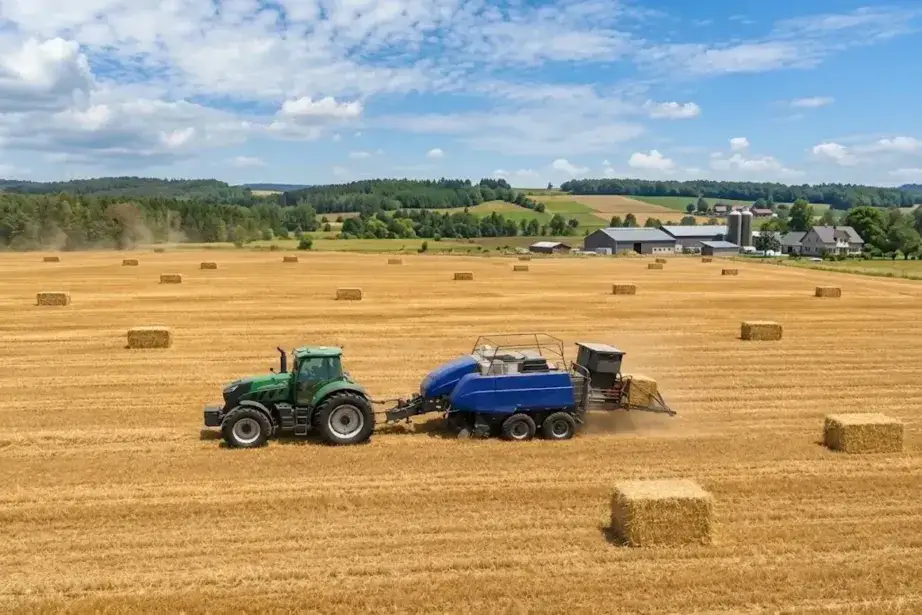
Especificaciones de la toma de fuerza para la gestión de la velocidad
Preguntas frecuentes: Velocidad de funcionamiento de la empacadora cuadrada
¿Debo conducir a velocidad constante o ajustar la velocidad continuamente?+
Ajuste continuo. La velocidad óptima para una sección determinada de la hilera depende de la densidad de dicha sección, la cual varía en cualquier campo real debido a la variación del rendimiento, la superposición del rastrillado y las diferencias de humedad del terreno. Un operador de empacadora experimentado lee continuamente las señales de la máquina (carga de entrada, retroalimentación del peso de la paca, carga del motor del tractor) y realiza pequeños ajustes de velocidad cada 15 a 30 segundos en condiciones variables. En una hilera muy uniforme sobre un terreno plano, más común en grandes explotaciones de alfalfa de regadío que en pequeñas explotaciones de cultivos mixtos, mantener una velocidad constante es práctico una vez establecida la velocidad correcta. Sin embargo, esto es la excepción, no la regla. En la mayoría de las explotaciones agrícolas, tratar la velocidad de avance como un control de variación continua, en lugar de un ajuste fijo, produce una mayor uniformidad en las pacas y menos obstrucciones.
Si quiero aumentar la producción por hora, ¿es mejor aumentar la velocidad o reducir la longitud de las balas?+
Ambos enfoques aumentan la cantidad de pacas por hora, pero a través de mecanismos diferentes y con distintas implicaciones en la calidad. Aumentar la velocidad manteniendo la longitud de la paca produce más pacas por hora, pero conlleva el riesgo de obstrucciones e inconsistencias en la densidad en hileras variables. Reducir la longitud de la paca manteniendo la velocidad produce más pacas por hora con un menor peso individual de la paca y sin cambios en el riesgo de obstrucciones: la máquina opera a la misma velocidad de avance, solo que ata antes. Para los mercados que pagan por paca independientemente del peso (heno de caballo minorista por paca), reducir la longitud de la paca suele ser el enfoque más limpio para aumentar la producción por hora porque evita los riesgos de calidad relacionados con la velocidad. Para los mercados que pagan por peso, ninguno de los enfoques aumenta los ingresos por hora; solo aumentar la velocidad de avance (y por lo tanto la cobertura del campo) aumenta las toneladas por hora y, por lo tanto, los ingresos. Elija el enfoque que se ajuste a la estructura de pago de su mercado.
Mi empacadora parece funcionar mejor a 7 km/h que a 5 km/h. ¿Es eso posible?+
Sí, en ciertas condiciones de cultivo y hilera, existe una velocidad en la que la tasa de suministro de cultivo se ajusta al ciclo del alimentador y del émbolo con una fluidez excepcional. Esto suele ocurrir cuando la velocidad de avance produce un volumen de carga de cultivo que llena exactamente la entrada en un solo ciclo del émbolo, sin acumulación residual ni periodo de inactividad. Por debajo de esta velocidad, el émbolo puede estar comprimiendo una carga menor a la ideal, lo que produce vibraciones mecánicas debido al desequilibrio de la carga. Por encima de esta velocidad, el material comienza a acumularse en la entrada y el émbolo encuentra resistencia variable, lo que genera un funcionamiento más irregular. La velocidad de funcionamiento más fluida en una hilera determinada es una señal útil de que se está cerca de la velocidad óptima para esa densidad de hilera y tipo de cultivo.
¿Qué les ocurre a mis fardos cuando reduzco la velocidad para cruzar un tramo irregular del campo?+
Reducir la velocidad en un tramo irregular produce una paca más ligera durante ese paso: menos cultivo llega a la cámara por cada carrera del émbolo a menor velocidad, y la paca en formación en ese momento será más ligera que las pacas adyacentes. Esta es una variación normal y esperada, no un problema del mecanismo. Las pacas inmediatamente anteriores y posteriores al tramo irregular tendrán el peso normal. Si el tramo irregular es lo suficientemente largo como para que se produzcan varias pacas durante el paso lento, todas esas pacas serán más ligeras y deben identificarse y separarse si la uniformidad del peso de las pacas es un requisito del comprador. Utilizar un sistema de marcado sencillo —una línea de tiza o una marca en aerosol en el lateral de la paca— permite identificar posteriormente cualquier paca ligera producida durante las reducciones de velocidad planificadas para cruces de drenaje, entradas u obstáculos en el campo.
¿Cómo sabe un operador novato qué velocidad utilizar en un terreno desconocido?+
El protocolo de arranque más seguro para un campo desconocido: comience a 4 km/h independientemente del tipo de cultivo. Esta velocidad está por debajo del umbral de obstrucción para cualquier tipo de hilera que la serie 9YF pueda manejar. Después de 3 a 5 pacas a 4 km/h, aumente a 5 km/h. Después de otras 3 a 5 pacas, aumente a 6 km/h si la carga de entrada es limpia y el peso de la paca está dentro del rango objetivo. Continúe aumentando en incrementos de 0,5 km/h hasta que aparezca una de las señales de exceso de velocidad, luego retroceda 0,5 km/h y mantenga esa velocidad. En un campo con una densidad de hileras que varía significativamente, establezca la velocidad máxima conservadora durante la primera pasada y úsela como límite superior, reduciendo la velocidad solo en las secciones visiblemente más densas. Este enfoque progresivo generalmente requiere solo una hilera para establecer la velocidad de operación correcta para esa combinación de campo, hilera y cultivo.
¿Puedo hacer funcionar la empacadora más rápido si reduzco la densidad de las pacas?+
Sí, reducir la tensión de la densidad permite que la paca salga antes de la cámara, lo que reduce ligeramente el tiempo por ciclo y permite una velocidad de avance marginalmente mayor antes de que se produzca la saturación de la entrada. Sin embargo, la mejora en la seguridad que supone una menor tensión en la velocidad de avance es modesta; el límite principal de la velocidad de avance es la capacidad del alimentador y la entrada, no el tiempo del ciclo de expulsión de la paca. Reducir la densidad para avanzar más rápido produce pacas más ligeras a la misma velocidad de campo. Esto solo es útil si el peso objetivo de la paca es inferior a la producción actual y se desea aumentar la producción por hora reduciendo el peso de la paca, una combinación de objetivos poco común. En la mayoría de los casos, avanzar más rápido y reducir la densidad produce más pacas por hora con menor peso por paca, lo que reduce los ingresos por hora si se cobra por peso de la paca. Evalúe si esta compensación beneficia a su mercado específico antes de utilizar deliberadamente este enfoque.
¿Influye la pendiente, ya sea ascendente o descendente, en la velocidad de funcionamiento correcta?+
Sí, la pendiente afecta la velocidad de operación de dos maneras. En los descensos, la gravedad ayuda al movimiento hacia adelante del tractor y la máquina puede avanzar más rápido de lo que el operador pretende en marchas bajas, lo que requiere una gestión activa de la velocidad para evitar exceder la velocidad de operación segura para la densidad de la hilera. El tipo de transmisión del tractor es importante aquí: las transmisiones hidrostáticas permiten un control preciso de la velocidad en pendientes; las transmisiones de engranajes pueden requerir bajar una marcha para mantener el control en pendientes más pronunciadas. En los ascensos, el motor del tractor está bajo mayor carga para mantener la velocidad de avance, lo que puede reducir la potencia disponible para la toma de fuerza si el tractor está cerca de su límite de potencia, afectando la velocidad de la toma de fuerza. En pendientes más pronunciadas que 15%, verifique que la velocidad de la toma de fuerza se mantenga en 540 rpm durante el empacado en pendiente ascendente y reduzca la velocidad de avance si el sonido del motor del tractor indica que está trabajando con dificultad. En pendientes muy pronunciadas, la operación lateral (a través de la pendiente en lugar de arriba y abajo) introduce la inclinación de la hilera que cambia la altura efectiva de recogida; inspeccione la holgura de las púas y ajuste la altura según corresponda.
¿Existe algún indicador de velocidad GPS que pueda utilizar para controlar con precisión la velocidad de funcionamiento?+
Sí, cualquier dispositivo GPS o aplicación de velocidad GPS para smartphone proporciona una lectura precisa de la velocidad de avance, independientemente del deslizamiento de las ruedas del tractor. Los velocímetros de los tractores son notoriamente imprecisos, especialmente a bajas velocidades inferiores a 8 km/h; el deslizamiento de las ruedas en terreno blando puede hacer que el velocímetro marque 6 km/h cuando la velocidad real es de 4,5 km/h. Una lectura de velocidad GPS elimina esta fuente de error y permite aplicar con precisión los objetivos de velocidad operativa de la tabla anterior. Coloque el teléfono en una posición visible en la cabina o utilice una pantalla GPS montada en el tractor, si está disponible. En los rangos de velocidad utilizados para el empacado (3-8 km/h), una sencilla aplicación gratuita de velocímetro GPS para smartphone proporciona información de velocidad más precisa que la mayoría de los paneles de instrumentos del tractor. Muchos operadores comerciales ahora utilizan de forma rutinaria la lectura de velocidad GPS como una herramienta estándar de empacado en lugar de depender del velocímetro del tractor para una gestión precisa de la velocidad.
Encuentre la empacadora adecuada para su cultivo y condiciones de operación.
El rango de velocidad de funcionamiento correcto depende del modelo que esté utilizando. Serie 9YF Cubre potencias de 40 a 140 CV y todos los principales cultivos de heno y paja. Indíquenos su cultivo principal y las condiciones de la hilera, y le confirmaremos el modelo más adecuado para su entorno de trabajo.
Editor: Cxm