
Biologie du dactyle : comment son mode de croissance détermine chaque décision de coupe
Dactyle (Dactylis glomerataLe dactyle est une graminée vivace cespiteuse originaire d'Europe qui s'est naturalisée dans les régions tempérées des États-Unis. Son mode de croissance – des talles cespiteuses plutôt que les rhizomes rampants du bermudagrass ou la croissance étalée du pâturin des prés – en fait une plante extrêmement productive à partir de souches bien établies, mais qui exige une gestion différente de celle des graminées rampantes que la plupart des producteurs connaissent. Comprendre la croissance du dactyle est indispensable pour comprendre pourquoi le calendrier de coupe est adapté et pourquoi son andain se comporte différemment des autres espèces fourragères courantes.
La structure cespiteuse qui confère au dactyle sa grande productivité est aussi ce qui lui permet de produire l'andain le plus dense par mètre linéaire de toutes les graminées fourragères de saison froide. Un peuplement de dactyle mature, en pleine floraison, forme un tapis de biomasse agglomérée nettement plus dense qu'un andain de fléole des prés comparable. C'est précisément pourquoi la mise en balles du dactyle exige des réglages spécifiques du matériel, que les producteurs passant de la fléole des prés ou de la luzerne sous-estiment systématiquement.
| Espèces | intervalle de repousse estivale | Coupes saisonnières possibles | Tolérance à la chaleur | région de production primaire |
|---|---|---|---|---|
| Dactyle | 28 à 35 jours | 3–4 | Modéré | Nord-Est, Atlantique moyen, Grands Lacs, Nord-Ouest Pacifique |
| Timothée | 40 à 50 jours | 2–3 | Faible | PNW, Grands Lacs, Nord-Est |
| fétuque élevée | 35 à 45 jours | 2–3 | Haut | Sud-Est, Zone de transition, Atlantique moyen |
| brome lisse | 45 à 55 jours | 2 | Modéré-faible | Plaines du Nord, Grands Lacs (baisse des températures estivales) |
Stade de la tige, début de l'épiaison et épiaison : la matrice de qualité en 3 stades
La différence de qualité entre le dactyle coupé au stade de montaison et le même échantillon coupé une semaine plus tard, à pleine maturité, n'est pas une simple nuance nutritionnelle : c'est la différence entre le foin spécifié par un nutritionniste laitier et le foin destiné au marché de la viande bovine. Le tableau ci-dessous quantifie les apports de chaque stade, mais l'essentiel est le suivant : la période de 5 à 7 jours où le dactyle atteint sa qualité optimale pour les marchés haut de gamme est courte, éphémère et coïncide avec la période la plus chargée du début de l'été pour les travaux agricoles.
| Scène | Indicateur de champ | CP | NDF | Gamme NSC | Rendement | Meilleur marché |
|---|---|---|---|---|---|---|
| Étape de démarrage | Renflement de la tête ressenti à l'intérieur de la gaine foliaire ; non visible | 11–15% | 47–56% | 8–14% | 50–65% | Cheval de qualité supérieure; écurie spécialisée; groupe laitier de haut niveau |
| Tête précoce (équilibre optimal) | Le capitule est complètement sorti ; le pollen n'est pas encore visible. | 9–13% | 52–62% | 10–18% | 75–85% | Foin pour chevaux (test NSC) ; vaches laitières en milieu de lactation ; bœuf |
| Tête entière | Inflorescence complètement développée ; pollen jaune-vert | 8–11% | 60–70% | 12–22% | 90–100% | Bovins de boucherie; bovins d'engraissement; fourrage grossier |
| Post-tête / mature | Formation ou chute des graines ; brunissement de la base de la plante | 6–8% | 68–76% | Variable | Max | Fourrage grossier équivalent à la paille ; ne pas commercialiser comme foin de qualité supérieure |
Parcourez la plantation et sélectionnez 10 tiges au hasard, à différents endroits. Pincez la gaine foliaire supérieure entre votre pouce et votre index et faites glisser fermement vos doigts vers le haut. Au stade de la formation de l'épi, vous sentirez un gonflement distinct à l'intérieur de la gaine : la protubérance cylindrique de l'inflorescence est indubitable, même si elle n'est pas encore visible. La gaine foliaire est épaisse et turgescente à ce stade, comme un petit tuyau rempli d'eau. Si vous ne sentez aucun gonflement : la plante est légèrement précoce (excellente qualité, rendement plus faible). Si vous apercevez le sommet de l'inflorescence qui commence à émerger à travers l'extrémité de la gaine : la plante est au stade de la formation de l'inflorescence initiale. Décidez immédiatement de la coupe : le dactyle peut passer du stade de la formation de l'épi tardive à celui de la formation de l'inflorescence initiale en 2 à 4 jours par temps chaud au printemps.
Une fois que le dactyle atteint le stade de pleine floraison, la plante réoriente son énergie de la production de feuilles vers celle de graines plus rapidement que la plupart des autres graminées de saison froide. Le rapport feuille/tige chute brutalement (les feuilles contiennent 70 à 75 % des protéines totales de la plante), la teneur en NDF augmente de 8 à 10 points de pourcentage par semaine de retard, et la teneur en lignine de la tige de l'épi, qui s'allonge rapidement, grimpe en flèche. Des recherches menées par les instituts de vulgarisation agricole de Cornell et de Penn State montrent que le dactyle coupé 7 jours après le début de l'épiaison présente une teneur en protéines brutes (PB) inférieure de 3 à 5 points et une teneur en NDF supérieure de 8 à 12 points par rapport à la même parcelle coupée au début de l'épiaison. La variation de qualité est plus marquée que pour le brome inerme ou la fléole des prés à retard équivalent. Attendre après le début de l'épiaison ne présente aucun avantage pour les marchés haut de gamme.
Les glucides non structuraux (GNS) présents dans le dactyle : pourquoi il ne faut pas supposer qu’ils sont sans danger pour les chevaux atteints de troubles métaboliques
Le dactyle aggloméré est une graminée C3 de saison froide. Les graminées C3 accumulent du fructane — une chaîne de molécules de fructose qui constitue le principal composé de stockage des glucides de la plante — à des taux qui varient considérablement en fonction de la température, de l'intensité lumineuse et de la fertilité du sol. Ce mécanisme d'accumulation est fondamentalement différent de l'accumulation d'amidon chez les graminées de saison chaude comme le chiendent pied-de-poule ou de la faible production de fructane du teff. La teneur en glucides non structuraux (GNS) du dactyle aggloméré est instable, imprévisible à l'œil nu et ne peut être estimée sans analyse spécifique du lot lors de l'alimentation de chevaux atteints du syndrome métabolique équin, d'un dérèglement de l'insuline ou ayant des antécédents de fourbure.
Séchage du dactyle : andains denses, séchage lent au cœur et piège de conditionnement
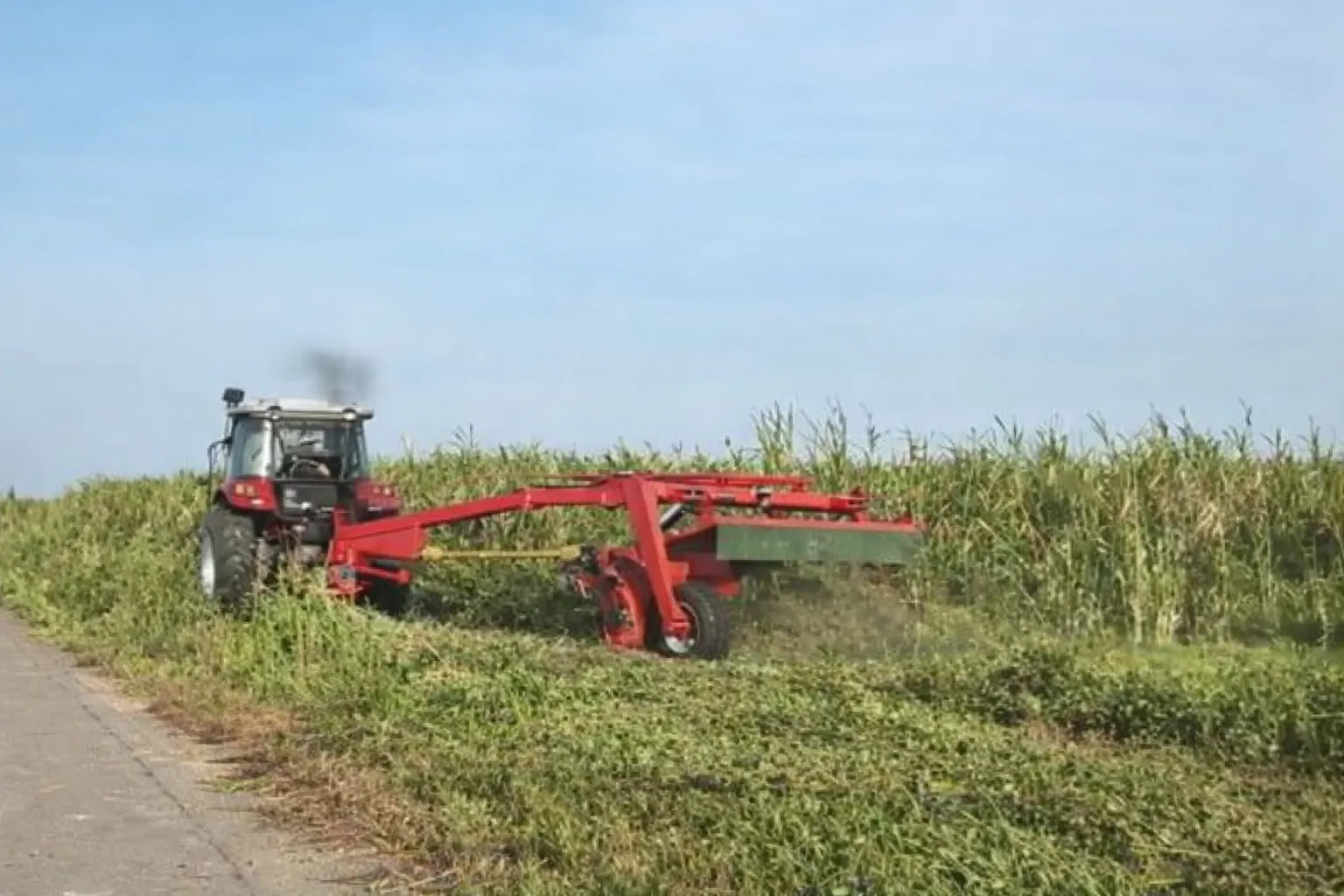
Le comportement au séchage du foin de dactyle est l'aspect de la production qui surprend le plus souvent les producteurs n'ayant d'expérience qu'avec la luzerne ou la fléole des prés. Le dactyle coupé sur une prairie dense et bien établie forme un andain plus dense au mètre linéaire que la luzerne ou la fléole des prés, sèche plus lentement au cœur de l'andain malgré la finesse des tiges, et a tendance à se réhydrater au contact de l'humidité du sol pendant la rosée nocturne, un phénomène plus marqué que pour les andains plus fins. La gestion de ce profil de séchage nécessite de comprendre les mécanismes en jeu, et non de simplement suivre un calendrier fixe.
Les tiges de dactyle aggloméré, gorgées d'eau lors de la coupe, présentent un diamètre individuel de seulement 3 à 4 mm, mais leur paroi contient plus d'eau que celle d'une tige de fléole des prés de taille comparable. Le conditionnement, qui consiste à écraser la paroi de la tige, fend la structure cellulaire et permet une évaporation rapide à l'intérieur de celle-ci. Le dactyle aggloméré non conditionné, à une humidité de 65 µg/m², met 48 à 72 heures pour atteindre le taux d'humidité optimal pour le pressage par temps sec et favorable ; le dactyle aggloméré conditionné, dans les mêmes conditions, atteint ce taux en 28 à 40 heures. La différence ne tient pas à la commodité, mais à la marge de manœuvre entre une période de beau temps et un épisode pluvieux. Réglez l'écartement des rouleaux de conditionnement pour une pression moyenne à ferme sur le dactyle aggloméré ; le réglage pour la luzerne convient pour la première coupe, mais doit être augmenté de 10 à 15 µg/m² pour les coupes d'été denses.
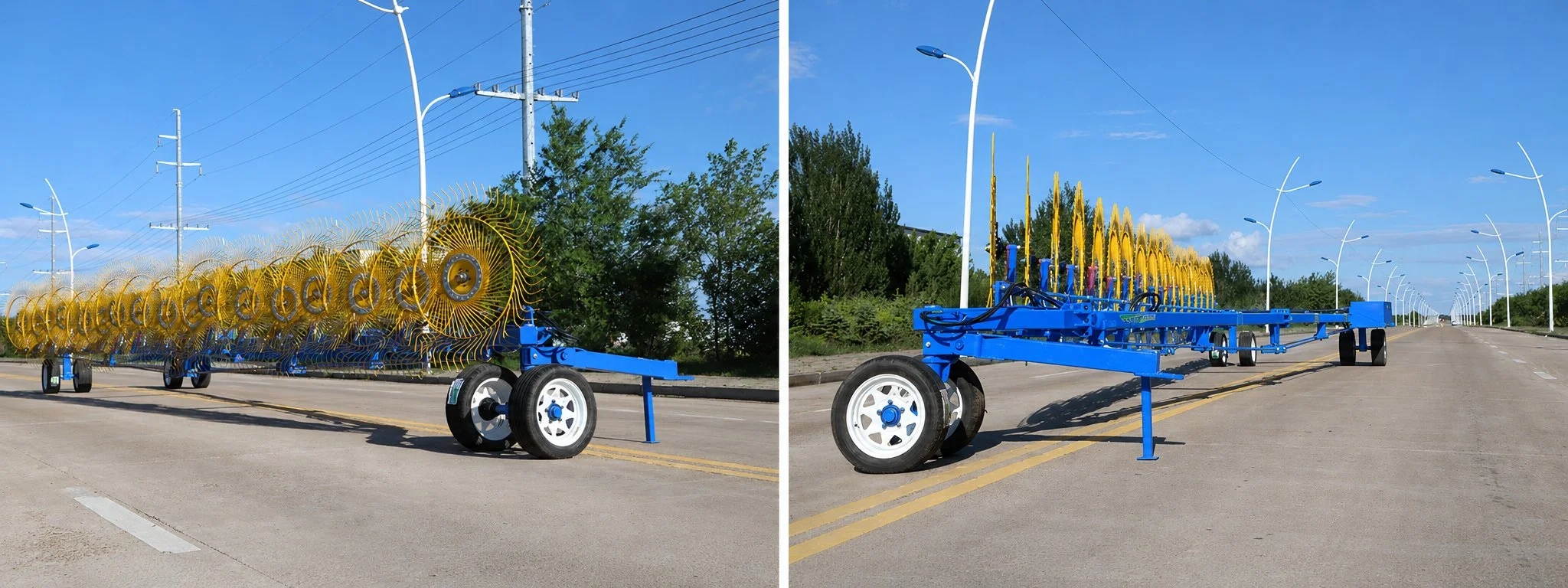
Coupez et étalez le dactyle sur toute la largeur permise par le déflecteur de votre tondeuse ; évitez de former un andain étroit. Un andain large et peu profond favorise la circulation de l'air dans le matériau dès les premières heures suivant la coupe et expose un maximum de feuilles au soleil et au vent. Un andain étroit emprisonne l'humidité à l'intérieur d'une masse cylindrique dense, où le cœur peut rester au-dessus de 20% tandis que l'extérieur paraît sec. Ne ratissez pour former un andain de pressage final que lorsque le taux d'humidité au cœur (mesuré à l'aide d'une longue sonde insérée au centre de l'andain) se situe à 3 ou 4 points de pourcentage de votre taux d'humidité cible pour le pressage. Les techniques de ratissage permettant de préserver cette gestion de l'humidité sont décrites dans… guide de ratissage du foin et de formation des andains.
Réglages de la presse à balles pour le dactyle : pourquoi cette culture résiste différemment au ramassage
Les andains de dactyle associent une masse importante au mètre carré à une orientation des tiges imbriquées, ce qui sollicite le système de ramassage différemment de la luzerne (légère et uniforme) ou du chiendent (fin et flexible). Les tiges ne sont ni aussi lourdes que celles du sorgho fourrager, ni aussi faciles à manipuler que les feuilles de luzerne. Le principal problème lors du pressage du dactyle n'est pas un bourrage au sens traditionnel du terme, mais une surcharge progressive : le ramasseur tente de soulever une quantité de matière supérieure à sa capacité de traitement à la vitesse d'avancement actuelle de l'opérateur, ce qui entraîne un enroulement de la récolte sur les dents du ramassage au lieu d'un ramassage correct.
Vitesse au sol — le réglage principal
Réduisez la vitesse à 5-6 km/h dans les andains de dactyle, contre 6-10 km/h pour la luzerne. Les andains denses de dactyle nécessitent plus de temps par 30 cm d'andain pour que les dents du ramasseur s'engagent complètement et séparent le tapis. Si vous entendez un cognement rythmé ou si vous sentez une résistance accrue du ramasseur avant un blocage complet, vous dépassez de 1,5 à 2,5 km/h la vitesse optimale pour cette densité d'andain. La vitesse optimale varie selon la largeur de l'andain, l'humidité et la densité du peuplement ; effectuez un étalonnage à chaque nouvelle parcelle plutôt que de supposer que le réglage de la saison précédente est valable.
Tension du ressort de densité — 5–10% au-dessus de la ligne de base de la luzerne
Les tiges du dactyle sont plus lisses que les feuilles de luzerne et ne s'imbriquent pas mécaniquement aussi naturellement dans la chambre de compression. Résultat : la balle atteint son diamètre cible (déclenchant le signal de densité) avant d'avoir accumulé une masse suffisante, ce qui donne des balles plus volumineuses en apparence que leur poids ne le justifie. Augmenter la tension du ressort de densité de 5 à 10% par rapport à votre réglage pour la luzerne permet de maintenir le diamètre de la chambre plus petit plus longtemps, ce qui permet à une plus grande quantité de matière de se comprimer avant l'éjection et de produire des balles de 225 à 315 kg (500 à 700 lb) pour une presse 4×5 qui conserveront leur forme au stockage. Pour les spécifications de la prise de force avec des réglages de densité accrus, voir… spécifications des composants de la boîte de vitesses agricole et de la prise de force.
Dimensions des balles : 4×4 pour les marchés aux chevaux, 4×5 pour les marchés aux bovins et aux animaux mixtes.
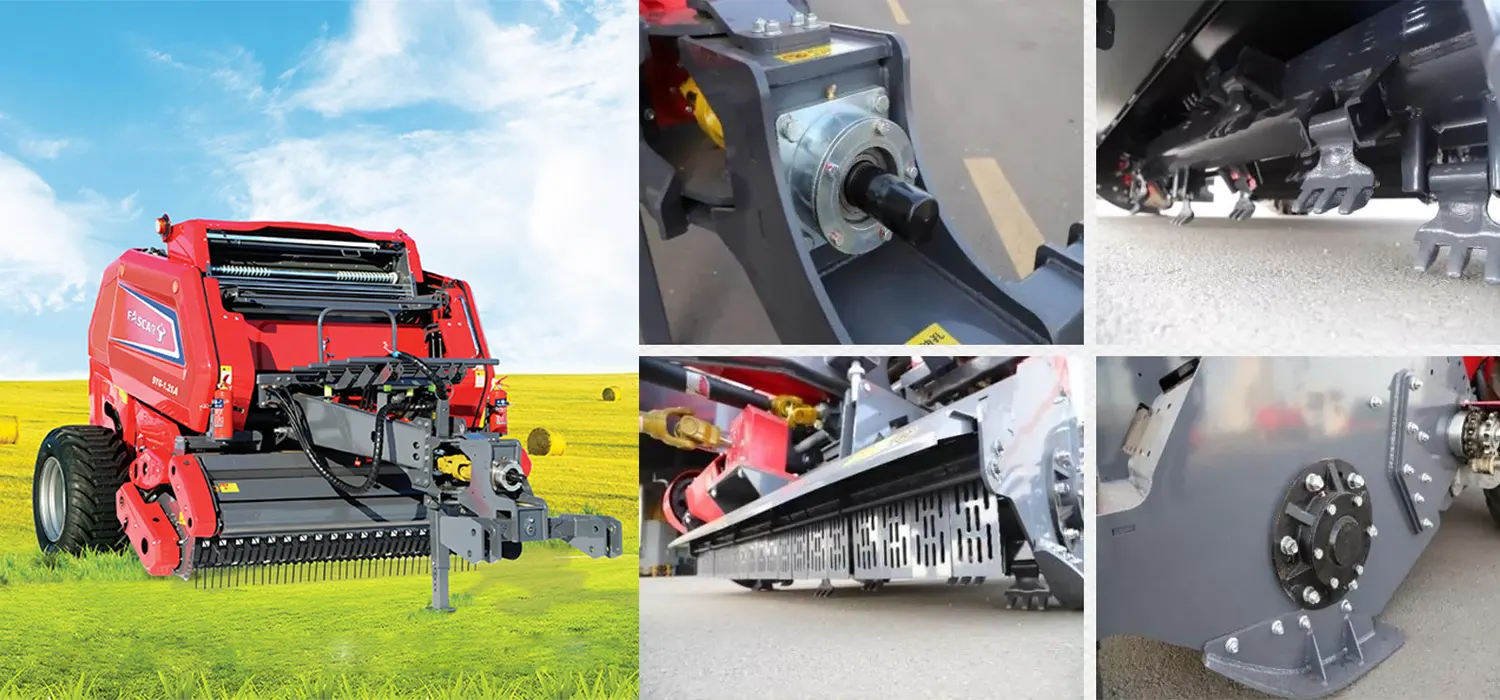
Pour le dactyle destiné au marché équin, la balle 4×4 est le format privilégié par les acheteurs d'écuries : facile à manipuler sans matériel lourd, elle correspond aux habitudes des éleveurs équins qui passent aux balles rondes. Une balle de dactyle 4×4 bien compressée pèse entre 200 et 270 kg, ce qui permet à une seule personne de la déplacer avec un chargeur frontal de catégorie 1 monté sur un tracteur compact. Pour les marchés laitiers et bovins, les balles 4×5 ou 5×5 optimisent l'efficacité de chaque opération de manutention. Les dimensions des balles et les configurations de presses à fourrage adaptées à la production de dactyle sont disponibles auprès de notre modèles de presses à balles rondes.
Emballage filet — requis pour toute livraison sur le marché premium
Les balles de dactyle ficelées sont structurellement adaptées à l'alimentation du bétail à proximité du champ, mais ne conviennent pas à la livraison sur les marchés équins, à la vente par l'intermédiaire de négociants, ni au stockage au-delà de 60 jours. La fraction foliaire — qui représente la plus grande quantité de protéines brutes et constitue le principal indicateur visuel de qualité pour les acheteurs de chevaux à la livraison — se détache progressivement des balles ficelées lors de toute manipulation ou empilage après le pressage. Le filet de ficelle répartit la pression uniformément sur la surface de la balle, préservant ainsi la couche extérieure de feuilles vertes qui justifie son prix plus élevé. Pour tout foin de dactyle destiné aux marchés équins, il est recommandé d'utiliser au minimum deux couches de ficelle complètes.
Dactyle aggloméré ou fléole des prés : le cadre de décision pour votre marché et votre région
Le dactyle et la fléole des prés sont deux graminées fourragères de saison fraîche de première qualité pour le marché équin, mais elles répondent aux besoins de différents producteurs selon les régions et pour différentes raisons. Choisir la mauvaise espèce en fonction de votre climat et de votre marché peut vous amener à obtenir soit une espèce peu performante dans vos conditions climatiques, soit un produit qui ne correspond pas aux attentes de votre clientèle. Le comparatif ci-dessous ne vise pas à déterminer laquelle est « meilleure », mais plutôt laquelle est la mieux adaptée à votre situation spécifique, en fonction de votre climat, de votre clientèle et de votre système de gestion.
| Facteur | Dactyle | Timothée | Conséquences de la décision |
|---|---|---|---|
| Climat adapté | Zones 4 à 8 ; tolère une chaleur estivale modérée | Zones 4 à 6 ; faible tolérance à la chaleur | Au sud de la zone 6 ou dans les étés chauds du Midwest : dactyle aggloméré |
| Coupes par saison | 3–4 | 2–3 | Une production plus élevée de dactyle compense la différence de qualité par tonne sur la plupart des marchés de gros. |
| accès premium au marché des chevaux | Modéré ($140–$210/tonne) | Élevé ($200–$320/tonne) | Timothy bénéficie d'une prime de marque ; le dactyle aggloméré mise sur la qualité de sa documentation. |
| éligibilité au marché d'exportation | Limité | Fort (Japon, Corée du Sud) | Pour l'accès aux marchés d'exportation de la côte Pacifique : fléole des prés ; pour les marchés intérieurs : dactyle aggloméré. |
| qualité du foin laitier | Bon (CP 11–15%) | Modéré (CP 9–13%) | Le dactyle en phase de démarrage répond aux spécifications des vaches laitières en milieu de lactation ; la fléole des prés est limite sans analyses. |
| Vie debout | 5 à 8 ans | 5 à 8 ans (PNW) ; 3 à 5 ans (Grands Lacs) | Le dactyle est généralement plus persistant à l'est des montagnes Rocheuses. |
| Compatibilité mixte | Excellent (avec de la luzerne) | Modéré (avec trèfle blanc) | Le dactyle est la principale graminée compagne dans les peuplements mixtes de luzerne et de graminées du Nord-Est et du Mid-Atlantic. |
Gestion du peuplement : rénovation, sursemis et gestion des adventices tout au long du cycle de vie du peuplement
Un peuplement de dactyle bien géré peut rester productif pendant 5 à 8 ans, les coûts d'implantation, bien que décroissants, étant amortis sur cette période. Un peuplement mal géré – trop éclairci par des coupes tardives répétées, affaibli par le gel hivernal dans des sols insuffisamment drainés, ou envahi par des adventices dès la première année – peut nécessiter une rénovation complète au bout de 3 à 4 ans, au coût total de la réimplantation. Comprendre les décisions de gestion qui prolongent la durée de vie du peuplement fait toute la différence entre un investissement rentable sur une décennie et un investissement à amortir dès la quatrième année.
Parcourez votre champ de dactyle à 10 endroits choisis au hasard et comptez le nombre de plants productifs par pied carré à chaque endroit. Un peuplement productif compte 8 à 12 plants/pied carré, voire plus. Un peuplement de 5 à 7 plants/pied carré est clairsemé, mais peut être régénéré par semis d'hiver ou semis en sillons sans avoir à replanter entièrement. Un peuplement de moins de 4 plants/pied carré, fortement envahi par les adventices, justifie d'évaluer l'opportunité d'une rénovation complète par rapport à la poursuite de la gestion. Procédez à cette évaluation au début du printemps, avant la reprise de la végétation, lorsque les couronnes des plants sont plus faciles à compter sans être gênées par les tiges voisines.
Semez du dactyle à la volée (2,5 à 3,5 kg de semences par hectare) sur des peuplements clairsemés en fin d'hiver (février-mars dans la plupart des régions productrices), lorsque le sol est gelé mais que les températures diurnes atteignent occasionnellement 0 à 4 °C. L'alternance gel-dégel permet une incorporation mécanique des semences dans le sol, et la concurrence du peuplement existant en début de printemps est gérable si sa densité est inférieure à 6 plants/m². Le semis à la volée de dactyle en conditions de gel présente un taux de réussite de 40 à 65 % sur les peuplements clairsemés – moins fiable qu'un semis direct, mais une option rentable pour les peuplements moyennement clairsemés qui pourraient autrement produire encore 2 à 3 ans avant qu'une rénovation complète ne soit justifiée.
La méthode la plus efficace pour lutter contre les adventices dans le dactyle consiste à les faucher à intervalles appropriés afin d'empêcher la montée en graines et de maintenir l'avantage compétitif d'un couvert dense et productif. Faucher le dactyle au début de l'épiaison tous les 28 à 35 jours en été crée un couvert qui ombrage la plupart des jeunes pousses dicotylédones avant leur implantation. Faucher le dactyle au stade 50%+ (épiaison) offre aux jeunes pousses 10 à 14 jours supplémentaires d'obscurité pour s'établir, tout en affaiblissant le peuplement par un retard dans la reconstitution des réserves racinaires en glucides. La gestion des adventices la plus économique est celle qui améliore déjà la qualité : il s'agit de la même pratique.
Circuits de distribution et tarification : où le foin de dactyle atteint son meilleur prix
Le foin de dactyle ne bénéficie pas de la même notoriété que le foin de fléole des prés sur le marché équin, ni de la même prime protéique que le foin de luzerne sur le marché laitier. En revanche, il offre une qualité polyvalente pour de nombreux marchés : une teneur en protéines brutes adéquate pour les vaches laitières au stade de la montée de lait, une appétence suffisante pour les acheteurs de chevaux haut de gamme (avec justificatifs), et un prix compétitif pour les bovins de boucherie par rapport à la plupart des alternatives de saison froide dans le Nord-Est et le Mid-Atlantic. Bien positionner le foin de dactyle dépend de la connaissance du marché qui valorise votre production et votre système de gestion.
Le processus complet de production de foin — intégrant les décisions relatives au moment de la coupe, la gestion du séchage au champ et la planification du pressage afin de maintenir la qualité du champ à la balle — est abordé dans le guide d'optimisation du flux de travail pour la fenaison.
FAQ sur la production de foin de dactyle

Réglages de la presse à balles pour la production de foin de dactyle
Indiquez-nous le type de votre peuplement de dactyle (pur, mélangé à de la luzerne ou à du trèfle), la taille de balle souhaitée, le marché principal (chevaux, vaches laitières ou bovins) et la puissance de votre tracteur à prise de force. Nous déterminerons le réglage de la densité du ressort, la vitesse du ramasseur et la configuration du filet d'enrubannage qui vous permettront d'obtenir des balles de dactyle homogènes, adaptées à votre marché et à votre climat.
Éditeur : Cxm


