
The new vs used farm equipment question is one that every hay producer faces at some point in their operation’s development. The lower sticker price of used equipment is the obvious appeal — but the sticker price is not the total cost. Repair risk, downtime during harvest windows, parts availability for older machines, and the opportunity cost of a machine that breaks at the worst possible moment are all real costs that do not appear on the used equipment listing. This guide provides a framework for thinking through the total cost comparison honestly, and a practical inspection scorecard for evaluating any used baler or mowing machine before you commit to a purchase.
The Question That Changes the Comparison: What Is Your Downtime Risk Tolerance?
The fundamental variable in the new vs used decision for hay equipment is not the purchase price — it is your tolerance for the risk of a machine failure during a critical harvest window. Consider the actual cost of a baler that breaks down on day 3 of a 5-day weather window with 200 acres of cut hay in the field:
If you have a service contract and a dealer 25 miles away with parts in stock, the downtime cost is the 24 to 48 hours it takes to get the repair done. If you have a 10-year-old used machine with limited parts availability and no dealer support, the downtime cost could be 5 to 7 days of waiting for parts to ship — and a significant portion of your cut hay may have quality-degraded or rain-damaged by the time the machine is back in service. At $120 per ton for alfalfa hay, a 50-ton yield over 100 acres represents $6,000 of revenue at risk from a single breakdown at the wrong time.
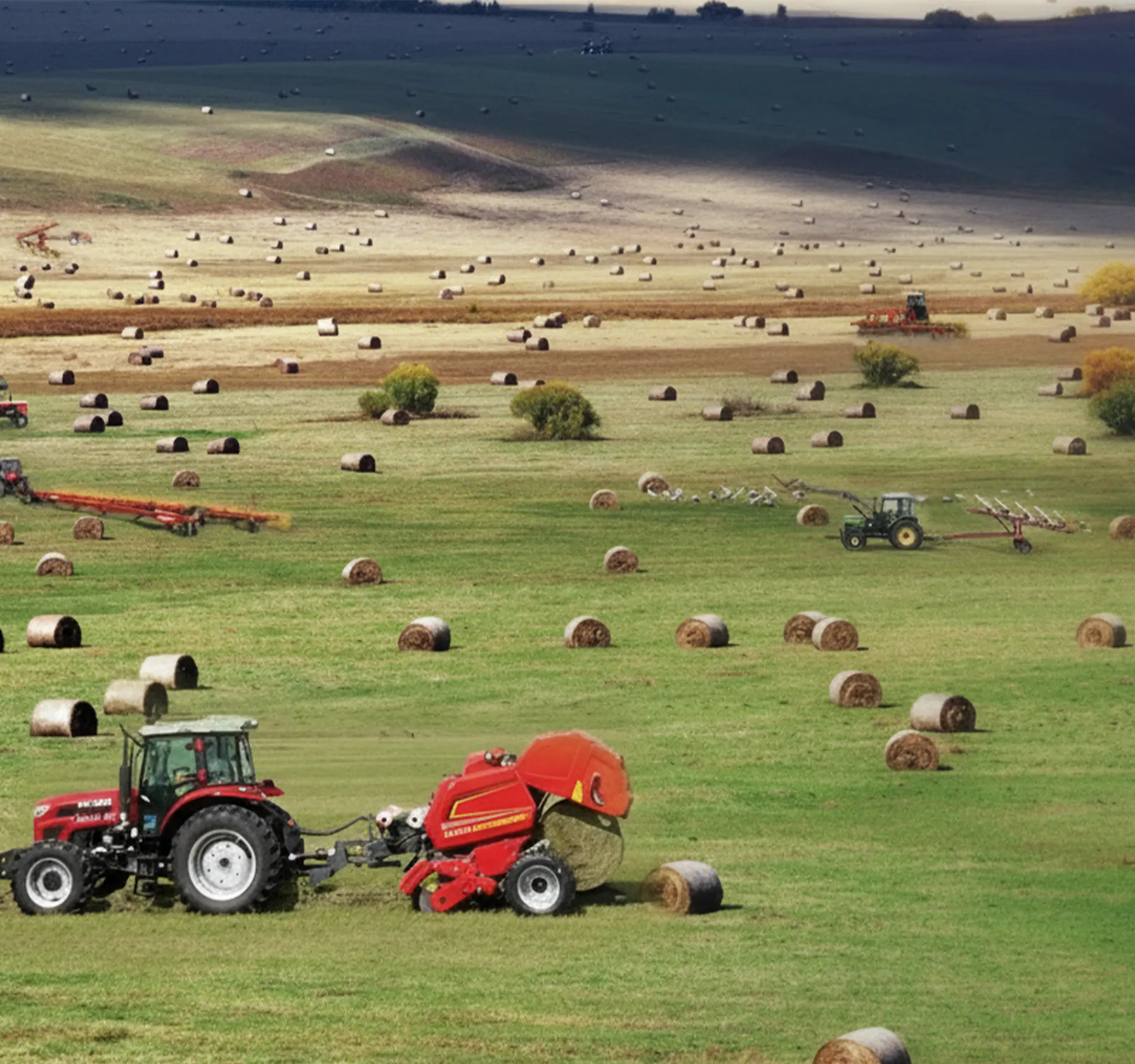
Operations with low downtime risk tolerance — large commercial hay farms, custom baling services, farms in narrow-weather-window regions — typically find that the true total cost of ownership (TCO) for used equipment with high repair probability approaches or exceeds the TCO for new equipment within 3 to 5 seasons. Operations with higher risk tolerance — small farms with flexible timing, producers with multiple machines for redundancy, or buyers with strong mechanical skills who can do in-house repairs — can successfully manage used equipment and capture genuine cost savings.
Total Cost Comparison: New vs Used Over 5 Seasons
| Catégorie de coût | New Baler $45,000 purchase |
Used Baler (Good) $15,000, 5,000 bales |
Used Baler (Risky) $9,000, 12,000 bales |
|---|---|---|---|
| Purchase price | $45,000 | $15,000 | $9,000 |
| Remaining useful life (est.) | 15,000+ bales | 10,000–12,000 bales | 3,000–5,000 bales |
| Depreciation per bale | $2.25–$3.00 | $1.25–$1.50 | $1.80–$3.00 |
| Expected 5-season maintenance | $3,000–$5,000 | $5,000–$9,000 | $8,000–$18,000 |
| Warranty / dealer support | Yes (1–2 year) | Limited or none | Aucun |
| 5-season total ownership cost | $48,000–$50,000 | $20,000–$24,000 | $17,000–$27,000 |
Illustrative estimates based on typical mid-range commercial round baler ownership patterns. Actual costs depend on machine condition, usage intensity, parts prices, and operator maintenance practices. The “Risky Used” scenario’s wide maintenance range reflects the high variance inherent in aging equipment — actual cost could be below or above the range shown depending on what fails.
The table illustrates that a well-selected used baler in good condition can genuinely cost less over 5 seasons than a new machine. However, a poorly selected used baler with hidden wear issues can match or exceed the total cost of new — while also delivering the downtime risk that new equipment avoids. The difference between the two used scenarios is almost entirely in the pre-purchase inspection quality. This is why the inspection scorecard that follows is the most important tool in the used equipment purchase process.
The 20-Point Used Baler Inspection Scorecard
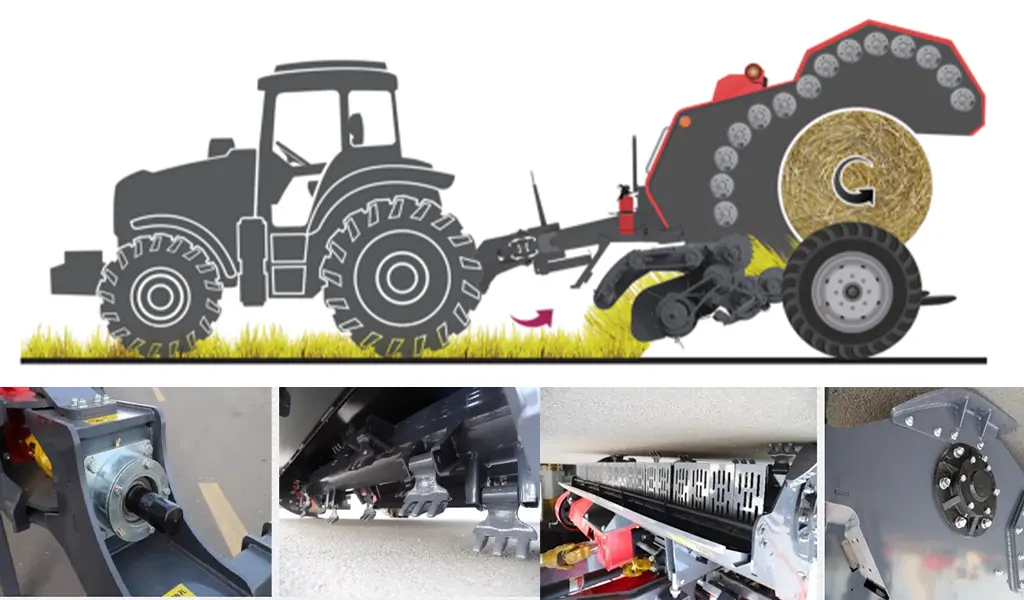
Rate each of the following 20 inspection points on a scale of 1 to 5, where 5 is excellent condition and 1 indicates a serious defect that will require near-term repair or replacement. After completing all 20 points, use the score interpretation table at the bottom to guide your purchase decision.
| Inspection Point | What to Check | Score (1–5) | 1 = Serious problem |
|---|---|---|---|
| 1. Belt condition | Inspect all belts for lug depth. Measure lug height against spec (minimum 6 mm on most machines). Check for cracking at lug bases, sidewall separation, and splice condition. | ___ | Lugs below 4 mm, cracks, worn splices |
| 2. Pickup tines | Check all tines for original curved profile. Any straightened, bent, or broken tines indicate field obstruction contact. Count missing tines per wheel. | ___ | More than 10% tines straightened or missing |
| 3. Pickup reel bearings | Grasp the pickup reel at each end and check for radial play. Any detectable movement indicates worn bearings. Spin the reel and listen for roughness or grinding. | ___ | Visible radial play or audible roughness |
| 4. Bale chamber rollers | Inspect accessible rollers for worn profiles, flat spots, or missing surface material. Spin each accessible roller by hand and check bearings for roughness. | ___ | Heavily grooved or flat-spotted rollers |
| 5. Net wrap knife | Check net wrap knife for sharpness and shear bar condition. A dull knife produces binding failures mid-bale. Test the cutting mechanism manually if possible. | ___ | Visibly dull, nicked, or bent knife |
| 6. Tailgate operation | Operate the tailgate through full open and close cycle. Check for binding, uneven movement between sides, worn latch mechanism, and hydraulic cylinder condition. | ___ | Binding, uneven, or latch failure |
| 7. Main frame welds | Inspect all frame weld areas for cracks, especially near hitch connection, bale chamber mount points, and tailgate hinge reinforcements. Cracks indicate overload history. | ___ | Any visible weld cracks |
| 8. Hydraulic system | Check all hydraulic hoses for cracking, bulging, or oil staining at fittings. Inspect cylinders for rod seal weeping. Check hydraulic oil color and level. | ___ | Weeping cylinders, cracked hoses, milky oil |
| 9. PTO driveline | Inspect universal joints for play and lubrication. Check telescoping shaft for free movement. Inspect safety shields for cracks or missing sections. Check slip clutch engagement. | ___ | U-joint play, seized telescope, missing shields |
| 10. Main drive gearbox | Check gearbox oil level and color. Look for oil staining around gearbox seals. Listen for gear noise when rotating. A failing gearbox is the most expensive repair on a baler. | ___ | Oil staining, low oil, metal chips in oil |
| 11. Chain drives | Check all exposed drive chains for elongation (sagging), pin wear, and sprocket tooth condition. A worn chain on a worn sprocket will require both to be replaced simultaneously. | ___ | Visible sag or hooked sprocket teeth |
| 12. Wheels and tires | Check tire tread depth, sidewall cracking, and inflation. Inspect wheel bearings for play by grabbing the tire top and bottom and rocking. Check lug nut torque visually. | ___ | Sidewall cracks, low tread, bearing play |
| 13. Hitch and drawbar | Check hitch pin wear and hitch receiver for cracks. For 3-point machines, check lower link pins and category arm wear. Inspect safety chain attachment points. | ___ | Cracked hitch, excessive pin wear |
| 14. Electronic monitor | Power on the cab monitor (if equipped). Verify all sensor displays respond. Check for stored fault codes. A non-functional monitor is a separate parts and programming expense. | ___ | Non-responsive display or multiple fault codes |
| 15. Pre-cutting knives (if equipped) | If the baler has a pre-cutting system, inspect knife condition, shear bar gap, and knife engagement mechanism. Bent or broken knives indicate rock ingestion in the system. | ___ | Broken knives, worn shear bar |
| 16. Paint and rust condition | Surface rust is cosmetic; structural rust through load-bearing members is a serious indicator of long outdoor storage, deferred maintenance, or use in corrosive conditions. | ___ | Rust perforation of frame members |
| 17. Grease points and lubrication history | Check all grease zerks for freshness and accessibility. A machine with dried, cracked grease or inaccessible blocked zerks was not maintained per schedule — assume bearing wear accordingly. | ___ | Multiple blocked or dried zerks |
| 18. Service history documentation | Ask for dealer service records, repair invoices, and any operator logs. A machine with documented maintenance history commands a premium and warrants it — a machine with no records requires additional skepticism about unknown repairs. | ___ | No records available |
| 19. Bale count or hours | If the machine has a bale counter, record the cumulative count. Cross-reference against the seller’s stated usage. High bale count is not necessarily a disqualifier — a well-maintained machine at 15,000 bales may have more remaining life than a neglected machine at 8,000. | ___ | Above 18,000 bales without major rebuild |
| 20. Operational test bale | If at all possible, request the opportunity to run one complete bale cycle with the machine connected to a tractor. Observe pickup intake, chamber formation, binding cycle, and tailgate discharge. A seller who refuses this test should be viewed with significant caution. | ___ | Seller refuses operational demonstration |
Score Interpretation Table:
| Total Score | Decision Guidance |
|---|---|
| 85–100 | Buy confidently. Machine is in excellent condition for its age. Budget normal preventive maintenance only. |
| 65–84 | Buy with known repair budget. Identify the specific low-scoring items and cost out repairs before finalizing the price. Negotiate the price down by the estimated repair cost of items scoring 2 or below. |
| 45–64 | Proceed with caution. Multiple items scoring 2 or below indicate a machine with significant deferred maintenance. The price must reflect the cost of bringing the machine to working condition. Consider whether a new machine at a higher price provides better total value. |
| Below 45 | Pass. This machine has too many serious issues for the price to compensate adequately. The repair investment to make it field-ready will likely exceed the cost savings over a lower-bale-count used machine or a new entry-level model. |
Any single item scoring 1 (serious defect) should be flagged regardless of total score — a cracked frame, a failed main gearbox, or a non-functional electronic controller are disqualifying issues at any price unless you have confirmed repair costs and parts availability in advance.
When New Equipment Is the Better Investment
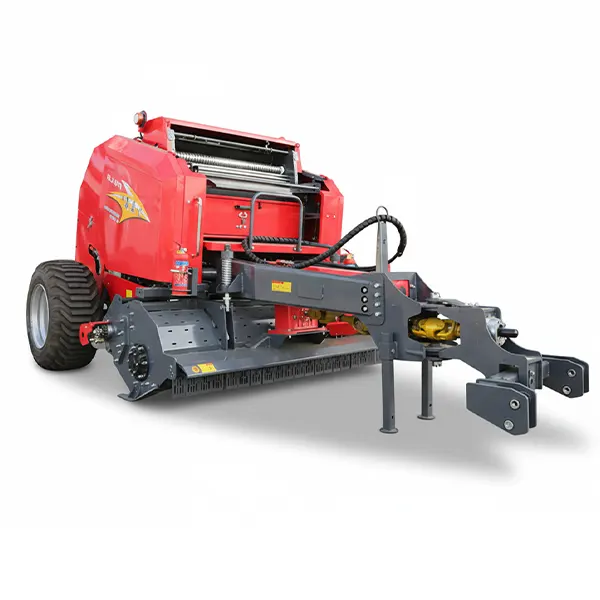
New equipment is the correct choice — not just the safe choice — in several specific situations that many buyers underweight when comparing sticker prices:
When your operation has a narrow, non-negotiable harvest window (such as alfalfa in a high-humidity region with 3-day weather windows), the risk premium of used equipment is highest. A single breakdown in a 3-day window can cost as much in lost hay value as the price difference between a new and a comparable used machine. The value of reliability in this context is real and calculable.
When Section 179 is available and you have sufficient farm income to absorb the deduction, the after-tax cost of new equipment may be closer to the purchase price of comparable used equipment than the sticker prices suggest. A $45,000 new baler at a 24% effective tax rate costs $34,200 after the Section 179 deduction in year 1. A $22,000 used baler without Section 179 eligibility costs $22,000 with unknown repair risk ahead.
When parts availability for your used candidate is limited or the machine is out of active production, the total cost of ownership escalates quickly as specific components become difficult to source. Used equipment from manufacturers with active U.S. dealer networks and stocked parts inventories carries lower parts risk than discontinued models from brands with limited U.S. service infrastructure.
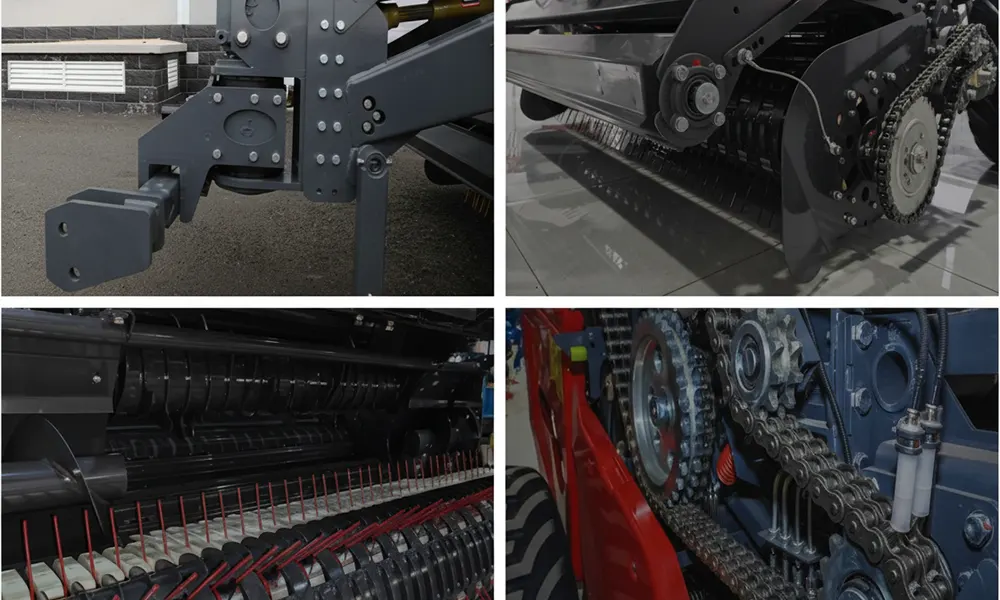
For a direct comparison of new round baler options across different price points and production capacities, see notre gamme de presses à balles rondes, where specifications and pricing are published for all current models. The agricultural driveline and gearbox components supplied with new equipment are warrantied — a significant advantage over the unknown driveline history of used machines where universal joint wear and gearbox condition can only be estimated, not guaranteed.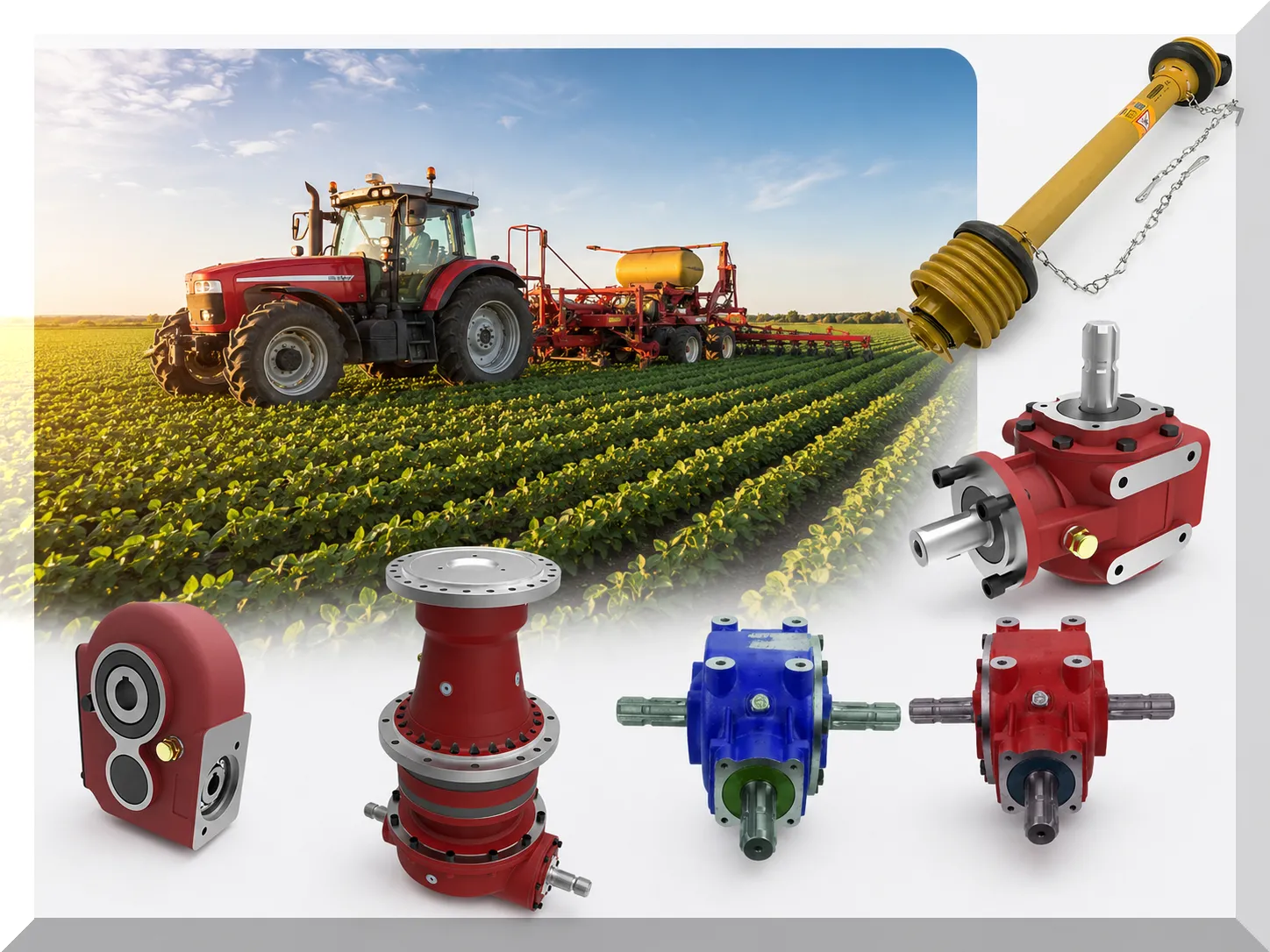
Foire aux questions
New Equipment, Direct Factory Pricing — With Section 179 Documentation Included
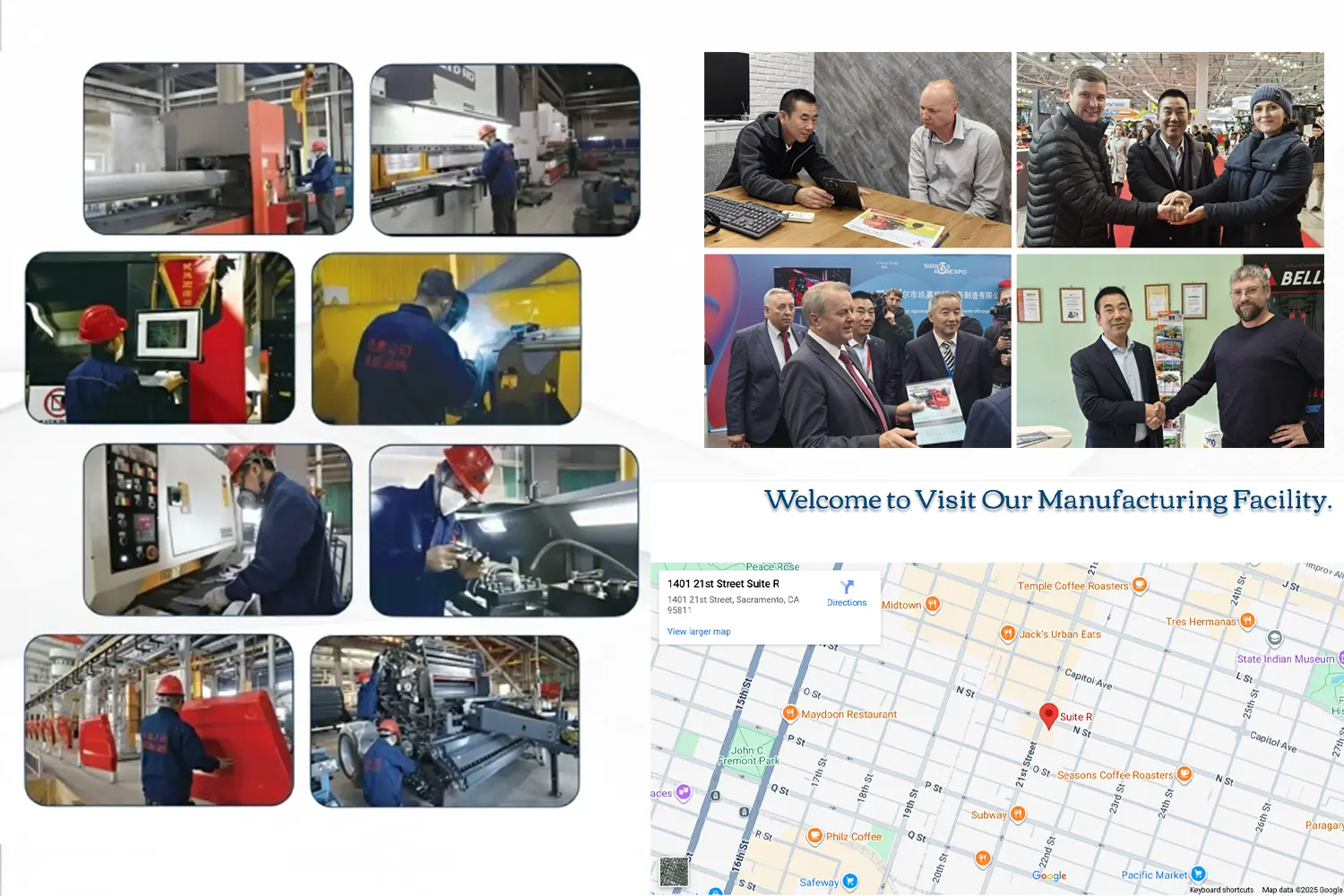
If the new vs used analysis points toward new, our U.S. team can confirm the right model, tractor compatibility, and parts availability from our California warehouse before anything ships. Direct factory pricing with no dealer markup, and Section 179 commercial invoice documentation with every order.
Éditeur : Cxm


