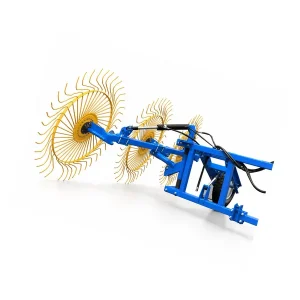
Moissonneuse-batteuse de haricots rouges 4DQ-5 | Batteuse traînée à 5 rangs
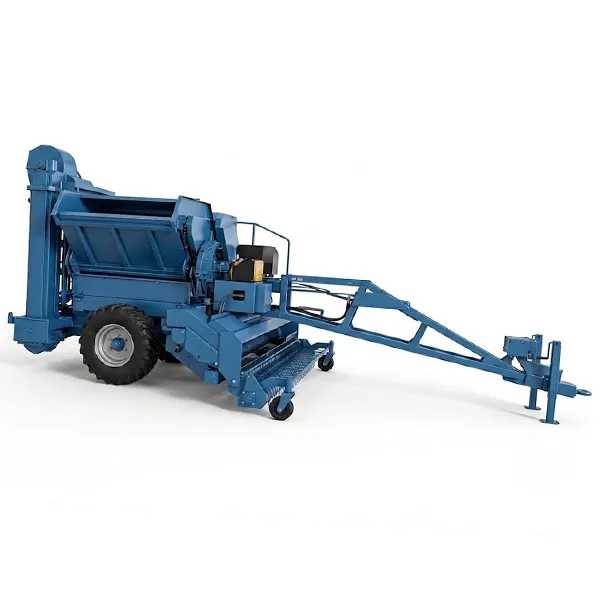
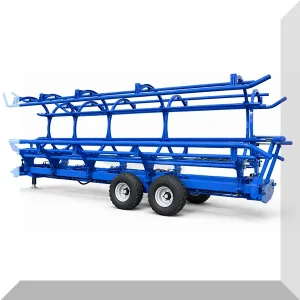
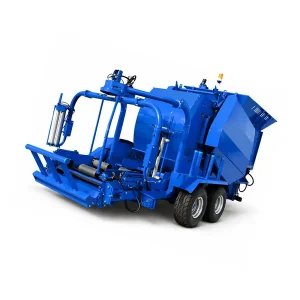
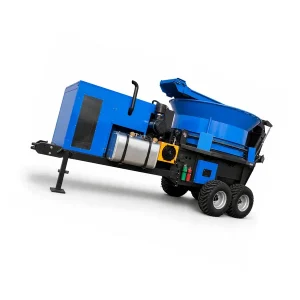
Le moissonneuse-batteuse de haricots rouges 4DQ-5 La 4DQ-5 est la machine de deuxième étape à échelle commerciale d'un programme mécanisé de culture de haricots secs : elle ramasse les andains de haricots rouges séchés au champ et les traite dans un seul tambour de battage pour fournir des grains propres dans une trémie embarquée de 5,06 m³ – le tout en un seul passage de tracteur à une vitesse de 1,3 à 2,6 ha/h. Avec une largeur de travail de 3 200 mm sur 5 rangs et nécessitant un tracteur de 200 ch, la 4DQ-5 est dimensionnée pour les exploitations de 80 hectares ou plus de haricots rouges, blancs, pinto ou noirs qui doivent effectuer le battage dans les meilleures conditions météorologiques après la récolte.
Le rôle du 4DQ-5 : La deuxième étape de la récolte mécanique des haricots rouges
La récolte mécanisée des haricots rouges dans les régions productrices américaines se déroule en deux étapes que la 4DQ-5 est conçue pour réaliser. La première étape – l’arrachage de la plante à la racine, le secouage du sol et la mise en andain de la récolte – est effectuée par les arracheuses de notre système. série de récolteuses de haricots rougesLa deuxième étape – ramasser l'andain séché, égrener les fèves, nettoyer les grains et remplir la cuve embarquée – est assurée par la 4DQ-5. Sans ces deux étapes, la récolte mécanique des fèves sèches est incomplète ; la 4DQ-5 est la machine qui boucle la boucle.
Le processus se déroule comme suit : l’arracheuse (généralement l’arracheuse de haricots rouges 4BYH-3.25 à 5 rangs ou l’arracheuse de haricots rouges 4BYHD-3.9 à 6 rangs) parcourt le champ, arrachant les plants et formant des andains. Ces andains sèchent au champ pendant 3 à 7 jours, jusqu’à ce que l’humidité des gousses atteigne le taux requis (entre 12 et 181 TP5T) pour un battage optimal. La moissonneuse-batteuse 4DQ-5 suit ensuite les mêmes rangs, ramassant l’andain séché par sa barre d’alimentation et l’acheminant vers la chambre de battage à tambour unique. Les haricots propres sont déversés dans la trémie de 5,06 m³, tandis que les résidus végétaux (fragments de gousses, tiges, feuilles) sont évacués par l’arrière. Une fois la trémie pleine, elle se vide par la vis de vidange hydraulique dans une remorque ou un camion à grains adjacent.
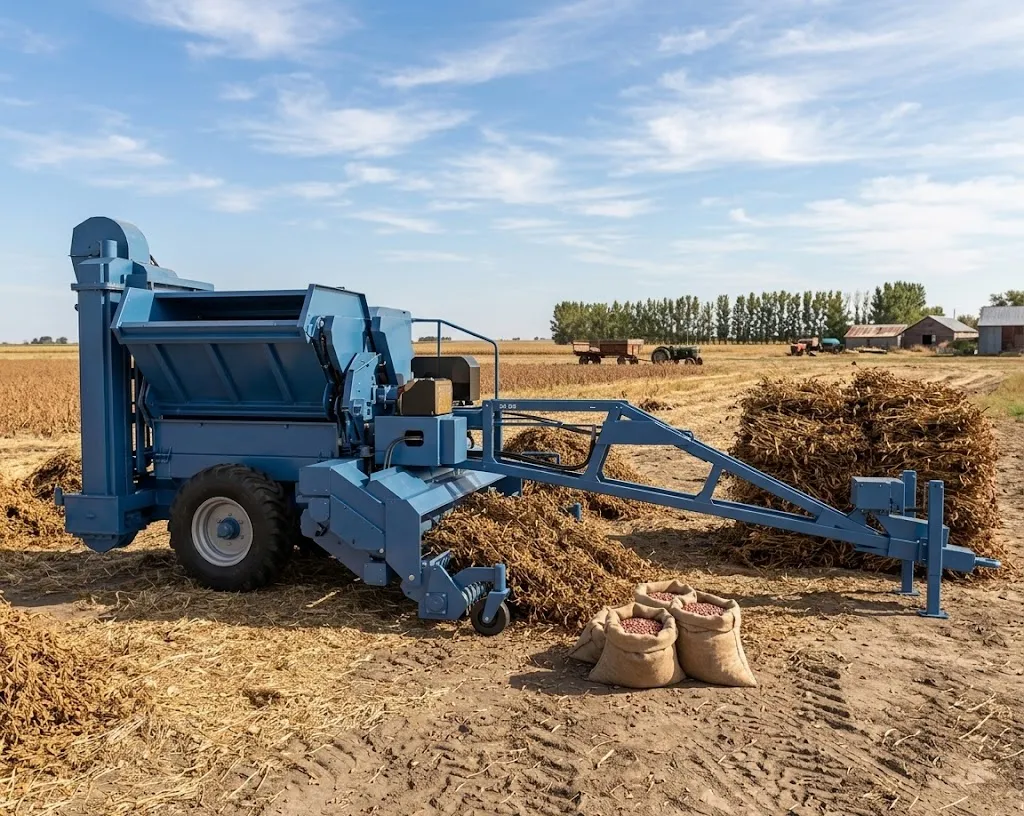
Avec sa largeur de travail de 3 200 mm, le 4DQ-5 est adapté au traitement d'un andain produit par un seul passage de l'arracheuse à 5 rangs ou d'un andain combiné issu de deux passages de l' 4BYH-2.6 Arrache-haricots à 4 rangsL'utilisation de machines de première et de deuxième génération de largeurs identiques permet d'éliminer les pertes de temps de passage dues à un équipement incompatible, l'une des principales causes de gaspillage de temps sur le terrain dans les grandes cultures de haricots. Notre équipe vérifie la compatibilité des machines lors de votre commande.
Spécifications techniques
Toutes les spécifications sont conformes à la fiche technique de production du 4DQ-5. Avant de commander, veuillez vérifier la puissance de prise de force continue nominale de votre tracteur, sa capacité de traction et les distributeurs hydrauliques disponibles. Notre équipe technique américaine peut vérifier gratuitement la compatibilité avec votre tracteur à partir de son modèle et de sa fiche technique.
| Non. | Paramètre | Unité | Valeur |
|---|---|---|---|
| 1 | Modèle | / | Moissonneuse-batteuse à tambour unique traînée 4DQ-5 pour haricots rouges |
| 2 | Type de connexion | / | Attelage latéral à barre de traction |
| 3 | Largeur de travail | mm (rangées) | 3 200 mm — 5 rangées |
| 4 | Puissance requise du tracteur | kW / HP | Prise de force continue ≥ 147 kW (200 ch) |
| 5 | Capacité sur le terrain | ha/h | 1,3–2,6 |
| 6 | Vitesse de fonctionnement | km/h | 4–8 |
| 7 | Vitesse de l'arbre de prise de force | r/min | 540–760 |
| 8 | Capacité du silo à grains | m³ | 5,06 m³ (≈3 950 kg de haricots rouges secs) |
| 9 | Dimensions hors tout (L × l × H) | mm | 11 120 × 4 000 × 4 000 |
| 10 | Spécifications des pneus | dans | 18,4–30 (paire gauche et droite appariées) |
| 11 | Bande de roulement | mm | 2,300 |
| 12 | Poids de la machine | kg | 7,500 |
Principe de fonctionnement : Du ramassage des andains au grain propre en un seul passage
La moissonneuse-batteuse 4DQ-5 traite les andains de haricots rouges en quatre étapes successives, en un seul passage continu :
Étape 1 — Ramassage des andains
La barre d'alimentation couvre toute la largeur de travail de 3 200 mm. À mesure que la machine avance le long de l'andain sec, un mécanisme de ramassage à tambour soulève l'amas de plantes enchevêtrées et l'achemine vers le convoyeur transversal. La hauteur d'alimentation est réglable afin de s'adapter aux différentes épaisseurs d'andain et aux conditions du sol, sans scalper la terre ni laisser de fèves non ramassées au sol.
Étape 2 — Battage à tambour unique
La masse de récolte est acheminée axialement à travers le tambour de battage unique. Ce dernier tourne à une vitesse de 540 à 760 tr/min grâce à une prise de force. L'impact des barres de battage et la friction du contre-batteur ouvrent les gousses sèches et libèrent les haricots. La conception à tambour unique (contrairement aux systèmes à tambours multiples) est spécifiquement choisie pour les haricots rouges, car leur tégument large et fragile est sensible aux impacts mécaniques répétés. Un seul passage de tambour bien calibré suffit pour obtenir des gousses sèches et réduit le taux de fissuration du tégument par rapport à un système à tambours successifs. L'écart entre le tambour et le contre-batteur est réglable sur le terrain en fonction du degré de séchage des gousses.
Étape 3 — Séparation par soufflage d'air et tamisage
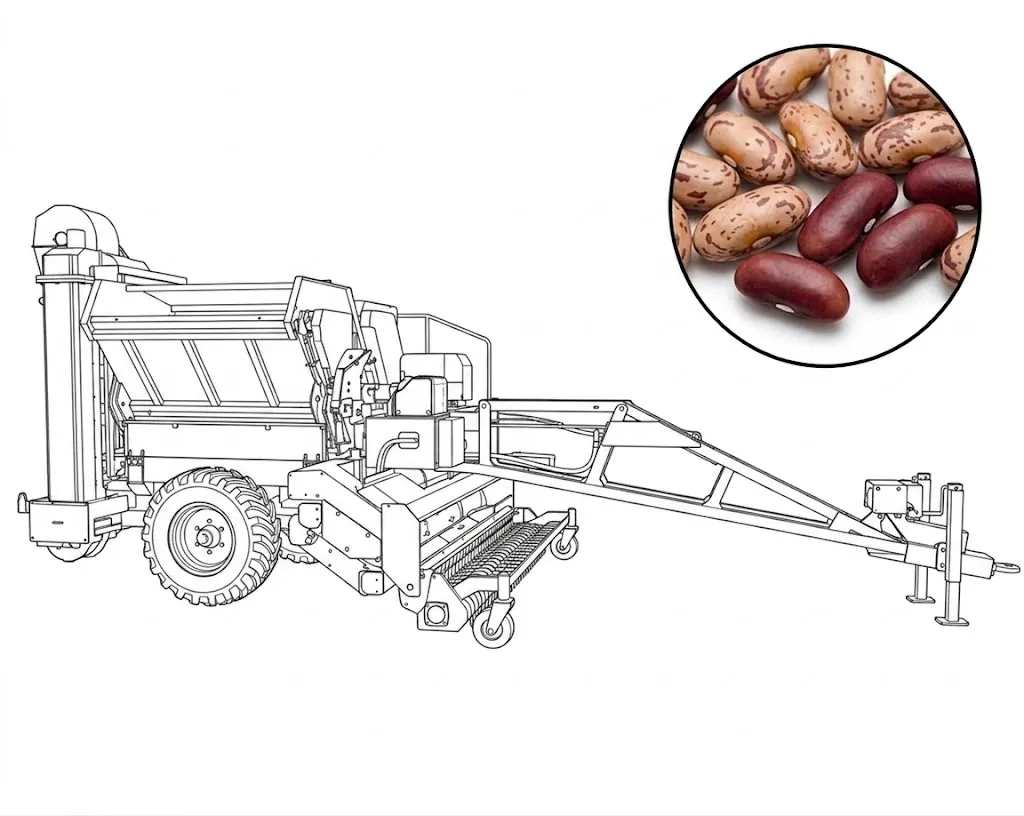
Après le battage, le mélange de récolte (haricots, fragments de gousses, tiges et débris végétaux) passe par un système de nettoyage en deux étapes. La première étape consiste en un ventilateur à air pulsé créant une colonne d'air ascendante : les matières plus légères (fragments de gousses et déchets) sont entraînées vers le haut et évacuées, tandis que les haricots tombent par gravité. La seconde étape est un tamis oscillant qui sépare les particules selon leur taille, acheminant les haricots propres vers l'élévateur à grains et renvoyant les résidus non battus à l'entrée du tambour pour être retraités. Ce nettoyage en deux étapes permet d'atteindre des niveaux d'impuretés inférieurs à 21 TP5T pour les récoltes de haricots rouges secs standard, à l'humidité de battage optimale.
Étape 4 — Remplissage et déchargement des trémies à grains
Les haricots propres sont évacués du système de nettoyage vers un élévateur à godets qui les transfère dans la trémie embarquée de 5,06 m³. La vis de vidange hydraulique de la trémie peut pivoter pour atteindre une remorque à grains adjacente, permettant ainsi un déchargement en cours de route lors des manœuvres en bout de champ, sans nécessiter d'arrêt. Avec une densité apparente typique de haricots rouges secs de 750 à 800 kg/m³, la trémie pleine contient environ 3 800 à 4 050 kg, soit suffisamment pour 30 à 60 minutes de battage continu avec des rendements moyens avant qu'un déchargement ne soit nécessaire.
Configuration à traction latérale : pourquoi le 4DQ-5 utilise une barre de traction plutôt qu’un attelage trois points.
Avec un poids de 7 500 kg et une longueur hors tout de 11 120 mm, la 4DQ-5 dépasse largement la capacité de charge de tout attelage trois points arrière standard, même sur les plus gros tracteurs agricoles. Elle est attelée par un système de barre d'attelage latérale – une barre d'attelage pivotante ou une chape située à l'arrière du tracteur – qui décale la machine à droite de l'axe longitudinal du tracteur.
Cette géométrie à déport latéral résout un problème crucial sur le terrain : le tracteur doit longer le bord de l’andain sans que ses roues ne frottent sur le rang précédent. Avec une configuration à traction centrale et une largeur de machine comparable, la roue motrice droite du tracteur passerait sur l’andain que la barre de coupe est censée ramasser, écrasant les fèves et mélangeant des impuretés de la terre au flux d’admission avant qu’elles n’atteignent le tambour de battage. Le déport latéral positionne le tracteur dans la zone dégagée entre les rangs – à gauche de l’axe de la machine – tandis que la barre de coupe de 3 200 mm couvre toute la largeur de l’andain à droite. Il en résulte une admission propre, sans pertes avant battage dues au contact des roues.
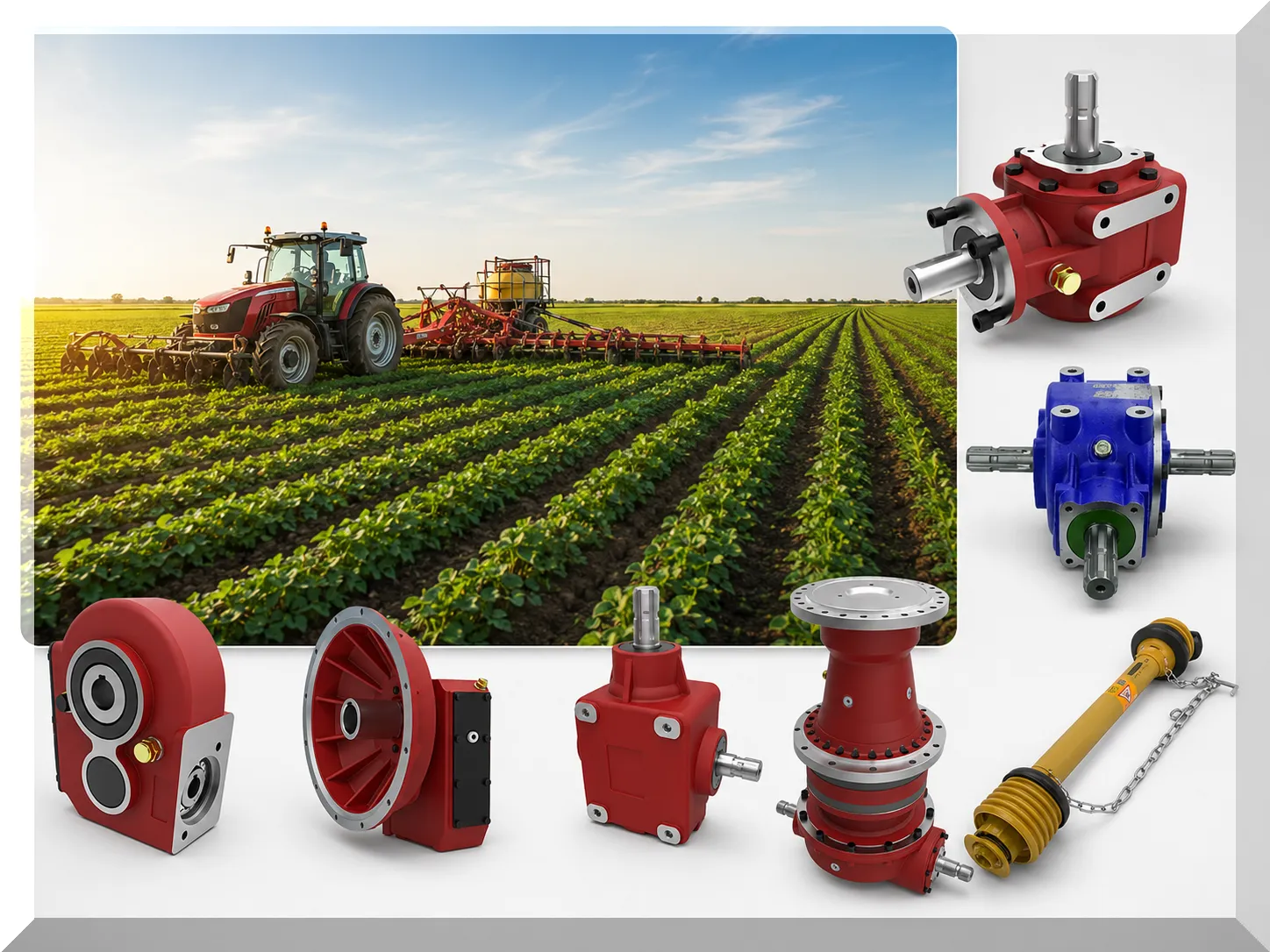
La transmission de la prise de force 4DQ-5 se raccorde à l'arbre de prise de force arrière standard du tracteur (540 tr/min) via un arbre de transmission à joint universel qui compense le léger angle de décalage latéral. boîte de vitesses agricole L'entrée de la machine distribue la puissance au tambour de battage, au ventilateur de nettoyage, à l'élévateur à grains et à l'entraînement du tamis à partir de l'unique entrée de prise de force — ce qui simplifie l'architecture de la chaîne cinématique et réduit le nombre de composants nécessitant une inspection périodique.
Exigences relatives au tracteur : Adapter le 4DQ-5 à votre groupe motopropulseur
Le 4DQ-5 fonctionne dans une catégorie de puissance et de poids qui exige une adaptation précise au tracteur. Trois paramètres doivent être confirmés avant son utilisation :
Puissance de sortie de la prise de force — 147 kW (200 CV) en continu : La valeur de 200 ch correspond à la puissance de sortie continue à la prise de force (PDF) au régime moteur nominal, et non à la puissance maximale du moteur. De nombreux tracteurs d'une puissance moteur de 200 ch délivrent en réalité entre 165 et 180 ch à la PDF, ce qui est insuffisant pour un battage soutenu dans des andains denses. Veuillez vérifier la puissance de sortie certifiée de la PDF du tracteur sur sa fiche technique. Le modèle 4DQ-5 nécessite une prise de force arrière de 540 tr/min ; une prise de force de 1 000 tr/min n'est pas compatible.
Force de traction — au moins 45 kN en conditions réelles : Avec un poids de 7 500 kg et jusqu'à 4 000 kg de grain dans la trémie, le tracteur doit pouvoir tracter une charge totale d'environ 11 500 kg sur des terrains meubles en fin de saison. Un tracteur de 200 ch, lesté et équipé de roues arrière jumelées, répond généralement à cette exigence ; vérifiez la capacité de traction de votre tracteur lesté dans le manuel d'utilisation ou le rapport d'essai ASABE.
Commandes hydrauliques à distance — minimum 2 distributeurs hydrauliques indépendants : Le relevage de la barre de coupe, l'orientation de la vis de vidange de la trémie et le réglage fin de la hauteur de la barre de coupe sont tous à commande hydraulique. Deux distributeurs hydrauliques indépendants (SCV) constituent le minimum requis ; un troisième est utile pour le réglage de l'angle de la barre de coupe sur terrain accidenté. Des raccords hydrauliques ISO standard sont utilisés partout ; aucun raccord hydraulique spécifique n'est nécessaire.
Scénarios d'application : Opérations commerciales de haricots rouges aux États-Unis
Michigan Thumb — Récolte de haricots rouges foncés et de haricots blancs
Le Michigan est le premier État producteur de haricots rouges secs aux États-Unis. Dans la région de Thumb, la courte période de récolte de fin d'été (généralement de 2 à 4 semaines entre les conditions optimales d'arrachage et les premières gelées) met à rude épreuve les capacités de battage. Avec une capacité maximale de 2,6 ha/h et une largeur de travail de 3 200 mm, la batteuse 4DQ-5 peut traiter de 8 à 10 hectares par jour dans des conditions optimales, couvrant ainsi une parcelle de haricots rouges de 160 hectares en 18 à 22 jours, selon les grandes exploitations commerciales.
Vallée de la rivière Rouge — Battage des haricots blancs et des haricots pinto
La structure plate et étendue des vastes champs de la vallée de la rivière Rouge et de la région agricole environnante du Dakota du Nord et du Minnesota convient parfaitement à la configuration à traction latérale de la 4DQ-5 : les longues rangées droites réduisent la fréquence des manœuvres en bout de champ et permettent à la machine de passer un plus grand pourcentage de chaque passage en mode de battage productif. Les andains de haricots blancs dans cette région sont généralement plus fins que ceux des haricots rouges, ce qui permet de travailler à la limite supérieure de la plage de vitesses de 4 à 8 km/h et d’atteindre de manière constante la capacité de 2,6 ha/h.
Idaho et Wyoming — Programmes de haricots pinto et de haricots noirs
Dans le sud de l'Idaho, le nord du Nevada et le Wyoming, les cultures de haricots Pinto se déroulent généralement sur des terres irriguées dont les sols, en fin de saison, sont suffisamment meubles pour laisser des traces de roues de tracteur, même avec une configuration standard. Les pneus 18.4-30 du 4DQ-5, associés à une voie de 2 300 mm, répartissent le poids de la machine sur une large surface, minimisant ainsi le tassement du sol après la récolte. Cet avantage est crucial dans ces régions où les champs doivent être préparés pour le blé d'hiver ou les cultures de couverture quelques semaines seulement après la récolte des haricots.
Opérations de battage personnalisées
La 4DQ-5 est idéale comme machine principale pour un service de battage à façon desservant plusieurs exploitations agricoles dans une zone de culture de haricots rouges. Avec un tarif de $40 à $80 par acre pour les services de battage dans la plupart des régions productrices de haricots secs des États-Unis, une machine couvrant 25 acres par jour, à la limite inférieure de sa capacité, génère un chiffre d'affaires journalier de $1 000 à $2 000 dollars pendant la saison des récoltes. Les entreprises de travaux agricoles qui associent la 4DQ-5 à un ou deux extracteurs 4BYH ou 4BYHD de notre gamme proposent un service de récolte clé en main complet : extraction, andainage, battage et remplissage de la remorque à grains, sans que l'exploitation agricole ait besoin de posséder le moindre équipement de récolte.
Six avantages de conception du 4DQ-5 pour les programmes commerciaux de production de haricots rouges
1. Battage en un seul passage, de l'andain au silo à grains. La 4DQ-5 élimine l'étape intermédiaire de transfert des fèves battues entre les machines. L'andainage se fait à la barre de coupe et le grain propre est déversé dans la trémie en une seule opération continue ; fini les tas de fèves en vrac dans le champ qui nécessitent un équipement de ramassage secondaire.
2. Un réservoir à grains de grande capacité réduit la charge logistique sur le terrain. La trémie de 5,06 m³ peut contenir de 3 800 à 4 050 kg de haricots secs, soit plus que la plupart des remorques à grains utilisées dans les petites exploitations. Cette capacité permet de réaliser un ou plusieurs passages complets dans les champs avant de devoir utiliser un camion ou une remorque pour le déchargement. Grâce à une remorque à grains dédiée en bordure de champ, les exploitations peuvent assurer une couverture quasi continue des champs sans interruption.
3. Le dégagement concave réglable préserve la qualité alimentaire des semences. L'écart entre le contre-batteur et le tambour est réglable sur le terrain en fonction du degré de dessiccation des gousses. Ce contrôle direct de l'agressivité du battage est essentiel pour préserver l'intégrité du tégument, condition indispensable à la commercialisation des haricots rouges de qualité alimentaire. Les opérateurs qui surveillent et ajustent l'écart entre le contre-batteur et le tambour tout au long de la journée, à mesure que les gousses sèchent, obtiennent systématiquement des taux de fissuration du tégument inférieurs à ceux obtenus avec des équipements à écartement fixe.
4. La configuration à traction latérale élimine la contamination des andains par les roues du tracteur. Le décalage de l'attelage positionne le tracteur sur le côté de l'andain, évitant ainsi les pertes de fèves dues aux pneus et la contamination du sol dans la zone d'alimentation. Il s'agit de la configuration géométrique optimale pour un équipement de cette largeur et de ce poids — un détail qui influe sur chaque passage effectué durant la saison des récoltes.
5. Fabrication certifiée ISO 9001 avec éligibilité aux subventions nationales. Le 4DQ-5 est fabriqué selon le système de gestion de la qualité ISO 9001 et figure dans le répertoire national des subventions à l'achat de machines agricoles. Les acheteurs américains sont invités à vérifier les programmes EQIP du Département de l'Agriculture des États-Unis (USDA) et les programmes étatiques applicables à la mécanisation de la récolte des cultures spécialisées ; notre équipe américaine peut fournir la documentation nécessaire aux demandes de subvention.
6. Compatible avec les séries d'extracteurs 4BYH et 4BYHD de la même gamme. Commander l'étape de traction et l'étape de battage auprès du même fournisseur signifie que la compatibilité en largeur est confirmée avant l'expédition de l'une ou l'autre machine, que le stockage des pièces pour les deux machines est coordonné à partir du même entrepôt californien et que l'équipe technique qui prend en charge votre presse à balles prend également en charge votre batteuse tout au long de la saison.
Programme d'entretien et pièces d'usure
L'inspection et l'entretien de la moissonneuse-batteuse 4DQ-5 avant la saison prennent de 4 à 6 heures et portent sur les points suivants. Effectuer ces travaux avant l'ouverture de la période de récolte permet d'éviter les pannes en cours de saison, responsables des pertes de fèves dues aux andains trop secs qui restent non ramassés pendant le délai de réparation.
Tambour de battage : Inspectez les dents et les extrémités des barres du tambour pour détecter toute usure. Des dents usées réduisent l'efficacité du battage sans présenter de symptômes extérieurs visibles ; comparez la profondeur de la pointe avec les spécifications du fabricant indiquées dans le manuel d'utilisation et remplacez toute dent dont le profil est inférieur au minimum requis. Vérifiez le jeu des paliers de l'arbre du tambour (aucun mouvement, ni radial ni axial, ne doit être perceptible à la main).
Concave de battage : Inspectez toutes les barres concaves afin de détecter toute fissure, déformation ou fixation desserrée. Une barre concave fissurée ou desserrée peut entraîner des dommages catastrophiques au tambour dès le premier passage en charge. Cette inspection ne prend que 10 minutes et permet d'éviter la panne la plus coûteuse de la machine.
Système de nettoyage : Vérifiez la tension et l'état de la courroie d'entraînement du ventilateur. Inspectez les sections du tamis pour détecter toute déformation ou barre d'ouverture cassée qui laisserait passer prématurément des particules de la taille d'un haricot. Vérifiez la lubrification et l'usure du mécanisme excentrique d'entraînement du tamis.
Silo à céréales: Vérifiez la tension de la chaîne et le serrage des boulons de fixation du godet. Un godet d'élévateur mal fixé peut obstruer l'entrée de la trémie ; il est alors nécessaire de vider complètement la trémie pour accéder à cette pièce sur le terrain, ce qui rend toute réparation en pleine récolte coûteuse en temps et en pertes de grains.
Système hydraulique : Vérifiez l'étanchéité des vérins de levage de la barre de coupe, de rotation de la vis de vidange et de réglage en hauteur. Contrôlez l'état des flexibles hydrauliques : les fissures dues à la flexion aux extrémités, près des raccords rapides, constituent la principale cause de défaillance des flexibles sur les équipements de récolte traînés.
Notre entrepôt de Sacramento, en Californie, dispose en stock des pièces d'usure les plus fréquemment utilisées pour les machines 4DQ-5, notamment les dents de tambour, les barres concaves, les sections de tamis, la chaîne et les godets d'élévateur, les kits de roulements, les kits de joints hydrauliques et les jeux de dents de ramassage. Expédition le jour même pour les commandes passées avant 14 h (heure du Pacifique) en pleine saison.
Avis clients de US Kidney Bean Operations
David Schreiber, producteur de haricots rouges foncés, comté de Tuscola, Michigan (saison 2025)
★★★★★
Nous cultivons 154 hectares de haricots rouges foncés et avions recours à un service de battage à façon depuis des années. La 4DQ-5 a été la première machine que nous avons achetée pour le battage, et elle a été rentabilisée dès la première année par rapport au tarif du prestataire. La capacité de la trémie est ce qui m'a le plus marqué : nous n'avons eu besoin de nous arrêter que quatre fois pour décharger en une journée complète de battage, contrairement aux allers-retours incessants que nous devions effectuer avec le matériel plus petit utilisé par le prestataire. L'état des téguments était conforme aux spécifications de notre contrat de silo (2%) sur tous les chargements contrôlés. L'équipe d'assistance a répondu à une question concernant le dégagement du contre-batteur en moins de deux heures, un samedi matin pendant la récolte ; une réponse inattendue et vraiment précieuse.
Greg et Annette Paulson, ferme de haricots blancs et rouges, comté d'Otter Tail, Minnesota (saison 2025)
★★★★★
Après trois saisons de fendillement des téguments trop important dû à la vitesse du tambour de la moissonneuse-batteuse, nous sommes passés d'une moissonneuse-batteuse à grains reconditionnée équipée d'un ramasseur à la 4DQ-5. La conception à tambour unique, avec une vitesse d'entrée de 540 tr/min et un contre-batteur réglable, a immédiatement fait la différence : nos fiches de quai d'élévateur ont montré une baisse de 3,11 TP5T à 1,41 TP5T de graines fendues dès la première saison avec la 4DQ-5. La machine, livrée pré-assemblée de Californie, était opérationnelle dès le lendemain. Nous l'avons associée à l'arracheuse à 5 rangs 4BYH-3.25 pour la première étape, et les deux machines ont couvert nos 170 hectares de fèves en 9 jours d'arrachage et 13 jours de battage – soit la récolte la mieux organisée que nous ayons eue en six ans de culture de fèves à cette échelle.
Craig Olson, exploitant de travaux agricoles à façon, comté de Sargent, Dakota du Nord (saison 2025)
★★★★★
Je propose des services de récolte à façon sur quatre exploitations agricoles, couvrant environ 360 hectares de haricots pinto et de haricots blancs. Ma batteuse principale est la 4DQ-5, associée à deux arracheuses 4BYHD-3.9 pour l'arrachage. Cette combinaison constitue une solution complète : je planifie l'arrachage à l'exploitation 1 pendant que les andains de l'exploitation 2, récoltés la semaine précédente, sont prêts à être battus. Avec un rendement réel de 2,0 à 2,3 ha/h dans les conditions de la vallée de la Rivière Rouge, je peux couvrir la parcelle de battage d'une exploitation par jour sur les plus grandes. L'entrepôt californien m'a livré, dès le lendemain matin, par transport express, une section de crible de rechange dont j'avais besoin en pleine saison. C'est ce genre de soutien qui permet à une entreprise de travaux agricoles de poursuivre ses activités lorsqu'une pièce tombe en panne sur le terrain.
Foire aux questions
Obtenez le 4DQ-5 configuré et tarifé pour votre programme de haricots rouges
Compatibilité avec la prise de force du tracteur vérifiée, appariement avec le tracteur 4BYH ou 4BYHD confirmé et disponibilité en entrepôt californien contrôlée avant toute expédition. Documentation relative à l'article 179 et prix direct usine pour chaque commande.
Informations complémentaires
| Éditeur | Cxm |
|---|