
Râteau faucheur traîné 9GL-2.5/2.9 | Râteau faucheur à vendre
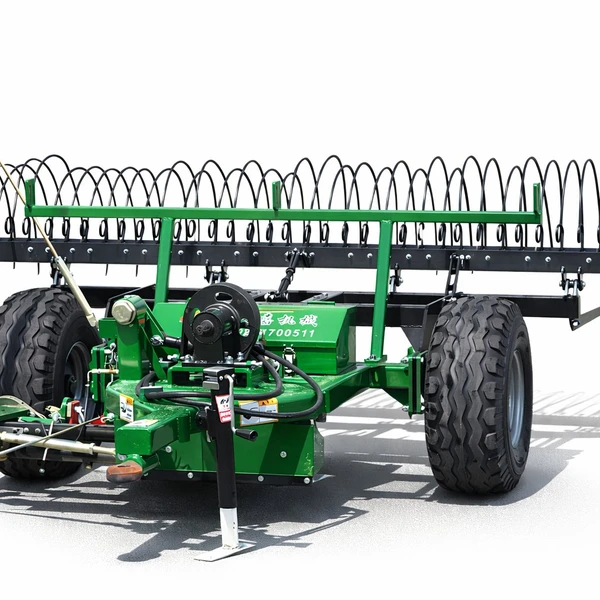
La faucheuse-andaineuse traînée 9GL-2.5/2.9 offre une largeur de coupe de 2,5 m et une portée d'andainage de 2,9 m. Elle permet la fauche et l'andainage du foin en un seul passage pour les tracteurs de 35 à 75 CV.
Présentation du produit
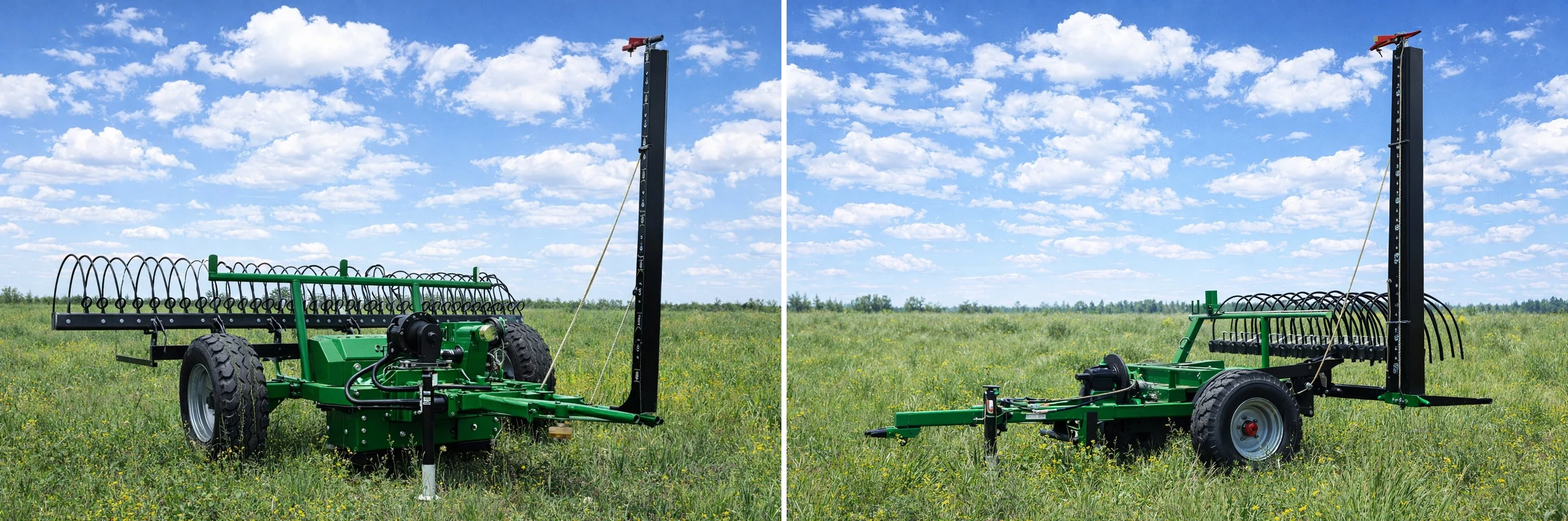
Le 9GL-2.5/2.9 râteau à fauche traîné Cette machine de récolte de fourrage, tractée et supportée par des pneus, combine la fauche et le fanage en un seul passage. Montée sur des roues pneumatiques indépendantes, elle se connecte aux tracteurs à roues d'une puissance de 25 à 55 kW (environ 35 à 75 ch) via une prise de force arrière standard et un attelage à barre de traction. Sa principale caractéristique est sa capacité à couper le fourrage sur pied et à le rassembler immédiatement en andains réguliers, évitant ainsi un second passage avec un équipement séparé. La barre de coupe alternative de 2,5 mètres coupe le fourrage proprement à 60-70 mm du sol, tandis que le tambour de fanage traînant de 2,9 mètres, équipé de 42 dents à ressort, rassemble le fourrage fraîchement coupé en andains continus, prêts pour le pressage ou le séchage.
Conçu pour les pâturages plats, les coteaux doux et les prairies ouvertes, ce râteau à tondeuse Cette machine traite efficacement les légumineuses cultivées, les graminées indigènes des prairies et les cultures fourragères semées, avec des résultats constants. Avec une vitesse de travail de 6 à 7 km/h et un poids total de 920 kg, elle offre une productivité de fauche de 1,2 à 1,44 hm²/h et une productivité de ratissage de 1,5 à 1,8 hm²/h. L'ensemble se replie hydrauliquement sur une largeur compacte de 2 920 mm pour un transport routier sécurisé. Pour les éleveurs, les entrepreneurs de fenaison et les agriculteurs pratiquant la polyculture-élevage qui souhaitent réduire leur temps de travail, leur consommation de carburant et préserver la qualité de leur fourrage, la 9GL-2.5/2.9 constitue une solution pratique et monobloc qui remplace deux machines distinctes.
Spécifications techniques
Le tableau suivant répertorie tous les paramètres mesurés du modèle 9GL-2.5/2.9. Ces valeurs ont été enregistrées dans des conditions de terrain contrôlées et représentent les performances de base auxquelles vous pouvez vous attendre lorsque la machine est correctement associée à un tracteur compatible. Si vous évaluez ce modèle, veuillez consulter le tableau ci-dessous. râteau à tondeuse Ces chiffres permettent une comparaison directe avec les autres équipements de votre parc. Portez une attention particulière à la puissance requise et à la vitesse de la prise de force, car ces deux valeurs déterminent si votre tracteur actuel peut utiliser cet outil sans modification.
| Non. | Paramètre | Unité | Spécification |
|---|---|---|---|
| 1 | Désignation du modèle | / | Râteau faucheur traîné 9GL-2.5/2.9 |
| 2 | Type d'attelage | / | Remorqué (barre de traction) |
| 3 | Type de structure de coupe | / | Barre de faucille alternative |
| 4 | Largeur de tonte effective | m | 2.5 |
| 5 | Largeur de ratissage effective | m | 2.9 |
| 6 | Plage de vitesses de travail | km/h | 6 - 7 |
| 7 | Taux de productivité | hm²/h | Tonte : 1,2 - 1,44 / Ratissage : 1,5 - 1,8 |
| 8 | Hauteur moyenne des cheveux | mm | 60 - 70 |
| 9 | Puissance requise du tracteur | kW | 25 - 55 |
| 10 | Vitesse de l'arbre de sortie de la prise de force | r/min | 540 |
| 11 | Poids de la machine | kg | 920 |
| 12 | Nombre de dents du râteau | pièces | 42 |
| 13 | Espacement des dents du râteau | mm | 71 |
| 14 | Dimensions de transport (L x l x H) | mm | 3100 x 2920 x 2900 |
| 15 | Dimensions utiles (L x l x H) | mm | 3100 x 5000 x 950 |
| 16 | Nombre de lames de coupe mobiles | pièces | 34 |
Points forts de cette faucheuse-râteau traînée
La 9GL-2.5/2.9 a été développée pour résoudre un problème fondamental de la récolte fourragère : les pertes de temps, de carburant et de qualité de la récolte liées à la réalisation de la fauche et du ramassage en deux opérations distinctes. Vous trouverez ci-dessous les principaux atouts techniques qui font de cette machine une solution performante. râteau à fauche traîné Ces caractéristiques les distinguent des équipements monofonctionnels classiques. Elles ont été validées lors d'essais sur le terrain dans des climats et des types de terrains variés, allant des prairies tempérées coréennes aux pâturages tropicaux d'Asie du Sud-Est.
⚙ Fonctionnement deux-en-un en un seul passage
La tonte à 2,5 m et le ratissage à 2,9 m sont effectués simultanément. Un seul passage dans le champ en remplace deux, ce qui réduit la consommation de carburant d'environ la moitié et limite le tassement du sol dû aux passages répétés du tracteur.
⚖ Faible consommation d'énergie du tracteur
Compatible avec les tracteurs à roues de 25 kW à 55 kW (35-75 ch). La barre de coupe à mouvement alternatif, très efficace, consomme beaucoup moins d'énergie que les faucheuses à disques rotatifs, la rendant accessible aux exploitations agricoles disposant de parcs de tracteurs plus petits.
✂ Coupe réciproque nette
Les 34 lames dentelées produisent une coupe douce, semblable à celle de ciseaux, plutôt qu'un impact violent. Ceci préserve les feuilles délicates des légumineuses riches en protéines comme la luzerne et le trèfle, augmentant ainsi directement la valeur nutritive du foin fini.
? Formation immédiate d'andains
42 dents à ressort à haute résistance espacées de 71 mm balaient immédiatement la récolte fraîchement coupée en andains aérés, l'empêchant d'être piétinée par les pneus du tracteur et permettant un séchage naturel rapide grâce à la pénétration du vent et du soleil.
Système de levage entièrement hydraulique
La barre de coupe et le cadre de ratissage se lèvent et s'abaissent grâce à une seule commande hydraulique depuis la cabine du tracteur. Les manœuvres en bout de champ, le franchissement d'obstacles et la configuration pour le transport routier ne nécessitent aucune intervention manuelle.
Profil de transport compact
Ses dimensions pliées (3100 x 2920 x 2900 mm) lui permettent de circuler aisément sur les chemins agricoles et les routes de campagne classiques. La machine passe d'une largeur de travail de 5 mètres à une largeur inférieure à 3 mètres pour la circulation sur route en quelques secondes.
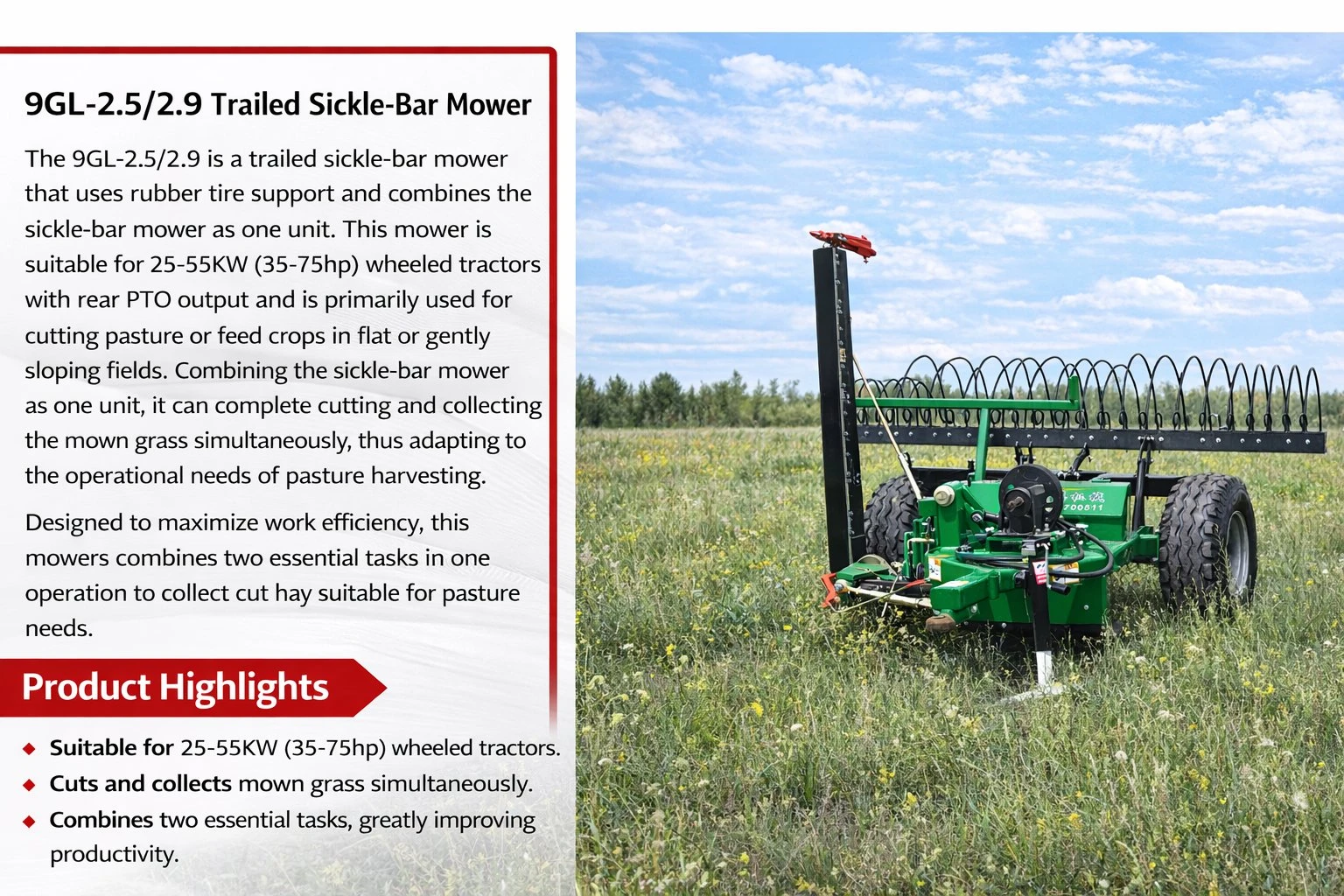
Chacune de ces caractéristiques répond à un défi spécifique auquel les agriculteurs et les entrepreneurs de fenaison sont confrontés lors de la récolte du fourrage. La capacité de coupe en un seul passage réduit directement le nombre de passages du tracteur dans le champ, ce qui se traduit par des économies de carburant, une moindre compaction du sol et une exposition plus courte du fourrage coupé aux intempéries. Le mécanisme de la barre de coupe à mouvement alternatif assure une coupe par cisaillement plutôt que par arrachement ou impact, préservant ainsi davantage de feuilles sur les légumineuses riches en protéines. Parallèlement, le système d'andainage à 42 dents garantit un ramassage complet du fourrage coupé, quelle que soit la densité de la culture, formant des andains réguliers que les presses à balles peuvent traiter sans interruption.
Comment fonctionne cette combinaison râteau à foin et faucheuse dans les champs
Comprendre le fonctionnement du 9GL-2.5/2.9 aide les agriculteurs à planifier leur processus de récolte et à prendre des décisions d'achat éclairées. combinaison râteau à foin et faucheuse Le processus est simple et mécanique : la presse transforme le fourrage sur pied en andains réguliers, prêts pour le pressage. L’ensemble du cycle, de la récolte à l’andain fini, se déroule dans la longueur de la machine. Ainsi, si les conditions le permettent, la presse peut suivre directement le tracteur lors du même passage dans le champ.
Étape 1 : Alimentation par prise de force et distribution de la boîte de vitesses
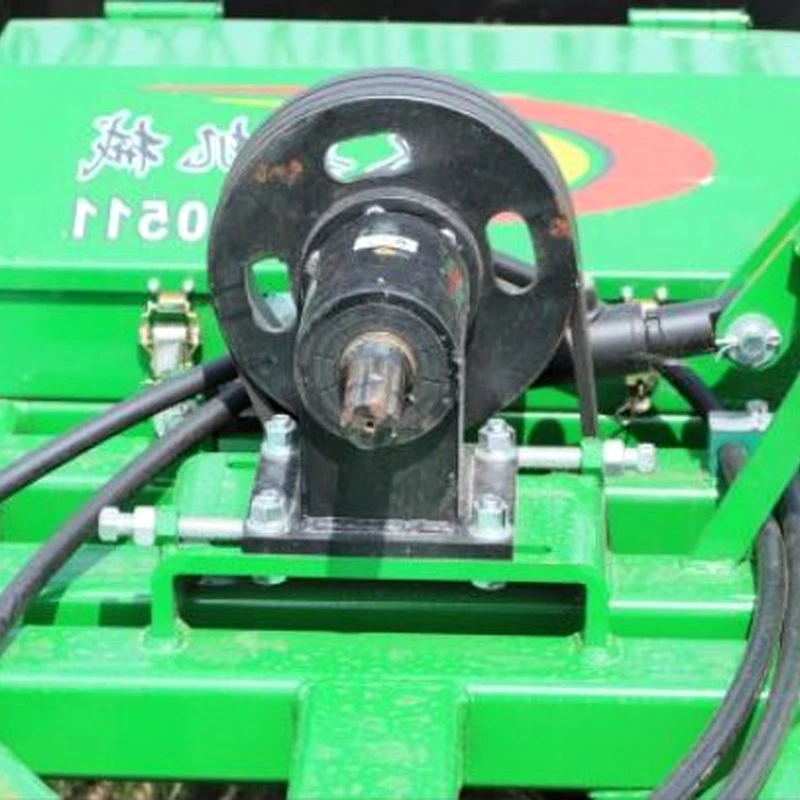
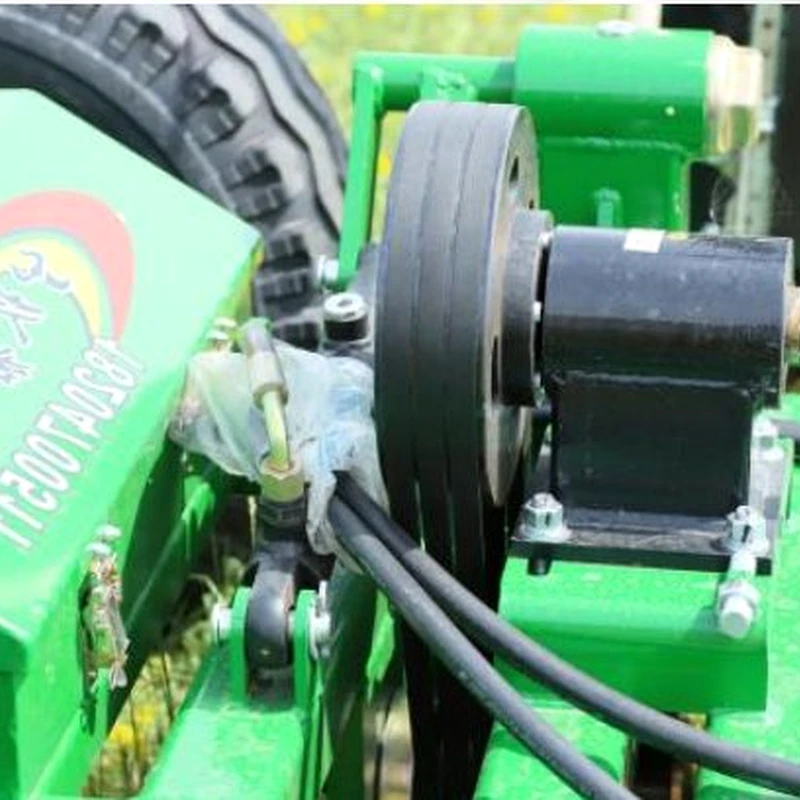
La prise de force du tracteur s'enclenche à 540 tours par minute. Un réducteur central reçoit ce régime de rotation et répartit la puissance entre le bras excentrique qui entraîne la barre de coupe et le tambour mécanique qui actionne le système d'andainage. Contrairement aux faucheuses à disques rotatifs qui utilisent des lames tournant à grande vitesse et consomment une puissance importante, la barre de coupe à mouvement alternatif utilise un mouvement de va-et-vient. Les 34 lames dentelées glissent sur des plaques de protection fixes à l'avant de la barre de coupe, produisant une coupe nette et précise. Ce système consomme beaucoup moins d'énergie et maintient la puissance requise du tracteur entre 25 et 55 kW.
Étape 2 : Coupe et récolte immédiate
Lorsque le tracteur avance à une vitesse de 6 à 7 km/h, la récolte fraîchement coupée tombe directement dans le champ de passage des 42 dents de l'andaineur à ressort. Ces dents, espacées de 71 mm le long du tambour d'andainage, convergent vers l'intérieur, canalisant la matière végétale en un andain continu. L'andain ainsi formé repose sur une crête peu marquée qui permet au vent et à la lumière du soleil de pénétrer de tous côtés, accélérant considérablement le séchage. Grâce à une coupe douce, la rétention des feuilles est optimale sur les cultures délicates comme la luzerne et le trèfle rouge, ce qui influe directement sur la valeur nutritive du foin fini.
 |
 |
 |
 |
Étape 3 : Transition du levage hydraulique et du transport
Lorsque l'opérateur atteint la limite du champ, une simple commande hydraulique relève simultanément la barre de coupe et le cadre d'andainage, permettant ainsi au tracteur de tourner sans que l'outil ne traîne dans la culture. Pour le transport routier, la machine se replie sur une largeur de 2 920 mm, ce qui lui permet de circuler aisément sur les chemins agricoles et les routes de campagne. Le passage complet de la configuration de travail au mode transport ne prend que quelques secondes et ne nécessite aucun outil ni réglage manuel.
Compatibilité du tracteur et exigences relatives au groupe motopropulseur
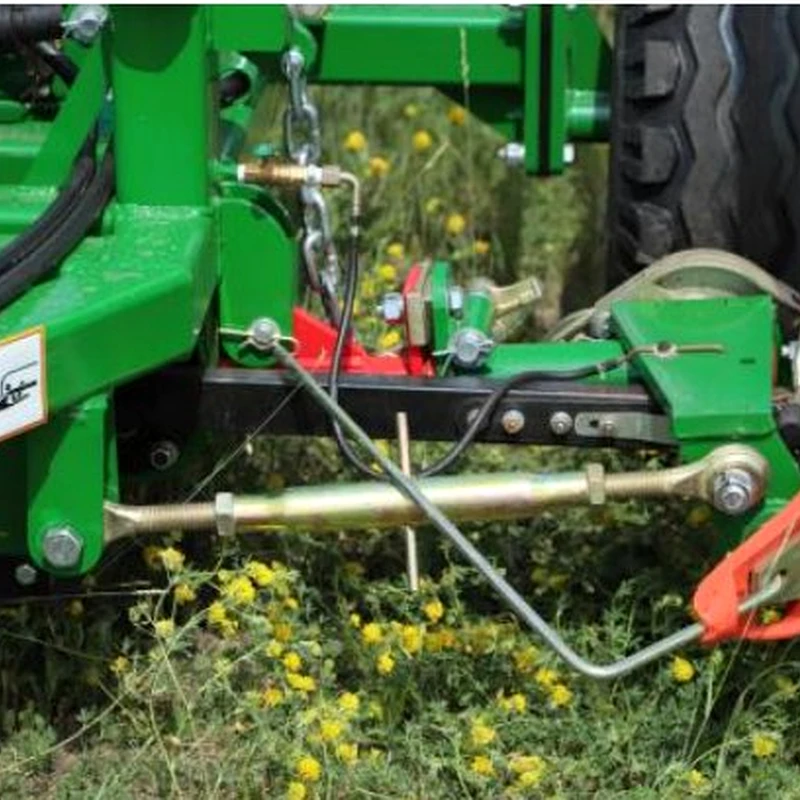
Choisir le bon tracteur pour ce faucheuse-conditionneuse traînée avec fonction de ratissage L'utilisation de cet outil est essentielle pour un fonctionnement sûr et productif. Il se fixe au tracteur via un axe d'attelage standard et nécessite au moins une commande hydraulique arrière pour actionner le vérin de levage. La prise de force (PDF) doit tourner à 540 tr/min précisément. Le raccordement de cette machine à une PDF de 1 000 tr/min sans réducteur de vitesse entraînera de fortes vibrations et des dommages potentiels. Avant l'achat, vérifiez que votre tracteur possède un axe d'attelage de catégorie 1 ou 2, une PDF fonctionnelle à 540 tr/min et un coupleur hydraulique arrière avec un débit suffisant. Cet outil est compatible avec la plupart des tracteurs de 35 à 75 chevaux, quelle que soit leur marque.
Applications sur le terrain pour le râteau faucheur traîné
La polyvalence du 9GL-2.5/2.9 le rend adapté à une grande variété de situations de récolte fourragère. Conçu initialement pour les prairies tempérées, il a été adopté avec succès par des agriculteurs de nombreuses zones climatiques. Le principal facteur déterminant est le type de culture, le terrain et le parc de tracteurs disponible. Vous trouverez ci-dessous quelques exemples de scénarios courants d'utilisation. râteau à tondeuse offre des gains de productivité mesurables par rapport aux systèmes de récolte classiques à deux passages.
Production de foin de légumineuses cultivées
Les légumineuses comme la luzerne, le trèfle rouge et le lotier corniculé présentent la plus haute valeur nutritive dans leurs feuilles. Lorsque ces cultures sèchent au soleil pendant des heures avant d'être ratissées, les feuilles cassantes se brisent lors de la manipulation, entraînant une perte importante de qualité fourragère. La conception à passage unique de ce râteau à fauche traîné La récolte est effectuée immédiatement après la coupe, lorsque les tiges et les feuilles conservent leur humidité naturelle et leur souplesse. Cela permet de préserver davantage de matière foliaire dans l'andain final, ce qui se traduit par une teneur plus élevée en protéines brutes dans la balle finale. Pour les éleveurs laitiers et bovins qui dépendent d'un foin de légumineuses de haute qualité, cette méthode peut améliorer sensiblement la valeur nutritive du fourrage sans modifier les pratiques culturales.
Récolte des prairies et des pâturages indigènes
Sur les vastes étendues de prairies non améliorées, le principal facteur de coût est la consommation de carburant. Faire passer une tondeuse sur des milliers d'hectares, puis effectuer un second passage avec une… râteau à foinL'utilisation de deux machines double les dépenses en diesel et le nombre d'heures passées au volant. Le 9GL-2.5/2.9 réduit ce temps à un seul passage, diminuant ainsi la consommation de carburant de moitié par rapport à une méthode utilisant deux machines. Sa vitesse de travail de 6 à 7 km/h permet de couvrir une surface importante en une journée de travail standard, et sa faible puissance minimale requise de 25 kW permet même aux tracteurs utilitaires plus anciens ou plus petits d'effectuer le travail sans difficulté.
⛰ Opérations sur terrain accidenté et en pente
Contrairement aux équipements à trois points d'attelage qui transmettent directement les chocs du sol au châssis du tracteur, le châssis traîné du 9GL-2.5/2.9 repose sur ses propres pneumatiques. Ceci permet aux ensembles de coupe et d'andainage de suivre les contours du terrain sans secouer le tracteur ni nécessiter de réglages constants de profondeur par l'opérateur. Sur les terrains vallonnés, les terres défrichées et les champs accidentés, cet effet de suspension indépendant assure un fonctionnement plus souple et une hauteur de coupe plus uniforme. Les pneumatiques servent également de jauges de profondeur, maintenant une hauteur de chaume de 60 à 70 mm qui favorise une repousse saine sur l'ensemble du champ.
Gestion des fourrages tropicaux et subtropicaux
Dans les régions tropicales et subtropicales, les herbes denses poussent rapidement et présentent une forte teneur en humidité au moment de la récolte. La lame alternative de cette machine coupe les espèces tropicales épaisses et fibreuses sans s'engorger, et ses 42 dents à ressort sont suffisamment puissantes pour former des andains bien formés, même avec une végétation lourde et humide. Travailler à faible vitesse (environ 6 km/h) permet au mécanisme de coupe de faucher proprement les peuplements denses. Pour les récoltes importantes et régulières, il est conseillé d'utiliser un tracteur d'une puissance proche de 55 kW. Dans ces conditions, la possibilité de couper et d'andainer en une seule passe est particulièrement précieuse, car la pluie peut survenir soudainement l'après-midi et toute récolte laissée au sol risque de perdre ses nutriments par lessivage.
Conception structurelle et qualité de fabrication de ce râteau faucheur
La fiabilité à long terme compte plus que les performances de la première année. râteau à fauche traîné Une panne survenant pendant la période critique de récolte coûte à l'exploitant bien plus cher en perte de valeur fourragère que le simple coût des réparations. La moissonneuse-batteuse 9GL-2.5/2.9 répond à cette problématique grâce à une conception qui privilégie la durabilité et la facilité d'entretien.
Construction du cadre et du châssis
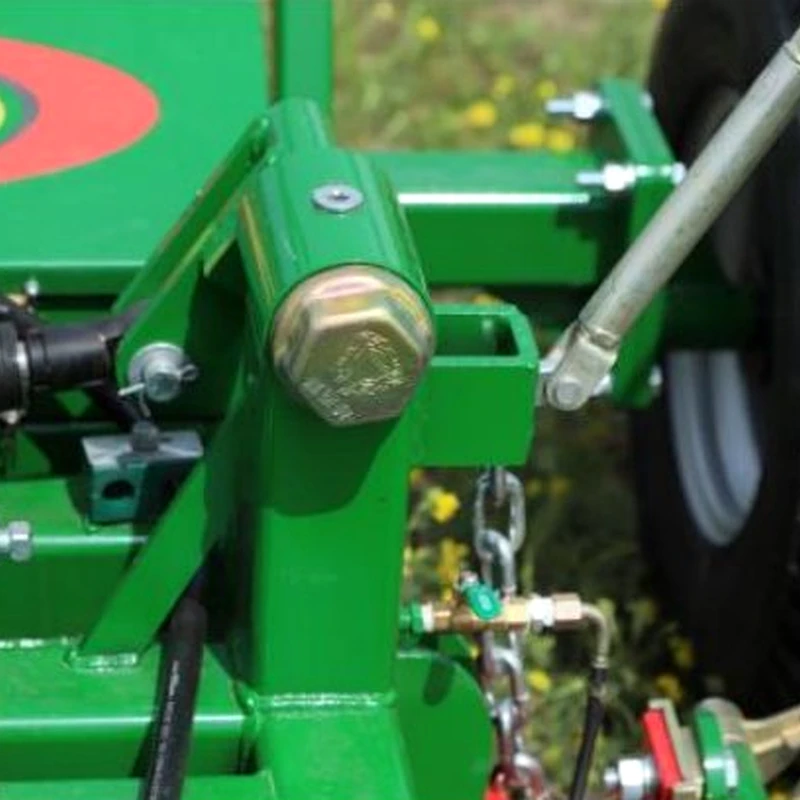
Le châssis principal est fabriqué en acier au carbone tubulaire soudé, ce qui lui confère la rigidité en torsion nécessaire pour supporter la largeur de travail de 5 mètres sans flexion ni affaissement. Tous les points de pivot sont équipés de roulements étanches afin de réduire les intervalles d'entretien, et la liaison de la barre d'attelage est renforcée par des goussets pour résister aux contraintes générées lors du transport sur des routes accidentées. L'outil est monté sur des pneumatiques robustes qui absorbent les vibrations du terrain et maintiennent la barre de coupe à une hauteur constante au-dessus du sol.
Ensemble barre de coupe et tambour de ratissage
La barre de coupe est située à l'avant de la machine et protégée par des plaques de protection remplaçables qui empêchent les 34 lames mobiles d'entrer en contact avec des pierres et des débris. Chaque lame peut être dévissée et remplacée individuellement sans avoir à démonter la barre de coupe, ce qui simplifie et accélère les réparations sur le terrain. Le tambour de ratissage se trouve derrière la barre de coupe et est entraîné mécaniquement par un système de chaîne et de pignon logé dans un carter étanche à la poussière. Les 42 dents à ressort sont fabriquées en fil d'acier à haute résistance et sont conçues pour fléchir au contact d'obstacles plutôt que de se rompre. Si une dent est endommagée, son remplacement ne prend que quelques minutes et ne nécessite aucun outil spécifique.
Dispositifs de sécurité et mécanismes de protection
Les conditions de travail sur le terrain sont imprévisibles et des obstacles cachés, tels que des pierres enfouies, de vieux poteaux de clôture et des tuyaux d'irrigation, peuvent surgir sans prévenir. La 9GL-2.5/2.9 est équipée d'un verrou de sécurité mécanique sur la barre d'attelage. Si la barre de coupe heurte un objet fixe, le verrou se déverrouille et permet à la barre de pivoter vers l'arrière, absorbant ainsi l'énergie de l'impact avant tout dommage structurel. Une fois l'obstacle dégagé, l'opérateur réarme le verrou manuellement et reprend son travail. Tous les arbres de transmission et les prises de force exposés sont équipés de protections conformes aux normes internationales de sécurité des machines agricoles. Le vérin de levage hydraulique est relié à la commande à distance arrière du tracteur par un collecteur commun, ce qui réduit le nombre de raccords hydrauliques nécessaires.
Guide d'entretien pour la faucheuse-conditionneuse traînée avec fonction de ratissage
En gardant ceci faucheuse-conditionneuse traînée avec fonction de ratissage Un entretien régulier est indispensable au bon fonctionnement de la machine, contrairement aux réparations ponctuelles. Le programme d'entretien ci-dessous couvre les tâches quotidiennes, de mi-saison et de fin de saison. Le respect de ces recommandations prolongera la durée de vie de la machine et garantira des performances constantes sur plusieurs années de récolte.
Contrôles quotidiens sur le terrain (avant chaque séance de travail)
- Faites le tour de la machine et inspectez les lames de coupe pour détecter tout éclat, fissure ou émoussement excessif.
- Vérifiez que les 42 dents du râteau sont intactes et correctement positionnées dans leurs supports.
- Recherchez les fuites de fluide hydraulique autour du vérin de levage et des raccords de flexibles.
- Vérifiez que le protecteur de la prise de force est bien en place et que la goupille de la barre de traction est correctement verrouillée.
- Vérifiez la pression des pneus des deux roues de support.
- Gardez en permanence des lames de rechange sur le tracteur ou le véhicule de service.
Ces vérifications prennent moins de dix minutes et permettent d'éviter la plupart des pannes sur le terrain. Un affûtage précis des lames est le facteur le plus important pour la qualité de coupe et la consommation de carburant ; par conséquent, un entretien quotidien des lames sera largement rentabilisé au cours de la saison.
Inspection de mi-saison (toutes les 40 à 50 heures de fonctionnement)
Après 40 à 50 heures de fonctionnement, retendre la chaîne d'entraînement et inspecter les dents du pignon pour détecter tout signe d'accrochage ou d'usure irrégulière. Examiner les raccords des flexibles hydrauliques pour déceler toute abrasion, en particulier aux endroits où les flexibles passent près des pièces mobiles. Vérifier le bon fonctionnement du mécanisme de verrouillage de sécurité de la barre d'attelage en le déverrouillant et en le réarmant manuellement. Graisser tous les points d'appui de l'arbre du tambour de ratissage et du pivot de la barre de coupe. La tenue d'un registre écrit des heures de fonctionnement et des interventions de maintenance vous permettra de repérer rapidement les signes d'usure et de commander les pièces de rechange avant que leur remplacement ne devienne urgent.
Préparation au stockage de fin de saison
À la fin de chaque saison de coupe, nettoyez soigneusement la machine pour éliminer les résidus de récolte séchés, la terre et l'humidité susceptibles de provoquer de la corrosion pendant le remisage. Graissez tous les points de roulement avec une graisse agricole au lithium. Inspectez la chaîne de transmission et les pignons pour détecter toute usure et remplacez les pièces présentant des signes d'étirement ou d'endommagement des dents. Vérifiez la pression des pneus et gonflez-les conformément aux spécifications du fabricant. Appliquez une fine couche d'huile sur les plaques de support de la barre de coupe pour prévenir la rouille. Rangez la machine dans un endroit couvert ou sous une bâche pour la protéger des intempéries. Avant le début de la saison suivante, remplacez les lames de coupe si elles n'ont pas été changées à la fin de l'année précédente et actionnez le relevage hydraulique plusieurs fois pour purger l'air du système.
Râteau de fauche intégré vs. équipement séparé : une comparaison pratique
De nombreux agriculteurs envisagent une râteau à tondeuse Vous possédez déjà une faucheuse et un râteau séparés ? La question est souvent de savoir si l’approche intégrée offre des avantages pratiques suffisants pour justifier l’ajout d’une machine supplémentaire. Le tableau ci-dessous compare les performances des différents équipements selon les critères les plus importants pour les travaux agricoles quotidiens. Ces différences s’accentuent avec l’augmentation de la superficie des parcelles et du nombre de coupes par saison. Un agriculteur effectuant trois ou quatre coupes par an sur 30 hectares ou plus réalisera des économies bien plus importantes avec une récolte en un seul passage qu’un agriculteur amateur fauchant une petite parcelle une fois par saison.
| Zone de performance | Râteau faucheur intégré 9GL-2.5/2.9 | Tondeuse séparée + râteau séparé |
|---|---|---|
| Consommation de carburant | Un seul passage réduit la consommation de diesel d'environ 50% | Deux passages complets sont nécessaires au-dessus de la même zone. |
| Compaction du sol | Le tracteur ne passe sur le sol qu'une seule fois. | Le double trafic augmente le compactage du sol |
| Rétention des feuilles de culture | Récolte récoltée alors qu'elle était encore souple et humide | Le ratissage des récoltes séchées brise les feuilles délicates |
| Besoins en main-d'œuvre | Un seul opérateur effectue les deux tâches | Nécessite deux opérateurs ou double le temps de travail pour un seul opérateur. |
| Risque météorologique | Une exposition plus courte au champ réduit les risques de dommages causés par la pluie | La récolte reste exposée en attendant le passage du râteau. |
| Stockage d'équipement | Une machine stockée sur une place de parking | Deux machines nécessitent plus d'espace de stockage. |
Cette comparaison repose sur des conditions de culture normales et une densité de culture modérée. Dans des situations extrêmes, comme la présence d'herbes tropicales très denses ou de terrains extrêmement rocailleux, les résultats individuels peuvent varier. Toutefois, l'avantage fondamental que représente la suppression d'un passage complet dans le champ est universel, quel que soit le type de culture ou la situation géographique. Il convient également de souligner l'avantage environnemental lié à la réduction du tassement du sol : un sol compacté réduit l'infiltration de l'eau, limite le développement racinaire et, en fin de compte, diminue le rendement des coupes suivantes. Pour les exploitations où la main-d'œuvre est limitée ou lorsque les conditions météorologiques propices à la fenaison sont restreintes, le gain de temps à lui seul peut justifier l'investissement dans une unité intégrée.
Pourquoi choisir Ever-Power pour votre râteau à fauche traîné ?
Ever-Power est un fabricant spécialisé de systèmes de transmission mécanique et hydraulique, fort de plusieurs décennies d'expérience dans la production de machines agricoles, de boîtes de vitesses, d'arbres de transmission de prise de force et de composants associés. Lorsque vous achetez un râteau à fauche traîné En achetant chez nous, vous vous adressez à un fournisseur qui maîtrise parfaitement chaque composant de la transmission, de la prise de force jusqu'au tambour de ratissage. Voici ce à quoi vous pouvez vous attendre :
- ✅ Contrôle qualité direct usine Chaque unité est soumise à des tests de pré-livraison en usine avant son expédition. Nous testons l'entrée de la prise de force, la réponse du relevage hydraulique, l'alignement des lames et la rotation du tambour de ratissage en charge afin de confirmer que la machine répond à nos spécifications publiées.
- ✅ Chaîne d'approvisionnement dédiée aux pièces détachées — Nous maintenons des stocks régionaux de pièces détachées afin de minimiser les temps d'arrêt. Lames, dents, chaînes de transmission, pignons, flexibles hydrauliques et kits de roulements de rechange sont en stock et prêts à être expédiés. Pour nos clients en Corée et dans les pays voisins, nous livrons généralement les pièces sous quelques jours ouvrables après la commande.
- ✅ Consultation technique avant-vente Notre équipe d'ingénieurs vous aidera à choisir l'équipement le mieux adapté à votre parc de tracteurs, aux conditions de vos champs et à vos cultures avant tout achat. Nous vous fournirons des recommandations honnêtes et vous indiquerons si un autre modèle serait plus approprié à votre situation.
- ✅ Assistance après-vente pendant toute la durée de vie du produit Notre équipe d'assistance technique est à votre disposition pour répondre à vos questions concernant le fonctionnement, la maintenance, le dépannage et les réglages saisonniers. Notre relation avec vous ne s'arrête pas à la sortie de la machine de notre entrepôt.
- ✅ Expérience en logistique internationale Nous expédions régulièrement vers la Corée, le Japon, l'Asie du Sud-Est, l'Asie centrale, l'Afrique, l'Amérique du Sud et d'autres régions. Notre équipe logistique prend en charge le transport par conteneur, les formalités douanières et peut organiser une livraison à domicile sur demande.
- ✅ Gamme complète d'équipements pour fourrage Outre le râteau de faucheuse, notre catalogue de produits comprend des presses à balles rondes, des broyeurs d'aliments pour animaux, des arbres de transmission à prise de force et des réducteurs agricoles. Vous pouvez ainsi constituer un système complet de récolte de foin auprès d'un fournisseur unique, ce qui simplifie l'approvisionnement et garantit la compatibilité.
Au fil des ans, nous avons bâti notre réputation sur la fourniture d'équipements fiables, saison après saison. Le modèle 9GL-2.5/2.9 témoigne de ce même engagement envers des machines agricoles pratiques et durables. Que vous achetiez votre premier outil de récolte fourragère ou que vous agrandissiez votre parc de machines existant, notre équipe est là pour vous accompagner, de votre première demande d'information jusqu'à la fin de son utilisation.
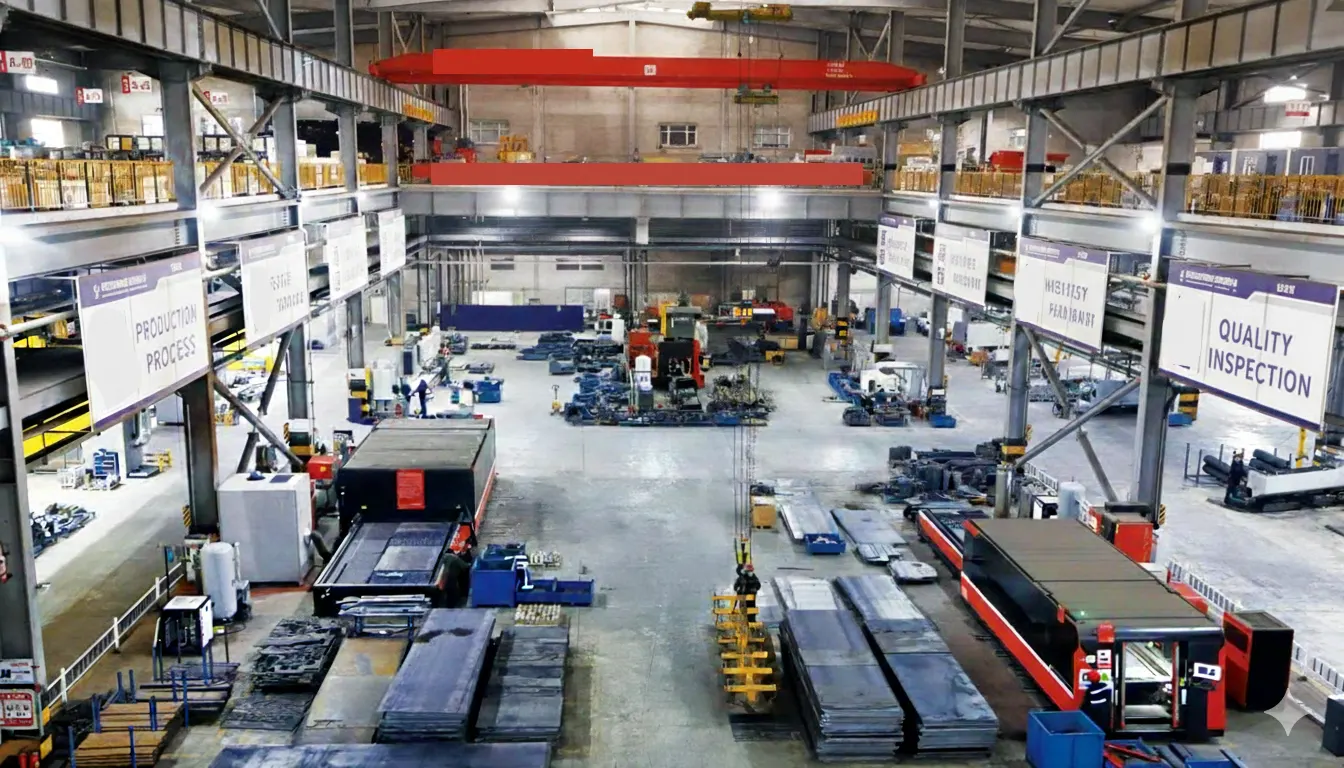
Équipements agricoles connexes d'Ever-Power
Le 9GL-2.5/2.9 râteau à fauche traîné La récolte du fourrage est un élément essentiel d'une chaîne de production complète. Pour vous aider à optimiser votre processus, du champ au stockage, Ever-Power conçoit et fournit une gamme d'équipements agricoles complémentaires. L'achat de plusieurs machines auprès d'un même fournisseur garantit leur compatibilité mécanique, simplifie la commande de pièces détachées et vous offre un interlocuteur unique pour l'assistance technique de l'ensemble de votre parc.
Presses à balles rondes ?
Une fois votre râteau à tondeuse Le champ est parsemé d'andains bien nets ; une presse à balles rondes ramasse la matière sèche et la compresse en balles cylindriques denses pour le stockage ou le transport. presse à balles rondes La gamme comprend des modèles compacts pour petits tracteurs (à partir de 30 CV) et des presses à chambre fixe haute capacité pour les exploitations agricoles. Disponibles avec option d'enrubannage par filet ou par ficelle, ces presses se couplent directement à la sortie d'andainage 9GL-2.5/2.9, permettant ainsi à la presse de suivre le andaineur lors du même passage dans le champ pour une efficacité maximale.
⚙ Arbres de transmission de prise de force
L'arbre de transmission de la prise de force (PDF) assure la liaison mécanique entre votre tracteur et tout outil entraîné par la PDF, y compris cette faucheuse-andaineuse traînée. Ever-Power propose une gamme complète d'outils agricoles. Arbres de prise de force Avec des profils de cannelures standard, des protections et des embrayages de protection contre les surcharges. Si votre arbre de prise de force actuel est usé, endommagé ou ne correspond pas à la configuration des cannelures du 9GL-2.5/2.9, nous pouvons vous fournir un arbre de remplacement de la bonne dimension pour garantir une transmission de puissance sûre et sans vibrations à la vitesse de fonctionnement requise de 540 tr/min.
Boîtes de vitesses agricoles
Les réducteurs agricoles convertissent et redirigent la puissance de la prise de force pour actionner les composants des outils agricoles. Ever-Power fabrique des réducteurs pour faucheuses rotatives, fraises rotatives, épandeurs d'engrais et autres équipements montés sur tracteur. Notre boîte de vitesses Ces réducteurs sont conçus avec des engrenages en alliage trempé et des carters à bain d'huile étanches pour résister aux conditions exigeantes du secteur agricole. Si vous utilisez d'autres équipements à prise de force avec le 9GL-2.5/2.9, nous pouvons vous fournir des réducteurs compatibles et des unités de remplacement issues de notre gamme standard.
Broyeurs d'aliments et traitement du fourrage
Pour les exploitations qui transforment le fourrage en aliments pour animaux plutôt que de le stocker en balles entières, notre gamme de broyeurs à fourrage réduit le foin séché, la paille et les tiges de récolte en particules plus fines, idéales pour être mélangées à des céréales ou des compléments alimentaires. Ces machines acceptent le fourrage directement des balles ou des andains et peuvent être entraînées par le même type de tracteur que celui utilisé pour la faucheuse-andaineuse 9GL-2.5/2.9, ce qui vous permet de conserver un investissement dans une même catégorie de puissance.
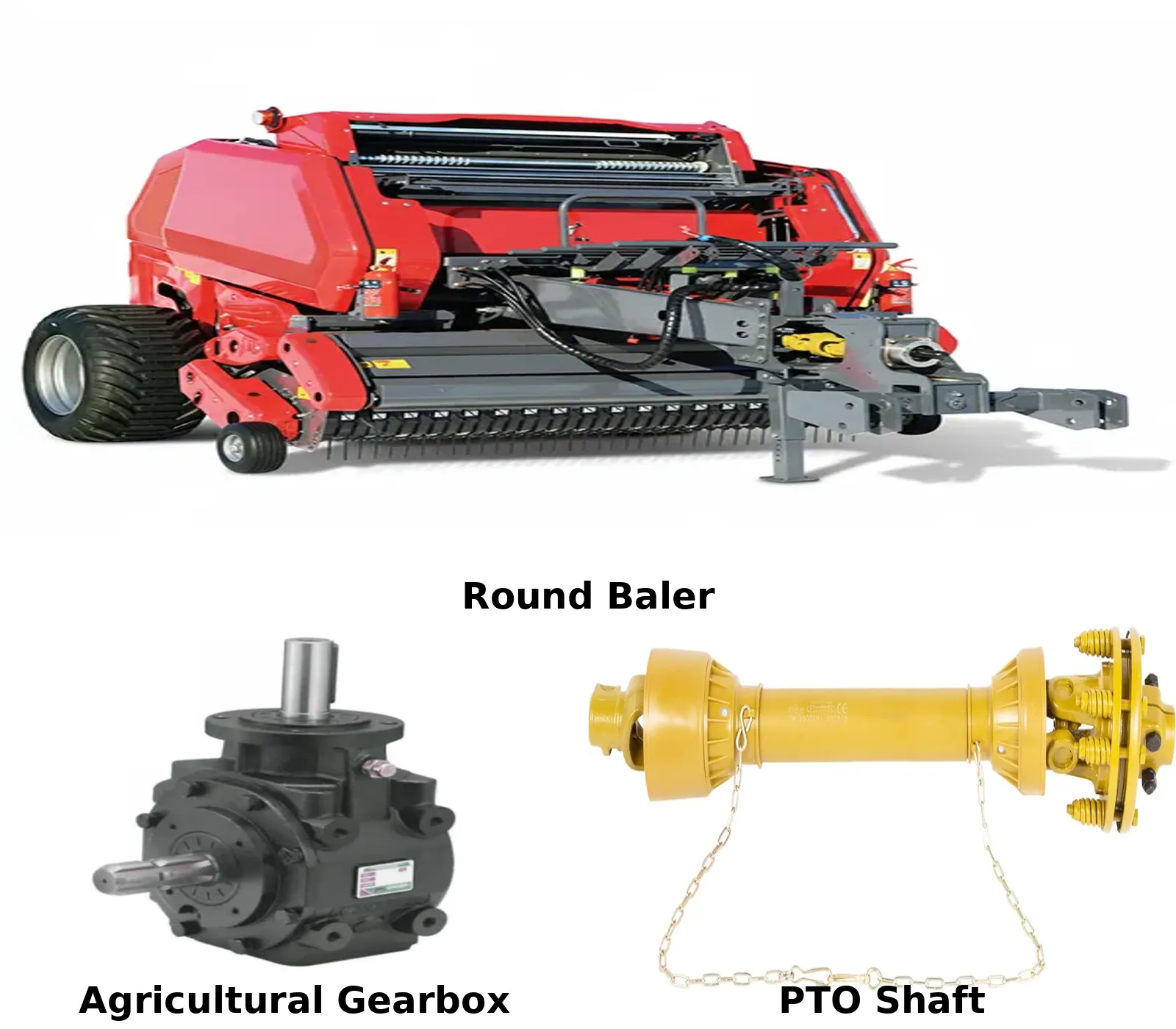
S'approvisionner en râteaux de faucheuse, presses à balles, arbres de transmission et boîtes de vitesses auprès d'un seul fabricant simplifie le processus d'achat et vous assure que chaque composant de votre chaîne de production est conçu pour fonctionner en parfaite harmonie. Notre équipe commerciale peut vous proposer un devis groupé pour plusieurs produits, et nos ingénieurs examineront les spécifications de votre parc de tracteurs afin de garantir que chaque outil est parfaitement adapté en termes de puissance, de vitesse et de configuration d'attelage.
Questions fréquemment posées sur le râteau faucheur 9GL-2.5/2.9
Vous trouverez ci-dessous les réponses aux questions que nos équipes commerciales et techniques reçoivent le plus souvent de la part des acheteurs qui évaluent ce produit. râteau à fauche traîné pour leurs opérations.
Quelle puissance minimale de tracteur est nécessaire pour faire fonctionner cette faucheuse-râteau traînée ?
La faucheuse 9GL-2.5/2.9 nécessite un tracteur à roues d'une puissance comprise entre 25 et 55 kW, soit environ 35 à 75 chevaux. Grâce à sa barre de coupe à mouvement alternatif, elle consomme moins d'énergie que les faucheuses rotatives ; ainsi, même les tracteurs de faible puissance peuvent l'utiliser efficacement dans des conditions de culture normales. Avant de passer commande, assurez-vous que votre tracteur dispose d'une prise de force (PDF) à 540 tr/min et d'au moins une commande hydraulique arrière.
À quelle fréquence dois-je remplacer les lames de coupe de cette combinaison râteau à foin et tondeuse ?
La fréquence de remplacement des lames dépend des conditions du terrain. Dans les pâturages propres et sans pierres, un jeu de 34 lames peut durer toute une saison de coupe. En terrain rocailleux ou abrasif, il peut être nécessaire de remplacer ou d'affûter les lames plus fréquemment. Nous recommandons d'inspecter les lames quotidiennement et d'emporter un jeu de rechange lors de la récolte. Chaque lame se fixe individuellement par boulonnage ; son remplacement ne prend donc que quelques minutes par lame avec des outils à main courants.
Cette faucheuse-râteau peut-elle convenir aux herbes tropicales denses et humides ou est-elle uniquement destinée au fourrage sec ?
La barre de coupe alternative coupe efficacement les herbes denses et fibreuses, et les 42 dents à ressort sont suffisamment agressives pour rassembler les végétaux lourds et humides en andains. Pour les fourrages tropicaux très denses, travailler à faible vitesse (environ 6 km/h) permet au mécanisme de coupe de faucher proprement la végétation. Il est conseillé d'utiliser un tracteur d'une puissance proche de 55 kW pour les récoltes abondantes et régulières.
Comment cette faucheuse-conditionneuse traînée avec fonction de ratissage est-elle expédiée à l'international ?
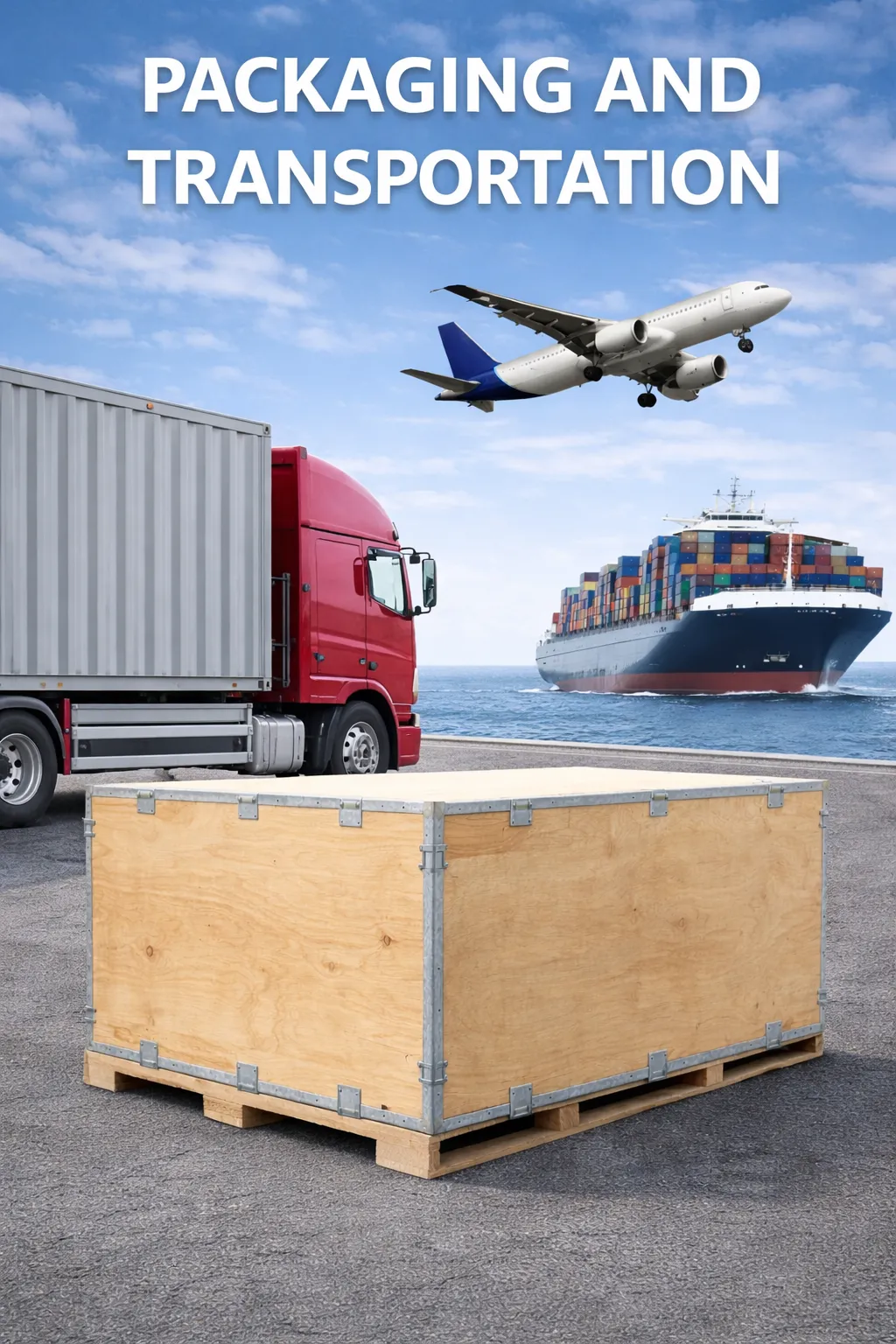
Pour les acheteurs internationaux, le modèle 9GL-2.5/2.9 est livré en kit (SKD) afin d'optimiser l'espace dans les conteneurs. Un conteneur standard de 20 pieds peut contenir plusieurs unités. Nous fournissons des manuels d'assemblage détaillés et illustrés, ainsi que des tutoriels vidéo, pour permettre à vos techniciens locaux d'assembler la machine sur site. Notre équipe logistique coordonne les expéditions vers les ports de Corée, du Japon, d'Asie du Sud-Est et d'autres destinations, et nous pouvons organiser une livraison porte-à-porte sur demande.
Quel entretien le mécanisme de ratissage nécessite-t-il entre les saisons ?
Après la récolte, nettoyez soigneusement le tambour d'andainage pour éliminer les résidus de récolte compactés. Graissez tous les points d'appui de l'arbre du tambour et des supports de dents. Inspectez les 42 dents à ressort pour détecter toute déformation, fissure ou marque d'usure et remplacez celles qui présentent des signes d'usure. Vérifiez la tension de la chaîne d'entraînement et ajustez-la ou remplacez-la si nécessaire. Rangez la machine dans un endroit abrité pour éviter la formation de rouille sur le fil des dents et la surface du tambour.
Ce râteau faucheur convient-il aux petits pâturages en pente ou seulement aux champs plats ?
Grâce à sa conception traînée et à ses pneus indépendants, cette machine épouse les terrains accidentés avec plus de souplesse qu'un équipement à trois points d'attelage. Elle se comporte bien sur les pentes douces à modérées, ses pneus suivant naturellement le relief. Pour les pentes très raides, supérieures à 15 degrés, une barre de coupe portée peut s'avérer plus appropriée, mais pour la plupart des pâturages vallonnés et des prairies, la 9GL-2.5/2.9 offre des performances fiables.
Où puis-je trouver des pièces de rechange pour le râteau de faucheuse traînée 9GL-2.5/2.9 ?
Les pièces détachées, notamment les lames de coupe, les dents de râteau, les chaînes d'entraînement, les pignons, les flexibles hydrauliques et les kits de roulements, sont disponibles directement auprès d'Ever-Power. Nous disposons de stocks régionaux de pièces détachées afin de garantir des délais de livraison rapides, et notre service client est à votre disposition pour vous aider à identifier les références des pièces adaptées à votre appareil. Pour les clients en Corée et dans les pays limitrophes, la livraison est généralement effectuée sous quelques jours ouvrés après la commande.
Avis clients
Voici les témoignages d'acheteurs concernant leur expérience avec le 9GL-2.5/2.9 après l'avoir utilisé dans leurs exploitations agricoles. Ces avis proviennent d'acheteurs vérifiés de différentes régions et exploitations.
Park Joon-ho, directeur d'exploitation agricole, Gangwon-do (septembre 2025)
Nous utilisons cette machine depuis la fin du printemps et elle a parfaitement tenu le coup après cinq tontes. Sa largeur de coupe de 2,5 m est idéale pour la configuration de notre champ et les andains sont toujours réguliers. Notre tracteur de 50 CV la gère sans aucun problème. Le principal avantage pour nous a été la réduction de notre consommation de carburant. Auparavant, nous utilisions la faucheuse un jour et le andaineur le lendemain ; cette machine nous permet donc de gagner une journée complète d'utilisation du tracteur à chaque tonte. La commande de pièces détachées s'est également faite sans difficulté : nous avions besoin de lames supplémentaires et elles sont arrivées en quatre jours à notre adresse à Chuncheon.
Kim Soo-yeon, directrice de la coopérative laitière, Chungcheongnam-do (novembre 2025)
La qualité du fourrage est primordiale pour notre troupeau laitier. Nous cultivons de la luzerne sur environ 40 hectares et les pertes de feuilles dues au ramassage des résidus secs étaient une source constante de frustration. Le passage à cette faucheuse-andaineuse a permis d'améliorer sensiblement les résultats de nos analyses de foin. Le taux de protéines brutes a augmenté par rapport à l'année dernière, où nous utilisions un équipement séparé. La machine est simple d'utilisation et notre conducteur de tracteur habituel a appris à s'en servir en une vingtaine de minutes.
Song Hye-jin, directeur d'une ferme maraîchère, Gyeonggi-do (fin 2024)
Nous l'utilisons principalement pour gérer les résidus de cultures de couverture entre nos principales rotations de légumes. La hauteur de coupe de 60 à 70 mm laisse juste assez de chaume pour protéger la surface du sol tout en enlevant suffisamment de matière pour préparer la prochaine plantation. Son poids de 920 kg limite la pression au sol, ce qui est important pour nous car nous essayons d'éviter le tassement de nos planches. La livraison à notre ferme près de Suwon s'est déroulée sans problème et les instructions de montage étaient suffisamment claires pour que notre équipe de deux personnes puisse l'installer en une demi-journée.
Nguyen Van Thanh, entrepreneur en fourrage, province de Nghe An, Vietnam (mars 2025)
Je m'occupe d'une quinzaine d'élevages bovins dans la région et le temps est toujours compté car la saison des pluies peut commencer d'un jour à l'autre. Avant cette machine, je devais tondre puis revenir le lendemain matin pour ratisser, et il arrivait que la pluie atteigne les cultures pendant la nuit. Maintenant, je fais tout en un seul passage et les presses à balles suivent immédiatement l'après-midi même. L'équipe d'Ever-Power a répondu rapidement à mes questions techniques lorsque j'hésitais entre ce modèle et une faucheuse rotative plus grande, et ils ont été honnêtes quant aux capacités et aux limites de cette machine. Cette franchise m'a inspiré confiance.
Tanaka Kenji, exploitant agricole mixte, Hokkaido, Japon (août 2025)
Nous avons environ 25 hectares de fléole des prés que nous fauchons trois fois par saison. J'ai attelé cet râteau à notre Kubota de 45 CV et il a fonctionné sans problème dès le premier champ. Les 42 dents du râteau ramassent l'herbe efficacement. J'apprécie l'écartement de 71 mm entre les dents, suffisamment serré pour ramasser la fléole des prés à tiges fines sans laisser de résidus. Notre ancien râteau avait un écartement plus large et laissait toujours des bandes d'herbe au sol. Seul bémol : par temps très chaud, la réponse hydraulique est légèrement plus lente, mais c'est un problème lié au système hydraulique du tracteur, et non à l'outil lui-même. Globalement, c'est un bon produit.
Lee Dong-wook, éleveur, Jeju-do (octobre 2025)
La livraison sur l'île de Jeju était ma principale préoccupation lors de ma commande. L'équipe logistique s'est occupée de tout, du port continental jusqu'à ma ferme. La machine est arrivée bien emballée et en parfait état. Nous l'utilisons dans nos pâturages et la qualité de coupe est excellente. La lame alternative offre une coupe beaucoup plus nette que la faucheuse à fléaux que nous utilisions auparavant, et les chevaux semblent préférer le foin ainsi obtenu. J'apprécie également le fait que la largeur de travail se replie à moins de 3 mètres, ce qui facilite les déplacements entre les enclos sur nos chemins étroits.
Informations complémentaires
| Éditeur | Cxm |
|---|
Produits similaires
-
Râteau à foin à roues à doigts 9LZ-6.0 | Râteau en V à 12 roues 6 m
-
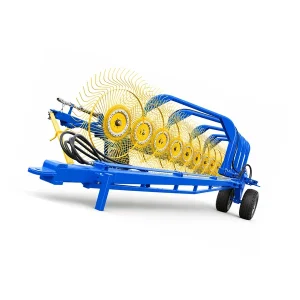
Râteau à foin à roue à doigts 9LZY-9.0 | Râteau en V à 15 roues 9m
-
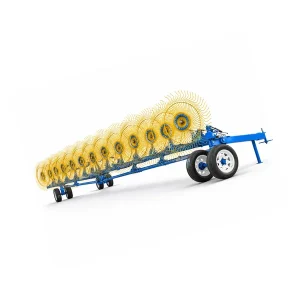
Râteau en V à 17 roues 9LZD-9.0 | Râteau à foin à roues de 9 m
-
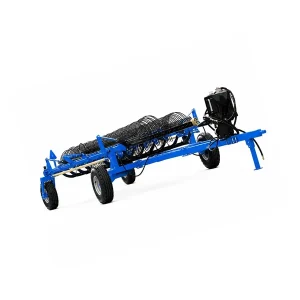
Râteau à foin horizontal tracté 9LH-12 | Largeur : 12 m
-
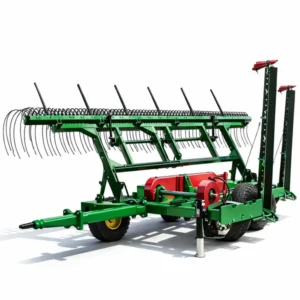
Râteau traîné 9GL-5.0/5.6 | Largeur de coupe : 5 m, Largeur de ratissage : 5,6 m


