Model Comparison · 9YF Series · Updated August 2026
9YF-2200 vs 9YF-2200S Square Baler Comparison
The 9YF-2200 and 9YF-2200S share the same 2,200mm pickup width and 460×360mm bale chamber — but they are designed for fundamentally different crop situations. The 9YF-2200 is a standard spring-tooth baler optimised for clean hay crops at 50HP+. The 9YF-2200S adds a single shredder mechanism and hammer-claw pickup for dense, hard-stalk material at 99HP+. Choosing the wrong model for your crops wastes money on unnecessary complexity or produces consistent plugging in demanding material. This comparison covers every dimension that separates them.
Covers: HP requirement · pickup mechanism · shredder function · crop compatibility · ash content · operating cost · horse hay implications · when to choose each model
Quick Answer
Choose the 9YF-2200 if your primary crops are grass hay, timothy, bermudagrass or light alfalfa — and your tractor is in the 50–85HP range. The spring-tooth pickup is gentler on seed heads and the standard mechanism is simpler to maintain.
Choose the 9YF-2200S if you regularly bale dense first-cut alfalfa, cotton stalk, corn stover or any hard-stalk material — and your tractor delivers 99HP+ at the PTO. The shredder mechanism substantially reduces plugging in these crops.
The Core Difference: What a Shredder Actually Does
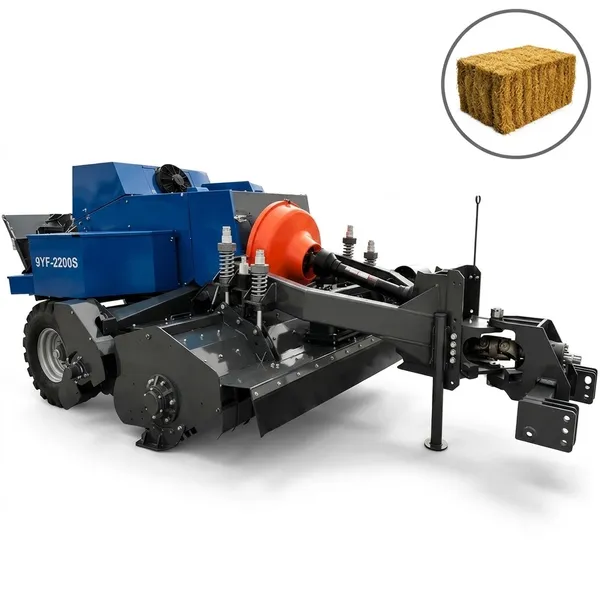
The shredder in the 9YF-2200S is not simply a more aggressive version of the spring-tooth pickup. It is a separate pre-processing mechanism — a rotating drum fitted with hammer-claw tines that operates between the pickup reel and the feeder inlet. As crop material enters the machine, the shredder drum processes it into shorter, more uniform particle lengths before it reaches the bale chamber inlet.
This pre-processing step addresses the root cause of plugging in hard-stalk crops: rigid hollow stalks (corn, cotton, sorghum, dense alfalfa stems) bridge across the feeder inlet opening when they enter in random lengths and orientations. A stalk at exactly the wrong angle spans the inlet and supports the material weight above it — blocking the feeder from clearing the charge. The shredder converts these long, variable-angle stalks into shorter uniform segments that flow freely into the inlet without bridging. This is why the plugging rate difference between the 9YF-2200 and 9YF-2200S in cotton stalk or corn stover is not marginal — it is the difference between a productive session and one interrupted every few minutes.
9YF-2200 — Spring-Tooth Pickup
Flexible spring-steel tines mounted on the rotating pickup reel. Tines flex on contact with field obstructions (rocks, soil mounds) and return to position — resistant to breakage. The gentle, sweeping tine action is ideal for hay crops where leaf retention and seed head integrity matter. No pre-processing of material before the inlet — crop enters in the length and orientation it was raked. Optimal for uniform, consistent hay windrows.
9YF-2200S — Hammer-Claw + Single Shredder
Rigid hammer-claw tines that actively pull material from the windrow rather than sweeping it. The shredder rotor downstream processes the incoming material into a more uniform particle length before it reaches the bale chamber inlet. This dual-stage intake dramatically reduces bridging in hard-stalk crops. The more aggressive tine action is very effective on mat-lying material (rice straw, corn stover) but slightly more disruptive to delicate seed heads in dry timothy or orchard grass.
Eight-Dimension Side-by-Side Comparison
| आयाम |
9YF-2200 (Standard) |
9YF-2200S (Shredder) |
| Minimum PTO HP |
50 एचपी — pairs with a wide range of mid-size utility tractors |
99 HP — requires a full-size row-crop tractor |
| अनुशंसित पीटीओ एचपी |
65 HP for standard hay crops; 75 HP for dense alfalfa |
115 HP for standard use; 125 HP in heavy corn stover or cotton stalk |
| Pickup mechanism |
Spring-tooth — flexible tines, gentle crop handling, low leaf damage |
Hammer-claw — rigid tines, aggressive lift, effective on mat-lying material |
| Shredder mechanism |
None — crop enters the inlet at the same length as the windrow |
Single shredder drum — pre-processes material to shorter, uniform lengths before inlet entry |
| Plugging rate in hard-stalk |
उच्च — cotton stalk and corn stover bridging causes frequent stoppages |
Very low — shredder pre-processing eliminates most bridging events |
| Seed head preservation |
उत्कृष्ट — spring-tooth action minimises damage to timothy and orchard grass seed heads |
गोरा — hammer-claw tines are more aggressive; not recommended for dry seed-head-sensitive crops |
| Density control |
Manual spring tension adjustment |
Touchscreen control panel — digital density setting with session memory |
| वार्षिक रखरखाव लागत |
Lower — fewer mechanism components; shredder tine replacement not required |
Higher — shredder hammer-claw tines are wear items requiring inspection and periodic replacement |
Crop Compatibility — Which Model for Which Material
| फसल / सामग्री |
9YF-2200 |
9YF-2200S |
सिफारिश |
| Grass hay (mixed, orchard, fescue) |
उत्कृष्ट |
अच्छा |
9YF-2200 — simpler, lower HP, no shredder needed for standard hay |
| Timothy hay (horse market) |
उत्कृष्ट |
गोरा |
9YF-2200 — spring-tooth preserves seed heads; critical for horse market premium |
| बरमूडा घास का चारा |
उत्कृष्ट |
अच्छा |
9YF-2200 for domestic horse/cattle. 9YFS-2.2 for export ash-reduction markets. |
| Alfalfa — 2nd / 3rd cut |
अच्छा |
अच्छा |
Either model works well. 9YF-2200 at 65–75HP tractor is sufficient. |
| अल्फाल्फा — पहली कटाई, पूरी फसल |
मध्यम |
अच्छा |
9YF-2200S reduces plugging events in very dense first-cut stands at high forward speed |
| कपास के डंठल (पहले से कटे हुए) |
गरीब |
उत्कृष्ट |
9YF-2200S only — rigid stalk bridging makes standard model impractical for consistent production |
| घास का ढेर |
Very poor |
अच्छा |
9YF-2200S strongly recommended — shredder pre-processing is essential for consistent stover throughput |
| Wheat / barley straw |
उत्कृष्ट |
अच्छा |
9YF-2200 — straw is light and uniform; no shredder benefit for standard straw baling |
Specific Consideration: Horse Hay and Seed Head Preservation
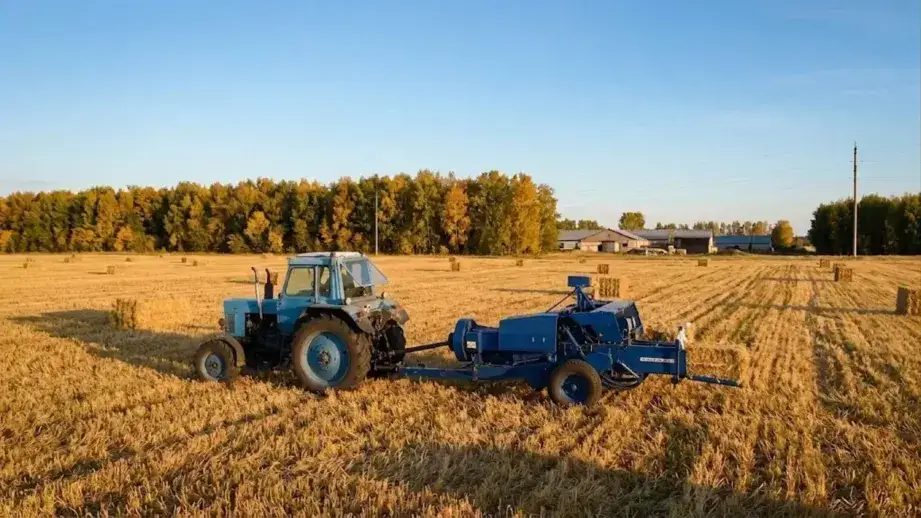
For operations targeting the premium horse hay market — particularly timothy and orchard grass at boot stage — the 9YF-2200 spring-tooth model is the recommended choice, regardless of whether the 9YF-2200S would otherwise suit the tractor HP available. The closed seed head that horse buyers inspect and value is more susceptible to mechanical damage when baling dry at 13–15% moisture. At this moisture level, the seed heads are somewhat brittle and the impact velocity of hammer-claw tines is noticeably more disruptive than the sweeping action of spring-tooth tines.
Horse hay operations that also bale corn stover or cotton stalk as a secondary crop face a difficult choice: neither model perfectly serves both. The common solution for dual-purpose operations is to use the 9YF-2200 for the horse hay season (spring and early summer) and accept the lower stover productivity with the standard pickup — rather than investing in the 9YF-2200S that delivers excellent stover performance but compromises seed head quality in the premium hay season.
Operating Cost Comparison: The True Cost Difference Per Season
9YF-2200 Annual Operating Costs
Fuel (tractor at 65HP)Lower — engine at 75–85% load
Annual service partsStandard — no shredder components
Shredder tine replacementNot applicable
Total relative to 9YF-2200S15–25% lower per season
9YF-2200S Annual Operating Costs
Fuel (tractor at 115HP)Higher — larger engine at higher load
Annual service partsHigher — shredder bearings, belts
Shredder tine replacement$150–$400 per set, per 10,000 bales
Offset by:Higher productivity in hard-stalk
The higher operating cost of the 9YF-2200S is only justified when the shredder mechanism delivers enough productivity improvement — reduced plugging stoppages, higher forward speed in hard-stalk crops — to offset both the higher fuel cost and the shredder tine wear cost. For operations baling exclusively hay crops, the productivity advantage does not exist and the 9YF-2200 is the lower-cost choice on every dimension.
PTO Shaft Specification for 9YF-2200S — Why the Driveshaft Must Be Upgraded
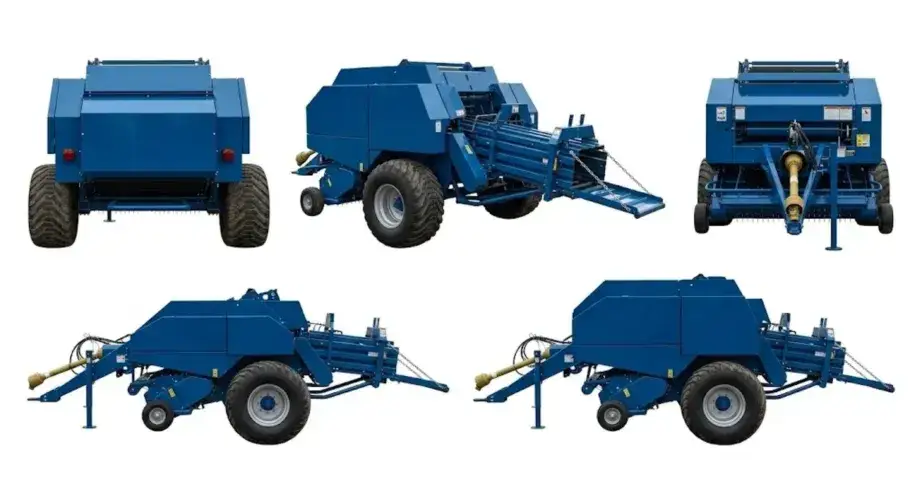
If you are upgrading from a 9YF-2200 to a 9YF-2200S and retaining the same PTO driveshaft, verify that the shaft is rated for the higher HP. A shaft rated at 65HP will transmit the 9YF-2200S shredder peak torque at failure risk — the shaft will overheat the CV joints and fail under sustained hard-stalk baling load. The CV joint angle rating must also be re-checked when pairing a larger tractor with the 9YF-2200S — the higher-HP tractor may have a different hitch geometry. Full specification and upgrade guide: PTO driveshaft HP and torque rating upgrade guide for shredder balers.
Frequently Asked Questions — 9YF-2200 vs 9YF-2200S
Do both models produce the same bale size?+
Yes — both the 9YF-2200 and 9YF-2200S produce bales with an identical 460mm × 360mm cross-section. The bale length and weight settings are controlled by the same star wheel metering device and density spring system on both models. The shredder mechanism affects only the pre-processing of material before it enters the bale chamber — it does not change the bale chamber geometry or the bale format. A horse hay buyer inspecting a bale from either model would see the same 460×360mm cross-section.
Can I bale bermudagrass for export with the 9YF-2200S?+
Yes — the 9YF-2200S bales bermudagrass effectively, and the hammer-claw tine action on bermudagrass (fine-stem crop) is not as damaging to the crop as it is to dry boot-stage timothy seed heads. For export markets requiring ash content below 2%, the 9YFS-2.2 dual-shredder model with its negative-pressure fan system is the strongest choice because the fan actively removes soil particles from the material stream during baling — producing measurably lower ash content than either the 9YF-2200 or 9YF-2200S. If you are baling bermudagrass for the Japanese or Korean export market and ash content is a specification point, discuss the 9YFS-2.2 fan system benefits with us before selecting a model.
Is the touchscreen on the 9YF-2200S worth the price difference on its own?+
No — the touchscreen density control on the 9YF-2200S should not be the deciding factor. The touchscreen provides digital density setting with session memory (the machine remembers your last setting), which is convenient for operations switching between multiple crops with different density requirements. However, the manual tension adjustment on the 9YF-2200 is equally effective at maintaining consistent density — it simply requires a physical adjustment rather than a screen input. The decision between models should rest on crop type and HP availability, not on the control interface preference. If you primarily bale hay crops with a 50–85HP tractor, the 9YF-2200 manual system is fully adequate.
How much more does the 9YF-2200S cost to maintain annually than the 9YF-2200?+
Annual maintenance cost for the 9YF-2200S runs approximately 20–35% higher than the 9YF-2200 at the same bale volume. The additional cost comes from: shredder hammer-claw tine wear (tines require inspection every 5,000 bales in hard-stalk crops and replacement every 10,000–15,000 bales); shredder drive belt inspection and replacement; and the additional grease fittings on the shredder shaft bearings that must be serviced at each session. The tractor operating the 9YF-2200S also consumes more fuel due to the higher HP requirement — for a 10,000-bale season at 115HP versus 65HP tractor, the fuel cost difference alone is $800–$1,500 depending on fuel price and tractor efficiency. These costs are justified when the shredder mechanism is actually delivering productivity improvement — in hard-stalk crops where the 9YF-2200 would experience frequent plugging.
My tractor is 85HP. Can I use the 9YF-2200S on standard hay?+
No — 85HP PTO is below the 99HP minimum for the 9YF-2200S. An 85HP tractor can operate the standard baling mechanism at rated speed, but the shredder mechanism adds sufficient additional sustained load to push the engine below the rated PTO speed in any but the lightest conditions. Operating a 9YF-2200S with an under-powered tractor produces the PTO speed fluctuation that causes knotter timing problems and bale density inconsistency — the same problems that insufficient HP causes on any square baler. An 85HP tractor is well-matched to the 9YF-2200 for all hay crops including first-cut alfalfa, and is in the comfortable operating range for the standard model in normal conditions.
Does the shredder on the 9YF-2200S require any special setup for different crops?+
The shredder clearance setting may need adjustment between hay crops and hard-stalk crops. For hay crops where the shredder is active but not heavily loaded, a wider clearance setting reduces the aggressive cutting action and minimises the seed head damage in crops like alfalfa where some stem shortening is beneficial but leaf damage is not wanted. For hard-stalk crops (cotton, stover), a tighter clearance setting produces more aggressive shredding and shorter output particle sizes — reducing bridging risk at the inlet. The shredder clearance adjustment procedure is described in the operator manual for each setting position. In practice, many operators use a single intermediate setting year-round rather than adjusting between crops — this is acceptable for mixed hay and light hard-stalk operations but a dedicated setting for each crop type produces better results.
What is the 9YFS-2.2, and how does it differ from the 9YF-2200S?+
The 9YFS-2.2 is the dual-shredder version of the shredder range — where the 9YF-2200S has a single shredder stage, the 9YFS-2.2 processes material through two shredder stages before the inlet. It also adds a negative-pressure fan system that removes fine particles and soil from the material stream during baling, which measurably reduces bale ash content. The 9YFS-2.2 is the highest-specification model in the 9YF range and is appropriate for operations where ash content reduction is a market specification — particularly export bermudagrass for Japanese or Korean dairy importers who test for ash as an indicator of soil contamination. The 9YFS-2.2 also benefits corn stover and cotton stalk baling through more complete particle size reduction. HP requirement for the 9YFS-2.2 is 99HP minimum with 125HP+ recommended.
Which model is better for a mixed operation baling hay in spring and stover in fall?+
If the hay crop is timothy or orchard grass for the horse market and the stover volume is significant, this is the most challenging model selection scenario in the 9YF range. The 9YF-2200 does the hay exceptionally well but struggles with stover plugging. The 9YF-2200S handles stover very well but delivers fair (not excellent) seed head preservation in dry horse hay. The decision depends on relative revenue: if horse hay at the premium price is the primary revenue source, protect that quality with the 9YF-2200 and accept the reduced stover productivity. If stover volume is large and both sources contribute significantly to revenue, the 9YF-2200S is the more productive overall investment — and managing the horse hay session at slightly higher moisture (15–17%) rather than very dry (13–14%) reduces the seed head damage risk from the hammer-claw tines. Contact us with your specific crop volumes and we can help you model the economics of each choice.
9YF-2200 or 9YF-2200S — Get the Right Answer for Your Crops
Tell us your crop list, tractor HP and primary market and we will confirm which 9YF square baler model delivers the best return for your specific operation.
अमेरिका एवर-पावर फोरेज बेलर इक्विपमेंट इंक. · 1401 21वीं स्ट्रीट, सैक्रामेंटो, कैलिफोर्निया 95811
संपादक: सीएक्सएम