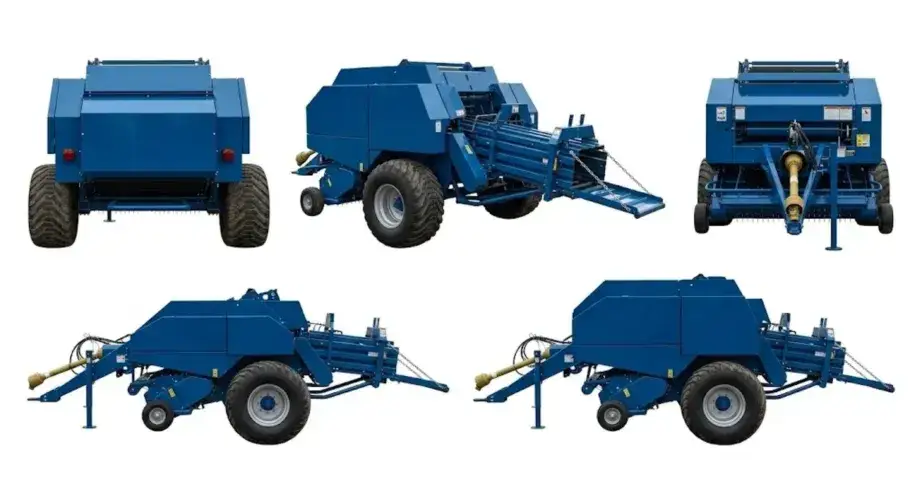
PTO Troubleshooting · 9YF and 9YQ Series · Updated August 2026
Hay Baler PTO Problems
PTO problems on a hay baler — whether a 9YF square baler or a 9YQ round baler — fall into five categories: PTO will not engage, disengages under load, shaft vibration during operation, speed fluctuation causing knotter or net wrap timing errors, और driveshaft overheating. Each fault has a specific diagnostic path involving the tractor clutch, the driveshaft, the baler input gearbox and the protection mechanisms. This guide covers all five in sequence.
Covers: PTO drive system component overview · complete 5-fault diagnosis table · repair steps for each fault · slip clutch vs shear bolt protection · annual maintenance schedule · when to stop and seek service
5 PTO Faults — Quick Reference
1. PTO will not engage → clutch, shear bolt or slip clutch
2. Disengages under load → HP insufficient or slip clutch worn
3. Shaft vibration → CV joint worn or yoke phasing incorrect
4. Speed fluctuation → engine lug or CV joint oscillation
5. Shaft overheating → extreme angle or telescoping bottomed
The Hay Baler PTO Drive System — Component Chain
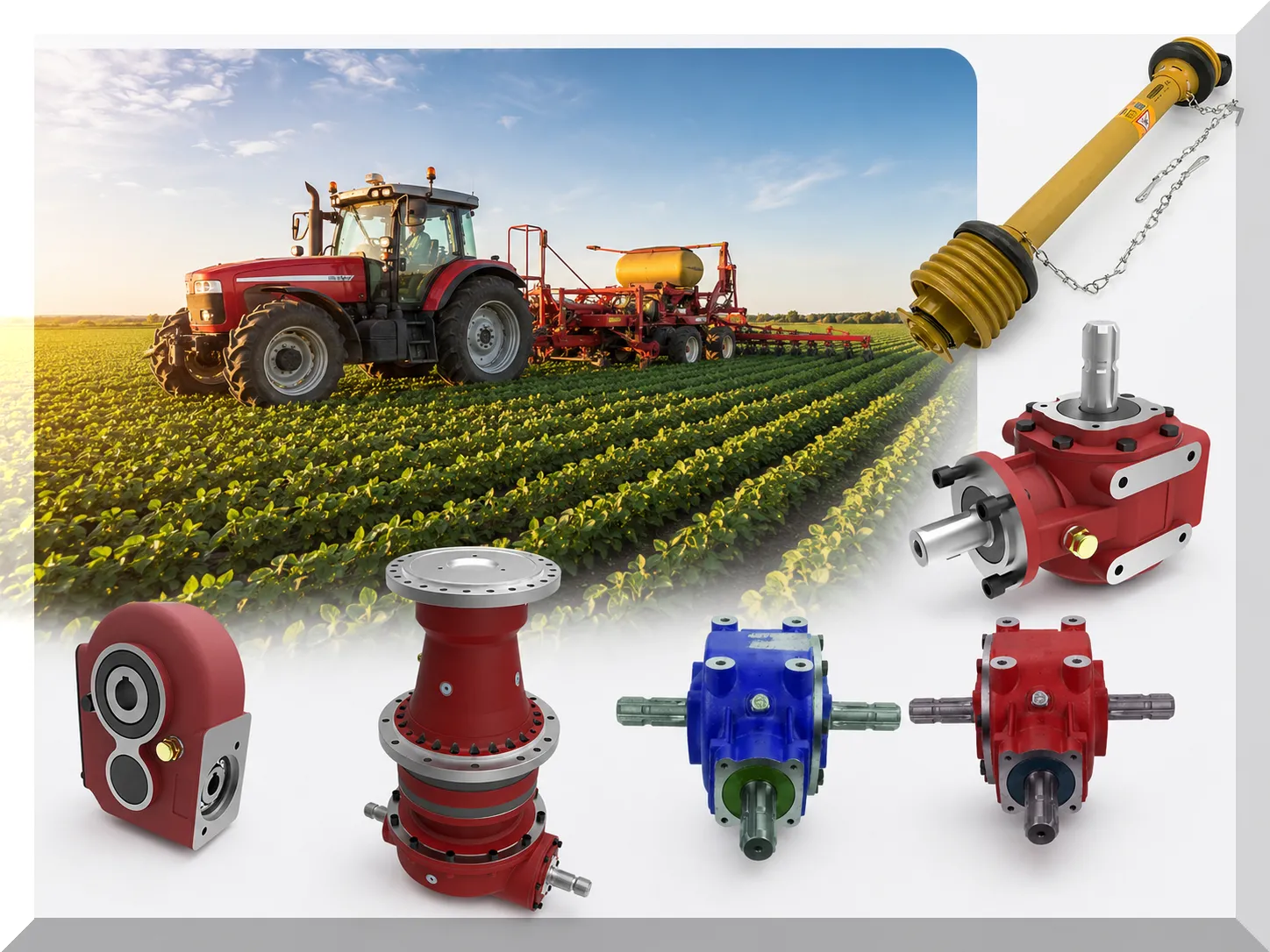
A PTO problem on a hay baler can originate at any point in the drive chain from the tractor engine to the baler mechanism. Systematic diagnosis identifies which component is at fault rather than replacing parts at random:
TRACTOR
Engine → PTO clutch → PTO output shaft (540rpm)
→
DRIVESHAFT
CV joint → telescoping shaft → CV joint → wide angle yoke
→
BALER INPUT
Input gearbox → slip clutch/shear bolt → flywheel or bale chamber drive
→
MECHANISM
Plunger crankshaft (square) or belt drive system (round)
Complete 5-Fault Diagnosis Table
| Fault |
Primary Symptom |
Diagnostic Location |
Most Common Cause |
| 1. PTO will not engage |
No rotation at all at the baler input; tractor PTO lever engaged but driveshaft stationary |
Tractor first, then driveshaft, then baler input |
Tractor PTO clutch fault; baler input shear bolt broken; slip clutch seized |
| 2. Disengages under load |
PTO engages normally, runs at idle, but cuts out when the baler is under baling load |
Tractor engine load and tractor PTO clutch |
Insufficient tractor HP for baler model; worn tractor PTO clutch slipping under load |
| 3. Shaft vibration |
Felt as vibration in tractor cab and baler body; may increase at specific forward speed; noise from driveshaft area |
PTO driveshaft and CV joints |
Worn or dry CV joint; shaft yoke phasing incorrect; driveshaft running at incorrect angle |
| 4. Speed fluctuation |
Knotter fires inconsistently; net wrap timing errors; bale density varies without operator change; tachometer needle oscillates |
Tractor engine, driveshaft CV joints |
Engine lugging under high load; worn CV joint producing speed oscillation at output |
| 5. Driveshaft overheating |
Burning smell from driveshaft area; visible heat shimmer; CV joint boot cracked or melted; shaft becomes hot to the touch within 30 minutes of operation |
PTO driveshaft angle and telescoping section |
Operating at CV joint angle above rated maximum; telescoping section at minimum compressed length |
Fault 1: PTO Will Not Engage at All
Check tractor PTO first: Disengage the driveshaft from the tractor and engage PTO. If the tractor PTO output shaft rotates: the problem is at the driveshaft or baler input, not the tractor. If the tractor PTO output shaft does not rotate: the fault is in the tractor PTO clutch — a dealer service issue, not a baler fault.
Check baler input shear bolt: If the tractor PTO rotates but the baler input does not turn with the driveshaft connected: the shear bolt at the baler input coupling has broken. Inspect the coupling — remove the broken bolt halves, identify the overload cause and install the correct replacement shear bolt.
Check slip clutch (if fitted): Some 9YF and 9YQ models use a slip clutch as the primary protection rather than a shear bolt. If the slip clutch plates have seized together due to rust from off-season storage (the clutch was stored in a disengaged state and the plates corroded together): the clutch will not transmit torque. Symptom: the input shaft tries to turn but the clutch slips immediately in both directions. Resolution: follow the operator manual procedure for manually forcing the clutch plates apart to free the corrosion bond.
Fault 2: PTO Disengages Under Baling Load
A PTO that runs correctly in no-load conditions but cuts out when the baler is actually baling hay indicates that the torque under load exceeds the capacity of one or more components in the drive chain.
Insufficient tractor HP
If the tractor HP at the PTO is below the baler minimum specification: the tractor engine lugs and the PTO speed decreases rapidly under load, triggering the tractor load-protection system that disengages the PTO. Confirm tractor PTO HP meets the 9YF or 9YQ minimum specification. On the 9YF series: 40HP minimum for 9YF-1700 up to 99HP for 9YF-2200S. On the 9YQ series: 40HP for 9YQ-870 up to 100HP for 9YQ-2300.
Worn tractor PTO clutch slipping
A worn tractor PTO clutch may engage fully at low torque but slip when baling load increases — the clutch plate friction material is worn below its effective grip range. Symptom: PTO speed decreases audibly under load without the tractor engine also slowing. This is a tractor service requirement — the PTO clutch plates require inspection and possible replacement by a tractor dealer.
Fault 3: PTO Shaft Vibration During Baling
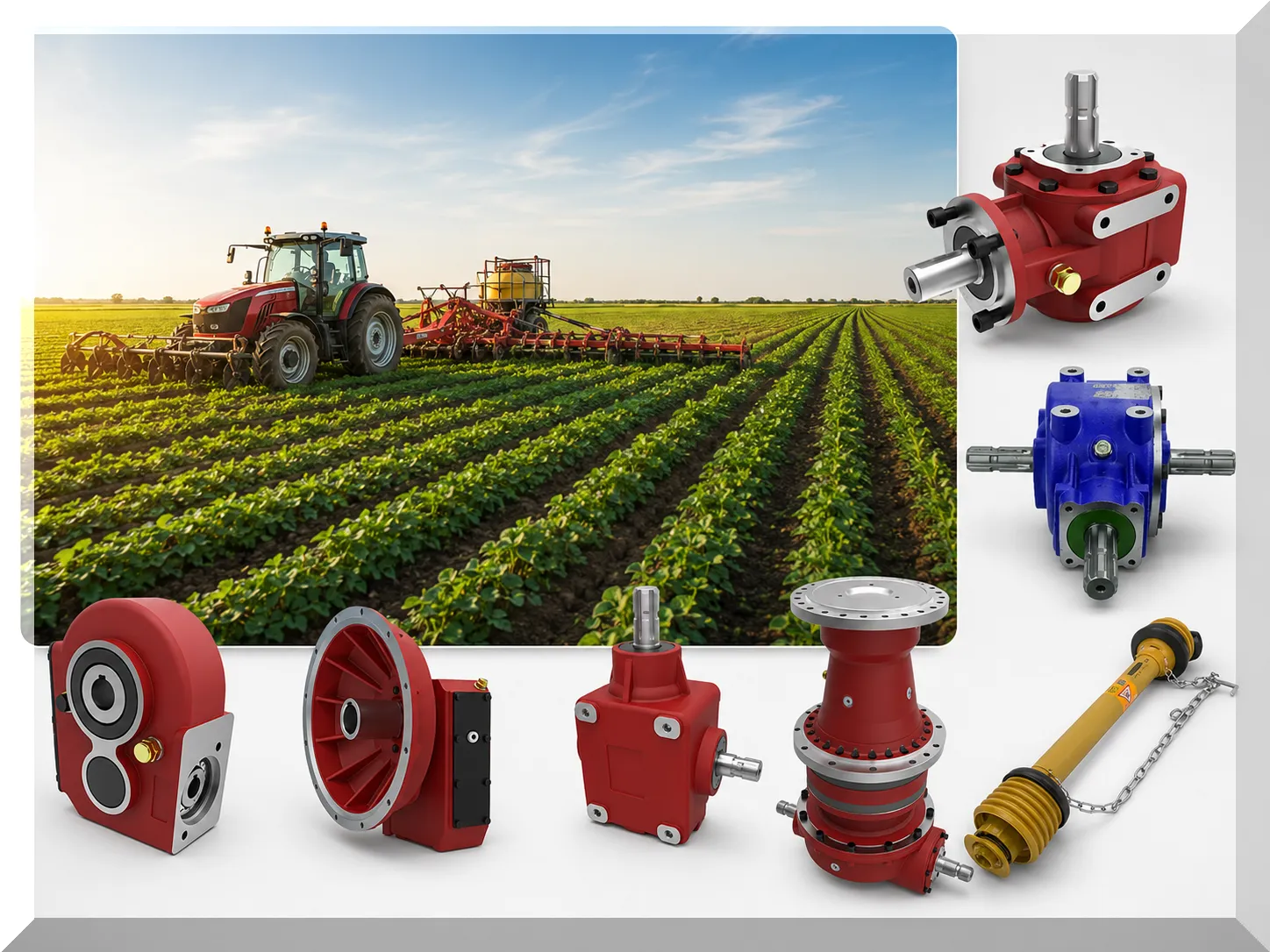
CV joint wear: The most common vibration cause. A CV joint running low on grease (from a failed or cracked boot) generates vibration as the joint rocks rather than rotating smoothly. The vibration is typically speed-dependent — more pronounced at specific RPM ranges. Inspect both CV joint boots for cracks, tears or collapsed sections. A failed boot shows an absence of grease around the joint with grease flung onto surrounding surfaces. Replace the boot and repack the joint with the specified grease quantity — do not continue running a baler with a failed CV joint boot.
Yoke phasing: The two CV joints in the driveshaft must be assembled in phase — the yokes at each end of the telescoping section must be aligned in the same plane. An out-of-phase shaft produces a velocity fluctuation each revolution (the output speed oscillates even when input speed is constant) — felt as vibration and visible as tachometer needle oscillation. If the shaft was disassembled and reassembled for service: verify yoke phasing. The correct phasing mark is typically a paint mark or punch mark on both telescoping sections at the correct alignment position.
Incorrect shaft angle: A driveshaft operating at a constant steep angle (one CV joint permanently at more than 15–20 degrees) produces a cyclic velocity variation as the joint geometry changes through each rotation. This manifests as vibration and accelerates CV joint wear. The shaft should run as close to horizontal as possible when viewed from the side — the tractor hitch height may need adjustment to level the shaft angle.
Faults 4 and 5: Speed Fluctuation and Driveshaft Overheating
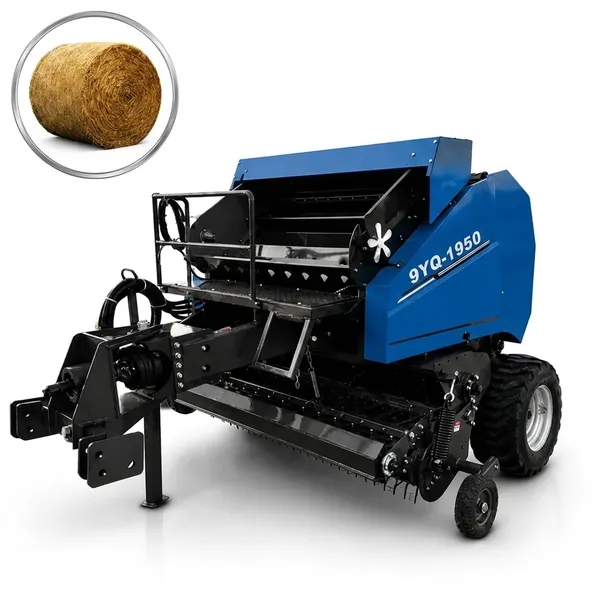
Fault 4: PTO Speed Fluctuation Causing Timing Errors
On a square baler: PTO speed fluctuation causes the flywheel to vary in rotational speed during the session, changing the timing of the plunger stroke relative to the knotter cam. Knotters that fire slightly early or late miss the correct twine engagement position, producing missed knots, incomplete knots or twine-wrapped-around-bale faults — all of which look like knotter faults but are actually PTO faults.
On a round baler: PTO speed fluctuation shifts the timing of the net wrap arm extension and knife engagement relative to the bale rotation count — producing early or late knife fire (over-wrap or under-wrap) that looks like a net wrap mechanism fault.
Diagnosis: Monitor the tractor engine RPM indicator throughout the session. If the RPM decreases noticeably during the densest windrow sections — the tractor is lugging under load. Fix: upgrade tractor HP, reduce forward speed or switch to a lighter windrow. If RPM is stable but speed fluctuation is still present: a worn CV joint producing velocity oscillation is the cause — inspect the driveshaft.
Fault 5: Driveshaft Overheating
Cause A — Operating at excessive CV joint angle: Each CV joint has a maximum operating angle — typically 25–35 degrees for baler applications. Operating above this angle generates heat in the joint faster than the grease can dissipate it, causing boot collapse, grease breakdown and eventual bearing failure. This occurs when the tractor and baler are not connected at matching 3-point hitch heights — the front CV joint operates at a permanent steep downward or upward angle. Level the coupling by adjusting the tractor 3-point linkage top link or the baler drawbar height.
Cause B — Telescoping section at minimum compressed length: When the tractor turns, the shaft telescoping section must have room to lengthen. If the shaft is already at its minimum compressed length in the straight position, the section cannot lengthen on turns — the yokes hit their travel limit and the shaft transmits turning force as a rigid lever, generating extreme heat and stress. This is a shaft length mismatch — the shaft is too long for the tractor-baler combination. Measure the shaft in the working (straight ahead) position: the telescoping section should be at 60–70% of its total extension range, with room to both shorten and lengthen on turns.
Annual PTO Driveshaft Maintenance Schedule

| अवयव |
Schedule |
प्रक्रिया |
| CV joint boots |
पूर्व के मौसम |
Inspect all 4 boots (2 per end) for cracks, tears, hardening or collapse. Replace any boot showing damage — the boot protects the grease that keeps the joint running. A CV joint without grease fails within one season. |
| CV joint grease |
Annual or boot replacement |
Pack with the specified grease quantity at boot replacement. Quantity varies by joint size — refer to the shaft specification for the correct amount. Under-filling causes overheating; over-filling causes boot expansion and pressure failure. |
| Grease fittings |
Every 8 hours of operation |
Grease all fittings on the shaft cross-bearings, telescoping section guard and any other fittings specified in the operator manual. Use the specified grease type — EP2 lithium-based grease is standard for most baler driveshaft applications. |
| Shaft angle check |
Pre-season + when changing tractors |
With baler connected and on level ground, observe the driveshaft angle from the side. Aim for less than 10 degrees angle from horizontal. Adjust tractor 3-point linkage or baler hitch height if the angle exceeds 15 degrees. |
| Telescoping section travel |
पूर्व के मौसम |
Measure shaft length in working position. Confirm adequate extension and compression travel for full turn radius on both sides. Mark the minimum and maximum extension positions with paint or tape for quick field checks. |
| Yoke phasing |
After any shaft disassembly |
Verify the two shaft halves are in phase before re-assembly. Align the reference marks. An out-of-phase shaft produces velocity oscillation that damages both the baler input gearbox and the tractor PTO output shaft over time. |
PTO Shaft Specifications for All 9YF and 9YQ Models
The PTO driveshaft must be rated for the maximum HP demand of the baler model — not the average HP during light baling. The 9YF-2200S at 99HP minimum creates peak torque spikes during dense 1st-cut alfalfa that can exceed 140% of average operating torque on the plunger compression stroke. A shaft rated at 65HP for the 9YF-2200 will operate above its rating during these peaks on the 9YF-2200S — causing the overheating and premature bearing failure described in Fault 5. Full specification guide: PTO driveshaft HP rating and CV joint angle guide for 9YF and 9YQ balers.
Frequently Asked Questions — Hay Baler PTO Problems
Why does my baler PTO run fine empty but slow down and stall under load?+
A baler that runs freely without load but stalls under baling conditions almost always indicates that the tractor PTO HP is below the baler minimum specification for the crop and speed combination. The no-load condition requires only 5–10% of the rated HP to overcome friction and spin the mechanism — any tractor can manage this. The full baling load (compressing hay, driving the pickup, operating the knotter or net wrap) requires the full rated HP. If the tractor engine revolutions per minute (RPM) decrease noticeably when the baler picks up a windrow, the tractor is lugging under load — the engine does not have sufficient reserve torque to maintain RPM against the baling load. Solutions: reduce forward speed (directly reduces baling load per unit time), rake windrows narrower (reduces material per plunger stroke), or confirm you are baling with a tractor that meets the model minimum PTO HP specification.
What is the correct PTO speed for operating a 9YF or 9YQ baler?+
All 9YF square balers and 9YQ round balers in the current range operate at 540rpm PTO. This is the international standard PTO speed for implements up to approximately 65kW (87HP) — 9YQ models above 75HP (the 9YQ-2300 at 100HP minimum) also operate at 540rpm despite their high HP requirement, because the power is transmitted through a large-diameter input shaft rather than through a higher PTO speed. Always confirm the tractor throttle setting produces exactly 540rpm at the PTO output before engaging the baler — most tractors have a PTO speed indicator in the instrument cluster, and the correct engine throttle position for 540rpm PTO is marked on the throttle lever or verified from the tractor operator manual. Do not estimate — operating at 480rpm PTO instead of 540rpm reduces flywheel momentum by approximately 20% and significantly increases shear bolt break frequency in heavy conditions.
How do I know if my driveshaft CV joint is worn and needs replacement?+
Three indicators that a CV joint needs replacement: (1) Boot damage — a cracked, torn or collapsed boot is the most visible indicator. Once the boot fails, the grease it protects is flung out by centrifugal force and the joint runs dry. A dry CV joint is a matter of hours from seizing. (2) Vibration — vibration that increases in severity over the season indicates the joint is wearing progressively. A sharp increase in vibration severity means the joint is reaching end-of-life. (3) Play in the joint — with the machine stationary and PTO off, grasp the driveshaft near the CV joint and try to move it in all directions. A serviceable joint has minimal play in any direction. A worn joint with excessive clearance rocks noticeably — this play is what produces the vibration and velocity oscillation during operation. Replace any CV joint showing two or more of these indicators before the start of the next baling season. Carry a pre-assembled replacement boot kit for each CV joint model used in the field during peak season.
Can the same PTO driveshaft be used when switching between the 9YF-2200 and 9YF-2200S?+
Not necessarily — this must be verified rather than assumed. The 9YF-2200 requires 50HP minimum PTO and the 9YF-2200S requires 99HP minimum. A driveshaft rated for 65HP (appropriate for the 9YF-2200) is operating within its rating on the standard model but would be running above its rating on the 9YF-2200S — particularly during peak load on dense 1st-cut alfalfa when instantaneous torque can significantly exceed average operating torque. The physical shaft may fit both machines identically — the coupling geometry is the same — but the HP rating of the shaft cross-bearings and CV joints must meet the higher requirement. Confirm the HP rating of the existing shaft (from the shaft manufacturer specification, not from the baler manual) against the 9YF-2200S maximum demand before transferring it between implements. If the existing shaft is rated below 99HP: upgrade before using with the 9YF-2200S.
My tractor has a 1000rpm PTO. Can I still run the 9YF baler?+
A 1000rpm PTO tractor can run the 9YF baler, which is designed for 540rpm PTO, only if the driveshaft includes a gearbox reducer that converts 1000rpm at the tractor to 540rpm at the baler input. Running the baler directly at 1000rpm without a reducer will damage the baler input gearbox — the baler is designed for maximum 540rpm input and the internal gearing is calibrated for this speed. The most common solution for large tractors with 1000rpm PTO: a separate dedicated 540rpm PTO port (most modern large tractors have both 540rpm and 1000rpm PTO output options — choose the 540rpm port and use a standard driveshaft). If the tractor has only a 1000rpm PTO output: a 1000-to-540rpm reducer gearbox driveshaft adapter is required. Confirm tractor PTO speed specification before pairing with any 9YF or 9YQ implement.
What is the slip clutch on a hay baler and when does it need servicing?+
The slip clutch is a friction-plate torque-limiting device installed at the baler input — it transmits torque up to its rated threshold and slips rather than transmitting torques above that threshold. This protects the baler mechanism from sudden torque spikes without the production interruption of a shear bolt break. The slip clutch plates require annual inspection for three conditions: (1) Glazing — the friction plate surfaces become polished from heat and slipping frequency, reducing the friction coefficient and lowering the effective slip threshold below the designed value. Glazed plates cause nuisance slipping during normal baling. (2) Corrosion — plates that have been in contact during off-season storage may rust together, causing the clutch to act as a rigid coupling and not slip when required. Free corroded plates according to the operator manual before the first session of the season. (3) Spring wear — the plate stack springs that apply clamping force weaken with age and heat cycles, reducing the effective slip threshold. Measure spring free length annually and replace any springs below the minimum specified length.
How do I stop the driveshaft from making noise when I turn at the field headland?+
A driveshaft that is quiet in the straight position but produces a clunking, clicking or binding noise when the tractor turns is most likely reaching the maximum extension or minimum compression limit of the telescoping section during turns. When the telescoping section bottoms out (reaches minimum compressed length on a tight turn), the yokes contact each other and the shaft transmits the turning force as a rigid lever — producing the clunk and placing extreme stress on the CV joints. Solution: disengage PTO before making headland turns, particularly tight turns at the end of each pass. Most baler operators disengage PTO at the end of each row regardless of the shaft condition — this is correct practice and avoids the angle and extension issues that cause noise and wear. If the noise persists during gentle, wide turns with PTO engaged: the shaft may be too long for the tractor-baler combination, causing the section to be near its compression limit even in the working position. A shaft with correct working-position extension of 60–70% of total travel has adequate reserve for normal operational turns without bottoming.
The baler starts fine but the PTO smells hot after 2 hours. Is this normal?+
A hot PTO smell after 2 hours of operation is not normal and should be investigated before continuing. The most common heat source is one of three locations: (1) a CV joint running low on grease — inspect both CV joint boots immediately for damage; a failed boot causes rapid grease loss and the resulting dry joint overheats within hours. (2) The slip clutch slipping more frequently than expected — if the baling conditions are creating repeated torque spikes near the slip threshold, the clutch plates generate heat from friction. Reduce forward speed and verify windrow density is within the machine rating. (3) The telescoping section running at minimum length — when the telescoping tube and rod run tight against each other (at minimum extension), friction between the inner and outer tube generates heat. The solution is to check working-position extension and adjust the tractor-baler connection geometry to increase the operating extension of the shaft. Stop operating and allow the shaft to cool fully before inspecting — a hot CV joint component can cause burns.
PTO Fault Not Resolved by This Guide?
Tell us the fault symptom, tractor HP, baler model and crop conditions and our technical team will identify the correct repair for your 9YF square baler या 9YQ round baler.
अमेरिका एवर-पावर फोरेज बेलर इक्विपमेंट इंक. · 1401 21वीं स्ट्रीट, सैक्रामेंटो, कैलिफोर्निया 95811
संपादक: सीएक्सएम