Alfalfa Quality Guide · Leaf Retention · All 9YF Models
गांठें बनाते समय घास की पत्तियों के नुकसान को कैसे कम करें
Alfalfa leaves contain 70–75% of the plant crude protein in a typical cutting. A 10% leaf loss reduces your hay crude protein by 6–7 percentage points — the difference between premium-grade horse hay and second-grade livestock hay at the same market. Every leaf that stays on the bale is protein that reaches the buyer. Every leaf on the ground is revenue lost before the wagon is loaded.
Covers: where leaves are lost · optimal moisture window · raking timing · pickup adjustments · tedding effects · conditioning · night cutting · field test
Why Leaves Matter: The Protein Economics of Leaf Loss
Alfalfa leaves are not simply a cosmetic quality indicator. They are the primary repository of crude protein, total digestible nutrients and beta-carotene in the plant. The stem, while providing energy through its soluble carbohydrate content, is proportionally much lower in protein than the leaf — and the stem-to-leaf ratio changes with maturity, with later-cut alfalfa carrying a higher stem proportion and therefore lower crude protein per tonne even before any leaf loss occurs.
A typical early-bloom alfalfa cutting in good condition contains approximately 20–22% crude protein at the time of cutting. Of this, approximately 70–75% resides in the leaf fraction. A 10% leaf loss — visible as shattered leaves on the windrow surface after raking — reduces the bale crude protein to approximately 14–15%. In premium horse hay markets where buyers pay based on crude protein grade, a reduction from 20% to 14% crude protein moves the hay from a premium category to a discount category — potentially reducing the sale price per bale by 25–40%.
Quantifying this loss: on a 100-acre cutting producing 250 bales per acre at $12 per bale premium grade, a 10% leaf loss that reduces grade to $7 per bale represents $125,000 in lost seasonal revenue from a single cutting. The investment required to prevent leaf loss — earlier raking time, moisture monitoring, slightly lower pickup speed — is negligible compared to this revenue protection.
Where Leaf Loss Occurs: The Four Loss Points
1. Mowing and Conditioning
Estimated loss: 5–10% of total leaf mass
Aggressive conditioning rolls can shatter leaves on immediate cutting — particularly at high travel speeds or with impeller-type conditioners on wet-at-cutting alfalfa that is brittle from previous drought stress. Most of this loss is unavoidable but can be reduced by conditioning roller gap adjustment.
2. Tedding Operations
Estimated loss: 8–15% of total leaf mass
Tedding that occurs after the surface moisture has dropped below 50% — typically after 10:00 in warm, sunny conditions — can shatter leaves at the tine contact point. Tedding in the morning when surface moisture is still 50–70% dramatically reduces leaf shatter compared to afternoon tedding at the same crop condition.
3. Raking Into Windrow
Estimated loss: 15–30% of total leaf mass
Raking is the single largest leaf loss point in the entire hay production process. Raking when crop moisture is below 30–35% can cause leaf shatter at every tine contact — and a wheel rake passes over the crop multiple times during the raking stroke. Raking in the morning or early afternoon at 40–55% surface moisture reduces leaf loss at this point by 40–60% compared to late-afternoon raking.
4. Pickup and Baling
Estimated loss: 5–12% of total leaf mass
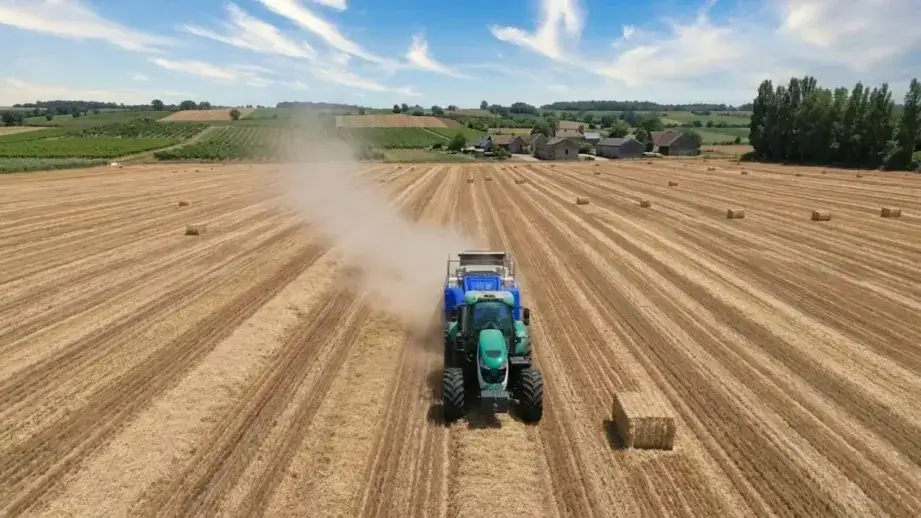
The baler pickup causes leaf loss through two mechanisms: direct tine impact on dry, brittle leaves at pickup contact; and air turbulence as the pickup reel rotates through the windrow, blowing loose leaves off the windrow surface before they can be captured. Both mechanisms are significantly reduced when baling moisture is 14–17% rather than below 12%.
The Moisture Window for Minimum Leaf Loss
The Dual Constraint: Safe Storage vs Leaf Retention
Leaf loss and bale heating pull in opposite directions: the drier the hay at baling, the less heating risk — but the more brittle the leaves and the greater the leaf shatter loss. The wetter the hay at baling, the better the leaf pliability and the less shattering — but the greater the heating and mold risk in storage. The optimal moisture window for minimum combined loss — leaf loss plus heating damage — is 14–17% core moisture at the time of baling.
| Core Moisture at Baling |
Leaf Loss Risk |
Heating Risk |
सिफारिश |
| 12% से नीचे |
बहुत ऊँचा |
Very Low |
Avoid — protein loss at pickup exceeds heating benefit. Bale quality severely degraded. |
| 12–14% |
उच्च |
कम |
Marginal. Acceptable for cattle or silage-quality hay, not for premium markets. |
| 14–171टीपी5टी |
कम |
Low to Moderate |
OPTIMAL. Target this window for premium alfalfa hay. |
| 17–201टीपी5टी |
Very Low |
Moderate–High |
Use with hay preservative only. Leaves remain on bale but heating risk increases significantly. |
| Above 20% |
न्यूनतम |
Severe |
Do not bale without preservative. Heating and mold risk is not manageable without treatment. |
The 14–17% window closes earlier in the afternoon and in hot, windy conditions. In California Central Valley summer baling, the window may be 13:00–15:30 before the crop passes below 13% and leaf shatter risk becomes significant. Monitor with a probe meter every 30–45 minutes during the session.
Raking Timing: The Highest-Impact Single Adjustment
The Morning Rake Advantage
Because raking accounts for 40–60% of total leaf loss across the hay production process, timing the rake pass is the single highest-return management change available to a hay producer targeting premium alfalfa quality. Moving the rake pass from late afternoon (when surface moisture is below 20%) to mid-morning (when surface moisture is still 35–50%) reduces raking leaf loss by 40–60% with no additional cost — only a schedule change.
The mechanism: at 40–50% surface moisture, alfalfa leaves are still pliable and bend at tine contact rather than shattering. The leaf stem junction — the weakest point of the leaf attachment — requires significantly less force to fracture when the leaf is dry and brittle versus when it retains sufficient moisture for flexibility. A leaf contacted by a rake tine at 40% moisture bends and is swept into the windrow. The same leaf contacted at 15% moisture shatters at the tine contact point and falls to the ground.
The Trade-Off: Wetter Raking Means Slower Core Drying
Raking at higher moisture forms the windrow with more loosely aligned stems — this is actually slightly beneficial for continued drying after raking because it allows more airflow through the windrow cross-section. However, if the windrow is raked too early at excessive moisture, the inside of the windrow may not complete drying before evening re-wetting begins. Target the rake pass when surface moisture is in the 40–55% range — this preserves leaf flexibility while the core (measured with a probe meter) is at 25–35%, meaning the windrow will reach baling moisture by the following afternoon under normal drying conditions.
Pickup Adjustments to Reduce Leaf Loss at Baling

Forward Speed and Pickup Aggressiveness
Higher forward speeds increase the tine peripheral-to-ground-speed ratio, which causes tines to strike the windrow with a higher relative velocity. At 7–8 km/h, tine impact velocity on the windrow is significantly higher than at 5–6 km/h. In dry alfalfa below 14% moisture, this higher impact velocity increases the shattering force on each leaf contact. Reducing forward speed by 15–20% during the driest afternoon baling period — without reducing PTO speed — reduces the effective tine impact velocity and measurably reduces leaf shatter at the pickup without otherwise changing bale quality.
Pickup Height and Air Turbulence
A pickup set lower than the optimal 30–50mm clearance creates more air turbulence as the reel rotates through the windrow — the reel face comes closer to the ground surface and the air it displaces has less space to escape behind the reel, creating a puff that can lift loose leaves off the windrow surface and blow them behind the machine rather than into the pickup. Set pickup height to the minimum needed to avoid soil contact — not lower. In dry alfalfa where loose leaves are already detached from the windrow surface, this air puff is a real source of loss that is prevented by correct pickup height.
The Fan System Advantage for Leaf Retention (9YFS-2.2)
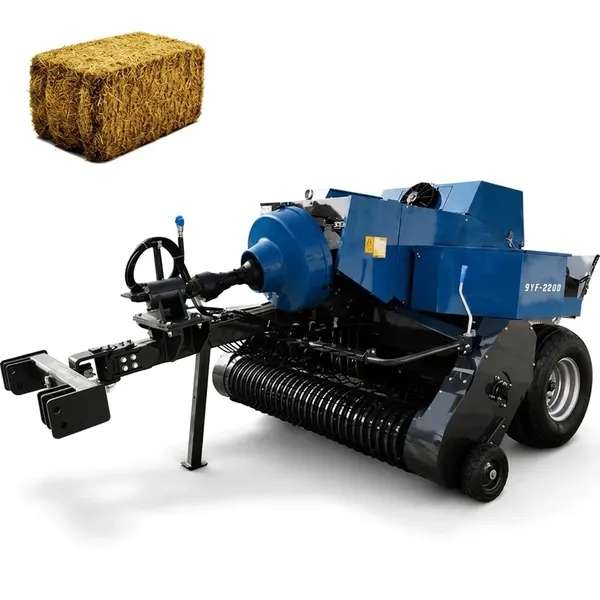
The negative-pressure fan system on the 9YFS-2.2 creates an inward airflow through the material stream at the pickup zone. This inward flow reduces the outward-blowing air turbulence from the reel rotation and captures fine leaf fragments that would otherwise be blown off the windrow surface by the reel rotation. For premium export hay where fine material content is a quality specification — and for situations where the windrow has dried to below 13% and loose leaf material is present on the windrow surface — the fan system provides a measurable improvement in captured leaf material per tonne of hay baled.
Conditioning and Tedding Effects on Leaf Loss
Faster Drying vs Higher Loss: Finding the Balance
Conditioning and tedding accelerate curing but increase leaf loss at those operations. The question is whether the additional leaf loss from conditioning and tedding is offset by the improved quality that results from faster, more uniform curing — which reduces heating risk, mold risk and the cumulative field losses from extended curing time.
Research on this trade-off consistently shows that properly timed tedding in humid climates (tedding when surface moisture is 50–70%) produces net leaf retention improvement over non-tedded hay because the accelerated curing reduces the number of dew cycles the windrow is exposed to — and each dew cycle followed by rapid re-drying causes more cumulative leaf loss than a single well-timed tedd at higher moisture. In dry, hot western climates where the windrow dries rapidly without assistance, tedding may not be necessary and can be omitted to avoid the leaf loss at the tedd pass.
Conditioning Roll Gap: Impact on Leaf Loss at Mowing
Conditioner rolls that are set too close together flatten the alfalfa stem too aggressively — accelerating stem curing but also damaging leaf petioles at the roll contact point. A roll gap that is 10–20% wider than the minimum-resistance setting reduces stem conditioning efficiency slightly but reduces conditioning-caused leaf damage significantly. In very high-yielding first cuts, the thick stems benefit from aggressive conditioning more than the leaves can tolerate — set the widest gap that achieves acceptable stem curing speed for your curing day count.
Measuring Your Leaf Loss: The Field Test Method
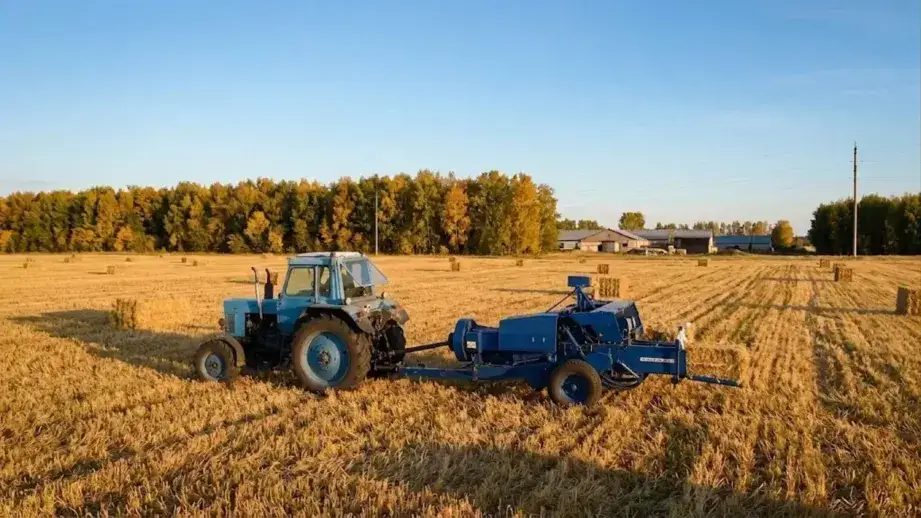
Quantifying your actual leaf loss at baling allows you to diagnose whether the current management is acceptable or whether adjustments are needed. A simple field test:
स्टेप 1
Mark 10 metres of windrow length before pickup with a visible stake at each end. Weigh the crop in the marked section by collecting and weighing a 1-metre length as representative sample — multiply to get 10-metre section mass.
चरण दो
Allow the baler to pick up the marked section. Immediately after the baler passes, collect all leaf material remaining on the ground in the track of the baler for the 10-metre section.
चरण 3
Weigh the collected ground material. Leaf loss percentage at baling = (ground material weight / pre-pickup windrow weight in same section) × 100. Compare to benchmarks: below 5% is excellent; 5–10% is acceptable; above 10% requires management change.
Run this test at the start of the baling window (13:00–14:00) and again near the end (16:00–17:00) to measure whether leaf loss increases as the crop dries further during the session. An increase of more than 3 percentage points between early and late session tests indicates the crop is drying below the optimal moisture window during the session and baling should stop earlier.
Drive Train Reference for Leaf-Retention Baling
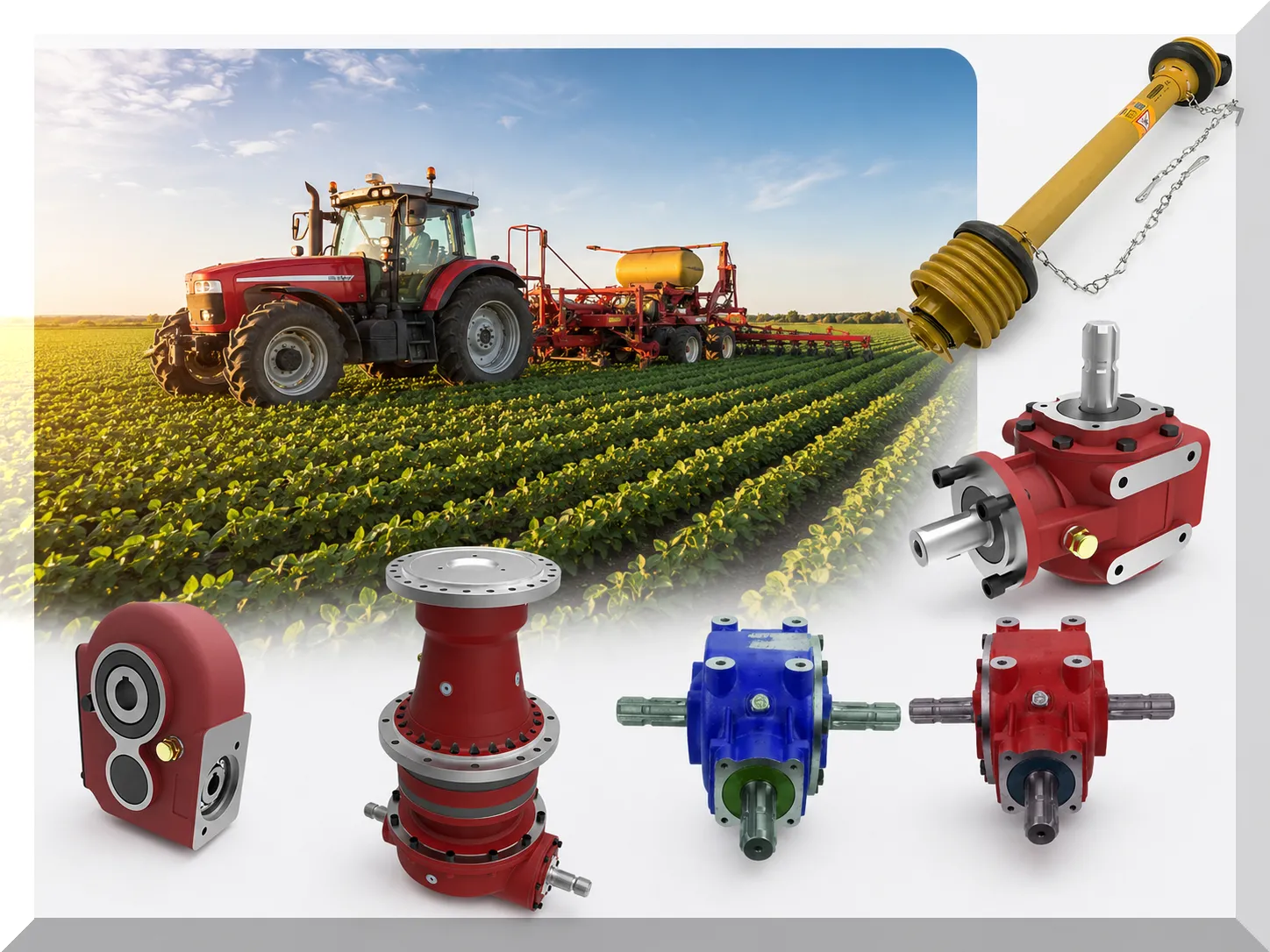
Maintaining 540rpm PTO speed while reducing forward speed (the leaf-retention strategy in dry conditions) requires the drive train to be correctly sized for the reduced load at lower speed — and the driveshaft must be the correct length to avoid angle-induced speed variation: पीटीओ ड्राइवशाफ्ट और सीवी जॉइंट साइजिंग गाइड.
Frequently Asked Questions — Hay Leaf Loss During Baling
Is all the leaf I see on the ground after baling actually leaf loss from the baler?+
No — most of the leaf material on the ground after baling has already been separated from the windrow before the baler arrives. The majority of leaf shatter in a typical alfalfa cutting occurs during raking. By the time the baler pickup reaches the windrow, the leaf material visible on the ground below and around the windrow is largely material that was already detached during raking. The baler contributes an additional leaf loss at pickup — typically 5–12% of remaining leaf mass — but the soil surface under a windrow that has been raked at low moisture will already show a leaf litter layer that predates the baling pass. To isolate baling-specific leaf loss from pre-existing ground loss, use the field test protocol described in the Measuring Your Leaf Loss section above — this method captures only the material that falls during the 10-metre baler passage, not the pre-existing ground litter.
How much crude protein do I lose per 10% leaf loss in alfalfa?+
This depends on the crude protein content of the leaves relative to the stems in your specific cutting. For early-bloom alfalfa (the typical premium cutting), leaf crude protein is approximately 28–32% on a dry matter basis. Stem crude protein is approximately 10–14% on a dry matter basis. If the leaf-to-stem ratio is 55:45 (leaves are 55% of the dry matter), and you lose 10% of the leaf fraction, you lose approximately 5.5% of total dry matter that was high-protein leaf material. The crude protein reduction of the remaining bale depends on this calculation but typically ranges from 2–4 percentage points per 10% leaf loss for early-bloom alfalfa. A hay that starts at 20% crude protein with 10% leaf loss ends at approximately 17–18% crude protein — significant but not catastrophic. With 20–25% leaf loss, the reduction can reach 5–7 percentage points, bringing 20% CP hay to 13–15% CP — the difference between premium and rejected product in competitive export markets.
Does cutting at night reduce leaf loss?+
Night cutting (typically 20:00–02:00) does not directly reduce leaf loss at the cutting operation — conditioning roll leaf damage is similar at night as during the day. However, night cutting provides two indirect benefits for leaf retention. First: plant sugar content in alfalfa is highest in the late afternoon and evening after a full day of photosynthesis — cutting at night captures maximum non-structural carbohydrate content in the stem, improving energy quality of the final hay. Second: the cut swath left overnight in cool, humid conditions retains surface moisture better and begins drying more uniformly when morning solar radiation starts — reducing the temperature spike that accelerates daytime drying and contributes to leaf brittleness in hot afternoon conditions. Night cutting does NOT reduce conditioning damage or raking damage — the management changes described in this guide for those operations still apply regardless of cutting time.
Is the 9YFS-2.2 fan system worth the additional cost specifically for leaf retention in premium alfalfa?+
The 9YFS-2.2 fan system is not primarily marketed as a leaf-retention system — its primary function is ash content reduction for export markets. However, the inward airflow the fan generates at the pickup zone does have a secondary benefit for leaf retention: it reduces the outward air puff from the rotating reel that blows loose, already-detached leaf material off the windrow surface ahead of the tines. In conditions where loose leaf material is already present on the windrow surface from raking shatter — which is common in late-afternoon baling at moisture below 14% — the fan system captures a portion of this loose material that would otherwise be blown away. Quantifying this benefit: producers who have compared the same alfalfa field baled with and without the fan system report 2–4 percentage point improvement in leaf recovery under dry conditions. Whether this improvement — worth approximately $0.40–$0.80 per bale in premium market value for a 2 CP-point quality improvement — justifies the additional machine cost depends on your volume and the premium market differential in your location.
Should I ted first-cut alfalfa or let it wilt in the swath?+
Tedding first-cut alfalfa accelerates curing — particularly beneficial in humid regions or when thunderstorm forecasts create time pressure. However, tedding always incurs leaf loss from tine contact, and in the wrong timing it increases loss significantly. The guideline: ted first cut when the swath is still at 60–70% moisture (typically Day 1 afternoon or Day 2 morning, depending on cutting conditions) — this is the window where leaves remain flexible and tine damage is minimised. Never ted when surface moisture is below 35%. In dry, hot western climates on first-cut alfalfa in June: if you can bale on Day 3 without tedding, the avoided tedding leaf loss may be worth more than the one-day time saving. In humid southeastern conditions: ted regardless of leaf loss risk because the alternative — delayed curing and additional dew cycles — causes more cumulative quality loss than the tedd. The regional context determines whether tedding is the leaf-retention-positive or leaf-retention-negative choice for your specific situation.
Can hay preservative help with leaf retention as well as moisture management?+
Hay preservatives (propionic acid products) do not directly reduce leaf shatter loss — they work on microbial activity in the bale after baling, not on the mechanical shattering that occurs during pickup. However, preservatives allow baling at 17–20% moisture rather than waiting for 14–17% moisture — and baling at the higher moisture range dramatically reduces leaf shatter compared to waiting for the crop to dry to 14% in hot afternoon conditions. So while preservative does not retain leaves directly, it enables a management strategy (baling at higher moisture) that significantly reduces leaf shattering. For premium alfalfa operations in hot, dry climates where the afternoon moisture window passes through the ideal 14–17% range very rapidly, preservative use that allows baling at 17–19% before the crop becomes too dry is a valid leaf-retention strategy as much as a heating-prevention strategy.
Does the forage analysis test show leaf loss damage or only protein content?+
A standard hay forage analysis (crude protein, ADF, NDF, RFV) will show the effect of leaf loss as a reduction in crude protein content compared to the expected value for the cutting stage — but it will not isolate leaf loss as the specific cause. A low CP result in an early-bloom alfalfa sample could be caused by leaf loss during field operations, by baling at a later maturity stage than intended, or by heat damage during storage (ADICP). To determine if leaf loss is the specific issue, compare your crude protein result against a reference sample: collect a grab sample of the crop at mowing before any field operations and have it analysed. Compare that analysis to the final bale analysis. The difference between pre-operation CP and bale CP — after accounting for expected changes from curing — reflects the combined quality loss from all field operations. If the CP reduction exceeds the expected range for your mowing maturity stage, leaf loss is the most likely cause and the management adjustments in this guide should be applied to the next cutting.
What cutting stage minimises leaf loss risk regardless of baling management?+
Cutting at 10% bloom or earlier — before full flower expression — minimises leaf loss risk across all field operations because the stems are shorter, more flexible and less woody, making the windrow more resistant to shattering at every operation from tedding through raking to baling. Earlier cutting also produces the highest crude protein content before stem lignification increases — the two quality objectives (high CP and low leaf loss) are both achieved by earlier cutting. The trade-off: earlier cutting means lower yield per acre. The first 10% bloom baling produces approximately 70–75% of the dry matter yield of a full-bloom cutting. Whether the quality premium justifies the yield reduction depends on your market: for premium horse and export hay at $12–$18 per bale, the combination of higher CP and lower leaf loss at early cutting typically justifies the yield trade-off. For commodity hay at $4–$6 per bale, the yield reduction from early cutting may not be offset by the quality premium and a later cutting for maximum yield is the economically correct approach.
Choose the Right Model for Premium Alfalfa Production
From standard spring-tooth models for managed hay production to fan-equipped models for export-grade low-ash premium alfalfa — the 9YF श्रृंखला covers every leaf-retention requirement. Tell us your target crude protein specification and market and we will confirm the right model for your quality objectives.
संपादक: सीएक्सएम