2025 Buyer Guide · 9YF Series · Small Farm and Hobby Farm
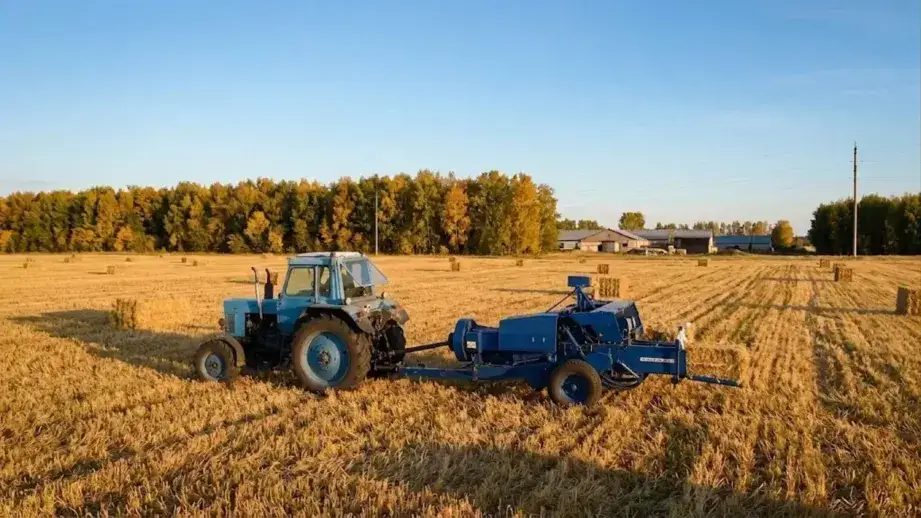
Best Small Square Baler for Small Farm: 2025 Buyer Guide
The right small square baler for a 3-horse property is a different machine from the right baler for a 120-acre mixed hay and straw operation — even if both buyers describe themselves as a small farm. This guide walks through every relevant decision point to find the correct 9YF model for your specific situation, honestly comparing each model rather than recommending the most expensive one.
Covers: acreage thresholds · tractor HP requirements · pickup width decisions · market matching · model-by-model comparison · total setup cost
Define Your Small Farm First — This Determines Everything
The term small farm covers an enormous range — from a 2-acre property with 1 horse to a 200-acre operation with mixed livestock that the owner manages part-time around another job. The correct baler for each is very different. Before comparing models, answer three questions:
Q1: How many acres will you bale per year?
Under 30 acres — entry-level is correct. 30–80 acres — mid-entry is ideal. 80–150 acres — mid-range standard. Above 150 acres — full-width standard or shredder model depending on crop.
Q2: Who will buy your hay or how will you use it?
Personal horse feeding — any standard model. Retail and horse buyers — any standard model with emphasis on consistency. Export (Japan/Korea) — fan model for ash control.
Q3: What tractor do you have?
Under 40HP PTO — no 9YF model is safe to operate (below rated minimum for 9YF-1700). 40–55HP PTO — 9YF-1700 or 9YF-1900. 55–80HP PTO — 9YF-2200. 80HP+ — any model including shredder.
The 40HP Minimum: A Hard Limit, Not a Guideline
The 9YF-1700 requires a minimum of 40HP at the PTO — equivalent to approximately 50–55HP engine output on a typical farm tractor. This is not a conservative safety margin; it is the actual minimum power required to maintain 540rpm PTO speed under the peak plunger load in standard hay conditions. Below this power threshold, the tractor drops below rated PTO speed at peak compression, the knotter timing shifts, and missed knots occur. Running a baler below its rated power minimum also places the tractor in continuous overload — reducing engine life and increasing fuel consumption above the normal operating range.
If your tractor produces between 35–39HP at the PTO — a very common size for compact utility tractors — no model in the 9YF range can be operated correctly. Do not fit a sub-rated tractor to a baler hoping it will manage. The correct response is either to upgrade the tractor before purchasing a baler, or to use a custom baling service until the tractor upgrade is practical.
If your tractor produces exactly 40HP PTO — do not assume comfortable operating margin. The 40HP minimum is the required power to operate the 9YF-1700 in standard grass hay at moderate density. Heavy windrows of alfalfa or straw at high density settings will require a brief PTO speed reduction below 540rpm on some strokes. Budget for a 45–50HP PTO tractor for a genuinely comfortable 9YF-1700 operation with reserve for density peaks.
Pickup Width: Does Wider Always Win for a Small Farm?
The Real Value of Extra Pickup Width
The three standard models — 1,700mm, 1,900mm and 2,200mm pickup width — cover the full range of windrow sizes encountered in small farm operation. The wider pickup covers more ground per pass, reducing the number of baling passes per acre and the time per session. At 6 km/h forward speed, the difference between a 1,700mm and 2,200mm pickup is approximately 23% fewer passes per acre — translating to roughly 1.5–2 fewer hours per 100 acres.
For a 20-acre property baling once per year, this time difference is approximately 20–25 minutes per year — a negligible practical difference that does not justify the price premium for the wider model. For a 120-acre operation baling three times per season, the same width difference saves approximately 2.5 hours per cutting, which becomes meaningful when baling inside a narrow weather window.
Width by Acreage Guide
| Luas Lahan Tahunan |
Recommended Width |
Reasoning |
| Under 30 acres |
1,700mm (9YF-1700) |
Time saving from wider pickup is negligible at this scale. Entry price is the priority. |
| 30–80 acres |
1,900mm (9YF-1900) |
Moderate improvement in field efficiency. Same tractor requirement as 9YF-1700 (50HP min). |
| 80–150 acres |
2,200mm (9YF-2200) |
Time saving per session becomes meaningful at this acreage. Same 50HP min tractor as 9YF-1900. |
| 150+ acres or hard-stalk crops |
9YF-2200S or 9YFS-2.2 |
Higher throughput + shredder density benefit justifies premium. Requires 99HP+ tractor. |
Model-by-Model Comparison: Honest Assessment for Small Farms
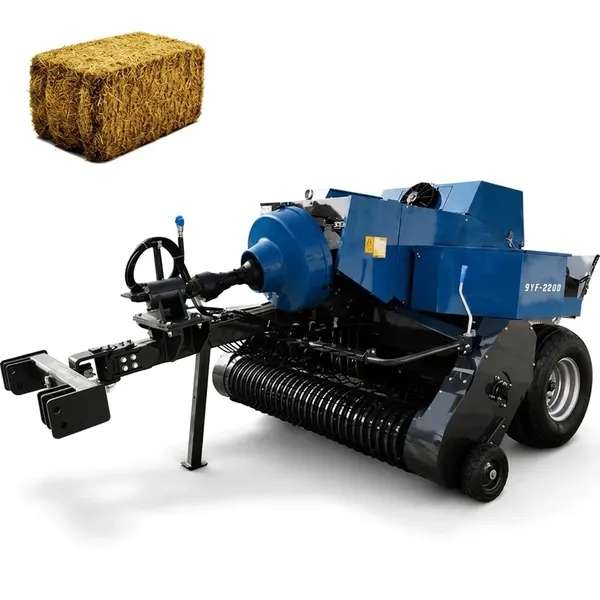
9YF-1700 — The Entry Model
1,700mm spring-tooth pickup · 40HP PTO minimum · 460×360mm bale
Best for: under 30 acres
Strengths
- Lowest purchase price in the 9YF range
- Lowest tractor HP requirement — pairs with the widest range of compact tractors
- Simplest mechanism — fewest systems requiring maintenance
- Completely adequate for personal use, small horse properties and sub-30-acre operations
Limitations
- Narrowest pickup — more field passes per acre than wider models
- Spring-tooth only — not suited for hard-stalk crops or lodged material
- No shredder option — late-cut crops produce lighter bales than wider models at same settings
- Thin tractor HP margin at 40HP minimum — a 45HP tractor is the practical comfortable match
Verdict: The correct choice for hobby farms, personal horse properties and any operation where the annual bale count is under 1,500–2,000. Do not upgrade to 9YF-1900 unless acreage or time savings justify the additional cost.
9YF-1900 — The Step-Up Model
1,900mm spring-tooth pickup · 50HP PTO minimum · 460×360mm bale
Best for: 30–80 acres
Strengths
- 200mm wider pickup than 9YF-1700 for moderate efficiency improvement
- Same tractor requirement increases to 50HP — appropriate for most 55–70HP tractors
- Good value step between entry and standard models
- Handles the same crop types as the 9YF-1700 with slightly better windrow coverage
Limitations
- For operations above 80 acres, the 9YF-2200 is only marginally more expensive and substantially more efficient
- The 200mm width gain over 9YF-1700 is modest — at low acreage, this is not a meaningful real-world difference
- Spring-tooth only — same limitation as 9YF-1700 in hard-stalk crops
Verdict: A solid choice for 30–80 acre operations where the 9YF-1700 feels too narrow but the 9YF-2200 price is not justified. If your tractor is 55HP+, compare the 9YF-1900 and 9YF-2200 prices carefully — the 9YF-2200 is often the better value per mm of pickup width.
9YF-2200 — The Standard Model
2,200mm spring-tooth pickup · 50HP PTO minimum · 460×360mm bale
Best for: 80–150+ acres
Strengths
- Full 2,200mm pickup covers the widest windrow range without compromise
- Same 50HP minimum tractor as the 9YF-1900 — no tractor upgrade required over 9YF-1900
- Best value per mm of pickup width in the standard range
- Handles all standard hay and straw crops at production scale
- Lower operating cost per bale than shredder models due to simpler mechanism
Limitations
- Spring-tooth only — not the best for hard-stalk crops or lodged fields
- No shredder — late-cut thick-stem alfalfa packs less uniformly than in shredder models
- For export (Japan/Korea) requiring very low ash content, the fan system on 9YFS-2.2 adds value
Recommended for most small farm operations above 80 acres. Best combination of field efficiency, machine simplicity and cost for the broadest range of small farm applications.
When to Choose the Shredder Models (9YF-2200S or 9YFS-2.2)
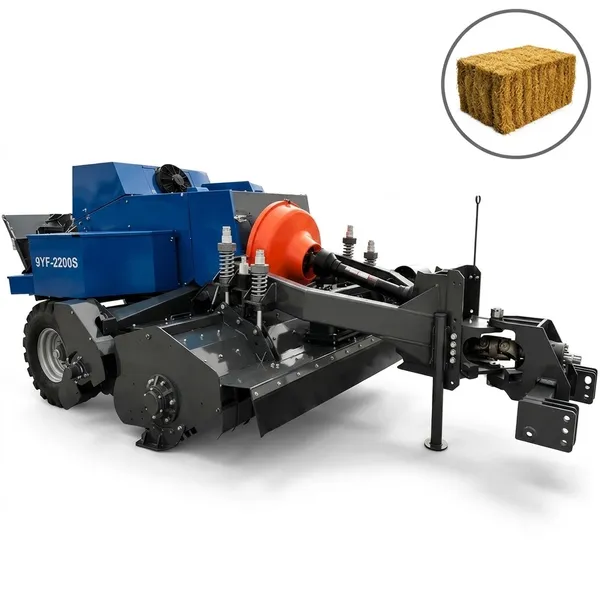
The shredder models — 9YF-2200S (single shredder, touchscreen) and 9YFS-2.2 (dual shredder, fan system) — require a minimum 99HP tractor and represent a significant price step above the standard models. For most small farm operations baling standard hay and straw, the shredder premium is not justified and the standard 9YF-2200 is the better value choice.
Choose the 9YF-2200S when: you regularly bale corn stover, cotton stalk, sorghum or any thick-stemmed crop where stem bridging causes plugging or density inconsistency in standard models; you need the touchscreen monitor for density feedback in multiple-crop operations; or you are baling volumes above 200 acres per season where the density improvement from shredding improves your per-acre revenue enough to justify the additional machine cost.
Choose the 9YFS-2.2 when: your primary market is Japanese or Korean dairy export where ash content is a contractual specification — the negative-pressure fan system removes soil particles from the material stream before compression, consistently producing lower-ash bales than any standard-compression model from the same field. This is the specific application where the 9YFS-2.2 provides value that no other model can match.
Total Setup Cost: What You Need Beyond the Baler
The baler purchase price is not the total cost of starting a hay baling operation. For buyers who do not already have all supporting equipment, the additional items are:
PTO Driveshaft: $200–$600
May or may not be included with the baler — confirm at purchase. Must be the correct length for your tractor-to-baler hitch distance.
Hay Rake: $1,500–$5,000
A side-delivery or V-wheel rake to form windrows before baling. Essential — cannot bale without a formed windrow. Wheel rakes are common for small farms.
Twine First Season: $500–$1,200
1,000–3,000 bales per season at 5 metres per bale. Buy rated polypropylene twine matched to your target bale weight as specified in the model section above.
Hay Moisture Meter: $80–$200
A probe-type meter for windrow core moisture testing before baling. Not optional — baling hay at incorrect moisture is the most common cause of heated bale lots.
Platform Scale: $100–$200
For bale weight calibration at session start. Accurate weight measurement is how you confirm the density setting is producing the target bale weight for your market.
Spare Parts Kit: $60–$150
Knife blades (2 sets), shear bolts (10+), grease gun with correct lubricant. These are field-necessary consumables that should be on the machine before the first session.
Frequently Overlooked: Twine Compatibility and UV Storage
New baler buyers frequently underestimate the importance of twine quality and storage. Two specific points apply to all 9YF models:
Twine knot strength rating: the twine must be rated at a minimum knot strength of 4 times the target bale weight. For 24kg bales, use minimum 96kg rated twine — and 110kg+ rated twine as a practical standard. Economy twine without a stated knot strength rating should not be used in any 9YF model. Twine of incorrect rating is the most common cause of first-season knotting problems for new baler owners.
UV storage: polypropylene twine degrades from UV radiation over months of sunlight exposure, losing 20–30% of its tensile strength before any visible change is apparent. Never leave spools on the baler outdoors between sessions or between seasons. Store indoors in a dry, UV-protected location. This one habit prevents a large proportion of mid-season twine breakage events from materialising.
PTO Driveshaft and Gearbox Reference
The PTO driveshaft length and CV joint angle are specific to your tractor-to-baler hitch distance. Using an incorrect shaft length causes CV joint over-angulation and premature failure. Full specifications: Panduan ukuran poros penggerak PTO dan sambungan CV..
Frequently Asked Questions — Best Small Square Baler for Small Farm
I have a 45HP tractor. Which 9YF model will work for me?+
A 45HP engine tractor typically produces 35–40HP at the PTO after transmission losses. This puts you right at the minimum boundary for the 9YF-1700 — which requires 40HP PTO. In light windrows of dry grass hay, a 40HP PTO tractor may manage adequately. In heavy windrows of wet alfalfa at moderate density settings, the tractor will labour and may not maintain rated PTO speed at peak compression. If your tractor is the current limit of your investment capacity, the 9YF-1700 is the only appropriate model — but expect to reduce forward speed in heavy windrow sections and avoid maximum density settings. A 50HP engine tractor (approximately 40–45HP PTO) is a more comfortable practical match for the 9YF-1700. A 60HP engine tractor is the practical comfortable entry point for any model in the 9YF range without operational restrictions.
I bale for my own 3 horses only, about 500 bales per year. Do I really need a 9YF-1700 or can I use a custom baling service instead?+
At 500 bales per year, the economics typically favour custom baling over machine ownership. At $0.55 per bale custom rate, 500 bales costs $275 per year — compared to $1,800–$2,500 per year total ownership cost for a 9YF-1700. The machine ownership cost will not be recovered within a reasonable timeframe at 500 bales annually. The argument for owning at low volume is scheduling control — a custom baler may not be available on the exact afternoon your hay reaches baling moisture. If this scheduling problem is real and has caused you losses in previous years (heated bales from baling at the wrong time because the custom operator was not available), the operational benefit may justify the ownership cost even at low volume. If scheduling is flexible and a reliable custom operator is available, custom baling is the correct economic choice for 500 bales per year.
Is there any benefit to the 9YF-2200 over the 9YF-1900 for a farm with a 60HP tractor?+
With a 60HP tractor, both the 9YF-1900 and 9YF-2200 are within comfortable operating range — both require 50HP PTO minimum and a 60HP engine typically produces 48–55HP at the PTO. The 9YF-2200 offers 300mm more pickup width than the 9YF-1900 at the same minimum tractor requirement. Whether this matters depends on your windrow width: if your mower produces a windrow of 1,400–1,600mm width, the 1,900mm pickup handles it easily. If your windrow is 1,700–2,000mm width, the 2,200mm pickup provides a more appropriate match. For the price difference between the models, the 9YF-2200 is often the better value if your acreage is above 50 acres or if your windrow is naturally wide — the same tractor runs both comfortably and the cost difference is recovered within 2–3 seasons of baling at modest acreage.
What is the difference between the D-type knotter in all 9YF models and other knotter types?+
All 9YF series models use a D-type double knotter — two complete knotter units per machine, one for each rope on the bale. The D-type refers to the shape of the knot formed — a D-shaped loop around the rope. This is the same fundamental knotter design used by most major commercial square baler manufacturers worldwide and represents decades of refinement in agricultural equipment design. D-type knotters form a reliable, compact knot that holds under bale weight and handling loads while cutting cleanly from the twine feed. The twin-knotter design ensures that each bale is secured at two points along its length, preventing the bale from bursting at the ends during handling and stacking. For practical purposes, the D-type knotter in all 9YF models is the industry-standard configuration and works with the full range of polypropylene baler twine that is widely available in the U.S. market.
Can I use the 9YF series for baling straw as well as hay?+
Yes — all models in the 9YF range are suitable for wheat straw, barley straw, oat straw and rice straw baling in addition to hay. Straw bales are typically lighter per unit volume than hay bales due to the lower density of dry cereal straw, so the target weight for straw at the same density setting will be lower than for hay. Adjust the density setting after weighing 10 calibration bales at the start of each straw session — do not assume the setting from hay baling will produce your target straw weight. For rice straw specifically, the spring-tooth pickup provides good collection in well-formed windrows. In combine-cut rice straw where the material lies flat and tangled, the hammer-claw pickup on the 9YF-2200S provides better mat-contact recovery. Straw typically produces more pickup wear than hay due to the higher silica content in cereal straw — inspect tine condition more frequently during straw baling sessions than during hay baling.
Is the 9YF series suitable for a very small acreage of 5–10 acres?+
The 9YF-1700 is mechanically operable on a 5–10 acre property provided the tractor HP is adequate — the machine does not care about the size of the farm, only the power and crop type. However, the economic case for ownership at 5–10 acres is very weak: a 5-acre field at 2 tonnes per acre and 24kg bales produces approximately 417 bales per year. At $0.55 per bale custom rate, that is $229 per year in custom baling — against $1,500–$2,000 per year minimum ownership cost for the 9YF-1700. Ownership breaks even at 5–10 acres only if the scheduling value — the ability to bale on the precise afternoon the crop is ready — is worth $1,200–$1,700 per year in recovered quality. For most very-small operations, custom baling is the economically correct choice. The exception: if your 5–10 acres produces very high-value specialty hay (certified organic, premium horse hay at $15+ per bale direct sale) where getting the baling day exactly right is worth significant revenue, ownership becomes justifiable on quality rather than quantity grounds.
Does the 9YF-1700 require any different maintenance from the larger models?+
The 9YF-1700 uses the same D-type knotter mechanism, the same chain and sprocket drive configuration, and the same general lubrication requirement as the larger models. The maintenance schedule — daily lubrication points, pre-season full service, annual knotter blade and knife replacement — is essentially identical across the range. The narrower pickup on the 9YF-1700 has fewer tines to inspect than the 2,200mm models, which slightly reduces inspection time per service. The smaller tractor requirement of the 9YF-1700 does mean that tractor-related pickup speed issues are more likely when the tractor is operating near its limit — a 40HP tractor at maximum load in heavy alfalfa will produce lower PTO speed variation than a 70HP tractor at 60% load, so pickup consistency is somewhat more tractor-dependent on the 9YF-1700 than on the larger models with more HP reserve. Apart from this operational consideration, the maintenance routine is the same across the range.
Can I start with the 9YF-1700 and upgrade to a larger model later?+
Yes — upgrading from a smaller to a larger model as your operation grows is a common and practical approach. A 9YF-1700 purchased for a 20-acre operation can be sold — typically at 50–65% of purchase price at 3–5 years of age in good condition — and the funds applied toward a 9YF-2200 or larger when acreage grows to 80+ acres. The resale market for small square balers in good condition is active, particularly in regions with significant horse populations and hay retail markets. When planning an upgrade path, maintain the machine in documented-service condition throughout ownership — service records, annual pre-season service completion, all original guards and covers — as these directly improve resale value when the time comes to upgrade. A well-maintained 9YF-1700 with documentation typically commands a meaningfully higher resale price than the same machine without service history, even when the mechanical condition is similar.
Find the Right 9YF Model for Your Farm
Tell us your tractor HP, annual acreage, primary crop and target market — we will confirm the correct model and give you a current price. The full 9YF square baler range from 40HP to 140HP+ is available for any small farm application.
Editor: Cxm