
9LZD-9.0 Penggaruk Jerami V 17 Roda | Penggaruk Jerami Roda Jari 9 m
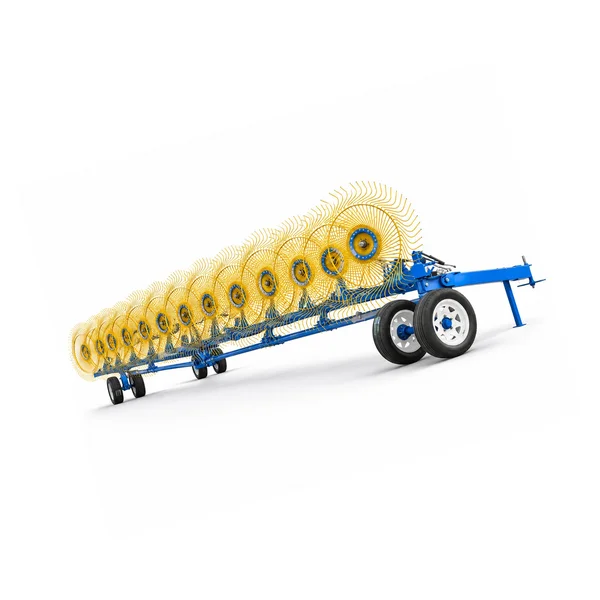
Itu 9LZD-9.0 penggaruk jerami roda jari Ini adalah andalan utama dari lini V-rake gandeng kami yang tangguh dengan 17 roda, dirancang untuk produsen AS yang membutuhkan cakupan gigi seketat mungkin di jalur selebar 9 meter (29,5 kaki). Tujuh belas roda penggerak tanah membawa total 1.020 gigi baja pegas, menyapu alfalfa yang telah dipotong, rumput asli, dan jerami serealia menjadi barisan seragam dengan kecepatan 7,2–9 ha/jam (17,8–22,2 ac/jam) tanpa koneksi PTO tunggal. Dibuat oleh US Forage Baler Equipment Co. untuk memenuhi tuntutan musim panen jerami di Amerika Utara.
Ikhtisar Produk: Peningkatan 17 Roda dari Model 9LZY-9.0 Kami
Itu 9LZD-9.0 menempati posisi teratas dalam daftar kami katalog penggaruk jerami roda jariJika model 9LZ-6.0 dengan 12 roda mencakup lebar 6 meter dan model 9LZY-9.0 dengan 15 roda mencakup lebar 9 meter dengan jumlah roda yang lebih sedikit, model 9LZD-9.0 menggunakan lebar kerja 9 meter yang sama dan dilengkapi dengan 17 roda jari di seluruh permukaannya. Dua roda tambahan berarti 120 gigi pegas ekstra per lintasan — total 1.020 gigi yang menyapu permukaan lapangan — dan kepadatan inilah yang menurunkan tingkat kesalahan hingga 2 persen atau kurang bahkan pada kondisi barisan jerami yang padat dan kusut yang sulit ditangani oleh alat penggaruk yang lebih kecil.
Bagi produsen AS yang memilih antara model 15 roda dan 17 roda, keputusan biasanya bergantung pada dua faktor: kepadatan hasil panen dan medan. Di ladang alfalfa yang datar dan beririgasi dengan pemotongan ketiga dan keempat yang berat, jangkauan gigi tambahan dari 9LZD-9.0 dapat memulihkan sisa-sisa daun yang signifikan yang seharusnya tertinggal. Di padang rumput alami yang kasar di Dataran Utara atau padang rumput berbatu di Pegunungan Barat, konfigurasi 17 roda dengan jarak roda yang lebih rapat menjaga setiap cakram tetap bersentuhan dengan tanah secara lebih konsisten di medan yang bergelombang. Dengan cara apa pun, satu operator pada traktor kelas menengah dapat mencakup lebar jalur 9 meter per lintasan — dengan lebih sedikit celah di barisan jerami di akhir hari.
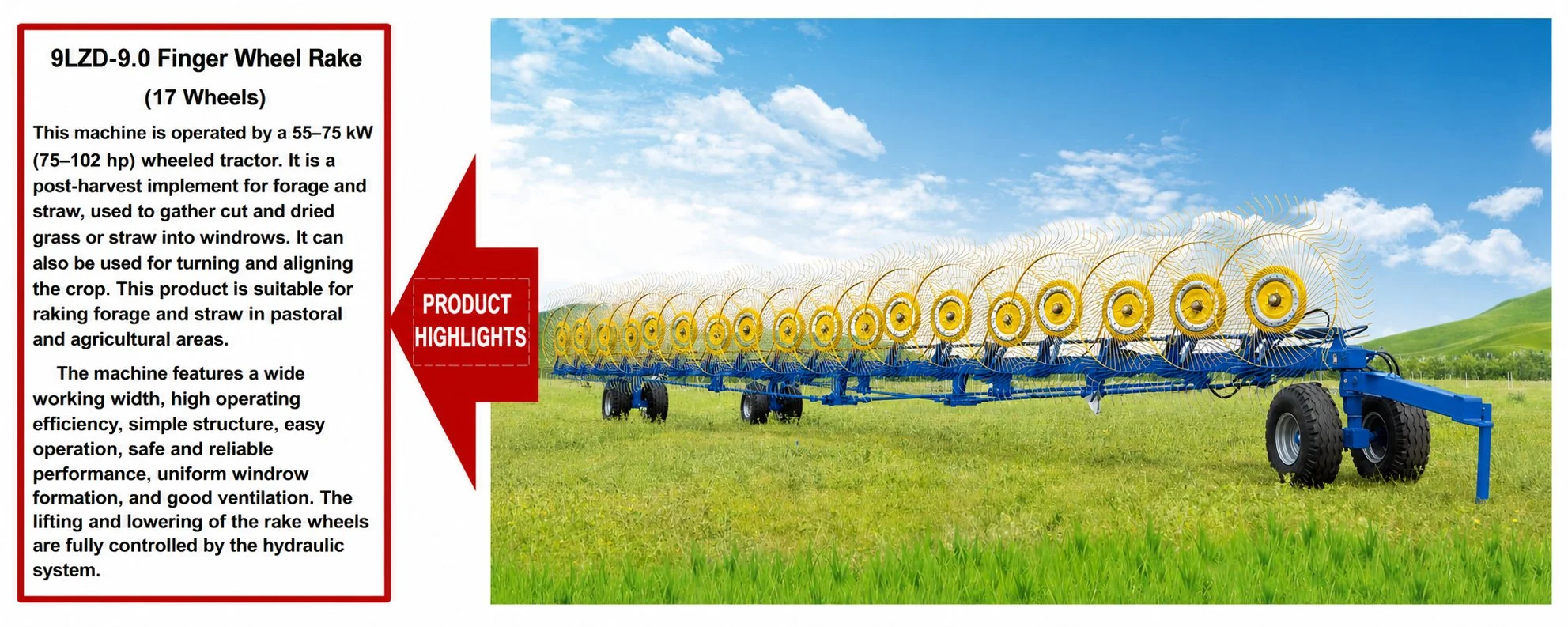
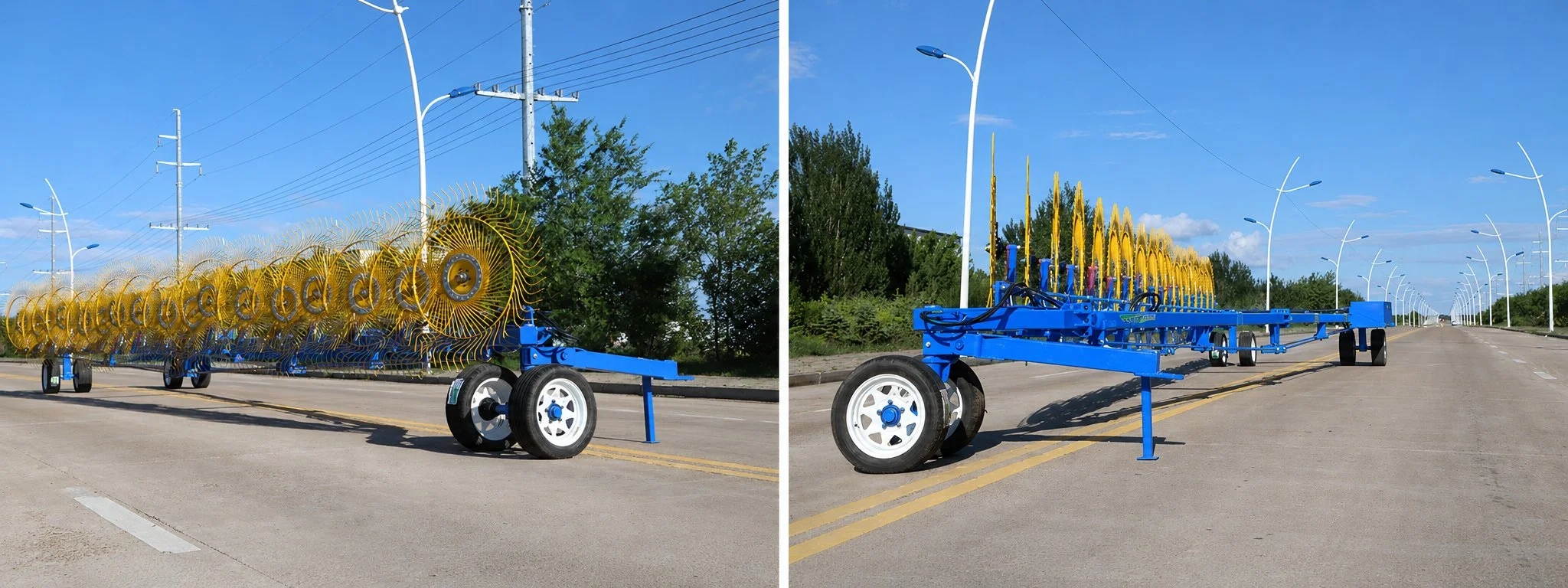
Alat ini ditarik di belakang traktor menggunakan pengait standar dan tidak memerlukan sambungan PTO pada alat pengumpul jerami itu sendiri. Semua daya untuk fungsi pengumpulan berasal dari kontak langsung dengan tanah saat traktor bergerak maju. Sirkuit pelipatan hidrolik menggunakan katup jarak jauh belakang traktor untuk melipat sayap agar mudah diangkut di jalan raya, sehingga mesin menjadi selebar yang sesuai dengan peraturan jalan raya. Dari Texas Panhandle hingga Lembah Willamette Oregon, para produsen jerami Amerika menggunakan 9LZD-9.0 untuk menjaga agar mesin pengepak jerami mereka beroperasi dengan kapasitas penuh dari pagi hingga sore hari.
Spesifikasi Teknis
Semua angka di bawah ini diambil langsung dari catatan produksi pabrik. Baik satuan metrik maupun imperial ditampilkan untuk operator Amerika guna memverifikasi kompatibilitas dengan peralatan armada yang ada, gerbang pertanian, dan peraturan transportasi DOT. Hubungi tim teknis AS sebelum memesan jika traktor Anda beroperasi di luar rentang daya yang tercantum atau kondisi lahan Anda mencakup kemiringan lereng yang ekstrem di atas 12 persen.
| TIDAK. | Parameter | Satuan | Nilai |
|---|---|---|---|
| 1 | Model | / | 9LZD-9.0 Penggaruk Jerami Roda Jari |
| 2 | Jenis Struktur | / | Roda Jari (V-Rake), Ditarik |
| 3 | Metode Hitch | / | Batang Penarik Traktor, Ditarik di Belakang |
| 4 | Tenaga Traktor yang Dibutuhkan | kW (HP) | 55–75 (75–102 HP) |
| 5 | Jumlah Roda Jari | buah-buahan | 17 |
| 6 | Gigi Pegas per Roda | buah-buahan | 60 |
| 7 | Jumlah Gigi Pegas | buah-buahan | 1,020 |
| 8 | Lebar Kerja | m (kaki) | 9,0 (29,5 kaki) |
| 9 | Kecepatan Operasi | km/jam (mph) | 8–10 (5,0–6,2 mph) |
| 10 | Produktivitas Wilayah | ha/h (ac/h) | 7,2–9,0 (17,8–22,2 ac/jam) |
| 11 | Lebar Tumpukan Angin | m (kaki) | 0,8–1,2 (2,6–3,9 kaki) |
| 12 | Tingkat Kesalahan | % | ≤ 2 |
| 13 | Cuti Berbayar Diperlukan | / | Tidak — Digerakkan oleh Tanah |
| 14 | Operator yang Dibutuhkan | orang-orang | 1 |
| 15 | Massa Struktural | kg (lb) | 1.240 (2.734 lb) |
Cara Kerja 9LZD-9.0: Mekanisme Roda Jari yang Digerakkan oleh Tanah
9LZD-9.0 beroperasi berdasarkan prinsip kinematik pasif yang digerakkan oleh tanah dan tidak memerlukan sambungan ke poros PTO traktor. Saat traktor menarik alat ini ke depan dengan kecepatan 8 hingga 10 km/jam, setiap dari 17 roda jari bersentuhan langsung dengan tanah dan lapisan hijauan yang telah dipotong di atasnya. Gesekan antara gigi pegas roda dan permukaan tanah menyebabkan setiap cakram berputar bebas pada hub bantalan — sepenuhnya dari energi gerak maju, tanpa memerlukan penggerak eksternal.
Orientasi Cakram Sudut dan Sapuan Lateral
Setiap roda jari dipasang pada sudut yang telah diperhitungkan, yaitu sekitar 15–20 derajat relatif terhadap arah pergerakan. Saat setiap cakram berputar dari kontak dengan tanah, gigi-gigi miringnya membelokkan material yang terkumpul ke samping, mendorongnya secara bertahap ke arah tengah mesin. Dengan semua 17 roda bekerja secara bersamaan, hijauan yang telah dipotong disalurkan dari jalur selebar 9 meter menjadi barisan yang padat dan seragam dengan lebar 0,8 hingga 1,2 meter — siap untuk diambil oleh mesin pemanen lainnya. mesin pengepak jerami bundar di armada Anda.
Suspensi Pegas Independen pada Setiap Roda
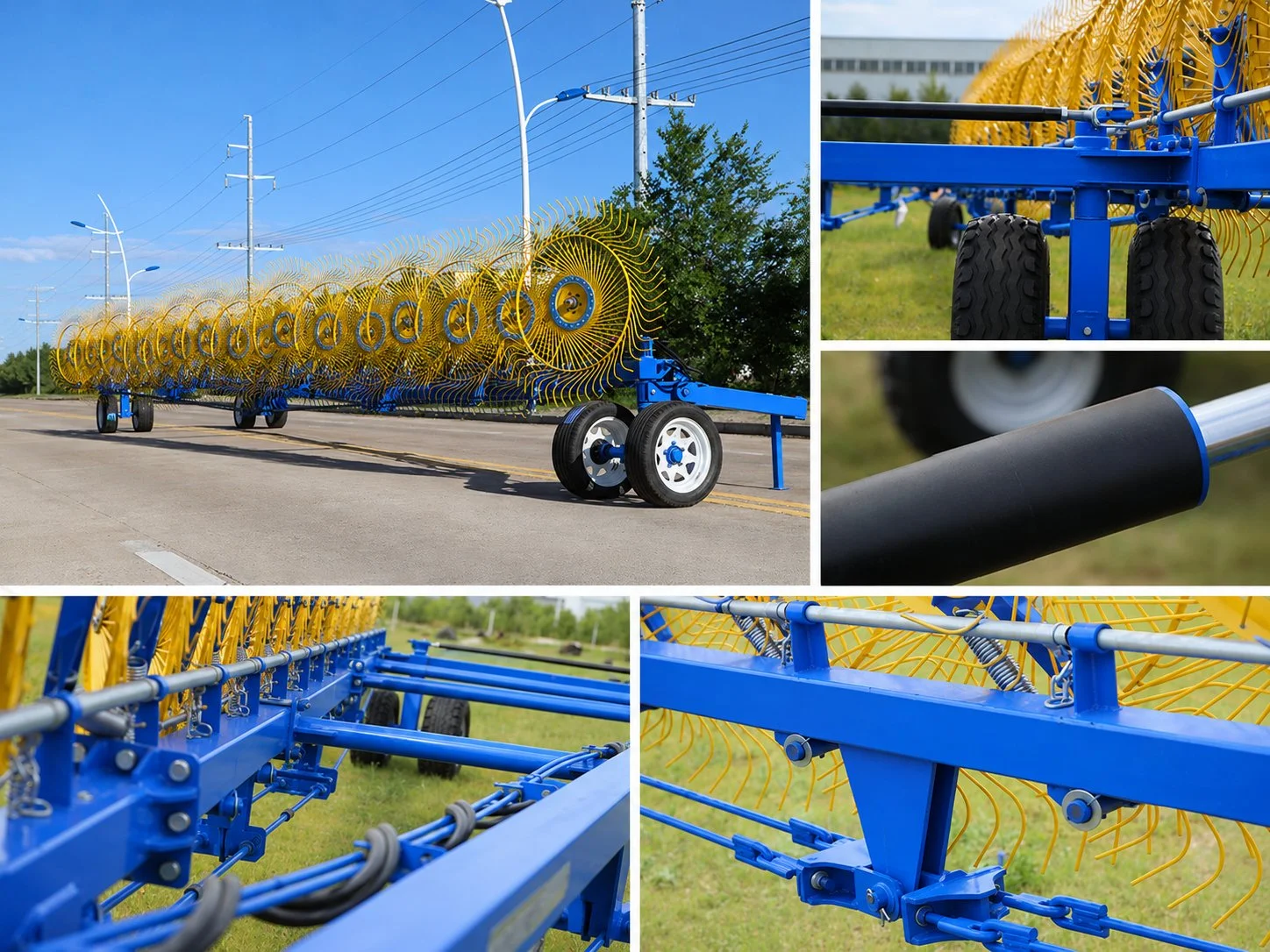
Masing-masing dari 17 roda tersebut menggunakan suspensi pegas independennya sendiri, memungkinkan roda tersebut melayang di atas permukaan tanah yang tidak rata — tanggul irigasi, gundukan tikus tanah, singkapan batuan — tanpa mengangkat roda di sebelahnya dari tanah. Kemampuan melayang independen ini sangat penting di padang rumput asli Wyoming yang tidak rata, ladang berbatu di New England, dan ladang alfalfa yang diairi dengan sistem alur di Lembah San Joaquin. Jika satu roda terangkat melewati rintangan, roda-roda di sebelahnya tetap mempertahankan kontak penuh dengan tanah dan tekanan gigi bajak, sehingga menjaga tingkat kesalahan yang konsisten pada atau di bawah 2 persen di seluruh lintasan sepanjang 9 meter.
Pengangkatan dan Pelipatan Hidraulik dari Kabin
Seluruh rakitan cakram dapat dinaikkan dan diturunkan melalui katup hidrolik jarak jauh belakang traktor — tanpa perlu melepasnya. Saat berbelok di ujung lahan, operator mengangkat cakram hingga terangkat dari tanah dalam waktu kurang dari dua detik. Untuk transportasi di jalan raya, sirkuit hidrolik yang sama melipat sayap lateral ke dalam dan ke atas, mengurangi lebar kerja menjadi profil yang sesuai dengan peraturan jalan raya yang memenuhi persyaratan DOT di sebagian besar negara bagian AS tanpa izin muatan berlebih. Pin pengunci otomatis terpasang pada posisi terlipat penuh untuk mencegah sayap terbentang selama pengangkutan.
Enam Keunggulan Operasional yang Tercermin dalam Laporan Laba Rugi Anda
9LZD-9.0 dirancang berdasarkan hasil nyata di lapangan, bukan sekadar poin-poin dalam brosur. Berikut enam keuntungan yang secara konsisten dilaporkan oleh para produsen jerami Amerika setelah musim penuh pertama mereka menggunakan alat ini.
Dengan 60 gigi per roda di 17 roda, kepadatan gigi per meter lebar kerja lebih tinggi daripada model lain dalam jajaran produk kami. Cakupan yang rapat menutup celah pada lahan dengan ketebalan barisan yang tidak beraturan, menurunkan tingkat kesalahan panen hingga 2 persen atau lebih rendah bahkan pada alfalfa hasil panen kedua dan ketiga di mana lapisan tanaman tidak rata.
Mekanisme penggerak tanah membuat poros PTO traktor benar-benar bebas. Tidak ada beban pada sistem penggerak, tidak ada poros penggerak berputar yang perlu dirawat, dan tidak ada kopling yang perlu diganti di tengah musim. Operator secara konsisten melaporkan konsumsi bahan bakar 25–40% lebih rendah per hektar dibandingkan dengan penggaruk roda yang digerakkan PTO aktif dengan lebar kerja yang setara.
Gerakan gigi yang lembut dan tidak agresif tidak mengacaukan atau menggulingkan tanaman. Daun alfalfa dan semanggi yang rapuh—tempat sebagian besar nilai protein terkonsentrasi—tetap menempel pada batang selama proses penggarukan. Peternak sapi perah yang beralih dari penggaruk putar melaporkan peningkatan yang konsisten dalam skor Nilai Pakan Relatif (RFV) jerami yang dikemas.
Satu operator dan traktor berdaya 75–100 HP dapat menggarap 17,8 hingga 22,2 hektar per jam dalam sekali jalan. Untuk lahan alfalfa seluas 300 hektar, itu berarti menyelesaikan fase penggarukan dalam waktu sekitar 14 hingga 17 jam — masih dalam rentang waktu pengeringan yang sempit yang menentukan kualitas jerami yang tinggi di musim panas yang lembap di wilayah Midwest.
Setiap dari 1.020 gigi garpu dipasang satu per satu ke hub rodanya. Jika salah satu gigi garpu patah karena benturan batu, Anda hanya perlu melepas dua baut, memasang penggantinya, dan mengencangkannya—kurang dari dua menit per gigi garpu dengan kunci pas standar. Satu set gigi garpu cadangan disertakan dengan setiap mesin baru tanpa biaya tambahan.
Dari dalam kabin, operator melipat sayap samping hingga lebar yang sesuai untuk transportasi di jalan raya dalam hitungan detik. Pin pengunci otomatis terpasang pada posisi terlipat penuh. Memindahkan alat ini antar ladang atau memuat ke truk bak terbuka hanya membutuhkan beberapa menit, bukan waktu yang lama seperti yang dibutuhkan untuk mengunci secara manual alat penggaruk rangka kaku ke posisi transportasi.
Di mana Produsen AS Menggunakan Mesin 9LZD-9.0
Tanaman Alfalfa Panen Kedua yang Subur di Wilayah Sabuk Jagung dan Danau-Danau Besar
Alfalfa hasil panen kedua di Iowa, Wisconsin, dan Michigan biasanya menghasilkan hasil panen paling tebal per hektar dalam satu musim, dengan batang yang rapat dan saling terkait serta rasio daun-batang yang lebih tinggi daripada panen pertama. Mesin penggaruk 17 roda 9LZD-9.0 menutup celah yang ditinggalkan oleh penggaruk yang lebih kecil pada hamparan panen kedua yang lebat: jarak roda yang lebih rapat berarti lebih banyak gigi per kaki linier jalur pemotongan, dan suspensi pegas independen menjaga setiap roda tetap bersentuhan dengan tanah bahkan saat alat tersebut melintasi gundukan yang ditinggalkan oleh lintasan pemotongan sebelumnya.
Rumput Asli dan Jerami Padang Rumput di Dataran Utara
Padang rumput campuran di South Dakota, North Dakota, dan Montana bagian timur menghadirkan kombinasi kepadatan tanaman yang jarang, medan bergelombang, dan jendela cuaca yang sempit yang menentukan kondisi penyapuan tersulit di Amerika Utara. Artikulasi 9LZD-9.0 yang mengikuti kontur tanah mampu mengatasi undulasi ringan tanpa merusak punggung bukit atau melewatkan cekungan. Pada lahan padang rumput alami seluas 600 hektar yang khas untuk operasi peternakan di Dataran Utara, kemampuan untuk mencakup 22 hektar per jam berarti satu operator dapat menyelesaikan penyapuan sebelum badai petir sore hari yang diramalkan tiba.
Rumput Timothy dan Orchardgrass yang Diairi untuk Pasar Jerami Kuda Premium
Para pembeli jerami kuda di California, Colorado, dan wilayah Pasifik Barat Laut rela membayar mahal untuk bal jerami yang bersih, berdaun lebat, dan hijau, bebas dari kontaminasi tanah. Gigi-gigi penggerak tanah pada 9LZD-9.0 mengangkat hijauan dengan lembut tanpa gerakan berputar yang agresif seperti pada penggaruk putar, yang berarti lebih sedikit kotoran di tumpukan jerami dan warna bal yang lebih hijau. Beberapa pengirim jerami premium California melaporkan bahwa jerami timothy dan orchardgrass kualitas ekspor mereka kini secara konsisten memenuhi spesifikasi pasar Jepang setelah beralih dari penggaruk putar ke 9LZD-9.0.
Jasa Pembuatan dan Kontrak Pertanian Rumput Kering di Seluruh Wilayah Midwest
Bagi kontraktor pemanenan jerami yang menagih per hektar, produktivitas 9LZD-9.0 sebesar 17,8 hingga 22,2 hektar/jam memungkinkan lebih banyak lahan kontrak yang dapat diselesaikan per hari dengan satu traktor dan operator. Sistem pelipatan hidrolik mengurangi waktu tempuh antar lahan secara signifikan. Operator kontrak di Indiana dan Illinois melaporkan kemampuan untuk menangani 15 hingga 25 persen lebih banyak lahan kontrak per musim setelah menambahkan 9LZD-9.0 ke armada mereka, tanpa menambah jumlah pekerja atau traktor kedua.
Memilih Antara V-Rake 17 Roda, 15 Roda, dan 12 Roda Kami
Ketiga model dalam jajaran traktor roda jari gandeng kami memiliki prinsip pengoperasian yang sama, yaitu digerakkan oleh tanah, sistem pengangkutan lipat hidraulik, dan antarmuka pengait batang penarik. Perbedaannya terletak pada jumlah roda, kepadatan gigi, dan daya traktor yang dibutuhkan. Tabel di bawah ini akan memandu pilihan Anda.
| Item Perbandingan | 9LZD-9.0 (Model Ini) |
9LZY-9.0 penggaruk jerami roda jari |
9LZ-6.0 penggaruk jerami roda jari |
|---|---|---|---|
| Roda Jari | 17 | 15 | 12 |
| Jumlah Gigi Pegas | 1,020 | 900 | 720 |
| Lebar Kerja | 9,0 m / 29,5 kaki | 9,0 m / 29,5 kaki | 6,0 m / 19,7 kaki |
| Produktivitas | 7,2–9,0 ha/jam | 7,2–9,0 ha/jam | 4,8–6,0 ha/jam |
| Tingkat Kesalahan | ≤ 2% | ≤ 2% | ≤ 2% |
| Tenaga Traktor yang Dibutuhkan | 55–75 kW / 75–102 HP | 50–55 kW / 68–75 HP | 37–50 kW / 50–68 HP |
| Terbaik untuk | Hasil panen melimpah, tanaman lebat, operasi skala komersial. | Pertanian menengah hingga besar, umumnya menanam alfalfa dan rumput. | Usaha yang lebih kecil, hasil panen yang lebih ringan. |
Jika Anda secara rutin memanen alfalfa hasil panen kedua atau ketiga yang berat, beroperasi di padang rumput alami dengan medan yang tidak rata, atau menjalankan bisnis kontrak jerami di mana hasil panen adalah pendapatan, 9LZD-9.0 adalah pilihan yang tepat. Jika lahan Anda menghasilkan panen yang lebih ringan atau traktor Anda berada di kisaran 68–75 HP, 9LZY-9.0 dapat mencakup lahan yang sama dengan kebutuhan daya tarik yang lebih rendah.
Komponen Transmisi Daya dan Sistem Penggerak
Mesin 9LZD-9.0 sendiri tidak memerlukan gearbox — mekanisme pengumpul yang digerakkan oleh tanah tidak memiliki poros penggerak yang berputar. Namun, mesin pengepak jerami yang diumpaninya adalah cerita yang berbeda. Saat barisan jerami tebal dan padat yang dihasilkan oleh 1.020 gigi pegas membanjiri rotor pengumpul mesin pengepak jerami bundar Anda, lonjakan torsi yang hebat melonjak melalui seluruh poros penggerak mesin pengepak jerami tepat pada saat kecepatan panen paling kritis. Gearbox mesin pengepak jerami yang aus atau terlalu kecil akan menyerap lonjakan tersebut hingga rusak — seringkali pada siang hari di hari tersibuk musim panen jerami.
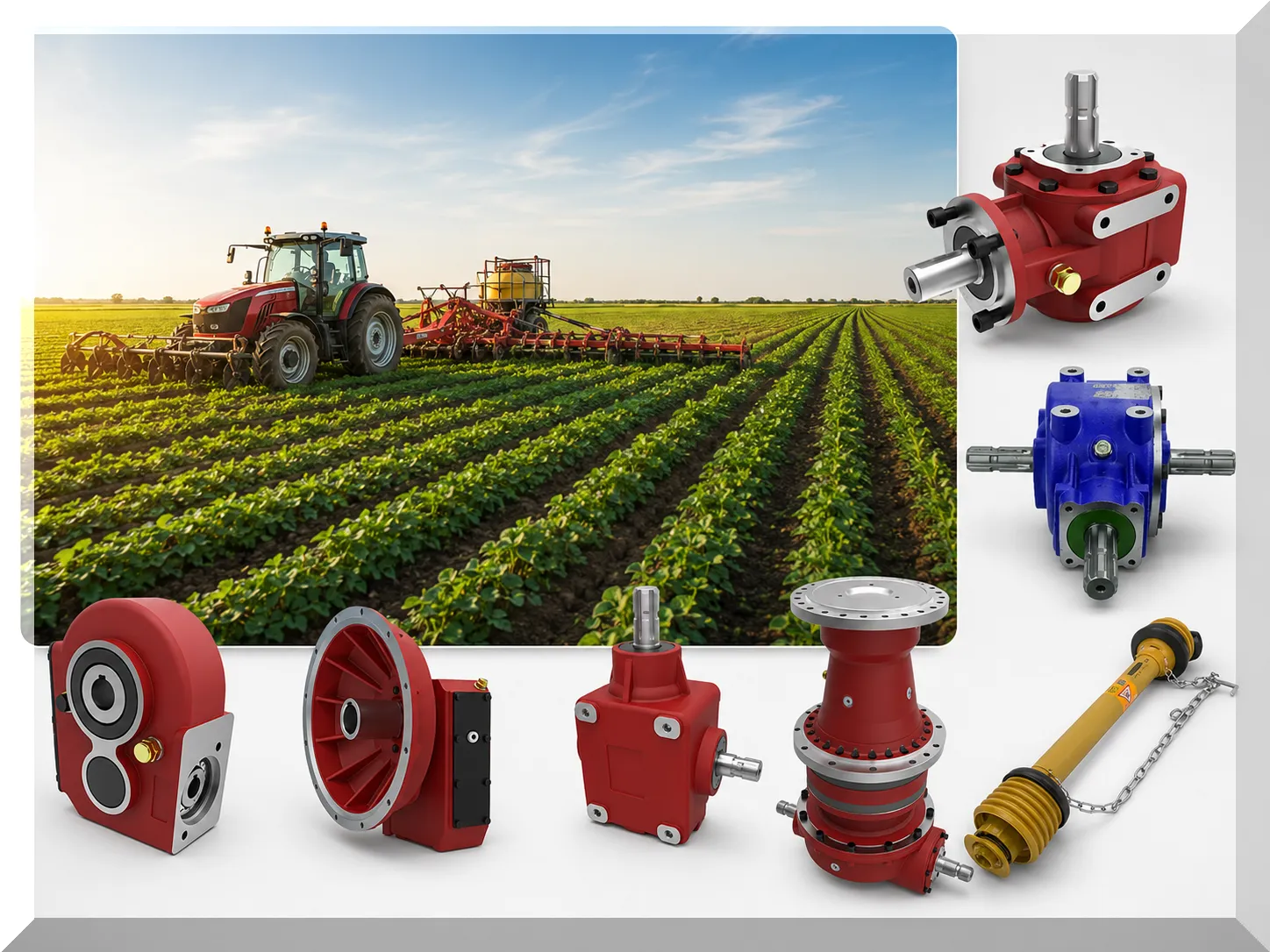
Pencocokan presisi kotak roda gigi sudut kanan pertanian Salah satu komponen dari katalog sistem penggerak kami dirancang khusus untuk beban torsi yang dihasilkan ketika penggaruk V berkapasitas tinggi seperti 9LZD-9.0 memberi makan mesin pengepak jerami bundar besar pada kapasitas penuh. Komponen ini melindungi sambungan U, menghaluskan fluktuasi RPM pada roda gila, dan menjaga ruang pengepakan tetap berputar pada kecepatan yang konsisten bahkan saat material masuk dalam jumlah besar. Produsen Amerika yang memasangkan 9LZD-9.0 dengan gearbox mesin pengepak jerami yang sesuai melaporkan pengoperasian terus menerus selama beberapa musim tanpa insiden pada sistem penggerak, bahkan pada alfalfa hasil panen keempat yang paling padat.
Mengapa Produsen Jerami Amerika Memilih silagebalers.com
-
- ✔Penjualan dan Dukungan Berbasis di AS. Tim Ever-Power AS menangani semua pertanyaan dalam bahasa Inggris selama jam kerja Amerika. Tidak ada kendala bahasa, tidak ada perbedaan zona waktu luar negeri, dan tidak ada perusahaan perdagangan pihak ketiga antara Anda dan pabrik.
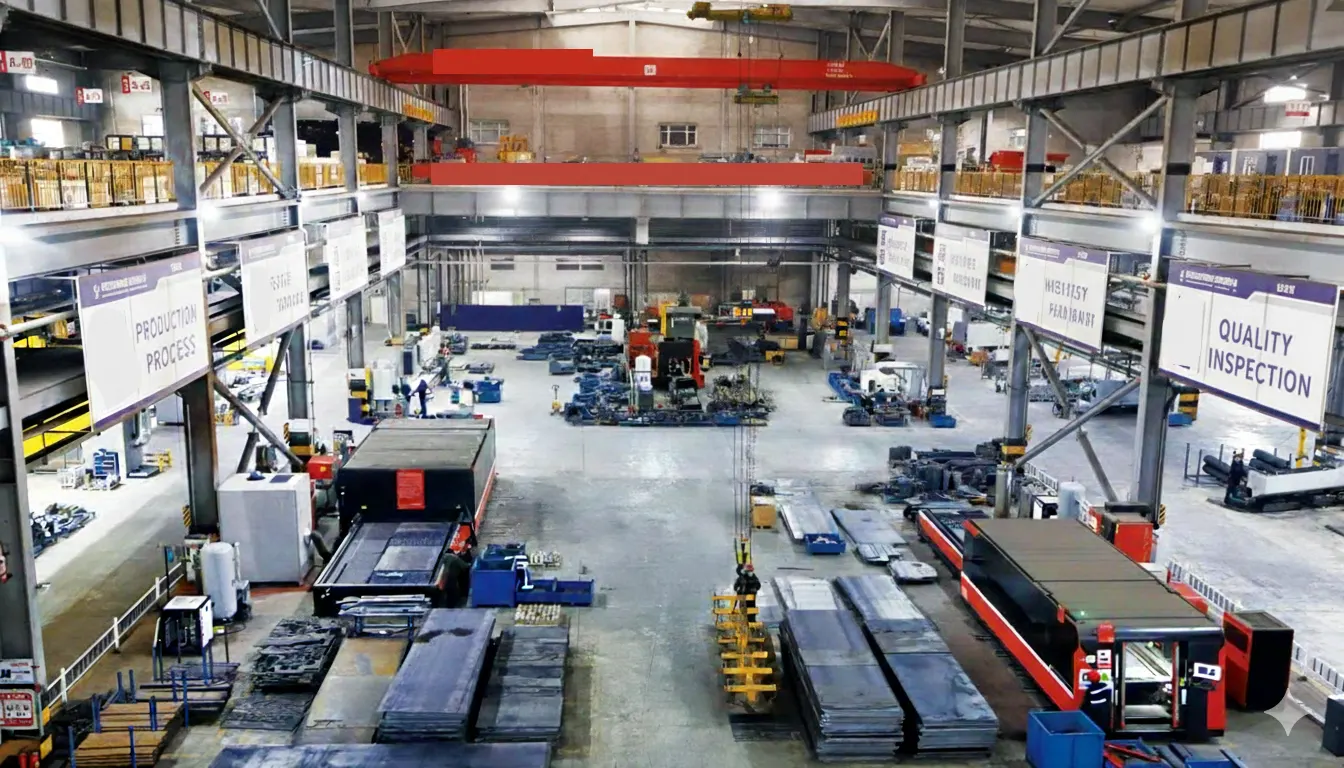
- ✔Manufaktur Bersertifikasi ISO 9001. Setiap 9LZD-9.0 dilengkapi dengan dokumentasi kualitas lengkap: catatan ketelusuran material, laporan inspeksi pengelasan, verifikasi dimensi, dan persetujuan akhir perakitan sebelum unit dikirim.
- ✔Pengiriman suku cadang cepat di AS. Gigi pegas, hub bantalan, perangkat keras batang penarik, dan kit segel hidrolik dikirim dari gudang AS. Sebagian besar alamat domestik menerima suku cadang dalam waktu 2 hingga 5 hari kerja. Pesanan yang dilakukan sebelum pukul 14.00 Waktu Pasifik biasanya dikirim pada hari yang sama.
- ✔Memenuhi syarat berdasarkan Pasal 179. 9LZD-9.0 memenuhi syarat untuk pengeluaran tahun pertama berdasarkan Bagian 179. Dokumentasi faktur lengkap untuk akuntan Anda disertakan dengan setiap pesanan berdasarkan permintaan.
- ✔Harga Langsung dari Pabrik. Tidak ada mark up jaringan dealer. Harga yang Anda bayar mencerminkan biaya sebenarnya dari mesin dan logistik AS — biasanya 15–25% lebih rendah daripada peralatan setara yang dijual melalui saluran dealer.
- ✔Lini Peralatan Pakan Ternak Lengkap. Padukan 9LZD-9.0 dengan mesin pemotong rumput, mesin pengepak jerami bundar, pengangkut jerami, dan mesin pengepak-pembungkus jerami — semuanya bersumber dari satu pemasok, dan semuanya didukung oleh tim AS yang sama. Kunjungi situs web kami. Tentang Kami Kunjungi halaman ini untuk membaca kisah lengkap perusahaan.
Pertanyaan yang Sering Diajukan
Apa perbedaan antara penggaruk jerami roda jari 9LZD-9.0 dan 9LZY-9.0?
Kedua model memiliki lebar kerja yang sama, yaitu 9 meter. Model 9LZD-9.0 memiliki 17 roda jari (total 1.020 gigi), sedangkan model 9LZY-9.0 memiliki 15 roda (total 900 gigi). Dua roda tambahan pada 9LZD-9.0 meningkatkan kepadatan gigi per meter, mengurangi celah pada barisan tanaman pada tanaman yang berat, dan membutuhkan traktor yang sedikit lebih bertenaga — 75–102 HP dibandingkan 68–75 HP untuk 9LZY-9.0.
Apakah alat pengumpul jerami roda jari 9LZD-9.0 memerlukan koneksi PTO?
Tidak. Alat penggaruk mengumpulkan hasil panen sepenuhnya melalui putaran roda yang digerakkan oleh tanah — tidak ada poros PTO yang terhubung pada alat tersebut. Satu-satunya sambungan traktor yang dibutuhkan selain pengait batang penarik adalah sepasang remote hidrolik belakang kerja ganda untuk sistem pelipatan. Poros PTO traktor Anda tetap sepenuhnya bebas selama operasi penggarukan.
Traktor saya berdaya 80 HP. Apakah itu cukup untuk mesin 9LZD-9.0?
Ya. Kisaran 75–102 HP berarti traktor 80 HP berada dalam jangkauan kerja yang nyaman. Karena alat penggaruk digerakkan oleh tanah dan tidak menggunakan daya PTO, tugas traktor adalah menarik alat seberat 1.240 kg dan memberikan tekanan hidrolik untuk melipatnya. Di medan datar hingga bergelombang ringan, 80 HP mampu menanganinya tanpa kesulitan. Di tanjakan yang berkelanjutan di atas 8 persen, traktor 90–100 HP memberikan kontrol yang lebih baik saat menuruni bukit.
Bagaimana cara mengganti gigi pegas yang patah pada 9LZD-9.0?
Setiap gigi dipasang secara terpisah ke hub roda jari dengan dua baut. Untuk mengganti: kendurkan dan lepaskan kedua baut dengan kunci pas standar, geser gigi yang rusak keluar dari braket, pasang gigi pengganti, dan kencangkan kembali sesuai spesifikasi pabrik. Penggantian lengkap membutuhkan waktu kurang dari dua menit per gigi dan hanya memerlukan peralatan tangan dasar. Kit gigi cadangan disertakan dengan setiap mesin baru tanpa biaya tambahan.
Berapa lebar barisan serbuk kayu yang dihasilkan oleh 9LZD-9.0?
Lebar barisan jerami dapat disesuaikan dalam rentang 0,8 hingga 1,2 meter (2,6 hingga 3,9 kaki) tergantung pada pengaturan sudut cakram dan kecepatan gerak. Barisan jerami yang sempit (0,8 m) memusatkan tanaman untuk kehilangan kelembapan yang lebih cepat dalam kondisi lembap. Barisan jerami yang lebih lebar (1,2 m) menyebarkan barisan jerami untuk paparan sinar matahari yang lebih cepat di iklim kering. Sebagian besar mesin pengepak jerami bundar besar dapat dengan mudah mengambil jerami dalam rentang barisan jerami 9LZD-9.0.
Apakah lebar jalan yang diizinkan untuk transportasi sesuai dengan peraturan DOT (Departemen Perhubungan) di jalan-jalan kabupaten dan jalan raya negara bagian AS?
Saat dilipat, 9LZD-9.0 memiliki lebar yang sesuai dengan peraturan alat pertanian di sebagian besar negara bagian AS tanpa memerlukan izin ukuran berlebih. Alat ini dilengkapi dengan lampu amber dan titik pemasangan emblem SMV (Kendaraan Bergerak Lambat) sesuai dengan persyaratan visibilitas FMCSA. Selalu verifikasi dengan Departemen Perhubungan negara bagian Anda — pembatasan lokal bervariasi berdasarkan kelas jalan raya dan yurisdiksi kabupaten.
Tanaman apa saja yang dapat ditangani secara efektif oleh alat penggaruk jerami roda jari 9LZD-9.0?
9LZD-9.0 dirancang untuk merapikan alfalfa (semua jenis potongan), jerami rumput campuran, rumput padang rumput asli, semanggi, timothy, orchardgrass, rumput Bermuda, jerami gandum, jerami oat, jerami jelai, jerami padi, dan batang jagung. Mesin ini bekerja sama baiknya pada tumpukan jerami yang tebal dan padat maupun pada sisa-sisa tanaman yang lebih ringan dan tersebar dari potongan rumput padang rumput asli yang tipis.
Berapa lama waktu pengiriman dan seperti apa proses pengirimannya?
Pengiriman standar dari gudang AS ke alamat domestik memakan waktu 7 hingga 14 hari kerja, tergantung pada negara bagian tujuan dan jadwal kurir. Pengiriman ekspres musim panen tersedia. Alat ini sebagian besar sudah dirakit; pengaturan akhir di lahan pertanian biasanya memakan waktu dua hingga empat jam dengan mengikuti panduan perakitan yang disertakan. Tim dukungan AS tersedia melalui telepon untuk membantu menjawab pertanyaan pengaturan langkah demi langkah.
Ulasan Pelanggan dari Peternakan AS
Ulasan-ulasan berikut berasal dari pemilik 9LZD-9.0 di berbagai lingkungan produksi dan sistem pertanian di AS. Setiap ulasan mencerminkan pengalaman pribadi pemilik selama setidaknya satu musim panen jerami penuh.
Travis Hollenbeck, Pemilik Peternakan Sapi Perah, Dodge County, Wisconsin (awal 2025)
★★★★★
Kami memerah susu 340 ekor sapi dan menanam 360 hektar alfalfa dengan tiga kali panen per tahun. Angka protein panen kedua adalah alasan saya mulai mempertimbangkan 9LZD-9.0 — alat penggaruk putar lama kami menghancurkan daun pada panen kedua yang lebat, dan ahli nutrisi kami terus mengingatkan hal itu. Kami beralih ke 9LZD-9.0 Juni lalu. RFV pada sampel panen kedua kami meningkat rata-rata 11 poin sepanjang musim. Sapi-sapi pun merasakannya. Komponen susu meningkat secara signifikan pada bulan Juli dan Agustus. Kepadatan 17 roda benar-benar membuat perbedaan pada alfalfa yang tebal. Saya tidak akan kembali menggunakan alat penggaruk lama.
Dale Mercer, Peternak Sapi, Kabupaten Haakon, Dakota Selatan (pertengahan 2025)
★★★★★
Kami memelihara 520 pasang sapi induk dan anak sapi di padang rumput alami dan menghasilkan sekitar 1.400 bal jerami bundar campuran rumput alami setiap tahunnya. Tanahnya bergelombang dan kasar di beberapa tempat, dan saya ragu apakah alat penggaruk 17 roda dapat mengikuti medan tanpa meninggalkan celah. Ternyata bisa. Suspensi independen pada setiap roda menjaga gigi penggaruk tetap di tanah bahkan di bagian yang lebih kasar. Tingkat kesalahan penggarukan mungkin hanya 1,51 TP5T sepanjang musim — lebih baik dari yang tertera di spesifikasi. Alat ini ditarik oleh traktor John Deere 6115M 95 HP. Traktor menangani beban penarik dengan mudah, tanpa perlu khawatir tentang poros PTO.
Karen Fitzgerald, Kontraktor Pembuatan Jerami Kustom, Polk County, Iowa (akhir 2024)
★★★★☆
Saya menjalankan usaha pengumpulan jerami khusus yang mencakup sekitar 40 pertanian dalam radius 50 mil di Iowa tengah. Mesin 9LZD-9.0 menggantikan dua mesin pengumpul jerami yang lebih kecil dalam armada saya, dan saya beralih dari membutuhkan dua operator menjadi satu untuk luas lahan harian yang sama. Sistem pelipatan hidroliknya andal dan cepat — berpindah antar pertanian hanya membutuhkan beberapa menit. Saya mencatat lebih dari 480 hektar dalam satu hari terbaik saya Agustus lalu. Manual perakitan mungkin perlu diagram yang lebih jelas di beberapa tempat, tetapi tim dukungan di California membantu saya melalui telepon tanpa masalah.
Robert Yamamoto, Pengirim Jerami Premium, Kabupaten Tulare, California (pertengahan 2025)
★★★★★
Kami mengelola 2.800 hektar alfalfa dan timothy di Lembah San Joaquin untuk diekspor ke pembeli Jepang dan Korea. Warna, daya tahan daun, dan tingkat kontaminasi tanah adalah tiga hal yang diperiksa pembeli saat kedatangan. 9LZD-9.0 memenuhi ketiga kriteria tersebut. Daun tetap menempel, barisan jerami rapat dan tidak menyentuh tanah, dan aksi yang lembut dan digerakkan oleh tanah tidak melemparkan tanah ke barisan jerami seperti yang dilakukan oleh alat penggaruk putar. Tingkat penolakan kami untuk pasar Jepang meningkat dari 4,11 TP5T menjadi di bawah 11 TP5T setelah beralih. Produktivitas mencapai 8,3 ha/jam secara konsisten di lahan datar.
Nathan Gruber, Petani Gandum dan Jerami, Reno County, Kansas (awal 2025)
★★★★★
Kami menanam gandum musim dingin merah keras di lahan seluas sekitar 1.500 hektar dan mengemas jerami setelah panen sebagai penghasilan tambahan. Mesin pemanen menyebarkan jerami tipis dan lebar di sepanjang jalur selebar 35 kaki. Mengumpulkan jerami menjadi barisan siap bal dengan cepat adalah keunggulan 9LZD-9.0. Kami menyelesaikan pengumpulan jerami dalam satu setengah hari dengan satu traktor dan satu operator. Barisan jerami yang dihasilkan konsisten dan padat — baik mesin pengemas jerami persegi maupun bundar dapat mengumpulkannya dengan bersih tanpa tersumbat. Pajak Bagian 179 menutupi sebagian besar harga pembelian di tahun pertama.
Michelle Andersen, Produsen Alfalfa Organik, Weld County, Colorado (akhir 2025)
★★★★★
Alfalfa organik bersertifikat kami dijual ke peternakan sapi perah di Front Range dengan harga premium dibandingkan alfalfa konvensional, tetapi pembeli organik sangat ketat mengenai ambang batas RFV dan penampilan visual. 9LZD-9.0 merupakan peningkatan yang signifikan dari alat penggaruk putar berbasis cakram yang kami gunakan sebelumnya. 1.020 gigi penggaruk memberikan cakupan yang merata bahkan di lahan irigasi kami yang sebelumnya sering terangkat oleh alat penggaruk yang lebih kecil. Keseragaman barisan jerami sangat baik. Suku cadang tiba dari California dalam tiga hari ketika saya memesan kit gigi tambahan sebelum pemotongan ketiga. Sangat direkomendasikan.
Siap Menggunakan 1.020 Gigi Pemotong Rumput Musim Ini?
Dapatkan penawaran tanpa kewajiban untuk alat pengumpul jerami roda jari 9LZD-9.0 yang dikirim ke pertanian Anda. Harga langsung dari pabrik, dukungan berbasis di AS, dan dokumentasi Bagian 179 disertakan dengan setiap pesanan.
America Ever-Power Silage Baler Equipment INC. | 1401 21st ST, STE R, Sacramento, CA 95811, AS
Produk Terkait
-
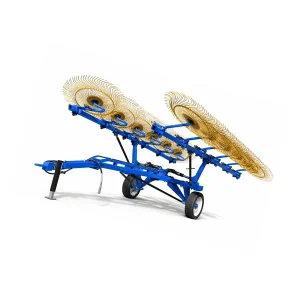
9LZ-6.0 Penggaruk Jerami Roda Jari | Penggaruk V 12 Roda 6m
-
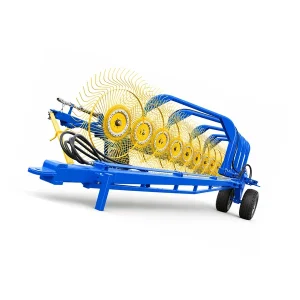
9LZY-9.0 Rake Jerami Roda Jari | V-Rake 15 Roda 9m
-
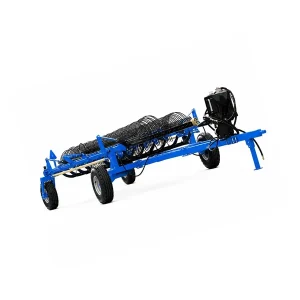
9LH-12 Penggaruk Jerami Horizontal yang Ditarik | Lebar 12 m
-
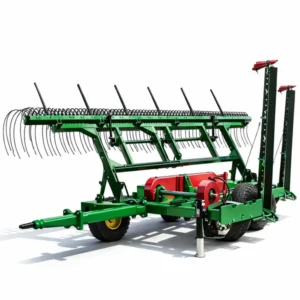
9GL-5.0/5.6 Penggaruk Rumput untuk Mesin Pemotong Rumput yang Ditarik | Lebar Pemotongan 5m, Lebar Penggaruk 5.6m
-
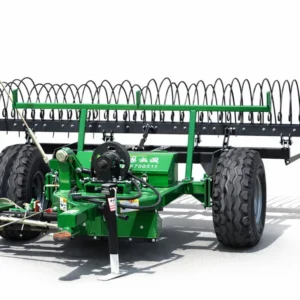
Penggaruk Rumput Tarik untuk Mesin Pemotong Rumput 9GL-2.5/2.9 | Penggaruk Rumput untuk Mesin Pemotong Rumput Dijual


