Industry Guide · Dairy Hay Market · Updated August 2026
Square Baler for Dairy Farm Hay
Dairy farms buy hay by nutritional content, not appearance. A lactating dairy cow requires 16–20% crude protein, NDF below 40% and RFV above 150 — and the farm nutritionist specifies each load against these targets. The 9YF-2200 serves most dairy hay operations producing 2nd and 3rd cut alfalfa at 65HP+; the 9YF-2200S is the correct model for dense 1st-cut alfalfa at 99HP+. Dairy farms also prefer heavier bales at 22–28kg for mechanical handling efficiency. This guide covers every aspect of the dairy hay market from the equipment and field management side.
Covers: dairy hay nutritional requirements · why the test matters · model recommendations · density for heavy alfalfa · bale weight for dairy handling · cutting stage for maximum protein · storage for quality retention
Quick Answer — Dairy Hay Baler Recommendation
9YF-2200 (spring-tooth) — correct model for 2nd and 3rd cut alfalfa and mixed dairy hay at 50–85HP. High density, 22–28kg bale weight, efficient throughput in uniform windrows.
9YF-2200S (shredder) — recommended for dense 1st-cut alfalfa at full stand in high-production fields where the standard inlet experiences frequent plugging at the density and speed needed for commercial dairy volumes at 99HP+.
What Dairy Farm Nutritionists Specify for Hay
Dairy farms are unique among hay buyers in that many do not make the purchasing decision based on visual inspection alone. A dairy nutritionist formulates a total mixed ration (TMR) to a specific nutritional specification — and hay that does not meet the protein, fiber and energy parameters of the formulation disrupts milk production, feed conversion efficiency and cow health. This means dairy buyers test hay loads and pay (or refuse to pay) based on the test result.
| Nutritional Indicator |
Definition |
Dairy (Lactating) Target |
Premium Dairy Target |
| Crude Protein (CP) |
Total nitrogen × 6.25 |
16–18% |
18–22% |
| NDF (Neutral Detergent Fiber) |
Total structural fiber |
Below 40% |
28–35% |
| ADF (Acid Detergent Fiber) |
Lignin + cellulose |
Below 32% |
Below 28% |
| RFV (Relative Feed Value) |
Digestibility index (100 = full-bloom) |
Above 150 |
Above 180 |
These targets are most readily achieved with first and early-second-cut alfalfa harvested at late bud to early bloom stage. Grass hay typically delivers CP of 8–12% and RFV of 90–130 — below dairy lactating requirements for primary forage. Mixed hay (50% alfalfa, 50% grass) can reach CP 12–15% and RFV 130–160, which may be acceptable for dairy dry cows or partial-ration inclusion.
Why Dairy Buyers Buy by the Test, Not by Appearance
A dairy farm feeding 500 cows at 12kg of dry matter per cow per day from hay requires 6,000kg of hay dry matter daily. At $180 per tonne, that is $1,080 per day in hay cost. A 2% decrease in crude protein from 18% to 16% in the hay component of the ration may reduce daily milk production by 0.5–1.5 litres per cow — at $0.35 per litre, that is a $87–$262 daily revenue reduction from a quality shortfall the farm nutritionist must compensate for with other ration components. This economic precision is why dairy farms test and specify nutritional content rather than buying on appearance alone.
For producers: this means that investing in equipment and field management practices that maximise alfalfa CP and RFV is directly monetised by dairy buyers — the premium for a forage test result of CP 20%, RFV 200+ in US alfalfa markets is $20–$40 per tonne above standard dairy-grade hay. The equipment choices (correct model, correct density, consistent baling moisture) contribute directly to hitting those test results consistently across loads.
Equipment Selection: 9YF-2200 vs 9YF-2200S for Dairy Alfalfa
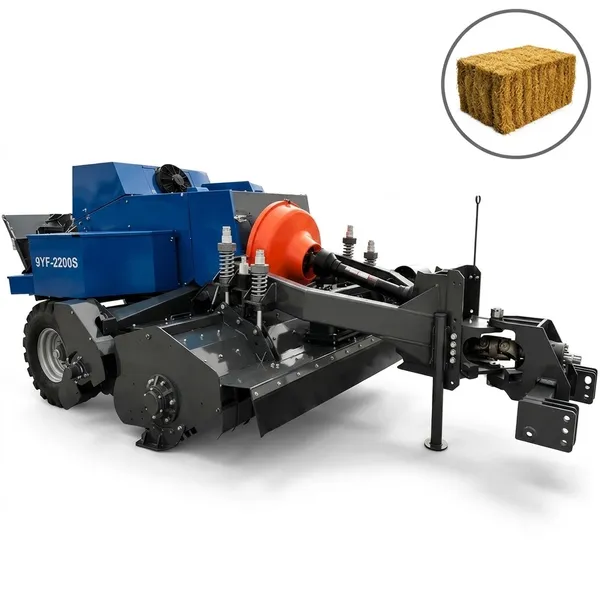
9YF-2200 — 2nd and 3rd Cut Alfalfa
2nd and 3rd cut alfalfa windrows are thinner and more uniform than 1st cut — the regrowth stems are shorter and enter the inlet more cleanly. The 9YF-2200 spring-tooth handles these lighter cuttings at 65HP without plugging issues at normal forward speed.
Best pairing: 65–85HP tractor · 2nd / 3rd cut alfalfa · target bale weight 22–26kg · dairy farms within 60km of field
9YF-2200S — 1st Cut Alfalfa at Full Stand
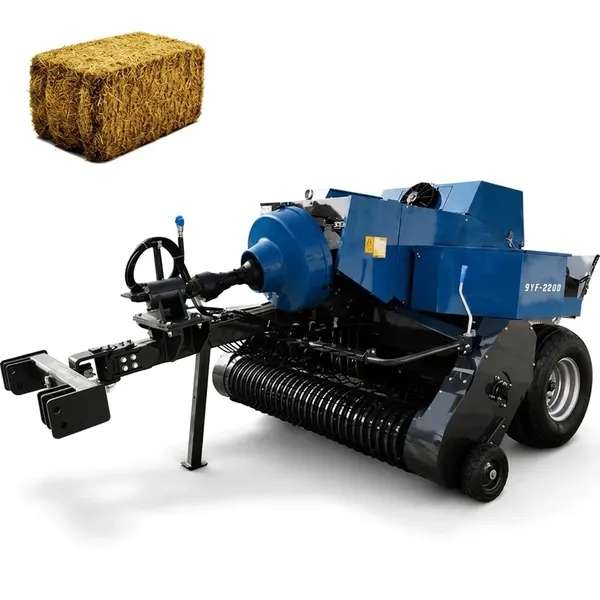
1st cut alfalfa in high-production fields produces thick, heavy windrows of dense stems at variable lengths. At the forward speed needed for commercial volume, these windrows bridge at the standard inlet. The shredder mechanism pre-processes material into uniform lengths that feed consistently without bridging.
Best pairing: 99–130HP tractor · 1st cut full-stand alfalfa · target bale weight 24–28kg · operations where 1st cut volume justifies 99HP+ investment
Regola di decisione: if your 1st-cut alfalfa windrows cause frequent plugging with the standard model at the forward speed needed for your daily bale target — switch to the 9YF-2200S. If plugging is occasional and manageable by reducing speed: the 9YF-2200 remains the lower-cost and lower-HP option for the overall operation including the lighter cuttings.
Bale Weight for Dairy Farm Handling — Why Heavier Is Better
Unlike the horse market where 18–22kg is the maximum for one-person handling, dairy farms use mechanical handling as standard — a front loader with a bale spike or a bale elevator system moves bales at the rate needed for TMR mixing. This means the handling weight constraint that limits horse hay bale weight does not apply in most dairy settings, and heavier bales reduce bale count per tonne fed, saving time on the loader and reducing the number of bale strings to remove per feeding.
| Dairy Operation Type |
Recommended Bale Weight |
Motivazione |
| Small dairy (<50 cows, hand-feed from bales) |
18–22 kg |
Manual handling limit applies. Same as horse hay target. |
| Medium dairy (50–200 cows, front loader feeding) |
22–26 kg |
Mechanical handling. Higher weight reduces bale count per tonne. |
| Large dairy (200+ cows, TMR with bale processor) |
24–28 kg |
Bale processor requires minimum density to shred correctly. Heavier bales per mix batch. |
| Commercial dairy hay producer (sells by tonne) |
22–28 kg (buyer-specified) |
Confirm target weight with buyer before production — dairy farms often specify weight for TMR calculations. |
Cutting Stage and Crude Protein — The Biggest Variable in Dairy Hay Value
| Alfalfa Cutting Stage |
Proteine grezze |
NDF |
RFV |
Dairy Value |
| Late bud (best for dairy) |
20–24% |
28–34% |
180–220 |
Supremo |
| Early bloom (10% bloom) |
18–22% |
32–38% |
155–185 |
premi |
| Mid bloom (25–50% bloom) |
16–18% |
38–44% |
130–160 |
Dairy grade |
| Full bloom / post-bloom |
12–16% |
44–52% |
100–135 |
Below dairy spec |
The 5–7 day window between late bud and early bloom is the difference between a Supreme-grade load worth $220/tonne and a standard-grade load worth $160/tonne in many US dairy hay markets — a $60/tonne differential on every tonne produced. Equipment reliability during that window directly determines whether the load is cut, dried and baled in time.
Density Setting for Dairy Alfalfa Hay
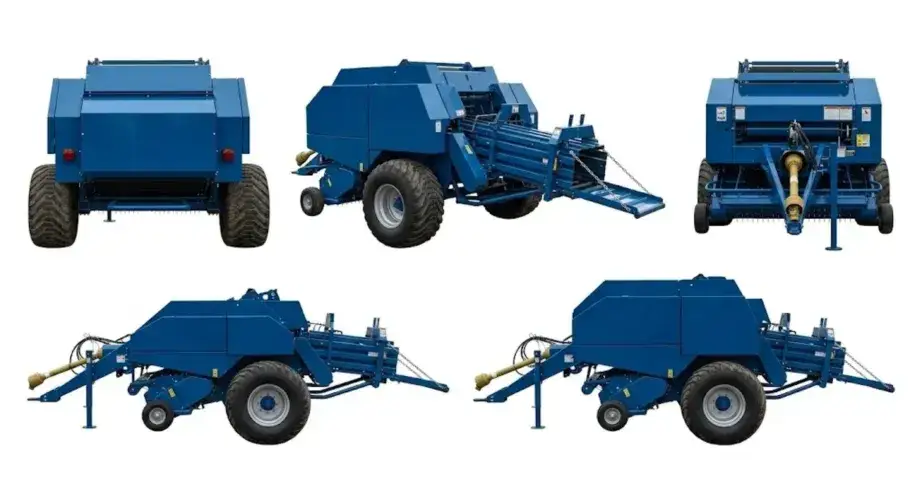
Dairy alfalfa is baled at higher density than most other hay crops — the target weight of 22–28kg in the 460×360mm cross-section requires density spring tension settings at medium-high to high, combined with a bale length of 500–600mm. This higher density also serves the dairy buyer: bale processors in TMR mixers work more efficiently with dense, firm bales that resist the shredding action rather than breaking apart before the processor has completed mixing.
Run calibration bales at the start of each 1st-cut alfalfa session — the dense, high-moisture 1st-cut windrow compresses differently than 2nd or 3rd cut material at the same spring tension setting. In most operations, the density spring must be set 1–2 positions lighter for 1st cut than for 2nd cut to achieve the same target weight, because 1st-cut alfalfa compresses more efficiently per plunger stroke due to its higher stem-to-leaf ratio.
PTO Drive for Consistent Density in High-Volume Dairy Alfalfa Sessions
Dairy alfalfa sessions are high-duration, high-density operations — a 1,000-bale day at 28kg bales in 1st-cut alfalfa places sustained high torque demand on the PTO driveshaft for 8–10 hours. Any driveshaft operating above its rated HP transmits heat into the CV joints continuously — the failure may not appear immediately but will manifest as premature CV joint bearing failure within the season. Annual shaft inspection and replacement of any worn CV joint boot before the start of 1st-cut season prevents costly in-field failures during the narrow harvest window. Full sizing guide: PTO driveshaft torque rating and inspection guide for high-volume alfalfa baling.
Frequently Asked Questions — Square Baler for Dairy Farm Hay
Can grass hay meet dairy nutritional requirements?+
Standard grass hay (mixed grasses, orchard, fescue) typically tests at 8–12% crude protein and RFV 90–130 — below the 16% CP and RFV 150 minimum for lactating dairy cows. Grass hay alone does not meet dairy lactating requirements for primary forage. However, grass hay is widely used in dairy rations as a supplemental roughage component (10–20% of total forage dry matter) to provide effective fiber (eNDF) that stimulates rumen function and maintains rumen mat — which is beneficial for overall digestive health even when the nutritional content is below lactating specification. Mixed hay with 50%+ alfalfa content can reach 12–15% CP and RFV 130–160, which suits dry cow rations and heifers but remains below peak lactation requirements. For producing hay that meets lactating dairy specifications as a primary forage, alfalfa at boot stage or early bloom is the correct crop — grass hay is the supplement, not the primary.
How do I get my alfalfa hay forage-tested before selling to a dairy?+
Forage testing procedure: obtain a Penn State forage sampler (a coring device that inserts into the bale end and extracts a core sample) from your local extension office or farm supply store. Sample 20–30 bales per test lot (one cutting from one field is one test lot) using the coring device inserted to full depth at the centre of each bale end face. Combine all core samples into a single zip-lock bag and submit to a certified forage analysis laboratory — Dairy One (Ithaca, NY), Ward Laboratories (Kearney, NE) or a regional university extension laboratory are common choices. Request a full dairy panel: dry matter, crude protein, NDF, ADF, RFV and ash. Results are typically available in 2–4 business days. Include the test certificate with the hay load at delivery — dairy nutritionists and buyers require the certificate to adjust TMR formulations. Testing costs approximately $20–$35 per sample and is worthwhile for every commercial dairy hay sale.
What bale weight does a TMR bale processor require?+
TMR bale processors (both vertical and horizontal types) are designed to handle a wide range of small square bale weights from approximately 15kg to 30kg. The main requirement is that the bale be dense enough to resist the flail or auger action without breaking apart prematurely before the flail has completed its work on the bale. Very loose, light bales (below 18kg) in some processor designs tend to collapse inward before the processor has shredded the outer layers, which can cause uneven particle size in the mixed ration. The 22–28kg target for dairy alfalfa bales is well within the operational range of all common TMR bale processor designs and is the preferred weight for most operations using this equipment. Confirm with your specific TMR equipment manufacturer whether there is a recommended minimum bale density for your processor model — some older designs have a minimum density specification.
How does baling moisture affect crude protein levels in alfalfa?+
Baling moisture has a significant indirect effect on crude protein in the final bale, primarily through the heating mechanism. Alfalfa baled at 18–22% moisture undergoes microbial and enzymatic heating in the first 7–21 days after baling. This heating causes heat-damaged protein (ADICP — acid detergent insoluble crude protein) — proteins that have undergone Maillard reaction with carbohydrates and become unavailable for rumen digestion. The total crude protein figure remains similar, but the digestible (available) protein fraction decreases. Well-cured alfalfa baled at 14–16% moisture has minimal heat-damaged protein and delivers higher effective protein to the cow. Dairy nutritionists increasingly specify not just total CP but also ADICP (heat-damaged protein) levels — a target of ADICP below 7–8% of total CP is common for premium dairy alfalfa specifications. Baling at the correct moisture every time is therefore both a quality and a nutritional digestibility requirement for the dairy market.
How many cuttings of alfalfa per year are possible for dairy hay?+
The number of cuttings per year varies significantly by region and irrigation status. In the US Intermountain West (Idaho, Utah, Nevada) with irrigation: 5–8 cuttings per year at 28–35 day intervals through the growing season. In the Midwest (Iowa, Illinois, Indiana) under rainfed conditions: 3–4 cuttings per year. In the Southeast: 4–6 cuttings of warm-season adapted alfalfa varieties. Each cutting must be harvested at the late bud to early bloom stage for maximum CP and RFV — which means the cutting interval is set by alfalfa growth rate rather than calendar schedule. In hot summer conditions where growth is rapid, cutting at 28 days may be necessary to catch late bud; in cooler spring or fall conditions, the same stage may not be reached until 35–40 days after the last cutting. The baler must be ready and the hay dried in the available window regardless of the calendar — equipment reliability is particularly critical for the 1st and 2nd cut which typically produce the highest-value loads.
Does ash content matter for dairy hay?+
Ash content matters more for export dairy hay buyers than for domestic dairy farms, but domestic dairy nutritionists do review ash levels on forage tests as an indicator of soil contamination. A hay test showing ash above 10–12% (typical for pure alfalfa is 8–10%) suggests soil pickup during raking or baling. Soil minerals dilute the nutritional value per tonne of hay and can contribute to trace mineral imbalance at high inclusion rates. The primary ash-reduction practice is correct pickup tine height — tines should clear the field surface by 15–25mm without dragging through it. Spring-tooth tines deflect over soil irregularities rather than digging in. Raking at the correct speed (not too fast) also reduces soil pickup during windrow formation. For the export dairy market (Japan, Korea), ash specifications of below 2% are commonly required — achieving this typically requires the 9YFS-2.2 fan system which actively removes fine soil particles during baling.
Can I produce both horse hay and dairy hay from the same alfalfa field?+
Yes — with careful cutting management, the same alfalfa field can produce hay for both markets. The difference is in cutting stage and the way you handle different cuttings. 1st cut and 2nd cut early-season alfalfa are typically best suited for dairy (high protein, dense windrows, less concern for visual leafiness) — these are your highest-protein loads and can be marketed directly to dairy buyers with a forage test. Late season 3rd and 4th cut alfalfa is often leafier, greener and lighter in stem density — well suited for the horse market where alfalfa is used as a supplement (not primary forage) for performance horses. Operating with both markets in mind throughout the season maximises revenue per acre by matching each cutting to its highest-value buyer. The same 9YF-2200 serves both markets: dense setting and longer bale length for dairy (22–28kg), lighter setting and shorter bale for horses (18–22kg).
How should dairy alfalfa hay be stored to preserve crude protein?+
Crude protein preservation in stored alfalfa hay depends primarily on preventing secondary heating and rain weathering, both of which destroy or damage protein. The indoor barn storage protocol for dairy alfalfa: pallets off the floor, staggered stacking pattern to the barn height limit (5–6 layers), 300mm clearance from side walls for airflow, and monitoring of bale temperature in the first 14 days (particularly for any bales near 18% baling moisture). Outdoor-stored dairy alfalfa loses crude protein at approximately 0.5–1.0% per month from rain weathering of the outer 50–100mm. For operations selling dairy hay within 60–90 days of baling: outdoor tarped storage is acceptable if the tarp is maintained in good condition. For operations storing through the winter for spring delivery: indoor barn storage is strongly recommended to preserve the crude protein value that dairy buyers are paying for. A load tested at 22% CP in August that has been stored outdoors without cover through winter may test at 17–18% CP by March — a grade reduction that affects the sale price.
Producing Dairy-Grade Hay at Scale?
Tell us your alfalfa acreage, cutting frequency and tractor HP and we will confirm which 9YF square baler model and density setting produces the high-CP, high-RFV bales dairy buyers specify.
America Ever-Power Forage Baler Equipment INC. · 1401 21st ST STE R, Sacramento, CA 95811
Redattore: Cxm