
Why Timing Matters More Than Most Producers Realise
A windrow that reached 15% moisture at 14:00 on Day 3 after cutting can be at 20–22% moisture by 08:00 the following morning — not because it rained, but because overnight atmospheric moisture (dew) re-absorbed into the partially cured hay. Baling that same windrow at 08:00 instead of 14:00 produces bales that will heat, lose quality and potentially be rejected by premium buyers. Baling it at 14:00 produces a marketable product. The equipment, the crop and the field are identical — only the time differs.
This diel (daily) moisture cycle in windrow hay is the most underappreciated factor in hay production quality. Understanding it allows you to predict your baling window reliably, avoid unnecessary field-drying delays and prevent the quality damage that comes from baling outside the safe moisture range.
Dew Point vs Relative Humidity — Which Matters More?
Why Relative Humidity Alone Is Misleading
Most producers monitor relative humidity (RH) as their primary weather indicator for baling decisions. RH is the percentage of maximum moisture the air can hold at its current temperature. The problem: RH changes dramatically with temperature even when the absolute amount of water in the air is unchanged. At 10°C with 80% RH, the air holds 6.1 g/m³ of water. At 30°C with 35% RH, the air holds approximately 11.0 g/m³. The morning reading (80% RH) suggests high humidity; the afternoon reading (35% RH) suggests ideal conditions — but the air at 30°C actually contains nearly twice as much water per cubic metre. This apparent paradox is why experienced hay producers focus on dew point rather than RH alone.
Dew Point: The Stable Indicator
The dew point temperature is the temperature at which the air would become saturated with water vapour — the point at which condensation begins. Unlike RH, dew point does not change as temperature rises and falls through the day. A dew point of 12°C at 06:00 is still approximately 12°C at 16:00 on the same day (assuming no weather front has moved through). This stability makes dew point the most reliable single indicator for hay baling timing decisions.
Excellent baling conditions. Low atmospheric moisture limits re-wetting potential. Morning baling may be feasible if windrow moisture is below 17% from previous day testing.
Typical baling conditions. Overnight re-wetting is moderate. Standard afternoon baling window (13:00–18:00) applies. Test moisture before starting.
High humidity region or season. Overnight re-wetting is significant. Afternoon baling window is shorter — start later (14:00–15:00) and stop earlier. Test more frequently.
Gulf Coast, Southeast summer conditions. Hay re-wetting is severe overnight. Afternoon baling window may be only 2–3 hours. Consider hay preservatives if this is routine.
Morning Baling: The Hidden Moisture Risk
What Happens to the Windrow Overnight
As air temperature falls after sunset, RH rises toward 100%. When the surface temperature of the windrow drops to the dew point temperature, moisture from the air begins condensing directly onto the hay surface — this is dew formation. Dew begins re-wetting the outer layer of the windrow at this point, typically between 22:00 and 02:00 depending on the season and location. By dawn, the windrow surface can have re-absorbed 4–8 percentage points of moisture compared to its late-afternoon reading.
This morning surface moisture is real moisture that goes into the bale if you bale before it evaporates. An operator who measures windrow surface moisture at 08:00 and gets a reading of 18–20% is measuring primarily this dew moisture — but the windrow core was already at 15% moisture the previous afternoon. Baling at 08:00 produces a bale that will heat, even though the windrow was ready the day before.
When Morning Baling Is Appropriate
There are two situations where morning baling is correct. First: when the dew point is below 8°C and nighttime temperatures stayed well above the dew point — dew did not form because the windrow surface did not cool to the dew point. In arid western regions during summer, this condition is common and morning baling is frequently safe. Second: baling hay with a preservative at slightly elevated moisture — morning baling of hay at 18–20% moisture with applied preservative is an established practice for weather-pressured operations. Outside these specific conditions, morning baling of standard small square alfalfa or grass hay is the most common cause of heated bale lots.
The Afternoon Window: When to Start and When to Stop
When the Window Opens
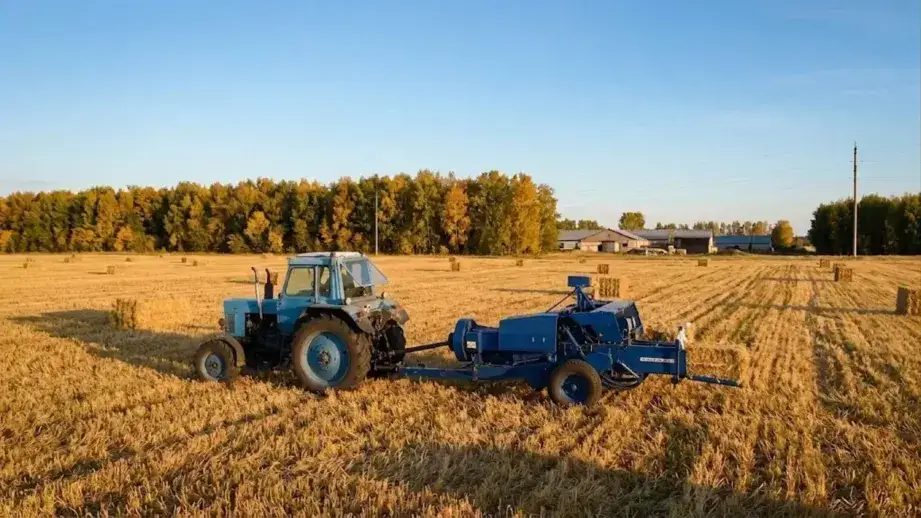
The afternoon baling window opens when two conditions are met simultaneously: the windrow surface has dried from overnight dew (typically reached 2–3 hours after sunrise in sunny conditions), and the windrow core moisture has reached or remained below the target baling range. In most summer hay-baling regions, these conditions align between 12:00 and 14:00 on a clear day. The most common mistake in hay baling is starting too early — at 10:00 or 11:00 — when the windrow surface feels dry but the core is still carrying overnight re-wetting moisture from the surface layer inward.
A reliable opening test: measure the windrow core moisture with a probe meter at 12:00. If the core reads below 17%, the window is open for standard small square baling. If it reads 17–19%, wait 60–90 minutes and test again. Temperature and solar radiation continue to drive moisture out of the core through mid-afternoon, so a reading of 18% at 12:00 often reaches 15–16% by 14:00 on a good day without any change in the windrow.
When the Window Closes
The afternoon baling window closes when evening humidity begins to rise — typically between 17:00 and 19:00, though this varies significantly by region and season. The closing signal is not a clock time but a humidity reading: when relative humidity begins rising noticeably on your weather app or station and the windrow surface starts to feel slightly cool or damp to the touch, stop baling for the day. Bales produced in the last 30–60 minutes before dew formation begins may appear dry at baling but will absorb surface moisture as they sit in the field overnight before being moved to storage — particularly the bales on the outer surface of a row or stack.
Regional Differences: Arid West vs Humid Southeast
Western Arid Regions (CA, AZ, NV, ID, WA East)
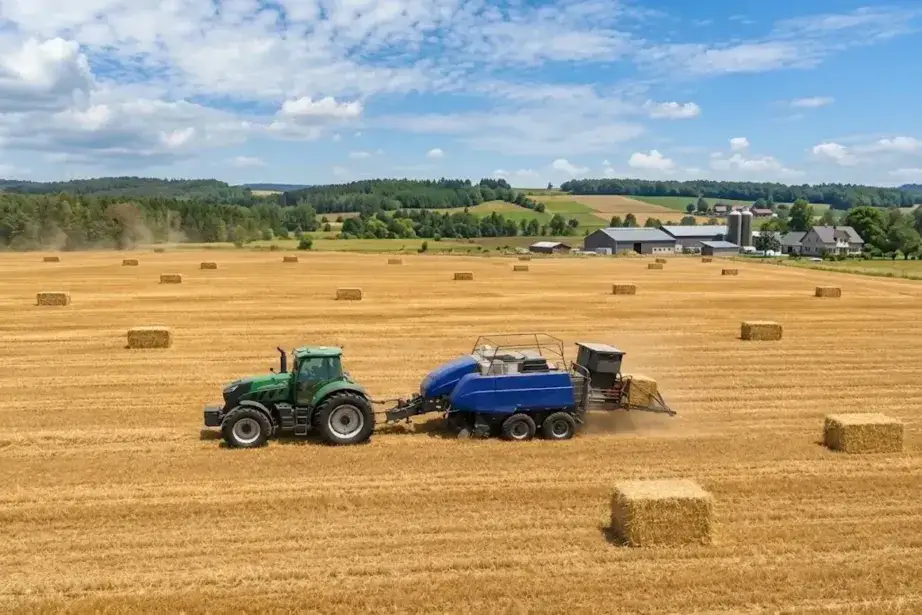
In the irrigated desert and semi-arid western states, summer nights are frequently dry enough that dew does not form on windrows overnight. Dew point temperatures remain below 8–10°C even in the warmest months in many valley locations. In these conditions, the baling window is substantially wider: early morning baling of windrows that reached baling moisture the previous afternoon is safe because no overnight re-wetting occurred. Pacific Northwest producers in Eastern Washington and Oregon frequently start baling at 09:00 and bale through until 19:00 in peak summer, with minimal quality variation across the day.
Southeastern and Gulf Coast States (TX Gulf, FL, AL, GA, MS)
High summer dew points of 20–24°C are common across the Southeast and Gulf Coast. In these conditions, dew formation begins earlier in the evening (often by 20:00), is heavier and persists later into the morning (sometimes until 11:00 or later with cloud cover). The practical baling window on a typical Southeast summer day may be only 3–4 hours: 13:00–17:00. Producers in these regions who attempt to extend the window by starting at 10:00 or baling past 18:00 consistently produce heated lots. Management strategies: mow in narrower windrows to promote faster core drying, consider hay preservatives as a routine tool, and plan production volumes to match the compressed daily window rather than trying to extend it.
Great Plains and Midwest (KS, NE, IA, MN, WI)
The central states span a range of humidity conditions that shift significantly with weather patterns. In dry years with Canadian air masses, conditions approach the western arid window. In humid years with Gulf moisture, the window narrows toward southeastern conditions. The most reliable approach for Great Plains producers: check the dew point each morning before making a baling start time decision, rather than using a fixed clock start. A 06:00 dew point reading below 12°C on a forecast-sunny day suggests a 12:00–13:00 baling start is appropriate. A dew point above 18°C suggests pushing the start to 14:00 and stopping by 17:00.
A Practical Daily Baling Decision Timetable
| Time | Windrow Condition | Recommended Action | Suitable for Baling? |
|---|---|---|---|
| 04:00–07:00 | Overnight dew on surface; core cool | Do not bale. Monitor weather forecast. | ❌ No |
| 07:00–10:00 | Surface drying; core still elevated | Do not bale. Use time for equipment checks or other tasks. | ❌ No |
| 10:00–12:00 | Surface mostly dry; core still high in humid regions | Test core moisture. In arid west: may bale if below 17%. In Southeast: wait. | ⚠ Region-dependent |
| 12:00–17:00 | Surface dry; core moisture at daily low | Confirm core below 17% then bale. Optimal window for most regions. | ✅ Yes |
| 17:00–19:00 | Humidity beginning to rise; field temperatures cooling | Check RH trend. Continue if RH is still below 65% and rising slowly. | ⚠ Monitor closely |
| After 19:00 | Dew fall approaching in most regions | Stop baling. Move cut bales to covered storage within 2 hours. | ❌ Stop |
How to Read a Weather Forecast for Baling Decisions
The Four Numbers That Matter
When planning a baling day from a weather forecast, the four numbers to focus on are: maximum daytime temperature, minimum overnight temperature, dew point at 06:00 and forecast RH at 14:00. From these four numbers, a reliable baling window estimate can be made without specialised equipment. If the minimum overnight temperature stays more than 4°C above the dew point — dew did not form (or was minimal) and early morning baling may be acceptable depending on previous day core moisture readings.
Weather apps and services that display dew point explicitly include Weather Underground, Weather.com (as a secondary field), and the National Weather Service point forecast page (weather.gov — enter a specific location and look for the hourly graph, which shows dew point alongside temperature). The hay community in the Pacific Northwest and Great Plains typically uses these resources routinely — producers in other regions often discover them only after a heated lot prompts a deeper look at timing management.
The 3-Day Baling Forecast System
Rather than making baling decisions the morning of each baling day, experienced producers plan 3 days ahead: identify the cutting window on Day 0 based on the 3-day forecast, track forecast stability through curing days and make the final baling decision by 08:00 on the target baling day based on the confirmed morning dew point and the afternoon forecast. A target baling day where the morning dew point is above 18°C and the afternoon forecast shows cloud cover and RH above 65% is not a baling day regardless of windrow condition — reschedule and continue curing rather than baling into a quality problem.
The Night Baling Question
Is Baling After Dark Ever Appropriate?
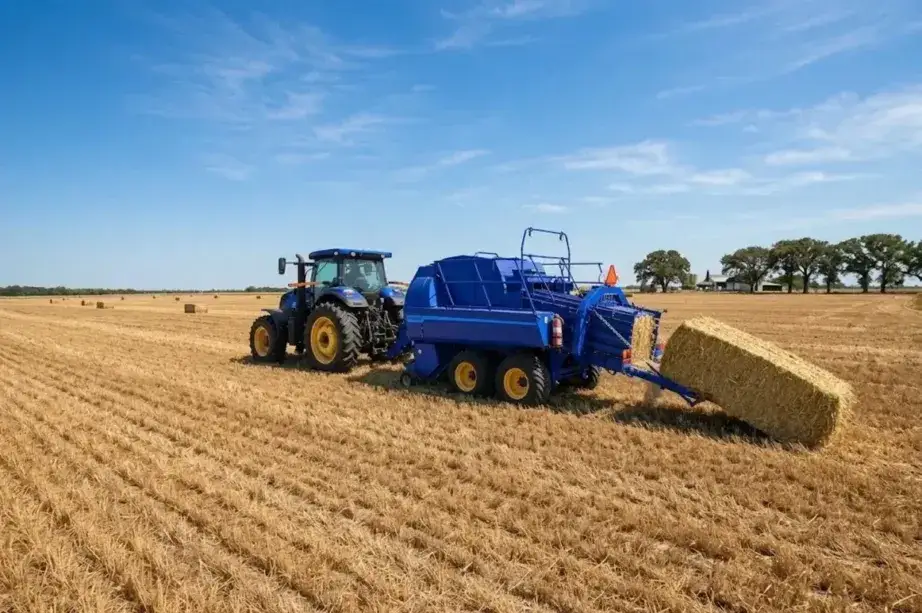
Night baling — continuing after full dark, typically 21:00 to 02:00 — is practiced in some arid western regions during peak season when daytime temperatures allow windrows to dry beyond the lower safe moisture limit and night temperatures remain warm enough that dew does not form. In these conditions, the hay actually bales better at night in terms of leaf retention because the slightly elevated night humidity prevents leaf brittleness without re-wetting the windrow core. However, this is not a universally applicable practice — it requires confirmed dew point monitoring throughout the night session, reliable field lighting for safe equipment operation and a tractor operator capable of sustained safe nighttime operation. In humid regions, night baling almost always produces bales at dangerous moisture levels. In the arid west during summer peak, it is a well-established production technique that experienced producers manage safely with appropriate monitoring.
Square Baler Equipment and PTO Reference
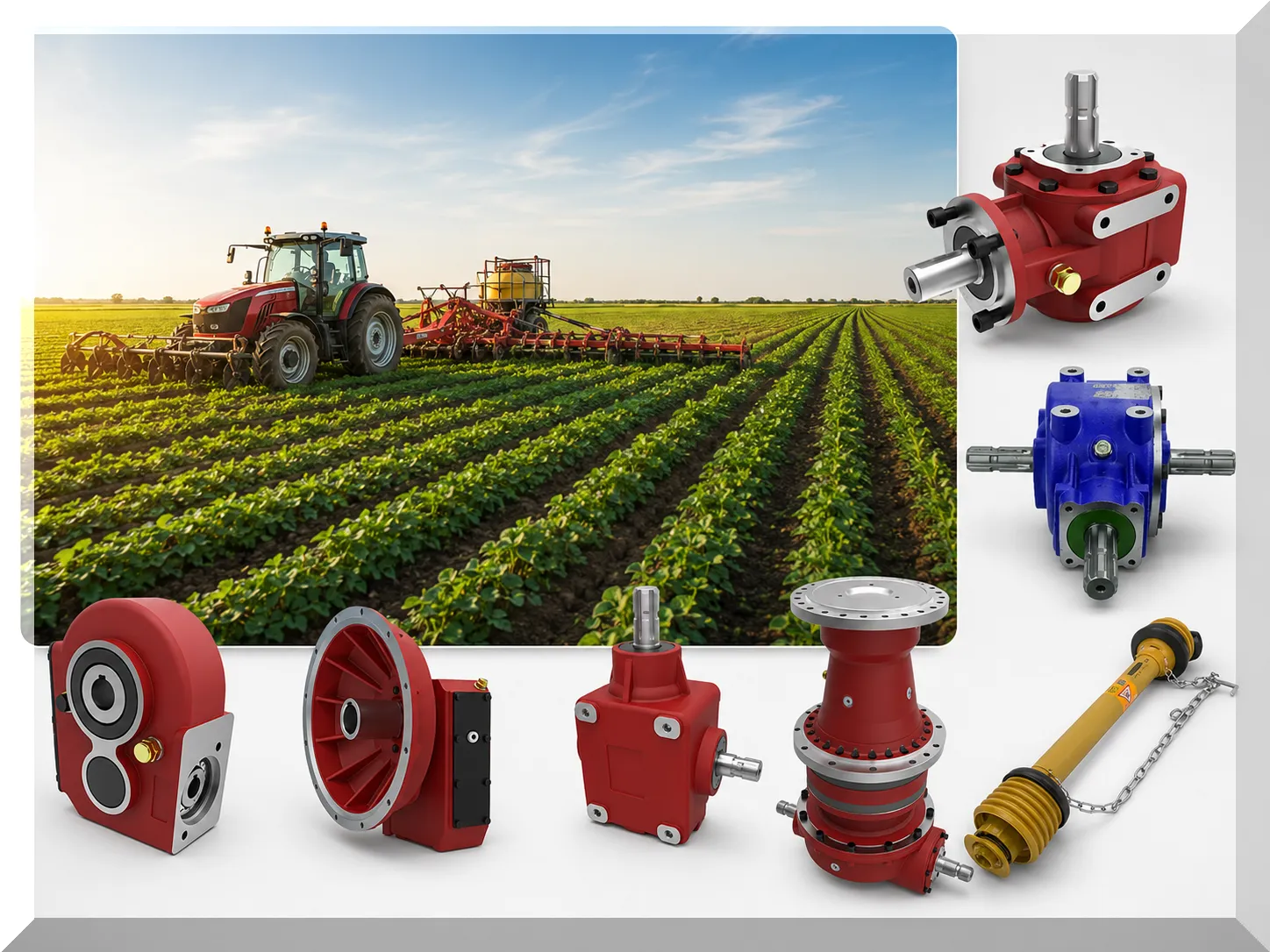
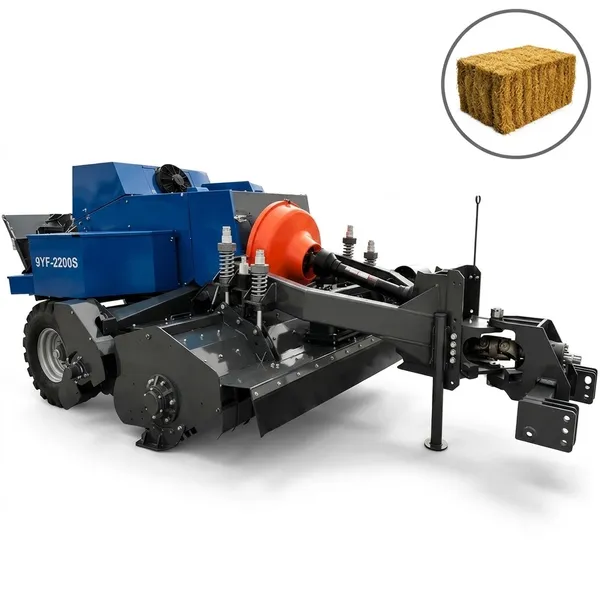
Specifiche dell'albero cardanico e del riduttore per tutti i modelli 9YF: Specifiche del riduttore agricolo e dell'albero cardanico
IL Presse per balle quadrate serie 9YF produce the 460×360mm small square format that horse, retail and export markets require. Driveshaft specifications for all models: Guida al dimensionamento dell'albero di trasmissione della presa di forza e del giunto omocinetico.
Frequently Asked Questions — Best Time of Day to Bale Hay
Choose the Right Baler for Your Region and Market
IL Presse per balle quadrate serie 9YF produce the consistent 460×360mm format that retail, equine and export markets require. Tell us your crop, region and tractor HP and we will match you to the right model.
Redattore: Cxm


