
Perché le capre non sono piccoli bovini e perché questa distinzione cambia tutto nella scelta del fieno
Le capre sono animali brucatori: si sono evolute nutrendosi di arbusti legnosi, erbe, corteccia e diverse tipologie di materiale vegetale in un ambiente molto diverso dai pascoli su cui si basa l'alimentazione dei bovini. Questo background evolutivo determina specifiche esigenze nutrizionali che differiscono da quelle dei bovini in diversi aspetti, influenzando direttamente la selezione delle specie di fieno, gli obiettivi di qualità del fieno e la progettazione delle mangiatoie necessarie per ridurre al minimo gli sprechi. Gestire le capre con programmi di alimentazione basati sul fieno per bovini produce problemi prevedibili e facilmente evitabili: eccesso di proteine nei maschi, carenza di energia nelle femmine da latte e spreco di 25-401 t di ogni balla di fieno, poiché il comportamento alimentare delle capre è fondamentalmente diverso da quello dei bovini al pascolo.
Nel loro comportamento naturale di foraggiamento, le capre selezionano parti specifiche delle piante: raggiungono la cima delle foglie, staccano il fogliame che preferiscono e passano oltre. Quando questo comportamento viene applicato a un cerchio di fieno o a una balla aperta, le capre tirano il materiale dal centro, lasciano cadere immediatamente ciò che non desiderano e si rifiutano di mangiare il fieno che ha toccato terra o che è stato mescolato con la saliva di altre capre. Questo schema comportamentale non è indice di pigrizia o selettività, bensì una selezione funzionale evolutasi per evitare agenti patogeni e tossine in ambienti con vegetazione mista. Capire questo meccanismo spiega sia perché le capre sprecano più fieno dei bovini, sia perché la progettazione delle mangiatoie per capre richiede principi diversi.
Le capre necessitano di 10-80 ppm di rame nella dieta, rispetto ai 9-11 ppm necessari alle pecore: un dato rilevante per i produttori di fieno che allevano entrambe le specie. Il fieno con un apporto di rame adeguato per le capre potrebbe essere insufficiente per le pecore e viceversa. Per un allevamento misto di capre e pecore, questa differenza implica un'integrazione minerale specifica, non una selezione universale del fieno. Questa guida si concentra sui fabbisogni specifici delle capre; le pecore richiedono valori target significativamente diversi per rame, selenio e altri minerali.
Qualità del fieno in base alla classe di produzione caprina: la matrice che determina il tuo acquisto
Il principio più importante nella selezione del fieno per capre è che un singolo lotto di fieno raramente soddisfa le esigenze di tutte le categorie di capre presenti nella stessa azienda agricola. Le capre da latte in fase di lattazione iniziale, i caproni da carne che mantengono la loro condizione fisica e le caprette da riproduzione in fase di crescita rappresentano tre situazioni nutrizionali distinte che possono richiedere tre diversi obiettivi di qualità del fieno. Gli allevatori che alimentano tutte le loro capre con lo stesso fieno si trovano di fronte a un compromesso che risulta o troppo costoso per i caproni o inadeguato per le capre da riproduzione.
| Classe Capra | obiettivo CP | Obiettivo NDF | Priorità Ca:P | Livello di fieno consigliato |
|---|---|---|---|---|
| Capre da latte — inizio lattazione | 14–18% | 40–55% | Alto contenuto di calcio (≥0,6%) | Erba medica in fase di spigatura, miscela di erba medica ed erba, trifoglio rosso in fase di spigatura; integratore energetico da cereali |
| Capre da latte — lattazione avanzata / asciutta | 10–14% | 48–60% | Ca moderato | Miscele di graminacee e leguminose, dactylis glomerata e fleolo: giustificata la riduzione dei costi derivante dalla fase di allattamento. |
| La carne si sviluppa nelle ultime 6 settimane di gestazione. | 11–14% | 44–56% | Ca moderato-alto | Miscela di erba medica e graminacee, dactylis glomerata a spiga precoce, erba con integratore di leguminose |
| La carne fa — manutenzione | 8–10% | 50–65% | Qualsiasi rapporto Ca:P bilanciato | Fieno di erba, misto di piante autoctone, dactylis glomerata a spiga precoce: qui l'erba medica di qualità viene sprecata. |
| Cervi maschi e castrati — tutto l'anno (Ca:P critico) | 8–10% | 52–68% | 2,5:1 Ca:P max | Si preferisce il fieno di erba; testare Ca e P; evitare l'erba medica pura; basso contenuto proteico importante |
| Bambini: dall'allattamento allo svezzamento | 14–18% | 40–52% | Alto contenuto di calcio (crescita ossea) | Erba medica di alta qualità o miscela di erba medica e graminacee; il fieno di avviamento di qualità favorisce la salute del rumine. |
| Cervi da riproduzione — 60 giorni di pre-accoppiamento | 10–12% | 48–60% | Moderato — guarda Ca | Miscela di graminacee e leguminose con analisi del calcio documentata; integrazione con cereali; evitare leguminose ad alto contenuto di calcio. |
Rapporto calcio-fosforo e calcoli urinari: il problema di salute che ogni proprietario di cervi deve comprendere
I calcoli urinari, ovvero depositi minerali nel tratto urinario, rappresentano la principale causa nutrizionale di morte nei capri maschi (castroni e capretti castrati) negli Stati Uniti. Sono quasi completamente prevenibili attraverso una corretta gestione dell'alimentazione. Il meccanismo nutrizionale è specifico e ben compreso; il protocollo di prevenzione è pratico; eppure i calcoli urinari uccidono ogni anno migliaia di capretti da compagnia, caproni da esposizione e riproduttori perché gli allevatori non sono consapevoli del rischio o presumono che "fieno di buona qualità" sia automaticamente sicuro per i loro animali maschi.
I calcoli urinari più comuni nei caproni alimentati con cereali e fieno sono quelli di struvite (fosfato di magnesio e ammonio) e di carbonato di calcio. La struvite si forma quando il fosforo urinario supera il calcio urinario, favorendo la formazione di cristalli nel tratto urinario. I calcoli di carbonato di calcio si formano quando il calcio urinario è estremamente elevato. Entrambi i tipi di calcoli sono favoriti da un'urina alcalina (pH elevato), a sua volta favorita da diete ad alto contenuto proteico e da una ridotta assunzione di acqua. La strategia di prevenzione si concentra simultaneamente su tre fattori: bilanciare il rapporto Ca:P nella dieta (il calcio dovrebbe superare il fosforo di almeno 2:1, idealmente 2,5-3:1), ridurre le proteine nella dieta a livelli di mantenimento nei caproni non riproduttori (meno proteine = meno azoto urinario = urina più acida) e garantire il massimo accesso all'acqua (più acqua = maggiore diluizione = minore concentrazione di minerali nelle urine).
Il fieno di erba medica, in genere, presenta un contenuto di calcio compreso tra 1,2 e 2,0 lTP5T (molto elevato) e un contenuto di fosforo tra 0,22 e 0,35 lTP5T, con un rapporto Ca:P da 4:1 a 6:1. Per le capre da latte e i capretti, che necessitano di un elevato contenuto di calcio per la produzione di latte e la crescita ossea, questo è un valore eccellente. Per i caproni e i castrati, che richiedono un rapporto Ca:P bilanciato e un basso contenuto proteico totale, questo è problematico per due motivi: l'elevatissimo contenuto di calcio può favorire la formazione di calcoli di carbonato di calcio nelle vie urinarie, e l'alto contenuto proteico (18-24 lTP5T di proteina grezza nell'erba medica) rende le urine alcaline, aumentando il rischio di calcoli di qualsiasi tipo. I caproni alimentati esclusivamente con fieno di erba medica presentano un rischio di calcoli significativamente maggiore rispetto agli stessi caproni alimentati con fieno di erba integrato con minerali.
Le migliori specie di fieno per le capre: un confronto classe per classe
Non esiste una singola specie di fieno universalmente ottimale per tutte le classi di capre. La tabella seguente valuta le specie di fieno più comunemente disponibili in relazione alle principali classi di produzione, utilizzando un semplice indice di idoneità che riflette i fattori nutrizionali, minerali e di appetibilità descritti in questa guida.
| Specie di fieno | I latticini fanno | La carne fa | Maschi castrati | Bambini | Considerazione chiave |
|---|---|---|---|---|---|
| Erba medica (1/10 di fioritura) | ★★★ | ★★★ | ★ (da evitare) | ★★★ | Ideale per femmine e capretti; alto rischio di calcio per i maschi; aggiungere cloruro di ammonio se inevitabile |
| Erba mazzolina (stadio di spigatura) | ★★★ | ★★★ | ★★★ | ★★★ | La migliore opzione monospecie tra tutte le classi di capre; rapporto Ca:P bilanciato, proteina grezza adeguata allo stelo |
| Timoteo (calcio alla testa precoce) | ★★ | ★★★ | ★★★ | ★★ | Ottimo per capre maschi e capre da mantenimento; contenuto proteico leggermente basso per la produzione lattiera intensiva. |
| Erba delle Bermuda (taglio a 28 giorni) | ★★ | ★★★ | ★★★ | ★★ | Fieno principale negli allevamenti di capre nel sud degli Stati Uniti; integratore per capre ad alta produzione |
| Miscela di erba medica e graminacee (50/50) | ★★★ | ★★★ | ★★ (con NH₄Cl) | ★★★ | Il miglior compromesso possibile per operazioni miste; utilizzare il cloruro di ammonio per ottenere profitti su questo fieno |
| Misto di prateria e specie autoctone | ★★ | ★★★ | ★★★ | ★★ | Foraggio ideale per il mantenimento; spesso molto appetibile per le capre al pascolo; integratore per le capre da produzione |
| Fieno di trifoglio rosso | ★★ | ★★ | ★ (da evitare) | ★★ | Un elevato apporto proteico favorisce un'urina alcalina; un elevato apporto di calcio è problematico: da evitare per i caproni e i castrati. |
Dosaggio, progettazione delle mangiatoie e riduzione degli sprechi negli allevamenti di capre
La gestione del fieno per le capre è un ambito in cui l'investimento in una corretta progettazione delle mangiatoie e in protocolli di riduzione degli sprechi si ripaga in tempi significativamente più brevi rispetto agli allevamenti bovini. Un allevamento di 50 capre da carne che consuma 68 kg di fieno al giorno e che spreca 75 kg di fieno nelle mangiatoie ad anello aperto, rispetto a 8 kg di fieno nelle mangiatoie a foro passante o a rete, risparmia circa 15 kg di fieno al giorno, ovvero circa 544 kg al mese, o 4,8 tonnellate di fieno all'anno. Considerando un costo di 150 kg/tonnellata, si tratta di un risparmio di 720 kg/tonnellata all'anno derivante da un investimento in mangiatoie che in genere costa tra 200 e 400 kg per un allevamento di 50 capi. Il periodo di ammortamento è inferiore a una stagione.
Fase avanzata della gestazione (ultime 6 settimane): 3-4 libbre per 100 libbre di peso corporeo
L'allattamento precoce ha i seguenti effetti: 4–6 libbre per 100 libbre di peso corporeo
Bambini in crescita: Scelta libera fino a 3 mesi; successivamente, 1,5-2 kg ogni 45 kg di peso corporeo.
Maschi in periodo riproduttivo (stagione attiva): 3–4 libbre per 100 libbre di peso corporeo + cereali
Alimentatori a buco di serratura: Fessure verticali strette che impediscono alle capre di estrarre grandi quantità di fieno in una sola volta; riduce gli sprechi a 8–12%; la mangiatoia più raccomandata per le capre. Reti per il fieno: Altamente efficace (5–8% di scarto) ma rischio di impigliamento delle corna nelle razze con corna. Rastrelliere per fieno con schienale pieno: Riduzione moderata degli sprechi; migliore degli anelli aperti ma meno efficace dei modelli a buco di serratura. Evitare: Mangiatoie ad anello aperte progettate per bovini: i rifiuti di capra in queste sono 25–40%. La guida completa alla gestione dell'alimentazione con balle rotonde e fieno è nella Guida all'alimentazione con balle rotonde e alla riduzione degli sprechi.
Un allevamento di 50 capre che consumano 90 kg di fieno al giorno (1,8 kg/capra) consumerà una balla rotonda 5x5 da 408 kg in 4-5 giorni. Questo è il tasso di consumo minimo che impedisce alla balla di deteriorarsi prima di essere consumata; gli allevamenti più piccoli dovrebbero considerare balle 4x4 (204-272 kg) che si consumano in 3-4 giorni con tassi di consumo inferiori. Gli allevamenti amatoriali di capre (5-10 animali) ottengono risultati migliori con balle quadrate piccole o balle rotonde 4x4; una balla 5x5 esposta all'aria per più di 10 giorni mentre viene consumata da un piccolo allevamento sviluppa un significativo deterioramento dello strato esterno che le capre rifiuteranno, riducendo di fatto la frazione di fieno utilizzabile e aumentando il costo effettivo per tonnellata consumata.
Acquisto di fieno per capre: quali analisi ordinare e cosa specificare
Gli acquirenti di fieno per allevamenti di capre necessitano di maggiori informazioni da un'analisi del foraggio rispetto ai tipici allevamenti di bovini, soprattutto a causa del fabbisogno di calcio e fosforo che varia notevolmente a seconda della specie animale. L'analisi standard del foraggio per bovini (proteine grezze, fibra acido-detersa, fibra neutro-detersa, digeribile totale) è necessaria ma insufficiente per gli allevamenti di capre che gestiscono maschi. Ampliare il pannello di analisi includendo l'analisi dei minerali aggiunge $15–$25 al costo dell'analisi e fornisce informazioni che possono prevenire un'emergenza veterinaria ($200–$600) per un maschio con calcoli urinari.
- Sostanza secca e umidità
- Proteina grezza (CP)
- ADF e NDF
- TDN (la formula per bovini è adatta anche alle capre)
- Ceneri (confermano la bassa contaminazione del suolo)
- Tutti gli elementi sopra elencati più:
- Calcio (Ca%) — fondamentale per il calcolo del rapporto Ca:P
- Fosforo (P%) — fondamentale per il calcolo del rapporto Ca:P
- Magnesio (Mg%) — rilevante per il rischio di struvite
- Potassio (K%) — rilevante per le femmine in fase avanzata di gestazione
Produzione di fieno per il mercato caprino in crescita
La popolazione caprina negli Stati Uniti è cresciuta considerevolmente negli ultimi due decenni, trainata sia dal settore delle capre da carne (Boer, Kiko e incroci commerciali) sia da quello delle capre da latte artigianali (Nubiane, LaMancha, Saanen). Questa crescita ha creato un mercato significativo per i produttori di fieno disposti a comprendere i requisiti di qualità specifici delle capre e a produrre fieno certificato che soddisfi tali requisiti: una nicchia che la maggior parte delle aziende produttrici di fieno di base ignora completamente.
Molti allevamenti di capre, in particolare quelli da latte e le piccole aziende a conduzione familiare, preferiscono nettamente le balle quadrate di piccole dimensioni (da 40 a 80 libbre) perché si adattano allo stoccaggio in stalla, sono facili da movimentare senza attrezzature e consentono un controllo preciso dell'alimentazione giornaliera. I produttori che possono offrire sia balle quadrate che rotonde ottengono un prezzo più elevato (da $0.40 a $0.70/libbra per balle quadrate di qualità rispetto a $0.12-$0.20/libbra per balle rotonde nella maggior parte dei mercati).
Esiste un mercato di nicchia in crescita per il fieno di erba documentato con un basso rapporto Ca:P testato (Ca inferiore a 0,65%, rapporto Ca:P inferiore a 3:1) commercializzato specificamente per allevamenti di caproni e castrati. Il fieno di erba mazzolina, erba bermuda e fleolo in genere soddisfa queste specifiche; la documentazione dei test che conferma sia il Ca che il P trasforma il fieno di erba comune in un prodotto premium che spunta $15–$30/tonnellata in più rispetto alla qualità equivalente non documentata. Il contesto dei prezzi di mercato per il fieno speciale è nel Guida alla valutazione e alla classificazione del fieno sul mercato.
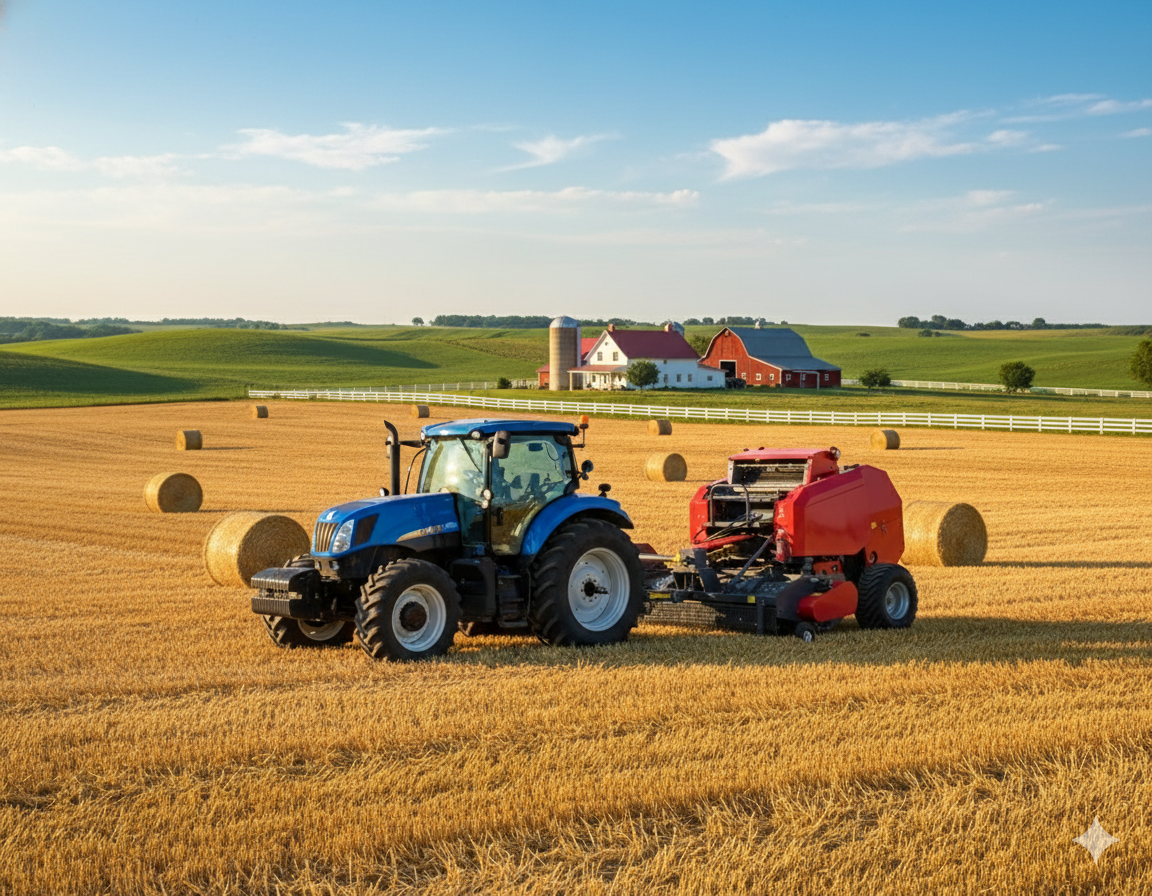
Le balle rotonde 4×4 sono adatte ad allevamenti di capre più grandi (oltre 20 capre) che consumano una balla entro 4-5 giorni. Per gli allevamenti che producono per un mix di mercati bovini e caprini, lo stesso modelli di presse rotopresse che servono i mercati del bestiame producono le dimensioni 4×4 e 5×5 adatte alle diverse scale operative delle capre. La compatibilità della presa di forza per i piccoli trattori compatti comuni nelle operazioni delle capre richiede specifiche specifiche dell'albero di trasmissione disponibili in Specifiche dei componenti del cambio agricolo e della presa di forza.
Stoccaggio del fieno per allevamenti caprini: prevenzione dell'accesso e preservazione della qualità
Gli allevamenti di capre si trovano ad affrontare una specifica sfida di stoccaggio che gli allevamenti di bovini ed equini non condividono: le capre sono straordinariamente abili nella fuga e accederanno al fieno immagazzinato a meno che non sia fisicamente protetto. Un gregge che si introduce in un deposito di fieno durante la notte può consumare o rovinare diverse settimane di scorte, e lo stress di dover selezionare il fieno deteriorato costringe ad acquisti immediati e non pianificati a prezzi di mercato potenzialmente sfavorevoli.
Le capre possono raggiungere il fondo delle balle di fieno, infilarsi in fessure più larghe di 10 cm nei cancelli e rosicchiare la rete protettiva delle balle per raggiungere il fieno all'interno. Conservate le balle rotonde in uno spazio separato e chiuso con una porta, oppure dietro pannelli per animali rialzati di almeno 20 cm da terra per impedire alle capre di raggiungere il fondo. La rete protettiva sulle balle conservate alla portata delle capre dovrebbe essere protetta con una gabbia di rete metallica: non si tratta di un lusso estetico, ma di una vera e propria misura di prevenzione degli sprechi che consente di risparmiare sia la rete protettiva che il foraggio.
Scegliete una balla di dimensioni adeguate al consumo previsto per 4-5 giorni, in modo da limitare il deterioramento della parte esposta. Una piccola mandria (8-12 capre) consuma una balla 4x4 (204-272 kg) in 5-7 giorni, un periodo accettabile in condizioni di tempo asciutto. Per le mandrie più piccole, le balle quadrate sono più pratiche di qualsiasi balla rotonda. Per allevamenti più grandi (oltre 30 capre più capretti), una balla 4x5 o 5x4 da 317-413 kg garantisce 4-5 giorni di consumo con un deterioramento minimo della parte tagliata, se avvolta in rete e conservata al riparo dalla pioggia.
Domande frequenti sul fieno per capre

Impostazioni della pressa per la produzione di fieno di capra
Indicaci la specie di fieno principale che utilizzi (erba mazzolina, miscuglio di erbe, erba medica e gramigna o erba bermuda), la dimensione della balla ideale per la tua mandria e se la tua produzione è destinata principalmente a capre femmine, maschi o a un allevamento misto di capre. Confermeremo la regolazione della densità della molla, la dimensione della balla e la configurazione dell'avvolgimento più adatte al tuo allevamento di capre.
Redattore: Cxm


