Crop Guide · Bermudagrass Hay · Updated August 2026
버뮤다그래스 건초 묶음 가이드
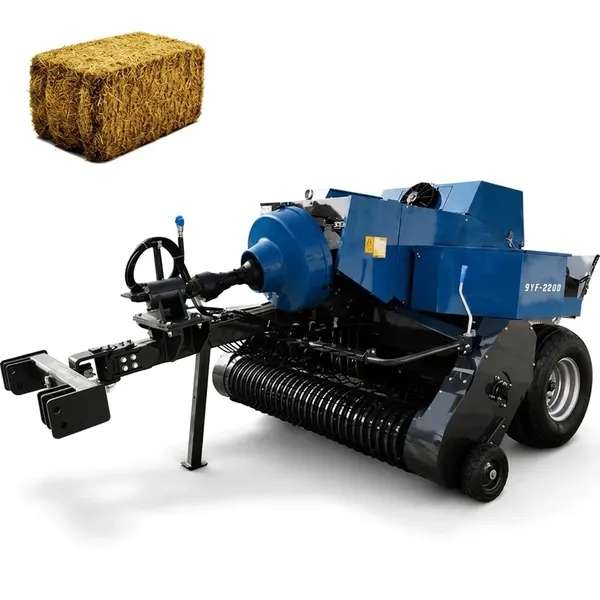
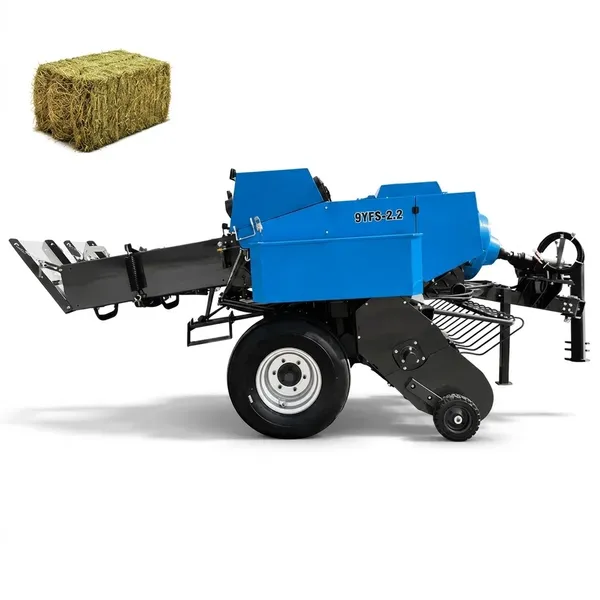
Bermudagrass is the dominant warm-season perennial hay grass across the Southeast US — from Georgia to Texas — producing 4–8 cuttings per year at 1–2 tonnes per acre per cutting in managed stands. Its main baling challenges are the narrow afternoon moisture window in humid Southeast conditions and the ash content specification required for Japan and Korea export markets. The 9YF-2200 spring-tooth baler serves domestic markets; the 9YFS-2.2 with fan system is the correct choice for consistent export ash compliance.
Covers: variety guide · cutting interval · curing in humid SE conditions · moisture management · equipment for domestic vs export · bale weight specifications · market guide
Quick Answer — Bermudagrass Hay Key Numbers
Cutting interval: 28–35 days (do not wait for visual browning)
Curing time (SE): 2–4 days with conditioning
수분 함량 줄이기: 14–17% core (probe meter required)
Cuttings/year: 4–6 in Southeast, up to 8 in Gulf Coast
Domestic baler: 9YF-2200 (spring-tooth)
Export baler: 9YFS-2.2 (fan system, ash below 2%)
Bermudagrass Varieties for Hay Production
Bermudagrass variety selection significantly affects hay yield, quality and the number of productive years from a single establishment. The choice between common bermudagrass and improved varieties is the first management decision for any bermudagrass hay operation.
Common BermudagrassEstablished from seed. Widely available and low establishment cost. Yield: 3–6 tonnes/acre/season. Adequate for beef cattle markets. Lower yield ceiling than improved varieties. Best suited for operations prioritising low establishment cost.
Coastal BermudagrassSterile hybrid — established by sprigging only. Yield: 5–8 tonnes/acre/season. The benchmark improved variety for the Southeast US. Finer stems than common bermudagrass, higher quality per unit yield. Widely available, well-researched management protocols.
Tifton 85High-yield hybrid from Georgia. Yield: 6–9 tonnes/acre/season. Highest yield ceiling of standard SE varieties. More digestible than Coastal (higher NDF digestibility). Premium for dairy hay markets. Requires full sprig establishment.
Jiggs, Alicia, RussellRegional varieties suited to specific state climates. Jiggs: widely used in Texas. Alicia: good performance in coastal areas. Variety choice should be confirmed with your local extension office for the specific county — variety performance varies significantly by micro-climate.
Cutting Interval — Why 28–35 Days Is the Standard
Bermudagrass cutting interval balances two competing requirements: quality (shorter interval = higher CP, softer stems) and stand persistence (longer interval = more root carbohydrate reserve). The 28–35 day interval is the compromise that maintains acceptable quality while allowing adequate root reserve replenishment between cuttings.
| 간격 |
CP |
Digestibility |
Stem Thickness |
Stand Effect |
| Below 21 days |
16–18% |
Very high |
Very fine |
Stand thins rapidly — not sustainable |
| 28–35 days (recommended) |
10–14% |
높은 |
Fine-medium |
Sustainable for 5+ year stands |
| 45~60일 |
7–10% |
낮추다 |
Coarse |
Stand maintains well, but hay quality below most market minimums |
Curing in Southeast Conditions — The Afternoon Baling Window
The Southeast US presents the most challenging hay curing environment in North America: high summer humidity (often 70–90% relative humidity at night), regular afternoon thunderstorms from June through August, and dew that rewets cut hay during every overnight period. Despite these conditions, successful bermudagrass hay production is a large commercial industry across Georgia, Alabama, Mississippi, Arkansas and Texas — the key is the baling window management.
Cutting timing: Cut in the morning to maximise drying daylight. Avoid cutting in the afternoon — a late-day cut misses the following day drying potential if dew rewets overnight.
Baling window: Typically 13:00–17:00 on a sunny day in summer — after the overnight dew has evaporated and before the afternoon thunderstorm risk. This is a 3–4 hour window that requires reliable equipment readiness.
윈드로우 너비: Rake bermudagrass to 60–70% of pickup width for faster core drying. Wider windrows in SE conditions retain moisture in the core much longer than the surface suggests.
Overnight dew and re-wetting: Bermudagrass that reached 18% surface moisture at 15:00 may read 28–35% again at 09:00 the next morning after overnight dew absorption. Always probe core moisture — not surface moisture — with a probe meter before starting the baler. The core is consistently 3–8% above the surface reading in re-wetted conditions. Bale only when the core reading is below 17%.
Equipment Recommendations — Domestic vs Export Market
Domestic Markets (Horse, Cattle, Dairy)
9YF-2200 spring-tooth — primary recommendation. Bermudagrass fine stems flow cleanly through the spring-tooth pickup without shredder pre-processing. The spring-tooth action is gentle enough for the fine stem structure of improved varieties (Coastal, Tifton 85) and produces low-dust bales suitable for horse markets. Target bale weight 18–22kg for horse markets; 22–26kg for dairy and cattle. Minimum tractor HP: 50. No shredder required for standard bermudagrass.
Japan/Korea Export (Ash Below 2%)
9YFS-2.2 fan system — the only reliable method for consistent export ash compliance. The dual shredder plus negative-pressure fan actively removes fine soil particles during baling. In fields with firm, dry surface conditions, the 9YF-2200 can occasionally achieve below 2% ash — but consistency across a season requires the fan system. Export contracts with Japan/Korea buyers typically specify below 2% ash as a contract condition with price penalty or rejection for non-compliance. The 9YFS-2.2 removes the field-condition variability from the ash result.
Bermudagrass Hay Market Guide
| 시장 |
Bale Weight |
Moisture |
Ash |
Price Range |
| Japan/Korea export (horse hay) |
18–22 kg |
Below 17% |
Below 2% |
$14–$20/bale FOB farm (via aggregator) |
| Domestic horse hay |
18–22 kg |
Below 17% |
Below 5% |
$10–$18/bale (SE US, varies by region) |
| Beef cattle (domestic) |
20–26 kg |
Below 18% |
Below 10% |
$4–$8/bale |
| Dairy supplemental |
22–28 kg |
Below 17% |
Below 8% |
$7–$12/bale (premium for forage-tested loads) |
PTO Drive Reliability During the SE Afternoon Baling Window
In the Southeast US, a PTO driveshaft or CV joint failure during the 13:00–17:00 baling window means the remaining windrows will re-wet overnight and require 2–3 additional days of drying before another baling window arrives — if the weather cooperates. Annual pre-season CV joint inspection and greasing before the bermudagrass season starts (April/May) is the most cost-effective single preventive step for SE bermudagrass operations. Full inspection guide: PTO driveshaft and CV joint pre-season inspection guide for bermudagrass hay balers.
Frequently Asked Questions — Bermudagrass Hay Baling
How many cuttings of bermudagrass can I take per year in Georgia?+
In Georgia at 28–35 day intervals: most coastal and piedmont areas achieve 5–6 cuttings per season, with the season running from mid-April through late September or early October. In the Coastal Plain (south Georgia): up to 7 cuttings are possible in long-season years with early spring greenup. At 35-day intervals from May 1 through October 1 (154 days): approximately 4–5 cuts are achievable. Most Georgia commercial bermudagrass operations plan for 5 cuts as the base and treat any 6th cut as a bonus. First cut in spring typically yields the highest total tonnage; summer cuts are slightly lower in yield but higher in quality per unit mass (shorter stems, higher leaf-to-stem ratio). Nitrogen fertilization at 50–60kg N/ha after each cut maintains stand density and sustains yield across all cuttings.
Is bermudagrass hay suitable for horses in the Southeast?+
Yes — bermudagrass is the primary horse hay in the Southeast US because it is the only widely available quality hay grass in that region. Horse buyers in Florida, Georgia, Alabama and Texas routinely accept and purchase bermudagrass hay. The quality profile of 28–35 day interval bermudagrass (CP 10–14%, NDF 55–65%, RFV 120–150) is suitable for maintenance feeding of horses in light to moderate work. Performance horses with higher protein requirements typically receive alfalfa supplementation alongside the bermudagrass. One critical note: bermudagrass hay does NOT carry the endophyte toxicity concern of tall fescue — it is safe for all horses including pregnant mares without any endophyte testing requirement. The visual quality standards horse buyers apply to bermudagrass (green color, fine stems, no mold, low dust) are similar to those for timothy in northern markets.
Why is my bermudagrass bale weight inconsistent across a session?+
Bermudagrass bale weight inconsistency within a session is almost always caused by windrow density variation across the field. Bermudagrass grows in a dense mat that can vary significantly in biomass per unit area — areas of higher soil fertility, better moisture or more established stand density produce thicker windrows, while weak spots, headland ends and areas with stand gaps produce lighter windrows. The baler produces heavier bales in thick windrow sections and lighter bales in thin sections at the same density spring setting. Management approaches: (1) Check the field before baling and identify visually thin sections — increase forward speed in thin sections to compensate for lower crop volume per metre; (2) Weigh a sample of 10 bales distributed across the full session rather than just the first few, and adjust density setting to the average rather than to any individual bale; (3) Ensure PTO speed is maintained consistently at 540rpm — PTO speed fluctuation (from tractor strain in thick windrows) produces variable density and thus variable bale weight even when windrow density is uniform.
How do I establish a new bermudagrass hay stand?+
Improved bermudagrass varieties (Coastal, Tifton 85) are sterile hybrids that must be established by vegetative planting (sprigging). The establishment process: (1) Soil test and lime to pH 6.0–6.5; apply recommended phosphorus and potassium. (2) Prepare a firm, weed-free seedbed. (3) Obtain certified sprigs from a reputable nursery — sprig rate: 25–40 bushels per acre for Coastal; 30–50 bushels for Tifton 85. (4) Plant sprigs with a sprig planter or broadcast and disc in — late spring (soil temperature above 18°C consistently) is the optimal planting window. (5) Apply 45–60kg N/ha after planting and maintain soil moisture for 3–4 weeks to establish sprigs. (6) The stand will be ready for first cutting in late summer of the establishment year. Full yield from an established stand develops in year 2 and 3. Stand life with good management: 10–20+ years, making the establishment investment highly worthwhile for commercial operations.
Can I bale bermudagrass with a 40HP compact tractor?+
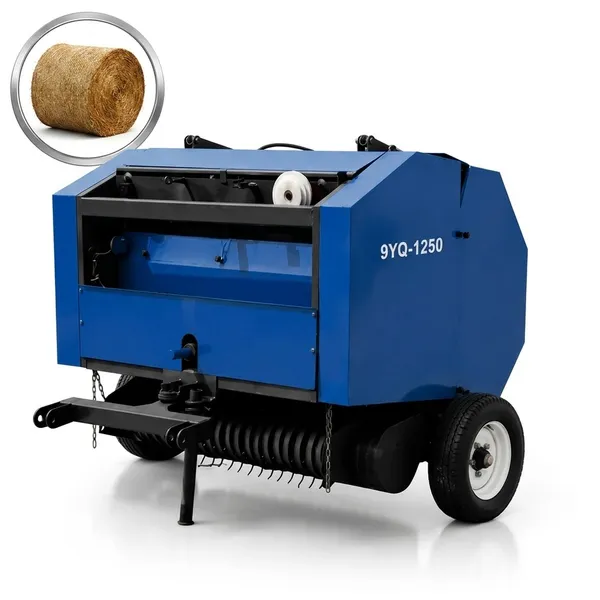
For small square baling of bermudagrass with the 9YF-1700 (40HP minimum): yes, a 40HP compact tractor is at the absolute minimum for the 9YF-1700 in standard bermudagrass windrows. Bermudagrass is finer and lighter than alfalfa or corn stover, making it one of the lower HP-demand hay crops in the 9YF range. A 40HP tractor at the 9YF-1700 can bale bermudagrass at reduced forward speed (4–5 km/h instead of 6–7 km/h) in standard windrows without the PTO speed fluctuation that would occur in heavier crops. For the 9YF-2200 on bermudagrass: the 50HP minimum applies but a 55–65HP tractor is the comfortable operating range. For round baling of bermudagrass with the 9YQ-870: a 40HP tractor is fully adequate — bermudagrass round bales are among the lightest-forming crops in the 9YQ range. Upgrade to a 55HP+ tractor for the 9YQ-1250 on standard bermudagrass windrows.
What is the correct stubble height to leave after cutting bermudagrass?+
The standard stubble height recommendation for bermudagrass hay production is 7–10cm (3–4 inches). Cutting below 7cm consistently removes the growing points of the stolon and rhizome system that drive rapid regrowth and stand persistence. It also increases the risk of soil pickup by the mower cutting bar, which raises ash content in the hay. The 7–10cm stubble also provides a structural base for the subsequent cutting — windrows that sit on a short stubble dry faster than windrows that lie flat on bare soil. Cutting height is set on the mower, not the baler — confirm the mower cut height setting with a ruler at the field edge before beginning each cutting. Common error: the disc mower blade height setting is adjusted for transport but not returned to the correct working height before entering the field.
How does winter affect bermudagrass hay production?+
Bermudagrass is a warm-season grass that goes dormant when soil temperature falls below 10°C (50°F). In the Deep South (south of US Highway 20): winter dormancy is brief (December to late February) and some production may continue into early December in mild years. In the mid-South and transitional areas of the Carolinas and Virginia: dormancy runs from November through March and the stand may experience winter kill in severe cold events. Bermudagrass hay production planning: do not take a cutting within 6 weeks before the first expected frost — the stand needs this period to accumulate root carbohydrate reserves for winter survival. A final cutting too close to frost, combined with a hard freeze, is the most common cause of stand loss in the Carolinas and upper South. In the Texas Hill Country and Oklahoma: bermudagrass is marginally adapted and stands may thin significantly in severe winters — check with local extension on winter-hardy bermudagrass variety recommendations for the specific region.
What is the yield per acre for Tifton 85 versus Coastal bermudagrass?+
Research trials across Georgia and Florida consistently show Tifton 85 outyielding Coastal bermudagrass by 15–25% under equivalent management and fertility. Typical yield comparison under good management (irrigated or adequate rainfall, adequate N fertilization): Coastal 5–7 tonnes DM/acre/season vs Tifton 85 6–9 tonnes DM/acre/season. At $80/tonne hay value (cattle market), the additional yield from Tifton 85 represents $80–$160/acre/season in additional revenue. Tifton 85 also has higher NDF digestibility than Coastal — it tests higher in relative feed quality at the same growth stage, which can command a modest premium in the dairy hay market. The decision between the two varieties typically comes down to establishment cost (sprig cost and availability differ by region), local winter hardiness concerns, and whether the yield advantage justifies the establishment differential in your specific operation economics.
Optimizing Your Bermudagrass Hay Operation?
Tell us your acreage, target market and tractor HP and we will confirm the right 9YF square baler for your bermudagrass operation — domestic or export grade.
아메리카 에버파워 사료 베일러 장비 주식회사 · 1401 21번가 R호, 새크라멘토, 캘리포니아 95811
편집자: Cxm