
De 9GD-2.5 getrokken schijvenmaaier is a high-speed rotary disc cutting machine that uses rotating disc blades to cut hay and forage crops in a clean, high-throughput pass. Like all disc-type mowers, its performance depends on correct setup, matched operating speed, and blades that retain their cutting edge profile. A disc mower operating with worn blades, incorrect cutting height, or mismatched ground speed delivers poor cut quality and elevated fuel consumption — problems that are straightforward to prevent with the routine checks described in this guide.
Pre-Season Inspection: What to Verify Before the First Cut
Pre-season inspection of the 9GD-2.5 takes 45 to 90 minutes and prevents the majority of in-season mechanical failures. Work through the following checklist before connecting the mower to the tractor for the first pass of the year:
Gearbox oil level and condition. The main gearbox transfers PTO power from the tractor driveline to the cutting disc system. Check the oil level against the sight glass or dipstick, and visually inspect the oil color — fresh gear oil is clear amber; oil with significant contamination from water ingress or metal particles appears cloudy or shows metallic shimmer. Drain and replace gearbox oil that shows contamination before operating. Refer to the operator manual for the correct oil grade and fill volume for the 9GD-2.5 gearbox.
Blade condition and torque. Inspect all cutting blades for tip wear, cracks, and deformation. Check each blade mounting bolt for correct torque — loose blade mounting bolts are a safety hazard and a cause of vibration that accelerates bearing wear. Blade mounting bolts should be torqued to specification after the first 30 minutes of operation in the season as the bolts seat under initial thermal cycling.
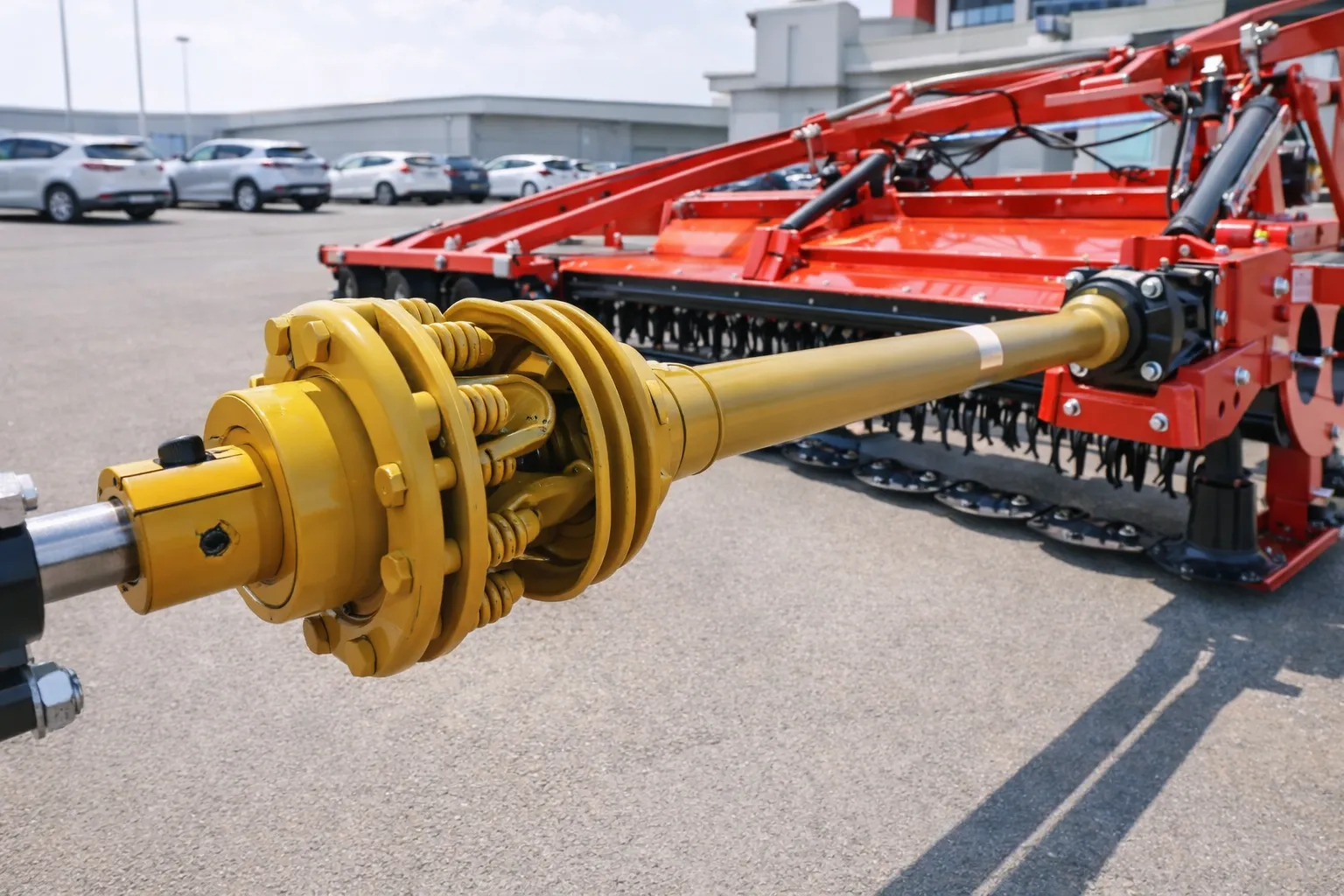
PTO driveline inspection. Inspect the universal joints for play, and the telescoping section for free movement through its full range. Check all safety shields for cracks, missing sections, or loose retaining clips. The agricultural gearbox and PTO drive components on the mower’s driveline should show no visible grease leakage at the U-joint caps, and the slip clutch (if equipped) should engage and release at the rated torque setting from the previous season. A slip clutch that no longer engages at rated torque has compressed clutch plates that need adjustment or replacement.

Skid shoes and cutting height mechanism. Inspect the skid shoes on the mower head for wear — these are the components that determine cutting height by contacting the soil surface. Worn or missing skid shoes will cause the mower to scalp the field, cutting too low and contaminating the swath with soil. Confirm the cutting height adjustment mechanism moves freely through its full range before the first field entry.
Cutting Height: How to Set Stubble Height Correctly for Your Crop
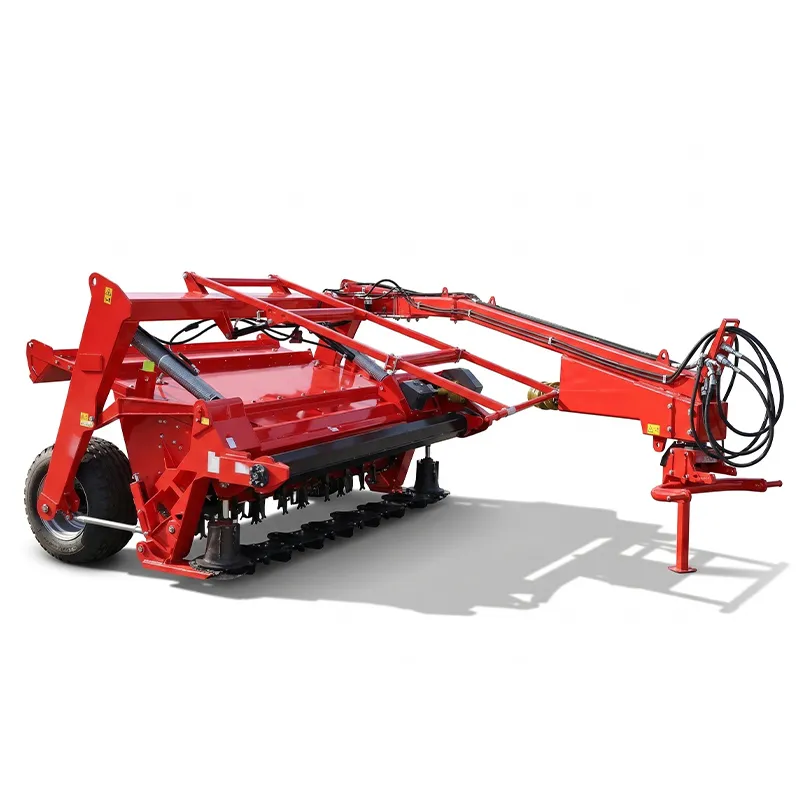
Cutting height is the most agronomically consequential operating setting on a disc mower. Set too low, it removes the growing point of legumes and grasses, stunting regrowth and reducing subsequent cutting yields. Set too high, it leaves more stem mass in the field, reducing yield per cut and potentially leaving a residue that slows swath drying. The correct setting depends on the crop being cut:
| Gewas | Recommended Stubble Height | Reden |
|---|---|---|
| Luzerne | 7–10 cm (3–4 in) | Protects crown and root reserves; cutting below 5 cm weakens stands and reduces stand longevity |
| Orchardgrass / Timothy | 7–10 cm (3–4 in) | Leaves sufficient leaf area for rapid regrowth; avoids removing tiller bases |
| Bermudagras | 5–7 cm (2–3 in) | Lower cutting acceptable due to growth from stolons and rhizomes; lower cut improves next-cut quality |
| Grass hay (first cut, tall) | 8–12 cm (3–5 in) | Higher setting on first cut reduces rock contact risk from winter-accumulated debris; lower on subsequent cuts |
Raise cutting height by 2 to 3 cm on fields with known rock or surface debris risk for the first pass of the season until the field surface is familiar. Lower to target stubble height once field conditions are confirmed clear.
Ground Speed and PTO: Matching Operating Speed to Crop Conditions
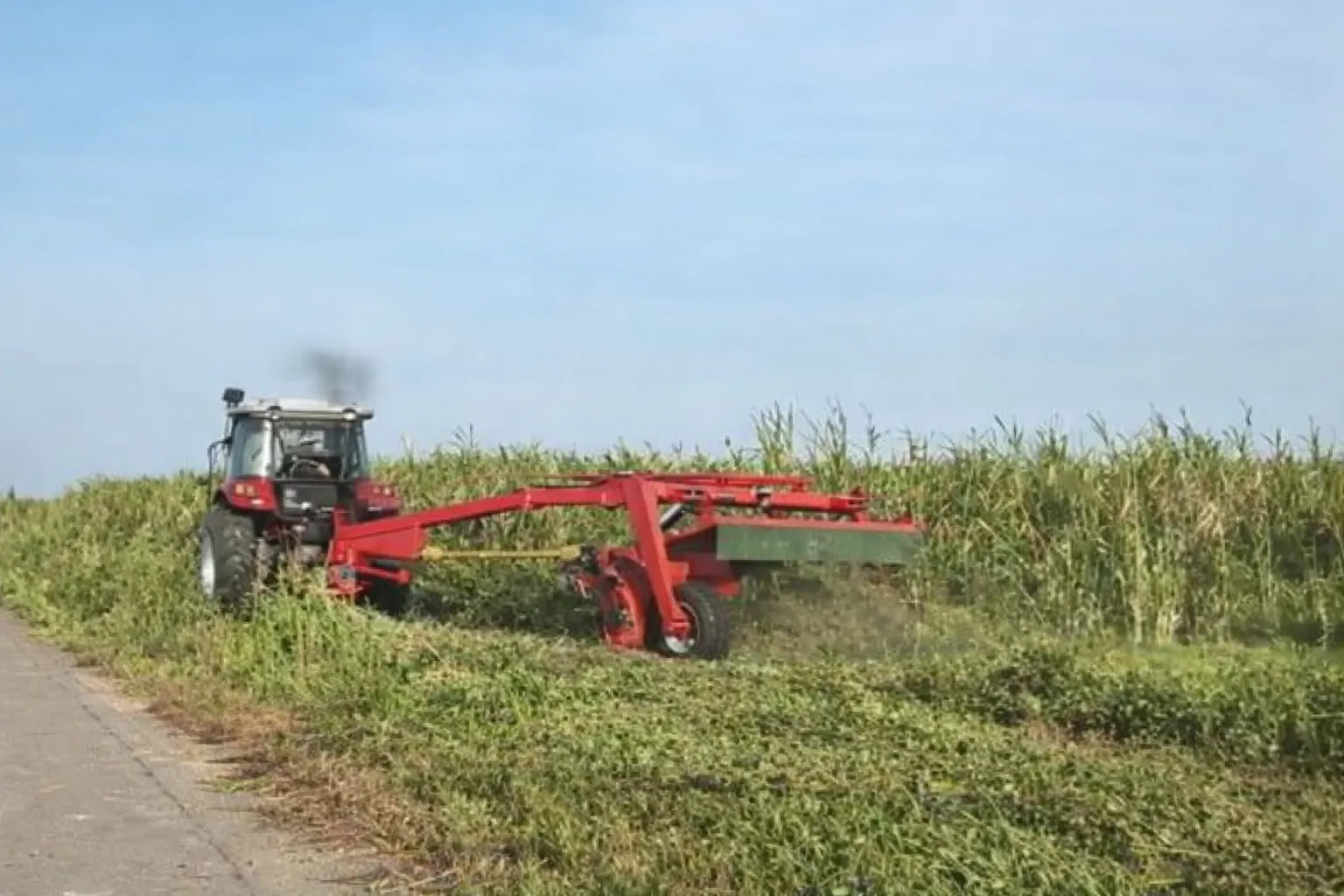
Disc mowers operate most efficiently when the disc blade tip speed substantially exceeds the forward travel speed — the cutting disc generates a high-velocity impact cut, and the blade tips must be moving fast enough to shear stems cleanly rather than pushing them over before cutting. On the 9GD-2.5 at 540 RPM PTO, disc tip speed is well above the threshold required for clean cutting across all recommended ground speeds.
Recommended operating speeds are 8 to 14 km/h under normal crop conditions. At 8 to 10 km/h, the disc has more time per stem pass and produces a cleaner, more consistent cut — better for premium hay markets or conditions with lodged crop. At 12 to 14 km/h, throughput is maximized on flat, uniform, standing crop. Reduce speed to 6 to 8 km/h in exceptionally dense first-cut alfalfa above 6 t DM/ha, wet and heavy crop immediately after rain, or when operating on uneven terrain where maintaining consistent cut height requires slower speed for accurate skid shoe ground contact.
The 9GD-2.5 should be operated at 540 RPM PTO input — do not engage at a lower RPM than rated, as reduced disc speed creates an inefficient tearing action on crop stems rather than a clean blade impact cut. Engage PTO at idle, bring engine to rated RPM before entering the crop, and maintain rated RPM through the cut pass.
Blade Wear Assessment: The 3-Stage Diagnostic Guide
Blade wear on a disc mower is gradual and easily overlooked until cut quality degrades visibly. The following three-stage assessment provides the criteria for deciding whether blades are serviceable, due for monitoring, or require immediate replacement:
Replacement trigger: blade tip width reduced to 60% or less of original profile, OR edge rounding visible as a 2+ mm radius at the cutting corner. Inspect blades visually after every 80 to 120 ha of cutting on normal soils; more frequently on abrasive sandy soils or known stony ground.
Headland Turns: Protecting the Mower Through Field Turnarounds
Headland turns on a towed disc mower require a consistent three-step approach that protects the disc head from ground contact damage during the tight-radius turn at the field boundary:
Step 1 — Raise the mower head before beginning the turn. The mower should be fully raised from cutting position before the tractor starts its turning arc. A mower head that is still in cutting position during a headland turn can contact uneven headland ground, strike embedded rocks in the field boundary, or drag on the soil during the tight inward arc — all of which cause blade and skid shoe damage.
Step 2 — Reduce PTO speed during the turn. While the mower is raised and not cutting, running the PTO at full operating speed is unnecessary wear on driveline components. Reduce engine RPM to mid-range during headland repositioning.
Step 3 — Engage cutting position and PTO before re-entering the crop. Bring engine to full rated RPM and lower the mower to cutting height just before the mower head enters the standing crop at the start of the next pass. Entering the crop at cutting height before PTO is at full speed produces a ragged cut entry and can cause momentary overload on the disc drive if the crop offers significant resistance.
De 9GD-2.5 upgraded version incorporates additional protection features at the mower head that extend component life under the repeated raise-and-lower cycling of commercial hay production. Both standard and upgraded configurations require the same headland discipline — the upgrade enhances durability, not tolerance for poor operating practice.
End-of-Season Storage and Winterization
Correct end-of-season storage prevents the majority of off-season corrosion and seal deterioration that causes unnecessary repairs before the next cutting season. Complete the following before placing the 9GD-2.5 in covered storage:
Drain and replace gearbox oil — seasonal wear particles in the old oil become corrosive over winter and accelerate bearing wear in the first season of use if not replaced. Wash the mower deck and disc system of accumulated sap, crop residue, and soil that hold moisture against metal surfaces. Apply a light oil or rust inhibitor to exposed blade mounting hardware and disc spindle bearing retainers. Inspect and grease all lubrication points, as fresh grease displaces moisture from bearing cavities before the machine sits over winter. Retract the PTO driveline telescoping section fully and store it clean and lightly greased.

Veelgestelde vragen
Replacement Blades and Seasonal Service Parts — Same-Day Dispatch From California
Blade sets, gearbox oil seals, skid shoes, and PTO driveline components for the 9GD-2.5 are stocked at our Sacramento warehouse for same-day dispatch on orders received before 2 PM Pacific.
Redacteur: Cxm


