
Elke ronde balenpers koopt ronde balenpers netwikkeling Meerdere keren per seizoen, maar de aankoopbeslissing komt bijna altijd neer op de prijs per rol. De kosten per rol zijn echter slechts één onderdeel van de werkelijke kosten per baal – die ook het aantal balen per rol, de besparing op droge stof door goede oppervlaktebescherming en de levensduur van de folie voordat UV-degradatie tot verliezen leidt, omvatten. ronde balenpers netwikkeling De handleiding legt alle vier de parameters uit, zodat uw selectie van balennetfolie Het verlaagt de kosten per baal, niet alleen de factuur per rol.
Wat ronde balenpersnetfolie doet — meer dan alleen de vorm van de baal behouden.
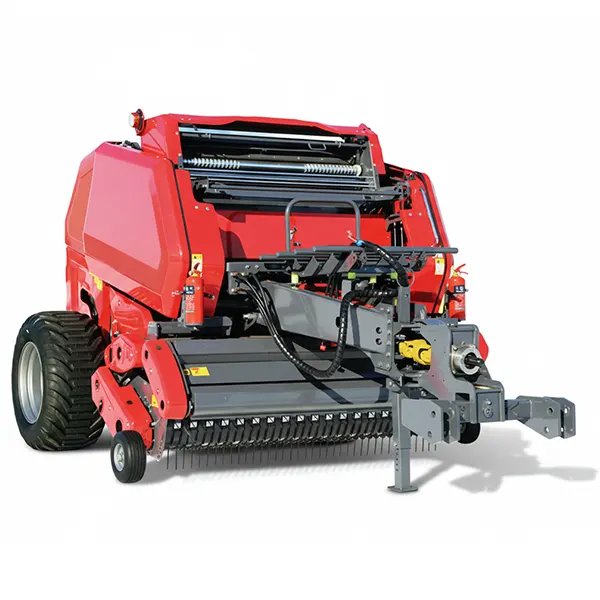
De meest zichtbare functie van ronde balenpers netwikkeling Een van de belangrijkste functies is het behoud van de baalvorm: het net houdt het samengeperste gewas in cilindrische vorm vast terwijl de baal eruit wordt gegooid. Maar de meest cruciale functie voor hooi dat buiten wordt opgeslagen, is de oppervlaktebedekking: de netwikkeling bedekt 55 tot 65 procent van het zijoppervlak van de baal met een semi-ondoordringbaar gaas dat neerslag afstoot, UV-degradatie van de buitenste hooilaag vermindert en voorkomt dat vocht vanuit de met regen verzadigde grond in contact komt met de binnenkant van de baal.
Specificaties van netfolie uitgelegd: breedte, denier, g/m² en UV-klasse
Dikte van de netwikkeling van de balenpers Het is geen enkele meting, maar een combinatie van denier, GSM en UV-stabilisatorklasse die samen de structurele prestaties en de duurzaamheid buitenshuis bepalen. De onderstaande specificatievergelijking omvat de vier productcategorieën die het meest beschikbaar zijn voor hooiproducenten in de VS.
Denier geeft het gewicht aan van individuele HDPE- of polypropyleendraden; een hogere denierwaarde betekent een zwaardere draad en dus een hogere scheurweerstand. GSM (gram per vierkante meter) meet het totale gewicht van het doek over het gaas. Beide waarden nemen toe naarmate de denierwaarde hoger is, omdat een hogere draaddichtheid ook de maasdichtheid verhoogt. De classificatie van de UV-stabilisator in het net bepaalt de duurzaamheid buitenshuis: Klasse 1 is geschikt voor balen die binnen hetzelfde seizoen worden gebruikt; Klasse 2 is vereist voor balen die langer dan 10 maanden buiten worden opgeslagen.
Instelling aantal wikkelingen per baal: het juiste aantal vinden voor uw programma
De instelling 'wikkelingen per baal' op uw balenpers bepaalt hoeveel volledige zijdelingse doorgangen de balenpers maakt. ronde balenpers netwikkeling De arm maakt een beweging over de breedte van de baal terwijl de baal tijdens de wikkelcyclus een volledige omwenteling maakt. Dit aantal wikkelingen – doorgaans instelbaar tussen 1,0 en 3,0 – is de belangrijkste aanpassing in het veld die tegelijkertijd de oppervlaktebedekking van de baal en de netto wikkelkosten per baal bepaalt.
Werkelijke kosten per baal: Levensduurwaardeanalyse van de netto verpakking
De werkelijke kosten per baal van ronde balenpers netwikkeling Dit bedrag omvat de netto materiaalkosten voor de verpakking plus het vermeden verlies aan droge stof in vergelijking met het alternatief. Dit gecombineerde bedrag – in plaats van de prijs per rol – is het cijfer dat leidend zou moeten zijn bij aankoopbeslissingen.
| Kostencomponent | Touw | Netverpakking (standaard) | Netfolie (Premium) |
|---|---|---|---|
| Materiaalkosten per baal | $0.35–0.55 | $0.20–0.28 | $0.28–0.38 |
| Verlies aan droge stof bij opslag in de buitenlucht (6-9 maanden) | 18–30% | 6–14% | 4–10% |
| DM-verlieskosten per $80 baal | $14.40–$24.00 | $4.80–$11.20 | $3.20–$8.00 |
| Gecombineerde werkelijke kosten/baal | $14.75–$24.55 | $5.00–$11.48 | $3.48–$8.38 |
Percentages drogestofverlies uit gepubliceerd voorlichtingsonderzoek naar de opslag van ronde balen in de buitenlucht. Netto kosten van het wikkelmateriaal bij 2,0 wikkelingen per baal; kosten van het touw bij standaard dubbele strengtoepassing. De werkelijke gecombineerde kosten zijn de materiaalkosten plus de waarde van het drogestofverlies – beide kosten worden gemaakt, ongeacht of u ze afzonderlijk bijhoudt.
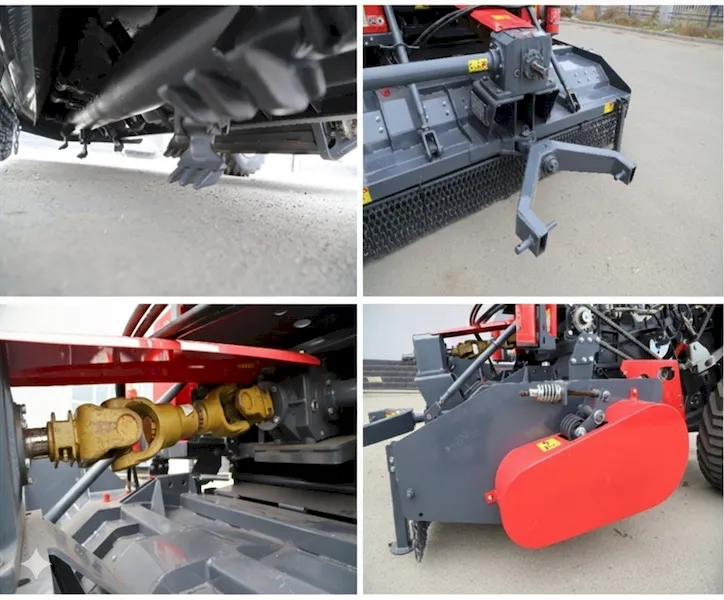
De arm voor het afvoeren van het net op commerciële balenpersen wordt aangedreven door hetzelfde systeem. landbouw aandrijfversnellingsbak die de balenkamer en de pick-up aandrijft — de aandrijfsynchronisatie tussen de netwikkelarm en de rotatiesnelheid van de baal wordt geregeld door de versnellingsbak, waardoor de consistentie van de netwikkeling gedurende het hele seizoen afhangt van het oliepeil en de conditie van de versnellingsbak, en niet alleen van de ingestelde filmspanning.
Problemen met het aanbrengen van netfolie en de oplossingen daarvoor.

Storingen bij het aanbrengen van netfolie zijn anders dan de algemene mechanische problemen van de balenpers die in handleidingen voor probleemoplossing worden behandeld. Ze vinden hun oorsprong specifiek in het netfolie-aanvoermechanisme – de spanrollen, de kernhouder, de voorsnijder en de messeneenheid – en elk heeft een herkenbaar symptoom, een specifieke oorzaak en een gerichte oplossing.
| Probleem | Hoofdoorzaak | Veldcorrectie |
|---|---|---|
| Het net zal pas beginnen met het toevoeren van de vulling na het persen van de balen. | De punt van het net is niet door de voorgesneden geleidingsgleuf geregen; de veer van de kernhouder is samengedrukt en de rol draait niet vrij; het uiteinde van het net is te kort na de vorige snede. | Rijg de netpunt opnieuw door alle geleiders volgens de gebruiksaanwijzing; controleer de veer van de kernhouder; zorg ervoor dat het netuiteinde 15-20 cm voorbij de voorsnijder uitsteekt voordat u de wikkelcyclus start. |
| Het net scheurt halverwege het inpakproces. | Een braam of scherpe rand van de invoerrol blijft aan het net haken; de spanning is hoger ingesteld dan de nominale belasting van het net; een uitstekende gewasstengel op het baaloppervlak blijft haken tijdens de eerste doorgang. | Controleer de invoerrol met een doek op bramen; haken wijzen op een braam; verlaag de spanning met één stand; schakel over op een net met een hogere denier als het scheurt bij minimale spanning. |
| Ongelijkmatige netdekking — aan één kant wat losjes. | Netrol excentrisch in de kernhouder geplaatst; kalibratieafwijking van de schakelaar voor de beweging van de wikkelarm — arm bereikt niet de volledige linker- of rechterbeweging; rolkern bezwijkt door vochtschade | Centreer de rol in de kernhouder en controleer of deze vrij kan draaien; controleer de eindschakelaars van de armbeweging aan beide uiteinden; vervang de rol als de kern vervormd of nat is. |
| Het net snijdt niet netjes door — de sleepstaart is langer dan 30 cm | De snijkant van het mes is tot over de levensduur versleten; de timing van het mes wijkt af van de sensor die aangeeft of de baal klaar is; de netto filmspanning is te laag op het moment van snijden (de film is opgevouwen in plaats van strak gespannen bij contact met het mes). | Controleer het mes volgens de conditiehandleiding (zie de bedieningshandleiding van de balenpers); controleer de timing van de sensor ten opzichte van het mes; verhoog de netspanning iets om ervoor te zorgen dat de folie strak gespannen is bij het contactpunt met het mes. |
| De kern van het netfolie glijdt in de houder tijdens het inpakken. | De veer van de kernhouder is versleten — de klemkracht is onvoldoende voor de huidige netspanning; de binnendiameter van de rolkern is te klein voor de diameter van de houder van dit balenpersmodel. | Vervang de veer van de kernhouder; controleer of de binnendiameter van de rolkern overeenkomt met de gespecificeerde diameter van de houder van het balenpersmodel (doorgaans 75 mm of 100 mm); bestel netrollen met de juiste kernmaat. |
Vervangende netwikkelmessets, kernhouderveren en invoerrollen worden dezelfde dag nog vanuit ons magazijn in Californië verzonden voor alle modellen in ons assortiment balenpersen. Raadpleeg de specifieke handleiding van de balenpers voor de juiste procedure voor het vervangen van de messen en de veiligheidsvergrendelingsprocedure.
Breedte van het net en compatibiliteit met de rol: afstemmen op uw balenpersmodel
Ronde balenpers netwikkeling De rol moet qua afmeting overeenkomen met zowel de breedte van de balenkamer als de diameter van de kernhouder van uw specifieke balenpers. Een te smalle netrol laat de uiteinden van de baal onbeschermd; een te brede rol zorgt ervoor dat het net zich ophoopt in de geleiders aan de uiteinden en is de meest voorkomende oorzaak van de hierboven beschreven fout "net start niet".
Netto rolbreedte: 1,23 m
Kerndiameter: 75 mm
Aanbevolen: Standaard niveau, 2.0 wraps
Netto rolbreedte: 1,23 m
Kerndiameter: 75 mm
Aanbevolen: Standaard of Premium, 2,0–2,5 wikkels
Netto rolbreedte: 1,25 m
Kerndiameter: 100 mm
Aanbevolen: Premium of Heavy Duty, 2,0–2,5 wikkels voor kuilvoer.
De kerndiameter (75 mm versus 100 mm) is de meest voorkomende compatibiliteitsfout bij het bestellen van netfolie voor een nieuwe balenpers of bij het wisselen van leverancier. Controleer de kerndiameter aan de hand van de handleiding van de balenpers voordat u in bulk bestelt. Ons team controleert de compatibiliteit voordat we een bestelling netfolie verzenden die samen met een balenpers wordt geleverd. Bekijk onze volledige ronde balenpersmodellen Pagina met complete specificatietabellen voor netwikkeling per model.
Veelgestelde vragen: Netwikkeling voor ronde balenpersen
Controleer of het net geschikt is — dit wordt vóór elke bestelling gecontroleerd.
Net Wrap Supply — Californisch magazijn
De rolbreedte, kerndiameter en kwaliteit worden vóór elke verzending gecontroleerd aan de hand van uw balenpers.
Wij bevestigen ronde balenpers netwikkeling Controleer de rolbreedte en kerndiameter aan de hand van uw balenpersmodel vóór verzending. Standaard-, Premium- en Heavy Duty-kwaliteiten zijn het hele jaar door op voorraad. Bestellingen in het seizoen worden dezelfde dag nog verzonden. Vervangende messensets, kernhouderveren en invoerrollen worden samen met de netfoliebestellingen verzonden.
Budget / Standaard / Premium / HD
Breedte + kerndiameter geverifieerd
Bestellingen vóór 14:00 uur Pacific Time
Redacteur: Cxm


