
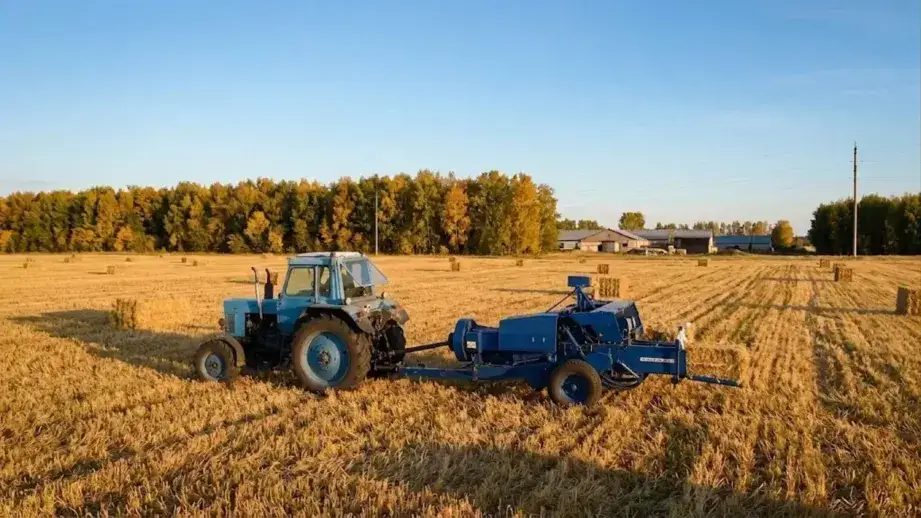
A square baler needs a minimum of 40HP at the PTO for entry-level models and 99HP or more for shredder models baling dense crops. Use PTO horsepower figures — not engine horsepower — for accurate tractor matching. Engine HP is typically 10–15% higher than PTO HP due to driveline losses.
9YF-1900 → 50HP min
9YF-2200 → 50HP min
9YF-2200S → 99HP min
9YFS-2.2 → 99HP min
PTO Horsepower vs Engine Horsepower: Why the Difference Matters
When a manufacturer states that a square baler requires 50HP, they mean 50HP measured at the PTO output shaft — not at the engine. This distinction is critical because most tractor dealerships advertise engine horsepower (also called gross HP), which is measured at the crankshaft before the transmission and hydraulic systems take their share of the power.
PTO horsepower is consistently 10–15% lower than engine horsepower on modern tractors. A tractor marketed as 60HP (engine) delivers approximately 52–55HP at the PTO under field conditions. Matching your tractor to a baler using the wrong HP figure leads to a machine that is under-powered in the field even though the numbers looked adequate on paper.
PTO horsepower is the usable power available at the power take-off shaft on the rear of the tractor — the shaft that connects directly to the baler gearbox. It is measured after the engine has powered the transmission, hydraulic pump, cooling fan and other auxiliary systems. PTO HP is the only figure relevant to baler tractor matching.
Square Baler HP Requirements by Model — Full 9YF Range
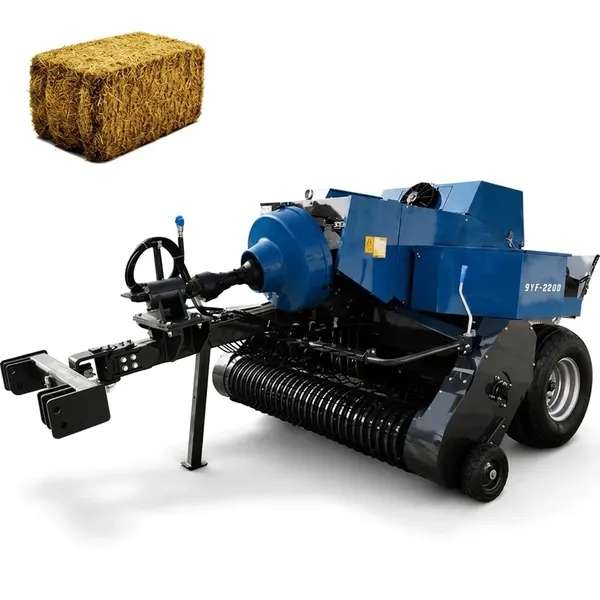
| Model | Minimum PTO HP | Aanbevolen aftakasvermogen | Comfortable HP Range | Ophaaltype | Typical Tractor Match |
|---|---|---|---|---|---|
| 9YF-1700 | 40 HP | 50 HP | 50–65 pk | Spring-tooth | Compact utility 45–70HP engine |
| 9YF-1900 | 50 HP | 60 HP | 60–75 HP | Spring-tooth | Compact utility or mid-size 55–85HP engine |
| 9YF-2200 | 50 HP | 65 pk | 65–85 HP | Spring-tooth | Mid-size utility 60–100HP engine |
| 9YF-2200S | 99 HP | 115 HP | 110–130 HP | Hammer-claw + shredder | Full-size row-crop 115–150HP engine |
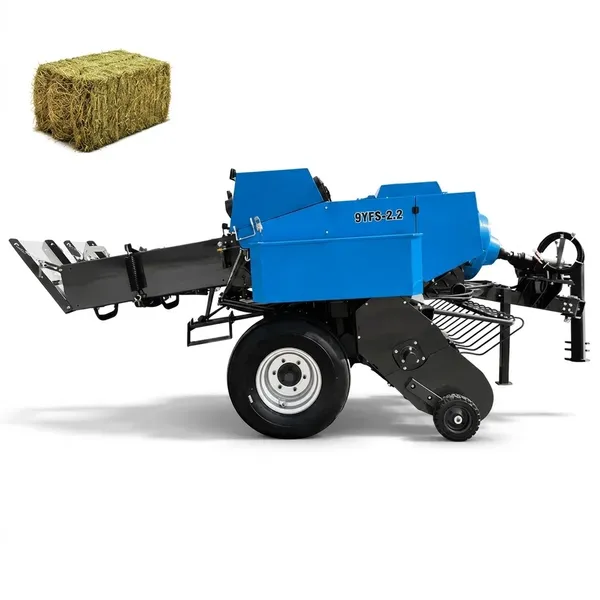
| 9YFS-2.2 | 99 HP | 125 HP | 120–145 pk | Hammer-claw + dual shredder + fan | Large row-crop or articulated 130–160HP engine |
All HP figures refer to PTO horsepower at rated engine speed. Engine HP will be 10–15% higher. Source: 9YF series operator specifications, America Ever-Power Forage Baler Equipment INC.
Why the Gap Between Minimum and Recommended HP Matters
The minimum HP rating represents the power required to operate the baler mechanism at rated PTO speed (540rpm) in ideal conditions — light, dry, uniform windrows on flat ground. The recommended HP figure is the power required to maintain 540rpm PTO speed during the most demanding field conditions you will realistically encounter: dense first-cut alfalfa windrows, humid heavy hay, uphill grades, or high-density bale settings.
Operating at minimum HP is not a problem when conditions are genuinely light. It becomes a problem when conditions vary within the same field — as they always do in practice. A tractor at exactly the minimum HP limit may handle half the field at an acceptable PTO speed but begin to lag on the heavier sections, causing knotter timing problems that appear to be mechanical faults when the actual cause is insufficient tractor power for that windrow density.
Acceptable in ideal conditions. PTO speed may fluctuate in denser sections, requiring reduced forward speed to maintain 540rpm. Less margin for operator error, terrain variation or changing windrow density.
PTO speed stays at 540rpm throughout varied windrow densities. Allows higher forward speed in standard sections. Engine has reserve for grade changes. Knotter timing is stable across all field conditions.
Full productivity on the most challenging crops (dense first-cut alfalfa, corn stover, wet-weight bermudagrass). High forward speed in standard windrows. Long-term engine longevity from reduced sustained-load operation.
HP Demand by Crop and Windrow Condition
HP demand at the PTO is not fixed — it varies with the crop type, windrow density, bale compression setting and moisture level. The same model baler operating at the same forward speed can require 20–40% more HP in a dense first-cut alfalfa windrow than in a light dry straw windrow. Understanding your peak demand crop is the correct basis for tractor matching — not your average or typical windrow.
| Crop / Windrow Condition | Relative HP Demand | Effect on Tractor Pairing |
|---|---|---|
| Dry straw — light windrow | Laag — near minimum rated HP | A minimum-HP tractor performs well. Forward speed is limited by windrow volume, not power. |
| Standard grass hay — uniform windrow | Gematigd — 80–90% of rated HP | Standard operating condition. Minimum-HP tractor acceptable with moderate forward speed. Recommended HP delivers higher productivity. |
| Bermudagrass — dense SE summer cut | Moderate–High — 85–95% of rated HP | Fine stems pack efficiently. Higher HP allows higher forward speed in the narrow baling window. |
| Alfalfa — 2nd or 3rd cut | Hoog — 90–100% of rated HP | Thinner windrow than first cut but high density. Minimum-HP tractor must reduce forward speed significantly in peak-density sections. |
| Luzerne — eerste snede, volle tribune | Peak demand — at or above rated HP | Use recommended HP or above. Minimum-HP tractor will lug on dense sections and PTO speed will fluctuate, causing potential miss-tie risk. |
| Corn stover — shredder model required | Peak demand — sustained high load | Shredder mechanism adds sustained HP demand beyond standard baling load. 9YF-2200S and 9YFS-2.2 require the full recommended HP range, not the minimum. |
Why Shredder Models Need So Much More HP
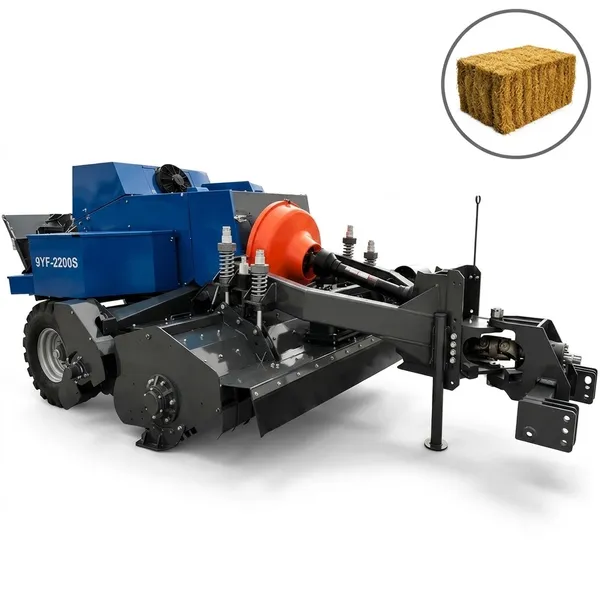
The jump from 50HP (9YF-2200) to 99HP minimum (9YF-2200S) reflects a fundamental change in mechanism — not just a scale increase. The shredder models power two separate working mechanisms simultaneously: the primary baling mechanism (plunger, feeder, knotters) and the shredder rotor. The shredder rotor is a high-speed hammer-claw drum that operates continuously as the machine moves forward, processing incoming crop material before it reaches the feeder inlet.
The shredder rotor consumes approximately 25–40HP on its own at full operating load in dense material such as first-cut alfalfa or corn stover. This HP demand is sustained and continuous — unlike the cyclical peak demands of the plunger — and creates a high baseline load on the tractor PTO throughout the session. A tractor at exactly 99HP PTO operates the 9YF-2200S at its limit; the recommended 115HP provides 16HP of reserve for dense sections and grade changes.
The 9YFS-2.2 dual-shredder model adds a second shredder stage and a negative-pressure fan system, pushing the sustained HP demand higher still. The 125HP recommended figure for this model is not conservative — it reflects real-world operation in the dense bermudagrass and corn stover conditions the dual-shredder was designed for.
Four Symptoms That Indicate Insufficient HP
These symptoms are the most reliable real-world indicators that your tractor does not have adequate PTO horsepower for the baler and conditions you are using. Each symptom has a direct mechanical cause rooted in insufficient PTO power delivery.
The most diagnostic symptom. PTO speed below 500rpm shifts the cam follower timing window relative to the needle arrival — causing the bill hook to be slightly out of position when the twine is delivered. This pattern — miss-ties only when the windrow is dense — almost always indicates a PTO speed problem rather than a knotter adjustment problem. Reducing forward speed in heavy sections typically resolves the miss-ties, confirming the HP cause.
A plunger compression stroke produces a brief but significant power peak — the engine must absorb this peak load without reducing speed. If the tractor engine RPM audibly dips each time the plunger compresses, the engine does not have sufficient reserve to manage the peak without PTO speed reduction. The engine note changes from steady to a rhythmic lug pattern timed with the baling cycle.
When the only way to maintain 540rpm PTO speed is to reduce forward speed below 4 km/h in standard windrows (not dense windrows), the tractor is under-powered for that baler model in that crop. Baler productivity is directly proportional to forward speed in consistent windrows — a 3 km/h operating speed produces roughly half the bales per hour of a 6 km/h operating speed in the same field.
A tractor operating at 95–100% of its power limit for sustained periods consumes fuel at maximum rate while producing lower bale output due to reduced forward speed. The result is a fuel cost per bale significantly higher than the rated-power pairing would produce. If fuel consumption seems high relative to bale output, verify PTO HP sufficiency before investigating fuel system issues.
How to Calculate Whether Your Tractor Has Enough HP
PTO Driveshaft HP Rating — The Overlooked Specification
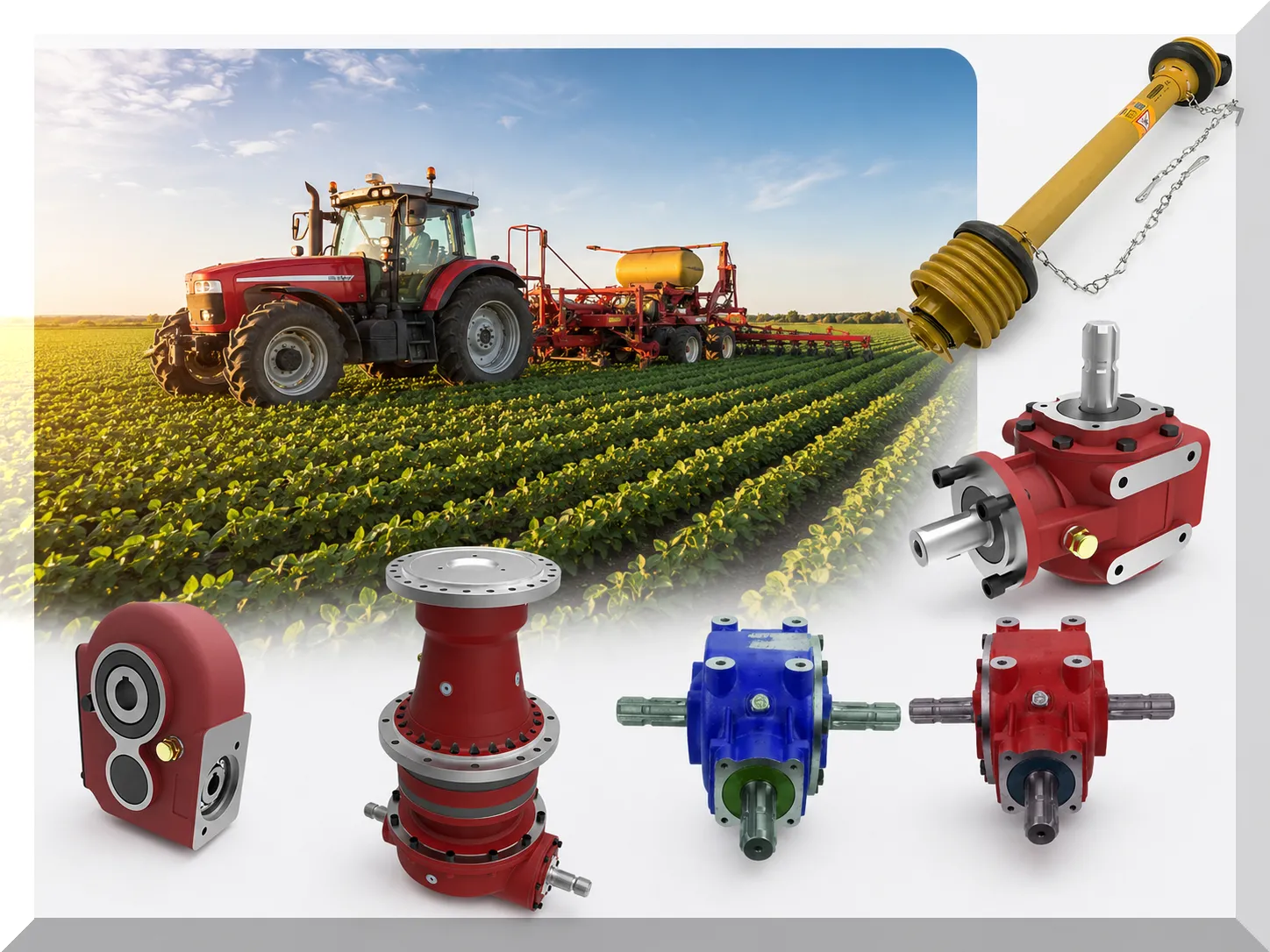
PTO shaft HP and torque ratings for all 9YF models: agricultural gearbox and PTO shaft HP ratings for square balers
The PTO driveshaft has its own HP and torque rating — separate from the tractor and baler ratings. A driveshaft rated at 65HP transmitting 99HP will overheat the CV joints, cause premature bearing failure and potentially separate under load. Always verify that the driveshaft HP rating meets or exceeds the baler model requirement when upgrading to a higher-HP pairing. CV joint angle rating is a second specification that must be respected — operating at too steep an angle concentrates stress on the joint regardless of HP. Full specification guide: PTO driveshaft HP rating and CV joint sizing guide.
Frequently Asked Questions — Square Baler Horsepower
Ready to Match the Right Baler to Your Tractor?
Tell us your tractor PTO HP, primary crop and annual bale target and we will confirm which 9YF square baler model pairs with your machine — and whether your driveshaft rating matches the pairing.
America Ever-Power Forage Baler Equipment INC. · 1401 21st ST STE R, Sacramento, CA 95811
Redacteur: Cxm


