Guia de Cultivos · Produção no Sudeste · Texas · Flórida · Geórgia
Guia de enfardamento de feno de grama-bermuda
A grama-bermuda é a principal cultura de feno de verão nos estados do Sudeste e da Costa do Golfo — do litoral do Texas ao centro da Flórida, passando pela Geórgia e pelas Carolinas. Enfardar grama-bermuda com sucesso exige o gerenciamento de um período de cura significativamente mais curto do que o da maioria das culturas de feno do oeste americano, além da compreensão de como a estrutura de caule fino da grama se comporta de maneira diferente da alfafa na colheitadeira e na câmara de enfardamento. Este guia aborda todos os aspectos específicos da produção de fardos quadrados pequenos de grama-bermuda.
Abrange: cronograma de cura · faixa ideal de umidade · gerenciamento de umidade SE · ajustes de ancinho · densidade de fardos por mercado · problemas de qualidade · recomendações de equipamentos
Características da grama bermuda que afetam o enfardamento
A grama-bermuda difere da alfafa e das culturas de feno do norte em aspectos que afetam diretamente o manejo do enfardamento:
estrutura fina do caule
Os caules da grama-bermuda são significativamente mais finos do que os da alfafa. Isso significa secagem superficial mais rápida, mas também danos foliares mais rápidos quando a cultura está muito seca no momento do recolhimento ou da colheita. A estrutura fina se comporta de maneira diferente na câmara de enfardamento — as configurações de densidade devem ser ajustadas para a grama-bermuda em comparação com culturas de caules mais grossos.
Resposta rápida à umidade
O caule fino absorve e libera umidade mais rapidamente do que culturas com caule grosso. Isso significa que a grama-bermuda seca mais rápido em dias ensolarados, mas também se reidrata mais rapidamente quando a umidade aumenta à noite. O período ideal para enfardamento pode ser de apenas 3 horas em condições climáticas extremas de verão no sudeste dos Estados Unidos.
Frequência de corte
No sudeste dos Estados Unidos, a grama bermuda é cortada a cada 4 a 6 semanas durante a estação de crescimento — chegando a 6 ou 7 cortes por ano no sul do Texas e na Flórida. Cada corte requer um período de cura específico. Essa alta frequência de cortes torna essencial um planejamento preciso.
Mercado de feno premium para cavalos
O feno de bermuda do sudeste, em fardos quadrados pequenos, é um feno premium para cavalos na Flórida, Geórgia e nas Carolinas. Os compradores de cavalos pagam pela cor verde, peso adequado (18–24 kg) e baixa emissão de poeira. O manejo correto do período de enfardamento está diretamente relacionado ao preço por fardo que o mercado está disposto a pagar.
Cronograma de cura para grama bermuda do sudeste
Cronograma padrão de verão do sudeste
| Dia/Hora |
Atividade |
Condição alvo |
| Dia 1 — Manhã (06:00–09:00) |
Corte e condicione. Estenda em faixa de largura total para máxima exposição. |
Corte recente, rolos condicionadores acionados. Faixa mais larga = secagem mais rápida. |
| Dia 1 — Meio-dia (10:00–13:00) |
Ted, se necessário — cedo o suficiente para que as folhas ainda tenham umidade acima de 60%. |
Secagem visível na superfície. Aplicar o Tedd somente antes das 13h para evitar que as folhas secas se quebrem. |
| Dia 2 — Manhã (06:00–09:00) |
Junte o feno em leiras. O solo ao redor da colheita será umedecido novamente pelo orvalho da noite anterior. |
Umidade superficial 40–60% — folhas ainda flexíveis. Núcleo da sonda: 22–28%. |
| Dia 2 — Tarde (13:00–17:00) |
Faça o teste e enfardeça se o teor de umidade estiver dentro da faixa recomendada. |
Núcleo da sonda: 14–17%. Interrompa o enfardamento antes das 17h quando a umidade aumentar. |
| Dia 3 — Tarde (caso o Dia 2 tenha sido muito chuvoso) |
Segunda janela de cultivo da tarde. Maior risco de perda de folhas à medida que a cultura envelhece. |
Núcleo da sonda: 13–15%. Observe se há amarelamento — sinal de ressecamento excessivo. |
Este cronograma pressupõe um clima ensolarado de verão, com temperaturas máximas diurnas acima de 30°C e umidade relativa do ar à tarde abaixo de 65%. Dias nublados ou parcialmente nublados acrescentam de 12 a 24 horas ao cronograma. A chuva durante a noite reinicia o processo de secagem — uma leira umedecida novamente requer mais um dia inteiro de secagem.
Período ideal de umidade para grama bermuda
Muito seco — abaixo de 12%
As folhas ficam quebradiças e se despedaçam ao contato com os dentes do enfardador. A cor verde desbota para amarelo-acastanhado após o enfardamento. O fardo apresenta aspecto seco e empoeirado. A perda de folhas reduz o teor de proteína bruta por tonelada. Fardos com umidade inferior a 12% apresentam significativa quebra de folhas durante a colheita — um problema comum em capim-bermuda deixado na leira após o terceiro dia em condições de calor e seca.
Ótimo — 14–17%
As folhas são flexíveis e resistem à colheita e à compressão sem se quebrarem. A cor verde é mantida no fardo. Baixo risco de aquecimento em armazenamento coberto. Este é o período ideal para feno de bermuda premium para cavalos. Normalmente, atinge-se o ponto ideal na tarde do segundo dia, em condições típicas de verão no sudeste dos EUA.
Muito úmido — Acima de 18%
O fardo aquece durante o armazenamento. Há risco de mofo, especialmente em fardos internos empilhados de forma compacta. A cor muda para marrom à medida que o fardo aquece. A grama-bermuda é mais suscetível ao mofo do que a alfafa na faixa de 18–22%, porque a estrutura de caule fino fornece um substrato denso para o crescimento de mofo quando as condições são favoráveis.
Gerenciando a estreita janela de enfardamento do sudeste
O problema da janela de 3 horas
Em condições climáticas de pico no sudeste dos Estados Unidos durante o verão (julho-agosto na Flórida, litoral do Texas e Louisiana), a combinação de ponto de orvalho diurno acima de 20°C e risco de tempestades à tarde cria uma janela de oportunidade para o armazenamento de areia entre 13h e 16h30 — no máximo 3,5 horas. Antes das 13h, a umidade acumulada durante a noite, proveniente do ciclo de orvalho anterior, ainda não evaporou completamente; após as 16h30, a umidade aumenta antes do desenvolvimento das tempestades da tarde e o reabastecimento da superfície do solo.
Gerenciar esse período exige: preparação antes do meio-dia (ancinho pronto, enfardadeira pré-verificada, trator abastecido) para que o enfardamento possa começar precisamente às 13h; um ajudante para gerenciar a coleta dos fardos enquanto o enfardamento continua sem interrupção; e uma parada rigorosa às 16h30, independentemente da quantidade de leira restante.
Para a produção de grama-bermuda em um período de 3 horas: a 9YF-2200, em condições normais de verão, produz aproximadamente 60 a 80 fardos por hora na velocidade de avanço correta para leiras de grama-bermuda. Em 3 horas: 180 a 240 fardos. Planeje a área de corte de forma que uma sessão de 3 horas possa concluir cada corte em 1 a 2 sessões — não corte uma área superior a 480 fardos por corte, a menos que possa concluir duas sessões em duas tardes consecutivas com boas condições.
Ajustes do ancinho e preparação de leiras para grama bermuda
Largura da leira para grama bermuda
Forme leiras de capim-bermuda com 60 a 70 TP5T da largura de recolhimento da enfardadeira — uma largura menor que a largura máxima usada para alfafa. O motivo: os caules finos do capim-bermuda criam uma seção transversal da leira mais densa do que a alfafa na mesma largura, e leiras mais estreitas permitem uma penetração solar mais completa no núcleo da leira. Essa redução de 20 a 25 TP5T na largura da leira pode reduzir o tempo de cura em 3 a 6 horas em condições úmidas — potencialmente antecipando a enfardagem do 3º dia para o final do 2º dia.
Momento ideal para o uso do ancinho na retenção de folhas
Rastele a grama bermuda no início da manhã — das 6h às 9h — quando a umidade da superfície estiver entre 45 e 60 TP5T. Nesse nível de umidade, as folhas da grama bermuda ainda estão flexíveis e não se quebram ao contato dos dentes do rastelo durante o processo. Rastele no final da manhã (após as 10h) em condições quentes e ensolaradas, pois isso pode resultar em umidade da superfície abaixo de 30 TP5T, momento em que as folhas finas da grama bermuda ficam extremamente quebradiças e se quebram facilmente durante a passagem do rastelo.
Para operar o ancinho de rodas em grama-bermuda: ajuste a altura da ponta dos dentes do ancinho para a folga mínima acima do solo que evite o recolhimento de terra — normalmente 15–20 mm em terrenos planos. A grama-bermuda geralmente fica mais baixa que a alfafa após o corte e requer uma altura de dentes do ancinho menor para capturar completamente a leira sem contaminação do solo. A velocidade do ancinho de rodas deve ser conservadora — 6–8 km/h no máximo — para evitar o efeito de leque causado pela rotação mais rápida das rodas, que pode espalhar folhas soltas de grama-bermuda para fora da leira antes que sejam capturadas.
Metas de densidade de fardos por mercado
| Mercado |
Peso alvo do fardo |
Principais prioridades de qualidade |
| Feno premium para cavalos (equinos da Flórida, Geórgia e Texas) |
18–24 kg |
Cor verde, baixo teor de poeira, nó firme, peso consistente. Fardo com umidade de 14–17% apenas. |
| Gado bovino (forragem do sudeste) |
22–30 kg |
Densidade mais elevada é aceitável. Algum escurecimento é tolerado. Priorize o teor energético e a ausência de mofo. |
| Gado leiteiro (mercados de forragem de qualidade) |
22–28 kg |
Proteína bruta acima de 12%, baixo teor de cinzas, ausência de mofo. O teor de umidade na enfardagem deve ser inferior a 17%. |
| Exportação Japão/Coreia (bermudas costeiras premium) |
18–22 kg |
Especificação rigorosa de teor de cinzas (abaixo de 2%), alto teor de proteína bruta e especificações de umidade. Enfardadeira com sistema de ventilação preferencial para controle de cinzas. |
Configurações da máquina para densidade de grama bermuda
Os talos finos da grama-bermuda compactam-se de forma mais eficiente do que as culturas de talos grossos — a mesma configuração da mola de tensão produz um fardo mais denso com grama-bermuda do que com alfafa de talos grossos. Comece com uma configuração de densidade mais baixa ao enfardar grama-bermuda e aumente gradualmente até atingir o peso desejado do fardo. A tensão excessiva da mola na grama-bermuda pode causar falhas constantes na amarração, pois o fardo muito compacto, com talos finos, apresenta maior resistência à ejeção do que o mecanismo de amarração encontrado na cultura de talos mais grossos para o qual foi ajustado. Faça 10 fardos de calibração no início de cada safra de grama-bermuda e pese-os para estabelecer a configuração de tensão correta.
Problemas comuns de qualidade da grama bermuda e suas causas
Cor do fardo: amarelo ou marromReclamação de qualidade mais comum
Causas: Enfardamento com umidade inferior a 12%, quando as folhas estão quebradiças e já perderam a clorofila; branqueamento pelo sol devido à exposição prolongada da leira além do 3º dia; aquecimento após o enfardamento devido ao excesso de umidade; ou uma combinação de fatores, como o enfardamento no final da tarde, quando a cultura já secou muito além do período ideal.
Prevenção: Enfardeie entre 14–171 TP5T de umidade do núcleo; não deixe a grama bermuda na leira por mais de 3 dias; enfardeie até às 16h30, no máximo; e monitore a trajetória da umidade durante a tarde — em condições quentes e secas, a cultura pode passar pela janela ideal em apenas 2 horas.
Fardos empoeirados ou com alto teor de cinzasPreocupações com as exportações e o mercado de cavalos
Causas: Altura de recolhimento muito baixa — os dentes entram em contato com a superfície do solo e coletam partículas de solo junto com a grama bermuda; rastelagem muito agressiva em condições secas, que recolhe crostas secas do solo da superfície; condições de enfardamento muito secas, onde a quebra das folhas cria poeira de partículas finas na câmara de enfardamento.
Prevenção: Ajuste a altura de recolhimento para a folga mínima que evite o contato com o solo — normalmente 25–35 mm em campos de grama bermuda; para mercados de exportação que exigem cinzas abaixo de 2%, o sistema de ventilador do modelo 9YFS-2.2 remove partículas de solo do fluxo de material antes da compressão, produzindo consistentemente fardos com menor teor de cinzas do que os modelos padrão nas mesmas condições.
Fardos soltos de hastes finasÉ necessário ajustar as configurações.
Causa: A configuração de mola de densidade herdada de culturas com caules mais grossos (como talos de algodão ou alfafa de primeiro corte) costuma ser muito baixa para a grama-bermuda. Os caules finos exigem menos força de compressão por unidade de volume, mas precisam da configuração correta para produzir o peso desejado do fardo. Uma configuração otimizada para culturas com caules mais grossos geralmente produz um fardo de 15 a 20 toneladas mais leve para a grama-bermuda.
Consertar: Faça 10 fardos de calibração no início de cada temporada de grama-bermuda e aumente a densidade gradualmente até atingir o peso desejado do fardo. A grama-bermuda normalmente requer uma tensão da mola ligeiramente maior do que a alfafa para produzir o mesmo peso de fardo em kg, porque os caules finos se compactam com menos vazios por unidade de volume do que a alfafa e exigem mais força de compressão para atingir o mesmo peso.
Aquecimento e mofo em fardos de feno para cavalosFalha no armazenamento devido ao excesso de umidade
Causa: Enfardamento acima de 18% de umidade no núcleo — comum quando a pressão do tempo força o enfardamento no início da tarde, antes que a cultura esteja pronta, ou quando a reidratação noturna é mais severa do que o esperado após uma noite úmida. Os talos finos da grama-bermuda em um fardo denso proporcionam um excelente ambiente para o desenvolvimento de mofo assim que o limite de umidade é ultrapassado.
Prevenção: Antes de enfardar, faça um teste de umidade no núcleo das leiras com uma sonda — não apenas ao toque da superfície. Não enfardeie a menos que a leitura do núcleo seja inferior a 17%. Se as condições climáticas exigirem o enfardamento com umidade entre 17 e 19%, aplique o conservante para feno na dosagem recomendada pelo fabricante e armazene em camada única por 48 horas antes de empilhar. Não empilhe fardos frescos de capim-bermuda em mais de 3 camadas até que a umidade se estabilize abaixo de 15%.
Recomendações de equipamentos para a produção de grama bermuda.
9YF-2200 — Produção padrão de grama bermuda
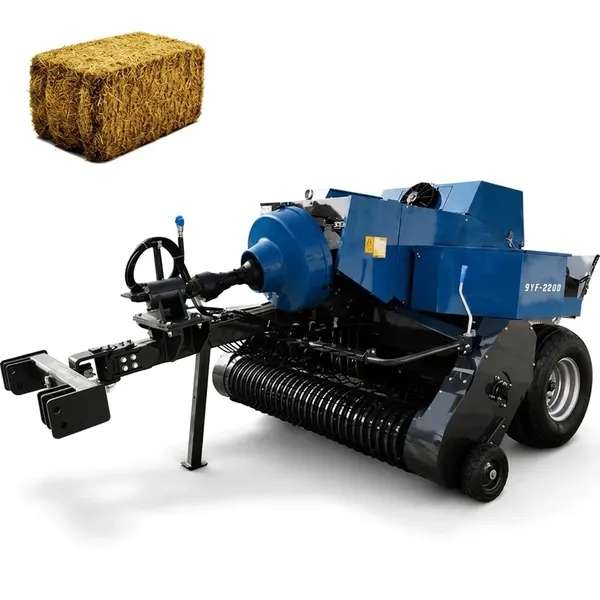
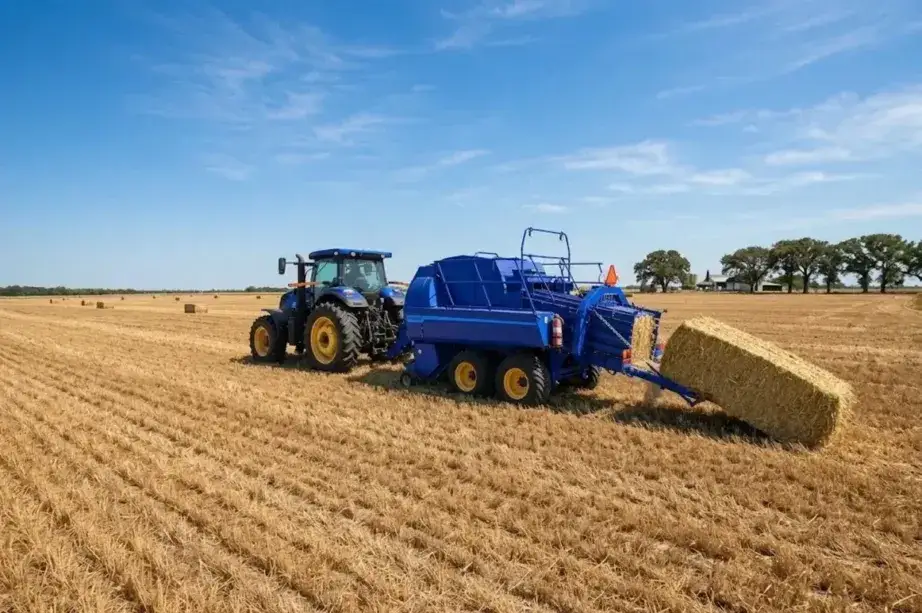
A 9YF-2200 com recolhedor de mola é o modelo ideal para a maioria das operações com capim-bermuda voltadas para os mercados de gado e cavalos. O recolhedor de mola de 2.200 mm maneja com eficiência as leiras de capim-bermuda na largura de recolhimento recomendada de 60–70%, e o mecanismo de compressão padrão produz fardos de 18 a 28 kg com as configurações de tensão adequadas. Este modelo oferece a combinação ideal de eficiência em campo e simplicidade para produtores do Sudeste dos EUA, em uma escala comum de 100 a 200 acres por temporada.
9YFS-2.2 — Produção Premium e para Exportação com Controle de Cinzas
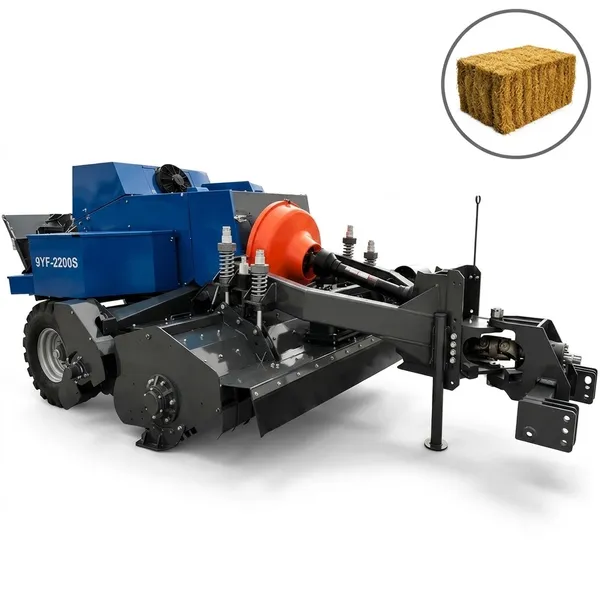
Para operações com grama-bermuda destinadas aos mercados de exportação japonês ou coreano, onde o teor de cinzas deve ser inferior a 2%, o modelo 9YFS-2.2 com sistema de ventilador de pressão negativa é a melhor opção. O sistema de ventilador gera um fluxo de ar interno através do material, removendo partículas de solo e poeira fina da cultura antes da compressão — reduzindo consistentemente o teor de cinzas dos fardos em 30–50% em comparação com modelos padrão nas mesmas condições. Esse benefício do sistema de ventilador é mais pronunciado na grama-bermuda, pois a estrutura de caule fino retém proporcionalmente mais partículas de solo da superfície do que culturas com caules mais grossos.
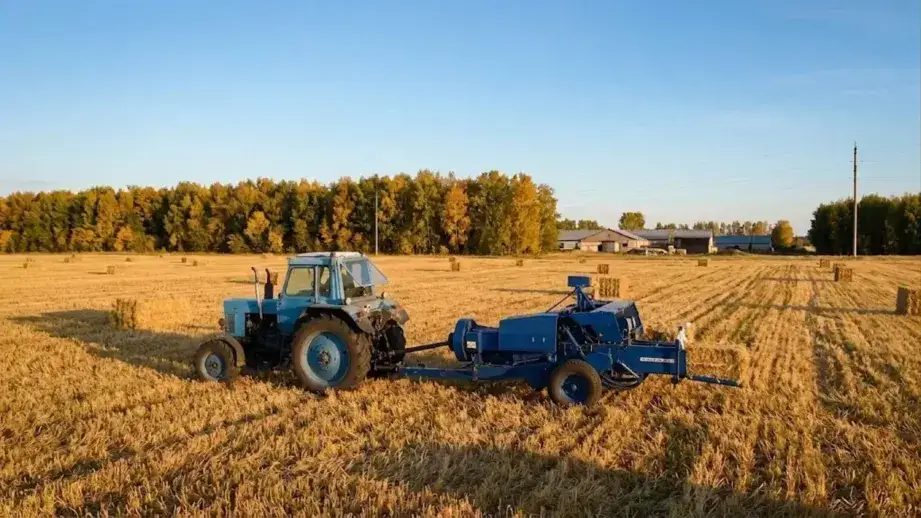
Especificações da tomada de força (PTO) e do acionamento para as condições do Sudeste.
Perguntas frequentes — Enfardamento de feno de grama-bermuda
Qual é a melhor época do ano para cortar grama bermuda para feno de cavalo na Flórida?+
O feno de bermuda de melhor qualidade para o mercado equino na Flórida é geralmente produzido nos cortes do final da primavera (abril-maio) e início do outono (setembro-outubro), em vez do auge do verão. Os motivos: as temperaturas de ponto de orvalho mais baixas em abril-maio e setembro-outubro proporcionam uma janela de enfardamento mais ampla — geralmente de 5 a 6 horas — em comparação com a janela de 3 horas em julho-agosto. O tempo de cura prolongado é menos crítico, pois a reidratação noturna é menos intensa. A cultura também está em um estágio de crescimento mais denso e folhoso nessas épocas de transição. A cor dos cortes de abril e outubro é geralmente melhor do que a de julho-agosto, porque a menor intensidade de raios UV reduz o branqueamento na leira. Os cortes de julho-agosto são necessários para a continuidade da produção sazonal, mas são mais difíceis de produzir com qualidade superior do que os cortes de primavera e outono.
Posso enfardar grama bermuda na manhã do segundo dia se a umidade da superfície estiver baixa?+
A secura da superfície na manhã do segundo dia não é um indicador confiável da umidade do interior da grama-bermuda. Os talos finos secam rapidamente na superfície, enquanto o interior da leira retém a umidade da reidratação noturna. Uma leira de grama-bermuda que parece seca ao toque às 9h do segundo dia pode ter uma leitura de umidade do interior de 22–261 TP5T — bem acima do limite seguro para enfardamento. Sempre faça o teste de umidade do interior da leira a uma profundidade de 10–15 cm antes de tomar qualquer decisão sobre o enfardamento na manhã do segundo dia. Na maioria das condições do Sudeste, a umidade do interior às 9h do segundo dia ainda é muito alta para o enfardamento seguro sem conservante. Aguarde o período da tarde, quando a radiação solar e a temperatura ambiente tiverem tido várias horas para reduzir a umidade do interior para a faixa de 14–171 TP5T.
Por que meus fardos de capim-bermuda ficam amarelos depois de apenas algumas semanas no celeiro?+
O amarelecimento do feno de bermuda após o enfardamento, durante o armazenamento, tem duas causas diferentes com soluções distintas. Primeira: amarelecimento devido ao aquecimento moderado — mesmo com umidade de enfardamento entre 16% e 181 TP5T, um fardo de feno de bermuda empilhado em um celeiro aquecido em agosto pode atingir 45–50 °C durante a cura inicial, causando a degradação de carotenoides que se manifesta como amarelecimento. Esse tipo de amarelecimento se estabiliza após 2 a 3 semanas e o feno permanece nutricionalmente aceitável. Prevenção: deixe os fardos em uma única camada por 48 horas após o enfardamento antes de empilhá-los no verão. Segunda: amarelecimento devido à umidade de enfardamento excessiva (acima de 201 TP5T), causando aquecimento significativo e alguma degradação de proteínas. Esse amarelecimento não se estabiliza e o feno apresentará manchas marrons e um odor característico de feno. A distinção: fardos que apresentam apenas amarelecimento estão mornos, mas não quentes ao toque; Fardos excessivamente úmidos ficam quentes ao toque em 3 a 5 dias e podem apresentar mofo visível nas extremidades ou laterais em 2 a 3 semanas.
Quantas colheitas de feno de grama-bermuda posso esperar por ano no centro do Texas?+
No centro do Texas, em anos com precipitação normal, a grama-bermuda produz de 4 a 6 cortes de maio a setembro em pastagens de sequeiro. A grama-bermuda irrigada pode produzir de 6 a 8 cortes de abril a outubro. Cada corte requer de 4 a 6 semanas de rebrota antes que a pastagem atinja a qualidade ideal para enfardamento — tentar cortar antes desse período de rebrota resulta em leiras finas e de baixo rendimento, com pouca estabilidade. O primeiro corte, no final de abril ou início de maio, estabelece a qualidade da pastagem para a temporada — cortar muito cedo, antes que o primeiro corte esteja bem estabelecido, resulta em baixos rendimentos na temporada. Os cortes de melhor qualidade são tipicamente o segundo e o terceiro (junho-julho), quando a pastagem está totalmente estabelecida e o crescimento é denso e folhoso. Cortes feitos no final da temporada (agosto-setembro) podem apresentar menor densidade foliar e teor de proteína bruta, à medida que a planta se prepara para o período de dormência. Planeje o manejo da irrigação ou da precipitação para favorecer ciclos consistentes de rebrota de 5 a 6 semanas entre os cortes, visando o máximo rendimento na temporada.
Qual a resistência ideal do barbante para fardos pequenos de grama bermuda em formato quadrado?+
Para fardos de capim-bermuda com peso alvo entre 18 e 24 kg: o barbante de polipropileno com resistência de 110 kg é a especificação padrão. Isso proporciona um fator de segurança de 4,5 a 6 vezes o peso máximo do fardo, o que é adequado para a carga dinâmica durante a ejeção. Em configurações de densidade mais altas, que produzem fardos acima de 26 kg para o mercado de gado, recomenda-se o uso de barbante com resistência de 130 a 140 kg. Para mercados de exportação que exigem tipos específicos de barbante — alguns compradores japoneses exigem barbante de sisal para evitar o risco de contaminação por plástico na ração — verifique as especificações do seu comprador antes de adquirir o barbante. Uma observação operacional importante para o capim-bermuda: os caules finos não criam a mesma carga máxima de ejeção que culturas com caules grossos, portanto, o barbante padrão de 110 kg raramente causa rupturas durante o enfardamento do capim-bermuda. Se você estiver tendo problemas com a quebra da corda em gramados de bermuda, a causa mais provável é o aperto excessivo do disco de tensão, e não a resistência insuficiente da corda. Diminua a tensão do disco em meia volta e teste novamente antes de usar uma corda de melhor qualidade.
A grama bermuda requer uma velocidade de recolhimento diferente da alfafa?+
A enfardagem de capim-bermuda geralmente permite uma velocidade de avanço ligeiramente maior do que a de alfafa de primeiro corte, porque a densidade da leira é menor — uma leira de capim-bermuda com a mesma largura de rastelo que a de alfafa tem uma massa significativamente menor por metro de comprimento. A velocidade de avanço padrão para capim-bermuda em uma leira bem formada de passagem única, com largura de recolhimento de 60–70 µm, é de 6–8 km/h no modelo 9YF-2200. Isso é de 10–20 µm mais rápido do que a velocidade confortável para alfafa de primeiro corte pesada. No entanto, o capim-bermuda é mais sensível à velocidade de avanço em termos de perda de folhas no recolhimento — em condições secas, com umidade abaixo de 14 µm, velocidades de avanço mais altas aumentam a velocidade de impacto dos dentes e pioram a quebra das folhas. Em condições de sequeiro (final da tarde, quando a cultura pode estar abaixo de 14%), reduza a velocidade de avanço para 4–5 km/h para diminuir a velocidade de impacto das hastes e minimizar a perda de folhas, mesmo que a cultura esteja leve o suficiente para suportar uma velocidade maior do ponto de vista do risco de entupimento. O objetivo é adequar a velocidade de avanço à necessidade de impacto das hastes para retenção de folhas, bem como à capacidade de entrada para prevenção de bloqueios.
Posso enfardar grama bermuda com conservante durante o período de junho a agosto?+
Sim — os conservantes para feno (ácido propiônico ou ácido propiônico tamponado) ampliam o limite de umidade seguro para enfardamento da grama-bermuda de aproximadamente 17% para 19–21%, permitindo que o enfardamento comece um pouco mais cedo no período da tarde, quando a cultura ainda não atingiu a faixa ideal de 14–17%. Essa é uma ferramenta útil durante julho e agosto no centro da Flórida ou no litoral do Texas, quando a janela de umidade é mais estreita e completar todo o corte em uma única sessão de 3 horas exige que o processo comece antes que a umidade ideal seja atingida. Aplique o conservante na dosagem recomendada pelo fabricante para o nível de umidade medido no momento do enfardamento — a aplicação insuficiente oferece proteção inadequada. Observe que alguns compradores de feno premium para cavalos e todos os compradores de exportação devem ser consultados sobre a aceitação de feno tratado com conservante antes da aplicação. A aceitação de conservantes varia: a maioria dos compradores de feno para equinos no mercado interno não realiza testes e aceita o feno tratado sem problemas; alguns programas de certificação orgânica exigem feno de fibra natural não tratado. Confirme a posição do seu comprador antes de tratar lotes de exportação ou com certificação orgânica.
Por que meus fardos de grama bermuda têm uma textura diferente por fora e por dentro?+
A diferença na textura da superfície externa do fardo em relação ao núcleo interno é típica da grama bermuda e resulta do padrão de compressão na câmara de enfardamento. A superfície externa de um pequeno fardo quadrado é a face que estava em contato com a parede da câmara ou com o fardo anterior durante a compressão — essa superfície é prensada e lisa, com os talos da grama alinhados em uma direção consistente. O núcleo interno do fardo apresenta uma orientação mais aleatória dos talos devido às múltiplas compressões do pistão que formaram o fardo seção por seção. Essa diferença de textura é estrutural e não um problema de qualidade. Um comprador que inspeciona a extremidade cortada de um fardo verá uma orientação mais aleatória dos talos; olhando para a face externa, verá a superfície lisa e prensada. Essa é a aparência normal de um pequeno fardo quadrado enfardado corretamente, independentemente da espécie da cultura.
Escolha a enfardadeira certa para sua operação com grama bermuda.
Desde a 9YF-2200 para os mercados domésticos de cavalos e gado até a 9YFS-2.2 para grama bermuda de baixo teor de cinzas para exportação — a Série 9YF Abrange todos os mercados de grama bermuda. Informe-nos seu mercado-alvo, estado e volume anual de fardos e confirmaremos o modelo ideal para sua operação.
America Ever-Power Forage Baler Equipment INC. · 1401 21st ST STE R, Sacramento, CA 95811
Editor: Cxm