Industry Guide · Horse Hay Market · Updated August 2026
Best Square Baler for Horse Hay
The best square baler for the horse hay market is the 9YF-2200 with spring-tooth pickup. Horse buyers pay a premium for four specific quality characteristics — green color, intact seed heads, sweet smell and low dust — and the spring-tooth pickup mechanism is the correct choice for all four, particularly when baling dry boot-stage timothy or orchard grass where hammer-claw tines cause measurable seed head damage. This guide covers every decision that separates premium horse hay from commodity hay at the equipment and field management level.
Covers: what horse buyers inspect · why pickup type determines seed head quality · model recommendations · bale weight targets · crop-specific guidance · moisture management · quality failure prevention
Quick Answer — Horse Hay Baler Recommendation
9YF-2200 (spring-tooth) — the standard recommendation for all operations targeting the premium horse hay market. Spring-tooth tines preserve boot-stage seed heads and produce clean, low-dust bales at 18–22kg.
9YF-1700 or 9YF-1900 — for small horse hay farms under 40 acres with compact tractors (40–60HP). Same spring-tooth advantage, lower HP requirement and smaller pickup for narrower windrows.
What Horse Buyers Inspect Before Purchasing Hay
Horse hay commands a price premium of $3–$8 per bale over commodity cattle hay in most US markets — but only when it meets the four quality criteria that experienced horse buyers apply consistently. Every one of these criteria is directly influenced by a baling equipment and field management decision within the producer control.
1
Green Color — The First Visual Cue
Horse buyers inspect bale color before anything else. Green bales signal correct cutting stage, correct baling moisture and proper storage — all without any explanation from the seller. Tan or yellow bales are immediately discounted or rejected. Green color is preserved by: cutting at boot stage, baling at 14–17% moisture without heating, and storing in a covered location away from direct sunlight. A bale that was green at baling but has faded to tan after outdoor exposure has lost the primary visual premium signal.
2
Intact Seed Heads — The Premium Timothy Identifier
For timothy and orchard grass, the closed cylinder seed head visible in the bale cross-section is the defining marker of boot-stage harvest — the most valuable cut for the horse market. Experienced buyers pull a handful from the bale interior and look at the head shape. Closed heads = boot stage, correct baling. Open or absent heads = post-bloom cut or over-dry baling with shatter. The spring-tooth pickup sweeps dry boot-stage heads into the machine with less tine-impact damage than hammer-claw tines — a measurable advantage on the specific quality indicator that determines horse hay premium pricing.
3
Sweet Smell — The Palatability Signal
Premium boot-stage timothy has a characteristic sweet, slightly vanilla-like smell from fructan carbohydrates stored in the stem. Buyers open a bale and smell it — the sweet smell confirms boot-stage harvest and correct moisture management without any moisture measurement. This smell is destroyed by: post-bloom cutting, baling above 20% moisture followed by heating, or extended windrow exposure that bleaches and over-dries the crop. Once destroyed, it cannot be recovered. Preserving the sweet smell requires cutting and baling the crop at the correct stage and moisture every time.
4
Low Dust — The Health Safety Factor
Dusty hay is a direct health risk for horses — particularly those kept in enclosed stables where respiratory conditions such as heaves (equine asthma) are common and made significantly worse by fine hay dust particles. Buyers test dust by shaking a handful vigorously over a dark surface. Any visible dust cloud on shaking is a rejection trigger for quality horse hay buyers. Dust in bales comes from: over-dry baling below 12% moisture causing leaf shattering, soil pickup from pickup tines running too low, and mold development from over-wet baling. The spring-tooth pickup running at the correct height minimises soil contact — a significant advantage over hammer-claw tines which are more aggressive at the soil interface.
Why Spring-Tooth Pickup Is the Right Choice for Horse Hay
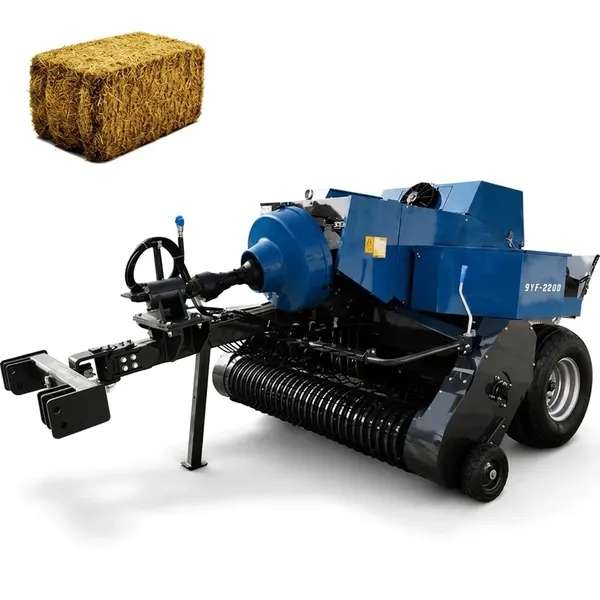
The spring-tooth pickup uses flexible spring-steel tines mounted on the rotating pickup reel. When a tine contacts the crop or the ground, it bends momentarily and returns to position — a sweeping rather than striking action. This flexibility has two practical advantages for dry horse hay at 13–16% moisture:
First, the tine bends on contact with each seed head cluster rather than striking it at full rotation velocity. In dry timothy at 14% moisture, the seed head connection to the stem is at its minimum tensile strength — a hard impact from a rigid hammer-claw tine at full rotational speed breaks this connection and shatters the seed head. The spring-tooth tine delivers enough upward force to lift the hay but not enough impact energy to fracture the brittle dry seed head connection.
Second, the spring-tooth tine is less aggressive at the soil interface — it deflects over soil irregularities rather than digging in. This reduces the soil pickup that increases bale ash content and dust levels, both of which are quality-reducing for the horse market. For operations baling timothy or orchard grass on fields with any surface unevenness, the spring-tooth model consistently produces lower-dust bales than the hammer-claw model on the same crop and field.
Model Recommendations by Operation Scale
| Modelo |
Best for Horse Hay Operation |
Min PTO HP |
Largura de captação |
Horse Market Suitability |
| 9YF-1700 |
Small horse properties, under 40 acres, own-use or small retail sales |
40 HP |
1,700 mm |
Excelente |
| 9YF-1900 |
Small-medium operations, 30–80 acres, local horse hay sales |
50 HP |
1,900 mm |
Excelente |
| 9YF-2200 |
Commercial horse hay producers, 60+ acres, retail and wholesale horse market |
50 HP |
2,200 mm |
Excelente |
| 9YF-2200S |
Not recommended as primary horse hay baler — hammer-claw reduces seed head quality in dry timothy |
99 HP |
2,200 mm |
Fair only |
Bale Weight Targets for the Horse Hay Market
The horse hay market has the tightest bale weight preferences of any small square bale market. Horse owners frequently stack their own hay — sometimes alone — which places a hard upper limit on acceptable bale weight determined by one-person handling capacity. The standard horse market target weight is 18–22 kg.
Below 16 kg
Too light
Buyers perceive poor value per bale. Feed store buyers reject underweight stock. Adjust density or increase bale length.
18–22 kg
Horse market target
One-person manageable. Correct size for daily feeding rationing. Meets most feed store and private buyer requirements.
22–25 kg
Acceptable but heavy
Two-person stacking or mechanical lift needed for sustained barn stacking. Some buyers accept; others specify 22kg maximum.
Above 25 kg
Too heavy
Exceeds one-person safe handling limit. Most horse hay buyers and feed stores will not accept consistently heavy bales.
Crop-Specific Guidance for Horse Hay Producers
Timothy Hay — The Premium Horse Hay StandardNorthern US, Canada, Pacific Northwest
Cut at early boot stage — the closed cylinder seed head just visible as a bulge inside the stem sheath, not yet emerged. Bale at 14–17% core moisture. Target weight 18–22kg. The spring-tooth pickup on the 9YF-1700, 9YF-1900 or 9YF-2200 preserves the seed heads that command the horse premium. Store covered and away from UV — green color is the primary premium indicator.
Bermudagrass Hay — Southeast Horse MarketSoutheast US, Texas, Florida
Bale in the narrow afternoon window at 14–17% core moisture. The 9YF-2200 spring-tooth pickup is correct — bermudagrass fine stems are not seed-head-sensitive and the spring-tooth handles them cleanly. Target weight 18–22kg for the equine market. Horse buyers in Florida and the Carolinas are experienced bermudagrass buyers — they assess color and weight at the truck tailgate. Keep bale weight consistent across the load.
Orchard Grass — Versatile Horse HayMidwest, Appalachia, Mid-Atlantic
Cut slightly earlier than timothy at similar boot stage. Orchard grass has a wider cutting-stage window than timothy — it tolerates being 3–5 days past early boot without as dramatic a quality loss as timothy. 9YF-1900 or 9YF-2200 spring-tooth recommended. Orchard grass commands a modest premium below timothy but well above generic grass hay for the horse market. Palatability is very high — horses accept it readily.
Moisture Management for Horse Hay — The Non-Negotiable Factor
Moisture management is the single most important factor in horse hay quality — more impactful than cutting stage, crop variety or equipment choice, because incorrect moisture at baling destroys the quality indicators that all the other correct choices have produced. Horse hay that was cut at perfect boot stage, baled at the correct moment, and then stored incorrectly in a high-humidity location can lose its entire premium within four weeks of production.
| Umidade na enfardagem |
Effect on Horse Hay Quality |
Market Outcome |
| Below 12% |
Seed head shatter at tine contact. Leaf loss. High dust. Color fades faster in storage. |
Rejection |
| 14–17% |
Optimal. Leaves and seed heads pliable. Green color retained. Sweet smell preserved. Low dust. |
Premium price |
| 17–20% |
Acceptable if stored correctly with ventilation. Some yellowing risk on heating. Sweet smell may persist. |
Standard price |
| Acima de 20% |
Bale heats. Color changes to brown. Mold risk. Sweet smell replaced by musty odor. Dust from mold spores. |
Rejection / loss |
Always verify moisture with a probe meter at 10–15cm windrow core depth before baling. Surface feel alone is not a reliable indicator — the core can remain above 20% when the surface feels dry to the touch, particularly after overnight dew re-wetting in northern and SE conditions.
Common Horse Hay Quality Failures and How to Prevent Them
Yellow bales after 2–4 weeks in barn
Causa: mild heating from 17–20% baling moisture, or direct sunlight bleaching in storage.
Prevenção: bale at 14–17% and store away from direct sun. Single-layer stacking for 48 hours after baling in summer.
Dusty bales rejected at delivery
Causa: baled below 12% moisture (leaf shatter) or pickup tines contacting soil (ash).
Prevenção: correct moisture and pickup height. Spring-tooth pickup minimises soil contact versus hammer-claw.
Missing or open seed heads in timothy
Causa: cutting past boot stage OR baling too dry with tine impact shattering.
Prevenção: cut at early boot. Bale at 15–17%, not below 13%. Use spring-tooth pickup, not hammer-claw.
Musty smell after barn storage
Causa: baled at 18–22% moisture — microbial activity began in the bale interior during initial curing.
Prevenção: probe-test core moisture before baling. Never bale horse hay above 18%.
PTO Drive Reliability During the Horse Hay Baling Window
Horse hay quality is time-sensitive — the baling window is 3–5 hours in many regions before humidity rises or dew re-wets the windrow. Equipment reliability during that window is not just a productivity concern; it is a quality concern. A PTO shaft failure at 14:00 that cannot be resolved before 16:00 means the remaining windrows must either be left overnight (re-wetting risk) or baled at marginal moisture. Annual CV joint inspection and greasing is the most effective prevention for in-session driveshaft failure. Full specification guide: PTO driveshaft inspection and CV joint maintenance for hay balers.
Frequently Asked Questions — Square Baler for Horse Hay
Can I use the 9YF-2200S to bale horse hay?+
The 9YF-2200S can bale horse hay but is not the recommended model for operations where horse hay is the primary market. The hammer-claw pickup on the 9YF-2200S is more aggressive at tine contact than the spring-tooth — in dry timothy at 13–15% moisture, this increases seed head damage and leaf shatter compared to the spring-tooth model. The difference is most noticeable in high-value boot-stage timothy that commands a significant premium based specifically on seed head integrity. For bermudagrass horse hay (Southeast), the 9YF-2200S is more acceptable — bermudagrass has no seed head quality concern and the hammer-claw handles the fine stems efficiently. If you already own a 9YF-2200S and are baling timothy: baling at a slightly higher moisture (16–17% rather than 14–15%) reduces tine impact damage by making the seed head connections more pliable.
How much more does premium horse hay sell for compared to cattle hay?+
Premium horse hay in the US typically commands $3–$8 per bale above comparable-grade cattle hay in most markets. The price premium is highest for: boot-stage timothy in the Pacific Northwest and Northeast ($15–$22 per bale for top quality vs $8–$12 for standard grass hay); bermudagrass for Florida and Georgia equine markets ($12–$18 per bale for premium equine-grade vs $7–$10 for cattle grade). The premium reflects both buyer willingness to pay for quality and the additional production cost from the narrower baling window and the lower acceptable moisture range. Operations producing consistently premium horse hay — green, clean, correct weight, no dust — and marketing directly to horse owners rather than through middlemen capture the full price premium. Operations selling through feed stores typically receive 60–75% of the retail price.
Is alfalfa hay suitable for horses from a square baler?+
Alfalfa is baled for horses successfully but requires careful management for the specific needs of horses. Alfalfa at 18–22% crude protein is too high in protein for horses in light to moderate work — it can contribute to metabolic conditions including laminitis in susceptible animals. Alfalfa for horses is typically recommended as a partial ration (20–30% of total hay intake) rather than the primary forage. High-value alfalfa for the performance horse market (racehorses, endurance horses in heavy work with high protein needs) is sold as premium small square bales at 22–28kg with strict moisture and protein specifications. The 9YF-2200 or 9YF-2200S is appropriate for alfalfa horse hay — the spring-tooth model for leafy 2nd-cut alfalfa, the shredder model for dense 1st-cut. Many horse hay producers diversify their acreage between grass hay (timothy/orchard) and alfalfa to serve both segments of the horse market.
How do I store horse hay after baling to maintain green color?+
Store horse hay in a covered barn or shed away from direct sunlight. The three enemies of green color in stored hay are: UV radiation (converts chlorophyll to pheophytin, turning green hay yellow-tan within 30–60 days of outdoor exposure), moisture from rain or condensation (initiates mold growth that appears as dark spots and produces musty odor), and heat from initial bale curing at excess moisture (destroys chlorophyll rapidly). Indoor covered storage eliminates UV and rain exposure. Pallets or wooden runners off the floor prevent ground moisture wicking. Good barn ventilation prevents condensation. If outdoor storage is unavoidable, cover with a breathable waterproof tarp secured to ground level on all sides — this reduces UV bleaching by 60–70% compared to uncovered outdoor storage. Horse hay stored correctly indoors retains acceptable green color for 6–12 months; outdoor uncovered bales may show significant tan fading within 4–8 weeks.
What twine grade should I use for horse hay bales?+
For horse hay bales in the 18–22kg target weight range: 110kg knot strength polypropylene twine is the standard specification — this provides a 5–6× safety factor over maximum bale weight, appropriate for the ejection and handling loads involved. The twine color does not affect quality, but some horse hay buyers prefer a specific color for consistency in their barn — yellow or orange polypropylene is the most common for the US horse hay market. One critical horse-specific note: confirm twine strands are fully removed before feeding baled hay to horses. Polypropylene twine consumed by horses can cause intestinal obstruction, which is a veterinary emergency. Some operations use natural sisal twine for horse hay specifically because small amounts consumed by horses are not associated with the same obstruction risk as polypropylene — at a modest price premium over synthetic twine.
How many horse hay bales per acre can I expect from timothy?+
Timothy hay yield varies significantly by region, irrigation status, cutting number and year. In the Pacific Northwest (irrigated), first-cut timothy yields 5–8 tonnes of dry matter per hectare (2–3.2 tonnes per acre), producing approximately 100–160 bales per acre at 20kg bale weight. Second cut yields 3–5 tonnes per hectare (1.2–2 tonnes per acre), producing approximately 60–100 bales per acre. In the northern US and Canada under rainfed conditions: first cut 2–4 tonnes per hectare (0.8–1.6 tonnes per acre), producing approximately 40–80 bales per acre; second cut 1–3 tonnes per hectare (0.4–1.2 tonnes per acre). At a conservative 60 bales per acre average across first and second cut in rainfed conditions, a 30-acre timothy stand produces approximately 1,800 bales per season — sufficient for a small commercial horse hay operation or significant own-use for a moderate-size equine property.
What is the difference between horse hay and rabbit hay in terms of baling requirements?+
Rabbit hay (sold at pet stores and to rabbit owners) has the strictest quality requirements of any hay market — stricter than premium horse hay in most respects. Rabbits are obligate hay consumers with extremely sensitive respiratory and digestive systems. Rabbit hay specifications: zero mold tolerance (a single moldy patch disqualifies the entire bale), dust level below the horse standard (rabbits eat hay from burrow-like enclosures where dust accumulates), and bale weight typically 14–18kg (lighter than horse hay for smaller sale quantities). The baling equipment requirements for rabbit hay are identical to premium horse hay — spring-tooth pickup, correct baling moisture at 14–16%, and clean hay with no soil contamination. The primary difference is bale weight: set the density and length to produce 14–18kg rather than 18–22kg. Rabbit hay typically commands $0.50–$1.50 per kg retail — among the highest per-kg returns for small square hay in the US market — but requires pristine quality management from field to retail packaging.
Should I forage test my horse hay before selling?+
Forage testing is increasingly common in the horse hay market and provides meaningful benefits for both buyer and seller. For sellers: a test report showing 10–14% crude protein, NDF below 55% and freedom from mold-indicator compounds is a powerful marketing document that justifies premium pricing. It also protects the seller from claims by buyers who feed hay to horses with metabolic conditions — the test proves the hay was appropriate. For buyers: the test confirms that the hay nutritionally supports the horses they are feeding, particularly for performance horses and easy keepers where exact protein and sugar levels matter. Non-structural carbohydrate (NSC) content is particularly relevant for horses with laminitis risk — NSC below 10–12% is typically specified by veterinarians managing these animals. Test using a certified forage analysis laboratory (send to Dairy One, Ward Laboratories or similar) and attach the results to your load documentation. For operations selling regular loads to feed stores or equine facilities, quarterly testing of representative bales from each cutting is a professional standard that differentiates quality-committed producers from commodity hay sellers.
Ready to Produce Premium Horse Hay?
Tell us your primary hay crop, acreage and tractor HP and we will confirm which 9YF spring-tooth square baler is the right match for your horse hay operation.
America Ever-Power Forage Baler Equipment INC. · 1401 21st ST STE R, Sacramento, CA 95811
Editor: Cxm