Equine Hay Guide · Horse Management · Updated August 2026
Round Bales vs Square Bales for Horses
Small square bales are the recommended format for most horse operations. They allow precise portion control, easy quality inspection at each feeding, and carry the premium market value that enables horse hay producers to recover their production costs. Round bales are not dangerous for horses when managed correctly, but they require specific handling practices to avoid the mold, respiratory and overconsumption risks that occur when round bales are used without adequate management. This guide compares both formats across every dimension relevant to horse health and hay producer economics.
Covers: 6-dimension comparison table · mold and respiratory risks in round bales · slow-feeding and obesity risk · when round bales are acceptable for horses · equipment recommendations for each format
Quick Answer
Square bales are the better choice for horses in most situations — they allow daily portion control, enable quality inspection at each feeding, carry lower mold risk than improperly managed round bales, and command a market premium for producers. Round bales are acceptable for outdoor horse herds with free-choice hay access and adequate management — but they require a slow-feed net and regular mold checks to be used safely. For stabled or individually managed horses, small square bales at 18–22kg remain the standard recommendation.
Square bales: best for stabled, individually managed horses
Round bales: acceptable for outdoor herd horses with slow-feed nets
Mold risk: higher in round bales without net wrap
Risk 1: Core Mold Invisible Until Consumed
In round bales, the outer cylinder is exposed to rain weathering and the core can retain moisture from the original baling if moisture exceeded 18%. Mold in the core of a round bale is physically impossible to inspect from the outside — it only becomes visible when the horses have consumed the outer 40–50% of the bale and the inner surface is exposed. By this point, horses may already have consumed a significant quantity of moldy material. Moldy hay in horses causes respiratory conditions, digestive upset and in severe cases choke or botulism from anaerobic mold species. Small square bales are fully inspectable on the open face at each feeding — a visual check before placing the bale reveals any mold development before the horse encounters it.
Risk 2: Overconsumption and Obesity in Easy Keepers
Horses in light work, retired horses and draft breeds are classified as “easy keepers” — they maintain body condition on less feed than a performance horse of the same size. Round bales fed without a slow-feed net give these horses unlimited access to hay at all times, replicating continuous grazing. Studies show horses consume 25–30% more dry matter per day from an open round bale compared to portion-controlled feeding. Sustained overconsumption causes obesity, which is a primary risk factor for laminitis — a painful and potentially career-ending hoof condition. Small square bales allow exact daily ration control: 0.75–1.0 bale per horse per day for easy keepers; 1–1.5 bales for horses in work.
Risk 3: Dust Accumulation in Round Bale Face
Horses feeding from a round bale hold their nose close to the bale face for extended periods — particularly in slow-feed net systems where they must work hay through a mesh. Fine dust and mold spores present in the hay are inhaled at close range during this extended feeding posture. Horses with heaves (equine asthma, recurrent airway obstruction) are particularly sensitive to fine hay dust, and exposure to even low dust levels during extended round bale feeding can trigger respiratory episodes. Small square bales fed in a wall-mounted hay rack or small net allow horses to position their head more naturally and spend less continuous time with nose in hay.
Risk 4: Net Wrap and Twine Ingestion Hazard
Round bale net wrap or residual twine strands left on the bale or dropped in the paddock are a serious hazard for horses. Horses investigate and mouth novel objects — a strand of polypropylene net wrap consumed by a horse can cause intestinal obstruction requiring emergency surgery. Before placing any round bale in a horse paddock, confirm all net wrap has been fully removed from the cylinder and the bale ends, and remove any dropped net fragments from the area immediately. This is a management step with zero tolerance for error — a single omission can be fatal.
Precise Daily Ration Control
One 20kg bale per horse per day for maintenance; half a bale for easy keepers; 1.5 bales for performance horses in heavy work. The bale becomes the measuring unit. No weighing, no calculation — consistent daily management without equipment.
Full Quality Visibility at Every Feeding
Opening each new bale exposes the full cross-section — color, smell and any mold is visible immediately. A bad bale is identified and removed before the horse touches it. No hidden core risk, no surprise mold exposure mid-bale.
No Handling Equipment Required
18–22kg bales are manageable by one person. No tractor, no ATV spike, no front loader. Horse owners who do not own farm equipment can purchase and manage small square bales at any barn size — from a single horse to 20.
Market Premium Recovery for Producers
Premium timothy or bermudagrass in small square bale format commands $3–$8 per bale more than the same hay in round bale format. The horse market simply does not pay premium prices for round bales — the quality uncertainty inherent in the format limits what buyers will pay.
Round bales can be used for horses safely in specific situations — the key is the management practices, not the bale format itself. The conditions where round bales are acceptable:
✓
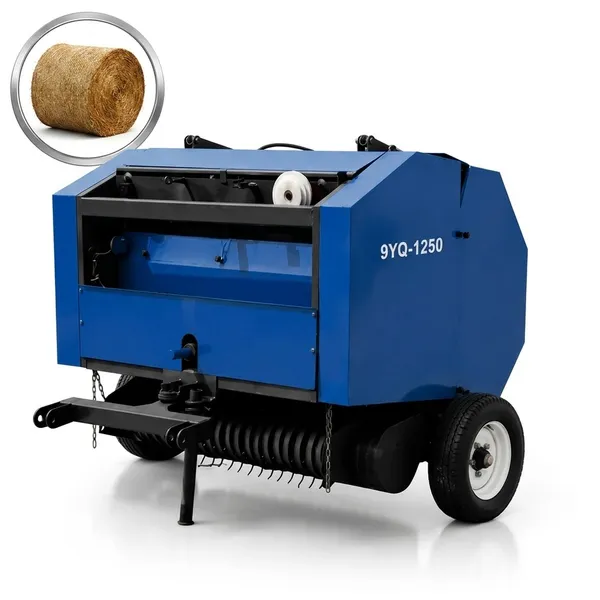
Outdoor paddock-kept horses on year-round pasture with hay as supplemental winter feed. Horses that live outdoors and graze naturally are accustomed to self-selection and are less sensitive to the overconsumption risk than stabled horses. Use a 9YQ-870 or 9YQ-1250 bale with a slow-feed ring to manage intake and reduce waste.
✓
Horses in moderate-to-hard work with high daily energy requirements. Performance horses, working horses and breeding stallions in active use have caloric needs that exceed what easy keepers consume. Overconsumption is not a concern for these animals — they burn the additional calories and benefit from ad lib access to hay.
✓
Cold-weather feeding where ad lib hay access is a thermoregulation tool. Horses in cold climates rely on hay fermentation heat from the hindgut for thermoregulation. Below 0°C, ad lib hay access from a round bale may be preferable to restricted feeding — the horse controls its own intake based on temperature and activity.
✓
Operations with 8+ horses in a group paddock where the bale cost saving is significant. Eight horses consuming one 800kg round bale over 4 days versus 8 × 1.5 bales of small square per day — the labour reduction is meaningful at this scale and the group dynamics mean no single horse is at overconsumption risk.
For all round bale applications involving horses: always use a round bale slow-feed ring designed for horses, always remove all net wrap before placing the bale, and inspect the bale face daily for any mold development.
Is it safe to leave a round bale in a horse paddock for multiple days?+
A round bale can remain in a horse paddock safely for 3–5 days in dry weather and below 15°C, and 2–3 days in warm, wet or humid conditions. Beyond these windows, the open face accumulates moisture from overnight dew or rain and the exposed surface begins to develop mold. Use a slow-feed ring that elevates the bale end off the ground to prevent ground moisture from wicking into the base. In warm, wet conditions: provide a fresh bale every 2 days maximum and remove any bale showing visible mold on the face immediately. Never leave a partially consumed round bale in a horse paddock through a rain event — the water penetration into the open face dramatically accelerates mold development in the exposed section.
How many small square bales does an average horse eat per day?+
A 500kg horse in moderate work consuming hay at 2% of body weight per day requires 10kg of hay dry matter daily. At a standard 20kg bale with 88% dry matter content (baled at 15% moisture): that is approximately 18kg of dry matter per bale. The horse therefore consumes approximately 0.55 bales per day — just over half a bale. In practical feeding: one bale every 1.5–2 days for maintenance-fed horses; one bale per day for horses in moderate work; 1.5 bales per day for hard-working horses in cold weather. Easy-keeper horses (ponies, draft breeds, metabolically sensitive horses) may require rationing to as little as 0.5% of body weight — approximately 0.14 bales per day — which requires a hay net rather than free-choice access from any bale format.
Can a horse develop laminitis from eating too much hay from a round bale?+
Yes — overconsumption of any forage, including hay, contributes to laminitis risk in susceptible horses through two mechanisms: weight gain that increases mechanical stress on the laminae; and excess non-structural carbohydrate (NSC — primarily fructans in grass hay) that overloads the hindgut fermentation capacity, producing lactic acid that increases hindgut pH and may trigger the inflammatory cascade associated with laminitis. Easy-keeper horses, ponies and horses with a prior laminitis history are at the highest risk. For these horses, unlimited access to any hay format — round or square — is inappropriate. Low-NSC hay (tested below 10% NSC) in restricted quantities from a small-hole hay net is the standard management approach. A veterinarian or equine nutritionist familiar with the individual horse should be consulted before changing hay type or feeding method for any horse with metabolic sensitivity.
What size round bale suits a horse paddock of 6 horses?+
For 6 horses averaging 500kg each in moderate work at 2% body weight hay dry matter per day: total daily hay requirement is 6 × 10kg = 60kg dry matter per day. A 9YQ-870 bale at 130kg (88% DM = 114kg DM) would last approximately 1.9 days — move a new bale every 2 days, which is manageable. A 9YQ-1250 bale at 300kg (264kg DM) would last approximately 4.4 days — within the safe consumption window. The 9YQ-1250 is the more efficient choice for 6 horses — fewer bale moves per week at a consumption speed that remains within the safe 5-day window. Use a 6-horse ring feeder (ensure sufficient access points so lower-ranked horses can access the bale simultaneously — insufficient access points cause dominant horses to monopolise the bale and subordinate horses to lose condition).
Do horses prefer round or square bale hay?+
Horses show preference based on hay quality, not bale format — they prefer greener, sweeter-smelling, leafier hay regardless of whether it is in square or round bale format. When offered the choice between a premium small square bale and an average-quality round bale of the same crop, horses will show preference for the higher-quality hay within minutes. The appearance of “preference” for round bales sometimes observed in practice reflects novelty (horses are attracted to large objects in their paddock) rather than a genuine nutritional preference. For assessing hay quality preference: blind comparison of hay quality in identical format (small portions of each in separate buckets) is the only valid method — horses cannot be used as reliable judges of bale format preference.
Is botulism a risk from round bales fed to horses?+
Yes — botulism from round bale hay is a documented and potentially fatal risk for horses. The bacterium Clostridium botulinum thrives in anaerobic, moist, high-protein conditions — conditions that occur in round bale cores baled above 20% moisture, in hay containing decomposed small animals that entered the baler during pickup (mice, rabbits), and in silage bales with compromised film coverage. Horses are significantly more sensitive to botulinum toxin than cattle or sheep — a dose that is sub-clinical in cattle can be lethal in a horse of the same body weight. The primary prevention measures: bale hay for horses at below 18% moisture, inspect the windrow ahead of the pickup for any dead animals, and never feed horses from any bale with visible mold or an unusual smell. Botulism vaccination is available for horses in high-risk areas or where round baling is standard practice — consult your equine veterinarian about the vaccination protocol appropriate for your region and feeding management.
Can I produce both small square bales and round bales from the same farm with two balers?+
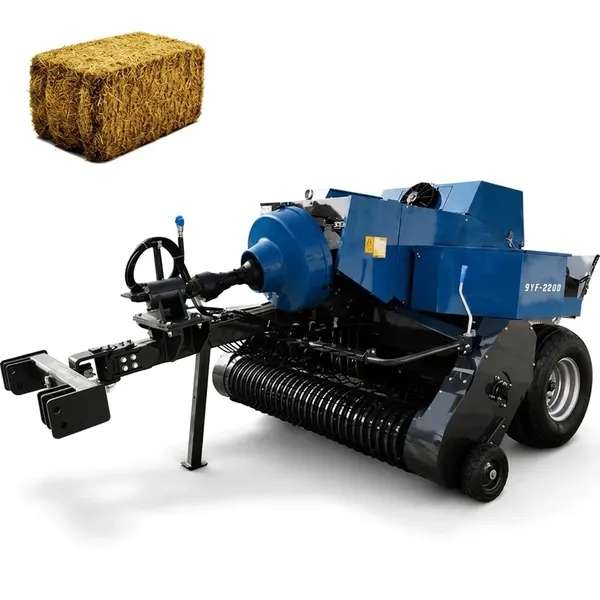
Yes — operating both a 9YF square baler and a 9YQ round baler from the same farm is a practical arrangement for operations with multiple markets. The standard approach: best-quality first and second cut hay (boot stage, lowest NDF, highest CP) goes through the 9YF square baler for the horse and rabbit hay premium market. Third and fourth cut — lower yield, acceptable quality — goes through the 9YQ round baler for cattle customers or own-use winter feeding. Straw baling can go either format depending on buyer requirements. The two balers are operated in sequence on the same tractor — change implements at the field gate. The capital cost of two implements is recovered through the market segmentation: premium hay at horse market price, roughage hay at cattle market price — each bale in the format that maximises its return.
What slow-feed equipment should I use with round bales for horses?+
The two standard slow-feed systems for round bales with horses are: (1) round bale slow-feed ring with a small-mesh hay net draped over the bale inside the ring — the net slows intake by requiring the horse to pull hay through mesh rather than taking large mouthfuls directly from the bale face; (2) a purpose-built round bale slow-feeder cage with fixed mesh sides and a roof — more durable than a net and eliminates the net wrapping hazard of a loose hay net that a horse could get a foot caught in. Mesh size for slow feeding: 5×5cm or smaller for most horses; 7×7cm for horses in hard work where intake restriction is not a goal but waste reduction is. For easy-keeper horses needing significant restriction: a 4×4cm mesh net used with a 9YQ-870 small bale is more practical than a large round bale, because the small total bale volume matches the daily requirement without requiring very small mesh on a very large bale.
Choosing Between Square and Round Bale Equipment for Your Horse Operation?
Tell us your horse numbers, management system and acreage and we will recommend the right 9YF square baler ou Enfardadeira redonda 9YQ for your specific situation.
America Ever-Power Forage Baler Equipment INC. · 1401 21st ST STE R, Sacramento, CA 95811