
Enfardadeira redonda 9YQ-2300
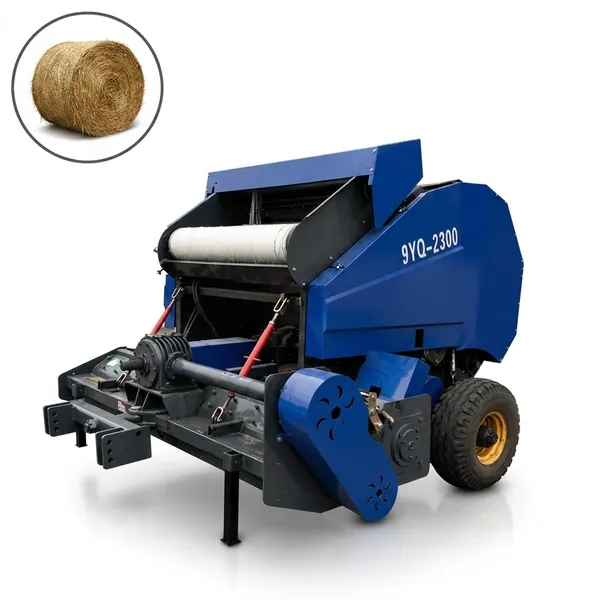
The widest-pickup model in the 9YQ series — the 9YQ-2300 covers 2,300mm per pass com um hammer-claw picker designed for tough, standing and lodged crop material that spring-tooth pickups miss. Paired with automatic net wrap, an 18-roller Φ1,000×1,250mm fixed chamber and 79–178HP PTO input, it is the high-output round baler for large-acreage commercial operations that cannot afford passes over difficult ground.
- ✦ 2,300mm hammer-claw pickup — handles standing, lodged and tangled crop material
- ✦ Widest pickup in the 9YQ lineup — maximum field coverage per pass
- ✦ Φ1,000×1,250mm automatic net wrap — same commercial bale as 9YQ-1950
- ✦ Shift-fork and screw continuous feeder — steady chamber delivery from wide-volume windrows
- ✦ 79–178HP PTO — matched to large-frame commercial tractors
9YQ-2300 Round Baler: Maximum Pickup Width and Hammer-Claw Precision
What the Hammer-Claw Picker Changes
Spring-tooth pickup systems work well when crop material is lying flat in a clean windrow. Lodged crops — corn that has blown over before harvest, rice that has fallen flat in the paddy, dense grass that has matted into the stubble — do not sit up neatly for a spring-tooth tine to pass under cleanly. The hammer-claw picker uses aggressive, hardened flail-style tines that actively beat and lift material off the ground surface rather than relying on the windrow being elevated. In difficult conditions where a spring-tooth baler struggles and leaves significant crop on the ground after each pass, the hammer-claw system recovers substantially more material per pass.
The second factor is pickup width. At 2,300mm the 9YQ-2300 covers the widest swath of any model in the 9YQ series. Combined with the hammer-claw system, this means the machine can bale directly behind a 2m+ wide combine header without a raking pre-pass in many crop conditions — and in difficult lodged or tangled material where the 9YQ-1950 would need a raking pass before baling, the 9YQ-2300 can often proceed directly, eliminating an entire field operation per crop cycle.
9YQ-2300 At a Glance
Especificações técnicas
| # | Item | Unidade | Especificação |
|---|---|---|---|
| 1 | Nome do modelo | — | Enfardadeira redonda 9YQ-2300 |
| 2 | Método de engate | — | Tipo rebocado / Rebocado |
| 3 | Largura de captação | mm | 2,300 |
| 4 | Estrutura do selecionador | — | Hammer-Claw Type |
| 5 | Estrutura do alimentador | — | Mecanismo de alimentação contínua por garfo de deslocamento + parafuso |
| 6 | Tipo de câmara de fardos | — | Tipo de tambor de rolo (fixo) |
| 7 | Largura da sala de compressão | mm | 1,250 |
| 8 | Diâmetro do fardo | mm | Φ1.000 |
| 9 | Quantidade de rolos de prensagem | peças | 18 |
| 10 | Diâmetro do rolo | mm | Φ190 |
| 11 | Método de agrupamento | — | Envolvimento automático em rede |
| 12 | Faixa de potência correspondente | kW / HP | 58.8–132.5 kW (approx. 79–178 HP) |
| 13 | Dimensões totais (C×L×A) | mm | 2,950 × 2,750 × 2,050 |
| 14 | Peso da máquina | kg | 2,500 |
Crop Applications — Where the Hammer-Claw Earns Its Place
Difficult and Lodged Crop Conditions
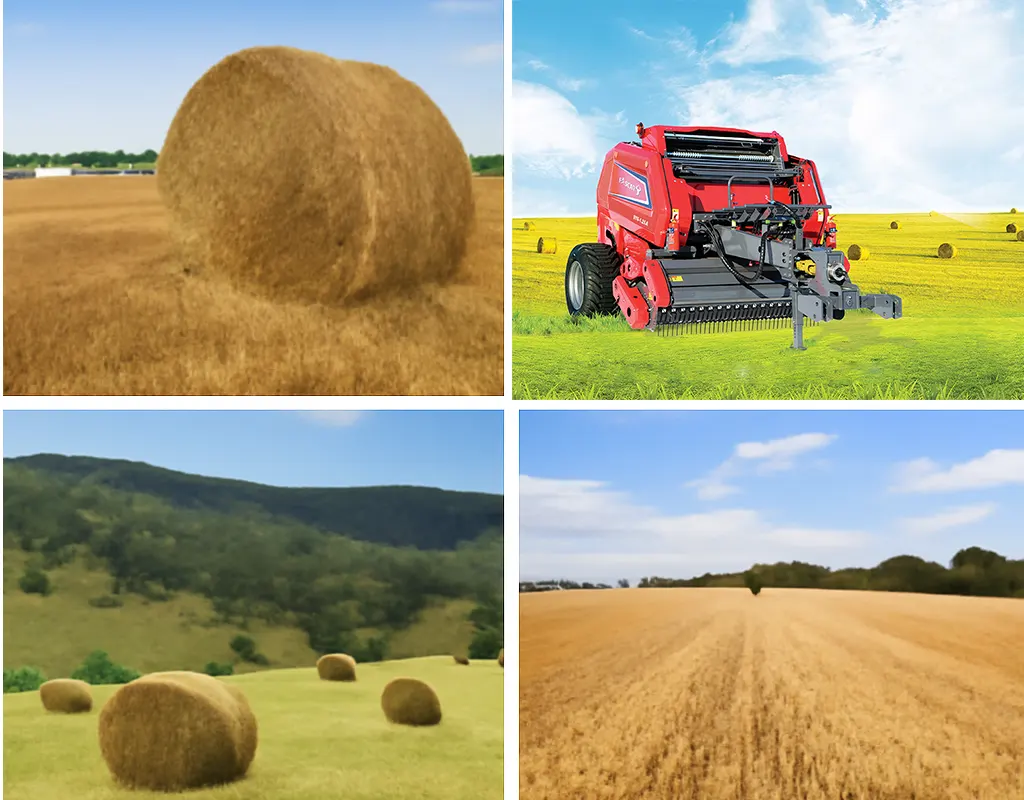
The hammer-claw picker performs best precisely where spring-tooth pickups perform worst. When crop material is standing, lodged, or tangled rather than lying in a clean elevated windrow, the spring-tooth system relies on tine-tip contact with the windrow base — which is compromised when the material is flattened against the ground. The hammer-claw flail tines actively beat and dislodge material from the surface, recovering significantly more of the crop per pass in these conditions. For more on hay making workflow and field preparation that minimises difficult pickup conditions, the hay making workflow optimisation guide covers mowing, conditioning and raking practices that affect baling efficiency.
- ▸Lodged corn stover — the primary application where the hammer-claw outperforms spring-tooth systems; matted stover that would need raking before spring-tooth baling can often be baled directly
- ▸Flattened paddy rice straw — rice that has lain flat in the paddy after harvest is difficult for spring-tooth pickups; the hammer-claw recovers this material efficiently
- ▸Wind-damaged wheat and barley — crops blown down before or during harvest leave tangled windrows where the hammer-claw is substantially more effective than spring-tooth design
- ▸talos de algodão — the harder, woodier cotton stalk material benefits from the more aggressive claw-type contact that the hammer-claw system provides
Standard Commercial Hay and Straw
In clean windrow conditions where a spring-tooth machine would perform equally well, the 9YQ-2300 advantage is purely the 2,300mm width — covering 18% more ground per pass than the 9YQ-1950 at the same forward speed. For large-acreage operations where reducing the number of passes per field matters for schedule and fuel economy, that extra 350mm of coverage adds up over a full season.
- ▸Large-field hay operations — ideal for producers with 500+ acre hay ground who need to cover the field quickly in tight weather windows
- ▸Alfalfa and mixed forage — net wrap preserves leaf matter during handling; the hammer-claw also manages the tangled stem structure that fresh-cut alfalfa can form in the windrow
- ▸Custom commercial baling — operators baling diverse customer fields where crop conditions vary between every job benefit from a picker that performs consistently in both clean and difficult material
Key Features of the 9YQ-2300
Hammer-Claw Pickup System — Engineering Behind the Design
Hammer-claw tines are heavier and shorter than spring-tooth tines, mounted on high-speed rotating shafts that deliver an impact-and-lift action against crop material on the ground surface. Rather than needing the windrow to be elevated above the ground for tine clearance, the hammer-claw physically dislodges and lifts material that is lying flat or tangled in the stubble.
The rotating claw tines carry significantly more kinetic energy per tine than spring-tooth designs. This impact energy is what breaks the bond between matted crop material and the ground surface — particularly relevant for corn stover that has been run over by grain cart traffic, paddy straw that has been flattened by combine tyres, or any crop that has been compressed into the soil surface by heavy equipment during harvest.
Because the hammer-claw system works at or below the level of the standing stubble, it recovers material from field positions where spring-tooth systems leave crop behind. For producers who sell straw or stover as a commodity and measure value in tonnes per acre recovered, the difference in ground-level recovery between picker types is a direct income line.
2,300mm Coverage Width and Dual-Stage Feeder
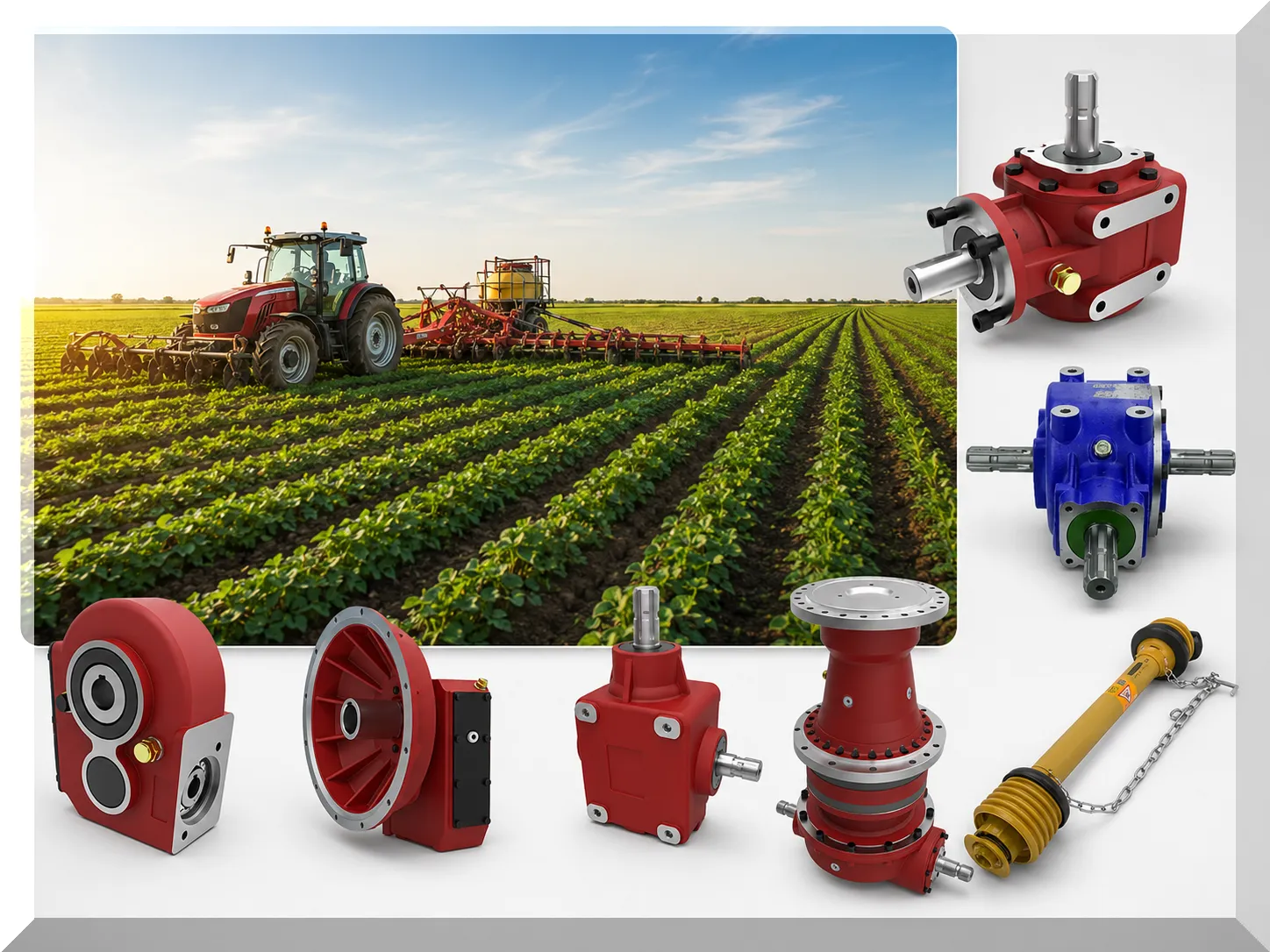
The 2,300mm pickup width means the 9YQ-2300 can follow a 2.2–2.3m wide combine header and bale the windrow in a single pass in most conditions — removing the need for a raking pre-pass that the 9YQ-1950 at 1,950mm requires on the widest combine outputs. The material volume entering the machine at 2,300mm pickup width in heavy windrows is handled by the same two-stage shift-fork and screw continuous feeding arrangement used on the 9YQ-1950, which manages the higher material volume without blockages. For information on PTO driveline components and gearbox specifications appropriate for the 79–178HP power range of this machine, agricultural gearbox PTO shaft specifications cover shaft ratings, gearbox reduction options, and driveline compatibility for commercial agricultural equipment.
18-Roller Φ1,000mm Chamber with Automatic Net Wrap
The compression chamber specifications mirror the 9YQ-1950: 18 × Φ190mm rollers producing a Φ1,000×1,250mm fixed-size bale with automatic net wrap applied at the end of each cycle. This means the 9YQ-2300 produces exactly the same bale output as the 9YQ-1950 — the same dimensions, same net wrap, same weight range per crop type — from a wider pickup and with a hammer-claw system that handles more challenging crop material. Producers who run both models can combine bales from each machine on the same transport without size inconsistency. For the seasonal maintenance protocol covering the roller system and net wrap mechanism, the round baler seasonal maintenance checklist applies to both the 9YQ-1950 and 9YQ-2300 chamber systems.
9YQ-2300 vs 9YQ-1950 — How to Choose Between These Two Models
When the 9YQ-2300 Is the Better Fit
- ✔Your crops include lodged or standing material that a spring-tooth pickup handles poorly
- ✔Your combine header is 2.2m+ wide and baling directly behind the combine header is a priority
- ✔Your operation runs corn stover or paddy rice straw where the hammer-claw delivers meaningfully better ground-level recovery
- ✔Your tractor is in the 120–180HP range and you want a machine properly matched to that power level
- ◆Your crops are typically clean-windrow hay, straw, or forage that sits well for spring-tooth pickup
- ◆Your tractor is in the 70–110HP range and you do not need the full 2,300mm width coverage
- ◆Road transport width constraints make the 2,750mm wide 9YQ-2300 more complex than the 2,500mm 9YQ-1950
Full Round Baler Lineup Comparison
| Modelo | Escolher | Picker Type | Tamanho do fardo | Poder | Enrolar |
|---|---|---|---|---|---|
| 9YQ-870 | 800 mm | Spring Tooth | Φ630×700mm | 25–50 HP | Corda |
| 9YQ-1250 | 1.250 mm | Spring Tooth | Φ800×1.250mm | 54–80 HP | Corda |
| 9YQ-1950 | 1.950 mm | Spring Tooth | Φ1.000×1.250mm | 49–148 HP | Envoltório de rede |
| 9YQ-2300 ◀ This model | 2.300 mm | Hammer-Claw | Φ1.000×1.250mm | 79–178 HP | Envoltório de rede |
| 9YG-2.2 (Corrigido) | 2.200 mm | Spring Tooth | Φ1.220×1.400mm | 148–201 HP | Envoltório de rede |
Operating Tips for the 9YQ-2300
Tractor Requirements and PTO Setup
The 9YQ-2300 minimum rated power is 58.8kW (79HP PTO) and maximum is 132.5kW (178HP PTO). For general-purpose commercial hay and straw baling at moderate forward speed, a tractor producing 90–120HP at the PTO is a well-balanced pairing. For continuous full-speed commercial operation in heavy stover or dense forage, 130–160HP PTO is the better range. The hammer-claw pickup draws more power than a spring-tooth unit of equivalent width — account for this when estimating tractor power requirements, particularly in very heavy, tangled material where the hammer-claw impact mechanism is doing substantial work to break and lift crop material from the ground.
Hammer-Claw Pickup Maintenance and Adjustment
- Daily inspection:Check all hammer-claw tines before each session for cracking, chipping or bending that reduces impact effectiveness. A damaged tine both reduces pickup performance and can cause vibration imbalance in the rotating pickup assembly. Replace individual damaged tines promptly — do not continue operating with damaged claw tines in service.
- Ground clearance:Set pickup height to allow the claw tines to work at the correct engagement depth for the crop condition. Too high and the hammer-claw misses the lodged material it is designed to recover; too low and the tines contact the soil surface and accelerate tine wear while contaminating the bale with soil material. The hydraulic height adjustment allows on-the-go correction as field conditions change across a large field.
- Speed management:In very heavy lodged material, reduce forward speed to give the hammer-claw system adequate dwell time per metre of travel to dislodge and lift the material fully. Moving too fast through heavy lodged stover produces a pickup that skims the surface rather than recovering the crop — the result is a lower per-acre recovery rate than the machine is capable of.
- Solução de problemas:For common problems including feed blockages, net wrap issues and pickup system irregularities, the round baler troubleshooting guide provides the step-by-step diagnostic approach for commercial-scale baler operation. Many issues that appear to be mechanical faults are actually adjustment or crop condition problems that can be resolved in the field without major intervention.
Frequently Asked Questions — 9YQ-2300 Round Baler
What Customers Say About the 9YQ-2300
The hammer-claw was the reason I chose this over the 1950. Half my custom work is corn stover in October and the fields have already been traffic-compacted by grain carts. A spring-tooth baler leaves a significant portion of the stover on the ground in those conditions. The 9YQ-2300 hammer-claw recovers stover that my previous baler would have missed — my customers notice the difference in how clean the fields look after. The 2,300mm width also means I can skip the raking pass on most stover fields, which saves me a significant amount of time and fuel per customer job.
Paddy straw lies flat against the surface after the combine goes through and it is genuinely difficult material for standard spring-tooth balers to recover cleanly. We were leaving 20–25% of the straw on the ground with our previous machine. The hammer-claw on the 9YQ-2300 changed that completely — the recovery rate in our post-paddy fields is significantly higher and the fields clear much faster. We sell the straw to a mushroom operation that needs consistent, dense net-wrapped bales, and the 9YQ-2300 delivers exactly that. The investment paid back faster than we expected based on the straw volume we are now actually capturing per acre.
We grow winter wheat on 1,200 acres and bale straw every year for a local feed dealer. Switched to the 9YQ-2300 after wind knocked down a significant portion of our wheat in two consecutive seasons — our old baler handled the standing straw fine but really struggled on the lodged sections. The hammer-claw on this machine handles lodged wheat straw well. On standard upright straw, both systems produce the same result; the hammer-claw only really shows its advantage in the difficult stuff. The 2,300mm width also noticeably reduced our baling days on 1,200 acres compared to the narrower machine. My only note is that hammer-claw tines do wear faster than spring teeth in normal conditions, so budget for annual tine inspection and replacement as needed.
Cotton stalks were the deciding factor. Previous spring-tooth balers could bale shredded cotton stalk in a pinch but the pickup was never ideal with the woodier, irregular material. The hammer-claw handles shredded cotton stalk significantly better — it grabs the material and moves it through reliably without the partial pickups and skipped sections our old machine left behind. We also bale bermuda hay on the same machine and the 2,300mm width cuts our hay baling time considerably compared to the narrower machine we replaced. The net wrap quality is consistent — bales in outdoor storage at 5 months still present well when we open the storage row for the feed dealer.
Get the 9YQ-2300 for Your Operation
Tell us your primary crop type, field conditions (upright or lodged material), tractor PTO output and total annual acreage. We will verify the 9YQ-2300 is the right fit and provide current pricing, lead time and delivery details.
Consulte os preços e a disponibilidade.
America Ever-Power Forage Baler Equipment INC. · 1401 21st ST STE R, Sacramento, CA 95811
Informação adicional
| Editor | Cxm |
|---|
Produtos relacionados
-
Enfardadeira redonda 9YQ-1250
-
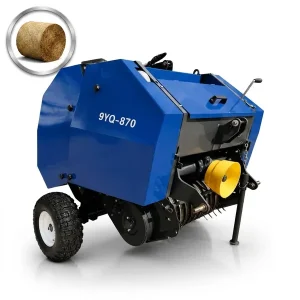
Enfardadeira de fardos redondos mini 9YQ-870
-
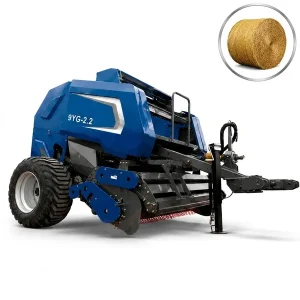
Enfardadeira de fardos redondos de câmara fixa 9YG-2.2
-
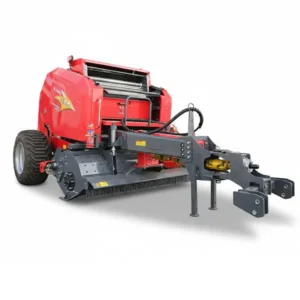
Enfardadeira de forragem – 9YG-1.25 Enfardadeira redonda para feno e silagem com enfardadeira automática de rede.
-
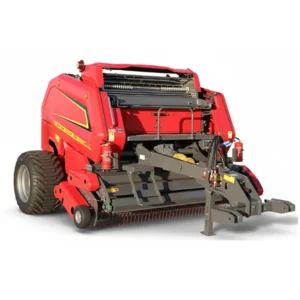
Enfardadeira de forragem – Enfardadeira redonda 9YG-2.24D S9000 (Base) para enfardamento de feno e silagem
-
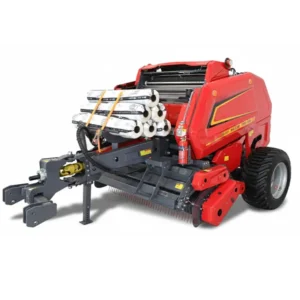
Enfardadeira de forragem – 9YG-2.24D Enfardadeira redonda S9000 Classic para feno e silagem
-
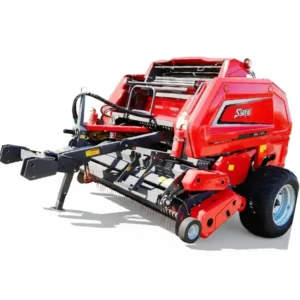
Enfardadeira de fardos redondos 9YG-2.24D S9000 Advanced | Enfardadeira para feno e silagem
-
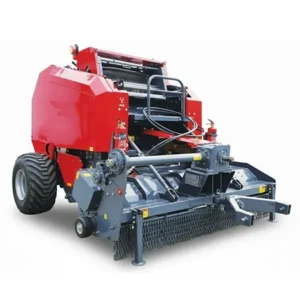
Enfardadeira de forragem – Enfardadeira redonda 9YG-1.0C | Enfardadeira com rede de amarração para fazendas nos EUA


