Safety Reference · All 9YF Models · Read Before Operating

方捆打捆机安全指南

Square balers are involved in more serious farm machinery injuries than most other PTO-driven equipment — not because they are inherently more dangerous, but because they are operated in conditions where the temptation to skip safety procedures is highest: in a narrow weather window, alone, under time pressure, with a blockage that needs clearing quickly. This guide describes every significant hazard and the specific procedure for managing each one safely.

Covers: PTO entanglement · blockage clearing procedure · guard requirements · bystander zones · transport safety · bale handling · emergency procedures

Why Square Balers Require Particular Safety Attention

Three characteristics of square baler operation create elevated safety risk compared to other farm machinery. First: the operator typically works alone with no one nearby to assist in an emergency. Second: the time pressure of a narrow baling weather window creates incentive to skip safety steps when a blockage or mechanical problem occurs. Third: the baler contains several mechanisms — the PTO shaft, the rotating pickup, the rapid-movement needle arm — that can cause serious injury in under one second if the operator is in the wrong position at the wrong moment.

Understanding specifically why each risk exists, rather than just being told to be careful, is what produces the consistent safe behaviour that prevents injuries. Every safety rule in this guide is derived from a specific injury mechanism — follow the rule and the mechanism cannot produce an injury.

Hazard 1: PTO Shaft Entanglement

Severity: Life-threatening — injury in under 0.1 seconds

A PTO shaft rotating at 540rpm completes 9 full revolutions per second. A loose sleeve, shoelace, pant leg or piece of hair that contacts a rotating PTO shaft or universal joint can be fully wrapped in less than one tenth of a second — far faster than any reflex response. The injury pattern from PTO entanglement is severe degloving, fractures and limb loss. This is not a risk that can be managed by being careful or staying alert — it requires physical barriers between people and the rotating shaft at all times.

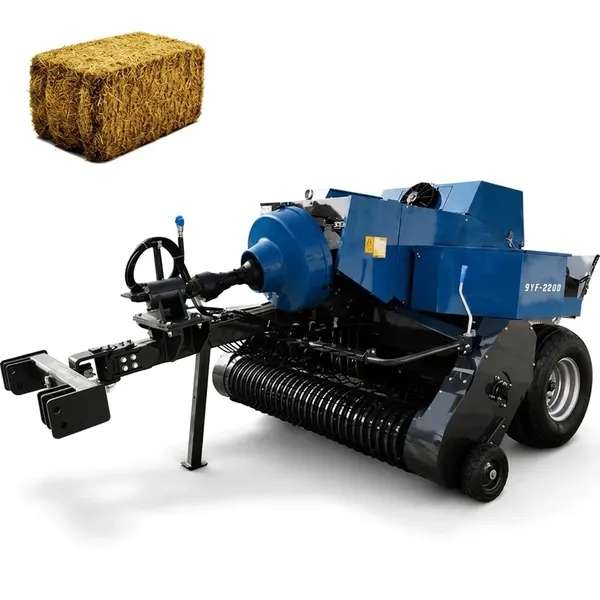
9YF-2200 square baler showing the PTO shaft guard location between the tractor PTO output and the baler input — the PTO shaft guard must be correctly fitted at both the tractor end and the baler end at all times the engine is running and must rotate freely over the shaft without contact with the shaft itself before any baling session begins

RULE 1

The PTO shaft guard must be fitted, complete and undamaged before any session begins. Check that the guard rotates freely over the shaft and is secured at both the tractor end and the baler input end. A guard that is cracked, missing a section or improperly secured provides no protection. Do not operate the machine with a damaged or incomplete PTO guard under any circumstances.

RULE 2

Never stand within arm reach of the PTO shaft while the tractor engine is running, regardless of whether the PTO is engaged or disengaged. A tractor PTO can be accidentally re-engaged by a lever movement, hydraulic drift or operator error at any time the engine is running.

RULE 3

Never approach the baler on foot while the PTO is engaged. This applies to the operator, helpers, family members and any bystanders. All routine machine checks, adjustments, lubrication and inspection must be conducted with the PTO fully disengaged and confirmed stationary.

RULE 4

Wear close-fitting clothing with no loose ends when operating a baler. No loose sleeves, no scarves, no untied shoelaces. This is not optional for persons working near the PTO shaft, pickup zone or knotter mechanism.

Hazard 2: Blockage Clearing — The Most Common Serious Injury Scenario

The Most Critical Safety Rule in Square Baler Operation

The most common category of serious square baler injury is entanglement during blockage clearing. An operator reaches into the blocked inlet or feeder zone without waiting for the mechanism to completely stop — and the mechanism, still carrying stored rotational energy from the flywheel, makes one more movement. The plunger, the feeder tine, or the rotating pickup catches the operator hand or arm before they can withdraw. The mechanism does not warn before it moves. It will always move if energy is stored, regardless of whether the PTO has been disengaged.

The only safe blockage clearing procedure — no exceptions:

1

Disengage the PTO completely — lever to full-off position. Confirm the indicator light is off on electric PTO systems.

2

Set the tractor in park or apply the handbrake — prevent any unintended forward movement that could re-load the mechanism.

3

Idle the tractor engine or turn it off — an accidental PTO re-engagement with the engine at high RPM has maximum injury potential. Idle or off eliminates both the accidental engagement risk and the stored pressure in hydraulic systems.

4

Wait a minimum of 60 seconds after PTO disengagement before approaching the baler. The flywheel and mechanism continue rotating under stored inertia after the PTO disengages. 60 seconds allows this inertia to dissipate fully.

5

Visually confirm all motion has stopped before approaching the baler from the cab. Confirm by sight — do not rely on sound alone, as some components can continue moving silently.

6

Use a hay hook or wooden implement — never hands — to clear the blockage. Reach into the inlet or feeder zone with a tool only, keeping your body and arms outside the danger zone. Never lean into the inlet or chamber to reach deeper.

The time pressure excuse: “I had to clear it quickly because the weather window was closing.” A baler injury does not respect weather windows. The 60 seconds needed for safe blockage clearing costs less than the lifetime of consequences from a serious hand or arm injury. No baling session is worth the risk of a shortcut.

Hazard 3: Knotter Guards and Moving Mechanism Exposure

The knotter mechanism contains the needle arm — a steel arm that moves rapidly through its travel path with enough force and speed to cause severe hand injury on contact. The guard covers over the knotter mechanism provide the only physical barrier between the operator and the needle arm during operation. A missing knotter guard is not an acceptable operating condition — it must be replaced before the machine is operated again.

Beyond the knotter, the pickup reel, the fork feeder and the plunger are all moving components that can cause injury on contact. All original guards and covers must be in place before any session. When servicing or adjusting the knotter with the guards removed, the PTO must be fully disengaged and confirmed stationary before any part of the knotter mechanism is touched.

If any guard is missing or damaged: order the replacement part before the next session. Contact us with your model and serial number for replacement guard availability. Temporary modifications — cardboard, wire or improvised covers — are not safety-equivalent to the original guard and should not be used as substitutes.

Hazard 4: Bystander and Child Safety

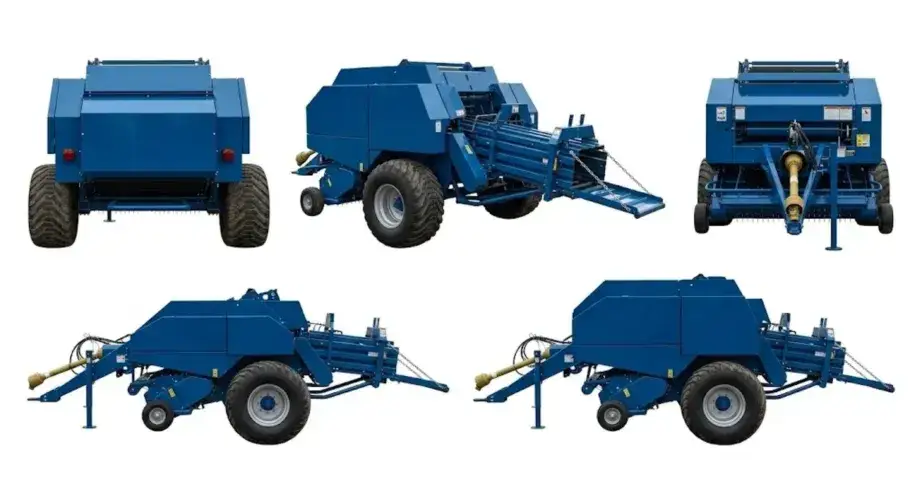
9YF series square baler models showing the bale exit chute on each model — the bale chute deposits bales behind and to the side of the machine during operation and no persons should be within 15 metres of the bale exit zone during operation as bales can exit in directions other than directly rearward and with sufficient force to cause injury to anyone struck by them

Child Exclusion — Minimum 50m

Children must never be within 50 metres of an operating baler. Do not permit children to ride on tractors or balers. Do not operate a baler when children are in the field. Children on foot near baling operations cannot be seen from the tractor cab in all directions and cannot react to moving equipment at the speeds involved.

Bale Exit Zone — Minimum 15m

No person should be within 15 metres behind and to the sides of the bale exit chute during operation. Bales weigh 18–40kg and exit the chute with momentum. An unexpected bale direction change — from a windrow curve or surface irregularity — can direct a bale toward someone standing in what appeared to be a safe position.

Pickup Zone — Clear at All Times

No person on foot should be in front of the baler within the pickup zone during operation. The rotating tines and the machine forward motion create entanglement and strike hazards for anyone on the ground in this area. The operator should visually clear the pickup zone before engaging forward.

Hazard 5: Road Transport Safety

Transporting a square baler on public roads requires specific preparations that are distinct from field operation safety. A baler on the road is a towed implement on a two-point hitch — it follows the tractor through turns and braking events with its own momentum and inertia.

TRANSPORT 1

Confirm the hitch pin is secured with a locking clip before any road transport. A hitch pin without a clip can vibrate loose on rough road surfaces, releasing the baler.

TRANSPORT 2

Fit slow-moving vehicle (SMV) marker and ensure all lights are functioning if transporting on public roads. Regulations vary by state — check your state requirements for implement lighting on public roads.

TRANSPORT 3

Maximum transport speed: 20 km/h or per operator manual specification. Higher transport speeds create stability problems on the hitch and increase stopping distance beyond what most tractor-baler combinations can manage safely.

TRANSPORT 4

Fold or lock any transport-position fold required by the model before road movement. The baler must be in the transport position with the pickup raised and any fold mechanism in the locked transport position.

Hazard 6: Bale Handling and Stack Safety

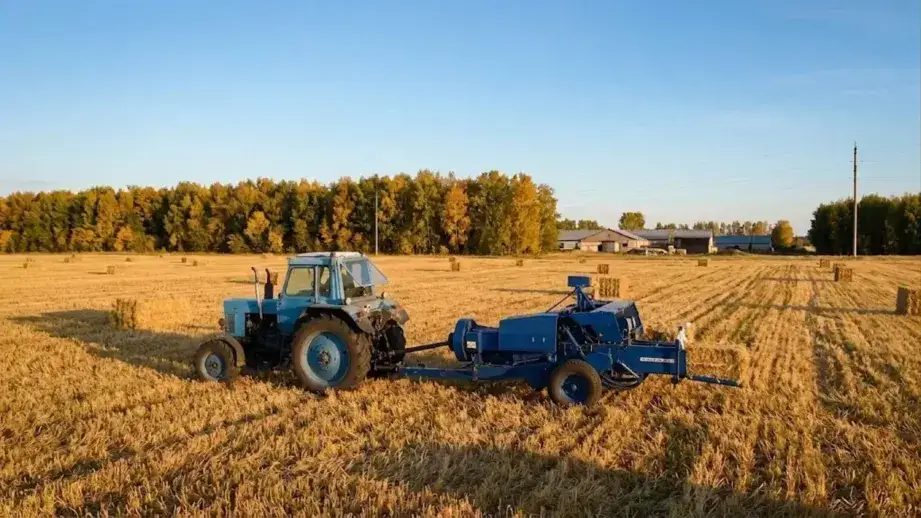
small square bales waiting for loading in a field — bale handling and stacking safety requires using correct manual handling technique for bales up to 30kg using mechanical assistance for heavier bales and building stable stacks that are no more than 6 layers high with a stable base pattern that does not allow bale movement or stack collapse under normal barn conditions

Bale handling injuries are the second most common category of hay baling injuries after entanglement incidents. Heavy bales, awkward lifting positions and rushed loading under time pressure create significant musculoskeletal injury risk.

Safe bale weight for manual handling: a single person should not lift bales above 25kg manually without mechanical assistance. At 26–40kg, use a two-person lift or a bale hook with mechanical advantage. Above 40kg, mechanical handling only.
Stack stability: stack in alternating pattern (rows crossing at each layer). Maximum safe stack height without mechanical restraint: 6 layers. Inspect stack base before adding to height — any loose or tipped bales in the base require correction before stacking continues.
Wet hay stacks: bales baled above 18% moisture and stacked immediately can heat and shift as the bale dimensions change during curing. Leave a gap between fresh high-moisture bales and do not stack more than 3 layers high until moisture has stabilised below 18%.

Hazard 7: Alone Operation — Emergency Planning

Most square baling is done by a single operator — alone in a field, sometimes at a distance from assistance. If an injury occurs, the response time before help arrives determines the outcome. Plan for emergencies before they occur:

PLAN 1

Always carry a fully charged mobile phone in an accessible pocket — not in the tractor cab when you are working on the baler outside the cab. A phone left in the cab is unreachable if an entanglement occurs at the baler.

PLAN 2

Tell someone where you are baling and when you expect to return. If you do not return or check in by the specified time, they should be able to give your location to emergency services. This is particularly important when baling in remote fields.

PLAN 3

Know your field location for emergency services. Rural field addresses are often unknown even to the landowner — know the GPS coordinates or the nearest intersection and mile marker that emergency services can use to find your field. Save this in your phone before the session.

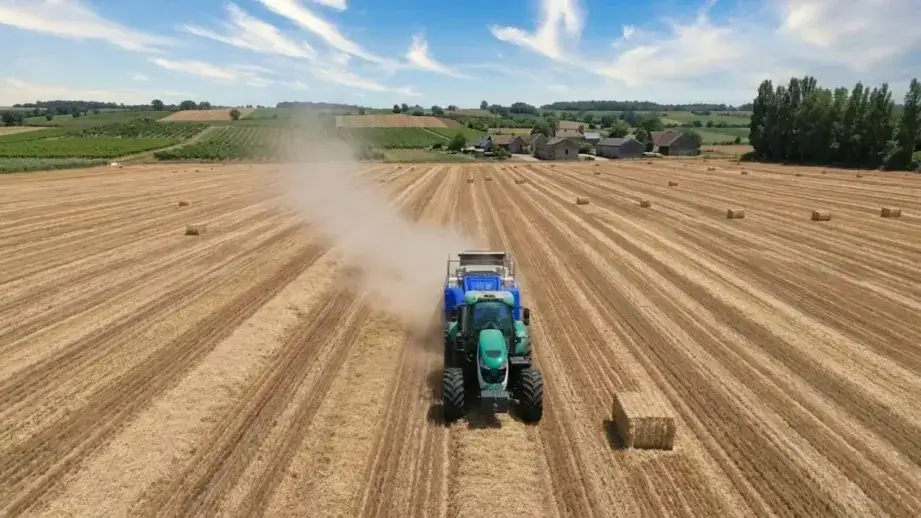
square baler operating in a hay field showing the typical single-operator baling scenario where the operator works alone in a remote field location — planning for emergencies before they occur including carrying a charged phone knowing the field location for emergency services and informing someone of your baling location and expected return time are the three most important actions a solo baler operator can take to reduce the consequence of any incident

PTO Shaft Safety Specifications


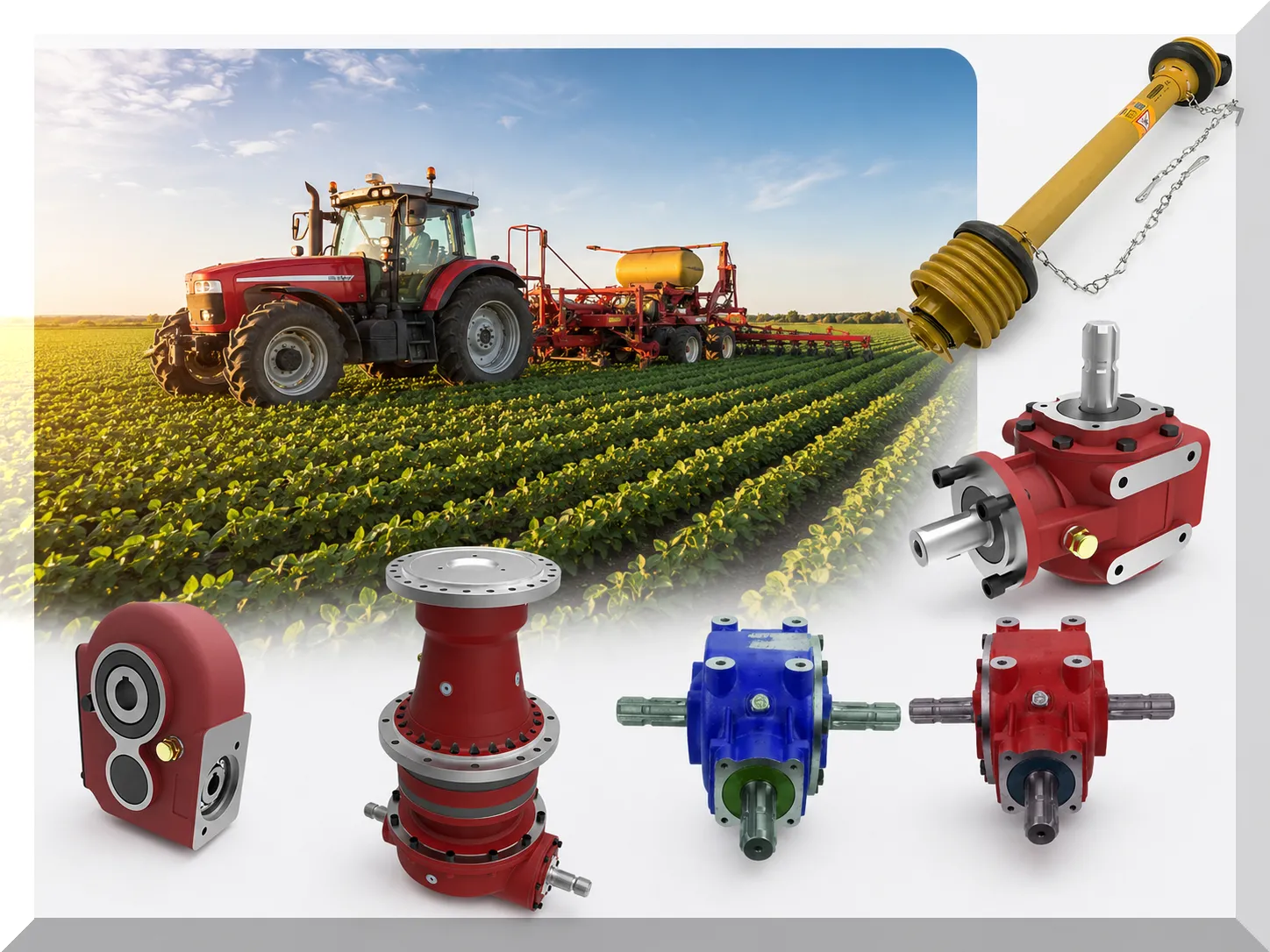
agricultural gearbox and PTO shaft specifications showing the guard requirements and correct shaft length for safe baler operation — an incorrectly specified PTO shaft that is too long can contact the tractor in turns creating a sudden uncontrolled motion event and one that is too short can disengage completely from the tractor PTO output

PTO shaft safety specifications for all 9YF models: 农业变速箱和动力输出轴规格

An incorrectly specified PTO driveshaft — wrong length for the tractor-to-baler distance, wrong angle rating for the hitch geometry — creates a secondary mechanical hazard beyond entanglement: a shaft that contacts the tractor during turns can cause sudden uncontrolled tractor movement. Full specifications: PTO传动轴和CV接头尺寸指南.

Frequently Asked Questions — Square Baler Safety

How long does the mechanism keep moving after I disengage the PTO?+
The rotational energy stored in the flywheel and drive train continues rotating the mechanism for 30–90 seconds after PTO disengagement depending on the load at the time of disengagement and the condition of the mechanism. Stopping suddenly with a blockage in the inlet means more stored energy to dissipate — the mechanism may move for a longer time after PTO disengagement than after a clean stop. The 60-second minimum wait in the safe clearing procedure is derived from the worst-case scenario — a blockage stop with full flywheel energy. If you are uncertain whether 60 seconds has passed, wait longer. There is no downside to waiting 90 or 120 seconds except time — and the difference between an injury and no injury is whether the mechanism moved while a hand was inside the machine.
Is it safe to let children ride on the tractor while baling?+
No. Children on a tractor during baling operation are at risk from multiple hazards: if the tractor stops suddenly for any reason, a child can fall forward into controls or off the seat; if a PTO or mechanism failure creates a sudden event, the operator cannot respond safely while managing a child; and most modern farm tractors are designed for one operator, with no safe position for a passenger on any baler tractor. Beyond the safety risk, OSHA regulations restrict the presence of children under 14 on agricultural equipment in commercial operations. Keep children out of the field during baling operations — the baling field is not a safe environment for any non-operating person regardless of how careful and experienced the operator is.
My knotter guard is cracked but still in place. Can I finish the season before replacing it?+
A cracked guard provides less protection than an intact guard — at some point of cracking, a guard may fail completely during operation, either falling away from the protected mechanism or fracturing into pieces that could cause secondary injury. Whether to finish the season with a cracked guard is a judgment about how severe the crack is: a hairline crack in a non-load-bearing section of a heavy plastic guard may have limited risk of full failure during the remaining season; a crack that has progressed through a load-bearing section or through more than 30% of the guard width suggests the guard should be replaced before further use. Contact us with your model number and the guard location — we will advise on parts availability and whether the specific damage level presents an immediate risk requiring replacement before the next session.
What should I do if I witness a baler entanglement injury to someone else?+
If you witness a baler entanglement injury: call emergency services (911) immediately before attempting any other action. Do not attempt to disentangle the victim while the mechanism is still moving — wait for complete stop and confirm before approach. Do not attempt to reverse the mechanism to disentangle — this is as likely to increase the injury as to reduce it. Keep the victim still and calm while waiting for emergency services if they are conscious. Do not attempt to remove clothing that is entangled in the mechanism — this task requires cutting tools and professional medical management. Your role is to call for help, keep others clear of the machine, and keep the victim still. The emergency services have the training and tools for extraction — the most important thing you can do is get them to the scene as quickly as possible.
Is there a safe way to check if the baler is still moving without getting close?+
Yes — the safest method is to observe the pickup reel or the flywheel (if visible through a guard gap) from the tractor cab or from a safe distance of at least 3 metres while remaining clear of the PTO shaft and machine sides. Both the pickup reel and flywheel are large rotating components that are visible from a distance and clearly still when stopped. Do not try to check by touching the machine while any movement at all is visible. An alternative check: watch the pickup tines. Any visible tine movement means the mechanism still has energy and is not safe to approach. Only when all visible movement has completely stopped for at least 10 additional seconds should you leave the tractor cab and approach the machine.
Is a helper on the ground behind the baler acceptable to help direct bales?+
No — a helper walking behind the baler in the bale exit zone during operation is not acceptable. Bales exit with force and in directions that cannot always be predicted. A helper on foot is also in the zone where the baler can reverse over them if the operator stops and reverses — the reverse safety check from inside a tractor cab does not provide the same visibility as a clear field. For bale collection and loading, the correct approach is a separate following tractor with a bale wagon or loader — not a person on foot. If a helper must work near the bale exit zone, the baler must be completely stopped (PTO disengaged, engine off, mechanism confirmed stationary) before the helper approaches the chute area. Resume baling only after the helper has moved to a safe distance.
What personal protective equipment should a baler operator wear?+
For tractor cab operation: no specific PPE is required when the operator is inside the cab. However, operators should wear hearing protection even inside cabs during extended baling sessions — the cumulative noise exposure from machinery over multiple sessions can cause hearing damage over years of baling. For work on the baler outside the cab: close-fitting work clothing with no loose ends (no loose sleeves or scarves); work gloves when handling crop or bale rope; sturdy work boots with ankle support for moving over rough field surfaces. Eye protection is advisable when cleaning the knotter mechanism or when adjusting components in dusty conditions. For bale loading and stacking: back support and correct lifting technique are more important than specific PPE — mechanical assistance for bales above 25kg reduces musculoskeletal injury risk more than any protective equipment.
Can a new operator learn to bale safely without formal training?+
A new operator should receive hands-on instruction from an experienced baler operator before operating alone — specifically on the safe blockage clearing procedure, PTO engagement and disengagement, and the bystander exclusion zones. Reading the operator manual is required but not sufficient on its own — the physical habits of checking the PTO is off, waiting for complete stop before approaching, and not reaching into moving mechanisms need to be established under supervision before they become automatic. One session of supervised operation with an experienced operator who demonstrates and explains each safety procedure is the minimum appropriate introduction for a new baler operator. Your local county agricultural extension office or Farm Bureau may offer farm machinery safety training — contact them for resources in your area.

Safe and Productive Baling Starts With the Right Machine

全部 9YF系列 models are shipped with a complete guard set and include operator manual safety sections specific to each model. Contact us for operator manual requests or safety-related technical questions.

编辑:Cxm