
Why Whole Stalks Compress Poorly in a Standard Bale Chamber
The Void Problem
A standard square bale chamber compresses the incoming crop material by pushing it with a reciprocating plunger — essentially a large flat press that pushes material toward the end of the growing bale. For flexible material like hay, grass and wheat straw, this compression works well: the stems bend and interlock as the plunger advances, filling the cross-section uniformly and producing a dense, stable bale.
Rigid, thick-stemmed materials behave differently. A corn stalk at 14% moisture has a woody stem 15–25mm in diameter that does not bend under plunger pressure — it fractures or bridges across the chamber, creating a structural void on both sides of the stem. Where hay produces a continuous compressed mass, whole corn stover produces a compressed mass with hollow channels running parallel to the stalk direction throughout the bale. These channels reduce average bale density, reduce bale shape stability and produce a bale that loses its rectangular cross-section progressively in storage as the internal void structure redistributes load.
At standard plunger settings, corn stover bales in a non-shredding machine typically reach 70–80% of the theoretical maximum density achievable from the same volume of material. Shredded stover consistently reaches 88–96% of theoretical maximum density — a 10–25% density improvement that translates directly into fewer bales for the same crop weight and more tonnes per unit of barn storage.
What a Square Baler Shredder Does to the Crop
Position in the Material Flow
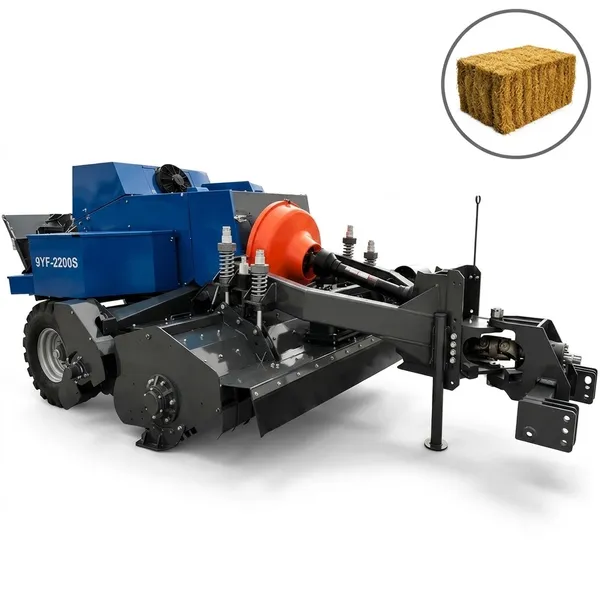
The shredder in the 9YF-2200S and 9YFS-2.2 is positioned between the fork feeder and the compression chamber inlet — after pickup and feeding, before compression. Material moves from the hammer-claw pickup into the fork feeder, which pushes it into the shredder zone. The shredder mechanism uses rotating blades or cutters that break and shred the material before it passes into the chamber. The shredded output is shorter, finer and more uniform in fragment size than the incoming whole stalks.
Single-Stage Shredder: The 9YF-2200S
How the Single Stage Works
The single-stage shredder on the 9YF-2200S uses one set of rotating blades or hammers that break incoming material as it passes through the shredder zone. Corn stalks and sorghum stems at typical harvest moisture (12–20%) are broken into segments of approximately 50–100mm length depending on the clearance setting and forward speed. These broken segments no longer bridge across the bale chamber in the same way whole stalks do — they enter the compression zone in a more random orientation and pack with fewer void zones.
The single shredder produces a meaningful density improvement over a non-shredding machine in hard-stalk crops. Typical corn stover bale density improvement: 12–20% at equivalent plunger settings. In terms of bale weight: a 20kg non-shredded corn stover bale at the same bale length becomes a 23–24kg bale with single-stage shredding — the same volume bale weighs more because the density is higher. For producers selling by weight or where bale density affects storage efficiency, this improvement has direct economic value.
The 9YF-2200S also includes a handheld color touch screen that monitors the bale cycle, giving the operator real-time feedback on bale formation quality — useful for detecting windrow density changes that affect density uniformity before a series of light bales is produced.
Dual-Stage Shredder: The 9YFS-2.2
What the Second Stage Adds
The 9YFS-2.2 uses two sequential shredder stages — material passes through the first stage, which breaks large stalks into intermediate segments, and then through the second stage, which shreds those intermediate segments into shorter, finer fragments. The dual-stage output is typically 20–50mm fragment length compared to the 50–100mm of single-stage shredding from the same crop input. Shorter, finer fragments pack with even fewer voids than single-stage output.
The density improvement over single-stage is crop-dependent. In moderately hard crops like standard corn stover at 14–18% moisture, the difference between single and dual shredding is modest — perhaps 5–8% additional density improvement. In very hard, thick-stemmed crops like mature sorghum at low moisture or dense cotton stalks, the dual stage provides more meaningful improvement because the first stage alone does not fully break the largest stem diameters, leaving fragments that the second stage reduces to the target range.
The 9YFS-2.2 also adds a negative-pressure fan alongside the dual shredder — the fan removes dust and soil particles from the crop stream between the pickup and shredder stages. The combination of dual shredding and fan cleaning addresses both the density limitation and the contamination limitation of non-shredding, non-cleaning machines in a single machine pass.

Feed Palatability Benefits of Shredded Bales
Why Fragment Length Matters for Livestock Feeding
The same properties that make shredded stalks compress better in the bale chamber also change how livestock interact with the feed at consumption. Whole or coarsely broken corn stalks in a non-shredded bale are sorted by cattle in TMR feeding — animals consume the leafy and finer material first and leave the hard stalk sections. This sorting behavior reduces the effective utilization of the stover bale and increases the volume of unconsumed residue that must be removed from the feeding area.
Shredded stover with 20–50mm fragment length mixes more uniformly in a total mixed ration (TMR) and shows less sorting behavior at the feed bunk — because the fragment size approaches the particle size of the other ration ingredients, making selective eating less effective. The result is higher dry matter intake per unit of stover offered and less feed waste per bale fed.
For dairy operations where TMR precision matters for milk production response to the ration, the consistency of shredded stover as a ration ingredient is valued beyond just its raw energy content. A bale of whole-stalk stover and a bale of shredded stover may have the same total dry matter, but the shredded bale contributes more predictable dry matter intake to the ration on a day-to-day basis.
For beef stocker operations feeding corn stover as a winter maintenance ration, shredded bales reduce the labor involved in removing unconsumed stalk sections from feedlots and reduce the risk of hardware ingestion from stalk sections with sharp fractured ends.
PTO Power Demand: What the Shredder Costs to Run
The shredder mechanism draws substantial additional PTO power compared to a non-shredding baler — this is the primary reason the minimum tractor requirement jumps from 50HP to 99HP between the spring-tooth standard models and the shredder-equipped models. The shredder load is not constant: it varies with crop hardness, crop moisture and material feed rate per forward metre of travel.
| Condition | Single Shredder (9YF-2200S) | Dual Shredder (9YFS-2.2) |
|---|---|---|
| Light hay or straw | 10–18HP | 18–28HP |
| Standard corn stover | 18–28HP | 26–38HP |
| Dense sorghum or cotton stalks | 24–35HP | 32–48HP |
These shredder loads add to the combined pickup, plunger and knotter PTO draw of the rest of the machine. A 9YF-2200S baling dense sorghum stalks can approach 80–90HP total PTO draw at peak load — which is why the comfortable operating range for the shredder models in hard-stalk conditions is 110–130HP PTO, even though the rated minimum is 99HP.
Shredder Maintenance: Blade Wear and Service Schedule
Blade and Clearance Inspection
The shredder blade edges wear progressively with use, particularly in abrasive conditions with sandy soil contamination in the material stream. A dull blade tears rather than cuts, which requires more PTO force per unit of material processed and produces less consistent fragment lengths. Inspect blade edges for rounding and notching at the start of each season and at mid-season in heavy stover use. Replace blade sets before they reach the point of visible edge rounding rather than waiting for power consumption to visibly increase — at that point the blade-to-counter-blade clearance has typically already shifted beyond the specification range.
Clearance Setting
The gap between the blade tip and the counter-blade surface determines the maximum fragment size output and the power consumption of the shredder. A tighter clearance produces shorter fragments and higher power consumption; a wider clearance produces longer fragments and lower power consumption. Adjust clearance per the operator manual for the crop type being baled — tighter for maximum processing of hard sorghum, wider for lighter straw where over-processing wastes energy. Both clearances must be set equally on both sides of the shredder drum to maintain even material flow across the full width of the feeder.
Blockage Management
Very wet material (above 23% moisture) can mat and bridge in the shredder zone rather than passing through freely. If the machine shows reduced output or uneven bale density in unexpectedly wet windrow sections, reduce forward speed to lower the material feed rate per shredder cycle. If the shredder blocks, disengage the PTO before attempting to clear the material — never attempt to clear a shredder blockage with the PTO engaged.
When You Do NOT Need a Shredder
Grass, alfalfa, clover and mixed hay are flexible-stem crops that compress uniformly without shredding at their natural stem diameters. A shredder adds cost, power demand and maintenance without measurable density improvement in these crops.
Cereal straw stems are much smaller in diameter than corn or sorghum stalks and compress adequately under normal plunger pressure. A non-shredding 9YF-1700/1900/2200 produces dense, well-shaped straw bales without a shredder across all standard wheat and barley straw conditions.
If your tractor produces less than 99HP at the PTO, the shredder models are outside your power class regardless of crop type. A 65HP tractor runs the non-shredder 9YF-2200 comfortably but cannot safely operate the shredder models in continuous use.
PTO Driveline Specifications for Shredder Model Balers
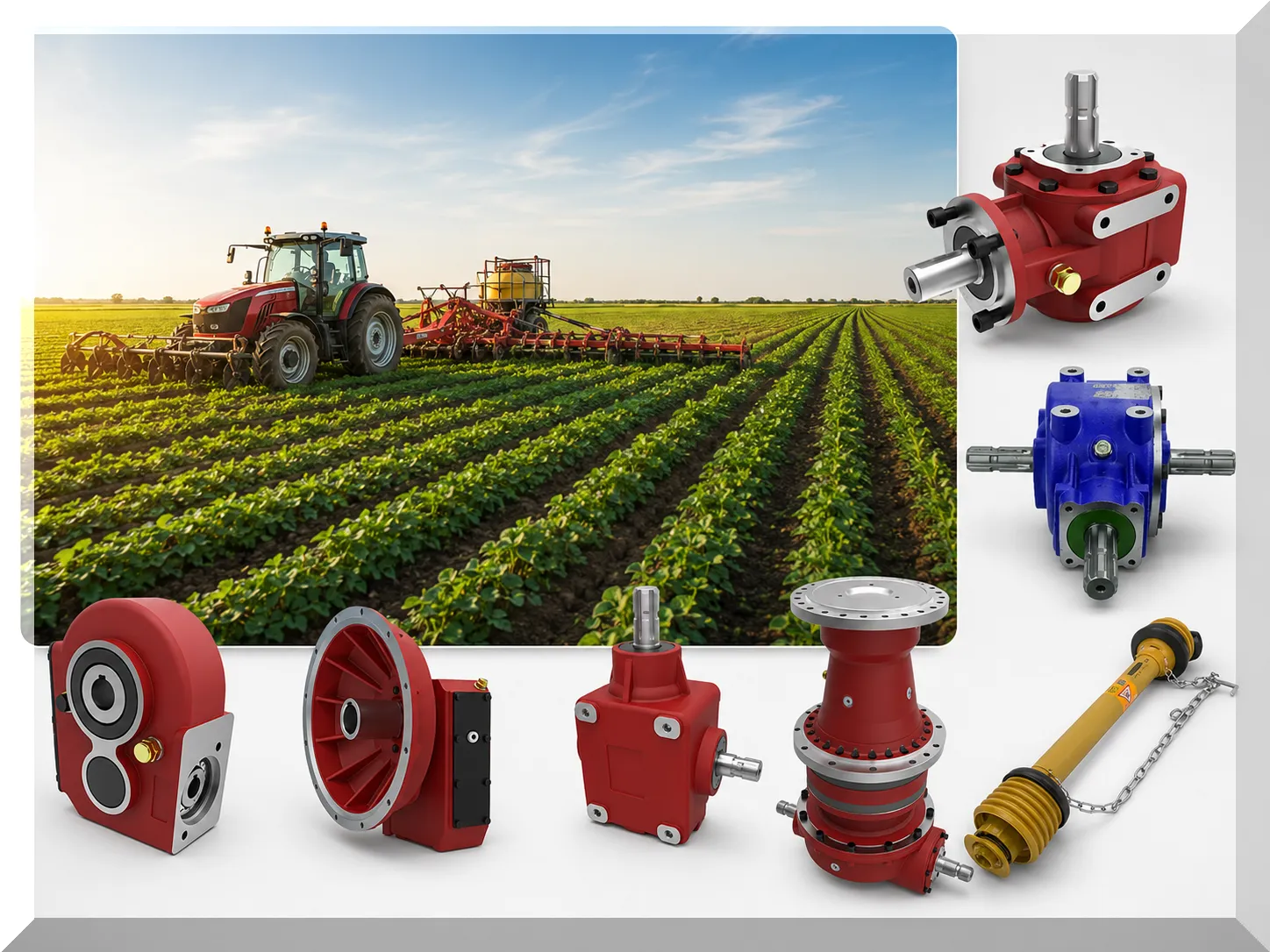
Gearbox torque ratings and shaft specifications for 99–140HP shredder balers: مواصفات علبة التروس الزراعية وعمود نقل الحركة
At 99–130HP PTO, the driveshaft length and CV joint angle specifications differ from the 50HP class. The higher torque load also changes the slip clutch specification needed to protect the shredder from shock-load damage during hard-stalk blockages. See the دليل تحديد حجم عمود نقل الحركة PTO ومفصل CV for the applicable specifications.
Frequently Asked Questions — Square Baler Shredder
Choose the Right Processing Level for Your Crops
Standard hay and straw: the 9YF-1700/1900/2200 (no shredder, 40–50HP). Corn stover, sorghum, cotton: the 9YF-2200S (single shredder, 99HP) or 9YFS-2.2 (dual shredder + fan, 99HP). Tell us your crops and we will confirm the right model.
شركة أمريكا إيفر-باور لمعدات بالات العلف المحدودة · 1401 شارع 21، جناح R، سكرامنتو، كاليفورنيا 95811
المحرر: سي إكس إم


