
Why Baling Moisture Is the Most Controllable Quality Variable in Hay Production
Of all the variables that determine whether a hay crop reaches its quality potential — species, fertility, cutting timing, curing method, storage — moisture at baling is the one that operators encounter as a real-time decision on every single cutting day. You cannot change the species after seeding, cannot recover a rain-damaged windrow, and cannot undo heat damage in a finished bale. But you can choose, within a 2–4 hour window each cutting day, to bale at the right moisture or at the wrong one. That decision, repeated across every cutting of every season, is the primary quality variable under continuous operator control.
The Science of Hay Drying: What Is Actually Happening in the Windrow
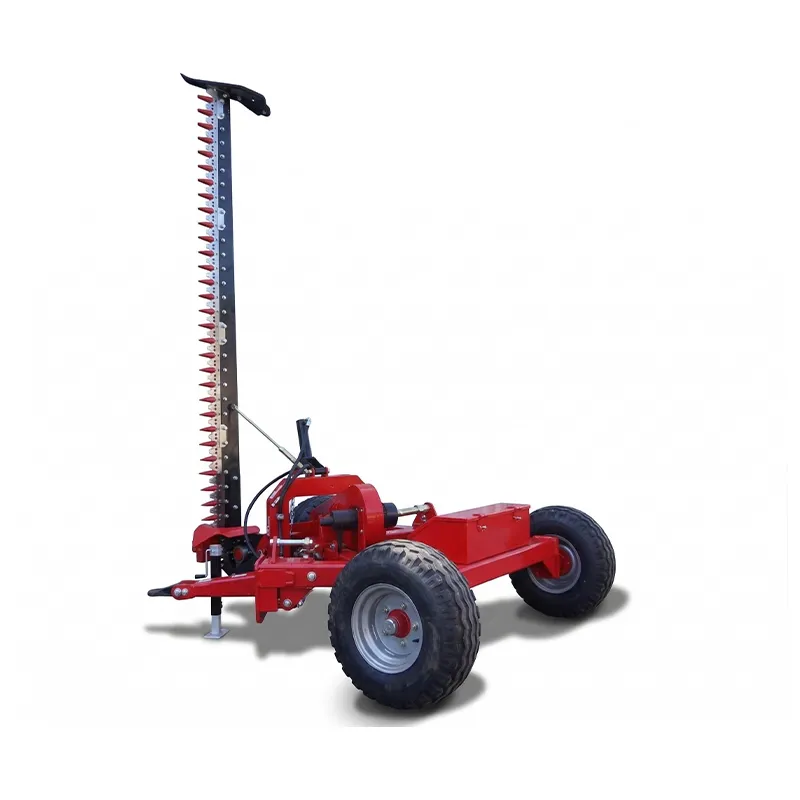
Cut hay loses moisture in two distinct phases with different rates and different management responses. Understanding which phase the windrow is in at any given time explains why the same field can look bone-dry on the surface at 10 AM and still read 20% at the core — and why an operator who bases the baling decision on surface appearance alone bales wet hay on clear days every season.
Immediately after cutting, the plant loses its vascular transport system and begins to desiccate. The water held loosely in the intercellular spaces evaporates rapidly — this is the moisture that drops from the plant’s cut moisture (typically 70–85%) down to approximately 30–40% within the first 4–8 hours on a clear day. This phase is visible: the windrow goes from bright green and shiny to dull green. Conditioning and tedding primarily accelerate this phase by disrupting the waxy leaf cuticle that slows surface evaporation.
Once the easily evaporated surface moisture is gone, the remaining moisture is bound within the plant cell walls and must diffuse through the cell structure before it can evaporate. This phase takes significantly longer — moving from 30–35% moisture down to the 12–16% baling target typically requires 12–24 additional hours of drying time depending on temperature, humidity, and windrow density. This is the phase where windrow management (adequate spreading and re-raking) and weather conditions determine the final timeline. Crucially, the surface of the windrow completes Phase 2 hours before the interior — creating the core-vs-surface moisture differential that makes surface-reading meters dangerously misleading.
Target Moisture Ranges by Crop, Bale Type, and Market Destination
The appropriate baling moisture range is not a single universal number — it shifts by crop species (due to differences in stem density and internal respiration rate), bale type (larger bales trap more heat for longer), and intended market (horse buyers require drier hay than cattle operations). The ranges below represent the practical decision thresholds that experienced operators in each crop region use as their field standards.
| Crop / bale type | Minimum safe | Ideal range | Max without preservative | Max with preservative |
|---|---|---|---|---|
| Alfalfa — 4×4 or 4×5 bale | 12% | 14–16% | 18% | 22–24% |
| Alfalfa — 5×5 or 5×6 bale | 12% | 14–15% | 16% | 20–22% |
| Wiesenlieschgras | 11% | 13–16% | 18% | 22% |
| Bermudagras | 11% | 13–16% | 18% | 21% |
| Mixed grass / pasture hay | 12% | 14–17% | 20% | 24% |
| Straw (wheat, oat, barley) | 10% | 12–16% | 18% | 20% |
| Baleage / haylage (wrapped) | 35% | 45–60% | No upper limit — higher moisture ferments better | |
Where to Sample: Why Surface Readings Mislead and Core Readings Decide
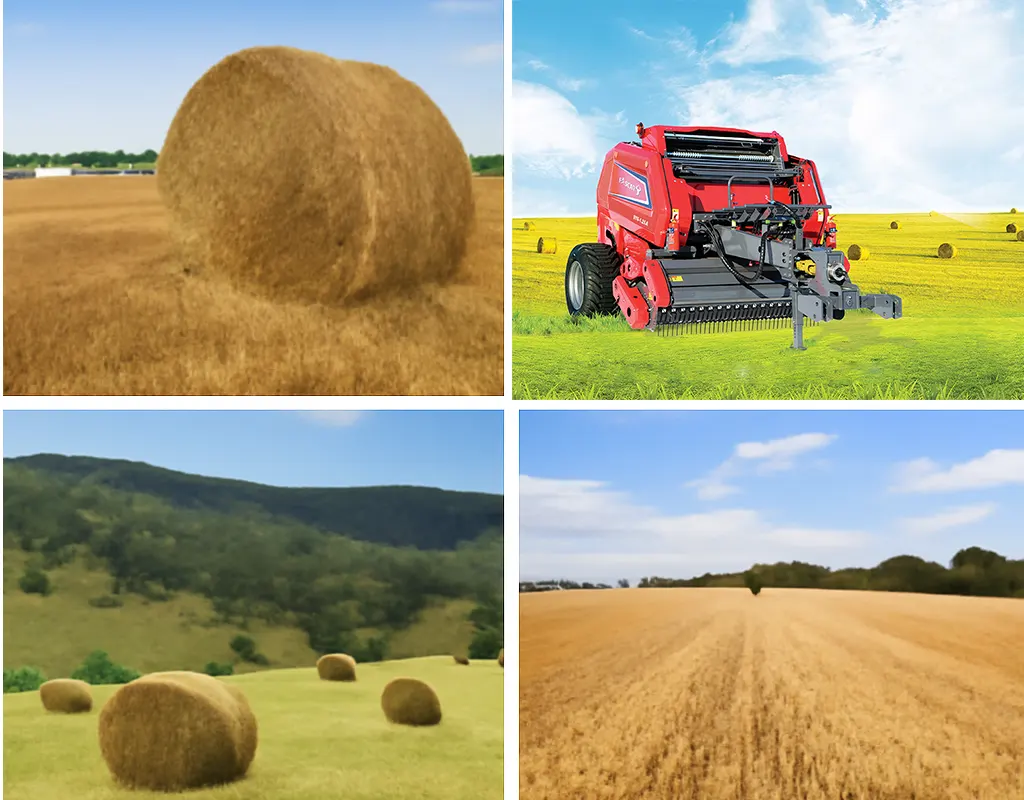
The single most common moisture measurement error in hay production is not using the wrong meter — it is measuring the wrong location. The outer 1–2 inches of a windrow dry 3–6 hours faster than the interior under typical field conditions. A surface probe reading at 2 PM on a clear summer day may show 13%, while the core of that same windrow reads 22%. Baling on the surface reading produces a bale that appears dry, triggers the density sensor normally, wraps cleanly — and then heats internally for 72 hours until the core moisture equilibrates through the bale, driving mold growth that the operator doesn’t discover until the bale is opened at feedout.
Insert an 18–24 inch probe meter into the center of the windrow, perpendicular to the windrow axis, reaching the geometric core (not just the top surface). Take readings at three locations along the windrow — at the lightest-looking spot, the heaviest spot, and the midpoint. The baling decision should be based on the highest reading of the three, not the average. Baling at the average moisture when the heaviest windrow section reads 21% produces wet bales from that section even though the average looks acceptable.
Take initial readings 4–6 hours before your expected start time to establish the drying trajectory. Take a second set of readings 2 hours before expected baling time. Take a final reading at the first bale immediately before engaging the drive system. As conditions change during the baling day — wind picks up, clouds roll in, temperature drops late afternoon — the drying rate changes and the initial moisture trajectory may not hold. Re-sample every 45–60 minutes during active baling when conditions are variable.
Soil types, drainage patterns, and stand density vary across most fields, producing windrows that dry at significantly different rates in different zones. Low spots, heavy-stand areas, and north-facing sections may run 5–8 percentage points wetter than dry knolls and thin-stand areas at the same time. Sample across the field’s variability, not just from one accessible windrow near the gate. A field where any section reads above the target is a field that should not be baling yet.
Moisture Measurement Tools: Accuracy, Cost, and Best Application for Each
Four categories of moisture measurement tools are available to hay producers, ranging from a $15 microwave oven method to $2,000+ baler-mounted sensor systems. Each has a specific accuracy range, practical application context, and failure mode that determines when it is the right tool and when it will produce a measurement that misleads the baling decision.
| Tool type | Accuracy (±%) | Cost range | Measures core? | Beste Anwendung |
|---|---|---|---|---|
| Oven / microwave dry-weight method | ±0.5–1% | $0–$50 | Yes (sample-based) | Calibration standard; not practical for real-time field decisions |
| Long-probe insertion meter (18–24 in) | ±2–4% | $80–$280 | Yes (windrow core) | Recommended for field baling decisions — most accurate practical tool |
| Handheld capacitance meter (surface) | ±3–6% | $40–$180 | No (surface only) | Quick relative comparison; not reliable for baling-go/no-go decisions |
| Baler-mounted NIR sensor | ±1–3% | $800–$2,500 | Partial (intake zone) | High-volume operations; continuous monitoring; alerts operator to wet sections |
| Hay preservative applicator sensor | ±3–5% | Included with applicator | Partial | Automates preservative application rate; not a standalone baling decision tool |
Weigh a 100g sample of windrow material (mixing stem and leaf material from the core). Place in microwave on low-medium power for 2 minutes, weigh again. Repeat 30-second intervals until weight stabilizes. Moisture % = (original weight – dry weight) ÷ original weight × 100. This is the only field-accessible method that measures true core moisture to ±1% accuracy — use it as a calibration check against your probe meter at the beginning of each cutting season.
Probe meters require calibration for each crop species because the electrical capacitance of crop material at equivalent moisture levels differs between alfalfa, grass, straw, and corn stover. A meter calibrated only for alfalfa will systematically over- or under-read on other crops. Most quality probe meters include species-specific calibration modes — verify you are using the correct mode before relying on readings for a baling decision. Cross-check with a microwave method sample once per cutting season to verify calibration accuracy.
Baling Too Wet: What Happens Inside the Bale After the Gate Closes

Once a bale is formed and ejected, the moisture-related processes inside it are largely beyond the producer’s control. The outcome — acceptable cured hay, mold-damaged hay, or heat-damaged hay — is determined by what moisture level was present at baling. Understanding the timeline and thresholds makes it possible to recognize a bale that has been baled too wet before storage decisions compound the problem.
The complete dry matter loss prevention protocol — including storage pad design, stacking patterns, and the monitoring schedule for newly baled hay in the critical first 30 days — is in the Leitfaden zur Lagerung von Rundballen.
Baling Too Dry: The Quality Loss That Happens Before the Bale Forms
While the risks of baling too wet receive more attention — fires and mold are dramatic — baling too dry destroys value more quietly and more consistently in many operations. Over-dry hay is not a storage problem; the damage is done in the field before the baler reaches the windrow, and it shows up immediately at the market as rejection or price reduction rather than as a storage loss weeks later.
When hay is raked, tedded, and baled at moisture below 12%, the leaf tissue becomes brittle and fractures at the stem-leaf junction under mechanical agitation. In alfalfa, leaves contain approximately 70% of the total crude protein in the plant — shattering the leaves during raking and pickup produces a bale that is enriched in low-quality stem material and depleted of high-quality leaf material. Each percentage point of leaf loss from over-drying reduces the bale’s effective CP by approximately 0.3–0.5 percentage points.
Over-dried hay produces visible dust when disturbed at feeding — a direct consequence of fractured leaf cells releasing sub-micron particles. This is the most common reason horse buyers reject or discount hay regardless of the forage test result. A 4×5 bale that tests at 14% CP but was baled at 10% moisture will shake out a visible dust cloud that a horse owner will photograph and use as grounds for returning the load. The forage test result is irrelevant when the buyer’s sensory inspection produces a rejection before the test is reviewed.
Carotene (the green pigment and vitamin A precursor in hay) is photosensitive and oxidizes under UV radiation and elevated temperature. Over-dried hay exposed to sun for extended field time loses carotene rapidly — the hay turns from bright green to yellow-green, a color change that buyers associate with low quality even when the protein content is unchanged. Hay baled at 14% on a slightly cloudy day retains substantially more carotene than hay baled at 10% after an additional 4 hours in direct sun.
Propionic Acid Hay Preservatives: When the Math Justifies Application
Propionic acid and buffered propionic acid preservatives work by creating a low-pH environment in the bale exterior that inhibits mold growth, allowing hay to be safely baled at moisture levels 5–8 percentage points above the untreated maximum. The question is not whether preservatives work — they reliably do — but whether the cost of application is recovered in the production flexibility and quality preservation they enable.
| Preservative type | Safe baling range | Anwendungsrate | Cost per 4×5 bale |
|---|---|---|---|
| None (untreated) | Up to 16–18% | — | $0 |
| Propionic acid (straight) | Up to 22% | 0.5–0.8% of bale weight | $4–$7 |
| Buffered propionic acid | Up to 24% | 0.7–1.0% of bale weight | $5–$9 |
| Organic acid blend (ammonia/propionic) | Up to 25% | 0.8–1.2% of bale weight | $6–$11 |
A cutting forecast to receive rain within 24–36 hours that is currently at 20–22% moisture — the preservative cost ($5–$9/bale) is far less than the loss of an entire cutting to rain damage if drying continues. A late-summer cutting where overnight humidity rises above 80% and the only baling window is early morning when windrow core moisture is 19–21%. A high-value horse-market cutting where the quality justifies any additive that protects leaf retention and prevents mold. Late-harvest cuttings in northern regions where the growing season is ending and waiting another day for drying risks frost damage to the standing crop.
Routine use as a substitute for correct drying management — propionic acid does not improve the quality of hay that was baled wet; it only prevents mold. Heat damage, protein binding, and DM loss from respiration still occur in treated bales above 20% moisture. Preservatives applied to hay above 25% moisture provide incomplete protection — the volume of active mold growth exceeds the acid’s capacity to suppress at recommended rates. Treating as a safety net for chronically mismanaged moisture decisions produces consistently lower quality hay with higher production costs than simply learning to read windrow moisture accurately.
The Field Decision Framework: From First Sample to First Bale
A systematic baling moisture decision process — applied consistently on every cutting day — eliminates the guesswork that produces moisture-related losses. The decision at each stage is binary: proceed or wait. The logic at each stage is based on actual measurements, not on elapsed time, field appearance, or a neighbor’s recommendation about what constitutes “ready.”
Early morning assessment (5–7 AM)
Take probe readings at three windrow locations — lightest, heaviest, midpoint. If the heaviest reading is above 22% with no rain in the 24-hour forecast, begin baling day planning with a possible preservative application. If the heaviest reading is above 30%, the crop is not baling today under any scenario — focus on maximizing drying rate for tomorrow. Record the readings and time; this establishes the starting point for drying rate projection.
Pre-baling check (1–2 hours before target start)
Re-probe the same three locations. Calculate the drying rate: if the crop dropped from 23% at 6 AM to 18% at 10 AM (4 points in 4 hours = 1 point per hour), it should reach 16% target by noon. Adjust expected start time based on the projected trajectory, not a fixed clock. If drying has stalled (less than 0.5 points per hour), identify whether the cause is humidity increase, cloud cover, or windrow density — and whether the cause is likely to clear before the window closes.
Go/no-go at the baler seat
Final reading before engaging. If the highest windrow core reading is within target range, proceed. If the highest reading is above target but within preservative range and weather conditions justify application, engage the preservative system and proceed. If the highest reading is above preservative range, wait or accept the loss of drying opportunity for that day. Never override the measurement with a judgment call based on appearance — the core moisture that causes mold is invisible.
During baling — monitor and re-measure
Conditions change during a baling session. Re-probe every 45–60 minutes, and whenever the windrow character changes (density, color, region of the field). If a re-check shows moisture rising above target — which happens when baling moves into a shadowed, low-lying, or heavier-stand zone — stop baling and assess. A producer who catches a wet section in progress loses 20–30 bales to a moisture problem; a producer who ignores the signal loses the entire day’s baling to a moisture problem.
The broader hay-making workflow that integrates moisture management with cutting schedule, raking timing, and delivery logistics is in the Leitfaden zur Optimierung des Heuernte-Workflows. The quality outcomes that moisture management directly affects — CP, ADF, NDF, and how to read the forage test to verify the moisture decision was correct — are in the Leitfaden zur Verbesserung der Heuqualität. For round baler models with built-in moisture monitoring and preservative application systems, see our Rundballenpressen.
Hay Baling Moisture FAQs
Get Baler Recommendations for Your Moisture Management Needs
Tell us your crop type, typical baling conditions, and target market. We confirm which baler configuration — chamber size, density system, and available moisture sensing options — matches your production environment and quality targets.
Herausgeber: Cxm


