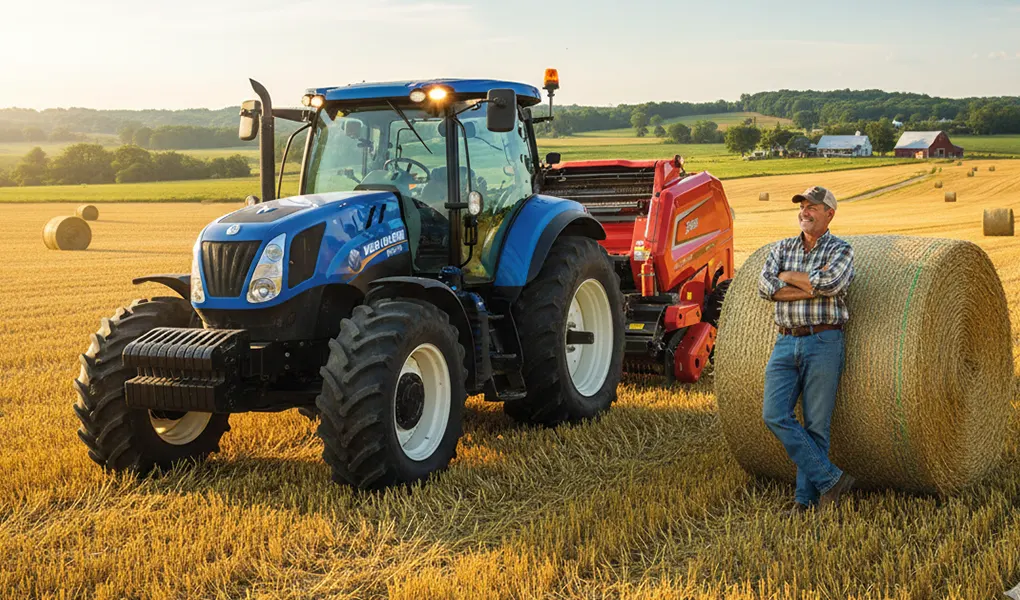
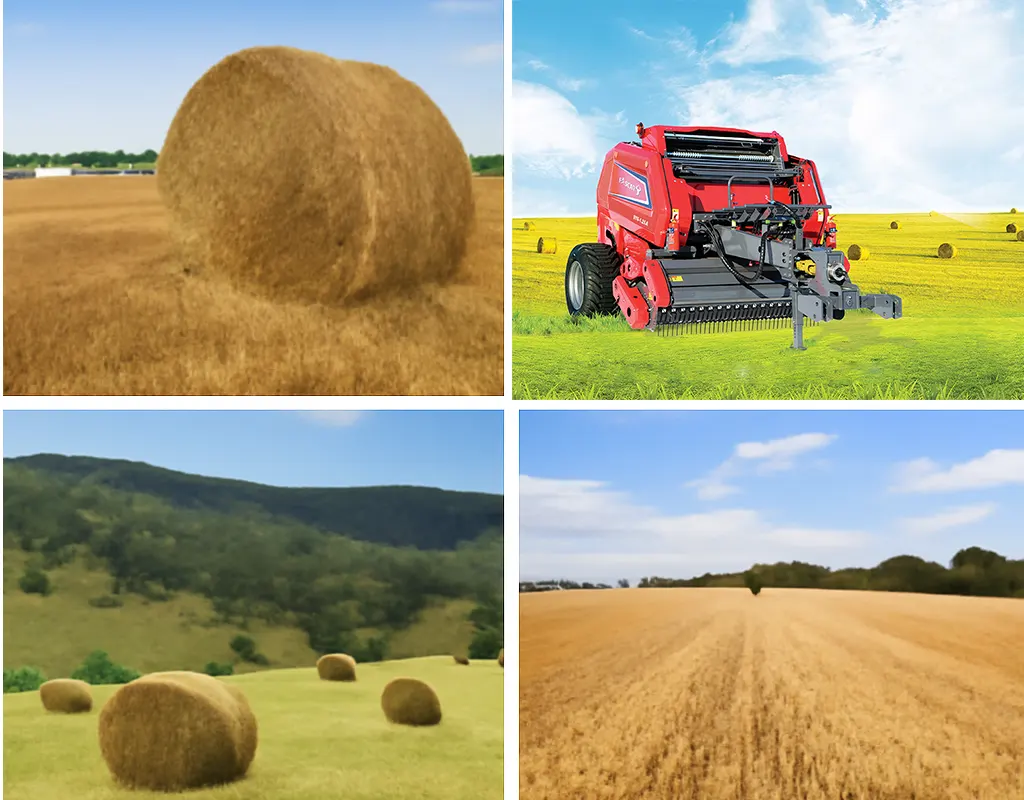
Das Pressen von Ballen wandelt stehendes Erntegut in transportables, lagerfähiges Futter um. Die biologischen und physikalischen Prozesse, die dieses Futter abbauen, werden durch das Pressen jedoch nicht gestoppt, sondern lediglich verlangsamt. Vom Verlassen der Presskammer bis zum Öffnen am Futtertrog geht weiterhin Trockenmasse verloren. Studien belegen, dass die durchschnittlichen Trockenmasseverluste bei der Lagerung von Rundballen im Freien zwischen 15 und 30 Prozent liegen. Im ungünstigsten Fall, bei Lagerung ohne Abdeckung auf dem bloßen Boden in feuchten Klimazonen, können die Verluste sogar 35 bis 45 Prozent erreichen. Bei 1 TP6T80 pro Ballen bedeutet ein Trockenmasseverlust von 20 Prozent, dass 1 TP6T16 Futterwert pro Ballen verloren gehen, bevor das erste Tier ihn frisst. Hochgerechnet auf 300 Ballen entspricht dies einem unsichtbaren jährlichen Verlust von 1 TP6T4.800. Jede Verbesserung in der Ballenpressung ist daher von entscheidender Bedeutung. Rundballenlagerung Durch Übung lässt sich diese Zahl reduzieren – und die Verbesserungen sind nicht teuer.
Wohin die Trockenmasse gelangt: Die vier Wege der Lagerverluste bei Rundballen
Verstehen, wo Trockenmasse Das Erkennen von Verlustursachen ist der erste Schritt zu deren Verhinderung. Vier verschiedene Rundballenlagerung Es sind verschiedene Verlustmechanismen verantwortlich, und jeder reagiert auf unterschiedliche Managementmaßnahmen:
4 – Tier- und Maschinenschäden
1–8% DM-Verlust
Nagetierfraß, Vogelpicken, Zugang durch Rehe und mechanische Beschädigungen beim Umschlag (z. B. durch Laderspitzen, Herabfallen des Ballens, Risse in der Netzfolie) schaffen Eintrittspforten für Feuchtigkeit, die alle drei biologischen Verderbnisprozesse gleichzeitig beschleunigen. Eine einzige Laderspitzen-Einstichstelle in der Netzfolie eines Silageballens erzeugt eine 4 bis 6 cm² große Sauerstoffeintrittsstelle, die innerhalb von 3 bis 4 Wochen eine Verderbniszone von 20 bis 30 cm in alle Richtungen um die Einstichstelle herum begünstigen kann.
Auswahl des Lagerorts: Sechs Kriterien, die bestimmen, wie viel Sie verlieren
Rundballenlagerung Die Standortwahl ist die wirkungsvollste Maßnahme. Keine andere Verbesserung – wie z. B. eine bessere Netzabdeckung, eine Plane oder eine optimierte Reihenausrichtung – erzielt einen so hohen Trockenmasseerhalt pro investiertem Euro wie das Umlagern der Ballen von kahlen, schattigen und feuchten Standorten auf erhöhte, gut drainierte und sonnige Plätze. Nutzen Sie die folgende Bewertungskarte, um Ihren aktuellen Lagerplatz zu bewerten.
Selbstbewertung Ihres Lagerstandorts – Bewerten Sie Ihren aktuellen Standort
| Kriterium |
✔ Beste |
△ Akzeptabel |
✗ Problem |
| Bodenoberfläche |
Schotter- oder Kiesbett, ≥10 cm Tiefe |
Verdichteter Stein oder Beton |
Nackter Boden, Gras oder Lehm |
| Entwässerungsneigung |
≥2% Gefälle weg von den Ballen in alle Richtungen |
Ebenes Gelände mit umlaufender Entwässerung |
Tiefliegendes Gebiet, Wasseransammlungen nach Regen |
| Sonnenaussetzung |
Den ganzen Tag volle Sonne – kein Schatten von Bäumen oder Gebäuden |
Halbschatten (weniger als 4 Stunden/Tag) |
Größtenteils im Schatten; Nordhänge |
| Reihenausrichtung |
Nord-Süd-Reihenrichtung (beide Seiten gleich sonnig) |
±30° von Nord–Süd |
Ost-West-Reihen (eine Seite dauerhaft beschattet) |
| Ballenabstand |
Kontakt zwischen den Reihen; ≥1 m zwischen den Reihen |
30–50 cm Reihenabstand |
Ballen, die sich zwischen benachbarten Reihen aneinander berühren |
| Schädlingsbefall |
Kein Gestrüpp/Getreide in der Nähe; Zaun oder Maschendrahtzaun |
Offenes Feld, geringer Wild-/Nagerdruck |
Angrenzend an Waldgebiete oder Getreidesilos; hohe Schädlingsaktivität |
Wenn Ihre Lagerfläche 4 oder mehr „Problem“-Bewertungen erhält, führt eine Verbesserung der Lagerfläche vor der Hinzufügung anderer Lagerverbesserungen (Netzabdeckung, Planen) zu größeren DM-Einsparungen pro ausgegebenem Dollar.
Netzband vs. Bindfaden: Wie die Wahl des Bindematerials den Trockenmasseverlust bei der Lagerung im Freien beeinflusst
Bindfaden und Netzwickel unterscheiden sich bei Rundballenlagerung Die meisten Anwender denken bei Ballenpressen nur an die Kosten pro Ballen, die Wickelgeschwindigkeit und die Formstabilität. Doch ihr Einfluss auf den Trockenmasseverlust bei der Lagerung im Freien ist ebenso bedeutend und wird deutlich weniger beachtet. Der Mechanismus ist einfach: Netzfolie bedeckt einen Großteil der Ballenoberfläche mit einer feuchtigkeitsbeständigen Barriere; Bindegarn hingegen praktisch gar nichts.
Mit Bindfaden zusammengebundener Ballen – Lagerung im Freien
✗ 0% Ballenoberfläche abgedeckt – Ballen ist vollständig Regen, Tau und UV-Strahlung der Sonne ausgesetzt
✗ Zwischen den Schnurwicklungen bilden sich Feuchtigkeitskanäle – Regen läuft entlang der Schnurrillen ins Innere des Ballens.
✗ DM-Verlust bei Lagerung im Freien: 15–30% in feuchten Klimazonen über 6–9 Monate
✓ Geringere Verpackungskosten pro Ballen
✓ Geeignet für im Stall gelagertes oder sofort verfüttertes Heu
Netzumwickelter Ballen – Lagerung im Freien
✓ ~60% Ballenoberfläche abgedeckt – durchgehendes Netzgewebe leitet Regen von oben und von den Seiten ab.
✓ Die glatte Außenfläche fördert den Wasserabfluss anstatt das Eindringen von Wasser.
✓ DM-Verlust bei Lagerung im Freien: 5–15% unter den gleichen Bedingungen
✓ Die Formbeständigkeit der Ballen verbessert die Stapelstabilität
△ Höhere Kosten pro Ballenverpackung (+1,50–3,00 pro Ballen im Vergleich zu Bindegarn)
Die Netto-Wrap-Amortisationsberechnung: Bei einem Trockenmasseverlust von 151 µT gegenüber 81 µT bei 200 Ballen Heu der Sorte 1 µT 80 spart die Netzverpackung jährlich ca. 1.120 µT (200 × 1 µT 80 × 0,07 = 1.120 µT). Bei einem Aufpreis von 2 µT pro Ballen für die Netzverpackung gegenüber der Bindegarnverpackung belaufen sich die zusätzlichen Kosten auf 400 µT pro Jahr. Die jährliche Nettoersparnis beträgt somit 720 µT. Bei einem Freilandlagerungsprogramm dieser Größenordnung amortisiert sich die Netzverpackung mehr als doppelt.
Unser komplettes Sortiment Netzwickel-Rundballenpressenmodelle ist mit kontinuierlichen Netzwickelzuführungssystemen ausgestattet, deren Antriebssynchronisation durch den Hauptantrieb der Ballenpresse aufrechterhalten wird. landwirtschaftliches Antriebsgetriebe — um eine gleichmäßige Wickelspannung und Überlappung bei jedem Ballen während des gesamten Produktionstages zu gewährleisten, nicht nur beim ersten Ballen nach dem Aufwickeln des Netzes.
Sechs Speicherkonfigurationen: Gemessene DM-Verluste und praktische Kompromisse
Forschung zu Rundballenlagerung Studien des USDA Agricultural Research Service, der University of Wisconsin Extension und der Cornell Cooperative Extension zeigen übereinstimmend, dass die Lagerkonfiguration der größte beeinflussbare Faktor für den Trockenmasseverlust bei Rundballen ist. Die folgende Tabelle fasst die Messwerte zusammen. Trockenmasse Verlustspannen bei sechs gängigen Speicherkonfigurationen, vom schlechtesten zum besten Wert:
| Speicherkonfiguration |
DM-Verlustbereich |
Wetterabhängigkeit |
Hauptursache für Verluste |
| Bindfaden, nackter Boden, Schatten |
25–45% |
Extrem |
Bodenkontakt + vollständige Oberflächenbelichtung + keine UV-Trocknung |
| Bindfaden, nackter Boden, volle Sonne |
18–30% |
Sehr hoch |
Bodenverluste + Regenrinnen zwischen den Schnurwicklungen |
| Netzabdeckung, nackter Boden, volle Sonneneinstrahlung |
12–22% |
Hoch |
Bodenkontakt bleibt bestehen; Oberfläche durch Netz geschützt |
| Netzumhüllung, Kiesbett, Nord-Süd-Reihe |
6–14% |
Mäßig |
Hauptsächlich oberflächliche Beschädigung; Bodenkontakt vermieden |
| Netzabdeckung, Kiesbett, abgedeckter oder offener Schuppen |
3–8% |
Niedrig |
Hauptsächlich Atmung; Oberflächenschutz weitgehend vollständig |
| Netzabdeckung, geschlossene Scheune, trockener Boden |
1–4% |
Minimal |
Nur Atmung; jegliche Witterungseinflüsse ausgeschlossen |
Die Trockenmasseverluste basieren auf veröffentlichten agronomischen Untersuchungen an Rundballen mit 1,2 m Durchmesser über einen Lagerzeitraum von 6–9 Monaten in gemäßigten Klimazonen der USA. Netzfolie: Standard 1,5 m UV-stabilisiertes LLDPE, zweifach mit 501 µm Überlappung.
Einzelreihig vs. gestapelt: Materialverlust, Flächeneffizienz und Strukturrisiko
Einzelreihig, Ende an Ende Rundballenlagerung ist durchweg die beste Konfiguration für Trockenmasse Erhaltung. Die Versuchung, Ballen zu stapeln – pyramidenförmig oder zweilagig in Reihen – ist durch Platzmangel bedingt: Durch das Stapeln verdoppelt sich die Anzahl der Ballen, die auf einer bestimmten Lagerfläche Platz finden. Allerdings führt das Stapeln zu einem Trockenmasseverlust, der gegen die eingesparten Flächenkosten abgewogen werden muss.
Einzelne Reihe von Ende zu Ende ✔ Beste
Endansicht – einlagig, Ballen berühren sich
✔ Vollständige Luftzirkulation an allen exponierten Oberflächen
✔ Keine Kontaktzone zwischen gestapelten Ballen – keine Feuchtigkeitsansammlung an den Berührungspunkten
✔ Geringster DM-Verlust aller Außenkonfigurationen
△ Benötigt mehr laufende Bodenfläche pro Ballen
Zweifach gestapelte Pyramide △ Akzeptabel
Endansicht – Pyramide, 1 auf 2
✔ 33% – mehr Ballen pro Reihenlänge im Vergleich zur Einzelschicht
△ Kontaktzonen zwischen oberen und unteren Ballen halten Feuchtigkeit zurück — +3–6% Trockenmasseverlust an den Kontaktstellen
△ Die obere Ballennetzfolie zersetzt sich durch die volle UV-Strahlung schneller.
✗ Erfordert maschinelle Handhabung – manuelles Stapeln über eine einzelne Lage hinaus ist nicht sicher.
Drei oder höher ✗ Nicht empfohlen
Endansicht – 3 hoch, instabil
✗ Die unteren Ballen wurden durch die statische Last darüber zerdrückt – das Netz ist gerissen, erheblicher Trockenmasseverlust in der Quetschzone
✗ Ab einer Höhe von 2 steigt das Abrollrisiko signifikant an, insbesondere an jeder Hangneigung.
✗ Die inneren Ballen befinden sich in tiefen Stapeln und sind für eine Zustandsprüfung unzugänglich.
Überdachter Lagerraum: Wann sich die Investition auszahlt
Die Entwicklung vom unbewachsenen Freiland Rundballenlagerung Der Umbau eines einfachen, nach einer Seite offenen Schuppens stellt die größte Einzelmaßnahme zur Verbesserung der Trockenmasse dar – typischerweise werden Verluste von 18 bis 301 TP5T auf 4 bis 81 TP5T reduziert. Ob sich diese Verbesserung aufgrund der Investitionskosten lohnt, hängt von der Betriebsgröße, dem Heumarktwert und der Abschreibungsdauer des Gebäudes ab. Die Berechnung ist einfach:
Jährliche Kosten des Trockenmasseverlusts — Freilandanbau ohne Boden (Durchschnitt 20%)
200 Ballen × 20% Trockenmasseverlust = Verlust von 40 Ballenäquivalenten
40 × $80 Marktwert = $3.200/Jahr unsichtbarer Verlust
Bei 300 Ballen: $4.800/Jahr verloren
Bei 400 Ballen: $6,400/Jahr verloren
Bei offener Scheune (durchschnittlicher Verlust von 61 t 5 t) — Gleiche 200 Ballen
200 Ballen × 6% Trockenmasseverlust = Verlust von 12 Ballenäquivalenten
12 × $80 = $960/Jahr Verlust (Ersparnis) $2,240/Jahr)
Einfacher offener Schuppen für 50 Ballen: $5.000–12.000 zum Bau
Amortisationszeit bei 200 Ballen/Jahr: 2,2–5,4 Jahre
Die Break-Even-Berechnung basiert auf einem Marktwert von 1 TP6T80 pro Ballen und einem Unterschied im Trockenmasseverlust von 201 TP5T im Freien gegenüber 61 TP5T unter einer Plane. Die tatsächliche Amortisation hängt von den lokalen Heupreisen, dem Klima und den Baukosten ab. Bei Betrieben mit weniger als 100 Ballen pro Jahr bieten Heuplanen (1 TP6T300–600 für 20 Ballen) in der Regel eine höhere Rendite als der Bau von Gebäuden.
Ballentransport zur Lagerung: Warum die richtige Ausrüstung für die Trockenmasseerhaltung wichtig ist
Jedes Verarbeitungsereignis in Rundballenlagerung Zwischen der Ballenkammer und dem Lagerplatz besteht die Möglichkeit, dass das Netz beschädigt wird. Ein Frontlader-Spieß, der während des Pressvorgangs durch einen netzumwickelten Ballen fährt. Rundballenlagerung Dadurch entsteht ein physisches Loch im Netz – und jeder nachfolgende Regenguss leitet Wasser durch dieses Loch in das Innere des Ballens. Innerhalb von vier bis sechs Wochen nach einem solchen Loch bilden sich um die Einstichstelle herum messbare Verderbniszonen, unabhängig davon, wie gut der Ballen ansonsten gelagert wird.
Die korrekte Handhabung von netzumwickelten Ballen erfolgt mit Geräten, die den Ballen greifen, ohne die Netzoberfläche zu durchdringen: eine Ballenwiege, ein Ballengreifer oder ein Ballenspieß, der von der flachen Seite des Ballens und nicht durch die gebogene, netzbedeckte Seitenfläche eingeführt wird. Rundballenlader und -transporter Die Modelle in unserem Sortiment verwenden eine hydraulische Wiegenbeladung, die die Ballen durch Unterstützung der gekrümmten Außenfläche des Ballens anhebt und bewegt – kein Eindringen von Spikes, keine Beschädigung des Netzes, volle Ballenintegrität vom Feld bis zum Lagerort.
Bei Betrieben, die mehr als 50 Ballen pro Schnitt zu einem zentralen Lagerplatz transportieren, reduziert ein spezieller Ballentransporter auch die durch Traktoren verursachten Reifenspuren an den gelagerten Ballen, die beim Manövrieren nahe an den Reihen entstehen. Jede Traktorfahrt in der Nähe der gelagerten Ballen erzeugt Spurrillen und Bodenverdichtung, wodurch das Oberflächenwasser schließlich von der Kiesfläche weg und zur Ballenbasis umgeleitet wird – wodurch der eigentliche Zweck der Kiesfläche für die Entwässerung zunichtegemacht wird.
Häufig gestellte Fragen: Lagerung von Rundballen
Wie wichtig ist Kies im Vergleich zu Schotter für die Lagerfläche?+
Beide Varianten funktionieren. Entscheidend sind freie Drainage und die Trennung von Ballen und Boden, nicht das spezifische Material. Gebrochener Kalkstein #57 (ca. 19 mm Korngröße, kantig) ist die gängigste und kostengünstigste Option – die kantige Form verdichtet sich weniger als gerundeter Kies und erhält die poröse Struktur über mehrere Saisons. Mindesttiefe: 10 cm für Ballen bis 500 kg; 15 cm für schwere Silageballen über 600 kg. Alternativ zur Ballenauflage können behandelte oder lackierte Bahnschwellen, Betonblöcke oder Altreifen als Ballenauflagen verwendet werden, um einen Luftraum von 15 bis 20 cm unter jedem Ballen zu schaffen – effektiv und ohne Investitionskosten, sofern die Materialien verfügbar sind.
Kann ich in Netze eingewickelte, trockene Heuballen direkt nebeneinander, Ende an Ende, lagern?+
Ja – die platzsparende Lagerung der Ballenenden innerhalb einer Reihe ist gängige Praxis und sogar empfehlenswert, da sie verhindert, dass sich Regenwasser in der Vertiefung zwischen benachbarten Ballenenden sammelt. Die flachen Ballenenden sind weniger stark mit Netzfolie umwickelt als die Seitenflächen (die Netzfolie umschließt den Umfang, die Schnittflächen bleiben jedoch unbedeckt), sodass jede Lücke zwischen benachbarten Ballenenden eine kleine Zone zur Regenwasseransammlung bildet. Durch die platzsparende Lagerung der Ballenenden wird diese Lücke vermieden. Zwischen den Reihen sollte jedoch ein Abstand von mindestens einem Meter eingehalten werden, um die Luftzirkulation zu gewährleisten und Feuchtigkeitsansammlungen in der Kontaktzone zwischen den Reihen zu verhindern.
Wie schneiden Heuplanen im Vergleich zu einem offenen Schuppen hinsichtlich der Trockenmassekonservierung ab?+
Eine gut gepflegte und ordnungsgemäß verankerte Heuplane kann Trockenmasseverluste von 5 bis 91 % pro 5 Tonnen erreichen – ähnlich wie ein einfacher, offener Schuppen (3 bis 81 % pro 5 Tonnen). Der Unterschied liegt in der Haltbarkeit: Eine hochwertige Heuplane hält 3 bis 5 Saisons, wenn sie außerhalb der Saison sachgemäß gelagert wird und nicht durch UV-Strahlung aufgrund mangelhafter Verankerung beschädigt wird (wodurch die Plane flattert und an den Rändern ausfranst). Ein offener Schuppen hingegen hält bei minimalem Wartungsaufwand 20 bis 30 Jahre. Der Kostenvergleich über 20 Jahre spricht in der Regel für eine feste Konstruktion bei Betrieben mit mehr als 150 Ballen pro Jahr und für Planen bei kleineren Betrieben oder wenn der Lagerplatz zwischen den Saisons wechselt. Das Aufstellen, Verankern und Entfernen von Planen erfordert zudem Arbeitsaufwand – die jährlichen Arbeitskosten sind ein wichtiger Kostenfaktor.
Mit welchem Trockenmasseverlust muss ich auf einem guten Freilandstandort im Mittleren Westen der USA rechnen?+
Bei einem gut geführten Rundballenlagerung Standort im Mittleren Westen – mit Netzen umwickelte Ballen, Kiesfläche, Nord-Süd-Reihen, volle Sonneneinstrahlung, kein Schatten – Trockenmasseverluste über einen Lagerzeitraum von 6 bis 9 Monaten (vom Pressen im Juni bis zur Fütterung im März) liegen typischerweise zwischen 8 und 141 TP5T. Dies berücksichtigt eine Sommerperiode mit ergiebigen Niederschlägen und eine Winterperiode mit Schneelast. Betriebe, die ihre Lagerplatzbewirtschaftung nach Best Practices gestalten (erhöhte Ballen auf großzügiger Kiesfläche, Ballen in engen Einzelreihen, ausgezeichnete Drainage), können Verluste von 5 bis 81 TP5T erreichen. Verluste unter 51 TP5T bei Freilandlagerung im Mittleren Westen sind selten und erfordern in der Regel überdachte Lagerung. Zum Vergleich: Gut geführte Scheunenlagerung im Mittleren Westen verzeichnet jährliche Trockenmasseverluste von 2 bis 41 TP5T.
Beim Öffnen des Heuballens ist starker Oberflächenschimmel vorhanden. Kann das Futter trotzdem noch bedenkenlos verfüttert werden?+
A Rundballen Bei starkem Oberflächenschimmel sollte vor der Fütterung beurteilt werden, wie weit der Schimmel ins Innere des Heus vordringt. Entfernen Sie die äußere, verdorbene Schicht (typischerweise 5 bis 15 cm) und untersuchen Sie das Innere. Ist es noch hell, trocken und schimmelfrei, kann es in der Regel in begrenzten Mengen (unter 30 % der Gesamtfutterration) an Rinder verfüttert werden. Schimmeliges Heu darf aufgrund des Mykotoxinrisikos unter keinen Umständen an Pferde, Zuchttiere oder Jungtiere verfüttert werden. Bei Milchkühen stellt stark verschimmeltes Heu ein Risiko für die Futterqualität und den Milchfettgehalt dar – lassen Sie das Heu vor der Verwendung in der Milchviehration auf Mykotoxine untersuchen. Im Zweifelsfall konsultieren Sie Ihren Ernährungsberater oder Tierarzt, bevor Sie empfindlichen Tieren sichtbar verschimmeltes Heu verfüttern.
Lohnt es sich, die Heuballen vom Feld zu einem besseren Lagerplatz zu transportieren, anstatt sie einfach dort zu lagern, wo sie landen?+
Zur Wirtschaftlichkeit: Der Transport von Ballen zu einem zentralen Kieslagerplatz kostet in der Regel 1.600 bis 1.600 Pfund pro Ballen an Maschineneinsatz und Kraftstoff. Die Verbesserung des Trockenmasseerhalts durch die Verlagerung der Ballen von der Freilandlagerung auf einen bewirtschafteten Kieslagerplatz beträgt typischerweise 8 bis 15 Prozentpunkte. Bei einem Ballen der Größe 1.600 Pfund entspricht dies einem erhaltenen Futterwert von 1.600 bis 1.600 Pfund pro Ballen – die Transportkosten amortisieren sich also bereits in der ersten Saison um das Zwei- bis Dreifache. Die zentrale Lagerung ist für Betriebe mit mehr als 100 Ballen pro Jahr fast immer wirtschaftlich. Bei weniger als 100 Ballen hängt die Gewinnschwelle stark von den spezifischen Bodenverhältnissen und den lokalen Niederschlagsmengen ab. Unsere Ballenlader und -transporter sind genau für diesen Anwendungsfall konzipiert – für einen kosteneffizienten und schadenfreien Transport vom Feld zum Lagerplatz.
Vollständige Heu-Systemunterstützung
Netzballenpressen, Ballentransporter und Lagerplanung – alles aus einem US-Lager
Unser Team in Kalifornien berät Sie bei der Auswahl von Netzballenpressen für Freilandlagerprogramme, stimmt die Kapazität der Ballentransporter auf Ihr jährliches Ballenvolumen ab und kann Ihnen Verbesserungen an Ihrem Lagerstandort empfehlen, die speziell auf Ihr Klima und Ihre Betriebsgröße abgestimmt sind.
✔ Netzwickel-Rundballenpressen
Vollständiges Sortiment, Lager in Kalifornien
✔ Ballenlader & -transporter
Hydraulische Wiege – kein Netzschaden
✔ Teileversand am selben Tag
Netze, Riemen, Lager auf Lager
America Ever-Power Forage Baler Equipment INC. | 1401 21st ST STE R, Sacramento, CA 95811
Lagerberatung anfordern
Herausgeber: Cxm