
Orchardgrass Biology: How Its Growth Pattern Determines Every Cutting Decision
Orchardgrass (Dactylis glomerata) is a perennial bunchgrass native to Europe that has naturalized throughout the temperate United States. Its growth architecture — clumping tillers rather than the creeping rhizomes of bermudagrass or the spreading growth of bluegrass — creates a plant that is extraordinarily productive from established crowns but requires different management thinking than the spreading grasses most producers are familiar with. Understanding how orchardgrass grows is the prerequisite for understanding why cutting timing works the way it does and why its windrow behaves unlike any other common hay species.
The bunchgrass architecture that makes orchardgrass so productive is also what makes it produce the heaviest windrow per linear foot of any cool-season hay grass. A mature first-cutting orchardgrass stand in full boot stage creates a mat of clumped biomass that is significantly denser than a comparable timothy windrow — which is exactly why orchardgrass baling requires a distinct set of equipment adjustments that producers transitioning from timothy or alfalfa consistently underestimate.
| Spezies | Summer regrowth interval | Season cuttings possible | Heat tolerance | Primary production region |
|---|---|---|---|---|
| Knaulgras | 28–35 Tage | 3–4 | Mäßig | Northeast, Mid-Atlantic, Great Lakes, PNW |
| Timothy | 40–50 days | 2–3 | Niedrig | PNW, Great Lakes, Northeast |
| Hoher Schwingel | 35–45 Tage | 2–3 | Hoch | Southeast, Transition Zone, Mid-Atlantic |
| Glatthafer | 45–55 days | 2 | Moderate-Low | Northern Plains, Great Lakes (summer slumps in heat) |
Boot Stage, Early Head, and Seed Head: The 3-Stage Quality Matrix
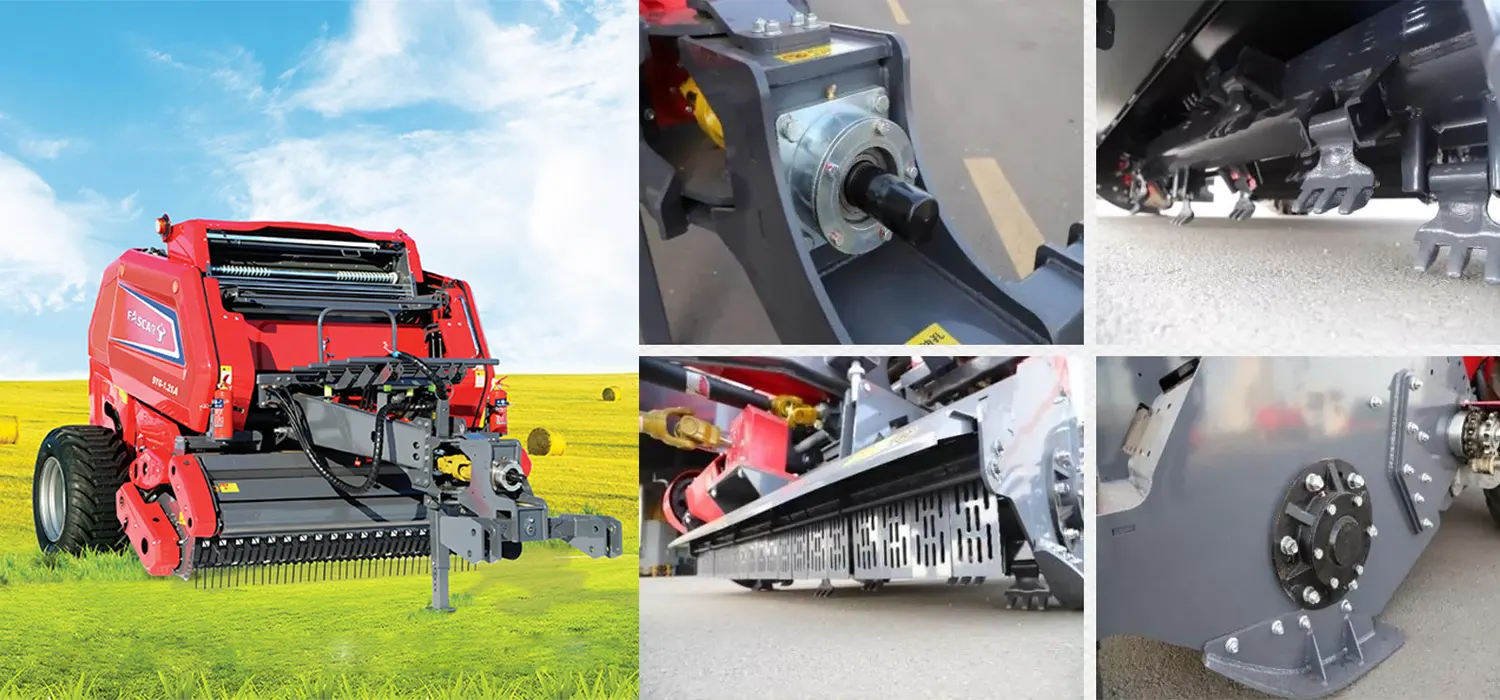
The quality difference between orchardgrass cut at boot stage and the same stand cut one week later at full head is not a small nutritional nuance — it is the difference between hay that a dairy nutritionist specifies by name and hay that goes to the commodity beef market. The table below quantifies what each stage delivers, but the practical point is this: the 5–7 day window where orchardgrass is at peak quality for premium markets is narrow, moves fast, and arrives at the same time as the busiest early-summer field schedule.
| Stage | Field indicator | CP | NDF | NSC-Sortiment | Ertrag | Best market |
|---|---|---|---|---|---|---|
| Bootphase | Head bulge felt inside leaf sheath; not visible | 11–15% | 47–56% | 8–14% | 50–65% | Premium horse; specialty stable; dairy high-group |
| Früher Kopf (optimum balance) | Head fully emerged; pollen not yet visible | 9–13% | 52–62% | 10–18% | 75–85% | Horse hay (test NSC); dairy mid-lactation; beef |
| Full head | Seed head fully developed; yellow-green pollen | 8–11% | 60–70% | 12–22% | 90–100% | Beef cattle; stocker cattle; commodity roughage |
| Post-head / mature | Seeds forming or dropping; plant browning at base | 6–8% | 68–76% | Variable | Max | Straw-equivalent roughage; do not market as premium hay |
Walk through the stand and select 10 stems randomly from different locations. Grip the uppermost leaf sheath between your thumb and forefinger and run your fingers firmly upward. At boot stage you will feel a distinct swelling inside the sheath — the seed head’s cylindrical bulge is unmistakable even though it isn’t visible yet. The leaf sheath itself is thick and turgid at this stage, like a small hose filled with water. If you don’t feel any swelling: you’re slightly early (excellent quality, lower yield). If you can see the top of the seed head beginning to emerge through the sheath tip: you’re at the transition to early-head stage. Make your cutting decision immediately — orchardgrass can advance from late-boot to early-head in 2–4 days during warm spring weather.
Once orchardgrass enters full head stage, the plant shifts energy allocation from leaf production to seed production at a faster rate than most other cool-season grasses. The leaf-to-stem ratio drops sharply (leaves contain 70–75% of the plant’s protein), NDF increases by 8–10 percentage points per week of delay, and the lignin content of the rapidly elongating seed head stalk rises dramatically. Research from Cornell and Penn State extension shows that orchardgrass cut at 7 days past early-head stage tests 3–5 CP points lower and 8–12 NDF points higher than the same stand cut at early-head. The quality trajectory is steeper than for smooth bromegrass or timothy at equivalent delay. There is no benefit to waiting past early-head for any premium market.
NSC in Orchardgrass: Why You Cannot Assume It’s Safe for Metabolic Horses
Orchardgrass is a C3 cool-season grass. C3 grasses accumulate fructan — a chain of fructose molecules that functions as the plant’s primary carbohydrate storage compound — at rates that vary significantly with temperature, light intensity, and soil fertility. This accumulation mechanism is fundamentally different from the starch accumulation of warm-season grasses like bermudagrass or the inherently low fructan production of teff. Orchardgrass NSC is not stable, not predictable from visual inspection, and not safe to assume without a current lot-specific test when feeding horses with equine metabolic syndrome, insulin dysregulation, or a history of laminitis.
Drying Orchardgrass: Dense Windrows, Slow Core Drying, and the Conditioning Trap
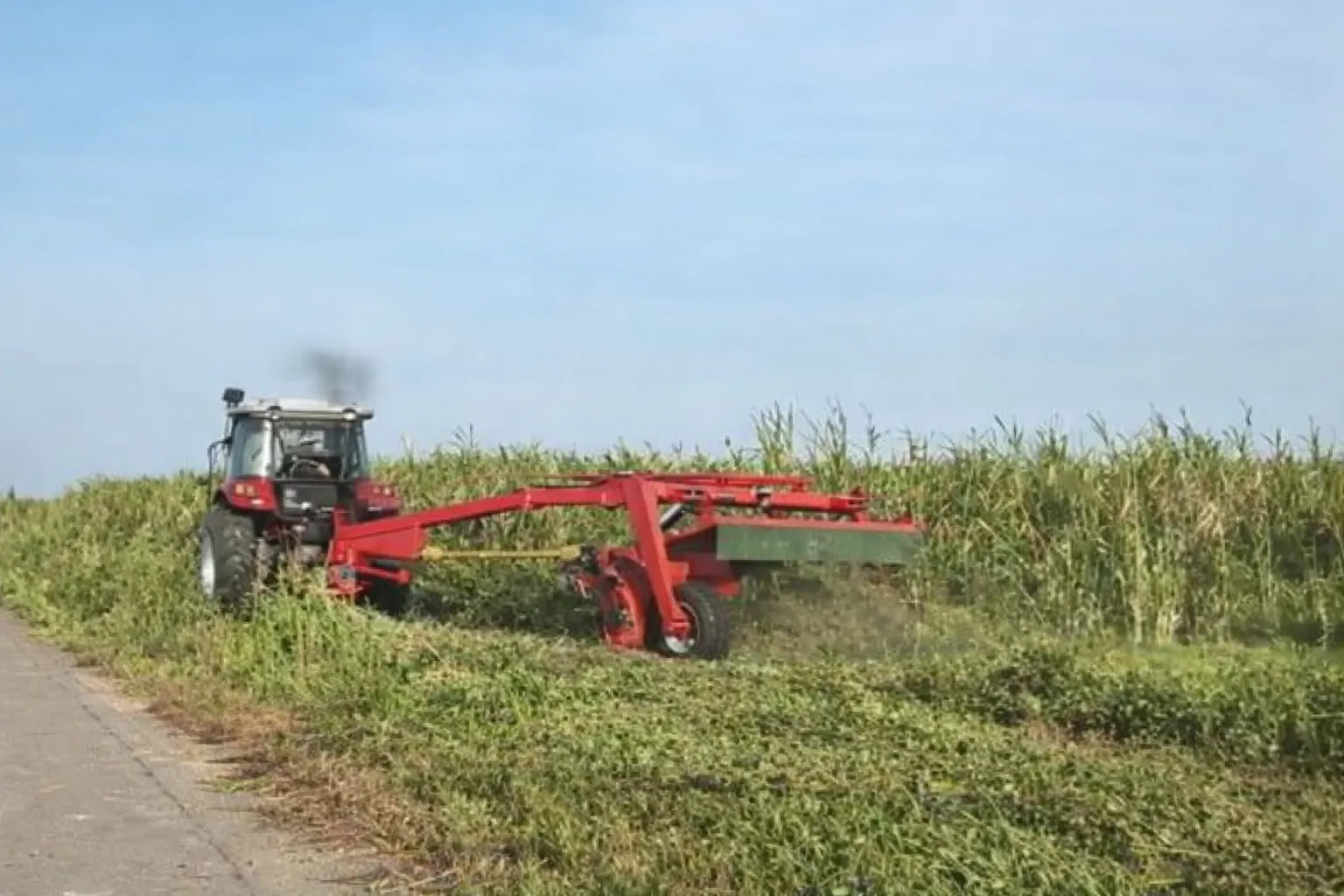
The drying behavior of orchardgrass hay is the aspect of production that most frequently surprises producers who have experience only with alfalfa or timothy. Orchardgrass cut from a full, established stand creates a windrow mass that is denser per linear foot than either alfalfa or timothy, dries more slowly at the windrow core despite the fine individual stems, and has a tendency to re-wet from soil moisture contact during overnight dew periods that is more pronounced than for thinner windrows. Managing this drying profile requires understanding why it behaves the way it does — not just following a fixed schedule.
Orchardgrass stems at cutting are turgid with cell water — the individual stem diameter is only 3–4mm but the stem wall has a higher water content than a comparably sized timothy stem. Conditioning that crushes the stem wall splits the cell structure and allows rapid evaporation from the stem interior. Unconditioned orchardgrass at 65% moisture takes 48–72 hours to reach baling moisture in good drying weather; conditioned orchardgrass in the same conditions reaches baling moisture in 28–40 hours. The difference is not convenience — it is the margin between a clear weather window and a rain event. Set the conditioning roller gap for medium-to-firm pressure on orchardgrass; the alfalfa setting is adequate for first-cutting material but should be increased 10–15% for dense summer cuttings.
Cut and spread orchardgrass as wide as the mower’s deflector allows — do not form a narrow windrow at cutting. A wide, shallow swath allows air circulation throughout the material from the first hours after cutting and exposes the maximum leaf area to sun and wind. A narrow windrow at cutting traps moisture inside a dense cylindrical mass where the core can remain above 20% moisture while the outside appears dry. Rake into a final baling windrow only when the core moisture reading (using a long insertion probe into the windrow center) is within 3–4 percentage points of your target baling moisture. The raking techniques that preserve this moisture management approach are in the Anleitung zum Heuwenden und Schwadenlegen.
Baler Settings for Orchardgrass: Why This Crop Resists the Pickup Differently
Orchardgrass windrows combine high mass per foot with interlocked stem orientation — a combination that challenges the pickup system in a different way than alfalfa (light, uniform) or bermudagrass (fine, flexible). The stems are neither as heavy as sorghum sudangrass nor as cooperative as alfalfa leaves. The primary failure mode in orchardgrass baling is not a jam in the traditional sense — it is a progressive overload where the pickup tries to lift more material than it can process at the operator’s current ground speed, leading to crop rolling over the tines rather than being cleanly picked up.
Ground speed — the primary adjustment
Reduce to 3–4 mph in orchardgrass windrows, compared to 4–6 mph that is comfortable in alfalfa. Dense orchardgrass windrows require more time per foot of windrow for the pickup tines to fully engage and separate the mat. If you hear a rhythmic thumping or feel pickup resistance increasing before a complete jam, you are 1–1.5 mph over the correct speed for that windrow density. The correct speed varies by windrow width, moisture, and stand density — calibrate at each new field rather than assuming last season’s setting applies.
Density spring tension — 5–10% above alfalfa baseline
Orchardgrass stems are smoother than alfalfa leaf surfaces and do not mechanically interlock as naturally within the bale chamber. The result: the bale achieves its target diameter (triggering the density signal) before it has accumulated sufficient mass, producing bales that are larger in appearance than their weight justifies. Increasing density spring tension by 5–10% from your alfalfa setting holds the chamber diameter smaller longer, allowing more material to compress before ejection and producing bales in the 500–700 lb range for a 4×5 that will maintain their shape in storage. For PTO driveline specifications at increased density settings, see Spezifikationen für landwirtschaftliche Getriebe und Zapfwellenantriebskomponenten.
Bale size — 4×4 for horse markets, 4×5 for cattle and mixed
For horse-market orchardgrass, the 4×4 bale is the preferred format among stable buyers — manageable without heavy equipment, consistent with the small-square-bale muscle memory of horse operations upgrading to round bale handling. A well-compressed 4×4 orchardgrass bale weighs 450–600 lbs, which one person can move with a basic category 1 spear loader on a compact tractor. For dairy and beef markets, 4×5 or 5×5 maximizes efficiency per handling event. The bale size and forage baler configurations suited to orchardgrass production are available through our Rundballenpressen-Modelle.
Net wrap — required for any premium market delivery
Orchardgrass bales wrapped with twine are structurally adequate for cattle feeding close to the field but are not appropriate for horse market delivery, sale through dealers, or storage beyond 60 days. The leaf fraction — which is the highest-CP component and the visual quality indicator that horse buyers judge at delivery — sheds progressively from twine-wrapped bales during any movement or stacking after baling. Net wrap distributes restraint uniformly across the bale surface, retaining the green outer leaf layer that justifies the premium price. For any orchardgrass hay intended for horse markets, apply a minimum of 2 complete wrap layers.
Orchardgrass vs Timothy: The Decision Framework for Your Market and Region
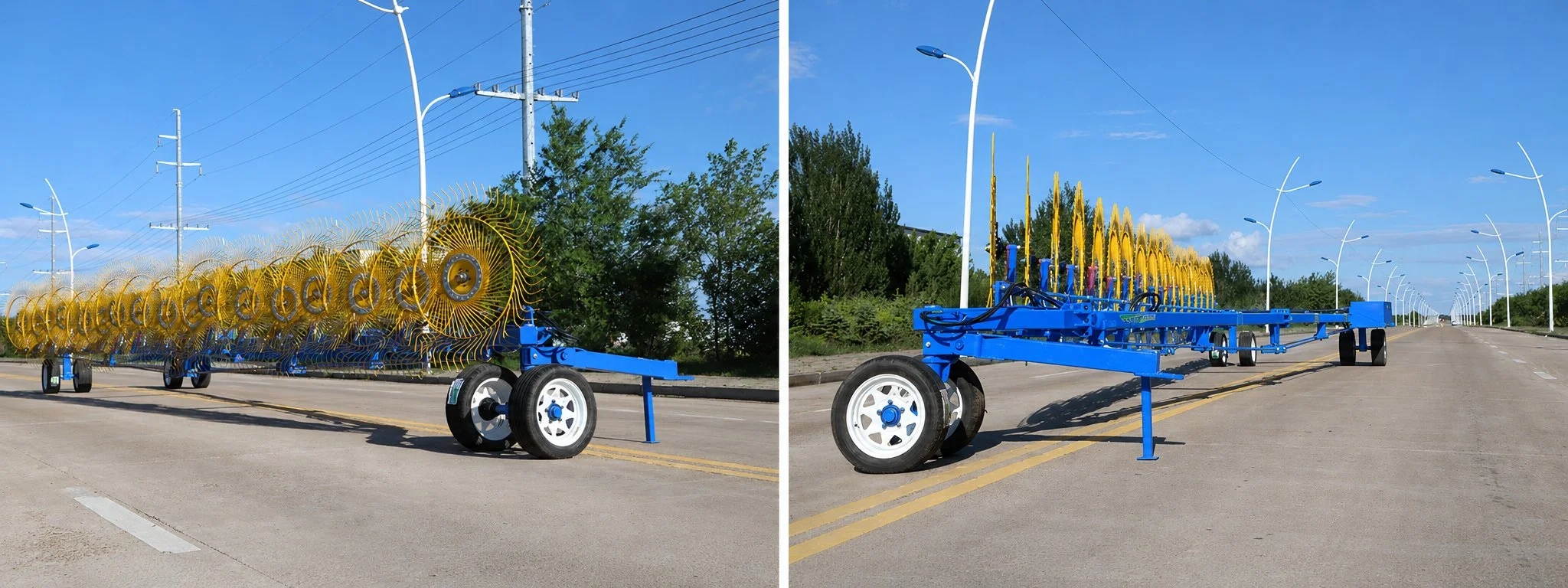
Orchardgrass and timothy are both premium cool-season hay grasses for the horse market, but they serve different producers in different regions for different reasons. Choosing the wrong one for your climate and market results in either a species that underperforms in your weather conditions or a product that your market doesn’t specifically want. The comparison below is not about which is “better” — it is about which fits your specific combination of climate, buyer base, and management system.
| Faktor | Knaulgras | Timothy | Decision implication |
|---|---|---|---|
| Climate fit | Zones 4–8; tolerates moderate summer heat | Zones 4–6; poor heat tolerance | South of Zone 6 or in hot Midwest summers: orchardgrass |
| Cuttings per season | 3–4 | 2–3 | Higher orchardgrass output offsets the per-ton quality difference in most volume markets |
| Horse market premium access | Moderate ($140–$210/ton) | High ($200–$320/ton) | Timothy commands a name-brand premium; orchardgrass competes on quality documentation |
| Export market eligibility | Beschränkt | Strong (Japan, South Korea) | For Pacific Coast export access: timothy; for inland markets: orchardgrass |
| Dairy hay quality | Good (CP 11–15%) | Moderate (CP 9–13%) | Boot-stage orchardgrass meets dairy mid-lactation specs; timothy is marginal without testing |
| Steh das Leben | 5–8 Jahre | 5–8 years (PNW); 3–5 years (Great Lakes) | Orchardgrass generally more persistent east of the Rocky Mountains |
| Mixed stand compatibility | Excellent (with alfalfa) | Moderate (with white clover) | Orchardgrass is the primary grass companion in alfalfa-grass mixed stands in the Northeast and Mid-Atlantic |
Stand Management: Renovation, Overseeding, and Weed Pressure Through the Stand Life
An orchardgrass stand managed correctly can remain productive for 5–8 years with declining but manageable establishment costs amortized over that period. An orchardgrass stand managed incorrectly — overthinned by repeated late cuttings, weakened by winter kill in inadequately drained soils, or invaded by weed species in the establishment year — may require renovation within 3–4 years at full re-establishment cost. Understanding the management decisions that extend stand life is the difference between an investment that pays out over a decade and one that needs to be written off at year four.
Walk your orchardgrass field at 10 random locations and count the number of productive orchardgrass plants per square foot at each location. A full productive stand has 8–12+ plants/sq ft. A stand at 5–7 plants/sq ft is thinning but can be renovated through frost seeding or slit seeding without full replanting. A stand below 4 plants/sq ft with significant weed invasion warrants evaluation of full renovation vs continued management. Make this assessment in early spring before growth resumes, when individual plant crowns are easiest to count without confusion from neighboring stems.
Broadcast orchardgrass seed (5–8 lbs PLS/acre) on thin stands in late winter (February–March in most production regions) when the ground is frozen but daylight temperatures occasionally reach 32–40°F. Freeze-thaw cycling mechanically incorporates the seed into the soil surface, and the pre-existing stand’s early-spring competition is manageable if the existing stand is below 6 plants/sq ft. Frost seeding orchardgrass has 40–65% establishment success in thin stands — not as reliable as a full tillage establishment, but a cost-effective option for moderately thin stands that would otherwise produce 2–3 more years before full renovation is justified.
The most effective weed control in orchardgrass is cutting at the appropriate interval to prevent weeds from setting seed and to maintain the competitive advantage of a dense, productive sward. Orchardgrass cut at early-head stage every 28–35 days in summer produces a canopy that shades most broadleaf weed seedlings before they establish. Orchardgrass cut at 50%+ head stage allows weed seedlings 10–14 extra days of unshaded establishment time and simultaneously weakens the stand through delayed root carbohydrate replenishment. The weed management that costs least is the cutting management that already improves quality — they are the same practice.
Market Channels and Pricing: Where Orchardgrass Hay Reaches Its Best Value
Orchardgrass hay does not carry the single-species name recognition that timothy hay carries in horse markets, and it does not command the protein premium that alfalfa does in dairy markets. What it does offer is versatile quality across multiple markets — adequate CP for dairy at boot stage, enough palatability for premium horse buyers with documentation, and competitive pricing for beef cattle compared to most cool-season alternatives in the Northeast and Mid-Atlantic. Positioning orchardgrass hay correctly depends on knowing which market values what you can actually produce from your stands and your management system.
The complete hay production workflow — integrating cutting timing decisions, field drying management, and baling scheduling to maintain quality from field to bale — is covered in the Leitfaden zur Optimierung des Heuernte-Workflows.
Orchardgrass Hay Production FAQs

Get Baler Settings for Orchardgrass Hay Production
Tell us your orchardgrass stand type (pure stand, mixed with alfalfa, or mixed with clover), target bale size, primary market (horse, dairy, or beef cattle), and PTO tractor horsepower. We confirm the density spring setting, pickup speed, and net wrap configuration that produces consistent orchardgrass bales for your market and climate.
Herausgeber: Cxm


