Reference Data · 9YF Series · Updated August 2026

Small Square Hay Bale Dimensions and Weight Chart

All 9YF series square balers produce a 460mm × 360mm cross-section bale. Bale weight ranges from 14kg for light dry straw to 32kg for maximum-density first-cut alfalfa, depending on the density spring setting and bale length. This page provides the complete reference for bale dimensions, weight by crop, handling limits and market weight specifications — in a format designed for quick field and purchasing decisions.

Covers: standard dimensions · weight by crop table · density and length interaction · handling weight limits · market specifications · format comparison

Quick Answer

Standard small square bale cross-section (all 9YF models): 460mm wide × 360mm tall. Bale length is operator-adjustable via the star wheel metering device — typically set between 400mm and 700mm. Weight is determined by bale length combined with the density spring setting and the crop being baled.

Cross-section: 460 × 360 mm
Typical length: 400–700 mm
Weight range: 14–32 kg
Horse market target: 18–22 kg

Standard 9YF Bale Cross-Section Dimensions

Every 9YF series model — from the entry-level 9YF-1700 to the dual-shredder 9YFS-2.2 — produces bales with an identical cross-section: 460mm wide × 360mm tall. This dimension is fixed by the bale chamber design and does not change with model, density setting or crop type. What varies between bales is the length (controlled by the star wheel meter) and the density (controlled by the tension spring setting), which together determine the bale weight.
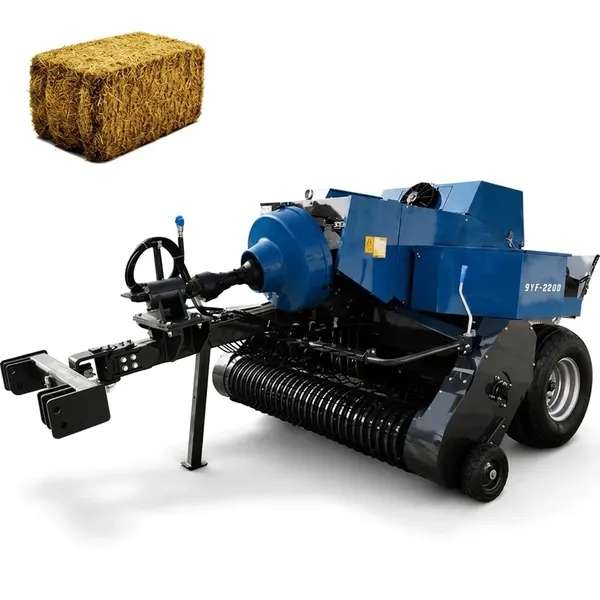
9YF-2200 square baler producing 460mm by 360mm cross-section bales — the bale chamber on all 9YF series models uses this fixed cross-section dimension and operators control bale weight by adjusting both the density spring tension and the star wheel bale length setting to achieve the target weight for their specific market

Dimension Standard Value Adjustable? How It Is Controlled
Breite 460 mm NEIN Fixed by bale chamber width. Identical across all 9YF models.
Höhe 360 mm NEIN Fixed by bale chamber height. Identical across all 9YF models.
Length 400–700 mm (typical) Ja Star wheel metering device — rotates as the bale grows and triggers the knotter at the set bale length.
Density (hardness) Low to High Ja Tension spring adjustment. Higher tension = harder bale, higher weight at the same length setting.

Bale Weight by Crop — Complete Reference Table

Bale weight for the same 460×360mm cross-section varies significantly by crop because different materials compress to different densities under the same plunger force. The figures below assume a standard bale length of 450–500mm and a medium-to-high density spring setting — representative of commercial hay baling conditions. Shorter bales at minimum density will weigh less; longer bales at maximum tension will weigh more.

Ernte / Material Light Setting Medium Setting Heavy Setting Primary Market
Weizen-/Gerstenstroh 12–16 kg 16–20 kg 20–26 kg Bedding, mushroom substrate
Heu aus verschiedenen Gräsern 14–18 kg 18–22 kg 22–26 kg Horses, cattle, goats, sheep
Timothy hay (horse market) 16–20 kg 18–22 kg 22–26 kg Premium horse hay — 18–22 kg is the standard horse market target
Bermudagrasheu 16–20 kg 18–24 kg 24–28 kg Horse, cattle, export (Japan/Korea)
Orchard grass / fescue 16–20 kg 20–24 kg 24–28 kg Horse hay, dairy roughage
Alfalfa — 2nd / 3rd cut 18–22 kg 22–26 kg 26–30 kg Dairy, performance horses
Luzerne – 1. Schnitt, voller Bestand 20–24 kg 24–28 kg 28–32 kg Dairy — may exceed one-person manual handling limit above 25 kg
Corn stover (bedding / feed) 16–20 kg 20–24 kg 24–28 kg Cattle bedding, bioenergy feedstock

Figures assume bale length 450–500mm. Weight increases proportionally with length — a 600mm bale is approximately 20% heavier than a 500mm bale at the same density setting and crop. Verify target weight by weighing the first 5 bales of each session when switching crops or density settings.

How Bale Length and Density Setting Interact to Determine Weight

Bale weight is the product of two independently adjustable variables: bale length and density. Understanding how they interact allows precise targeting of a specific bale weight for a specific market, regardless of crop variation within a session.

Bale Length (Star Wheel Setting)

The star wheel metering device counts plunger strokes and triggers the knotter at the set point. Increasing the stroke count before triggering produces a longer bale. For a given density, weight increases linearly with length — a 600mm bale is approximately 20% heavier than a 500mm bale of the same crop and density.

Typical range: 400–700mm length. Some models allow up to 900mm for specific applications.

Density Spring Tension

The density tension spring controls the resistance the chamber presents to the forming bale — higher tension means the plunger must work harder on each stroke to advance the bale, compressing it more tightly. Higher tension produces a heavier bale at the same length setting. Adjustable via the externally accessible tension screw on all 9YF models.

Effect on weight: changing from minimum to maximum tension typically adds 20–35% to bale weight at the same length setting.

Practical Calibration Method

Begin each crop or season with the density at medium and the star wheel at a moderate length setting. Weigh the first 5 bales and compare to target. If too light: increase tension first (one position at a time) — avoid increasing length if the bales are already at the upper handling weight for your team. If too heavy: reduce tension first, then reduce length if needed. After any density or length adjustment, weigh another 3 bales before declaring the setting stable.

Manual Handling Weight Limits and Market Specifications
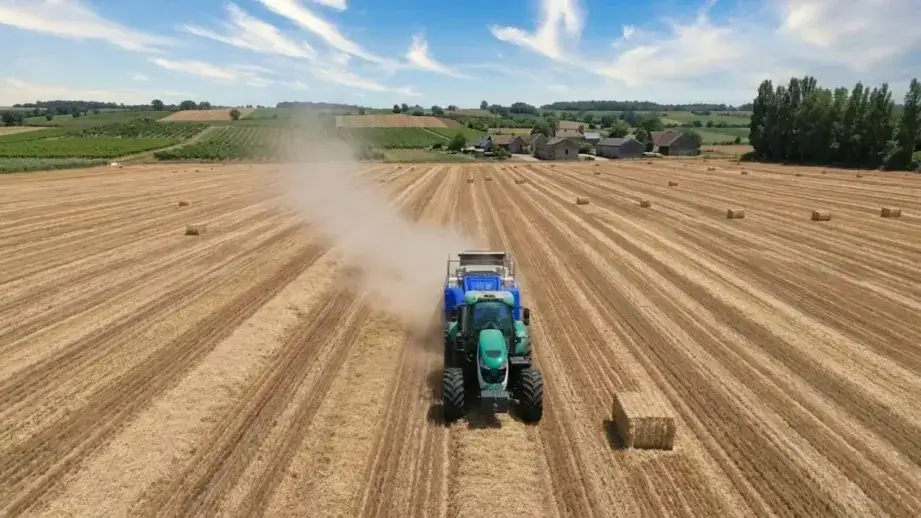
small square hay bales waiting for collection after baling showing the standard 460 by 360mm bale format — bales in the 18 to 22 kilogram range are manageable by one person for stacking and loading which is why this weight range is the most common target for horse hay operations where the buyer often handles bales individually

The practical upper limit for consistent one-person manual handling of small square bales is approximately 22–25kg. Above this range, two-person handling or mechanical assistance (bale elevator, front loader) becomes necessary for safe and sustainable operation. Many market specifications are set with this handling limit in mind — horse hay buyers who stack their own hay are particularly weight-sensitive.

Market / Buyer Type Target Bale Weight Reason for Specification
Premium-Pferdeheu (Spezialität für Pferde) 18–22 kg One-person handling for barn stacking. Horse owners typically stack and feed individually.
Rabbit hay / pet markets 14–18 kg Smaller quantity per feeding. Lighter bales reduce waste from opened bales.
Dairy farm (alfalfa / mixed) 22–28 kg Mechanical handling standard. Higher weight per bale reduces bale count and handling cost per tonne.
Cattle roughage / bedding 20–28 kg Front loader feeding standard. Weight tolerance higher — cattle producers buy by the tonne.
Japan / Korea export (bermudagrass / timothy) 18–22 kg Strict dimensional and weight specifications from importers. Moisture below 17%. Consistent weight required for container load calculations.
Goats / sheep / alpacas 16–20 kg Lighter bales suit small-volume daily feeding. Reduces opened-bale waste on small properties.

Small Square vs Large Square vs Round Bale Format Comparison
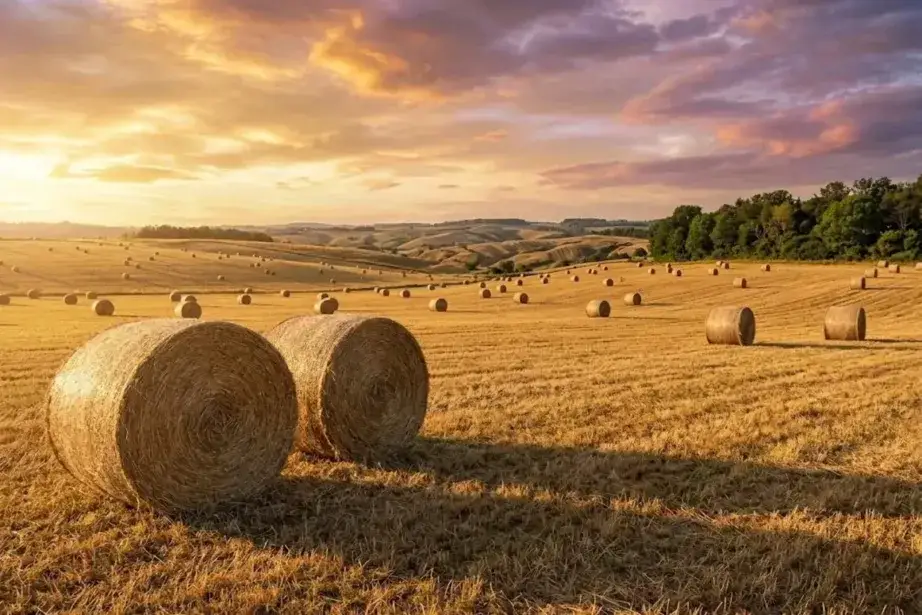
round hay bales in a field for format comparison — a round bale at 400 to 600 kilograms represents 20 to 30 times the mass of a standard 9YF series small square bale at 460 by 360mm which makes round bales more efficient for large cattle operations but impractical for horse properties and small livestock farms where individual bale handling is required

Format Cross-Section Typical Weight Primary Advantage Primary Limitation
Small square (9YF) 460 × 360 mm 14–32 kg Manual handling. Precise daily feed control. Horse market premium. Higher labour per tonne than large formats.
Large square (Hesston type) 800 × 900 mm
1,200 × 900 mm
300–600 kg Low labour per tonne. Efficient transport. Stackable. Requires heavy handling equipment. Not suited to horse or small livestock markets.
Round (9YQ series) 870–2,300 mm dia. 100–1,000 kg Range of sizes for different farm scales. Good weather resistance with net wrap. Not suitable for manual handling above 870mm diameter. Lower outdoor weathering resistance than small squares per unit volume.


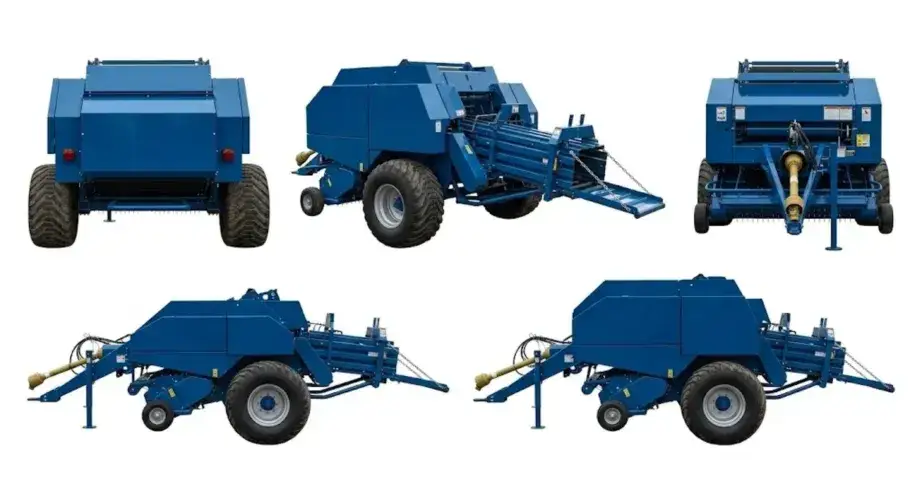
9YF series square baler models showing the full range from 9YF-1700 to 9YFS-2.2 — all models produce the identical 460 by 360mm cross-section bale with weight determined by the operator density spring setting and bale length adjustment to meet the target weight for the specific market being served

PTO Drive for Consistent Bale Density Across All Crops
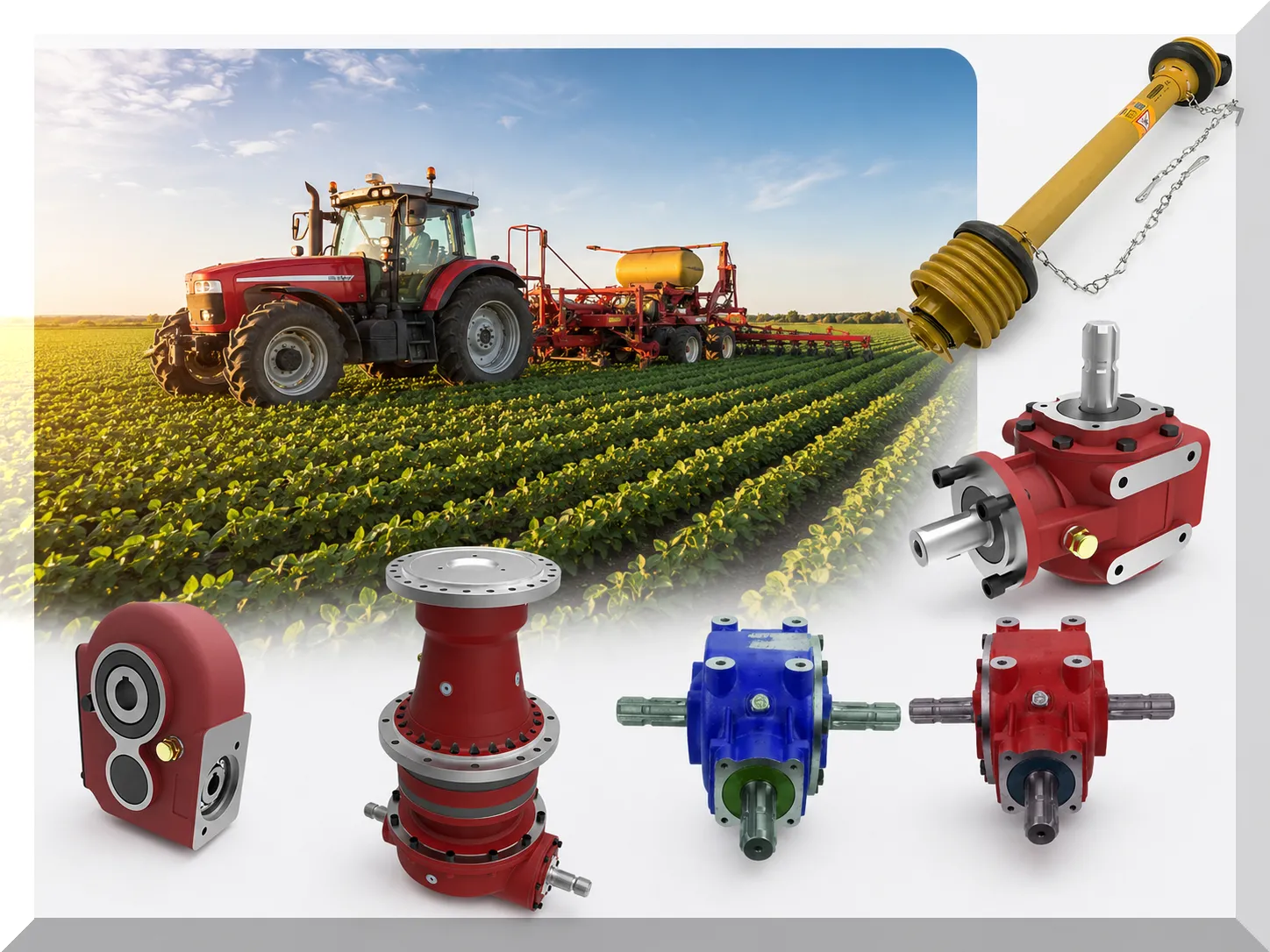

agricultural gearbox and PTO shaft for 9YF square baler consistent density operation — a PTO shaft delivering stable 540rpm throughout the baling session is the mechanical foundation for consistent bale weight because any PTO speed fluctuation changes the timing of each plunger compression stroke and produces bales of uneven density

PTO shaft specifications for consistent bale density across all 9YF models: agricultural gearbox and PTO shaft specifications for square balers

Consistent bale density depends on a stable 540rpm PTO throughout the session. PTO speed fluctuation — from an under-powered tractor or a worn driveshaft — causes variable compression per stroke and produces bales of inconsistent weight, even when the density spring setting has not changed. For operations where bale weight consistency is a buyer requirement, verify PTO shaft HP rating and CV joint condition annually. Full sizing guide: PTO driveshaft torque rating and CV joint angle guide for balers.

Frequently Asked Questions — Small Square Hay Bale Dimensions and Weight

What is the standard size of a small square hay bale?+
The standard small square hay bale cross-section in the US market is 460mm wide × 360mm tall — this is the dimension produced by all 9YF series models and is the most widely used format for horse hay, rabbit hay and small livestock markets. The bale length (depth) varies by operator setting, typically 400–700mm. The final weight depends on the combination of bale length, density spring tension and the crop being baled, ranging from 14kg for light dry straw to 32kg for maximum-density first-cut alfalfa.
How much does a standard small square bale of hay weigh?+
A standard small square hay bale weighs between 14kg and 32kg depending on the crop, density setting and bale length. The most common commercial weight target for horse hay is 18–22kg, which is manageable by one person for barn stacking and meets most horse buyer preferences. Dairy hay bales are typically set heavier at 22–28kg because mechanical handling is standard on dairy farms. Straw bales are typically lighter at 14–20kg due to the lower bulk density of straw compared to leafy hay crops. Export market specifications (Japan, Korea) require 18–22kg with strict moisture tolerances.
Can I adjust the bale weight on a 9YF square baler?+
Yes — bale weight is adjustable through two independent controls. The density spring tension sets how hard the plunger compresses each charge of crop — increasing tension produces heavier bales at the same length. The star wheel metering device sets the bale length before the knotter fires — a longer length setting produces more plunger strokes per bale and therefore a heavier bale. To hit a specific target weight: first set the density to a medium position, run 5 calibration bales, weigh them, then adjust length or tension in small increments until the average of 5 consecutive bales reaches the target. Weigh bales with a digital hanging scale at the field edge — precision matters for markets with strict weight specifications.
What bale weight does the Japanese hay export market require?+
Japanese hay importers typically specify 18–22kg bale weight for small square bermudagrass and timothy hay, along with moisture below 17%, ash content below 2% and net wrap packaging. The weight specification exists primarily for container load optimization — a consistent bale weight allows accurate calculation of the number of bales per container and the total container weight relative to shipping limits. Bales outside the specified weight range — heavier or lighter — can cause container overweight issues or reduce shipping efficiency per container. Confirm your specific buyer weight specification before production as individual buyer contracts may have tighter tolerances within this general range.
Why do bales from the same field vary in weight?+
Bale weight variation within a field is normal and expected — the primary cause is windrow density variation. Sections of the field with more material per metre of windrow (thicker growth, overlapping rake passes or convergence points) deliver more crop per plunger stroke, producing heavier bales at the same density setting. Sections with thinner windrows produce lighter bales. Other contributing factors include: operator forward speed changes (higher speed in thin sections produces lighter bales), moisture variation across the field at baling time, and any PTO speed fluctuation from terrain or tractor load changes. The typical acceptable variation is 10–15% around the target weight. Variation above 20% indicates either windrow formation is very inconsistent or the PTO speed is fluctuating during the session.
Is 25kg too heavy for one person to handle a hay bale?+
Health and safety guidelines in the US generally recommend a maximum of 22–25kg for consistent one-person lifting at waist height. A 25kg bale is at the upper limit of what most adults can safely handle repeatedly during a full barn-stacking session. The challenge with hay bales is the handling geometry — the bale twine provides a handle but the load is wide and extends away from the body, increasing the effective leverage load on the spine beyond what a 25kg symmetrical weight would represent. For operations where all bale handling is done by one person: target 18–22kg maximum. For operations with two people stacking, or where a bale elevator is used, bales up to 30kg are practical. Dairy farms using mechanical feeders have no handling weight concern and often prefer 26–30kg bales to reduce bale count per tonne fed.
How does moisture content affect bale weight?+
Bale weight increases with moisture content because water adds mass to the hay without adding dry matter nutritional value. A bale of hay at 20% moisture is approximately 5% heavier than the same bale of the same hay at 14% moisture — the additional weight is water that will evaporate during storage or heating. Buyers who pay per bale rather than per tonne of dry matter are essentially paying for water in wetter bales. Export buyers who pay per tonne and specify moisture below 17% are protecting themselves from paying for excess water weight. For producers: baling at the lower end of the safe moisture range (14–15% rather than 17–18%) produces slightly lighter bales per unit dry matter, which may require a small upward adjustment in density or length to maintain the target bale weight.
How many small square bales fit on a standard flatbed trailer?+
A standard 20-foot flatbed trailer (6.1m long × 2.4m wide) holds approximately 100–120 small square bales stacked 4–5 layers high, depending on bale length and stacking pattern. At 20kg per bale, this represents 2,000–2,400kg of hay — well within the rated capacity of most farm trailers. A 40-foot flatbed holds 200–250 bales at the same stacking height. For road transport: verify that the trailer gross vehicle weight rating (GVWR) is not exceeded — a fully loaded 20-foot trailer at 2,400kg of hay plus trailer weight (typically 1,200–1,800kg) requires a tow vehicle rated for 3,600–4,200kg total trailer weight. Net wrap on round bales does not apply to small square bale transport calculations — twine-tied small square bales are stable in stacked transport without additional restraint in most loading configurations.

Ready to Set the Right Bale Weight for Your Market?

Tell us your target bale weight, crop type and buyer market and we will confirm the correct density and length settings for the right 9YF square baler model for your operation.

America Ever-Power Forage Baler Equipment INC. · 1401 21st ST STE R, Sacramento, CA 95811

Herausgeber: Cxm