Crop Guide · Alfalfa Hay · Updated August 2026
Alfalfa Hay Baling Guide
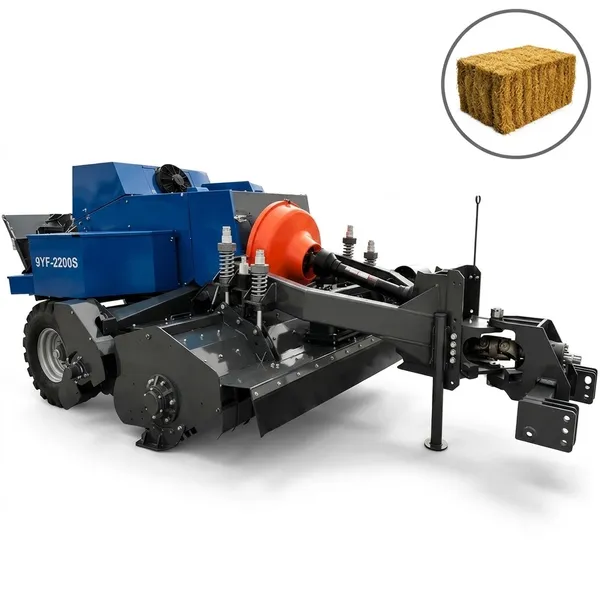
Alfalfa is the highest-value hay crop in the US — Supreme grade first-cut alfalfa can command $250–$400 per tonne in domestic dairy and export markets. Achieving that grade requires cutting at late bud stage, conditioning to achieve 2–3 day curing, and baling at 14–16% moisture to avoid heat-damaged protein. The 9YF-2200 serves 2nd and 3rd cut; the 9YF-2200S is the correct model for dense first-cut alfalfa at 99HP+.
Covers: cutting stage and quality table · mandatory conditioning · curing timeline · ADICP and heat-damaged protein · multiple cutting management · equipment guide · dairy and export market specifications
Quick Answer — Alfalfa Hay Key Numbers
Cut at: Late bud (10% or fewer flowers visible)
CP at late bud: 20–24%
Konditionierung: Mandatory — reduces curing to 2–3 days
Baling moisture: 14–16% (probe meter required)
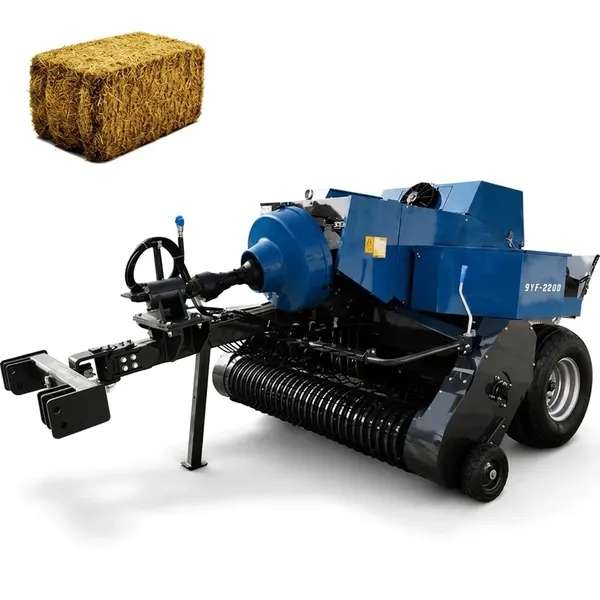
2nd/3rd cut baler: 9YF-2200 (50HP+)
1st cut baler: 9YF-2200S (99HP+) for dense windrows
Cutting Stage — The Decision That Determines Market Grade
Alfalfa quality at late bud stage (the correct harvest point) versus mid-bloom (one week later) represents a difference of 4–8% crude protein, 15–30 RFV points, and $20–$40 per tonne in dairy hay market pricing. No other single management decision has as large an impact on alfalfa hay value as cutting at the correct stage — and the window is only 5–7 days wide.
| Wachstumsphase |
Visueller Indikator |
CP |
NDF |
RFV |
Grad |
| Late bud (target) |
Buds formed, 0–10% flowers |
20–24% |
28–34% |
185–220+ |
Höchste |
| Early bloom (10%) |
10% flowers open |
18–22% |
32–38% |
160–190 |
Prämie |
| Mid-bloom (25–50%) |
25–50% flowers open |
14–18% |
38–46% |
130–165 |
Grade 1–2 |
| Volle Blüte |
Most flowers open |
Unterhalb von 14% |
Above 46% |
Below 130 |
Grade 3 or below |
Conditioning — Mandatory for Alfalfa, Not Optional
Alfalfa stem moisture loss is significantly slowed by the waxy cuticle layer on the stem surface. Without mechanical conditioning, alfalfa in ideal drying conditions (low humidity, sunny, moderate wind) takes 4–6 days to reach baling moisture — a weather risk window that leads to high losses in all regions except the arid Intermountain West. With a mower-conditioner: curing time reduces to 2–3 days in most conditions, and to 1.5–2 days in the Intermountain West, substantially reducing weather risk.
Roller conditioner (crimper): Passes stems between two rollers that crimp at 10–15mm intervals. Breaks waxy cuticle and stem vascular bundles. Standard in the Midwest and East. Good performance on all alfalfa varieties.
Impeller conditioner: High-speed rotating paddles that flail the cut material against a hood. More aggressive than roller — reduces curing time by 10–20% more than roller conditioning. Common in the Intermountain West. Better performance on thick-stemmed 1st cut.
Conditioning intensity for 1st cut vs later cuts: 1st cut alfalfa has the largest, most robust stems — maximum conditioner intensity (tightest roller gap or highest impeller speed) is appropriate. 2nd and 3rd cut regrowth has finer, more uniform stems — reduce conditioner intensity by 10–15% to avoid excessive leaf loss from over-aggressive conditioning of the finer material.
Moisture Management and Heat-Damaged Protein (ADICP)
Alfalfa baling moisture management has two distinct failure modes, both of which reduce the value of the hay. Understanding both is essential for maximising Supreme-grade production consistently.
Too Wet (Above 18–20%) — ADICP Risk
Alfalfa baled above 18–20% undergoes heating from microbial activity in the first 7–21 days after baling. This heat causes the Maillard reaction — proteins bond with cell wall sugars to form ADICP (acid detergent insoluble crude protein), which is bound protein unavailable to the animal. Total CP appears adequate on the forage test, but ADICP above 7–8% of total CP signals that effective digestible protein is significantly lower. Dairy nutritionists increasingly specify maximum ADICP as part of their purchasing criteria — high ADICP is the most common reason for price penalty on alfalfa that passes basic CP and NDF criteria.
Too Dry (Below 12%) — Leaf Shatter
Alfalfa leaves are where 70–80% of the crude protein is concentrated. When alfalfa is baled below 12% moisture, the dried leaves fracture at the petiole junction on contact with pickup tines, raking or any mechanical handling — this material is left in the windrow or becomes dust in the bale rather than reaching the analysis. The result: the bale contains predominantly stem material at lower CP and higher ADF than the intact plant — the test result is below what the cutting stage would have produced with correct moisture management.
The correct target: Bale alfalfa at 14–16% core moisture — confirmed by probe meter pushed to 15cm depth into the windrow stem at 10+ locations. At 14–16%: leaves are retained (not shattered), stems are sufficiently dry to prevent significant heating, and the bale produces maximum Supreme-grade quality on the forage test.
Multiple Cutting Management — Balancing Quality and Stand Persistence
| Cut |
Cutting Interval |
Merkmal |
Best Market |
| 1st cut |
First cut of season |
Highest yield per cut. Dense, mature stems. More variable quality if timing is missed. |
Dairy (if late bud), beef cattle (if bloom-stage) |
| 2. Schnitt |
28–35 days after 1st |
Finer stems, higher leaf-to-stem ratio. Often the highest CP of the season. More leafy and green. |
Supreme-grade dairy, premium horses |
| 3rd cut |
28–35 days after 2nd |
Lightest yield. Fine uniform stems. Good quality if late-bud timing is maintained. |
Premium dairy, horse hay supplement |
| 4th–6th cut (where achievable) |
28–35 Tage |
Quality maintained but yield lower per cut. Important to leave final cut 6 weeks before first frost. |
Dairy, horse — same specifications as 2nd/3rd |
Equipment Guide for Alfalfa Hay Production
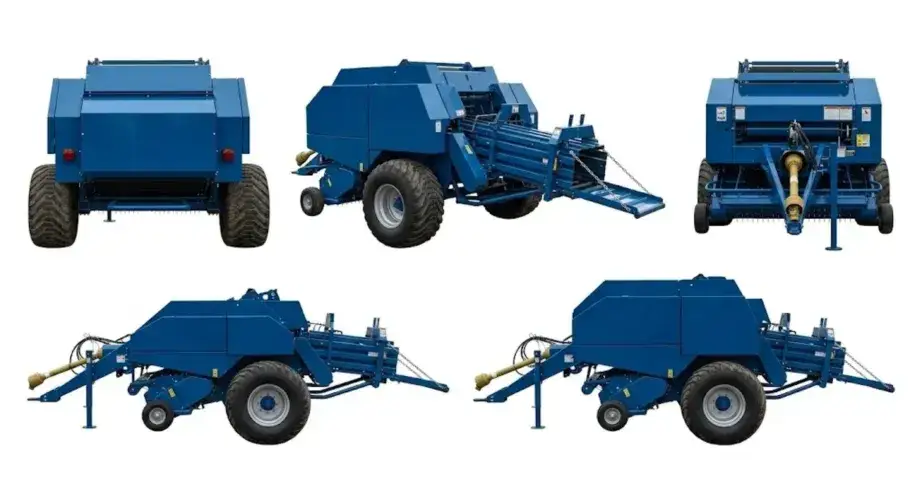
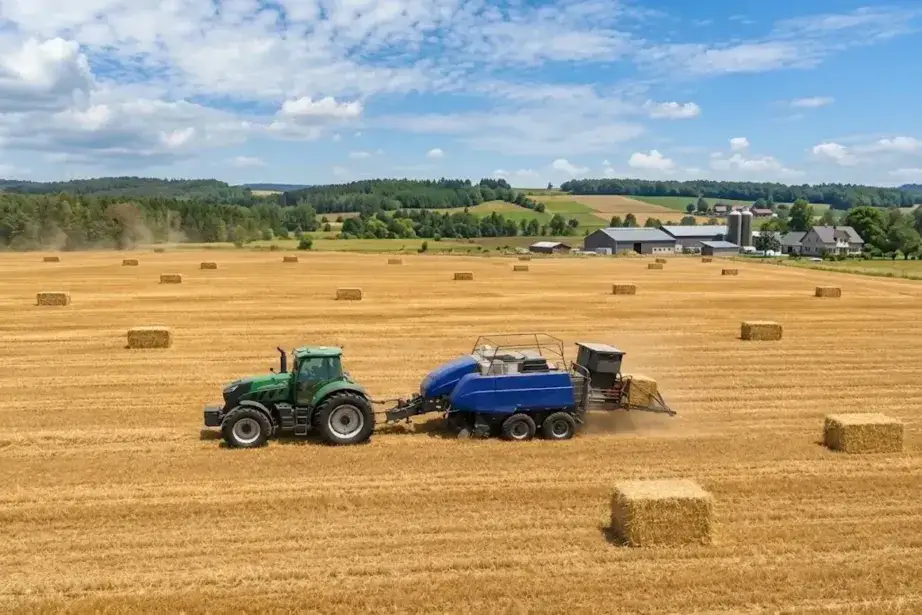
9YF-2200 (spring-tooth) — 2nd and 3rd cut alfalfa: The correct model for the lighter, finer-stemmed regrowth cuttings. Spring-tooth pickup handles alfalfa at 65HP+ without difficulty. High density spring setting achieves the 22–28kg bale weight dairy buyers prefer. The spring-tooth is gentler on the leafy 2nd/3rd cut material, reducing leaf shatter compared to the hammer-claw alternative.
9YF-2200S (shredder) — dense 1st cut alfalfa at full stand: Dense first-cut alfalfa windrows from high-producing established stands at 99HP+ produce stems thick enough to bridge across the standard inlet at the forward speed needed for commercial dairy volumes. The shredder pre-processes these stems into shorter uniform segments, virtually eliminating plugging events. The model switch from 9YF-2200 to 9YF-2200S is justified when 1st-cut plugging occurs more than 3–4 times per session at normal operating speed.
Tractor HP considerations by cutting: 1st cut alfalfa — 99HP minimum (9YF-2200S) or 65–85HP in light windrows (9YF-2200 at reduced forward speed). 2nd and 3rd cut — 65–85HP with the 9YF-2200 is comfortable for most established stand conditions. If operating the same tractor across all cuttings: size for 1st cut requirements and accept the surplus capacity on later cuts.
Alfalfa Hay Market Applications
| Markt |
Key Spec |
Bale Weight |
Price Indicator |
| Lactating dairy (primary) |
CP above 18%, NDF below 38%, RFV above 160, ADICP below 8% |
22–28 kg |
$9–$16/bale domestic |
| Japan/Korea export |
Moisture below 15%, Ash below 3%, CP above 18% |
18–22 kg |
Farm gate $180–$320/tonne (via aggregator) |
| Performance horses |
CP 18–22% (not above 22% for easy-keeper horses) |
18–22 kg |
$12–$20/bale |
| UAE/Saudi alfalfa |
Moisture below 12%, low dust, visual grade |
Various |
Compressed, volume-based — contact aggregator |
PTO Drive for the Short Alfalfa Baling Windows
Alfalfa reaches the correct 14–16% moisture window during a narrow afternoon period in most US production regions. A PTO driveshaft or CV joint failure during that window requires waiting for the next suitable afternoon — in the meantime, the windrow is subject to overnight dew re-wetting and morning re-drying before the next attempt. Each missed window delays harvest by 1–2 days and increases the risk of rain damage or advancing stage. Pre-season CV joint inspection is the highest-value preventive maintenance step for alfalfa operations. Full guide: PTO driveshaft pre-season inspection guide for alfalfa hay balers.
Frequently Asked Questions — Alfalfa Hay Baling
How do I identify late bud stage in the field?+
Late bud stage is identified by examining the upper 15–20cm of representative stems across the field. At late bud stage: visible buds are clustered at the stem tips but no flowers (purple or white) are open on more than 10% of stems sampled. The bud clusters are tight, green and densely formed — not yet elongated into the pre-flower form. Walk the field and check at least 20 stems in different areas before deciding to cut — alfalfa stands have natural variation in maturity, and waiting until all stems are at late bud means the fastest-maturing stems are already at 15–20% bloom. The correct decision point: cut when 80–90% of stems are at late bud or earlier, even though 10% may already show early bloom. Waiting for full uniformity is waiting too long.
Does alfalfa need to rest between cuttings to maintain stand health?+
Yes — alfalfa requires a rest period between cuttings to replenish root carbohydrate reserves. The traditional management guideline: allow alfalfa to show 20% bloom before the second cutting to indicate the plant has had sufficient time to restore carbohydrate reserves. This guideline has been largely replaced by a more nuanced approach based on regrowth days at specific temperatures: 28–35 days between cuttings is the modern standard for most US regions, based on growing degree day accumulation rather than fixed calendar intervals. The last cutting of the season requires an extended rest of 6–8 weeks before the first fall frost — this final rest period allows the plant to store carbohydrates in the taproot for winter survival. Cutting too aggressively late in the season is the most common cause of stand loss over multiple years. In irrigated western US operations: 6–7 cuttings per season is common with tight intervals; rainfed Midwest operations typically achieve 3–4 cuttings.
What is the maximum alfalfa bale weight for a dairy operation?+
There is no practical upper limit for dairy alfalfa bale weight — dairy farms use mechanical handling (front loader, bale spike, bale processor) as standard and can handle bales up to 30–35kg without difficulty. However, most operations target 22–28kg as a practical range that works well with both bale processor equipment (which requires adequate bale density to function correctly) and with hand placement where needed in the feed alley. Very heavy bales above 30kg from 1st cut dense alfalfa are acceptable mechanically but may create inconsistency in TMR ration delivery if the bale processor receives very large bales one day and average bales the next — the variation in material per bale can affect the consistency of the mixed ration if the processor operator does not adjust for bale weight variation. Weigh bales regularly during 1st cut sessions and target consistency within 22–28kg rather than maximising weight.
How do I prevent leaf loss during alfalfa baling?+
Alfalfa leaf retention during baling is primarily controlled by moisture at baling time. Leaves at 14–18% moisture are pliable and tolerate mechanical contact without fracturing. Below 12%: leaves are brittle and fracture at petiole attachment on any mechanical contact. The most effective leaf retention steps: (1) Bale at 14–16% core moisture — not below; (2) Reduce forward speed by 20% in dry, dusty windrows where leaf shatter is evident; (3) Avoid raking below 25% windrow moisture — raking at 15–18% causes significant leaf loss in the windrow before baling; (4) Maintain pickup tine height at 15–25mm clearance — tines dragging through the windrow base create extra mechanical contact that shatters dried leaves; (5) Consider a leaf-saver roller on the pickup reel if alfalfa is a primary crop — this accessory attachment reduces the mechanical impact on leaves as they enter the machine. Leaf retention of 95%+ is achievable with correct moisture and speed management; leaf loss below 10% should be expected under correctly managed conditions.
Why does my 2nd cut alfalfa test lower in CP than my 1st cut?+
This is counterintuitive — 2nd cut alfalfa typically tests higher in CP than 1st cut at the same growth stage because the regrowth is leafier and finer-stemmed. If your 2nd cut is testing lower than 1st cut, there are two common explanations: (1) Cutting stage mismatch — the 2nd cut was cut later (more bloom stage) than the 1st cut. A 1st cut at late bud and a 2nd cut at mid-bloom will show the expected reversed CP values. Compare the cutting stage, not just the calendar date between cuttings. (2) Heat damage — a 1st cut baled correctly at 15% moisture and a 2nd cut baled at 22% moisture (from rushing before rain) will show lower effective CP in the 2nd cut test due to high ADICP heat-damaged protein from the over-wet baling, even if the total CP numbers look similar. Request ADICP on both test reports to compare heat damage contribution to the result difference.
Can I bale alfalfa with a 50HP tractor using the 9YF-2200?+
For 2nd and 3rd cut alfalfa: a 50HP tractor at the 9YF-2200 minimum is workable at reduced forward speed. 2nd and 3rd cut alfalfa regrowth produces lighter, finer windrows than 1st cut — the HP demand per plunger stroke is significantly lower. At 50HP and 5 km/h forward speed: 2nd and 3rd cut alfalfa baling with the 9YF-2200 is within the tractor capacity for most established stands. The constraint appears in thick windrow sections where the HP demand peaks — reduce forward speed through these sections rather than maintaining constant speed and causing PTO speed to fall below 540rpm. For 1st cut alfalfa at full stand: 50HP is insufficient for the 9YF-2200 at any practical production speed. First-cut alfalfa requires 65–85HP for the 9YF-2200 at normal forward speed. If 50HP is the maximum available, consider using the 9YF-1700 (40HP minimum, lower throughput but matched to tractor capacity) for all cuttings, or using custom baling for the 1st cut and self-baling the lighter 2nd and 3rd cuts.
How do I price alfalfa hay for a dairy buyer who requests a forage test?+
The standard approach for test-based dairy alfalfa pricing is to establish a base price for a Grade 1 specification (RFV 150, CP 16%) and apply premiums or penalties by RFV point above or below that base. A common market formula: base price = $X/tonne at RFV 150; premium = $0.20–$0.40 per RFV point above 150; penalty = $0.15–$0.25 per RFV point below 150. Example: base $180/tonne at RFV 150. Your hay tests at RFV 185 (35 points above base) at $0.30/point premium = $10.50 premium per tonne. Adjusted price: $190.50/tonne. Variations: some buyers use NDF or ADF as the primary pricing parameter rather than RFV. Others add a separate ADICP premium or penalty. Confirm the pricing formula with your specific buyer before production — the formula affects what cutting stage and moisture target is most profitable for your specific buyer relationship.
Is alfalfa suitable for horses that are prone to laminitis?+
Alfalfa at 18–24% CP is generally too high in protein and too high in non-structural carbohydrates for horses with laminitis risk or insulin dysregulation. The high CP is not harmful in itself for most horses (excess protein is excreted as nitrogen in urine), but alfalfa also has higher calcium and sugar content that can be problematic for metabolic horses. Veterinarians managing laminitis-prone horses typically recommend: grass hay (tested below 10% NSC) as the primary forage and no alfalfa, or a small alfalfa supplement (10–15% of total forage) to provide mineral balance alongside low-NSC grass hay. For healthy performance horses in hard work: alfalfa (as a supplement to grass hay rather than a sole ration) is appropriate and beneficial. Always follow the advice of the attending equine veterinarian for any horse with a metabolic condition — general guidelines cannot replace individual assessment of the specific horse.
Producing Alfalfa Hay for Dairy or Export Markets?
Tell us your alfalfa acreage, target grade and tractor HP and we will confirm whether the 9YF-2200 or 9YF-2200S is the right model for consistent Supreme-grade production.
America Ever-Power Forage Baler Equipment INC. · 1401 21st ST STE R, Sacramento, CA 95811
Herausgeber: Cxm