
The Small Square Hay Market: Who Buys and What They Pay
Market Segments and Price Ranges
Small square hay bales command premium prices relative to large round bales of equivalent quality because the format provides handling convenience that the equine and retail markets pay for. The same forage that rounds for $60–90 per ton at commodity pricing can sell for $200–450 per ton in small square format when sold direct to horse owners and boarding stables. Understanding which market segment you are targeting determines your pricing strategy, quality requirements and sales approach.
| Market Segment | Typical Price Range | Key Requirement |
|---|---|---|
| Direct farm sale — horse owner | $8–18/bale | Quality, moisture documentation, consistent weight |
| Boarding stable supply | $7–15/bale | Volume, reliable delivery schedule, consistent quality |
| Futtermittelhandel im Großhandel | $5–10/bale | Consistent supply, palletized delivery, uniform bale weight |
| Farm stand retail | $6–14/bale | Attractive bale appearance, availability signage, self-serve setup |
| Commodity livestock supply | $3–7/bale | Volume, fast turnover, lower quality tolerance |
Direct Farm Sales: The Highest-Margin Channel
Setting Up for Farm Pickup Success
Direct farm sales — where buyers come to your location to pick up hay — offer the highest gross margin of any channel because you retain the full retail price with no intermediary margin. The trade-off is sales effort: you must attract buyers, answer inquiries, be available at pickup times and maintain a supply that meets buyer volume needs throughout the season. The economics are straightforward: a boarding stable buyer who takes 100 bales per week at $12 per bale generates $1,200 per week in direct revenue from one customer relationship.
Setting up your farm for buyer pickup: a visible, well-maintained hay storage area with clear access for pickup trucks and small trailers is the first requirement. Signs on the road frontage advertising hay for sale with a phone number (and a text-capable number — most buyers prefer texting) generate inquiries from passersby who are already in the market. A simple self-serve setup where buyers can load their own bales and pay via digital payment reduces your time at the farm stand to near zero during off-peak hours.
Quantity Minimums and Pricing Tiers
Offering a per-bale price for single bales (the highest price) and a lower price per bale for purchases of 20+ bales or full pallet orders encourages buyers to purchase in larger quantities — reducing your transaction overhead per bale and securing larger volumes from each buyer visit. A typical tiered structure: single bales at $12, 10–19 bales at $11, 20+ bales at $10, full pallet (typically 60–80 bales depending on stack configuration) at $9. Adjust these thresholds and prices for your local market — the principle is that every step up in order size represents real cost savings to you in handling time and transaction overhead.
Boarding Stables and Equestrian Facilities: Your Best Volume Buyers
Why Boarding Stable Relationships Are Worth Pursuing
A 20-horse boarding stable consumes approximately 40–60 small square bales per week throughout the year — roughly 2,000–3,000 bales per season. A single boarding stable relationship at $11 per bale generates $22,000–$33,000 per season in direct revenue with predictable weekly demand that allows efficient production and delivery scheduling. Three such relationships fill most of the productive capacity of a small square baling operation and provide revenue stability that commodity pricing cannot offer.
Approaching boarding stables: do not cold-call during busy hours (feeding time morning and evening). Visit or call mid-morning on weekdays and ask to speak with the barn manager or owner about your hay supply program. Bring a sample bale if possible — a barn manager who can open, smell and assess your hay in person makes a buying decision faster than any description. Offer a 10-bale trial delivery at the standard price with no commitment — this removes the risk from their decision and lets your product demonstrate itself.
What Boarding Stable Buyers Need from You
Beyond quality, boarding stable buyers need reliability. A supplier who delivers consistently on schedule — weekly or bi-weekly on agreed days — and communicates proactively when supply or delivery will change is valued above a supplier with marginally higher quality who delivers inconsistently. Set a delivery schedule that you can maintain reliably throughout the full season, including the weeks immediately after a cutting when production is highest and the weeks before the next cutting when stored inventory is lowest. If you cannot deliver reliably for a specific week, notify your buyer 48–72 hours in advance so they can arrange coverage.
Feed Stores and Farm Supply Retailers
The Volume-Margin Trade-Off
Feed stores and farm supply retailers buy hay at wholesale prices and resell at retail — their margin is the difference, typically 20–35% above their purchase price. For a bale that retails at $12 in the store, the store pays the producer $8–10 per bale. This is lower than direct farm sale pricing but offers guaranteed volume and reduced sales effort: one weekly or bi-weekly delivery to a single location moves more bales than managing 20 individual customer relationships.
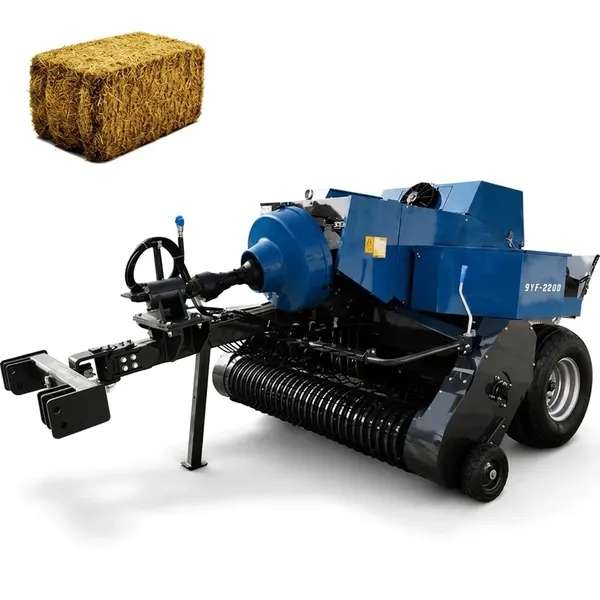
Feed store buyers have two additional requirements beyond price and quality: palletized delivery and consistent bale weight. Most feed stores stack small square bales on pallets in their retail area — bales that cannot be stacked neatly (irregular dimensions, variable weight or shape) are a problem for store staff. The 9YF series produces consistent 460×360mm bale cross-sections from the same plunger setting throughout the season — exactly the consistency that feed store buyers need for display stacking.
Approaching Feed Store Buyers
Contact the feed department manager (not the store owner — the department manager makes buying decisions for hay stock in most stores) and schedule a meeting outside of busy hours. Bring a forage analysis report and a sample bale. Ask about their current supplier, their weekly volume and their quality requirements — listen first before presenting your price. Offer a trial order of 100–200 bales for the store to evaluate both your quality and your delivery reliability before committing to a full season arrangement. Stores that currently have no reliable local supplier will move quickly from trial to regular orders if your product delivers on its specification.
Online Platforms and Hay Listing Sites
Several online platforms connect hay producers with buyers, and local platforms often generate more leads than national listings for small square format hay. The most effective platforms for small square hay sales in the U.S.:
The most visited dedicated hay listing site in the U.S. Listings are free for producers. Buyers search by location and species — appearing in local results drives inbound inquiries without active marketing effort. Include forage analysis data in your listing to differentiate from listings without it.
Highly effective for local direct sales. Horse owner and equestrian groups in your area are searchable on Facebook — post hay availability in these groups and in the Marketplace. Include a photo of an open bale showing quality and a photo of your production. Update listings with each new cutting.
Community classified platforms and local equestrian association newsletters reach concentrated local horse owner populations. State cooperative extension services and county farm bureau contacts can provide listings in producer directories that connect you directly with local livestock and horse operations.
Pricing Your Small Square Hay Bales
Cost-Plus Pricing vs Market-Based Pricing
Two approaches define small square hay pricing. Cost-plus pricing: calculate your total production cost per bale (all field operations, twine, tractor fuel, equipment depreciation and handling labour divided by total bales produced) and add a target margin. If your all-in cost is $6.50 per bale and you target a 40% margin, your floor price is $9.10 per bale. Market-based pricing: research what comparable hay is selling for in your area through Hay Exchange listings, local auction results and conversations with feed store managers, and price at or slightly below the market rate for equivalent quality.
The most effective approach combines both: use cost-plus to establish your floor (the minimum price at which you make a margin worth producing for) and market-based pricing to determine whether your floor is below, at or above what buyers in your area are paying. If the market rate in your area is above your floor, you have room to add quality documentation and service premiums. If the market rate is at or below your floor, you need to either reduce production costs or target a higher-value market segment.

Quality Documentation That Commands Premium Prices
Forage Analysis: The Most Valuable Quality Document
A forage analysis report from an accredited laboratory provides quantified quality data — protein content, energy (NEL/TDN), fiber fractions (ADF/NDF), moisture, ash and often additional parameters — that buyers cannot assess visually. For horse buyers and barn managers who understand forage nutrition, an analysis certificate attached to each cutting distinguishes your hay from unmarked products and directly supports premium pricing. Testing cost is typically $20–45 per sample — a cost recovered on the premium generated from the first 2–4 bales sold with the certificate attached.
Submit one composite sample per cutting per field — collect 10–15 core samples across the windrow and field before baling, combine into one sample bag and submit to the laboratory. Results typically return within 3–5 business days and can be attached to delivery invoices or displayed at the farm stand with the current cutting hay.
Moisture Documentation and Bale Weight
Recording the moisture at baling (from windrow probe readings before each baling session) and the average bale weight per cutting (from a 10-bale sample at the start of each session) gives buyers reliable information about what they are purchasing. A simple card attached to a representative bale — “Timothy hay, first cut, baled July 14, moisture 15%, average bale weight 24kg” — communicates professionalism and quality control that most producers do not provide. Buyers who receive this information once will expect it on every delivery — which means implementing the measurement habit at the start rather than inconsistently.
Delivery, Stacking and Customer Service
Delivery to boarding stables and large buyers requires a flatbed or hay truck that can carry 80–200 bales per load and stack bales in barn storage areas. The most efficient delivery setup for small square bales is a flatbed truck with a Hay Buster or similar bale unloader — eliminating manual off-stacking from the truck and allowing one person to deliver and stack 100–200 bales without additional labour. The capital cost of this equipment is substantial but the labour saving in delivery operations justifies it above approximately 200 bales per week in delivery volume.
Stacking bales in barn storage for the buyer — rather than leaving them on the truck for the buyer to move — is a service differentiator that some buyers will pay a premium delivery fee for. A barn manager at a 30-horse stable who would otherwise spend 2–3 hours each delivery day moving bales from the truck to the loft will pay $0.50–1.00 per bale extra for a supplier who stacks the delivery. At 150 bales per delivery, that is $75–150 of additional revenue per delivery visit for work that a single additional person on the delivery crew can handle.
Production Equipment Reference
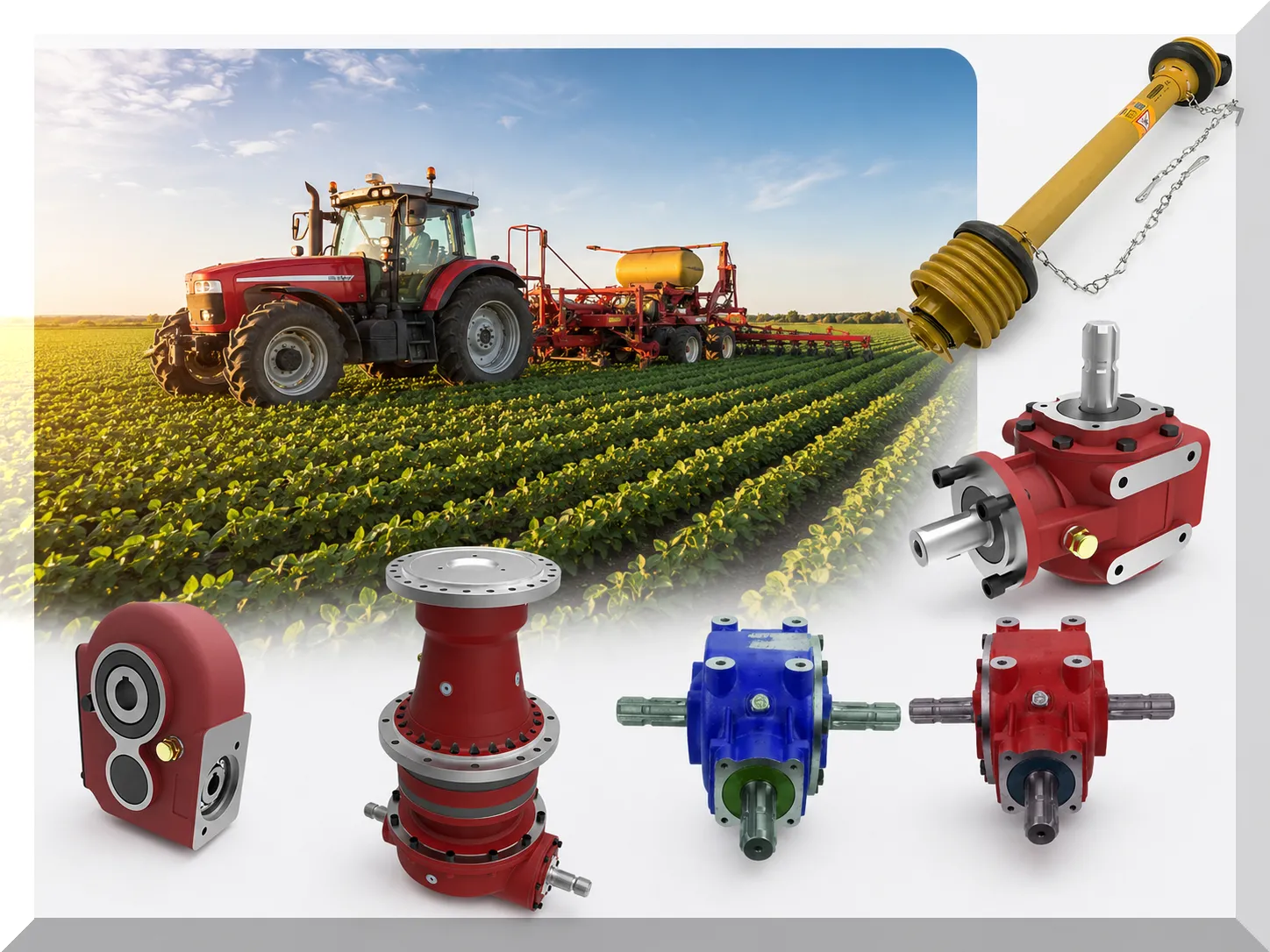
Gearbox and PTO shaft specifications for the 9YF production equipment: Spezifikationen für landwirtschaftliche Getriebe und Zapfwellen
Vollständige Ansicht 9YF square baler range to match your tractor HP and crop type to the right production model — consistent bale quality starts with the right equipment. PTO driveshaft specifications: PTO driveshaft and CV joint guide.
Frequently Asked Questions — Selling Small Square Hay Bales
Produce the Quality That Sells at Premium Prices
The right baler produces the consistent 460×360mm format that retail, horse and feed store buyers expect. From the compact 40HP 9YF-1700 to the fan-equipped 9YFS-2.2 for premium markets — tell us your operation and we will recommend the right model.
America Ever-Power Forage Baler Equipment INC. · 1401 21st ST STE R, Sacramento, CA 95811
Herausgeber: Cxm


