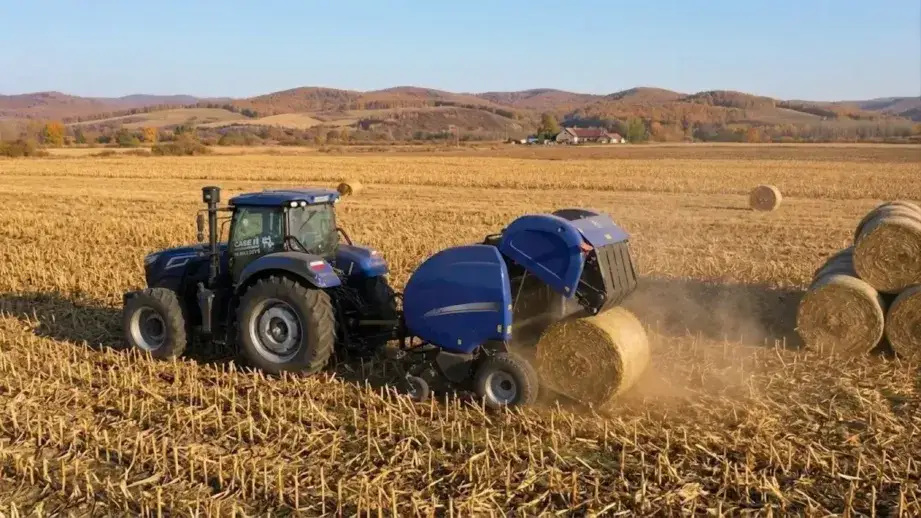
Kaufberatung · 9YQ-Serie · Modellvergleich und -auswahl
Kaufberatung für Rundballenpressen
Bei der Wahl der richtigen Rundballenpresse müssen drei Faktoren berücksichtigt werden, die oft vernachlässigt werden: die vom Markt geforderte Ballengröße, die verfügbare Traktorleistung und die für Ihre Ernteart und Lagerungsplanung benötigten Funktionen. Wird einer dieser Faktoren falsch eingeschätzt, kann dies zu einer Maschine führen, die entweder Ihren Marktzugang einschränkt, Ihren Traktor überlastet oder Ballen produziert, deren Lagerung und Handhabung teuer sind. Dieser Leitfaden führt Sie Schritt für Schritt durch alle Entscheidungsprozesse.
Themen: Festkammer vs. variable Kammer · Ballengröße je nach Markt · PS-Anforderungen · Netzwickel vs. Bindegarn · die 9YQ-Modellreihe · Checkliste für die Gebrauchtballenpresse · Gesamtbetriebskosten
Die Ballengröße sollte Ihr Hauptkriterium sein – nicht die Traktorleistung, nicht die Markenpräferenz, nicht der Preis. Die vom Käufer geforderte Ballengröße oder die Kapazität Ihrer eigenen Zuführanlage bestimmt, welche Modelle überhaupt infrage kommen. Eine Rundballenpresse, die den falschen Durchmesser für Ihren Markt oder Ihre Zuführanlage produziert, ist unabhängig von ihren anderen Eigenschaften ein Nachteil.
Für die meisten US-amerikanischen Heuproduktionsbetriebe, die Trockenheu für den Inlandsmarkt oder den Export herstellen, bietet eine Festkammer-Presse die erforderliche gleichmäßige Dichte und einen einfacheren Mechanismus. Die 9YQ-Serie verwendet eine Festkammer-Konstruktion, die ein gleichmäßiges Ballengewicht in allen Positionen der Kammer gewährleistet.
Wählen Sie die Ballenpresse immer passend zu Ihrem aktuellen Traktor – nicht zu dem, den Sie eventuell später aufrüsten möchten. Der Betrieb einer Ballenpresse am Leistungslimit Ihres Traktors führt zu drei Problemen: Die Zapfwellendrehzahl sinkt bei dichten Schwaden unter 540 U/min (was zu Problemen mit dem Knoten- oder Wickelsystem führt); die Fahrgeschwindigkeit muss so stark reduziert werden, dass die Produktivität inakzeptabel ist; und der Kraftstoffverbrauch des Traktors steigt stark an, da der Motor dauerhaft unter hoher Last arbeitet.
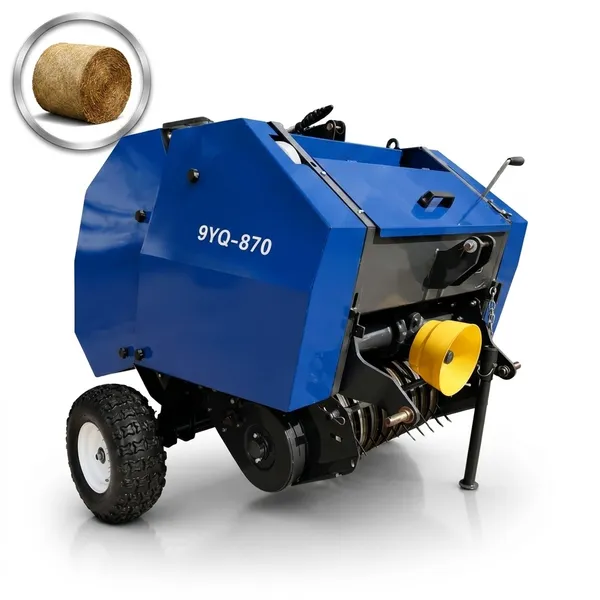
9YQ-870 — Kleinbetriebe und HobbybetriebeMindestens 40 PS · 870-mm-Ballen
Konzipiert für landwirtschaftliche Betriebe mit kompakten Traktoren und für Tätigkeiten, bei denen die Ballenhandhabung ohne Frontlader erfolgt. Der 870 mm große Ballen mit einem Gewicht von 100–160 kg kann von zwei Personen bewegt oder ohne Maschineneinsatz an seinen Bestimmungsort gerollt werden. Ideal für: Pferdebetriebe mit 3–10 Pferden, kleine Ziegen- oder Schafherden, Hobbyfarmen und Betriebe, bei denen Arbeitskräfte vorhanden, aber die Investitionen in Maschinen begrenzt sind. Die geringe Ballengröße minimiert zudem den Futterverlust bei kleinen Herden – der Ballen wird schneller verbraucht, bevor die offene Seite beschädigt wird.
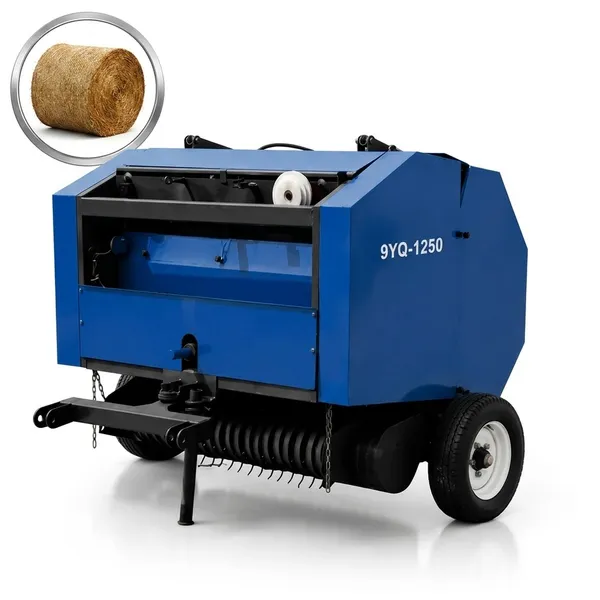
9YQ-1250 – Das vielseitigste Modell für kleine bis mittlere landwirtschaftliche BetriebeMindestens 55 PS · 1250-mm-Ballen
Der Ballendurchmesser von 1.250 mm ist eine der gängigsten Größen für die heimische Rinderhaltung – Standard-Rundballenfütterer in den USA sind üblicherweise für Ballen mit 1.200–1.350 mm Durchmesser ausgelegt. Das Ballengewicht von 250–380 kg lässt sich mit einem mittelgroßen Frontlader und einem einzelnen Ballenspieß gut handhaben. Dieses Modell eignet sich für die meisten kleinen bis mittelgroßen Rinderzuchtbetriebe mit 30–80 Zuchtkühen sowie für Heuproduzenten mit mittlerem Produktionsvolumen, die an regionale Rinder- und Milchviehbetriebe verkaufen.
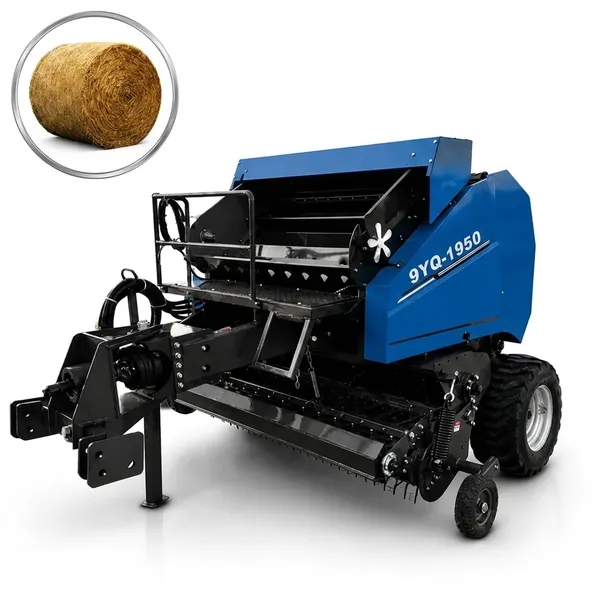
9YQ-1950 — Standard für gewerbliche HerstellerMindestens 75 PS · 1.950 mm Ballen
Der 1.950-mm-Ballen mit einem Gewicht von 400–650 kg ist das Standardformat für die kommerzielle Rundheuproduktion – groß genug für die effiziente Fütterung großer Herden und klein genug für die meisten Frontlader. Dieses Modell eignet sich für Heuproduzenten, die große Rinderzuchtbetriebe beliefern, für Silageproduzenten mit Mais- oder Grassilageprogrammen von über 40 Hektar sowie für Betriebe, die Exportmärkte bedienen, wo Ballen mit einem Durchmesser von 1.900–2.000 mm üblich sind.
9YQ-2300 — Kommerzielle Betriebe mit maximalem VolumenMindestens 100 PS · 2.300 mm Ballen
Das größte Modell der 9YQ-Reihe produziert Ballen von 650–1.000 kg und erzielt so maximale Effizienz pro Ballen in sehr großen Betrieben. Dieses Modell eignet sich für große Heu- und Biomasseproduzenten, die bereits über die entsprechende Ausrüstung (Schwerlast-Teleskoplader, Ballenanhänger) verfügen. Der 2.300-mm-Ballen ist nicht für Betriebe ohne spezielle Ausrüstung zum Umschlag von Schwerballen geeignet.
KONTROLLIEREN 1
Ballenkammerriemen oder -ketten (je nach Modell). Öffnen Sie die Heckklappe und prüfen Sie die gesamte Länge jedes Riemens bzw. jeder Kette. Verschleißerscheinungen an Riemen: Risse auf der Riemenoberfläche, Ausfransungen an den Kanten, fehlende oder beschädigte Verzahnung an der Verbindungsstelle. Verschleißerscheinungen an Ketten: sichtbare Längung zwischen den Gliedern, Rostbildung an einzelnen Gliedern, abgenutzte Eingriffszähne der Kettenräder. Der effektive Kaufpreis einer gebrauchten Rundballenpresse, deren Riemen oder Ketten den Verschleißschwellenwert erreicht haben, erhöht sich um $800–$2.500.
KONTROLLE 2
Aufnahmezinken und Kurvenfolger. Zählen Sie alle Zinken – fehlende Zinken führen zu Lücken in der Aufnahme. Vergleichen Sie die Zinkenlänge mit den Spezifikationen für neue Zinken (verbogene oder verkürzte Zinken durch Kontakt mit Fremdkörpern). Drehen Sie die Aufnahmetrommel von Hand und prüfen Sie den reibungslosen Eingriff des Kurvenfolgers – jegliches Ruckeln oder Schleifen deutet auf einen verschlissenen Kurvenfolger oder eine beschädigte Nocke hin.
KONTROLLE 3
Netz- oder Schnurwickelmechanismus. Bei Ballenpressen mit Netzwicklung: Prüfen Sie die Messerklinge auf Schärfe und die Netzführung auf Grate. Bitten Sie den Verkäufer nach Möglichkeit um eine Vorführung des Wickelvorgangs – eine Live-Demonstration ist die beste Bestätigung der Funktionsfähigkeit. Bei Bindegarn: Prüfen Sie alle Garnführungen und den Binde- bzw. Fangmechanismus. Alle klemmenden oder verhakten Teile müssen repariert werden, bevor die Maschine wieder einsatzbereit ist.
KONTROLLE 4
Alle Peilpunkte – von Hand drehen und lauschen. Bei stehender Maschine und abgeklemmter Zapfwelle: Drehen Sie jede zugängliche Welle oder Walze von Hand. Schleifende, rumpelnde oder raue Geräusche deuten auf ein verschlissenes oder bereits verschlissenes Lager hin. Achten Sie besonders auf die Lager der Aufnahmetrommel (2x), die Walzenlager der Ballenkammer (alle zugänglich) und die Lager des Ballenklappenscharniers.
KONTROLLE 5
Heckklappenverriegelung und Hydrauliksystem (falls es sich um eine hydraulisch anhebbare Heckklappe handelt). Die Auswurfklappe muss einwandfrei einrasten und sich leicht lösen lassen. Bei Hydrauliksystemen: Prüfen Sie die Zylinderdichtungen auf Hydrauliköllecks und stellen Sie sicher, dass die Klappe die vollständig geöffnete Position ohne zu klemmen erreicht. Eine Klappe, die sich nicht vollständig öffnet, muss vor dem Pressen überprüft werden – eine zu geringe Klappenöffnung kann zu Beschädigungen beim Auswurf der Ballen führen.
KONTROLLE 6
Zapfwelle und Gleichlaufgelenke. Prüfen Sie den Zustand der Manschette (keine Risse oder Spalten), die Beweglichkeit des Teleskopteils (freies Ausfahren bis zum vollen Hub ohne Blockieren) und den Zustand des Schmiernippels (frei, nicht verstopft). Eine gerissene Manschette des Gleichlaufgelenks muss nicht sofort ausgetauscht werden, sollte aber vor der nächsten Saison ersetzt werden.
Sollte ich mir als erste Ballenpresse eine neue oder eine gebrauchte Rundballenpresse kaufen?+
Für den Einstieg in die Welt der Rundballenpressen: Eine gebrauchte Maschine in gutem Zustand zum Preis von 60–701 TP5T (Neupreis) ist ein sinnvoller Einstieg, sofern sie die oben genannte Checkliste besteht. Das Risiko bei einer ersten Ballenpresse ist unbekannt: Sie wissen noch nicht, ob Sie regelmäßig genügend Ballen produzieren werden, um die Investition zu rechtfertigen. Ein günstigerer Einstieg reduziert das finanzielle Risiko in der Lernphase. Der Vorteil einer neuen Maschine: Die Herstellergarantie deckt alle mechanischen Probleme in der ersten Saison ab – genau dann, wenn Sie die Maschine kennenlernen und wahrscheinlich Fragen haben, ob ein Problem auf Bedienungsfehler oder Maschinendefekt zurückzuführen ist. Eine neue Maschine hat zudem von Anfang an keinen Verschleiß durch die Anzahl der produzierten Ballen. Wenn das Budget es zulässt, ist eine neue Maschine die risikoärmere Wahl. Besteht eine gebrauchte Maschine die vollständige Inspektion und verfügt über Wartungsnachweise, kann sie zum richtigen Preis eine gute Anschaffung sein. Vermeiden Sie gebrauchte Maschinen, die mehr als zwei Punkte auf der Checkliste nicht erfüllen – die Reparaturkosten nach dem Kauf übersteigen in der Regel den Preisnachlass gegenüber dem Marktpreis.
Wie viele Hektar Land benötige ich, um die Anschaffung einer Rundballenpresse zu rechtfertigen?+
Die optimale Anbaufläche hängt vom Heuertrag und davon ab, ob Sie auch Lohnpressung anbieten. Als Faustregel gilt: Um eine Rundballenpresse (Maschinenkosten + Betriebskosten) gegenüber den Kosten der Lohnpressung zu rechtfertigen, benötigen Sie in der Regel 80–150 Hektar Heufläche pro Saison für den Eigenbedarf oder 40–80 Hektar, wenn Sie auch Lohnpressung für Nachbarn anbieten. Unter 40 Hektar: Lohnpressung ist fast immer die kostengünstigere Option – die Maschinenkosten pro Ballen bei Eigenbesitz übersteigen den Lohnpresspreis. Über 150 Hektar: Der Besitz einer eigenen Maschine ist eindeutig gerechtfertigt. Zwischen 40 und 150 Hektar: Die Berechnung hängt von den örtlichen Lohnpresspreisen, Ihrem Heuertrag und der geplanten Nutzungsdauer der Maschine ab. Bei einer 9YQ-870 oder 9YQ-1250 mit niedrigeren Anschaffungskosten: Die Gewinnschwelle liegt bei einer geringeren Fläche – oft bei 30–50 Hektar, wo sich selbst eine kleine Maschine schneller amortisiert als Lohnunternehmerleistungen in Gebieten, in denen Lohnballenpressdienste rar oder unzuverlässig sind.
Wie hoch ist die typische Lebensdauer einer Rundballenpresse?+
Die Lebensdauer einer Rundballenpresse wird, wie bei Quaderballenpressen, am besten in Ballenanzahl statt in Jahren gemessen. Eine gut gewartete Rundballenpresse kann 25.000 bis 60.000 Ballen produzieren, bevor größere Investitionen in die Mechanik nötig werden. Bei einer typischen Saison mit 300 Ballen entspricht dies 80 bis 200 Betriebsjahren – weshalb Rundballenpressen oft mehrfach verkauft werden und Maschinen aus den 1990er-Jahren noch immer regelmäßig im Einsatz sind. Die Komponenten, die die Wirtschaftlichkeit einer Rundballenpresse am stärksten beeinflussen, sind: Riemen (bei Maschinen mit variabler Presskammer), Rollenlager der Ballenkammer sowie Verschleiß an Aufnahmenocken und Zinken. Mit jährlicher Inspektion vor Saisonbeginn und rechtzeitigem Austausch von Verschleißteilen ist eine Rundballenpresse eine sehr langlebige Maschine. Das regelmäßige tägliche Schmieren aller Schmiernippel ist für Rundballenpressen genauso wichtig wie für Quaderballenpressen und hat denselben Einfluss auf die Lagerlebensdauer.
Können die Rundballenpressen 9YQ auch für Silage verwendet werden?+
Ja – die Ballenpressen der Serie 9YQ können Grassilage (Heulage) mit einer Restfeuchte von 40–551 µT pressen und anschließend mit Stretchfolie von einer separaten Wickelmaschine umwickeln. Die Ballenpresse formt den Ballen; eine separate Wickelmaschine bringt dann 4–6 Lagen Stretchfolie an, um die für die Fermentation notwendigen anaeroben Bedingungen zu schaffen. Die Modelle der Serie 9YQ mit Netzwickelfunktion eignen sich besonders für die Silageballenpressung – das Netz sorgt für Formstabilität während des Wickelvorgangs, der unmittelbar nach dem Pressen erfolgt. Für die Silageproduktion gilt: Pressen Sie die Ballen mit einer Restfeuchte von 40–551 µT, wickeln Sie sie innerhalb von 4 Stunden nach dem Pressen (am selben Tag) mit Stretchfolie ein und lagern Sie sie auf einer festen, ebenen Fläche fern von scharfen Steinen oder anderen Beschädigungsgefahren. Die Stretchfolie ist die entscheidende Investition für die Silagequalität; jede Beschädigung der Folie unterbricht die Versiegelung, und der betroffene Bereich fermentiert nicht richtig.
Welche Mindestfeldgröße ist erforderlich, damit das Rundballenpressen wirtschaftlich sinnvoll ist?+
Felder unter 0,8 Hektar werden für Rundballenpressen zunehmend unproduktiver, da der Anteil der Wendezeit am Gesamtpressvorgang auf kleinen Feldern stark ansteigt. Eine Rundballenpresse verbringt auf einem 0,8 Hektar großen Feld etwa 30–40 l/5 Tonnen ihrer Presszeit mit Wendemanövern, im Vergleich zu 10–15 l/5 Tonnen auf einem 4 Hektar großen Feld. Dies reduziert die effektive Ballenleistung pro Stunde im gleichen Verhältnis. Es gibt keine feste Mindestgröße – aber unter 1,2–1,6 Hektar nähert sich die Zeit pro Ballen der Leistung einer Quaderballenpresse auf demselben Feld an, allerdings mit geringerer Effizienz bei der Ballenhandhabung. Das Kompaktmodell 9YQ-870 ist aufgrund seines engeren Wenderadius die praktischste Wahl für kleinere Felder; das Modell 9YQ-2300 ist am effizientesten auf großen, offenen Feldern ab 8 Hektar, wo der Anteil der Wendezeit während des gesamten Pressvorgangs gering bleibt.
Benötige ich eine Ballenrampe oder einen Ballenauswerfer an der Rundballenpresse?+
Eine Ballenrampe (auch Auswerfer genannt) befördert den Ballen von der Maschine nach hinten und kontrolliert dessen Abwurf auf die Feldoberfläche. Dadurch wird verhindert, dass der Ballen unkontrolliert wegrollt, wenn die Heckklappe an Hängen oder auf unebenem Gelände geöffnet wird. Auf flachen oder nahezu flachen Feldern ist eine Ballenrampe eher eine praktische Funktion als zwingend notwendig – der Ballen rollt unter den meisten Feldbedingungen von selbst sanft aus der geöffneten Heckklappe. Für hügeliges Gelände oder Steigungen über 51 µm (51 µT) wird eine Rampe oder ein Ballenauswerfer dringend empfohlen. Ohne diese Funktion rollt ein am Hang aus der Heckklappe freigegebener Ballen unkontrolliert bergab und kann beträchtliche Strecken zurücklegen, wodurch eine Gefahr für alle Personen auf dem Feld entsteht. Prüfen Sie, ob Ihr gewünschtes Modell serienmäßig oder optional mit einer Ballenrampe ausgestattet ist und vergewissern Sie sich, dass diese Funktion vorhanden ist, wenn Ihre Felder nennenswerte Steigungen aufweisen.
Wie hoch sind die Gesamtbetriebskosten eines 9YQ-1250 über einen Zeitraum von 10 Jahren?+
Die geschätzten Gesamtbetriebskosten einer 9YQ-1250 über 10 Jahre bei 400 Ballen pro Saison (insgesamt 4.000 Ballen) setzen sich wie folgt zusammen: Kaufpreis (geschätzt) + 10 jährliche Wartungskosten ($150–$300) + Austausch der Pickupzinken (2–3 Sätze à $80–$120) + Austausch der Lager (1–2 Sätze à $150–$300) + Netz- oder Bindegarn ($0,50–$1,50 pro Ballen) × 4.000 Ballen = $2.000–$6.000 Wickelkosten. Der Kaufpreis der Maschine ist bei diesem Ballenvolumen der größte Kostenfaktor – Wartung und Verbrauchsmaterialien erhöhen den Kaufpreis über den 10-Jahres-Zeitraum um ca. 15–25%. Bei 400 Ballen pro Saison ist die Wirtschaftlichkeit nur dann gegeben, wenn die Einsparungen gegenüber Lohnpressung (bzw. der Nutzen der eigenen Terminplanung und des Qualitätsmanagements) die jährlichen Gesamtkosten übersteigen. Bei üblichen Lohnpresspreisen von $12–$20 pro Ballen und eigenen Maschinenkosten von $7–$12 pro Ballen bei diesem Volumen ist der Eigenbetrieb bei 400 Ballen pro Saison in den meisten Märkten des Maisgürtels und des Südostens der USA wirtschaftlich sinnvoll.
Kann eine 9YQ-Rundballenpresse Maisstroh pressen?+
Ja – Rundballenpressen sind bei Maisstroh tatsächlich unempfindlicher als kleine Quaderballenpressen, da der Ballenbildungsmechanismus einer Rundballenpresse nicht das gleiche Problem der Brückenbildung am festen Einlauf aufweist wie eine Quaderballenpresse. Die rollende Ballenkammer einer Rundballenpresse zieht das Material kontinuierlich nach innen, anstatt diskrete Ladungen über einen Gabelförderer zuzuführen. Dadurch eignet sie sich naturgemäß besser für die Verarbeitung von Stroh unterschiedlicher Länge. Für die Strohballenpressung mit der 9YQ-Serie gilt: Der empfohlene Feuchtigkeitsbereich ist derselbe wie für die Strohballenpressung mit Quaderballen (16–24%). Bei dichtem Stroh sollte die Fahrgeschwindigkeit auf 3–5 km/h reduziert werden, um eine Überlastung der Aufnahme zu vermeiden. Für Strohballen ist Netzgewebe dem Bindegarn vorzuziehen, da die Enden der Strohpartikel dazu neigen, aus der Ballenoberfläche herauszuragen und eine raue Oberfläche zu erzeugen, die die Bindegarnstränge an ihren Kontaktpunkten belastet.