
Rastrillo de heno de rueda de dedos 9LZ-6.0 | Rastrillo en V de 12 ruedas y 6 m
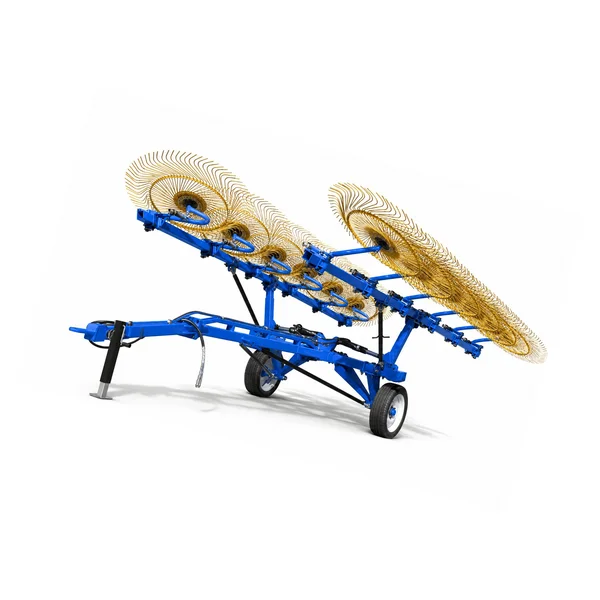
El Rastrillo de heno de rueda de dedos 9LZ-6.0 Es un rastrillo en V de doce discos accionado por el suelo, diseñado para operaciones de henificación que han superado la capacidad de su rastrillo rotatorio, pero que aún no requieren la inversión de capital ni los requisitos de potencia de una máquina comercial de 9 metros de ancho completo. Con 720 púas de resorte en 12 discos flotantes independientes, un ancho de trabajo de 6,0 metros y un tractor mínimo de ≥25 kW (35 HP), el 9LZ-6.0 ofrece el rendimiento suave con las hojas y la consistencia en la formación de hileras de una máquina comercial. rastrillo de heno de rueda dentada al alcance de las granjas que utilizan tractores compactos y utilitarios, la clase de tractores que impulsa la mayoría de los programas de heno de 50 a 200 hectáreas en los EE. UU.
¿Por qué las operaciones actualizan sus rastrillos rotativos al diseño de rueda de dedos 9LZ-6.0?
El rastrillo rotatorio es el rastrillo para heno de gama básica más común que se vende en el mercado estadounidense de tractores compactos, y funciona adecuadamente para operaciones de menos de 50 hectáreas que empacan un solo tipo de cultivo en un volumen anual bajo. Cuando la superficie anual de heno supera las 50 a 75 hectáreas, o cuando el cultivo principal cambia a alfalfa, donde las tasas de pérdida de hojas afectan directamente el valor de la paca, los rastrillos rotatorios producen sistemáticamente dos problemas que se acumulan temporada tras temporada: una mala uniformidad en la hilera y una rotura de hojas superior a la aceptable.
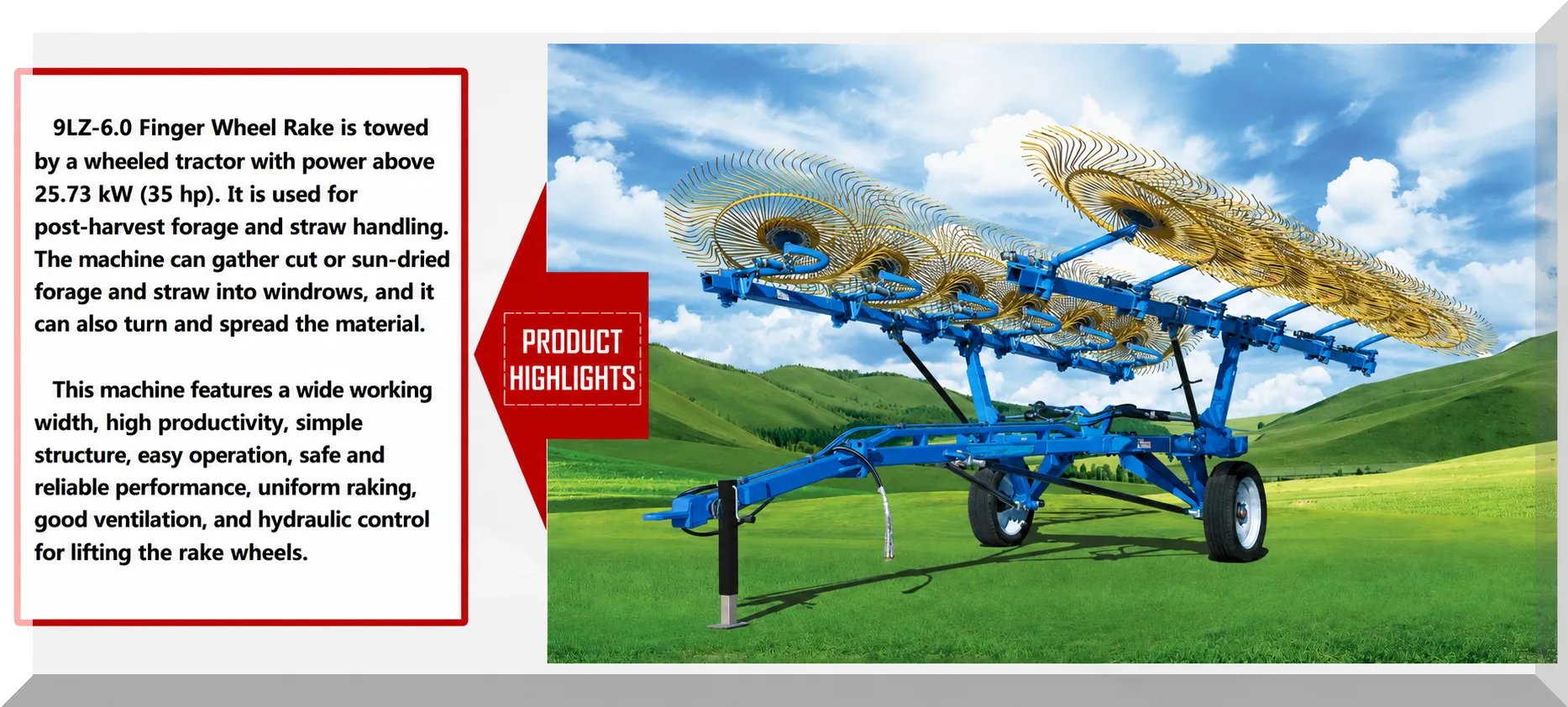
El 9LZ-6.0 resuelve ambos problemas mediante el mecanismo de disco de rueda dentada, que es mecánicamente superior a los diseños de tambor giratorio en tres aspectos medibles:
Especificaciones técnicas
Todos los valores son nominales de fábrica. El 9LZ-6.0 solo requiere un enganche de barra de tiro estándar y una salida hidráulica SCV trasera para elevación/descenso. No requiere eje de toma de fuerza. No requiere cableado eléctrico, salvo la iluminación opcional. Cualquier tractor de aproximadamente 35 HP o más con salidas hidráulicas remotas puede operar esta máquina.
| No. | Parámetro | Unidad | Valor |
|---|---|---|---|
| 1 | Modelo | / | 9LZ-6.0 |
| 2 | Tipo de enganche | / | Barra de tiro (remolcada) |
| 3 | Tipo de accionamiento | / | Accionamiento por tierra: no requiere toma de fuerza. |
| 4 | Ancho de trabajo | metros (pies) | 6.0 (19.7 pies) |
| 5 | Cantidad de discos (ruedas) | piezas | 12 |
| 6 | Dientes de resorte por disco | piezas | 60 |
| 7 | Púas de resorte totales | piezas | 720 |
| 8 | Ancho de la hilera | m (pulg.) | 0,8–1,4 (31,5–55,1 pulgadas) |
| 9 | Potencia requerida del tractor | kW (HP) | ≥ 25 (≈ 35 CV) |
| 10 | Velocidad de trabajo | km/h (mph) | 7–12 (4,3–7,5 mph) |
| 11 | Productividad | ha/h (ac/h) | 4,2–7,2 (10,4–17,8 acres/hora) |
| 12 | Tasa de pérdida por racionamiento | % | ≤ 2 |
| 13 | Peso de la máquina | kg (lb) | ~800 (1764 libras) |
35 HP: El requisito más accesible para un tractor rastrillo comercial de heno.
La mayoría de los rastrillos comerciales para heno de 6 metros de ancho o más requieren una potencia de tractor de 55 CV o superior. El mínimo de 35 CV del 9LZ-6.0 es posible gracias a que el mecanismo de discos accionado por el suelo no consume energía del tractor más allá del remolque: las 720 púas giran por contacto con el suelo sin necesidad de toma de fuerza, motor hidráulico ni transmisión por correa. El motor del tractor solo debe proporcionar la fuerza de tracción necesaria para mover aproximadamente 800 kg de máquina a una velocidad de trabajo de 7 a 12 km/h.
Esta potencia mínima de 35 CV permite que el 9LZ-6.0 sea compatible con una clase de tractores que la mayoría de las pequeñas explotaciones agrícolas estadounidenses ya poseen. Se confirma la compatibilidad con los siguientes modelos:
El flujo de trabajo de heno con un solo tractor
En una operación con un solo tractor, la potencia de 35 HP permite que el mismo tractor utilitario de 40 a 55 HP se encargue de cada paso del programa de henificación: conectar la segadora y cortar; cambiar al rastrillo y formar hileras; cambiar a la empacadora de forraje y empacar. El modelo 9LZ-6.0 no requiere ninguna mejora en el tractor. Su mecanismo de accionamiento por el suelo también deja la toma de fuerza trasera completamente libre; por lo tanto, si el flujo de trabajo utiliza la empacadora y el rastrillo de forma secuencial en la misma máquina, no es necesario reconfigurar la toma de fuerza entre implementos.
para todo el sistema
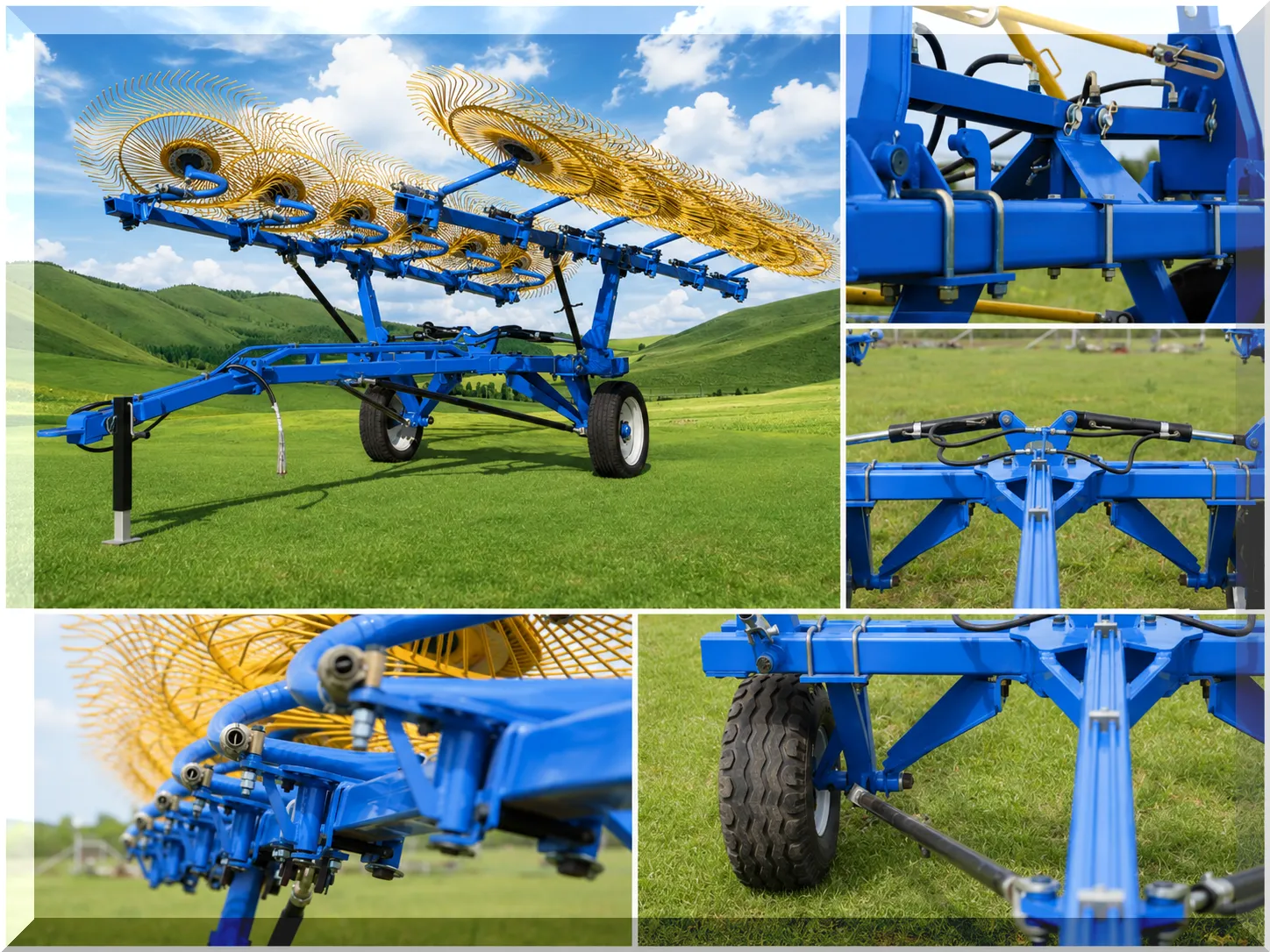
Por qué 6 metros es el ancho adecuado para la mayoría de las operaciones de tamaño mediano, no 9.
Uno de los errores más comunes al comprar rastrillos para heno es especificar un ancho excesivo. La lógica es: "Si de todas formas voy a actualizar el equipo, mejor compro la máquina más grande para no tener que actualizarla de nuevo". Este razonamiento tiene sentido para implementos que conservan su valor con el uso, como tractores, camiones y maquinaria de cosecha. Sin embargo, no se aplica a los implementos agrícolas remolcados que permanecen inactivos entre cosechas.
El problema práctico de sobredimensionar el ancho del rastrillo radica en que el tiempo ahorrado por pasada con una máquina más ancha solo se recupera si el volumen anual de rastrillado es lo suficientemente alto como para generar un número significativo de pasadas. Con 100 hectáreas al año y tres cortes (300 ha de superficie total anual de rastrillado), la diferencia entre un rastrillo de 6 metros y uno de 9 metros es de aproximadamente 23 horas de rastrillado al año, menos de tres días laborables completos. Dado el elevado coste de una máquina comercial de 9 metros, esas 23 horas no se amortizan hasta dentro de varios años.
| Programa anual | 9LZ-6,0 horas/año (A 5,5 ha/hora) |
9LZY-9,0 horas/año (A 7,5 ha/hora) |
Horas anuales ahorradas | Veredicto |
|---|---|---|---|---|
| 50 ha, 3 cortes = 150 ha | 27 horas | 20 horas | 7 horas/año | → 9LZ-6.0 óptimo |
| 100 ha, 3 cortes = 300 ha | 55 horas | 40 horas | 15 horas/año | → 9LZ-6.0 óptimo |
| 150 ha, 3 cortes = 450 ha | 82 horas | 60 horas | 22 horas/año | → Límite: evaluar el riesgo de la ventana meteorológica |
| 250 ha, 3 cortes = 750 ha | 136 horas | 100 horas | 36 horas/año | → Considere 9LZY-9.0 |
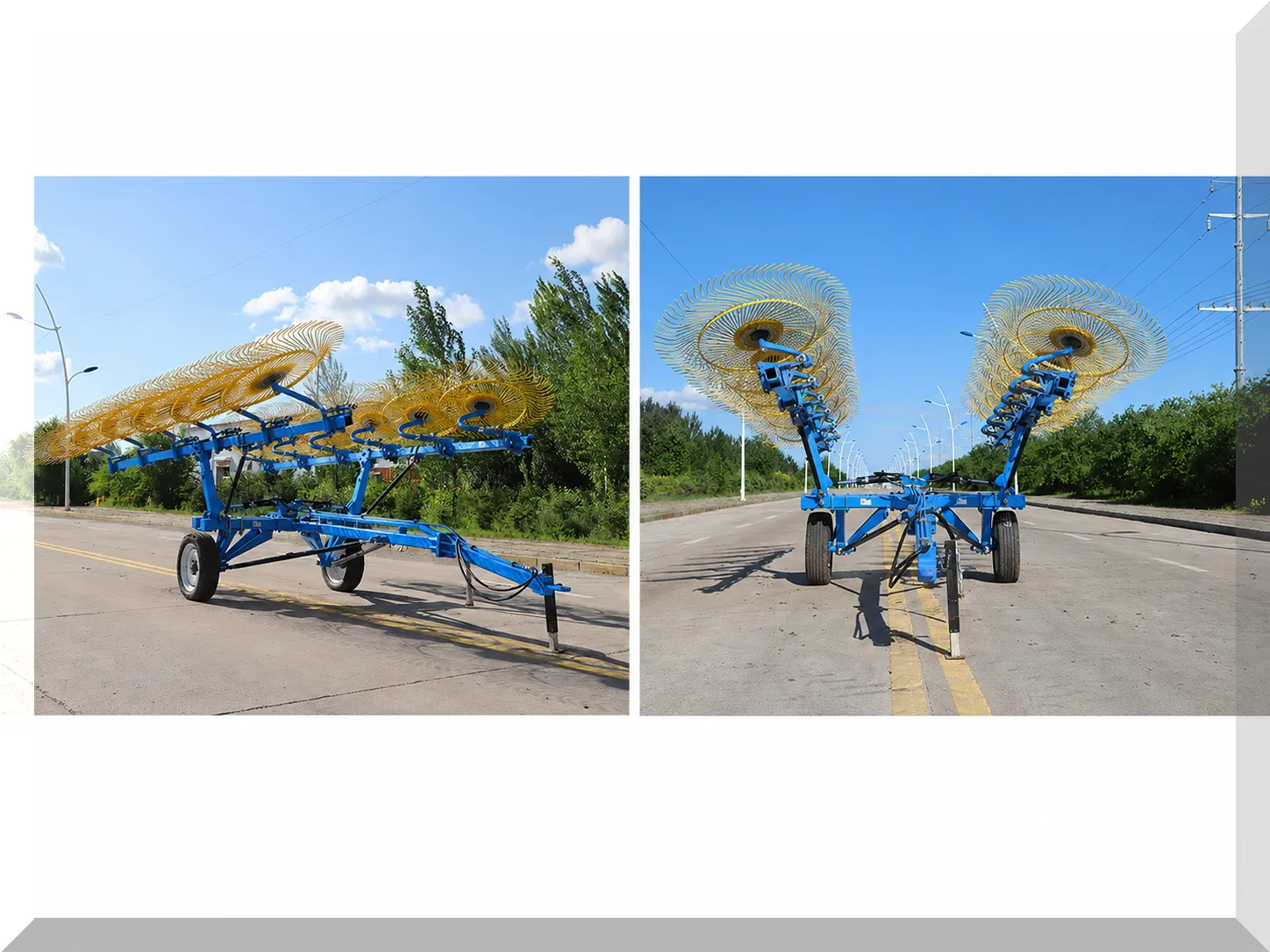
El 9LZ-6.0 en un programa típico de producción de heno en una pequeña explotación agrícola de 100 acres.
Una granja mixta de alfalfa y pasto de 100 acres en el Medio Oeste, con tres cortes al año, produce aproximadamente entre 350 y 450 pacas anuales. Así es como se ve el papel del rastrillo de heno 9LZ-6.0 en esa explotación a lo largo de un año calendario completo:
Movilidad compacta en el campo: donde un ancho menor se convierte en una ventaja operativa.
En explotaciones agrícolas pequeñas y medianas, la forma del terreno es más importante que en las grandes explotaciones comerciales con campos rectangulares largos y regulares. Las formas irregulares del terreno, las hileras de árboles, los estanques, las zanjas de drenaje y los estrechos caminos de acceso crean situaciones en las que un implemento de ancho compacto realiza la tarea de forma más eficiente que uno ancho. El ancho de trabajo de 6 metros del 9LZ-6.0 y su menor masa total proporcionan ventajas específicas de movilidad en el terreno:
🔄 Giros más cortos en los cabos
Un rastrillo en V de 6 metros requiere aproximadamente de 8 a 10 metros de radio de giro en las cabeceras a velocidad de trabajo estándar, menos que los 12 a 14 metros que requiere una máquina de 9 metros. En campos con franjas de cabecera de 20 a 30 metros (comunes en campos rectangulares pequeños), el radio de giro más corto produce un tiempo de trabajo más efectivo por pasada y menos material de cultivo pisoteado por el tractor durante los giros en las cabeceras.
🚪 Despeje de la puerta del campo
El modelo 9LZ-6.0 se pliega hasta alcanzar un ancho de transporte compacto que cumple con creces los límites de las carreteras para implementos agrícolas en EE. UU. Para operaciones con estrechos accesos a los campos o puertas de fincas, su perfil plegado facilita la maniobra en puntos de acceso restringidos en comparación con las máquinas más anchas de 9 metros, cuyas dimensiones plegadas superan los límites de las carreteras para implementos agrícolas en algunos estados.
🏚 Almacenamiento en cobertizo para implementos
Con un peso aproximado de 800 kg y un ancho de trabajo de 6 metros, la 9LZ-6.0 se almacena de forma más práctica en un cobertizo estándar para implementos agrícolas que las máquinas comerciales de 9 metros. Su tamaño plegado permite guardarla en un cobertizo estándar de una sola bahía sin necesidad de un edificio específico para implementos anchos, lo cual resulta relevante en explotaciones donde el espacio de almacenamiento cubierto para implementos es limitado.
🌿 Formas de campo irregulares
Los campos con bordes curvos, esquinas diagonales y geometría irregular se benefician más de una máquina de ancho compacto que puede realizar pasadas más cortas y cerradas en el límite del campo para minimizar las franjas sin rastrillar. En un campo irregular de 20 acres, un rastrillo de 6 metros puede requerir de 3 a 4 giros menos en las cabeceras que una máquina de 9 metros, recuperando material que de otro modo quedaría como residuo en las hileras de las cabeceras.
Cómo funciona el sistema de rueda de dedos 9LZ-6.0
El modelo 9LZ-6.0 funciona con el mismo principio de discos de dedos accionados por el suelo que los modelos más grandes de nuestra gama de rastrillos para heno; comprenderlo lleva dos minutos y explica todos los aspectos del rendimiento y el perfil de mantenimiento de la máquina.
Contacto con el suelo → rotación del disco: Cada uno de los 12 discos está montado sobre un cojinete de cubo de giro libre. A medida que el tractor avanza, las púas curvas con resorte entran en contacto con la superficie del suelo y cortan el cultivo simultáneamente. La fricción con el suelo hace girar cada disco, sin necesidad de accionamiento externo. La velocidad de rotación de los discos es directamente proporcional a la velocidad de avance del tractor: una mayor velocidad de desplazamiento produce una rotación más rápida de los discos y un mayor número de contactos de las púas por metro cuadrado.
Ángulo del disco → flujo lateral del cultivo: Cada disco está fijo en un ángulo orientado hacia adentro en la configuración en V. A medida que las púas giran, levantan el forraje desde abajo y le imprimen una velocidad lateral hacia el centro de la máquina. Los dos grupos de discos (izquierdo y derecho) barren cada uno su mitad del ancho de trabajo de 6 metros hacia el centro, depositando una hilera centrada en el eje de la máquina.
Deflexión de las púas del resorte → tolerancia a los obstáculos: Cada púa es de acero elástico: se dobla elásticamente al entrar en contacto con una roca, un terrón de tierra compacta o la base de los rastrojos, y luego regresa a su posición de trabajo. Este ciclo de flexión y recuperación no daña la púa ni el cojinete del cubo del disco. La suspensión flotante independiente de cada disco permite que cada conjunto de 60 púas siga el contorno del terreno de forma independiente, manteniendo la presión de contacto entre la púa y el suelo a lo largo de los 6 metros de ancho, incluso en terrenos ondulados.
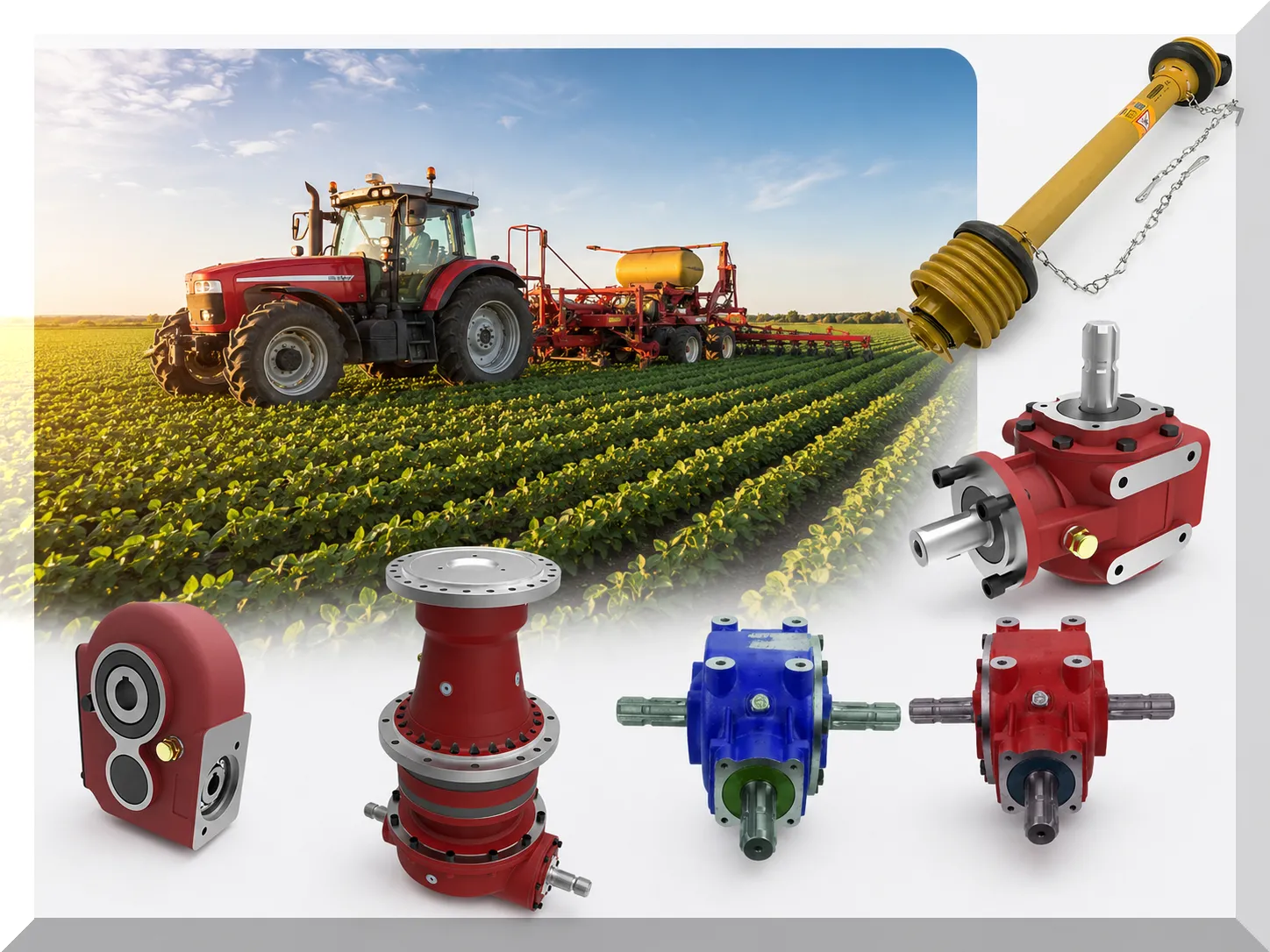
La máquina produce una hilera centrada de 0,8 a 1,4 m que coincide con el ancho del cabezal de recogida de la máquina. Gama de empacadoras de balas redondasLos modelos compactos de empacadoras de forraje de las clases 9YG-1.0C y 9YG-1.25, diseñados para la misma gama de tractores de 35 a 65 HP que el 9LZ-6.0, funcionan directamente sobre la salida de la hilera de este rastrillo sin necesidad de ajuste de ancho adicional. Este sistema tractor-rastrillo-empacadora, de la misma clase de HP, es el núcleo de un programa de heno para pequeñas explotaciones agrícolas con un solo tractor, para el cual el 9LZ-6.0 está específicamente dimensionado. La empacadora redonda de esa cadena utiliza una transmisión de toma de fuerza de 540 rpm con transferencia caja de cambios agrícola — el único componente motorizado en la cadena de producción de heno, que por lo demás es totalmente mecánicamente pasiva y accionada por el suelo, que permite el modelo 9LZ-6.0.
Seis razones por las que los productores de heno de pequeñas y medianas explotaciones agrícolas eligen la 9LZ-6.0
La ventaja de retención de hojas de alfalfa
Para las operaciones donde la calidad de la alfalfa afecta directamente el precio de venta, la transición de un rastrillo rotatorio al diseño de rueda de dedos 9LZ-6.0 suele ser la mejora de equipo con mayor retorno de la inversión. Entre un tres y un cinco por ciento menos de desprendimiento de hojas por corte, multiplicado por 150 pacas al año a un precio de $10 a $15 por paca, produce una recuperación en la primera temporada de $450 a $1,125, cifras reales de operaciones que han realizado este cambio.
12 rodamientos: mantenimiento anual mínimo
Los 12 cojinetes del cubo del disco son los únicos componentes mecánicos de desgaste de la máquina, además de las púas de resorte. Con las horas de funcionamiento típicas de una pequeña explotación agrícola (de 50 a 60 horas anuales), los intervalos de reemplazo de los cojinetes oscilan entre 4 y 7 años, un perfil de mantenimiento más similar al de una esparcidora de fertilizantes que al de un implemento mecánico complejo. El costo total anual de servicio de una 9LZ-6.0 bien mantenida a este nivel de utilización suele ser inferior a $200 al año.
Hilera consistente: mejores fardos
Doce discos flotantes independientes que procesan una estera continua de 6 metros producen una hilera de densidad uniforme desde el primer metro hasta el último. Los operadores de empacadoras informan sistemáticamente que las pacas de heno bien apiladas con un rastrillo en V de rueda de dedos son más uniformemente redondas, más densas y más fáciles de envolver de manera uniforme que las pacas producidas a partir de hileras rastrilladas con rastrillo rotatorio, donde son comunes los picos y valles de densidad.
Sin vacaciones pagadas: total versatilidad
Gracias a la rotación del disco accionada por el suelo, el 9LZ-6.0 puede ser remolcado por cualquier tractor con barra de tiro y una salida hidráulica SCV, incluso tractores cuya toma de fuerza trasera ya esté ocupada por otro implemento, o tractores más antiguos donde el mantenimiento de la toma de fuerza sea una preocupación. La máquina deja la toma de fuerza trasera completamente libre durante todo el funcionamiento.
Costo de capital adecuado para la escala de operación
El precio de la 9LZ-6.0 se ajusta al nivel adecuado para explotaciones de entre 50 y 200 hectáreas anuales, y no al precio de las máquinas comerciales de 9 metros, cuyo coste se amortiza en explotaciones de más de 400 hectáreas al año. Adquirir la máquina del tamaño adecuado al precio correcto permite recuperar la inversión más rápidamente y deja presupuesto para otras inversiones agrícolas que generen rentabilidad a la misma escala.
Ruta de actualización escalable
Cuando la superficie anual de heno supera las 200 o 250 hectáreas, el modelo 9LZ-6.0 ha demostrado su valía y la explotación cuenta con los datos de flujo de caja necesarios para justificar la adquisición de un modelo de 9 metros. Comenzar con la máquina de 6 metros, del tamaño adecuado, permite adquirir un conocimiento profundo del sistema de rastrillo en V con ruedas dentadas (procedimiento operativo, manejo de las púas, ajuste del ancho de la hilera), conocimiento que se transfiere directamente a la máquina más grande cuando llega el momento.
¿Por qué los pequeños productores de heno eligen foragebaler.com?
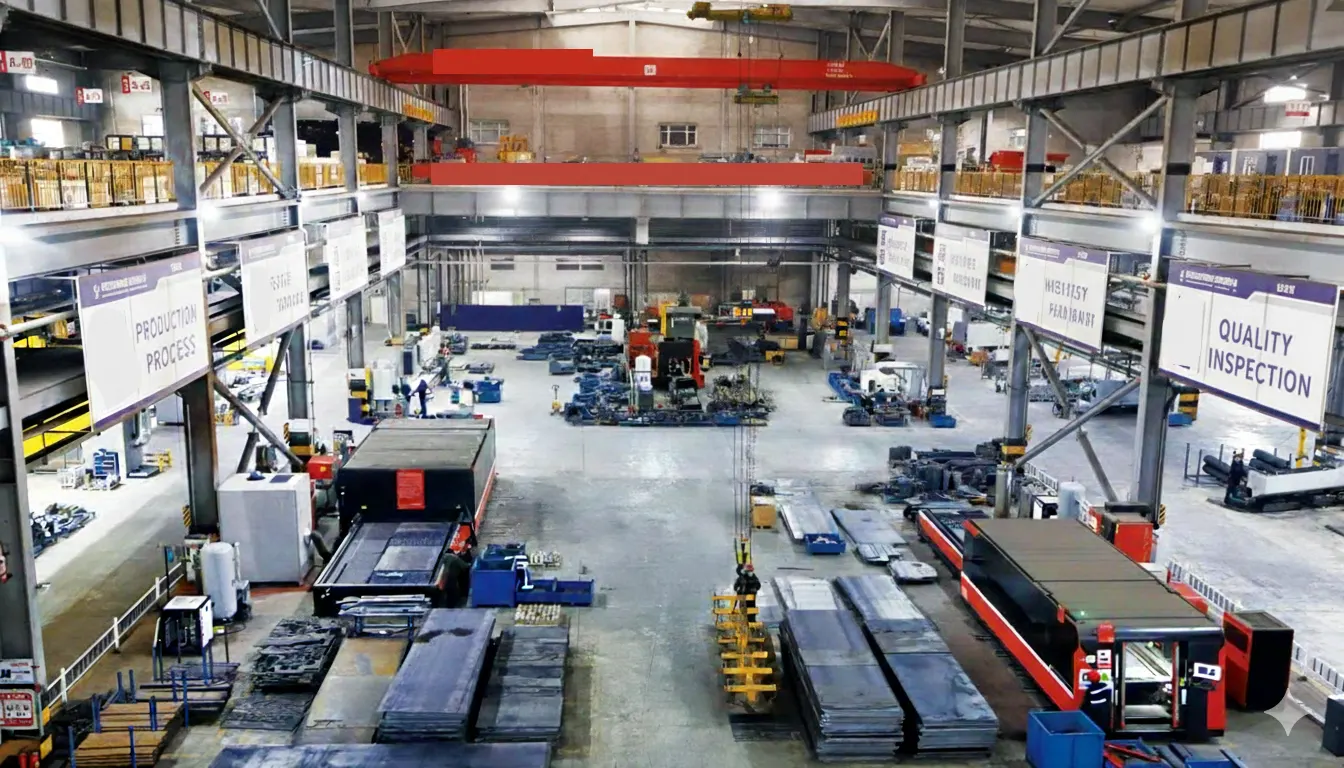
- ✔Sistema completo para la producción de heno de un solo proveedor. El rastrillo de heno 9LZ-6.0 forma parte de un sistema completo de forraje de cuatro pasos disponible en foragebaler.com Equipos de siega, henificadoras, rastrillos para heno y empacadoras de balas redondas: todo gestionado desde el mismo almacén en California. Una llamada, un pedido de repuestos, un equipo técnico.
- ✔Verifique la compatibilidad con el tractor antes de realizar el pedido. La capacidad del enganche de la barra de tiro, la presión hidráulica de la válvula de control selectivo (SCV) y la relación peso-carga del tractor se confirman según el modelo y año de su tractor antes del envío del 9LZ-6.0. Los compradores que adquieren un rastrillo en V por primera vez suelen valorar la comprobación de compatibilidad previa a la compra: les explicamos el procedimiento de funcionamiento y la configuración inicial durante la misma conversación.
- ✔Envío de piezas el mismo día. Disponemos de juegos de repuesto de 60 púas por disco, kits completos de rodamientos para 12 discos y conjuntos de mangueras hidráulicas durante todo el año en nuestro almacén de California. Los pedidos realizados antes de las 14:00 (hora del Pacífico) se envían el mismo día hábil. Olvídese de esperar semanas por piezas importadas para reparaciones a mitad de temporada.
- ✔Integración completa del sistema de heno. La producción de hileras del 9LZ-6.0 coincide con nuestra producción total. gama de rastrillos para heno y anchos de recogida de pacas redondas, y la máquina funciona con los mismos tractores compactos que utilizamos para nuestros equipos de siega y empacadoras de ensilaje de pequeña capacidad. Estás construyendo un sistema conectado, no solo comprando un implemento.
- ✔Precios directos de fábrica. Sin red de concesionarios, sin prima por territorio.
Mantenimiento: 12 rodamientos, 720 dientes, nada más que revisar.
El 9LZ-6.0 tiene el perfil de mantenimiento más sencillo de cualquier implemento comercial para heno. Sin caja de cambios, sin cadenas, sin correas de transmisión, sin motor hidráulico, sin eje de toma de fuerza. Tres categorías de servicio cubren toda la máquina:
🔩 Diariamente durante la temporada de corte (cada 8 horas)
🔧 Por corte o cada 20-30 horas
📅 Pretemporada Anual

Preguntas frecuentes
Lo que dicen los pequeños productores de heno después de su primera temporada.
★★★★★
Tres años usando un rastrillo rotatorio de rueda estrellada antes de cambiar al 9LZ-6.0. La primera comparación de corte fue reveladora: recorrí el campo después de la primera pasada del 9LZ-6.0 y observé una cantidad notablemente menor de hojas en el suelo en comparación con lo que dejaba el rastrillo rotatorio. Mi análisis de heno para elevador mostró una mejora de 2.8 puntos porcentuales en proteína cruda en el mismo cultivo de alfalfa, con los mismos cortes. Esa mejora recupera el costo de la máquina en primas de calidad en menos de dos temporadas en 85 acres a precio de Grado 1. Operando en un Massey Ferguson 1754E de 52 HP sin ningún esfuerzo.
★★★★★
Operación con un solo tractor Kubota MX5400 de 48 HP: la segadora, el rastrillo y la empacadora 9YG-1.25 funcionan con la misma máquina. Se eligió específicamente la 9LZ-6.0 porque funciona con el mismo tractor sin necesidad de potencia adicional. Tres cortes al año, aproximadamente 100 pacas por corte, y la 9LZ-6.0 limpia 40 acres (el tamaño de mi campo dividido en bloques) en 7 a 8 horas por corte. La calidad de la hilera es notablemente mejor que con el antiguo rastrillo rotativo: la empacadora se llena de manera más uniforme y las pacas tienen una forma más redonda.
★★★★★
Negocio de heno para caballos que vende a centros de pupilaje y propietarios de caballos deportivos que pagan precios elevados por alfalfa de hoja alta. La cosechadora 9LZ-6.0 se adquirió principalmente por su ventaja en la retención de hojas en la alfalfa de segundo y tercer corte, que alcanza los precios más altos. Tras la primera temporada con la 9LZ-6.0, tres de mis clientes habituales comentaron de forma independiente la mejora en la calidad del heno sin saber que había cambiado de equipo. Ese es el mejor aval que puedo dar. Combinada con un tractor Kubota B3350 de 40 CV, funciona bien en terrenos llanos y requiere precaución en pendientes suaves.
★★★★☆
Cuatro estrellas en lugar de cinco simplemente por la necesidad de lubricar los rodamientos a diario durante la temporada de corte, una práctica que tuve que incorporar a mi rutina. Una vez que adquirí ese hábito, la máquina no ha dado problemas durante dos temporadas. Maneja la paja de trigo a 12 km/h con la misma facilidad que el heno, algo que no esperaba. El ancho de 6 metros es ideal para el tamaño de nuestros campos (bloques de 20 a 35 acres): puedo trabajar todos los cabeceros sin tener que retroceder ni reposicionar la máquina, algo que requeriría una máquina más ancha en los campos de forma irregular del condado de Whitman. La uso con un tractor John Deere 5065E de 58 HP.
★★★★★
Vendemos alfalfa orgánica certificada directamente a clientes de ganadería lechera y equina orgánica con primas significativas. A nuestro precio, cada punto porcentual de proteína cruda recuperada mediante la retención de hojas se traduce directamente en ingresos. Inicialmente, tenía mis dudas sobre comprar cualquier equipo de rastrillo fuera de nuestra red habitual de distribuidores, pero la consulta previa a la compra con el equipo de foragebaler.com fue exhaustiva: confirmaron que nuestro tractor de 42 HP era compatible con nuestros campos planos del condado de Lancaster y me explicaron el ajuste del ancho de la hilera para nuestra empacadora 9YG-1.0C. La primera temporada fue perfecta. El costo de la máquina se amortizó con las primas de calidad antes del tercer corte.
★★★★★
70 acres de pasto nativo y pasto ovillo para 45 vacas de carne, empacado para forraje de invierno. No vendemos heno comercialmente, lo usamos para alimentar a nuestro propio ganado. La economía aquí es diferente: cada paca que produzco yo mismo es una paca que no pago entre $75 y $100 por comprar. El 9LZ-6.0 fue la mejora de un viejo rastrillo rotativo desgastado. La mejora en la calidad de la hilera es inmediatamente visible en la cantidad mucho menos material que dejamos en el campo después de cada pasada. En los bordes rocosos de nuestro campo en las montañas de Colorado, las púas de resorte se desvían sobre las rocas sin romperse, algo que el viejo rastrillo rotativo de púas rígidas no podía hacer. Segunda temporada sin problemas mecánicos.
El rastrillo de heno comercial ideal para su explotación agrícola pequeña o mediana.
Compatibilidad con el tractor (potencia en la barra de tiro, presión hidráulica, relación peso-carga) verificada según su modelo antes del envío. Precios directos de fábrica, envío de repuestos el mismo día desde nuestro almacén en EE. UU. y soporte técnico completo para toda la cadena de producción de forraje.
America Ever-Power Forage Baler Equipment INC. | 1401 21st ST STE R, Sacramento, CA 95811
Información adicional
| Editor | Cxm |
|---|
Productos relacionados
-
9LZY-9.0 Rastrillo de heno con rueda de dedo | Rastrillo en V de 15 ruedas 9 m
-
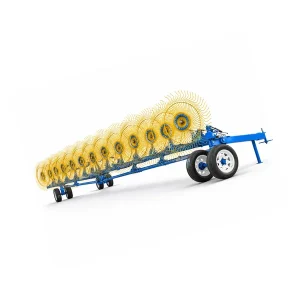
9LZD-9.0 Rastrillo en V de 17 ruedas | Rastrillo de heno de 9 m con ruedas dentadas
-
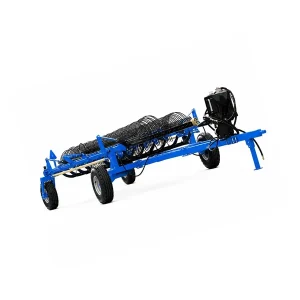
Rastrillo horizontal remolcable para heno 9LH-12 | 12 m de ancho
-
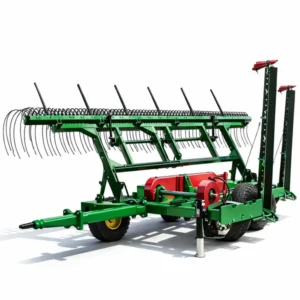
Rastrillo para cortacésped remolcado 9GL-5.0/5.6 | 5 m de corte, 5,6 m de ancho de rastrillo
-
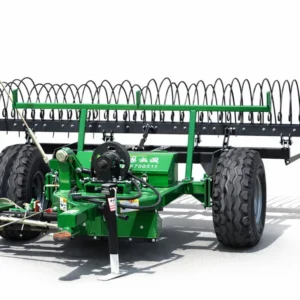
Rastrillo para cortacésped remolcado 9GL-2.5/2.9 | Rastrillo para cortacésped en venta


