
Why Small Square Bales Dominate Horse and Retail Hay Markets
The Handling Advantage Round Bales Cannot Match
A round bale at 300–600kg requires a front-end loader to move. A small square bale at 15–40kg can be carried by one person, stacked by hand in a low-ceiling barn, loaded on a pickup truck without assistance, and fed to three horses without wasting more than the daily requirement. These are not marginal conveniences — they are the core reason small square bales command a premium in markets that round bales cannot serve at all.
For horse boarding operations, small square bales fit in tack rooms, allow precise daily ration control, and arrive at a size customers expect. For farm stands and feed stores, small square bales are the retail product customers carry in their car. For small livestock operations keeping 5–30 animals, a 20–30kg bale matches 3–5 days of consumption without the waste that comes from opening a large round bale for a small group.
Markets That Require the Small Square Format
Boarding barns, riding schools and horse owners are the largest buyers of small square hay. Bale weight and low dust content are the primary purchase criteria.
Feed stores, garden centers and farm stands stock small square bales as a product customers carry out by hand. This market disappears entirely for round bales.
Pumpkin farms, corn mazes and fall festivals use thousands of small square straw bales each season — a recurring fall revenue stream unavailable in round bale format.
Goat, sheep and backyard livestock operations feed most efficiently from bales matched to 3–7 day consumption. Small square format reduces waste at every feeding cycle.
The Three Core Specs Every Small Square Baler Buyer Must Understand
Every small square baler purchase reduces to three numbers: pickup width, power requirement and processing system. Get these three right and the specification details fall into place.
| Spesifikasi | Range in the 9YF Series | What It Determines |
|---|---|---|
| Lebar Pengambilan | 1,700 – 2,200mm | Passes per acre, windrow handling, field efficiency per hour |
| PTO Power Minimum | 40HP – 99HP | Which tractors pair correctly; operating power reserve |
| Processing System | None / Single shredder / Dual + fan | Crop range, bale density, dust content, market suitability |
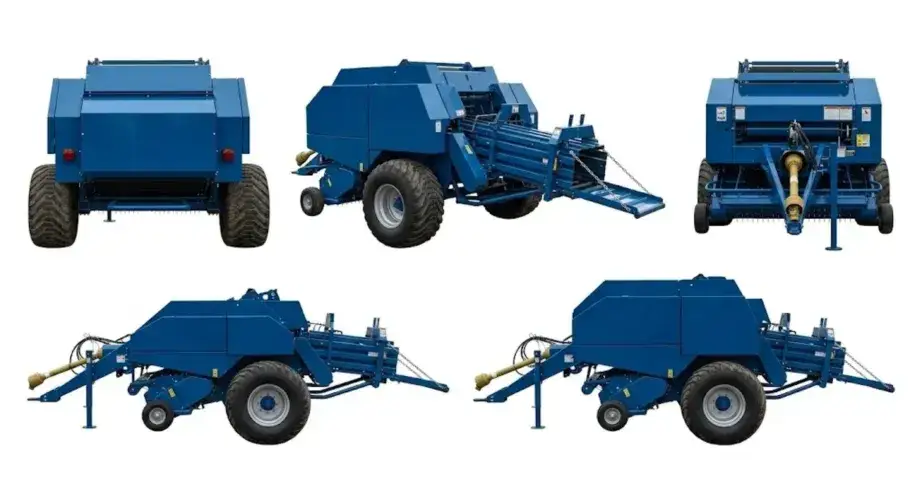
Pickup Width Guide: 1,700mm vs 1,900mm vs 2,200mm
1,700mm — Compact Entry for Small Tractors and Tight Access
Itu 9YF-1700 is the lightest and narrowest model at 1,750kg and 2,500mm overall width. The 40HP PTO minimum is the lowest in the series — the only model genuinely suited to compact utility tractors in the 45–55HP engine class. At 2,500mm overall width, it fits through 8-foot barn doors and standard farm gateways where wider models would not pass without difficulty. For operations under 60 acres with a compact tractor as the only field machine, the 9YF-1700 is the correct starting point.
1,900mm — The Balanced Mid-Range Option
The 9YF-1900 adds 200mm of pickup width and 100kg over the 1700 while keeping the same 4,965mm overall length. At 36.8–73.5kW (50–99HP) it pairs comfortably with the standard 55–75HP utility tractor that defines most working farm fleets. The 1,900mm pickup handles standard post-combine windrows from 1.8–2.0m headers in a single pass without raking in most conditions. For 60–150 acre operations with a 55–80HP tractor, the 9YF-1900 offers the best balance of coverage rate, machine cost and tractor compatibility.
2,200mm — Maximum Coverage for Larger Operations
Three models share the 2,200mm pickup: the standard 9YF-2200 (spring-tooth, no shredder), the 9YF-2200S (hammer-claw, single shredder, touch screen) and the 9YFS-2.2 (hammer-claw, dual shredder, negative-pressure fan). The pickup width is identical across all three — what differs is the processing capability applied to what the pickup collects.
At 2,200mm the machine covers 16% more ground per pass than the 1,900mm model at the same forward speed. On 200+ acre operations this translates to a meaningful reduction in baling hours per season. The 2200mm width also handles 2m combine windrows in a single pass without a raking pre-pass under standard conditions.
Tractor HP Requirements: PTO Power Pairing by Model
Engine HP vs PTO HP — Always Use the PTO Number
Baler power ratings always reference PTO output, not engine output. A 65HP engine tractor typically produces 55–60HP at the PTO — 8–15% less than the engine figure. When a baler specification lists a minimum power, that minimum is PTO. Running a baler whose engine meets the minimum but whose PTO does not will starve the machine in dense windrows and shorten the life of both the tractor drivetrain and the baler gearbox under sustained load.
| Model | PTO Minimum HP | Comfortable PTO Range | Typical Engine Pairing |
|---|---|---|---|
| 9YF-1700 | 40 HP | 40–65HP | 45–75HP engine utility tractor |
| 9YF-1900 | 50 HP | 55–80HP | 60–90HP engine utility tractor |
| 9YF-2200 | 50 HP | 55–85HP | 60–95HP engine tractor |
| 9YF-2200S | 99 HP | 100–130HP | 110–145HP engine; shredder adds load |
| 9YFS-2.2 | 99 HP | 110–140HP | 120–155HP engine; dual shredder + fan |
PTO Shaft and Driveline Specification References
Verifying PTO shaft rating, gearbox torque capacity and coupling dimensions before pairing a baler to a tractor prevents costly drivetrain mismatches. The following resources cover the component specifications applicable to the 40–140HP power range of the 9YF square baler series.
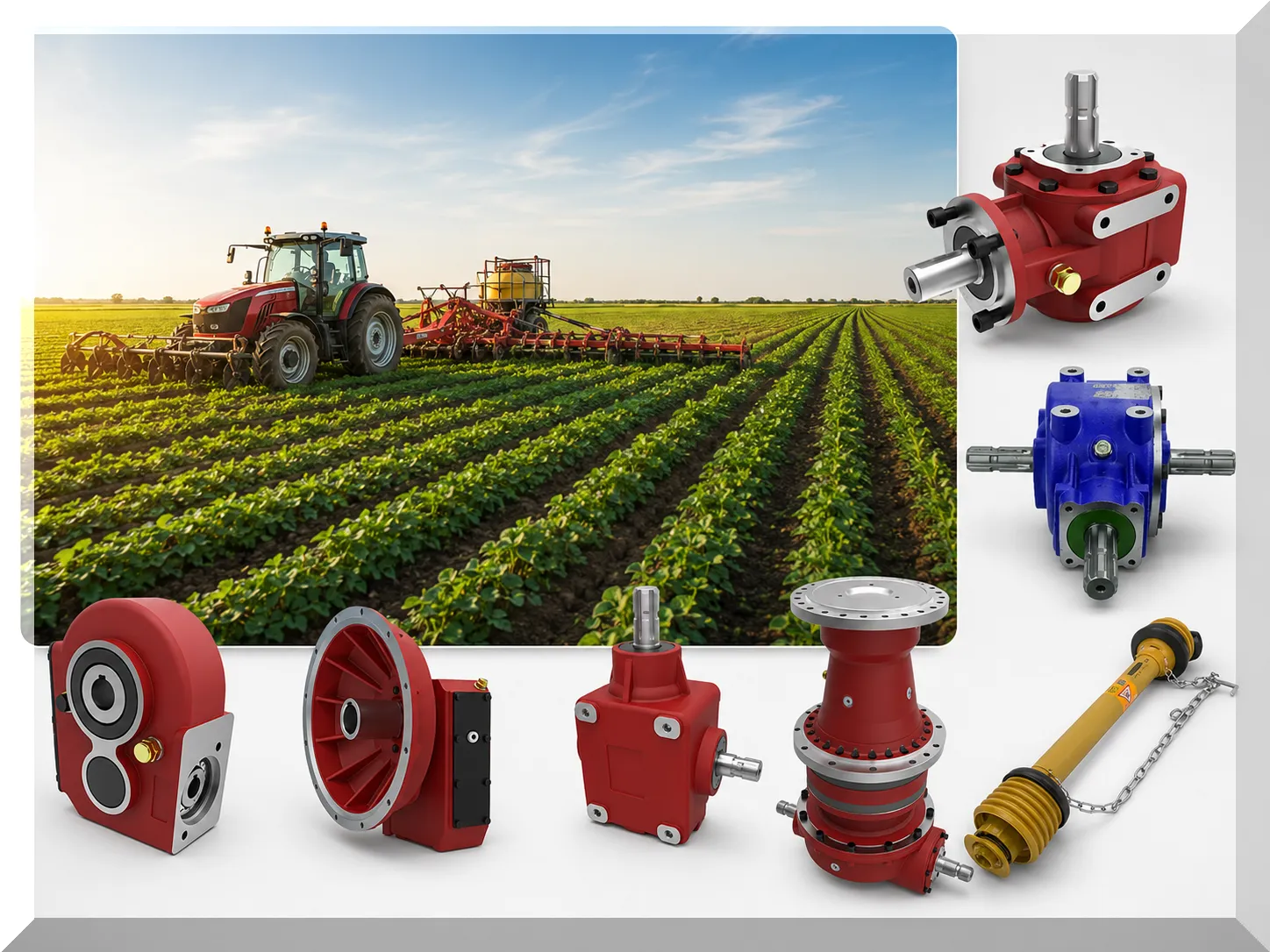
Gearbox torque ratings, PTO shaft diameter standards and coupling specifications: Spesifikasi gearbox pertanian dan poros PTO
For PTO driveline connection components — CV joints, wide-angle joints, telescoping shafts and safety shields — the specifications for the square baler connection are covered in the PTO driveshaft and CV joint selection guide.
Key checks before first connection: shaft length at full extension and compression, joint angle at maximum tractor turn, and shear bolt specification for the baler overload clutch.
Spring-Tooth vs Hammer-Claw: When the Pickup Upgrade Changes the Outcome
What Spring-Tooth Pickups Handle Best
Spring-tooth pickups — on the 9YF-1700, 1900 and 2200 — gather windrow material by passing flexible spring-steel tines under and around the crop. They perform reliably in clean, elevated windrows from properly raked cereal straw, hay and standard combine output. In these conditions they are lower-maintenance, consume less power and pair with smaller tractors than hammer-claw systems.
Limitations appear when windrow material is flattened against the ground by rain, combine traffic or crop lodging. In these conditions, spring-tooth tines need the crop elevated enough to pass under it — material lying flat against the soil surface is left behind after each pass.
When Hammer-Claw Changes the Result
Hammer-claw pickups — on the 9YF-2200S and 9YFS-2.2 — use rotating flail tines that physically impact and lift material off the ground surface. They do not require the windrow to be elevated because the claw rotation generates enough impact energy to dislodge flattened and tangled material from the stubble. In lodged crops, paddy-flattened rice straw or compacted corn stover, the hammer-claw recovers substantially more material per pass. In clean elevated windrows, both systems produce similar results.
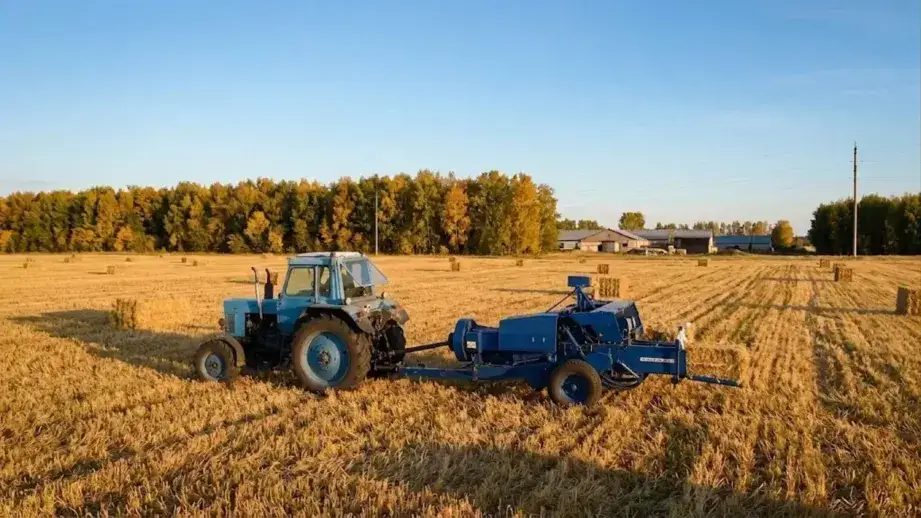
Aturan pengambilan keputusan: Spring-tooth for clean-windrow hay and straw on flat fields. Hammer-claw when lodged crops, paddy mat, traffic-compacted stover or standing residue recovery are regular operational requirements.
Shredder and Fan: Three Processing Levels and What Each Adds
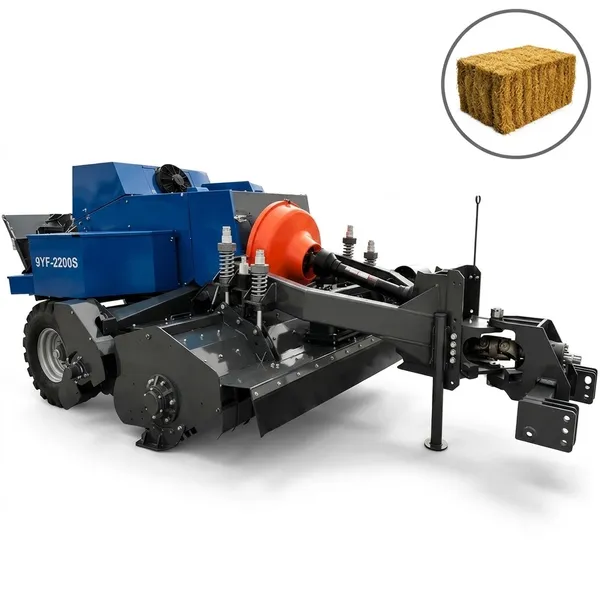
D-Type Dual Knotters: The Standard for Reliable Rope Binding
How D-Type Knotters Work
All five 9YF models use the same dual D-type knotter arrangement — two knotters placed across the 460mm bale width, each tying an independent rope strand around the bale cross-section. When the plunger completes a bale, the knotters engage simultaneously: the bill grips the rope, forms a loop, the knife cuts the strand and releases a clean knot. Two knotters on a 460mm bale produces a well-secured bale that retains its rectangular shape through loader handling, transport and stacking.
Pre-Session Knotter Checklist
- Bill condition:Tip must be sharp and undamaged — chipping prevents reliable grip on the rope loop during tie formation. Replace if the tip shows wear.
- Ketajaman pisau:The knife cuts the strand after the knot forms. A dull knife leaves ragged rope ends that can pull through the loop under bale stress in storage.
- Equal tension:Both knotters must be set to the same tension specification. Unequal tension produces asymmetric binding — one side tight, one loose — causing the bale to deform during stacking.
- Rope path:Clear the full path from spool to knotter before engaging the PTO. Kinks or crop material in the path cause tension variation that produces inconsistent knot quality.
460×360mm Bale Format: Weight, Handling and Market Fit
Bale Weight by Crop Type
The 460×360mm cross-section is consistent across all 9YF models. Bale length — controlled by the plunger density setting — determines per-bale weight:
| Tanaman | Typical Bale Weight |
|---|---|
| Grass hay (14–18% moisture) | 15–30 kg |
| Alfalfa hay (15% moisture) | 18–35 kg |
| Wheat or barley straw | 12–22 kg |
| Corn stover (15–20% moisture) | 20–40 kg |
At 15–25kg, bales are one-person carry weight. At 30–40kg, two people manage comfortably or a small loader attachment is used.
Storage and Handling Advantages
- ✦Stack to any barn ceiling height — not limited to the 1.0–1.4m round bale diameter
- ✦Fit tack rooms, low-ceiling barns and shipping containers where round bales cannot
- ✦Match daily feed quantity to animal group size precisely — no partial bale waste
- ✦Transport in a standard pickup bed without a loader or trailer
- ✦Retail customers carry them out of the store by hand — a sales format round bales cannot replicate
Which 9YF Model Fits Your Operation: A Decision Guide
Compare all five models in detail on the square baler product range page.
Frequently Asked Questions — Small Square Baler Buying Guide
Ready to Choose Your Square Baler? Start Here.
Tell us your tractor HP, primary crop type and annual baling acreage. We will recommend the right model from the 9YF series and provide current pricing, lead time and delivery information.
9YF-1900 · 50HP · 1,850kg
9YF-2200 · 50HP · 1,950kg
9YF-2200S · 99HP · Shredder
9YFS-2.2 · 99HP · Dual shredder + fan
America Ever-Power Forage Baler Equipment INC. · 1401 21st ST STE R, Sacramento, CA 95811
Editor:Cxm


