
Sorghum Stalk Characteristics That Affect Baling
Stem Hardness and Diameter
Grain sorghum stalks at harvest maturity are woody, with stem diameters of 15–30mm and dense lignin-rich cell walls that resist mechanical processing more aggressively than corn stover. Forage sorghum and sweet sorghum (sorghum-sudangrass hybrids) produce taller plants with slightly softer stem tissue at the same growth stage, but in any sorghum type the lower one-third of the stalk — where the stem is oldest and most lignified — creates the highest processing load for the pickup, shredder and plunger systems.
Sorghum plants also tiller extensively — a single sorghum plant at harvest can have 2–4 secondary stems at the base, producing a dense root cluster that can cause pickup system jams when the baler attempts to pull the cluster free of the soil. Setting the pickup height slightly higher than you would for corn stover (3–5cm above soil surface rather than 1–3cm) and mowing the stalk base before baling reduces the cluster-pull problem in heavily tillered stands.
Types of Sorghum and Their Baling Profiles
| Sorghum Type | Stem Diameter | Stem Hardness | Baling Approach |
|---|---|---|---|
| Grain sorghum (milo) | 15–25mm | Very high | Field shredder + baler shredder required at full drydown |
| Sweet sorghum | 20–35mm | High (fibrous) | Always requires field shredder; baler shredder beneficial |
| Forage sorghum (silage type, regrowth) | 10–18mm | 보통의 | Baler shredder beneficial; field shredder not always needed |
| Sorghum-sudangrass (summer annuals) | 8–14mm | Low-moderate | Spring-tooth models may handle in clean windrow conditions |
Timing the Baling Operation
The Moisture-Hardness Trade-Off
Sorghum stalk hardness increases as moisture decreases. A sorghum stalk at 20% moisture is measurably softer than the same stalk at 12% moisture — the water content plasticizes the cell wall material slightly, reducing the peak shredder blade load per cutting event. From a pure equipment-wear standpoint, the earlier in the post-harvest drying-down period you bale sorghum stalks, the lower the wear rate on shredder blades and hammer-claw tines.
However, the practical trade-off is field access and bale weight: at 20–25% moisture, sorghum stalks are within the baling range but produce heavier bales (because each bale contains more water weight), and field conditions may still be soft from the harvest. The practical baling window in most sorghum-producing regions is 14–20% stalk moisture — dry enough to produce bales that store without heating, soft enough to keep shredder blade loads within the 9YF-2200S comfortable operating range.
Weather Window Planning
In the Southern Plains, where most U.S. grain sorghum is grown, the post-harvest window before fall rains can be narrow — sometimes 3–4 weeks between harvest completion and the first moisture event that re-wets standing stalks. Planning equipment readiness and scheduling the field shredder pass immediately after harvest allows baling to begin while stalks are still in the optimal 14–20% moisture range. Once stalks rewet from rain and re-dry below 12%, the hardness increases substantially and shredder blade wear accelerates accordingly.
Field Preparation for Sorghum Stalk Baling
Field Shredder Pass: Required for Grain Sorghum
Grain sorghum and sweet sorghum stalks standing 0.8–1.5m tall after harvest must be field-shredded before baling — intact standing stalks at these heights cannot be processed reliably by any small square baler in the 9YF series, regardless of which pickup or shredder the machine is equipped with. A heavy-duty rotary cutter or flail mower reduces the stalks to 80–150mm segments and lays them in a residue layer across the field.
For forage sorghum regrowth (shorter, softer material at 60–80cm height), a field shredder pass may be optional depending on stem diameter — test 50 metres at slow forward speed before committing to a full field run without pre-shredding. If the 9YF-2200S shows consistent material flow without the feeder or shredder slowing or blocking, the material can be handled without pre-shredding. If there are feeding irregularities or speed fluctuations, pre-shredding is needed.
Raking After Field Shredding
After the field shredder pass, rake the residue into windrows using a side-delivery rake or merger. Sorghum shreddate is denser than rice straw and lighter than corn stover — it rakes into a windrow that is adequate for both spring-tooth and hammer-claw pickup in typical windrow formation conditions. Allow 24–48 hours after raking for any moisture absorbed from the soil during the field shredder pass to evaporate before baling.
Pickup and Shredder System Selection
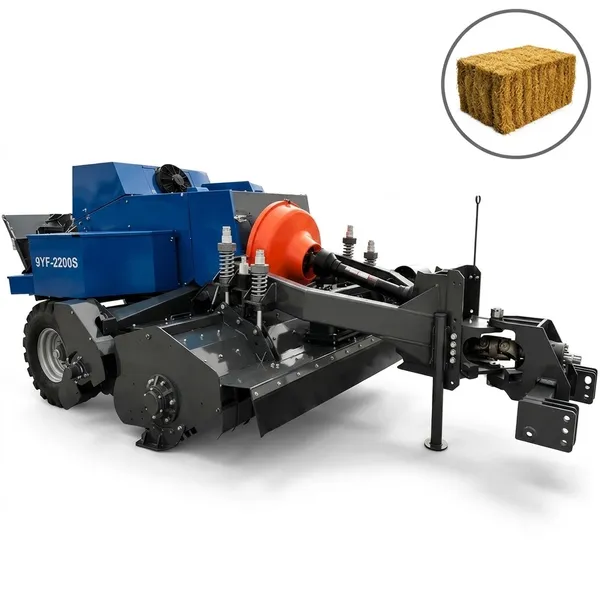
Spring-Tooth: Adequate for Sorghum-Sudangrass
Sorghum-sudangrass hybrids and forage sorghum types at lower growth stages produce finer, more flexible material than grain sorghum. After raking into elevated windrows, the spring-tooth pickup on the 9YF-1900 or 9YF-2200 handles this material adequately — the stems are within the diameter range that compresses reasonably well without baler-mounted shredding, and the windrow formation is manageable for spring-tooth engagement. In these crop types, the spring-tooth models at 50–65HP tractor output represent a lower-cost option for operations that primarily grow forage-type sorghum.
Hammer-Claw: Required for Grain Sorghum and Sweet Sorghum
Grain sorghum and sweet sorghum residue after field shredding contains sections where the shreddate is irregular, partly compacted and not uniformly elevated above the soil. The hammer-claw pickup on the 9YF-2200S recovers these sections more completely than spring-tooth tines, maintaining higher per-acre recovery rates across the variable conditions typical of a combine-trafficked sorghum field.
Beyond the pickup advantage, the baler-mounted shredder on the 9YF-2200S provides a major density improvement for grain sorghum material. Pre-shredded sorghum segments at 80–150mm entering the baler chamber are still long enough to bridge across the chamber and leave voids. The baler shredder reduces these to 40–70mm pieces that pack uniformly — a density improvement of 15–25% over direct compression without baler-mounted shredding, producing heavier bales from the same field residue weight.
Tractor HP Requirements for Sorghum Stalk Baling
Sorghum is the highest-load standard baling crop for the shredder mechanism — harder than corn stover, generating more peak blade load per unit of crop processed. For the 9YF-2200S in grain sorghum at the optimal 14–18% moisture window, a tractor producing 110–125HP at the PTO provides adequate reserve for normal density variation across the field. In dense tillered sections or in very dry (below 12% moisture) material, even 120HP tractors will show occasional engine loading — reduce forward speed in these sections.
For the 9YFS-2.2 with dual shredder in grain sorghum: 125–140HP PTO is the comfortable sustained operating range. The dual shredder processes material more thoroughly but adds 8–15HP more PTO demand than the single-stage shredder in the same crop. A 140–150HP engine tractor producing 120–130HP at the PTO is the practical pairing for intensive sorghum stalk baling with the 9YFS-2.2.

Blade, Tine and Knotter Wear in Sorghum Conditions
Grain sorghum accelerates blade wear at a rate comparable to cotton stalks — approximately 2–3 times faster than corn stover. Inspect blade edges every 100–130 operating hours in grain sorghum conditions. Replace before visible rounding reaches 4mm — at this point both power consumption and fragment-size consistency are already degraded.
Sorghum shreddate is abrasive to tine tips, though less so than grain sorghum at low moisture. Inspect tine tips every 100 operating hours in sorghum conditions. Replace before tip wear exceeds 3–4mm depth below the original tip geometry.
Sorghum dust and fine particles settle in the knotter mechanism during operation. Clean the knotter at end of each day and inspect knife edges every 150–200 baling hours — sorghum is less abrasive to knotter knives than rice straw but accelerates knife wear faster than hay or wheat straw.
Sorghum stalk sections too long or a field shredder that produces segments above 200mm can cause shredder blockages and slip clutch engagement. After each slip clutch event, stop, disengage PTO, clear the blockage and check the clutch engagement condition before resuming.
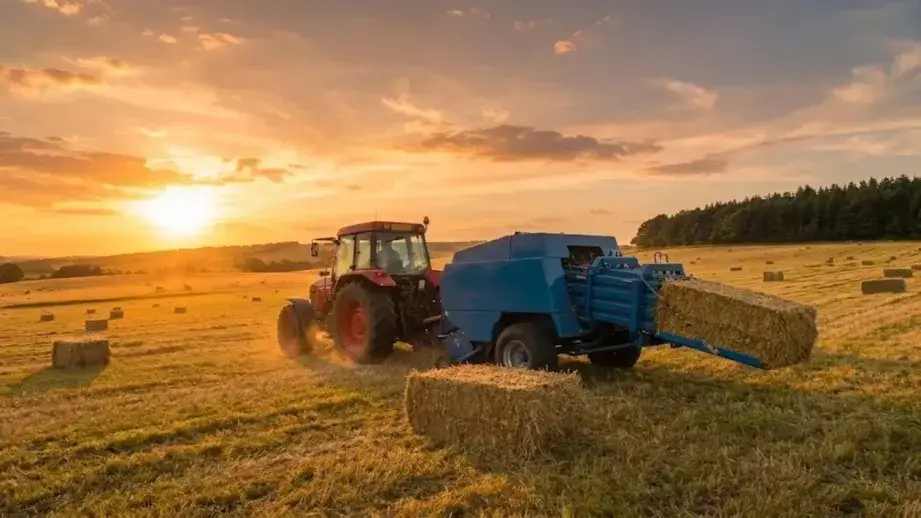
Markets for Sorghum Stalk Bales
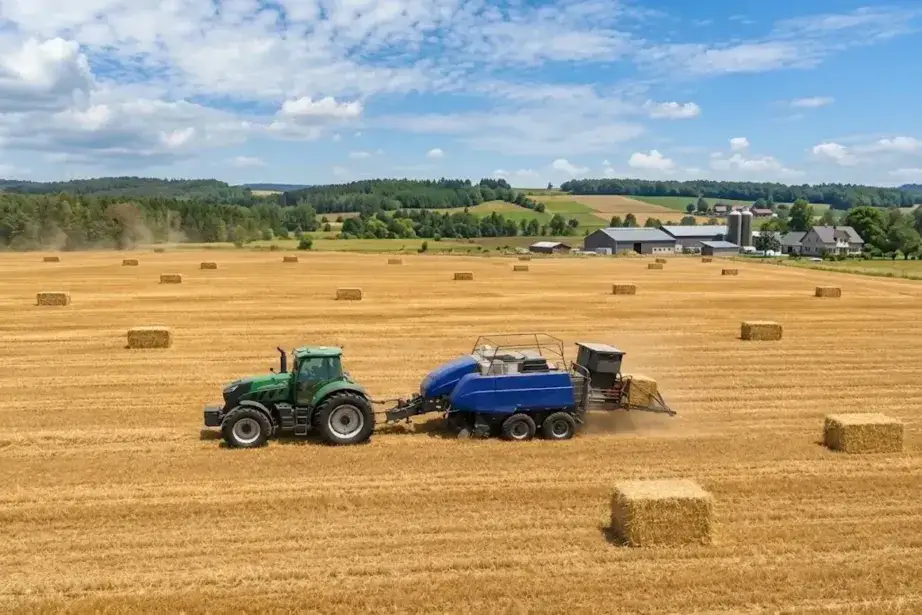
Sorghum stalk dry matter has energy content comparable to other agricultural residues. Biomass facilities and co-firing power plants in sorghum-producing regions purchase stalk bales on contract or spot-market basis. Low margin per bale but reliable volume market for large-scale operations.
Shredded sorghum stalk bales used as a low-quality winter roughage supplement for beef cattle. Nutritive value is low — crude protein typically below 5%, low digestibility — but useful for gut-fill when better forage is unavailable. Pricing: $3–6 per bale in typical cattle-belt markets.
Sorghum stalk bales purchased by composting operations, organic farm supply distributors and specialty compost producers. Shredded sorghum incorporates into compost windrows faster than whole stalks. Specialty market pricing: $6–10 per bale for clean, documented shredded product.
Shredded sorghum stalk bales used as feedlot and dry lot bedding where straw is scarce. Less absorbent than wheat straw but adequate for dry lot conditions. Pricing: $4–7 per bale in regions where straw alternatives are limited.
PTO Driveline References for Sorghum Stalk Baling
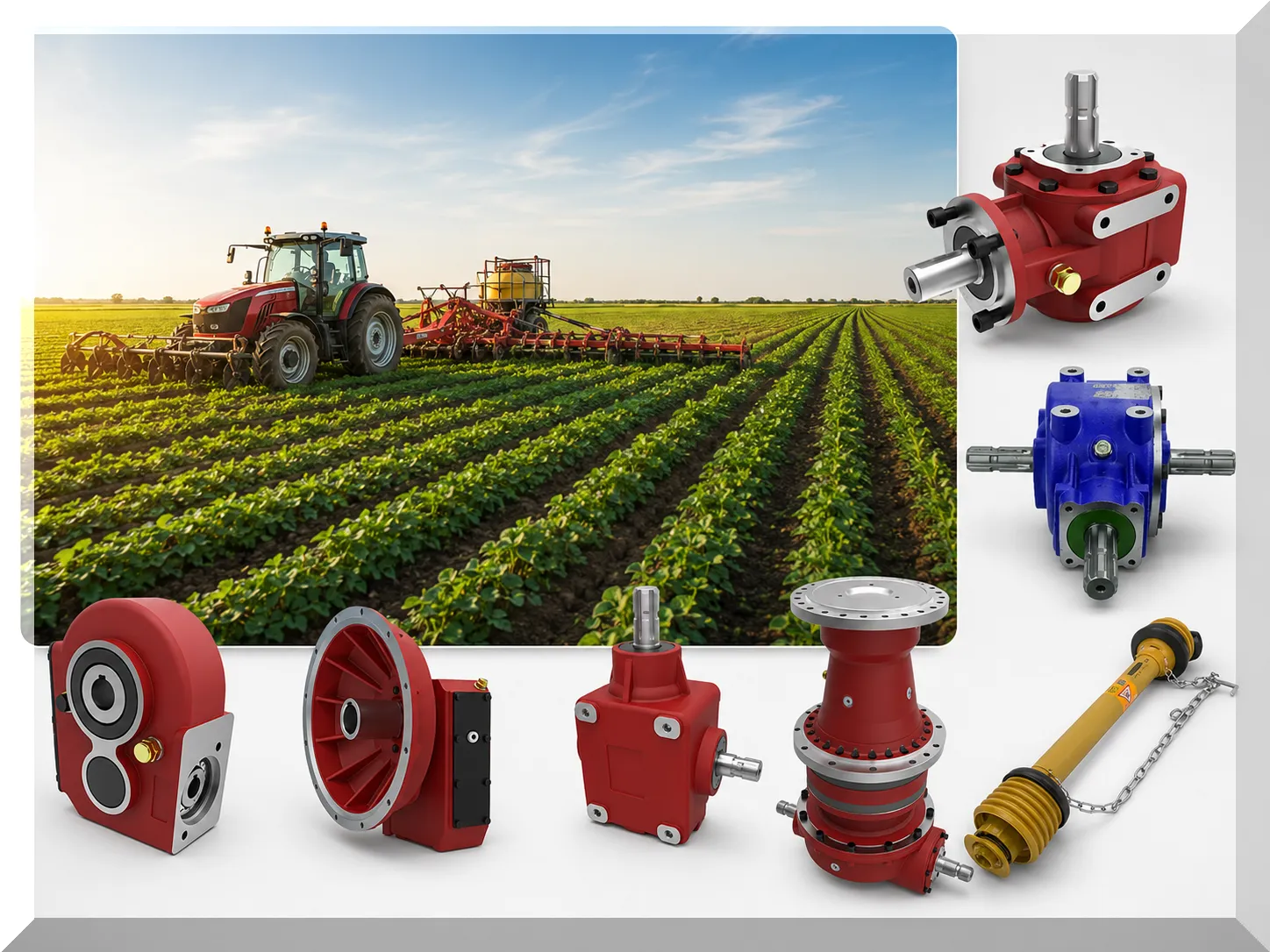
Gearbox torque ratings for 110–140HP sorghum baling: 농업용 기어박스 및 PTO 샤프트 사양
The high peak-load events in dense sorghum sections make correct slip clutch rating critical for protecting the gearbox input shaft. See the PTO 구동축 및 CV 조인트 크기 가이드 for specifications.
Frequently Asked Questions — Sorghum Stalk Baling
Find the Right Baler for Sorghum Stalk Conditions
Sorghum-sudangrass: spring-tooth models at 50HP minimum. Grain sorghum and sweet sorghum: the 9YF-2200S (single shredder, hammer-claw, 99HP) or 9YFS-2.2 (dual shredder, fan, 99HP). Tell us your sorghum type and tractor HP for a specific recommendation.
아메리카 에버파워 사료 베일러 장비 주식회사 · 1401 21번가 R호, 새크라멘토, 캘리포니아 95811
Editor:Cxm


