Equipment Asset Management Guide

농기계 중고 판매 및 보상 판매: 시기와 가격 가이드

Most producers sell or trade hay equipment when the old machine finally fails or a new one becomes available — not when market conditions favor the seller or when the equipment’s residual value is at its best. The difference between reactive and strategic equipment disposition can easily amount to $3,000–$6,000 on a single round baler transaction. This guide covers the timing, documentation, and channel decisions that determine whether you capture fair market value or accept whatever the dealer or first buyer offers.

Depreciation and Value

How Hay Equipment Depreciates: The Value Curve Over Time

Farm equipment depreciation is not a straight line — it follows a curve that is steepest in years one through three and flattens significantly in years four through eight. Understanding where your equipment sits on this curve determines whether holding it longer adds meaningful value decline risk or whether the depreciation rate has already slowed to a manageable level.

Year Approx. % of new price retained Annual depreciation rate What drives value at this stage
1학년 75–80% 20–25% Steepest drop — “used the moment it leaves the lot.” Low bale count and model year drive value.
Years 2–3 60–70% 8–12%/yr Service history, belt condition, and total bale count become primary value factors.
Years 4–7 45–60% 5–8%/yr Mechanical condition dominates. Well-maintained machines at this stage hold value well in strong used markets.
Years 8–12+ 25–45% 3–6%/yr Parts availability, known reliability of model, and remaining belt/drive life set floor value. May stabilize if model is popular.
The sweet spot for resale: Years 4–6 after purchase represent the optimal resale window for most commercial hay equipment — depreciation has slowed to 5–8% annually, the machine still has significant productive life remaining (making it attractive to buyers), and maintenance costs have not yet climbed to the level that erodes the value premium of a well-kept machine. Waiting beyond year 8 typically does not save significant annual depreciation but allows more total depreciation to accumulate.

Trade-In vs Private Sale: The $2,000–$5,000 Channel Decision

round baler mechanical systems — a trade-in at a dealer is the most convenient disposition channel but typically returns 15-25% less than a private sale for the same equipment; the difference is the dealer's reconditioning cost, carrying cost, and margin requirement built into the trade allowance

The trade-in transaction is convenient — one visit, one paperwork event, and the old machine is gone while the new one arrives. That convenience has a cost: dealers factor reconditioning expense, carrying cost during resale, and profit margin into the trade allowance offered. The resulting trade allowance is typically 15–25% below the private sale value for the same equipment in equivalent condition. On a $22,000 fair market value baler, this gap is $3,300–$5,500 — a meaningful sum against the convenience benefit.

Trade-in: when the convenience is worth it

Trade-in makes financial sense when: the equipment has significant deferred maintenance that would require disclosure or repair before private sale; your time has high opportunity cost during a busy season; the dealer is offering a promotional trade-in bonus that narrows the private-sale premium; or the equipment is an unusual or low-demand model that would sit on a private listing for months. The dealer absorbs the reconditioning risk and the sales timeline risk in exchange for the margin spread.

Private sale: capturing the full market value

Private sale captures the full retail market value — the price another farmer is willing to pay directly for your specific equipment. The effort required: accurate pricing research, listing preparation (photos, description, specs, bale count, service history), fielding inquiries, and managing the viewing and sale transaction. For well-maintained popular equipment with documented service history and low bale count, private sale is almost always worth the additional effort. The target is the same buyer the dealer would sell to, but without the dealer’s margin in between.

Seasonal Timing: When the Used Equipment Market Pays Most

Used hay equipment prices are not uniform throughout the year — they follow a seasonal demand cycle driven by when producers are planning equipment purchases and when they need equipment in the field. Selling at the right time in this cycle produces meaningfully higher prices than selling at the wrong time even for identical equipment.

Feb–April (Best)
Pre-season demand peak — producers planning their season are actively researching and purchasing used equipment. Buyers are motivated and willing to pay near-market prices to secure equipment before first cutting. List equipment in late February or March for maximum buyer pool. Hay equipment listed and sold before April typically commands 8–15% more than the same equipment listed in August or September.
May–July (Good)
Active season — some buyers replace failed or inadequate equipment during the season. Urgency buying can support strong prices, but the buyer pool is smaller (most producers have already committed to their equipment). Equipment that breaks mid-season and is sold quickly for whatever it brings produces the worst outcomes — plan, don’t react.
Aug–Oct (Fair)
Post-season lull — most producers have completed their season and are not urgently seeking equipment. Buyer pool is thin. Prices typically run 5–10% below the spring peak. Suitable for listing equipment that you plan to replace in the coming season, with patient timeline expectations.
Nov–Jan (Weakest)
Pre-winter and winter slow period — lowest buyer demand of the year. Unless equipment is priced aggressively below market to attract buyers, listings placed November through January typically sit until spring. Avoid selling in this window unless urgency of capital recovery outweighs the price impact.

Documentation That Maximizes Resale Value

equipment preparation and documentation for sale — a round baler listed with documented service history, current bale count, recent inspection, and a complete set of photographs sells faster and at higher prices than the same baler listed without documentation

Documentation is the second-most powerful value driver after mechanical condition — and unlike mechanical condition, documentation can be assembled in advance at no cost beyond time. A buyer who can verify a round baler’s service history, bale count, belt replacement record, and pre-sale inspection result has significantly lower purchase risk than a buyer who cannot verify any of those things. Lower risk to the buyer supports higher offered prices.

Documents that add the most value
  • Original purchase invoice (proves age, original cost)
  • Total bale count from monitor history or log
  • Belt elongation measurement records with dates
  • Belt replacement date and bale count at replacement
  • Dealer service records for any warranty or paid service
  • Recent pre-sale inspection report from a dealer (strongest credibility)
Photographs that sell equipment
  • Both sides of the baler from 15 feet distance — overall condition visible
  • Pickup system close-up — tine condition visible
  • Belt system with tailgate open — belt condition visible
  • Monitor display showing current bale count
  • Serial number plate — confirms model year identity
  • Any known cosmetic damage — disclosed proactively, not discovered by buyer
Pre-sale condition actions
  • Wash and clean the machine thoroughly — visual presentation matters more than most sellers assume
  • Fix minor obvious defects (broken lights, missing bolt covers) — low-cost items that signal “poorly maintained” to buyers
  • Grease all zerks and confirm lubrication is current
  • Have the baler start and run for the buyer inspection without issues
  • Do NOT replace major components immediately pre-sale without disclosing; buyers value knowing what has recently been done

How Dealers Calculate Trade-In Allowance

round baler comparison — dealers evaluating trade-in equipment use a formula that starts from the current wholesale book value and applies deductions for high bale count, belt condition, missing components, and cosmetic damage; understanding this formula allows producers to negotiate from a position of knowledge

Understanding how a dealer arrives at a trade-in number gives you the ability to evaluate whether an offer reflects the equipment’s actual condition or reflects the dealer’s negotiating position. Dealers typically start from a wholesale reference value (NADA Farm Machinery Guide, Iron Solutions, or their own recent auction data) and apply a set of adjustments — upward for below-average bale count and documented service, downward for deferred maintenance, high bale count, and missing components.

Dealer Trade-In Calculation — Approximate Framework for a Mid-Size Round Baler
Wholesale reference value (from NADA or recent auction data): $18,000
Adjustment for bale count below average (8,000 bales vs avg 15,000): +$1,200
Adjustment for belts replaced 2 seasons ago (documented): +$600
Deduction for minor cosmetic damage (dented side panel): –$300
Dealer reconditioning allowance (cleaning, inspection, minor repairs): –$800
Dealer carrying cost / margin allowance: –$1,500
Trade allowance offered: ~$17,200
Private sale value for same machine in same condition: $20,500–$21,000

Values illustrative. Actual margins vary by dealer, market conditions, and new equipment purchase volume. The gap between trade-in allowance and private sale value is typically largest when the equipment is in excellent condition — dealers discount more heavily on premium machines because their reconditioning and carrying risk is lower but they apply the same margin structure.

Where to List Used Hay Equipment: Channel Comparison

Machinery Pete / TractorHouse
National agricultural equipment listing platforms with the largest buyer audience for hay equipment. Listing costs $50–$150 per machine. Provides access to buyers outside your region who will travel for the right machine — important for specialized or high-value equipment. Slower sale timeline (weeks to months) but typically highest price outcomes for equipment priced correctly with complete documentation and photos.
Facebook Marketplace
Fastest regional buyer response — many equipment sales complete within 48–72 hours on Facebook. No listing fee. Buyer pool is local (within 100–200 miles) which limits competition to regional buyers but also limits price to regional market values. Best for equipment with strong local demand (popular baler models, common tractor sizes). Video of the equipment running significantly improves response rate and buyer confidence compared to photos alone.
Auction (live or online)
Auctions produce a definitive sale outcome on a known date — useful when timeline certainty is more important than maximum price. Auction prices for individual pieces of hay equipment are typically 10–20% below private sale values. Online platforms (Purple Wave, Ritchie Bros.) provide national buyer reach without requiring on-site attendance. Auction fees (buyer’s premium) reduce the net seller proceeds — confirm the fee structure before committing.
Neighbor / local network
The lowest-friction channel when a buyer exists — no listing, no photos, no waiting. Local sales to known buyers often produce fair prices when both parties have a relationship and trust the seller’s representation of condition. The risk: limiting the market to one potential buyer removes competitive pressure. For common equipment, the neighbor market produces fair outcomes; for specialized or high-value equipment, a wider listing typically adds meaningful price.

The full investment analysis framework — including cost-per-bale model, ROI calculation, and the upgrade decision criteria that determine when buying new equipment pencils out — is in the baler ROI investment analysis guide. The structured new vs used equipment decision framework — including the key questions that differentiate when used equipment is the right choice — is in the new vs used hay equipment decision guide. The complete equipment specification documentation that supports both insurance and resale valuation is in 농업용 변속기 및 PTO 구동계 부품 사양.

Upgrade Timing: The Decision Model That Avoids Costly Mistakes

The worst equipment upgrade decisions are made reactively — after a major breakdown during harvest, when the emotional cost of downtime overrides the financial analysis of whether upgrade is truly warranted. The best decisions are made proactively, using a structured financial model that compares the cost of keeping the existing machine against the cost of upgrading to the next machine. The right upgrade trigger is financial, not emotional.

Upgrade Decision Framework — Four Questions
1

What does the existing machine cost per bale to operate this year? Include maintenance, expected repairs, and ownership cost (depreciation + financing if applicable). If this number is rising year-over-year, the machine is on the expensive side of its cost curve.

2

What would a replacement machine cost per bale? Include purchase price minus trade-in or sale proceeds, plus estimated lower maintenance cost. If the new machine’s total cost per bale is lower than the existing machine’s, the financial case for upgrade exists.

3

What is the existing machine’s remaining productive life? A machine with 2 years of remaining productive life before a major rebuild is worth less to keep than one with 5 years remaining. Estimate remaining life honestly based on belt condition, gearbox condition, and structural integrity.

4

Is now the right time in the market cycle to sell? Even if the financial case for upgrade is strong, selling in November produces $3,000 less than selling in March on equivalent equipment. If the financial trigger is met, time the disposition to the spring demand peak.

Equipment Resale and Trade-In FAQs

Should I fix major mechanical issues before selling, or sell as-is and price accordingly?+
The repair-or-discount decision depends on the cost of repair relative to the value it adds. General rule: repair items where the cost is less than 50% of the value recovery. If a $400 belt set replacement allows you to price the baler $900 higher than selling with “belts need replacement” disclosure, the repair adds $500 net value. For major repairs (gearbox rebuild at $2,000 on a machine worth $8,000), the math often doesn’t work — the gearbox repair adds roughly $2,000 to the machine’s value but costs $2,000, producing no net benefit. In major-repair cases, disclose the issue clearly in the listing, price accordingly, and let the buyer factor in their own repair cost. Buyers who can do the repair themselves at lower cost than you can may pay a fair price for an as-is machine. Never misrepresent or fail to disclose a known material defect — the liability risk and relationship damage from a contested sale far exceed any short-term price benefit.
How do I find an accurate current market value for my specific baler before listing?+
Three sources provide the most reliable current market pricing: (1) NADA Farm Machinery Guide — provides wholesale and retail value ranges by year, make, and model with condition adjustments. Available by subscription or through many lenders and dealers. (2) Active listings on Machinery Pete, TractorHouse, and Facebook Marketplace — search your exact make, model, and year to see what sellers are currently asking. Note that asking prices are not sale prices; expect actual sale prices to run 5–10% below asking. (3) Completed auction results from Purple Wave, Ritchie Bros., or regional farm auction services — these are actual sale prices, not asking prices, and are the most reliable market data. Check recent results from the past 90 days for your model. Combining all three sources gives you a realistic asking price that is credible to buyers and defensible if challenged.
Can I negotiate a better trade-in allowance than the dealer’s first offer?+
Yes — trade-in allowances are negotiable, and dealers expect negotiation. The most effective approach: arrive with documentation of market value from NADA, active listings, and recent auction results for your specific machine. Present these as the basis for your counter and ask the dealer to walk through the adjustments that produced their offer. A dealer who cannot explain the gap between market data and their offer is offering based on margin targets rather than machine value. Second, get trade-in quotes from two dealers before committing — competing trade-in offers is the clearest signal to any dealer that the price needs to improve. Third, separate the trade-in negotiation from the new equipment negotiation when possible — bundling them makes it harder to evaluate whether you got fair value on each transaction individually.
How does bale count affect resale value, and is it worth keeping records of bales made?+
Bale count is the closest equivalent to odometer mileage on a vehicle — it is the primary measure of usage intensity and remaining life for hay equipment. Buyers and dealers adjust value significantly based on bale count relative to the typical usage for the machine’s age. A 6-year-old baler at 8,000 bales commands a substantial premium over the same machine at 22,000 bales — the low-count machine has most of its belt, drive chain, and bearing life ahead of it. Keeping bale count records is worth doing from day one: photograph the bale counter at the start and end of each season and record it in the maintenance log. When you sell, a documented bale count log is more convincing than a monitor screenshot taken the day before listing — it shows the count progression over the machine’s life and confirms the count was not reset. Most modern baler monitors maintain a lifetime bale count in non-volatile memory; confirm your model’s counter is cumulative and cannot be reset without dealer-level access.
What should I do if a buyer wants to return equipment after the sale?+
Private used equipment sales are generally “as-is” transactions with no implied warranty of fitness unless the seller makes specific representations that prove false. However, managing a post-sale dispute — even one you would legally win — is time-consuming and damaging to community relationships in a tight agricultural network. Prevention is the better approach: (1) disclose all known defects in writing before the sale; (2) allow the buyer to conduct a pre-purchase inspection and trial operation; (3) use a written bill of sale that documents the condition representations made and states the as-is nature of the transaction. If a dispute arises, the bill of sale and any pre-sale inspection documentation are your protection. A buyer who discovered the problem during an inspection they conducted has limited basis for a return claim. A buyer who claims they were not informed of a defect you knew about has a stronger legal basis — never omit known material defects from disclosure.
Is it worth listing equipment on multiple platforms simultaneously?+
Yes — listing on two or three platforms simultaneously maximizes buyer exposure without proportional additional effort. The same photographs and description can be adapted for each platform in 30–45 minutes. The practical combination: Machinery Pete or TractorHouse for national reach (serious buyers willing to travel), Facebook Marketplace for local quick-response, and a local classified or farm bureau listing for neighborhood buyer coverage. If you receive multiple inquiries simultaneously, manage them honestly — tell each buyer that others are interested and that the machine sells to the first confirmed buyer. Do not hold an equipment listing for one buyer without a deposit or written commitment; a verbal “I’m interested” is not a sale, and holding the listing costs you other buyers who were ready to commit. Once a deposit is received, remove the listing from all platforms immediately.
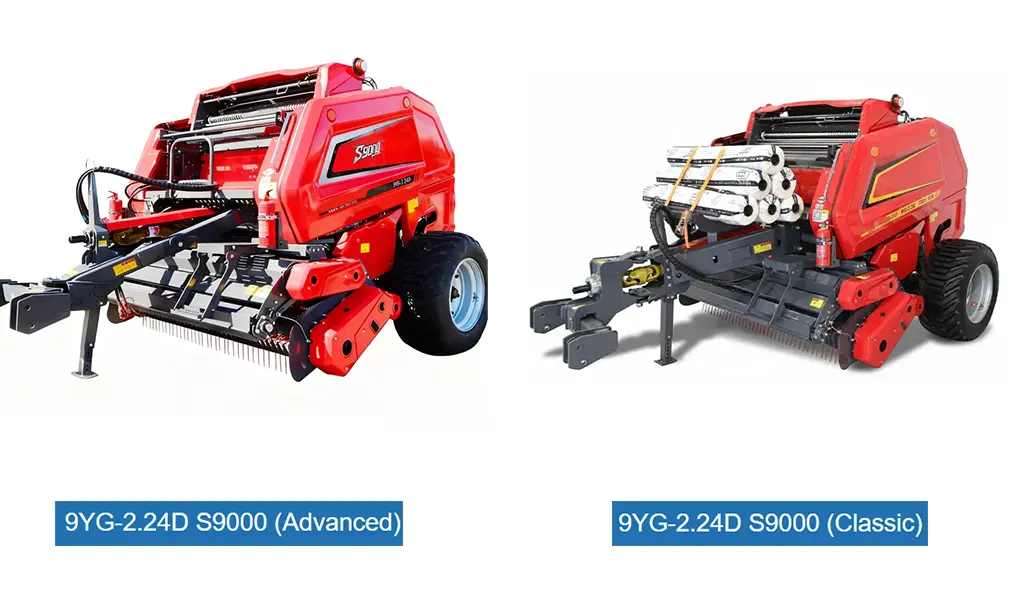
foragebaler.com round baler with complete specification documentation supporting resale valuation — serial number, model year, bale count, and service records

Get Current Equipment Pricing and Specifications to Support Your Sale

Tell us the make, model, year, and bale count of the equipment you are selling or trading. We provide current model specifications and market context that helps you price accurately and present the machine credibly to buyers and dealers.

Get Equipment Valuation Support

편집자: Cxm