Forage Production Planning Guide

Forage Crop Selection: Alfalfa, Grass, and Mixed Stand Guide

The forage crop planted in a field determines every subsequent management decision and equipment requirement for the next 5–10 years. Alfalfa, cool-season grasses, and mixed stands each have different site requirements, yield profiles, quality ceilings, market values, and cutting system demands. Matching the right crop to the right field — based on soil pH, drainage, climate zone, and available market — is the foundation of a profitable hay operation. This guide compares the main options with the practical selection criteria that apply to U.S. commercial hay producers.

Selection Framework

The Selection Framework: Five Questions That Determine the Right Crop

Forage crop selection is not a preference exercise — it is a matching process. The right crop for any given field and operation is determined by five objective criteria, and any crop that fails on one of the first three criteria should be eliminated regardless of its appeal in other dimensions.

1
Does the site support it? Soil pH, drainage, and rooting depth determine whether a crop can establish and persist. Alfalfa requires pH 6.5+ and well-drained soils. Most grasses tolerate lower pH and wetter soils. This is the hard constraint — it cannot be managed around in most practical situations.
2
Does the climate support it? Winter hardiness, summer heat tolerance, and growing season length limit what can be produced where. Alfalfa has clear winter hardiness zone requirements. Bermudagrass is not viable in northern climates. Orchardgrass is poorly adapted to southern heat.
3
Is there a buyer? The highest-quality hay from the wrong crop for your market is worth less than adequate quality from the right crop. Confirm buyer demand for the format and species before establishing a multi-year stand.
4
Do you have the equipment? Different crops require different cutting frequency, cutting height, and conditioning intensity. Alfalfa requires precise cutting height management; bermudagrass requires different mowing equipment than northern grasses. Verify equipment compatibility before establishing.
5
What is the yield and quality ceiling? Revenue per acre determines whether the crop pencils out after establishment and operating costs. Different crops have different realistic yield ranges — verify the realistic range for your climate zone and soil class before committing.

Alfalfa: The Premium Hay Crop — Requirements and Returns

commercial hay baling operation on established alfalfa field — alfalfa is the highest-value forage crop in most U.S. markets but has the most demanding site requirements; matching alfalfa to the right field is the foundation of premium hay production

Alfalfa is the most widely grown hay crop in the United States, producing the highest yield per acre, the highest protein content, and the highest market value of any common hay crop. It is also the most demanding: it requires specific soil conditions, careful cutting management, and consistent monitoring to sustain stand productivity. Where the site conditions support it, alfalfa is almost always the most profitable hay crop choice.

Site requirements
  • Soil pH 6.5–7.0 (critical — below 6.2 causes nodulation failure)
  • Well-drained soil; no standing water tolerance
  • Rooting depth 24+ inches for drought tolerance
  • No compaction layers above 18 inches
Production characteristics
  • Yield: 4–8 tons/acre in 3–5 cuttings depending on region
  • Protein: 18–26% CP at optimal cutting maturity
  • RFV potential: 175–220+ (Supreme grade) when cut at bud stage
  • Stand life: 6–10 years with good management
Market position
  • Highest market value of any common hay crop
  • Primary dairy, horse, and export markets
  • Stable year-round demand with consistent pricing
  • Premium price differential over grass hay: $30–$70/ton typical

The complete alfalfa establishment guide — covering variety selection, seeding date, pH preparation, and first-year management — is in the alfalfa stand establishment guide.

Cool-Season Grasses: Orchardgrass, Timothy, and Tall Fescue

Cool-season grass hays occupy a different market position from alfalfa — lower protein, lower RFV, and generally lower market value per ton, but they tolerate sites and conditions where alfalfa cannot persist. They also command premium prices in horse markets (especially timothy) where buyers value the softer stems and lower protein relative to alfalfa.

Grass species Ideal region Typical RFV (boot) Best market
Orchardgrass Northeast, Mid-Atlantic, Pacific NW 160–185 Horse hay (premium with early cutting); dairy roughage; mixed stands
Timothy Northern states, Canada, Pacific NW 145–175 Premium horse and small animal market; Japan/Korea export hay
Tall fescue Transition zone, Southeast, Midwest 120–145 Cattle roughage; endophyte-free varieties for horse use
Perennial ryegrass Pacific Northwest, Northeast 155–185 Dairy quality hay; silage; highest yield of cool-season grasses

Mixed Alfalfa-Grass Stands: The Balanced Choice for Many Operations

mower-conditioner cutting mixed forage stand — alfalfa-grass mixed stands require the same roller conditioning as pure alfalfa stands; the conditioning intensity should be set for the alfalfa component since stems are the drying-rate limiting material

Mixed alfalfa-grass stands — typically 50–70% alfalfa seeded with orchardgrass, timothy, or smooth bromegrass — have become increasingly popular for operations that want alfalfa’s quality but need the grass component to provide stand resilience and longevity. The grass component persists better under difficult conditions (late or early cutting, winter stress, soil pH near 6.0) and provides a “buffer” that prevents complete stand failure if the alfalfa thins.

Advantages of mixed stands
  • More tolerant of lower pH than pure alfalfa (grass component compensates when alfalfa thins)
  • Better winter persistence in harsh climates — grass survives where alfalfa crowns would winterkill
  • Reduced bloat risk compared to pure alfalfa when fed to cattle
  • More flexible cutting schedule — grass component is more forgiving of cutting timing
  • Natural nitrogen transfer from alfalfa nodules benefits grass growth
Limitations of mixed stands
  • Lower RFV than pure alfalfa at equivalent management — grass fraction dilutes protein and energy values
  • Cannot qualify for “pure alfalfa” market specifications at most commercial elevators
  • Species balance shifts over time — aggressive grass can crowd out alfalfa after 4–5 years
  • Cutting height and timing must compromise between optimal alfalfa and optimal grass management

Warm-Season Grasses for Southern Operations

In the transition zone and southern states where summer heat limits cool-season grass productivity and where alfalfa faces extended heat and drought stress, warm-season grasses dominate hay production. These crops are adapted to conditions where cool-season species struggle, and they occupy a distinct market niche.

Bermudagrass

The dominant warm-season hay crop in the South. Hybrid varieties (Coastal, Tifton 85) yield 4–8 tons/acre with 3–6 cuttings per season. RFV typically 90–130 depending on maturity — lower than alfalfa but adequate for beef cattle and stocker markets. Requires different mowing equipment (conditioner required for consistent drying) and higher cutting frequency than cool-season species.

Sorghum-Sudan / Forage Sorghum

Annual warm-season grass used in summer gap situations where perennial grasses are dormant. Fast-establishing and high-yielding (3–6 tons/acre per cutting). Primarily used for silage or summer-season hay. Lower protein than alfalfa but adequate for beef. Equipment requirements: heavy-duty disc mowers for thick stems; mower-conditioner essential for drying.

Bahiagrass

Persistent warm-season grass in the Deep South; highly drought-tolerant. Yield 2–4 tons/acre; RFV 70–100. Primary market: beef and stocker roughage. Very low maintenance after establishment. Not suitable for horse or dairy premium markets. Requires heavy-duty sickle bar or disc mower due to tough stems that damage lighter equipment.

Cutting System Requirements by Crop Type

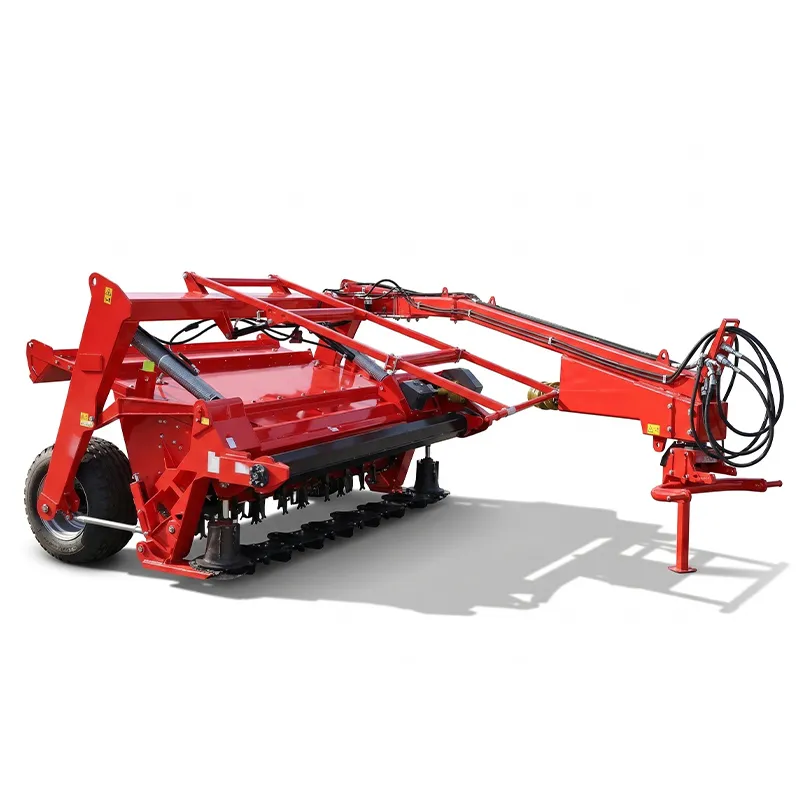
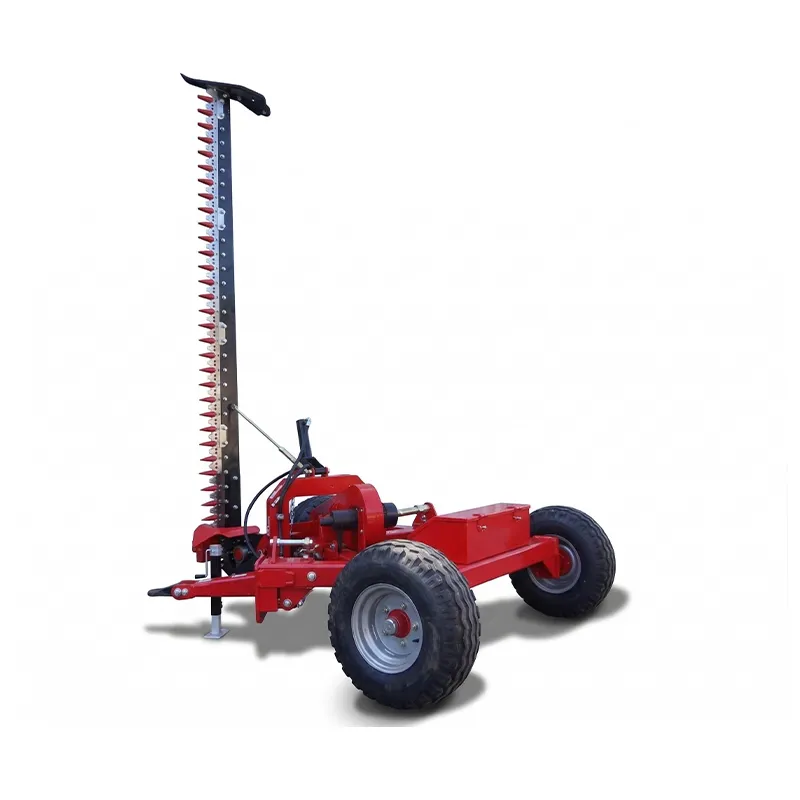
mowing equipment for forage crop production — cutting system requirements differ significantly between alfalfa, cool-season grasses, and warm-season forages; matching equipment to crop prevents both quality loss and equipment damage

수확고 Cutting height Conditioning need Annual cuttings
Alfalfa 2.5–3.5 inches Essential — roller preferred 3–6
Orchardgrass 3–4 inches Recommended 2–4
Timothy 3–4 inches Optional 2–3
Bermudagrass 3–4 inches Essential — flail or roller 4–7
Mixed alfalfa-grass 3.0–3.5 inches Recommended — roller 3~5세

The mowing equipment specifications — cutting height adjustment, conditioning intensity, and swath width management — that protect crop quality at each cut are in the mowing and conditioning quality guide. The PTO and gearbox specifications for the mower-conditioner drive systems used across all forage crop types are in 농업용 변속기 및 PTO 구동계 부품 사양.

Stand Persistence and Life Expectancy by Crop

Stand life — the number of productive years before renovation is needed — significantly affects the amortized cost of establishment. A stand that requires re-establishment every 4 years costs 2.5× as much in annual establishment cost as one that persists for 10 years. Understanding realistic stand life expectations for your region and management system allows you to include establishment cost correctly in your revenue-per-acre calculation.

Alfalfa: 6–10 years

Well-managed alfalfa on suitable sites with adequate pH, drainage, and pest management typically persists 7–8 years in the Midwest and Plains; 5–6 years in the South where summer heat and Phytophthora pressure are higher. Aggressive early-cutting systems reduce stand life by 1–2 years compared to later-cutting programs that allow more root carbohydrate accumulation.

Orchardgrass: 5–12 years

Orchardgrass stand persistence depends heavily on avoiding overgrazing and continuous close cutting. On productive soil with 3–4 inch cutting height, orchardgrass stands persist 8–12 years. Consistently cutting too close (under 2.5 inches) depletes root energy reserves and causes stand thinning within 4–5 years.

Timothy: 4–8 years

Timothy is less persistent than orchardgrass under intensive management. It benefits from a rest period between cuts (40–50 days) that many hay operations struggle to maintain. In cool, moist climates with appropriate cutting intervals, timothy stands persist 7–8 years. Under intensive 30-day cutting schedules in warm climates, stands thin rapidly within 3–4 years.

Bermudagrass: 15+ years

Established hybrid bermudagrass stands are among the most persistent forages in the South — properly managed stands routinely produce 15–20+ years with only periodic fertilization and pest management. The tradeoff: bermudagrass establishment from sprig transplanting is expensive and slow; successful establishment is the critical investment that pays dividends over the long stand life.

Revenue Per Acre: Comparing Crop Economics

Typical Revenue Per Acre by Crop — Representative Midwest/Northern U.S. Values
수확고 Typical yield Market price range Revenue/acre range Est. cost/acre
Premium alfalfa 5–7 T/acre $180–$240/ton $900–$1,680 $280–$380
Orchardgrass (horse quality) 3–5 T/acre $180–$280/ton $540–$1,400 $180–$250
Mixed alfalfa-grass 4–6 T/acre $150–$200/ton $600–$1,200 $220–$300
Grass hay (livestock) 3–5 T/acre $120–$160/ton $360–$800 $150–$220

Forage Crop Selection FAQs

My soil pH is 6.0 — can I grow alfalfa if I lime heavily at seeding?+
Lime at seeding does not create the conditions for successful alfalfa establishment — lime takes 12–18 months to fully react with soil particles and raise pH. At pH 6.0, alfalfa seedlings may emerge but will fail to nodulate effectively, producing nitrogen-deficient plants that appear yellowed and stunted by mid-summer. The practical path: apply lime 12–18 months before seeding and grow an annual crop in the interim; test pH from 3–6 inches depth in the target field just before seeding; confirm pH above 6.4 before seeding alfalfa. If the site cannot achieve pH 6.4 without prohibitive lime cost (e.g., highly acidic subsoils), consider a mixed alfalfa-grass stand at 30–40% alfalfa instead, or plant orchardgrass or tall fescue which tolerate pH down to 5.8–6.0.
Is timothy still worth growing when alfalfa commands such a price premium?+
Timothy retains a strong market position in specific applications where its characteristics are preferred over alfalfa. Premium horse markets — particularly for thoroughbred racehorses, sport horses, and rabbits — actively prefer high-quality timothy hay because its lower protein (10–14% vs alfalfa’s 18–26%) reduces the risk of nutritional imbalances in hard-working horses, and its firmer stems provide better digestive function in hindgut fermenters. Japan and Korea are major export markets for premium U.S. timothy hay that can command prices competitive with export alfalfa. In the Pacific Northwest where the climate suits timothy particularly well, many producers achieve economics comparable to alfalfa through premium horse and export pricing. The key is market access — timothy grown without access to these premium channels is a lower-value commodity than alfalfa for most buyers.
Can I plant alfalfa on a field that has had alfalfa in the last 3 years?+
Planting alfalfa directly back into a field with existing or recently terminated alfalfa is not recommended due to alfalfa autotoxicity. Established alfalfa roots release allelopathic compounds into the soil that suppress new alfalfa seedling establishment — the compounds persist for 6–18 months depending on temperature, moisture, and soil organic matter. The standard recommendation is to wait 12 months (one full growing season) after alfalfa stand termination before reseeding alfalfa, using that year for a non-autotoxic rotation crop such as corn, small grain, or annual grass. Attempting to reseed directly into terminated alfalfa typically produces uneven stands with 30–60% lower plant density than expected, often requiring re-establishment at additional cost within 2–3 years when the sparse stand cannot maintain weed competition or adequate yield.
What is the most common mistake in forage crop selection?+
Planting the crop with the best market value without confirming site suitability — specifically, planting alfalfa on sites with poor drainage or low pH because alfalfa commands the highest price. The result is a stand that fails within 2–3 years from Phytophthora root rot (poor drainage), bacterial wilt (low-pH-stressed plants), or winter injury (nitrogen-deficient plants from poor nodulation accumulate insufficient carbohydrate reserves for winter survival). The correct approach is always site first: evaluate drainage, pH, and rooting depth before considering the crop. If the site supports alfalfa, plant alfalfa. If it does not, plant the best-adapted crop for the actual site conditions and manage the marketing accordingly. A healthy, persistent grass hay stand on unsuitable-for-alfalfa ground produces more total revenue over 10 years than an alfalfa stand that fails in year 3 and requires re-establishment.
How do I decide between 100% alfalfa and a mixed stand on a marginal site?+
The decision criteria: if pH is in the range 6.2–6.5 (marginal but not disqualifying for alfalfa), a mixed stand at 50–60% alfalfa seeding rate is a better risk management choice than pure alfalfa. The grass component will fill in as alfalfa thins from pH stress, maintaining a productive stand that a pure alfalfa stand would not sustain. If pH is above 6.5 and drainage is adequate but the site has a history of winterkill or disease pressure, selecting a higher winter hardiness variety (WH 4 or 5) in a pure stand is appropriate. If pH is below 6.2 and cannot be economically raised, grass hay is the correct answer regardless of the alfalfa price premium. The mixed stand approach works well on borderline sites (pH 6.2–6.4) with known winter stress, where the investment in pH correction to reach 6.5+ would require 2–3 years of lime applications before seeding — during which time a mixed stand at the current pH can produce cash flow while the lime gradually improves conditions for subsequent alfalfa overseeding or renovation.
What is the most undervalued forage crop in the current U.S. market?+
High-quality orchardgrass and orchardgrass-alfalfa mixtures for horse markets in many regions are consistently undervalued relative to the premium available if marketed directly. Many orchardgrass producers sell into the commodity livestock market at grass hay prices when the same hay — tested, packaged attractively, and marketed directly to horse owners or equine facilities — commands $30–$60/ton above commodity pricing. The orchardgrass crop’s quality ceiling at boot stage (RFV 160–185) is comparable to mid-quality alfalfa, and horse owners who have had digestive issues with high-protein alfalfa often actively prefer premium orchardgrass. The undervaluation persists because most producers don’t invest in the direct marketing relationship — they sell through an elevator that aggregates and blends without capturing the premium. If you are growing orchardgrass and selling it at generic grass hay prices, testing your hay, identifying its quality, and developing direct horse-owner accounts in your region is likely the highest-ROI marketing change available to your operation.

foragebaler.com hay production equipment — mowing, conditioning, and baling systems configured for each major forage crop type and target market

Get Equipment Specifications Matched to Your Forage Crop

Tell us your primary forage crop, climate zone, annual acreage, and target market. We recommend the mowing, conditioning, raking, and baling equipment configuration that produces the best quality and economics for your specific crop-market combination.

Get Crop-Specific Equipment Guide

편집자: Cxm