Forage Risk Management Guide

Hay Crop Insurance: WFRP, PRF, and Options for Forage Producers

Hay and forage crops have historically been among the most underinsured agricultural commodities in the U.S. — many producers plant, grow, and sell hay without any revenue protection against drought, flood, or market disruption. The USDA Risk Management Agency offers several programs specifically designed for forage producers, and understanding which program fits which operation type is the first step toward building a risk management program that protects the operation’s revenue in adverse years.

Program Overview

The Four Main Insurance Options for Forage Producers

USDA Risk Management Agency (RMA) offers forage-relevant insurance programs that differ fundamentally in what they insure — your actual production, your revenue, or a weather index — and in how losses are triggered and paid. Each program fits a different operation profile; using the wrong program for your situation produces either inadequate coverage or unnecessary premium cost.

PRF
Pasture, Rangeland, Forage index insurance based on rainfall. Covers grazed forage and hay production from pasture.
WFRP
Whole Farm Revenue Protection. Covers all farm revenue including hay. Requires 5 years of Schedule F tax records.
APH / Forage Seeding
Actual Production History insurance for planted alfalfa and grass hay fields in eligible counties.
NAP
Noninsured Crop Disaster Assistance for crops where no USDA insurance program is available. Lower indemnity than RMA programs.

PRF — Pasture, Rangeland, and Forage Index Insurance

foragebaler.com equipment quality — hay production revenue protection through PRF insurance is indexed to rainfall measurements at NOAA grid points; producers who understand how their local rainfall correlates with hay yield can select grid intervals and coverage levels that maximize protection for their specific operation

PRF is the most widely used forage insurance program in the U.S. and is available in all 48 contiguous states. It insures against rainfall deficits — not actual yield loss. When rainfall at the NOAA Climate Grid point covering your operation falls below the insured percentage of the historical average during your selected two-month intervals, you receive an indemnity payment. The key advantage of PRF is simplicity: no production records are required, no adjuster visits the farm, and payment is determined solely by the rainfall index data for your grid point.

How PRF grid intervals work

Producers select which 2-month intervals to insure across the growing season. Each interval receives a percentage of the total coverage allocation — for example, 30% in May–June, 40% in July–August, and 30% in September–October. If only the July–August interval has a rainfall deficit that triggers the index, only the 40% allocation for that interval is paid. You can distribute coverage across the season to match your hay production schedule — weight coverage in the intervals that historically produce your most valuable cuttings.

Coverage levels and premium

Coverage levels of 70–90% of the historical average rainfall are available. Higher coverage levels provide payment more frequently (triggered by less severe deficits) but cost more in premium. The 90% coverage level costs significantly more than 70% but triggers on moderate droughts that cause real yield reduction. Most hay producers who are seriously trying to protect revenue elect 85–90% coverage — the premium increase over 70% is modest relative to the additional protection depth.

PRF Important Limitation: PRF pays when the rainfall index is below threshold — not when your farm has a yield loss. If your grid point receives adequate measured rainfall but a localized storm pattern left your specific fields dry, PRF may not pay even if you experienced a significant yield loss. Conversely, PRF may pay during years when you have good hay yields if the rainfall index happens to be below threshold due to measurement timing or distribution. PRF works best as revenue averaging across multiple years rather than as precise yield-loss insurance.

WFRP — Whole Farm Revenue Protection for Commercial Hay Operations

Whole Farm Revenue Protection insures the total revenue of all crops on a farm under a single policy. For operations where hay is one of several enterprises, WFRP may provide better coverage than crop-specific programs because it protects against revenue decline from any combination of causes — drought, price decline, or production loss on any covered commodity. The indemnity is based on Allowable Revenue, calculated from five years of Schedule F tax returns.

Who WFRP fits best
Diversified farms with multiple revenue streams including hay, other crops, and/or livestock income. Operations with consistent five-year revenue history. Farms where a single crop insurance program would leave significant revenue unprotected. Operations with experienced farm managers who understand Schedule F documentation requirements.
WFRP documentation requirements
Five consecutive years of Schedule F federal income tax returns are required to establish the Allowable Revenue baseline. Operations that have not maintained consistent Schedule F filing, or whose income is primarily from non-farm sources, may not qualify or may find the Allowable Revenue calculation produces a coverage level inadequate for their actual operation size. Begin maintaining clean Schedule F records years before you plan to enroll in WFRP.
Maximum coverage and premium
WFRP coverage levels are 50–85% of Allowable Revenue. Premium subsidy ranges from 44–59% depending on coverage level. For operations with significant hay revenue, WFRP premium cost is typically $1.50–$4.00 per $100 of covered revenue. Contact a crop insurance agent approved to sell WFRP for a current quote — WFRP quotes require Schedule F records and cannot be approximated without farm-specific data.

APH Forage Production Insurance: County-Specific Availability

hay production and logistics — APH forage insurance is based on the producer's actual production history records; maintaining accurate yield records per field over multiple years is the prerequisite for accessing APH coverage, which pays on actual production shortfalls rather than weather indices

Actual Production History (APH) insurance for forage is available in specific counties for specific crops — primarily irrigated alfalfa in western states and established grass hay in some eastern and midwestern counties. Where available, APH forage insurance is the most precise coverage because it insures actual yield against the producer’s documented historical average rather than a weather index. If your actual yield falls below the insured percentage of your APH average, you receive an indemnity for the production shortfall times the price election.

Building your APH yield history

APH coverage uses the average of up to 10 years of actual yields per practice (irrigated or non-irrigated) per crop type. New operations or operations with less than four years of records use transitional yields provided by USDA until actual history builds. To improve APH accuracy: maintain field-by-field yield records with harvest date, cutting number, and tons per acre; file records with your crop insurance agent annually at spring reporting deadlines; and never claim a yield lower than actual — the APH average directly determines your coverage level.

Where to find county availability

Search the USDA RMA Cost Estimator (rma.usda.gov/Information-Tools/Cost-Estimator) for your county and crop type to see which programs are available. Many counties in the western U.S. have forage APH coverage for irrigated alfalfa; coverage in the midwest and east is more limited. If your county has no APH forage program, PRF and WFRP are your primary options.

NAP — Noninsured Crop Disaster Assistance for Gaps in Coverage

For forage crops and specific hay operations that are not covered by any RMA insurance program in their county, USDA’s Noninsured Crop Disaster Assistance Program (NAP) provides a catastrophic-level safety net. NAP does not function like private crop insurance — it only pays when a natural disaster causes a yield loss of more than 50% below the normal county average. The payment rate is 55% of the established price — a modest recovery rate, but meaningful for total-loss events.

NAP Application and Enrollment
Applications must be filed with your local USDA Farm Service Agency office before the final crop planting date — typically November 20 for winter small grains and March–May for perennial forages, depending on state. The application fee is $250 per crop with a $750 maximum per producer per county, waived for limited resource, beginning, or socially disadvantaged producers. NAP coverage elections are made at application; unharvested or replanting costs are not typically covered. NAP is an underutilized program that provides basic protection where no other program applies — file the application even if you don’t expect to use it, as retrospective applications are not accepted.

The detailed hay crop insurance comparison — including program maps, premium estimate approaches, and the production record documentation that supports all insurance programs — is in the hay crop insurance guide for forage producers. The straw and crop residue baling market context — relevant to operations that derive revenue from both hay and straw and need to understand which commodity revenue streams require separate insurance coverage — is in the straw and crop residue baling guide. The equipment specifications for hay operations seeking insurance documentation support are in 농업용 변속기 및 PTO 구동계 부품 사양.

Critical Deadlines and Common Enrollment Errors

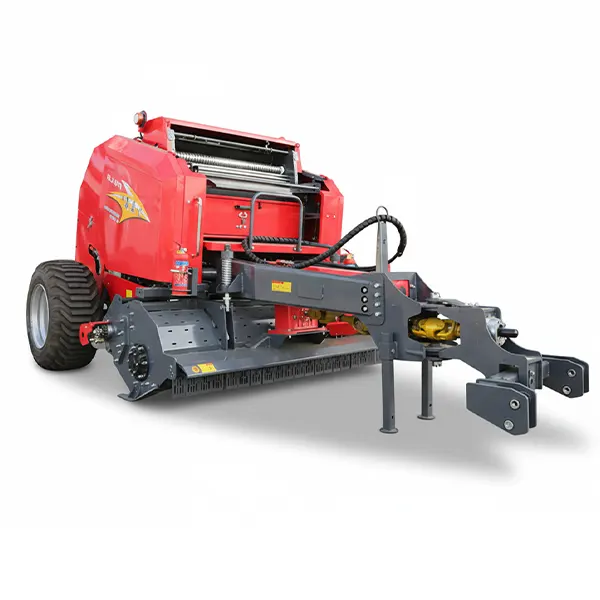
round baler hay production — hay crop insurance enrollment deadlines are fixed and non-extendable; missing the enrollment window for PRF or WFRP means waiting an entire year for the next enrollment opportunity, potentially leaving a full production season unprotected

Program Sales closing deadline 메모
PRF (most states) December 1 Enrolls for the following calendar year; grid selection and interval allocation must be completed by this date
WFRP March 15 (most states) Requires Schedule F records submitted with application; coverage begins after sales closing date
APH Forage (varies by crop) Varies by crop/state Typically September–March depending on crop; confirm with your crop insurance agent
NAP Before planting date Filed with FSA before crop is planted; state-specific dates for each crop type
Most common error #1: Missing the December 1 PRF deadline because “it seems far away in September.” Put a reminder in your phone for November 1 to contact your crop insurance agent and complete PRF enrollment before the holiday season distracts you from the deadline.
Most common error #2: Enrolling in PRF but selecting the wrong grid point. Some farms span multiple NOAA grid points — producers sometimes enroll their acreage under the grid point that covers most of the farm geographically but whose rainfall history does not accurately represent the driest portion of the fields. Verify your grid assignment carefully with your agent.
Most common error #3: Failing to report actual production for APH or WFRP programs by the annual production reporting deadline. Late production reports result in substituted yields being assigned — typically lower than your actual production — which reduces your coverage level in subsequent years.

Building a Complete Forage Risk Management Strategy

No single insurance program provides complete protection for all forage revenue risks. A well-designed forage risk management strategy typically layers two or three programs to address different risk types: weather-driven yield loss (covered by PRF or APH), price and revenue risk (covered by WFRP), and catastrophic total-loss events (covered by NAP where other programs don’t apply). Building this layered approach requires planning several years in advance to accumulate the production history that higher-coverage programs require.

Year 1–3: Build the foundation

Enroll in PRF immediately — no production history required. File NAP for any crops not covered by RMA. Begin maintaining accurate Schedule F tax records and field-by-field yield logs. These records will be required for WFRP and APH in future years.

Year 4–5: Add revenue protection

With four or more years of Schedule F records, evaluate WFRP. Submit five years of returns to a qualified WFRP agent for a coverage and premium estimate. If WFRP coverage level and cost is favorable, enroll for the following year and maintain PRF for the weather-index layer.

Ongoing: Optimize and review

Review PRF interval allocation annually based on actual rainfall patterns at your grid point. Adjust coverage levels when premium subsidies or risk profile change. Add APH forage insurance if it becomes available in your county. Discuss coordination between PRF and WFRP with your agent every two to three years to ensure no double-coverage gaps or conflicts.

Hay Crop Insurance FAQs

Can I use both PRF and WFRP on the same operation simultaneously?+
Yes — PRF and WFRP can be used simultaneously on the same operation, and this combination is used by some producers to build layered forage revenue protection. PRF provides index-based protection for pasture and rangeland against rainfall deficits; WFRP covers the total farm revenue including hay sales. The programs insure different things and trigger independently. However, WFRP does require that all other USDA crop insurance policies on the farm be disclosed and accounted for — indemnities from PRF payments reduce the allowable revenue shortfall eligible for WFRP payment to prevent double-recovery of the same loss. Discuss the coordination with a qualified crop insurance agent who handles both programs.
My PRF did not pay even though we had a drought and my hay yield was way below normal. Why?+
PRF is an index insurance program — it pays based on the rainfall index at your NOAA grid point, not based on your actual farm yield. If your grid point’s rainfall index for the insured intervals remained above your coverage threshold even though your farm experienced a localized drought, no payment is triggered regardless of actual yield loss. This is called basis risk — the risk that the index and your actual outcome diverge. Common causes: a thunderstorm that dropped significant rain on your grid measurement point but missed your fields; your coverage intervals were selected for months that happened to receive adequate indexed rainfall while the critical short dry period occurred in a different month; or your coverage level was set at 70% when a 90% level would have triggered on the actual deficit that occurred. Review your interval selection and coverage level after any non-payment drought year with your agent — adjusting interval allocation and coverage level based on your farm’s drought patterns improves PRF performance over time.
Does PRF cover intentionally harvested hay or only grazed forage?+
PRF covers planted or native forage regardless of intended use — it can be grazed, harvested for hay, or used as silage. The insured commodity is the forage production from the covered acres, not a specific use type. When enrolling, you specify the practice (irrigated or non-irrigated) and the acres of forage being insured. The same PRF policy covers a field whether you hay it, graze it, or do both during the season. This flexibility makes PRF well-suited to operations with multiple forage uses across the same acreage — no separate policies are needed for hay versus pasture use on the same fields.
Is crop insurance worth the premium for a small hay operation under 100 acres?+
The economics depend on the operation’s financial position and risk tolerance rather than size alone. PRF at 100 acres of alfalfa hay in an irrigated western county might cost $400–$800 in annual premium after subsidy. If a severe drought year produces a $12,000–$20,000 revenue shortfall on those 100 acres, the premium was well worth it. For a financially secure operation with significant cash reserves, the same $600/year premium might represent a poor expected value return compared to self-insuring through those reserves. The better question for small operations is not whether to insure but which program to use: PRF is the most accessible for small forage producers because it requires no production records and has a simple enrollment process. WFRP and APH have administrative burdens that may not be worth the complexity for small operations. NAP is worth filing for any crop that isn’t covered by RMA programs regardless of operation size — the application fee is modest and the catastrophic-level protection is meaningful for total-loss scenarios.
How do I find a qualified crop insurance agent for forage programs?+
The USDA RMA Agent Locator at rma.usda.gov allows you to search for USDA-approved crop insurance agents in your county by crop type. For forage-specific programs, look for agents who specifically list PRF or WFRP in their program list — not all agents who sell crop insurance are equally familiar with forage programs. Your state’s Cooperative Extension Service often publishes agent lists and educational resources for agricultural insurance. County Farm Bureau offices and state cattlemen’s associations frequently maintain referral lists for agents with forage program expertise. When interviewing an agent, ask specifically about their experience with PRF interval selection, grid identification, and production history reporting — these are program-specific skills that not all general crop insurance agents possess at the same level.
Can I insure a newly seeded alfalfa field in its establishment year?+
Forage Seeding insurance (available in some counties through RMA) specifically covers the establishment year of newly seeded alfalfa or perennial grasses — paying if the stand fails to establish due to drought, frost, or other covered causes. Without a Forage Seeding policy, a newly seeded field typically has no production history and cannot be covered under APH. PRF can cover the acreage for rainfall deficit protection in the establishment year even without production history. WFRP can potentially include seeding costs as farm revenue exposure. For operations in counties with Forage Seeding coverage, this policy is worth evaluating in any year where a significant acreage of new alfalfa is being seeded — establishment failure in a dry summer is one of the highest single-event forage losses a hay operation faces, and it is insurable in many counties.
foragebaler.com commercial hay operation — production records and equipment documentation that support crop insurance APH history and WFRP revenue verification

Get Equipment and Production Documentation for Your Insurance Program

Tell us your hay production acreage, irrigated or dryland, and primary crops. We help you identify the production documentation your crop insurance program requires and the equipment records that support accurate production history reporting.

Get Production Documentation Support

편집자: Cxm