Michigan’s Dominant Position in U.S. Dry Bean Production
Michigan consistently accounts for 35–50% of total U.S. dry bean production by value in a typical year, making it by far the largest producing state for this crop category. The industry is concentrated in the eastern Lower Peninsula — primarily the Thumb region counties of Huron, Tuscola, Sanilac, and Lapeer — where the light-textured, well-drained soils and the regional climate with cool late-summer nights create ideal conditions for the dry bean classes that command premium market prices.
The crop’s economic importance to Michigan agriculture is substantial. Dry beans are a primary cash crop for thousands of Michigan farm operations, with the kidney bean classes — dark red kidney, light red kidney, and white kidney (cannellini) — representing the highest-value segment. The state’s dry bean infrastructure includes an extensive network of seed companies, custom harvest operators, elevator and cleaning facilities, and equipment dealers who specialize in the bean-specific equipment that this mechanized harvest system requires.
35–50%
Share of U.S. dry bean production value from Michigan in a typical year
300k+
Acres of dry beans planted in Michigan in peak production years
5
Major dry bean market classes produced commercially in Michigan
The Five Major Michigan Dry Bean Market Classes
Michigan’s dry bean industry is organized around five distinct market classes, each with separate price structures, quality specifications, and end-use markets. The market class you plant determines your entire production and marketing program — variety selection, agronomic management, harvest equipment configuration, and the elevator or buyer network you sell through.
Donkerrode nier (DRK)
Michigan share of U.S. production: 75–85%
Primary market: Domestic food processing — canned kidney beans, chili, soups. Dark red seed coat must remain intact through processing without splitting or color fade.
Premium driver: Seed coat integrity and uniformity. Color and appearance specifications are strict — discolored, split, or damaged seed coats reduce grade and price.
Highest-value kidney class; most acreage in the Michigan Thumb
Lichtrode nier (LRK)
Michigan share of U.S. production: 70–80%
Primary market: Domestic food processing and export. LRK is more widely accepted in international markets than DRK and commands strong export demand particularly from Latin America and Caribbean markets.
Premium driver: Large seed size and uniform color. LRK buyers specify minimum seed size screens; undersized beans are downgraded.
Second largest class by acreage; wider harvest window than DRK
Navy Bean
Michigan share of U.S. production: 50–65%
Primary market: Navy bean soup, baked beans — both domestic processing and export (UK is a major navy bean buyer for baked beans production).
Premium driver: Small, uniform seed size; white seed coat free of color marks. Navy beans require the same mechanical harvest system as kidney beans but with adjusted puller settings for smaller plant size.
High volume, established market; price driven by commodity-level supply and demand
Black Bean
Michigan share of U.S. production: 20–35%
Primary market: Hispanic food market, soup processing, restaurant dry bean market. Black bean demand has grown significantly over the past decade driven by U.S. demographic shifts and Mexican cuisine popularity.
Production note: Black beans mature earlier than kidney beans and are more sensitive to heat during pod fill — timing and variety selection are critical for Michigan’s climate.
Growing market class; premium varieties with mechanical harvest suitability increasingly available
Cranberry / White Kidney
Michigan share of U.S. production: Varies; cannellini (white kidney) is a specialty class with a growing Italian and Mediterranean food market.
Primary market: Specialty food — Italian cuisine, Mediterranean diet products, premium natural food segment. Cannellini commands a consistent premium over commodity navy beans.
Harvest note: White seed coats stain easily from soil contact and mechanical damage — seed coat integrity is the primary quality driver.
Specialty market; premium price with strict seed coat quality requirements
Production Geography: The Thumb and Beyond
The geographic concentration of Michigan dry bean production reflects the alignment of soil type, climate, and infrastructure that makes commercial-scale dry bean production practical. Understanding the production geography is relevant for equipment dealers and service providers locating in bean-growing areas, and for producers evaluating whether their specific county and soil type are suitable for dry bean production.
| Region / Counties |
Primary beans grown |
Soil characteristics |
Production notes |
Thumb Core
Huron, Tuscola, Sanilac |
DRK, LRK, Navy |
Sandy loam to loam; well-drained; lake-effect moderates temperature extremes |
Highest concentration of bean acreage per square mile; most established custom harvest infrastructure |
Central Thumb / Saginaw Valley
Saginaw, Bay, Gratiot |
Navy, Black, LRK |
Variable — sandy loam to heavier clay loam; drainage quality varies by field |
Heavier soils require more attention to pulling depth and soil moisture at harvest time |
Western Lower Peninsula
Montcalm, Ionia, Kent |
Navy, Black, Cranberry |
Sandy loam to loamy sand; well-drained; some irrigated acreage |
Growing bean acreage; some specialty class production for food-grade markets |
Southeast Lower Peninsula
Lapeer, Genesee, Shiawassee |
DRK, LRK, Navy |
Loam to clay loam; drainage more variable; frost risk slightly higher than Thumb |
Earlier frost risk requires earlier-maturing variety selections; harvest scheduling more critical |
The Michigan Dry Bean Mechanical Harvest System
Unlike grain crops that are direct-combined, Michigan dry beans are harvested in a three-step mechanical sequence: pulling, windrowing, and combining. This sequence is required because the pods must be allowed to finish drying in the windrow after pulling — direct combining at harvest maturity would shatter too many pods and produce unacceptable seed damage in the combine cylinder. Understanding the complete sequence is essential for equipment selection and scheduling.
Stap 1
Pulling
The bean puller grips each plant at the crown and extracts it from the soil, laying it in a windrow between the rows. Pulling occurs when the plants have reached physiological maturity but before the pods have dried to the point of significant shattering — typically when 80–90% of pods are yellow-brown and the stems have begun to dry. The puller must be calibrated to the row spacing, variety’s lowest pod height, and soil condition for each field and variety combination.
Stap 2
Windrowing
After pulling, the uprooted plants lie in the windrow for 3–7 days to finish drying. The windrow period allows the entire plant — including the less-mature upper pods of indeterminate varieties — to reach a uniform low moisture level suitable for combining. Weather during the windrow period is critical: rain rewets the pods and delays combining, while high winds can scatter the windrow and cause pod shatter before combining.
Stap 3
Combining
A combine equipped with a windrow pickup header picks up the dried windrow and threshes the beans from the pods. Bean combine settings — cylinder speed, concave clearance, and fan speed — must be set conservatively to minimize seed coat damage. Bean combining typically uses lower cylinder speeds and wider concave clearances than grain combining to protect the delicate seed coats.
Equipment Requirements for a Complete Michigan Bean Operation
A complete Michigan dry bean operation requires several pieces of specialized equipment that are distinct from standard grain farming equipment. Understanding the full equipment complement allows producers to assess their current equipment inventory against production requirements and identify where custom hiring or equipment investment is needed.
Bean Puller (Essential)
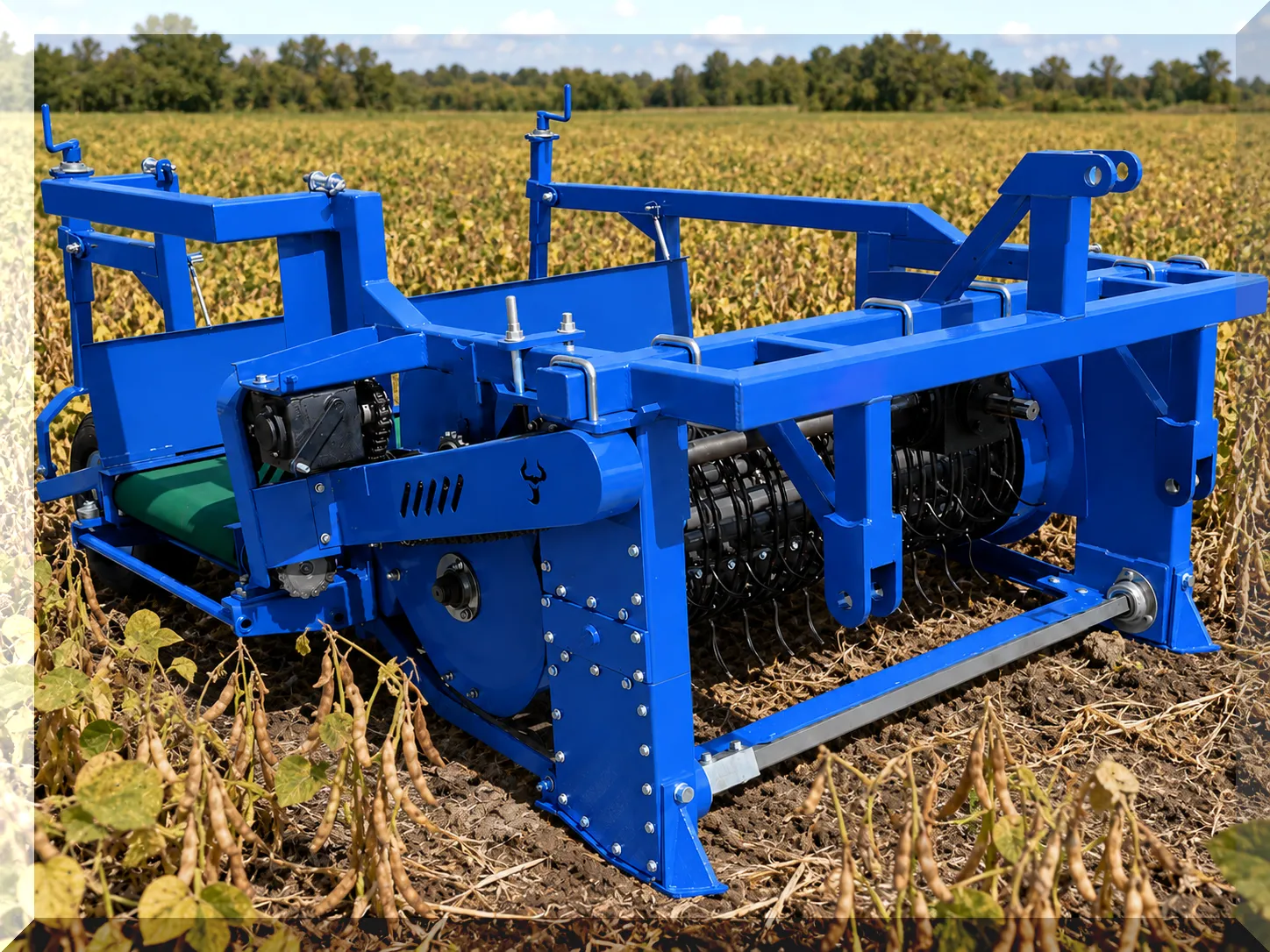
The most specialized piece of bean harvest equipment. Must match the row spacing, be adjustable for lowest pod height by variety, and have adequate pulling speed for the soil conditions. The 4BYH-1.3 is designed for Michigan’s standard row spacings with adjustable shoe configuration. The complete setup guide for this equipment — including row spacing adjustment and working width configuration — is in the mechanical harvest pulling guide.
Combine with Pickup Header
A standard grain combine equipped with a windrow pickup attachment. Bean combining uses gentler cylinder settings than grain combining to protect seed coats. Some producers invest in a dedicated bean-spec combine; others rely on conservative settings adjustments from a multi-purpose machine. Custom combining is common for smaller operations that cannot justify a full-time combine for bean acreage alone.
Windrow Management Equipment
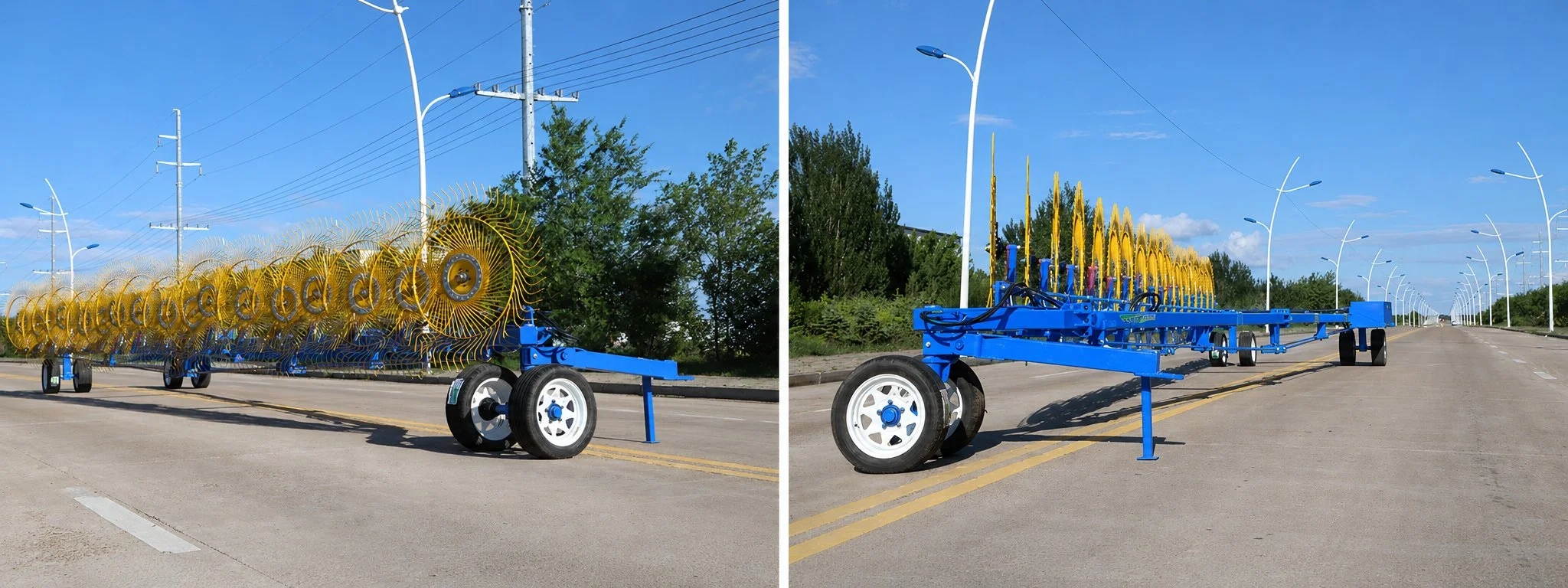
A hay rake configured for bean windrow merging is used when multiple pulled rows need to be combined for combining efficiency. The same finger-wheel rakes used in hay production can be used for bean windrow management, though tine height must be adjusted to avoid disturbing the pulled plant root balls.
The variety selection decisions that determine which varieties are best suited to mechanical harvest with the 4BYH-1.3 puller — including the lowest pod height, growth habit, and shatter resistance traits that predict pull quality — are covered in the Gids voor het kiezen van de juiste kidneyboonvariëteit. The gearbox and PTO driveline specifications for the bean puller power requirements are in Specificaties van componenten voor landbouwversnellingsbakken en aftakas-aandrijflijnen.
Michigan Bean Industry Economics: Pricing Structure and Market Access
Dry bean pricing in Michigan is structured around the Chicago Board of Trade (CBOT) navy bean futures contract as a benchmark for commodity classes, with kidney bean classes trading at a premium to the navy bean price based on supply, demand, and quality. Understanding the pricing relationship helps producers evaluate marketing timing and contract opportunities.
Price formation
Michigan kidney bean prices are set by contract (forward price at planting for a portion of the crop) and spot market (at delivery elevator). Processors and exporters typically offer forward contracts in late winter that lock in a price before the growing season begins — providing price certainty in exchange for delivery commitment.
Quality premium structure
Michigan elevators grade beans on USDA Federal Grade Standards. U.S. No. 1 grade commands full contract price; U.S. No. 2 typically receives a 5–10% dock; below-standard beans are sold at significantly reduced prices. Seed coat damage, splits, and foreign material are the primary grade-reducers resulting from mechanical harvest.
Market access
Michigan Dry Bean Commission (michiganbean.org) and Michigan State University Extension provide current market information, variety trial data, and production guides. The Michigan Bean Dealers Association and individual elevator networks provide marketing access for the majority of Michigan bean production.
Agronomic Production Calendar: Key Dates for Michigan Dry Beans
| Period |
Activiteit |
Critical considerations |
| November–February |
Variety selection, forward contract signing, seed ordering |
Review MSU variety trial data; confirm seed availability; evaluate forward contract offers vs. expected spot market |
| May 15–June 10 |
Planting window |
Soil temperature minimum 55°F at 2-inch depth. Late planting compresses the season and increases frost risk at harvest. Most production planted May 20–June 5. |
| July–August |
Pod fill, disease scouting |
Monitor for white mold (Sclerotinia) and root rot; irrigation scheduling for pod fill; scout for bean leaf beetle and aphids |
| Late August–September |
Pulling and windrowing |
Narrow harvest window; monitor field-by-field; equipment preparation complete by Aug 15. Race against frost date (typically Sept 20–Oct 10 depending on county). |
| September–October |
Combining and delivery |
Combine as soon as windrow moisture reaches 14–16%; frost hardens pods and improves combining quality but increases split risk if beans are very dry. Deliver within weeks to avoid storage loss. |
Michigan Dry Bean Industry FAQs
Is a new farmer without dry bean experience able to start commercial kidney bean production in Michigan?+
Yes, and the Michigan dry bean industry has a well-developed pathway for new producers. Starting recommendations: begin with a smaller acreage (30–75 acres) to learn the crop and harvest timing without the pressure of a large acreage investment; use custom harvest operators for the puller and combine until you have sufficient volume and experience to justify equipment ownership; attend Michigan Bean Commission sponsored field days and extension events that provide hands-on production training; connect with experienced neighbors in your county who grow beans — the local knowledge about varieties that work well on your specific soil type is irreplaceable. The Michigan Bean Commission and MSU Extension both provide new grower resources and can help identify local mentors and service providers. Starting with navy beans or black beans, which have more forgiving harvest windows than dark red kidney beans, reduces the learning-curve risk for new bean growers.
How does dry bean production fit into a Michigan crop rotation?+
Michigan dry beans fit well in a corn–soybean–bean rotation, with beans typically replacing soybeans in the rotation sequence. The legume credit from beans is modest compared to soybeans because beans do not nodulate as effectively, but the rotation break from corn pests and diseases provides agronomic value. The key rotation rule: do not return beans to the same field more frequently than 1 in 3 years — more frequent bean production accumulates white mold inoculum in the soil (sclerotia persist for 3–5 years) and increases root rot disease pressure from Rhizoctonia and Aphanomyces. Fields with a history of severe white mold should rest from beans for 3–4 years before replanting. The rotation also affects equipment scheduling — if corn harvest overlaps with late bean combining, priorities must be established in advance for equipment and operator allocation.
What is the typical yield range for Michigan kidney beans, and what drives yield variation?+
Commercial Michigan kidney bean yields typically range from 1,400 to 2,400 lbs per acre (approximately 23–40 100-lb bags/acre), with the state average hovering around 1,800–2,000 lbs/acre in normal years. The primary yield drivers are: variety selection (top varieties yield 15–25% more than bottom-of-trial varieties in replicated tests); planting date and uniformity (late planting or poor stand establishment reduces yields significantly); white mold management (severe white mold reduces yields by 20–50% in affected fields); pod fill weather (stress during the R7–R8 growth stages — the 2–3 weeks of pod fill — is the single most impactful weather event for final yield); and mechanical harvest losses (pull losses and combine losses that are avoidable with correct equipment and timing can account for 5–15% of theoretical yield in poorly managed harvests).
How are Michigan dry beans graded and what causes beans to be docked at the elevator?+
Michigan dry beans are graded under USDA Federal Grain Inspection Service (FGIS) standards or equivalent elevator protocols. The primary dock factors for kidney beans: split beans (seed coat split open during combining — caused by excessive cylinder speed or overly dry beans at combining time); wrinkled or shrunken beans (poor fill from drought or frost damage); discolored beans (staining from soil contact, disease, or frost — particularly critical for dark red kidney where color uniformity is a key market specification); foreign material (weed seeds, plant material, soil — elevators charge a cleaning fee above standard levels); and moisture above 14% at delivery (beans above delivery moisture are dried at the elevator with a shrink charge applied). Producers can reduce most of these dock factors through correct harvest timing, appropriate combine settings, and controlling field losses from soil contamination.
What are the main disease and pest challenges in Michigan dry bean production?+
The primary disease challenge is white mold (Sclerotinia sclerotiorum) — a soilborne fungal pathogen that is endemic to Michigan bean fields, particularly those with a history of frequent bean production. Wet conditions during flowering promote white mold infection; management includes variety selection for mold tolerance, fungicide applications at early flowering, crop rotation to reduce soil inoculum, and canopy management through appropriate row spacing. Root rot complex (Rhizoctonia, Fusarium, Aphanomyces) is the second major disease — management centers on soil drainage, rotation, seed treatments, and variety selection. For insects, bean leaf beetle and western bean cutworm are the primary pests in most years; bean aphid pressure varies and can be severe in some years. The Michigan Bean Commission and MSU Extension publish annual pest and disease scouting guides that provide current threshold recommendations and management timing for all major pest challenges.
Can I produce organic dry beans for the premium organic market in Michigan?+
Organic dry bean production is practiced in Michigan and can command a 30–80% price premium over conventional beans in strong organic market years. The primary challenges are: three-year USDA organic transition period before organic certification; weed management without herbicides (conventional dry bean production relies heavily on pre-emergence and post-emergence herbicides — organic production requires mechanical cultivation and higher tolerance for weed competition); disease management without synthetic fungicides (biological fungicides are available but less effective than synthetic products against white mold); and finding a certified organic elevator or buyer with contracts before committing to the production system. The organic premium is most valuable in the specialty market classes (cannellini, heirloom varieties) where food-conscious buyers are most willing to pay premium prices. Contact the Michigan Department of Agriculture and Rural Development for a list of USDA-accredited certifiers operating in Michigan, and the Michigan Organic Committee for organic bean producer resources.
Redacteur: Cxm