
Five Business Models for a Hay Operation — Choose Before You Buy Equipment
The most consequential decision in starting a hay business is not which baler to buy or how many acres to start with. It is which business model to operate — because the model determines everything else: which equipment is required, which markets to approach, which quality standard to target, and what the realistic first-year revenue looks like. Operators who buy equipment before choosing a model typically buy the wrong equipment for the market they end up serving.
Realistic Startup Equipment Costs: Three Tiers, No Hidden Surprises
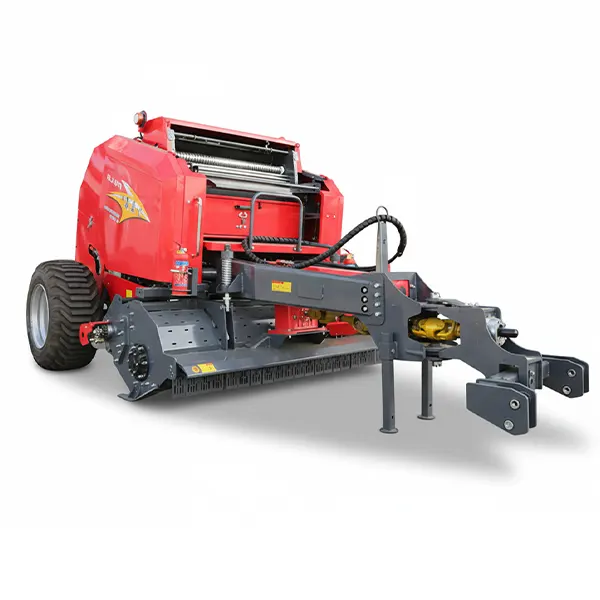
| Equipamento | Used — good | Used — fair | New |
|---|---|---|---|
| Tractor 55–75 HP | $14,000–$26,000 | $8,000–$16,000 | $32,000–$55,000 |
| Disc mower-conditioner 9–10 ft | $4,500–$9,000 | $2,500–$5,500 | $14,000–$22,000 |
| Finger-wheel rake | $2,000–$4,500 | $1,200–$2,800 | $6,000–$12,000 |
| Round baler 4×5 | $10,000–$18,000 | $6,000–$12,000 | $22,000–$38,000 |
100 HP+ tractor ($30,000–$65,000 used) + commercial disc mower-conditioner with wide cut ($15,000–$35,000) + large wheel rake or V-rake ($6,000–$18,000) + commercial round baler 5×5 or 5×6 with density control ($25,000–$50,000 used) + wrapping system for baleage ($8,000–$20,000 optional) + loader/spear for bale handling ($6,000–$15,000). Appropriate for 300+ acres with multi-cutting high-yield crops and established commercial buyer relationships. Most startup operations that jump to Tier 3 without first proving the market at Tier 2 scale face significant financial stress in years 1–2.
Production Costs Per Acre: The Numbers Behind the Profitability
Production cost per acre determines your minimum selling price to break even — every dollar below your production cost that you sell hay for is a dollar that accelerates your operation’s financial deficit. The figures below represent typical ranges for established hay production in the continental U.S.; your specific costs will vary based on land lease rates, local fuel prices, labor cost, and soil fertility starting point.
| Cost item | Alfalfa /acre | Mixed grass /acre | Bermudagrass /acre |
|---|---|---|---|
| Seed / stand establishment (annualized) | $120–$200 | $60–$100 | $80–$150 |
| Fertilizer (N-P-K) | $80–$180 | $60–$130 | $40–$90 |
| Fuel (mowing, raking, baling) | $35–$55 | $28–$48 | $25–$42 |
| Equipment cost (depreciation + maintenance) | $60–$120 | $50–$95 | $45–$88 |
| Baling materials (net wrap / twine) | $20–$35 | $18–$32 | $16–$28 |
| Land (lease, $80–$180/acre range) | $80–$180 | $60–$150 | $50–$120 |
| Total variable cost per acre | $395–$770 | $276–$555 | $256–$518 |
The Break-Even Model: How Many Bales to Reach Profitability
Annual land + production cost ($550/acre × 100 acres): $55,000
Total annual cost: $61,500
Yield: 4 bales/acre × 100 acres × 3 cuttings = 1,200 bales
Price: $90/bale (cattle hay market)
Revenue: $108,000
Net (before operator labor): $46,500 ✓ Profitable year 1
Annual land + production ($480/acre × 75 acres): $36,000
Forage testing ($25 × 12 lots): $300
Total annual cost: $41,800
Yield: 3 bales/acre × 75 acres × 2.5 cuttings = 563 bales
Price: $150/bale (direct horse stable sales)
Revenue: $84,450
Net: $42,650 ✓ At lower acreage and lower yield
The complete investment analysis tool — including 5-year NPV comparison, equipment financing vs cash purchase analysis, and the depreciation model that feeds into your Schedule F tax returns — is in the Guia de análise de retorno do investimento (ROI) para enfardadeiras redondas.
Where to Sell Your Hay: Market Channel Selection in Year One
The Equipment Acquisition Sequence: What to Buy and When
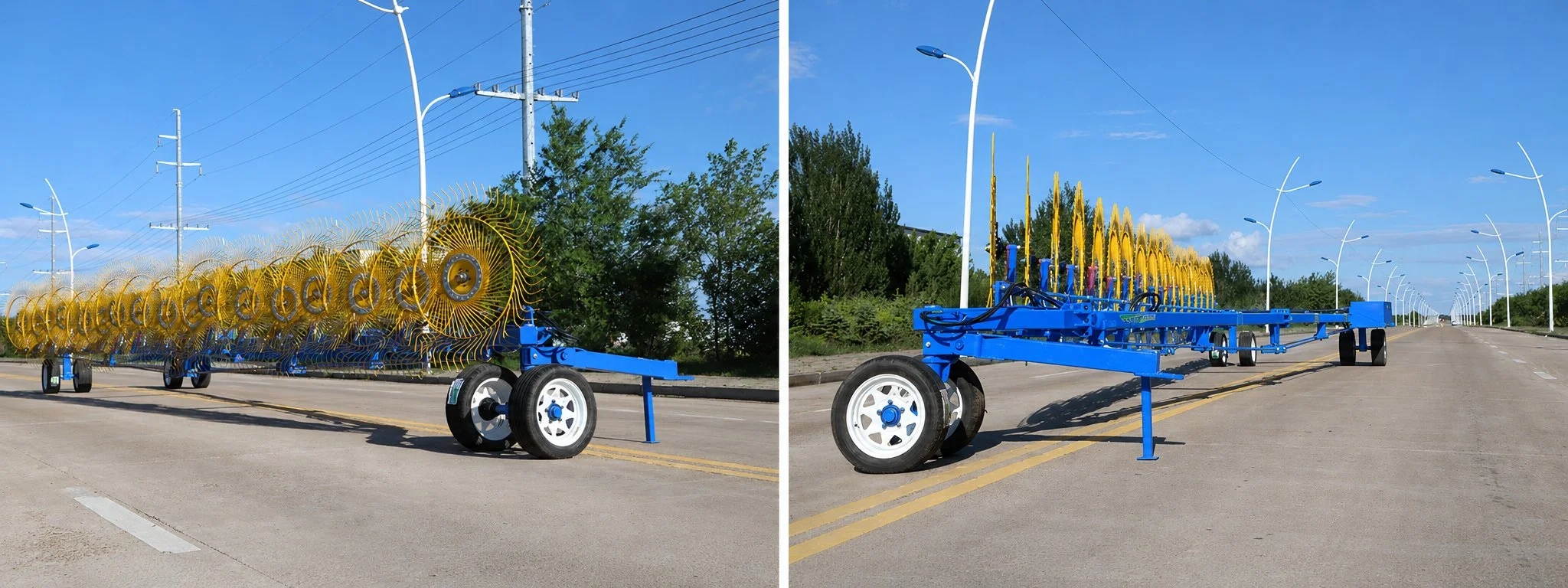
The order in which you acquire equipment determines your initial capital exposure and your ability to begin generating revenue. The recommended sequence is not intuitive — it is based on what you cannot outsource efficiently versus what can be contracted until your own volume justifies ownership.
Tractor
The tractor is the foundation — it determines which baler you can match, how much mowing capacity you can run, and how you will handle bales at the storage site. Buy your tractor first, confirm its PTO HP and hydraulic flow, and select all subsequent equipment to match it. Buying a baler and then finding a tractor to match is the most common equipment sequencing mistake and consistently results in mismatched systems.
enfardadeira redonda
The baler is second — it is the piece of equipment that generates the primary value in your operation and the piece that is most difficult to share or contract. Custom baling service exists in most markets, but using it removes your timing control (critical for quality) and eliminates the custom baling revenue stream. The buyer’s guide covering how to evaluate baler features, compare fixed vs variable chamber designs, and spec size to your market is in the Guia do comprador de enfardadeiras redondas. Browse our modelos de enfardadeiras redondas to compare chamber sizes, bale weights, and tractor HP requirements for your planned production scale. Gearbox and PTO driveline specifications for matching baler drivetrain requirements to your tractor’s output are in Especificações dos componentes da caixa de engrenagens e da transmissão da tomada de força (TDF) para uso agrícola.
Rake (or contract first)
A rake is inexpensive enough to own in year one ($2,000–$4,500 for a serviceable used finger-wheel rake), and provides timing independence for windrow formation — you cannot control windrow drying rate without controlling when and how you rake. Buy a simple rake early; it is the most cost-effective independence purchase in the startup sequence.
Mower-conditioner (after first season if revenue supports it)
Custom mowing is available in most agricultural areas and is the most practical first-year outsourcing decision — it saves $8,000–$20,000 in equipment investment while you prove your market and your yields. Upgrade to your own mowing system in year 2 when you have confirmed the production volume justifies the investment. Mowing is also the most weather-time-sensitive operation; once you are ready to scale and have a confirmed buyer base, own mowing equipment becomes essential for timing control.
Bale handling and storage infrastructure
Loader spear, bale grapple, or specialty handler for moving bales at the storage site. Often overlooked in startup planning but critical for storage efficiency — an operation that can only move bales by hand is limited to bale sizes light enough to handle manually. The storage infrastructure (gravel pad, partial weather protection, or full barn) compounds annually in its value by reducing DM loss and maintaining quality.
Risk Management: Insurance and Record-Keeping Before You Cut the First Acre
Form an LLC before producing your first commercial sale. A hay operation that operates as a sole proprietor and delivers hay to a stable that then has a horse medical incident related to hay quality faces personal liability with no legal entity shield. LLC formation costs $50–$200 in most states and separates business from personal liability — the most cost-effective risk mitigation available.
A Tier 2 equipment set worth $40,000–$60,000 should be insured as farm equipment. Commercial farm equipment insurance (not homeowner’s coverage, which typically excludes commercial farming) runs $600–$2,000 annually depending on total value and coverage limits. Your lender will require it if you financed equipment — and it protects you from catastrophic loss even if you paid cash.
Hay production is exposed to drought, hail, and flood risk that can eliminate an entire season’s income without crop insurance. PRF (Pasture Rangeland Forage) insurance is available in all 48 contiguous states and does not require production history to enroll. The December 1 enrollment deadline for the following year means you need to act before your first season, not after. The hay crop insurance options guide is in the forage producer insurance guide.
Maintain Schedule F federal tax returns from your first commercial sale year. Five consecutive years of Schedule F are required to qualify for Whole Farm Revenue Protection insurance, USDA farm loan programs, and most agricultural lenders’ equipment financing programs. Inconsistent or missing farm tax records are the most common reason new hay operations cannot access favorable financing terms in years 3–5 when they are ready to scale.
Five First-Year Mistakes That Destroy Profitability Before Year Two
Cutting before the buyer is found
Cutting hay without a committed buyer for the production creates storage costs that accumulate monthly. A new operation with 200 bales in storage and no buyer is not a hay business — it is a storage problem. Secure purchase commitments (ideally with price agreement) before the first cutting date. Even a handshake agreement with a neighbor farmer who will buy your first cutting at commodity price gives you the confirmed revenue that makes the production decision rational.
Overcapitalizing on equipment for projected future volume
The highest-margin, highest-output commercial baler is not the right baler for a 100-acre first-year operation. Equipment sized for 300+ acres carries fixed costs (depreciation, insurance, financing) that 100 acres cannot support — the excess capacity produces a drag on profitability that makes the operation appear unviable when the underlying market and production is actually sound. Size equipment to current volume, not projected future volume.
Skipping forage testing and selling at commodity prices by default
A producer who never tests hay cannot document quality and therefore cannot credibly command premium prices. Without test results, even excellent hay sells at the lowest-common-denominator commodity price because buyers have no basis for paying more. The $22–$28 per lot testing cost is the single highest-return-on-investment expenditure in a hay business when it enables premium pricing on any portion of production.
Single-market dependency
A hay operation that sells 100% of production to one buyer is not a business — it is a business risk. When that buyer exits (barn closes, operation sells, production shifts), the entire revenue stream stops. Build relationships with at least three buyers who collectively could absorb your full production before the season begins. Redundancy in market relationships costs nothing and eliminates the single most common cause of first-year hay operation revenue collapse.
Deferred preventive maintenance that becomes emergency repair
A hay business’s revenue is compressed into 4–8 weeks of seasonal production per cutting. An equipment failure during that window — a shear bolt that wasn’t replaced after repeated failures, a belt that was at 2.5% elongation going into the season, a hydraulic hose that had been seeping for two weeks — converts $100 in preventive maintenance into $2,000–$8,000 in emergency repair cost plus 1–3 days of lost production at the highest-value moment of the year.
Starting a Hay Business FAQs
Get Equipment Recommendations Matched to Your Startup Scale and Target Market
Tell us your available acreage, target crop, tractor HP, and primary market channel (cattle hay, horse hay, custom baling). We recommend the baler specification, bale size, and equipment tier that matches your first-year production plan and gives you a realistic path to profitability.
Editor: Cxm


