
Why Rice Straw Is Different from Other Crop Residues
Silica Content: The Hidden Wear Factor
Rice straw contains 10–18% silica (silicon dioxide) in its dry matter — far more than any other common crop residue. Wheat straw is typically 2–4% silica; corn stover is 1–3%. This silica is deposited in the cell walls of rice stems as the plant matures, giving the stems a distinctly abrasive quality when cut or processed. Any machine component that cuts or contacts rice straw under mechanical pressure — pickup tine tips, shredder blades, knife edges — wears faster than in any other standard baling crop.
The practical consequence: if you are calibrating your maintenance schedule based on wheat straw or hay experience, rice straw will exhaust your blades and tines approximately 2–3 times faster at the same operating hours. Budget for more frequent inspection and earlier replacement of all cutting-edge components before starting a rice straw baling program.
Low Density and Light Bale Weight
Rice straw is significantly lighter per unit volume than hay or cereal grain straw. The hollow stem structure and fine leaf fraction mean that even at maximum plunger density settings, a rice straw bale in the 460×360mm small square format typically weighs 12–20kg — lighter than wheat straw bales (14–22kg) from the same machine at the same settings. This low per-bale weight is a handling advantage for markets that require manual carrying, but it also means bale count per acre is higher than for hay and the per-tonne transport cost is higher because trucks carry fewer tonnes of rice straw per load than equivalent bale counts of denser hay.
Field Conditions After Combine Harvest
The Paddy Mat Problem
Paddy fields harvested under wet conditions — the standard situation in many rice-producing regions where the harvest window immediately follows monsoon or irrigation periods — are trafficked by heavy combines on soft soil. Combine wheel tracks compress straw flat against the soil surface in sections across the full field width. This compressed straw mat is the primary pickup challenge: spring-tooth tines need the straw to be elevated above the soil surface, and mat sections do not meet this requirement.
The extent of mat formation depends on soil moisture at harvest: dry paddy fields harvested late in the season show minimal mat formation and a spring-tooth pickup handles the residue adequately. Fields harvested in wet conditions — common in double-crop rice where timing is driven by planting schedules rather than field condition — can have 30–60% of the surface area in flat-mat sections that resist spring-tooth pickup.
Field Access and Turning Conditions
Soft paddy soil after harvest limits tractor ground pressure. Standard baler-tractor combinations (9YF-2200 at 1,950kg plus a 70HP tractor at 2,800kg) total approximately 4,750kg on four wheels — potentially too heavy for very soft paddy soil without rutting that makes subsequent baling passes uneven. Consider total equipment weight before field entry on wet paddy soil: the 9YF-1700 at 1,750kg paired with a 50–55HP compact tractor (typically 2,000–2,400kg) gives a 10–15% lower footprint than the heavier model pairings. On extremely soft fields, waiting an additional 48–72 hours for surface drying before field entry is the safest approach for both equipment ground pressure and windrow formation quality.
Field Preparation: Drying, Raking and Windrow Formation
The Drying Window
Fresh-cut rice straw from the combine windrow is typically at 25–40% moisture — too wet for immediate baling. Allow 3–5 days of field drying before raking into baling windrows, depending on weather and the initial moisture level. In regions with afternoon high winds and low relative humidity, 2–3 days may be sufficient. In cloudy or humid conditions, 5–7 days may be needed. Test windrow moisture with a probe-type meter at multiple points before raking — target below 20% before starting the rake pass, and below 18% before baling.
Rice straw holds moisture more uniformly than hay (it does not have the surface-dry, core-wet differential of leafy hay species) — a surface moisture reading on rice straw is a reliable indicator of bale moisture once in the 16–22% range. Below 25% moisture, the probe reading and bale moisture are closely aligned.
Raking Method and Windrow Height
Use a side-delivery rake rather than a rotary rake for rice straw — rotary rakes shatter the brittle, dry rice stems excessively, creating fine chaff that clogs the pickup and increases ash content in the finished bale from soil pickup during the rake pass. A side-delivery rake moves the straw gently, preserving stem length and minimising shatter loss. Target windrow height of 15–22cm — sufficient for spring-tooth tines to engage cleanly in clean sections, and high enough to distinguish from mat sections that need a second rake pass or hammer-claw recovery. After raking, if mat sections are visible (flat areas where the combine wheels tracked), run a second rake pass to lift and consolidate these sections into the main windrow before baling.
Pickup System Selection for Rice Straw
When Spring-Tooth Is Adequate
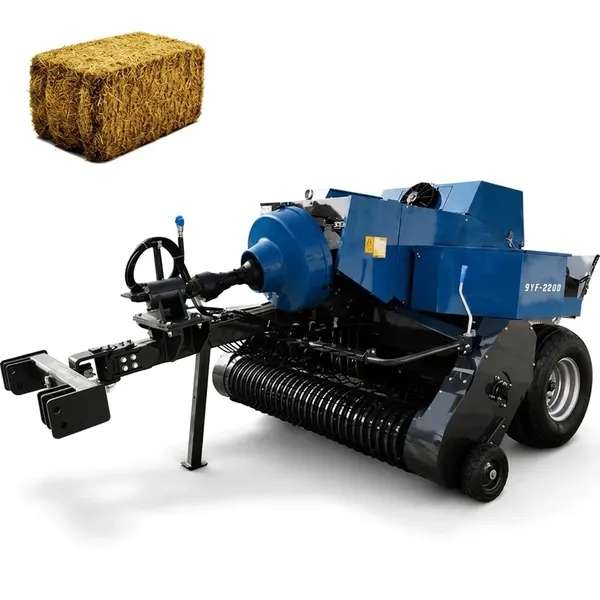
On dry paddy fields with minimal mat sections — fields harvested in dry conditions, or fields where a side-delivery rake has successfully lifted and elevated the full residue into good windrows — the spring-tooth pickup on the 9YF-1700, 9YF-1900 or 9YF-2200 handles rice straw reliably. The tines engage cleanly with elevated straw at 15cm or more above the soil surface and the light, fine material feeds into the chamber without the bridging problems that affect heavier stalk crops.
When the Hammer-Claw Becomes the Correct Choice
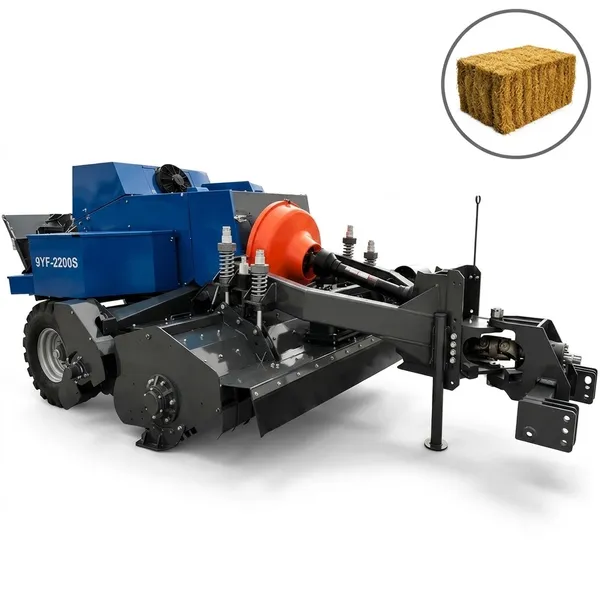
If mat sections are significant in extent — more than 20–25% of the field area has straw compressed flat against the soil that a second rake pass cannot fully elevate — the hammer-claw pickup on the 9YF-2200S or 9YFS-2.2 recovers measurably more material per pass. The impact energy of the rotating flails lifts mat-contact straw that spring tines ride over. In severe mat conditions on wet paddy fields, the hammer-claw recovery advantage over spring-tooth can reach 20–30% of the total available straw per acre.
The higher tractor power requirement (99HP minimum for the hammer-claw models vs 40–50HP for spring-tooth) is a significant practical consideration in regions where typical paddy-field tractors are in the 45–65HP class. Evaluate whether the crop recovery value of the hammer-claw upgrade justifies the cost of a larger tractor for the operation.
Moisture Targets and Bale Density Settings
Target Moisture: 14–20%
Rice straw baled at 14–18% moisture is within the safe range for bale storage in covered conditions. At this range, the straw is dry enough to prevent heating and mold development in the bale interior over 30–90 day storage periods. Baling above 22% moisture in rice straw produces heavier bales that will heat during initial storage — not to the dangerous levels of legume hay but enough to affect the product quality for mushroom substrate applications where microbiological cleanliness is a buying criterion.
Density Settings for Rice Straw Markets
The primary markets for rice straw bales — mushroom substrate, cattle bedding, garden mulch — all have different bale weight preferences. For mushroom substrate, a firm, dense bale at 16–20kg minimises the void space where competing organisms can establish before the substrate is inoculated. For cattle bedding, a lighter, fluffier bale at 12–16kg breaks apart more easily for stall spreading. For garden mulch sold by the bale at retail, the 14–18kg range suits most buyers and allows one-person handling.
Because rice straw is naturally light, reaching the upper end of these weight ranges requires running at maximum plunger density — there is no overweight risk in rice straw at maximum settings. Set the plunger to maximum, calibrate with 10 test bales and adjust bale length to reach your target weight range for the specific market destination.
Knotter and Tine Wear in Silica-Rich Rice Straw
Accelerated Wear Schedule for Rice Straw Operations
The silica content of rice straw accelerates wear on all components that contact the material under cutting or sliding forces. Knife blades in the knotter — which must cleanly cut the twine on each bale cycle — dull faster in rice straw than in any other standard baling crop. In an intensive rice straw baling operation (300–500 acres per season), plan for mid-season knife replacement rather than relying on a single set to last the full season.
| Bileşen | Rice Straw Interval | vs Wheat Straw |
|---|---|---|
| Knotter knife blades | Every 60–100 hours | 2× faster |
| Spring tine tips | Check every 80 hours | 1.5–2× faster |
| Shredder blades (if fitted) | Every 80–120 hours | 2–3× faster |
| Plunger wear strips | Check mid-season | 1.5× faster |
Carry spare knife sets in the field during rice straw baling — a mid-session knife replacement takes 10 minutes and prevents a field stop that extends into the next day if the knife fails at end of shift when no spare is available. Clean the knotter mechanism at the end of each day in rice straw conditions: the fine silica dust settles in the cam and follower mechanism and acts as an abrasive that accelerates cam face wear if allowed to accumulate between sessions.

Markets for Rice Straw Small Square Bales
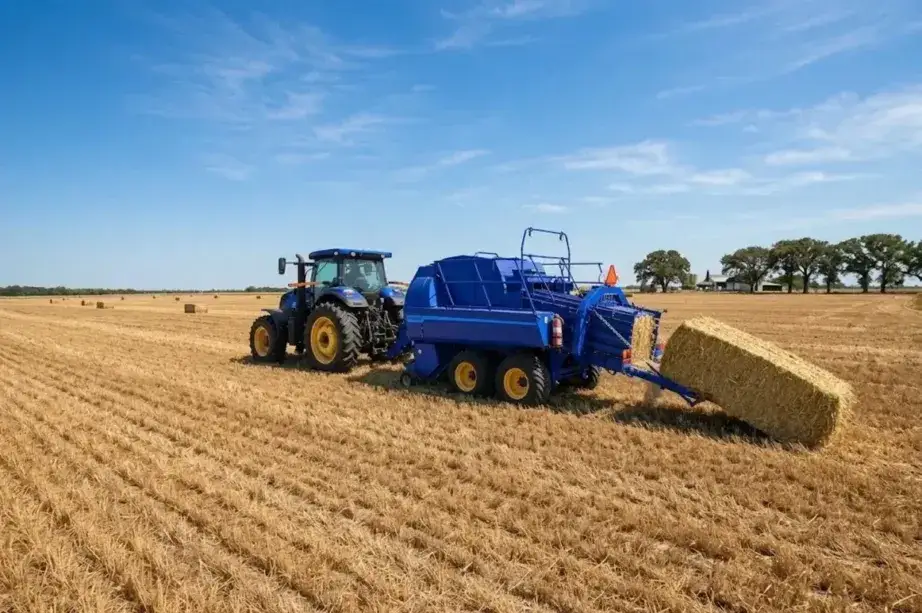
The highest-value market for rice straw bales in most regions. Oyster mushrooms (and several other species) grow readily on rice straw substrate. Specialty mushroom producers pay $8–18 per bale for clean, dry rice straw bales in the 14–18kg range. The key quality requirement: low ash content (indicating minimal soil contamination), consistent moisture below 18%, and freedom from chemical residues.
Rice straw is widely used as livestock bedding in regions where straw supply is limited. It is more slippery than wheat straw underfoot in high-traffic areas but absorbs moisture adequately for stall and pen bedding. Pricing at $4–8 per bale in most U.S. and Asian markets. Volume sales possible to dairy and beef operations in rice-growing areas.
Rice straw bales sold to landscapers, home gardeners and erosion control contractors. The light weight and low cost per bale suit this market — $5–10 per bale for retail garden center channels; $3–6 per bale wholesale to landscaping contractors. Weed-seed-free certification adds value for premium garden market channels.
Rice straw as a livestock feed has very low nutritive value (crude protein below 5%, low digestibility) but is used as a gut-fill roughage supplement in regions where better forage is scarce. Feed market pricing is the lowest of all rice straw markets — typically $2–5 per bale — but volume can be large in cattle-dense rice-producing areas.
PTO Driveline References for Rice Straw Baling
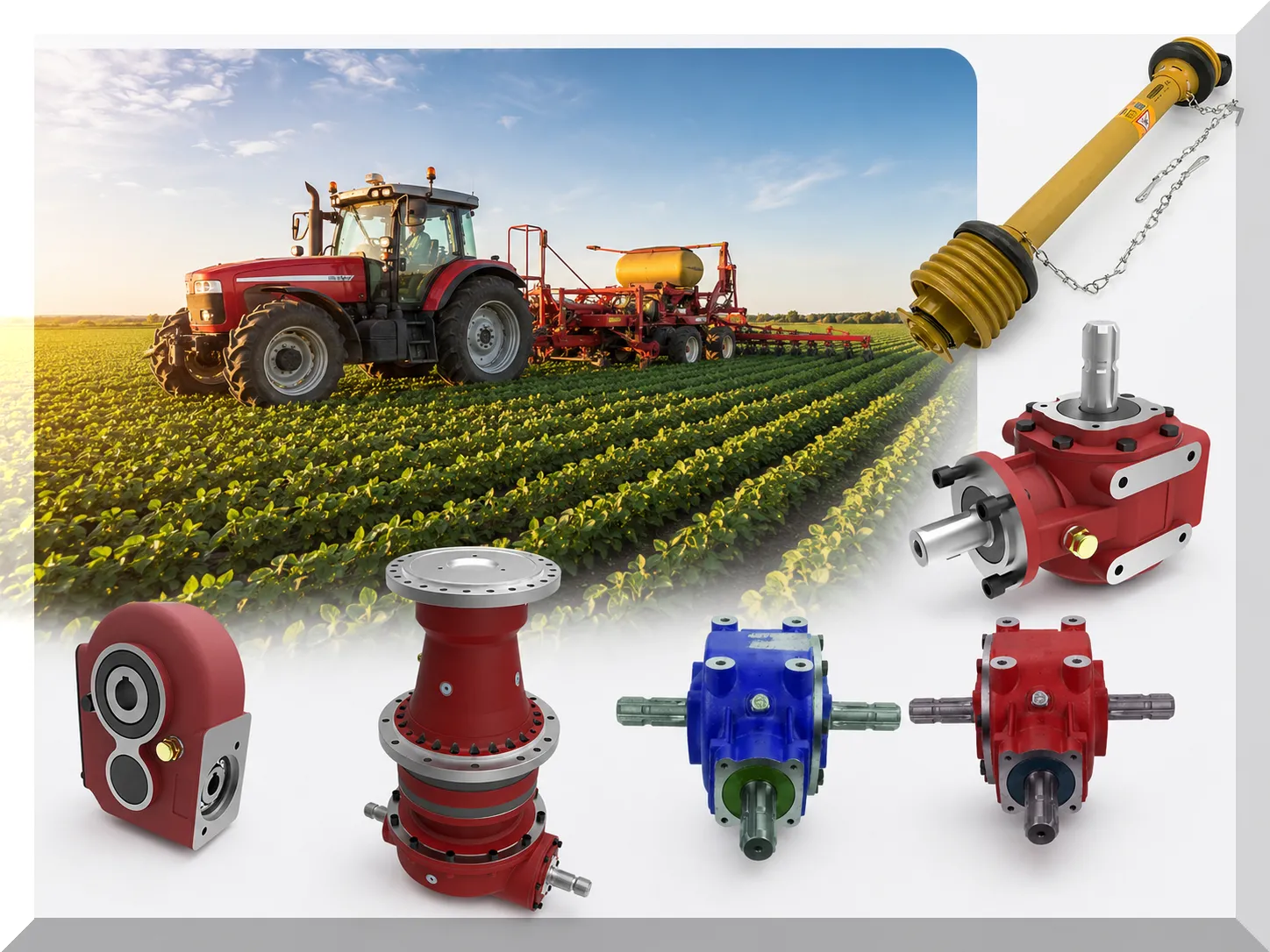
Gearbox torque ratings and shaft standards across the full 9YF power range: tarımsal şanzıman ve PTO şaftı özellikleri
PTO driveshaft length and CV joint angle specifications for all 9YF models used in rice straw conditions: PTO tahrik mili ve CV mafsalı boyutlandırma kılavuzu.
Frequently Asked Questions — Rice Straw Baling
Choose the Right Baler for Your Rice Straw Operation
Spring-tooth models (40–50HP minimum) for clean elevated paddy windrows. Hammer-claw models (99HP minimum) when mat recovery is essential. Fan-equipped 9YFS-2.2 for mushroom substrate and export markets. Tell us your paddy acreage and tractor HP for a model recommendation.
America Ever-Power Forage Baler Equipment INC. · 1401 21st ST STE R, Sacramento, CA 95811
Editör:Cxm


