
What a Correctly Operating Pickup Looks Like
Before diagnosing a problem, know what correct pickup operation looks like. Standing beside the machine at low operating speed, a correctly functioning pickup should: rotate smoothly with no wobble or side-to-side movement at the hub; have all tines extending fully at the 12 o-clock position and retracting completely before passing the 6 o-clock position; leave no visible stripe of uncollected crop across the windrow width; and make no grinding, clicking or rattling noises beyond the normal mechanical sound of the reel rotation.
Any deviation from this baseline — visible crop left in a regular pattern, noise, wobble or incomplete tine retraction — points to a specific component. The pattern of uncollected crop is particularly diagnostic: a full-width thin stripe across the windrow indicates a height problem; a partial-width stripe at consistent intervals indicates missing or bent tines in a specific reel row; a ragged, uneven pattern across the windrow indicates a cam or retraction problem.
Cause 1: Pickup Height Set Incorrectly — The Most Common Error
The Right Clearance and Why It Matters
The pickup height — the clearance between the lowest tine tip point and the ground surface — is the single most frequently incorrect setting on square balers in active use. The correct clearance for most crops and field conditions is 30–50mm (approximately 1.2–2 inches) from the tine tip to the ground. Below 30mm, the tines contact the ground and scoop soil, debris and stubble into the crop stream, reducing bale quality and increasing wear. Above 60mm, the tines pass over the lower portions of the windrow and leave a stripe of material on the ground.
Tines contact soil surface. Bales accumulate soil and debris. Tine wear rate accelerates. Ash content in hay increases — a problem for export market buyers.
Full windrow collection. No soil pickup. Tines operate in the crop material only. Consistent material delivery to the feeder. Check this at the start of each session.
Lower windrow material left uncollected. Visible stripe on the ground after each pass. Bales are lighter than expected. Most significant in low-lying windrows after heavy raking.
Adjusting Pickup Height
Height is adjusted via the gauge wheel position on both sides of the pickup reel or by adjusting the pickup lift arms on models with hydraulic or mechanical height control. Adjust both sides equally — uneven height settings cause the pickup to run at a lateral tilt, collecting more from one side of the windrow than the other. After any height adjustment, walk the machine for 20–30 metres at operating speed and visually check that no material stripe remains behind the pickup and no soil is being picked up. Adjust on soft ground, then recheck on firm ground — gauge wheel sinkage varies by soil type and can shift effective clearance by 15–20mm.
Cause 2: Spring Tine Damage — Bent, Missing or Worn
Spring Tine Inspection Standard
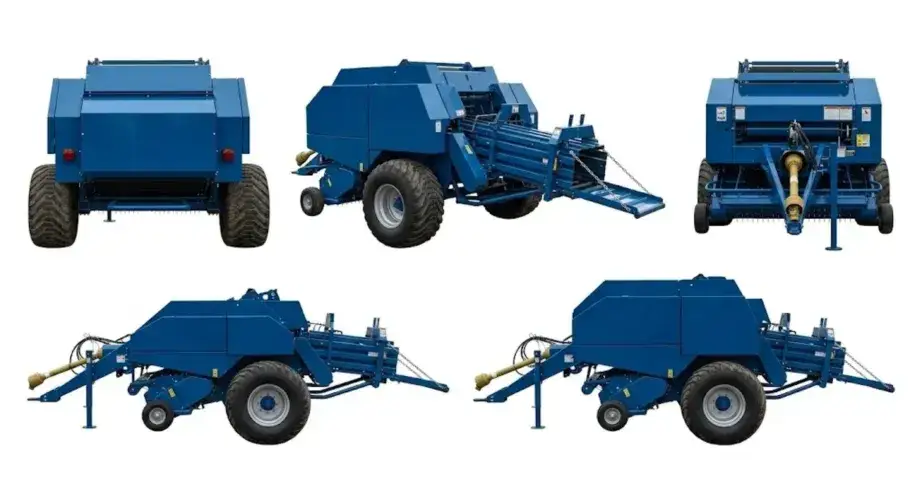
Spring tines on the 9YF-1700, 9YF-1900 and 9YF-2200 are rated for a specific angular range and tip profile. A tine is due for replacement when it meets any of the following criteria: visibly bent more than 15mm from its original straight line when viewed from the side at rest; shortened by more than 10% of original length from tip wear; broken at any point along its length; or sprung to a relaxed angle that differs by more than 10 degrees from adjacent undamaged tines in the same row.
Missing tines are an immediate priority — each missing tine leaves a gap in the pickup face that produces a consistent stripe of uncollected material across the windrow at that tine spacing interval. In a dense windrow with a well-matched forward speed, a single missing tine can leave 10–15% of the crop from that lateral position uncollected per pass.
Replacement Approach
Replace all damaged tines in a single service rather than replacing individual tines as they fail. The reason: individually replacing tines of different ages and wear states creates an uneven pickup face — new tines have a different spring constant from used tines and deliver non-uniform force across the reel width. At the same pickup height, a reel with mixed-age tines collects unevenly, producing a windrow feed variation that shows as inconsistent bale weight even when other machine settings are correct. Annual tine replacement as a maintenance item — rather than reactive replacement after visible damage — is the correct standard for operations above 200 bales per season.
Cause 3: Hammer-Claw Tine Tip Wear (9YF-2200S and 9YFS-2.2)
The hammer-claw pickup on the 9YF-2200S and 9YFS-2.2 uses rigid cast or forged tines rather than spring steel. The claw tip face that contacts and grips crop material develops a specific wear pattern — the forward contact angle decreases as the tip rounds from abrasion. When the tip angle has worn beyond specification, the claw slides over rather than gripping crop material, reducing recovery rate particularly in thin or fragile windrows where positive tine engagement is needed to lift material from the ground.
Inspect hammer-claw tine tips by comparing the tip face angle to the specification drawing in the operator manual. A tip that has visibly rounded from the original sharp-angle profile is approaching the replacement threshold. Measure the tip width — manufacturer specifications typically call for replacement when tip width has increased by more than 2mm beyond the new-part width at the contact face, indicating excessive rounding.
Hammer-claw tines are more durable than spring tines but significantly more expensive per unit. The replacement schedule is typically every 3–5 seasons for standard hay and straw operation, or every 1–2 seasons in abrasive hard-stalk crops (cotton, corn stover) where tip wear accelerates. Replace as a set across the full reel — as with spring tines, mixed new and worn hammer-claws produce non-uniform pickup performance.
Cause 4: Pickup Hub Bearing Wear or Failure
Symptoms and Inspection
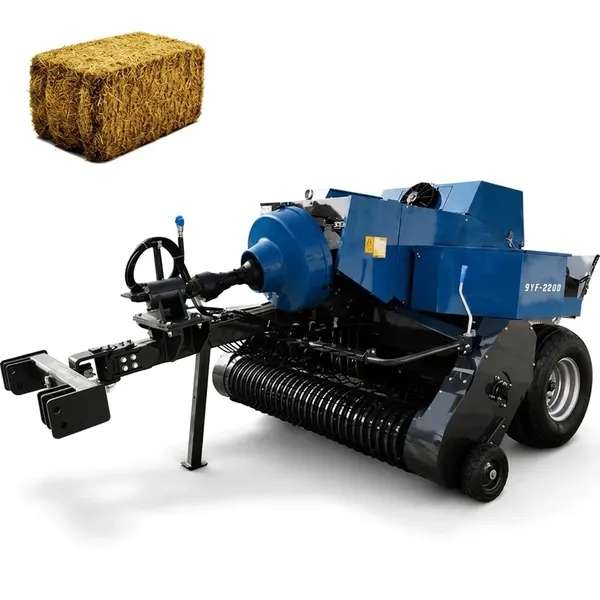
Pickup hub bearing wear produces a gradual-onset problem: lateral reel wobble increases as bearing play increases, causing the effective pickup height to vary across the reel width. At low bearing wear, the variation is small enough to produce only minor collection inconsistency. As wear progresses, the reel oscillates enough to contact the ground on one side of the pass while running too high on the other — producing a characteristic diagonal stripe pattern in the uncollected crop behind the machine.
To test hub bearing condition: with the PTO completely disengaged and the machine stationary, grasp the pickup reel tube near each hub and attempt to move it radially (in and out, perpendicular to its rotation axis). Acceptable radial play is less than 1mm at the tube surface. Play greater than 2mm at the tube surface indicates a bearing near the replacement threshold. Also rotate the reel slowly by hand — a grinding or gritty resistance that is absent when the hub is hand-warm indicates bearing damage that may not yet produce audible noise at low operating speed but will fail under operating load.
Replacement Schedule
Pickup hub bearings are a standard annual inspection item. Lubricate at the specified grease interval throughout the season — under-greased bearings fail in 1–2 seasons; correctly greased bearings typically last 4–8 seasons in standard hay and straw operation. Replace both hub bearings as a pair when either reaches the inspection limit — running a new bearing against a worn bearing at the opposite hub produces uneven reel support and can accelerate wear of the new bearing from running at a lateral angle.
Cause 5: Cam and Tine Retraction Problems
How Tine Retraction Works and What Fails
The pickup tines extend to collect crop at the front of the reel arc and retract back into the reel tube as they pass the bottom and rear of the rotation. This retraction is controlled by a fixed cam profile that the tine carrier follower rides. If the cam is worn, cracked or misadjusted, tines may not retract fully — remaining partially extended as they pass the bottom of the reel arc where they should be tucked away. A partially extended tine at the bottom of the arc will drag crop backward along the ground rather than depositing it into the feeder, and can pick up soil and debris from the ground surface even when the pickup height is correctly set.
Inspect tine retraction by standing beside the machine with the PTO engaged at low speed and watching the tine tips at the bottom and rear of the reel arc. All tines should be fully retracted — not visible or barely visible — by the time they reach the 6 o-clock position. Any tine that remains more than 10mm extended at 6 o-clock indicates either a worn cam follower for that tine carrier, a cracked or worn cam surface at that angular position, or a bent tine carrier that prevents full retraction travel.
Fix and Adjustment
The cam position adjustment — where available on the model — changes the retraction timing relative to the reel rotation. Cam wear typically produces progressive late retraction, meaning tines retract correctly early in the season and progressively later as the cam surface wears. Cam wear is inspected by measuring the cam profile height at multiple angular positions using a depth gauge. A cam with more than 1.5mm of wear at any measured point requires replacement. Individual tine carrier followers can be replaced without removing the full cam assembly on most 9YF models.
Cause 6: Crop Wrapping Around the Pickup Shaft
Long, stringy or vine-type crop material — cotton plant residue, sorghum vine, lodged wheat stems, climbing weeds — can wrap around the pickup reel tube between the tine rows during operation. The accumulation builds gradually and the operator may not notice until the wrapped material significantly reduces the effective pickup diameter. A heavily wrapped pickup reel has effectively reduced the tine extension radius, producing the same symptom as a reel with worn short tines: incomplete windrow recovery across the full width.
Check the reel tube in wrapping-prone crops every 15–20 bales. Remove any wrapping with a knife — always with the machine completely stopped and the PTO disengaged. Do not attempt to remove wrapping from a rotating reel under any circumstances. Cut the wrapped material in two or three places around the circumference and pull it free rather than attempting to unwind it.
Prevention for wrapping-prone crops: in cotton and sorghum vine conditions, reduce forward speed to allow the tines to engage individual stems rather than scooping masses of entangled material. The hammer-claw tines on the 9YF-2200S are more resistant to wrapping than spring tines because their wider spacing and rigid profile present fewer wrap points than the closely-spaced spring tine array.
Cause 7: Forward Speed vs Pickup Speed Mismatch
The Speed Ratio Concept
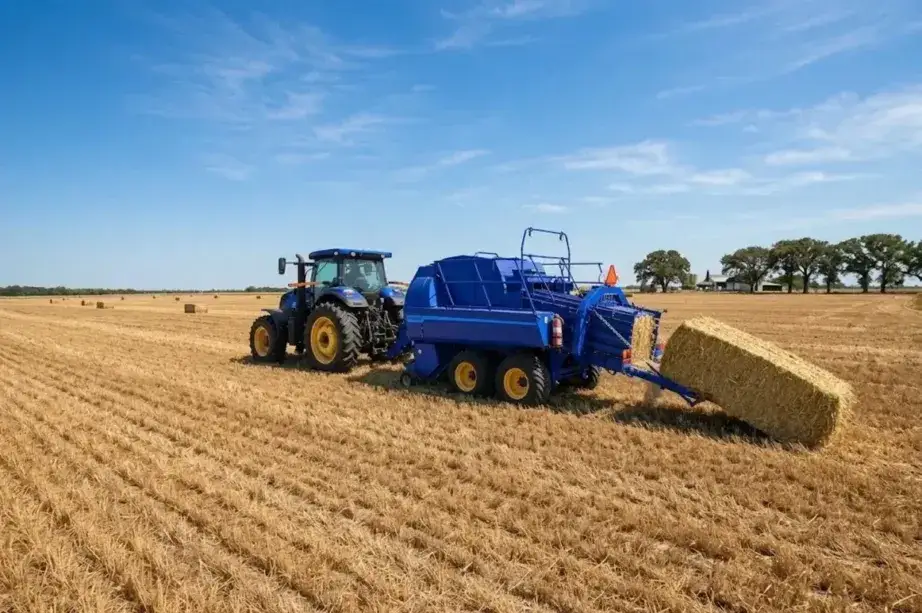
The pickup reel peripheral speed — the speed of the tine tips moving through the crop — is fixed by the PTO speed and the reel drive ratio. The forward speed of the machine relative to this tine tip speed determines the pickup angle at which tines engage the windrow. When forward speed is too high relative to tine peripheral speed, tines arrive at the windrow at a shallow angle and tend to push material forward along the ground rather than lifting it. This produces a characteristic rolling-windrow symptom — crop is pushed forward in a continuously growing heap rather than being lifted smoothly.
The correct ratio of forward speed to tine peripheral speed varies by crop type. For standard cured hay in a normal windrow, the tine peripheral speed should be approximately 10–30% faster than the forward ground speed. Maintain rated PTO speed — at below-rated PTO speed, the tine peripheral speed decreases and the forward speed that produces correct pickup angle also decreases proportionally, meaning the correct operating speed is lower when PTO speed is low.
Field Diagnosis
If the windrow material is pushed forward rather than lifted cleanly, reduce forward speed by 20%. If recovery improves immediately, forward speed was the cause. If the crop continues to push forward at reduced speed — with correct pickup height and full tine complement — the reel peripheral speed may be below specification from below-rated PTO speed or from a drive ratio change (check drive sprocket for missing teeth). The 9YF series pickup is designed for 540rpm PTO; at significantly below-rated speed, pickup efficiency decreases even when forward speed is reduced proportionally.
Recovery Rate Targets by Crop and Condition
| 作物/状况 | Expected Recovery Rate | 笔记 |
|---|---|---|
| Well-cured grass hay, standard windrow | 95–98% | Reference standard. Any rate below 93% indicates a pickup problem. |
| Alfalfa, first cut, full stand | 92–96% | Some leaf loss from rake stage expected; pickup loss should be minimal. |
| 小麦/大麦秸秆 | 88–94% | Brittle stems mean some breakage during pickup is expected; rate below 85% suggests height issue. |
| Cotton stalk (shredded) | 82–90% | Some material loss at rigid stem ends is normal; hammer-claw pickup recommended. |
| Lodged or mat-lying crop | 75–88% | Lower rate is inherent to crop orientation; pickup height at minimum and speed reduced. |
PTO Drive and Pickup Speed Reference
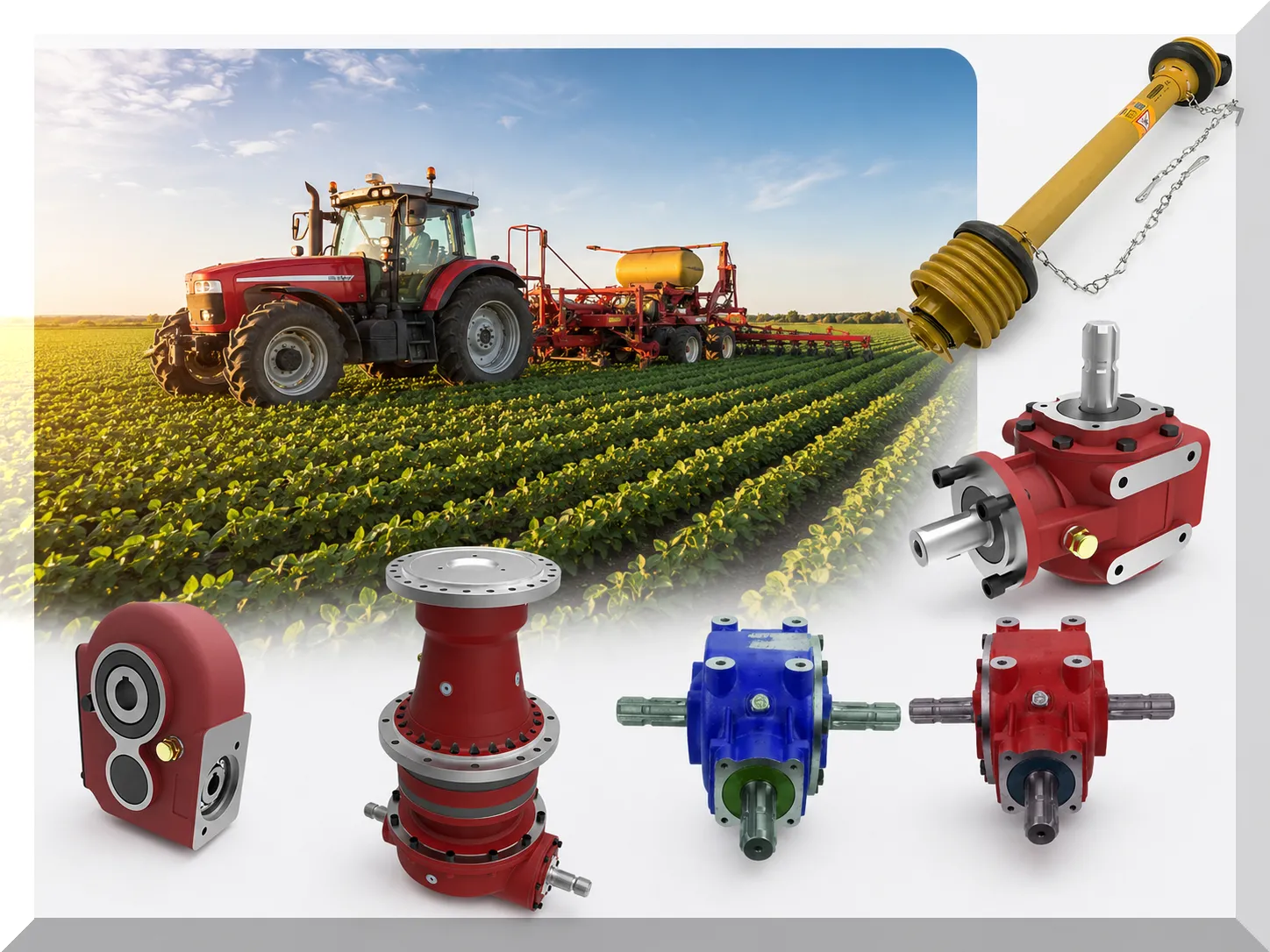
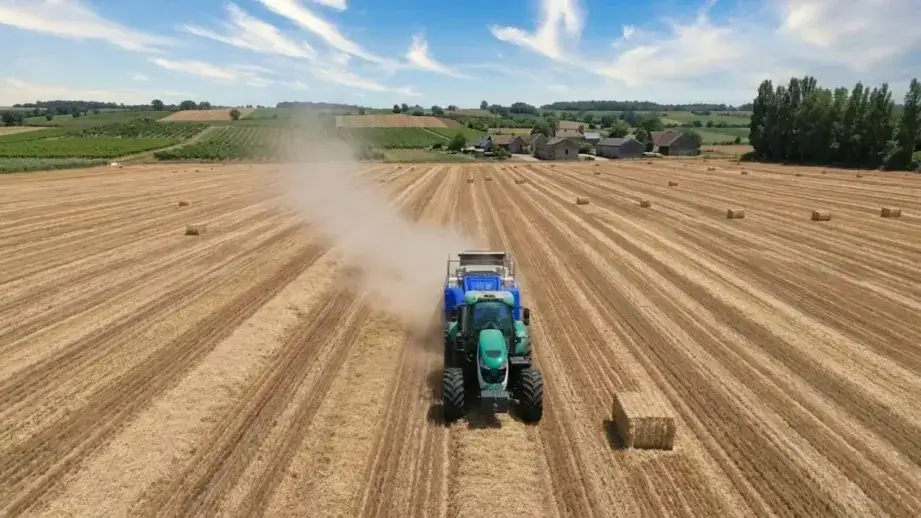
PTO shaft and gearbox specifications for all 9YF pickup-drive configurations: 农业变速箱和动力输出轴规格
A worn CV joint or undersized PTO shaft causes speed variation at the pickup drive that produces inconsistent tine peripheral speed — the same symptoms as incorrect forward speed. Full driveshaft specifications: PTO传动轴和CV接头尺寸指南.
Frequently Asked Questions — Square Baler Pickup Problems
Choose the Right Pickup Configuration for Your Crop
From the spring-tooth 9YF-1700 for standard hay to the hammer-claw 9YF-2200S for hard-stalk and lodged crops — tell us your primary crop and field conditions and we will confirm the correct pickup type for maximum recovery.
美国永动力饲料打包机设备有限公司 · 加利福尼亚州萨克拉门托市第21街1401号R室,邮编:95811
编辑:Cxm


