
How Spring-Tooth Pickups Work
The Mechanism and Its Strengths
Spring-tooth pickups use rows of curved, flexible steel tines mounted on a rotating reel. As the reel turns forward at ground level, the tines flex downward through the windrow material, lift it and carry it rearward into the feeder channel. The tines then retract on the return stroke to avoid pushing material back down. The system relies on the windrow being elevated above the soil surface — the tine tips need to pass under the crop material to lift it effectively.
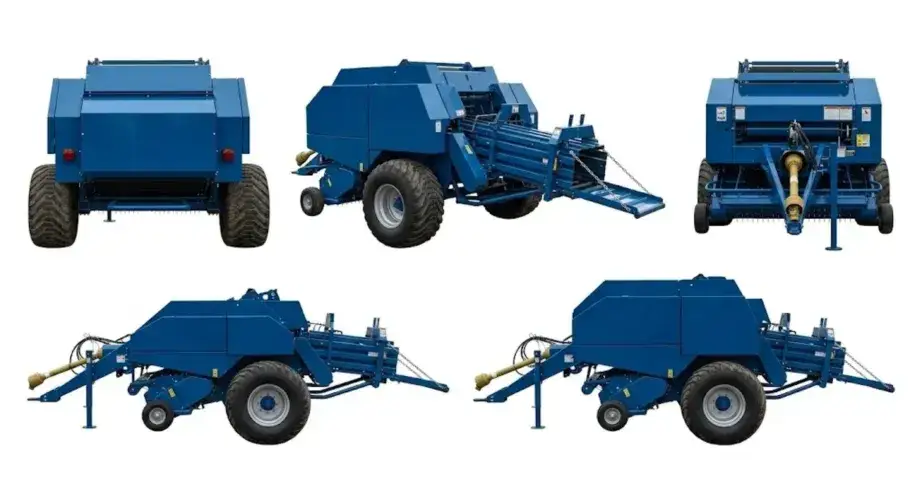
In the right conditions, spring-tooth pickups are highly effective: they are gentle on leaf-heavy crops like alfalfa (minimising leaf shatter compared to more aggressive systems), they run with relatively low PTO demand, and they require straightforward maintenance — replacing bent or broken individual tines as needed. All three standard models in the 9YF series use spring-tooth systems: the 9YF-1700, 9YF-1900 and 9YF-2200.
Optimal Conditions for Spring-Tooth Performance
- Hay windrows:Properly raked grass hay and alfalfa elevated 15–25cm above the soil surface. The tines pass cleanly under the windrow and lift without soil contact — ideal conditions.
- Cereal straw:Post-combine wheat and barley straw in a formed windrow stands up reasonably well in dry conditions, giving the tines adequate access under the material without soil contamination.
- Light crop loads:Operations where windrows are thin to moderate in density and the forward speed allows the tines to pick up the full windrow width without overflow at the feeder inlet.
- Flat paddy fields:Rice straw on flat paddy fields after raking into a proper windrow — provided the windrow is elevated and not matted flat against the soil surface from machine traffic.
How Hammer-Claw Pickups Work
Impact-and-Lift Recovery
Hammer-claw pickups replace the flexible spring tines with rigid, curved flail tines mounted on a rotating drum. Instead of flexing under the windrow, the flail tines rotate at higher speed and strike the crop material on each rotation — the impact physically dislodges material from the ground surface and throws it rearward into the feeder channel. This impact-based mechanism does not require the crop to be elevated; the energy in the rotating flail is sufficient to break the contact between flattened material and the soil below.
The result: in lodged, flattened or tangled crop conditions, the hammer-claw system lifts material that a spring-tooth reel would pass over. The tines contact the soil surface rather than floating above it — which is why hammer-claw systems pick up more material per pass but also accelerate tine wear more rapidly than spring-tooth systems in abrasive conditions.
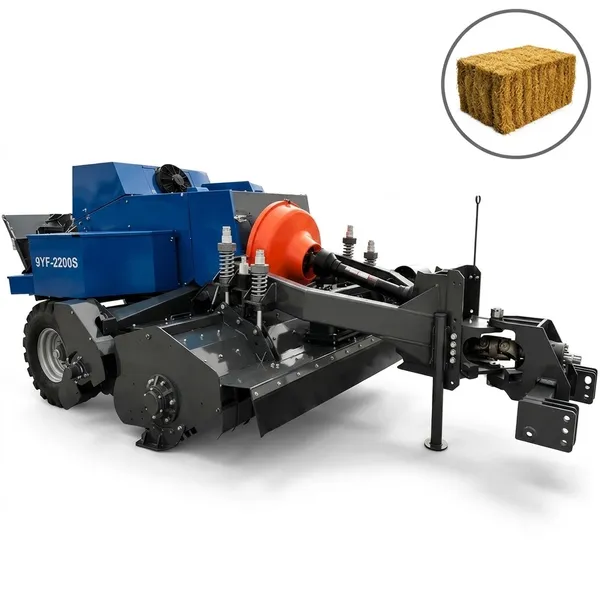
The 9YF-2200S and 9YFS-2.2 both use hammer-claw pickup systems. In these models, the hammer-claw is paired with the shredder mechanism — because the crops that demand hammer-claw recovery (corn stover, sorghum, cotton stalks) also benefit from shredding before compression. The two features address the same crop category from different angles.
Where Spring-Tooth Pickups Fall Short
Crops and Conditions That Expose Spring-Tooth Limitations
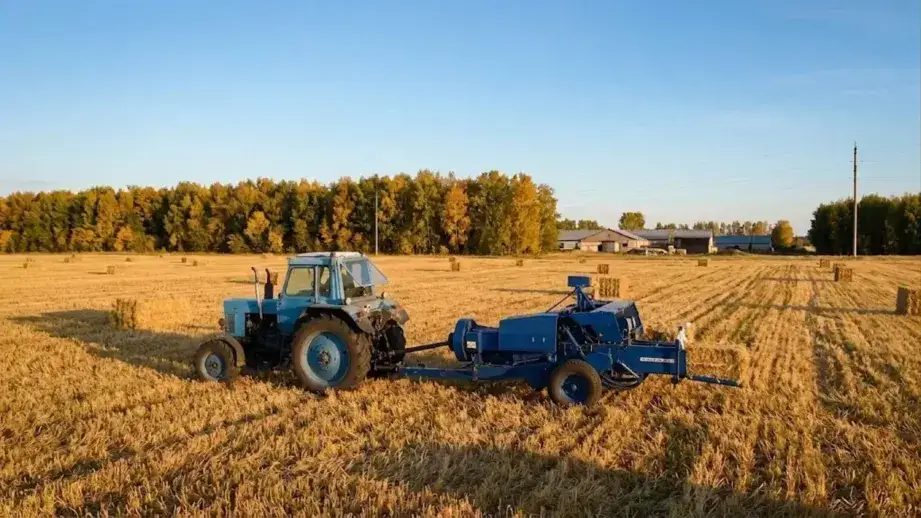
Wind, rain or combine wheel traffic can flatten wheat and barley straw so it lies against the soil. Spring-tooth tines need to pass under the material — on material lying flat against the ground, the tines ride over the surface without lifting, leaving 20–40% of the straw in the field.
Rice straw in paddy fields compacts into a dense mat from combine and tractor passes on wet soil. Even after raking, sections of the mat remain pressed flat. Spring-tooth tines lack the impact energy to lift this material off a wet soil surface.
Corn stover in fields after grain harvest is typically pressed flat by combine and grain cart passes. The stover lies in direct soil contact across most of the field width. Spring-tooth systems recover perhaps 70–80% of what the hammer-claw system lifts from the same pass.
Sorghum stalks and cotton stems after harvest are often tangled and interlocked in ways that resist lifting. Spring tines tend to pull some material free and leave the rest — the recovery rate is inconsistent and difficult to improve by adjusting pickup height.
Where Hammer-Claw Systems Outperform
Crop Recovery Comparison
In standard elevated windrow conditions — clean wheat straw, properly raked hay — the per-pass recovery difference between a spring-tooth and a hammer-claw system is small (typically 3–5%). Both systems clean the windrow effectively when the material is elevated and the windrow density is moderate. The performance gap widens dramatically in difficult conditions:
| Crop Condition | Spring-Tooth Recovery | Hammer-Claw Recovery |
|---|---|---|
| Clean elevated hay windrow | 93–97% | 95–98% |
| Wheat straw, normal conditions | 88–94% | 93–97% |
| Lodged wheat, post-rain flat | 60–75% | 85–93% |
| Rice straw, paddy mat sections | 55–70% | 80–90% |
| Corn stover, post-combine traffic | 65–80% | 85–95% |
Recovery rate estimates based on typical field conditions. Actual rates vary with windrow density, soil moisture, crop variety and pickup height adjustment.
Tine Wear and Maintenance: A Practical Comparison
Spring-Tooth Tine Maintenance
Spring tines bend in the direction of travel when they strike an embedded stone or soil clod, and then spring back to their working position. This self-protection mechanism means spring-tooth tines rarely break catastrophically — they deform progressively. A tine that has bent 5–10 degrees out of its correct angle still picks up some material but at reduced efficiency. Visual inspection at the start of each session identifies bent tines; replacement takes minutes with standard tools. A set of spring tines across a 2,200mm pickup typically lasts 2–4 seasons of normal hay and straw baling before replacement is needed.
Hammer-Claw Tine Maintenance
Hammer-claw flail tines are rigid — they absorb impact loads rather than flexing around them. In stony fields or fields with embedded crop debris, the tine tips wear faster than spring tines because they contact the soil surface actively. In corn stover operations where the tines contact the soil on every pass, tine wear rate is meaningfully higher than in clean hay conditions. Budget for hammer-claw tine inspection every 40–60 operating hours in heavy stover conditions, compared to 60–100 hours for spring-tooth systems in equivalent use. Replace tines showing more than 3–5mm of tip wear — worn tips reduce the impact energy available at the material surface and reduce recovery rate progressively.
Balancing Wear Against Recovery Value
The higher maintenance cost of hammer-claw tines in difficult conditions is typically outweighed by the crop recovery value in those same conditions. If a spring-tooth system leaves 25% of a corn stover field on the ground on each pass, and that stover sells at $4–6 per bale, the per-acre revenue lost to incomplete recovery can easily exceed the per-season tine replacement cost of the hammer-claw system. The economic case for hammer-claw tines depends on crop recovery value relative to tine replacement cost — a straightforward calculation for each operation.
Power Draw: What Each Pickup Type Costs at the PTO
Spring-tooth pickups are low-power consumers — the flexible tines do not generate significant drag and the reel rotation speed is moderate. Estimated PTO demand from the pickup alone: 3–6HP in standard operating conditions. Hammer-claw pickups rotate at higher speed and their rigid tines generate more air resistance and crop-impact energy per rotation. Estimated PTO demand from the hammer-claw pickup: 8–15HP in active recovery conditions.
This 5–10HP difference between pickup types is one contributing factor (alongside the shredder mechanism) to why the 9YF-2200S and 9YFS-2.2 require 99HP minimum PTO versus 50HP for the spring-tooth models. The shredder is the larger power consumer, but the hammer-claw adds meaningfully to the total PTO load relative to a spring-tooth system at equivalent pickup width.
The Models: Which Pickup System Each 9YF Uses
Which Pickup Is Right for Your Operation?
A Practical Decision Framework
PTO Driveline Reference for Both Pickup System Types
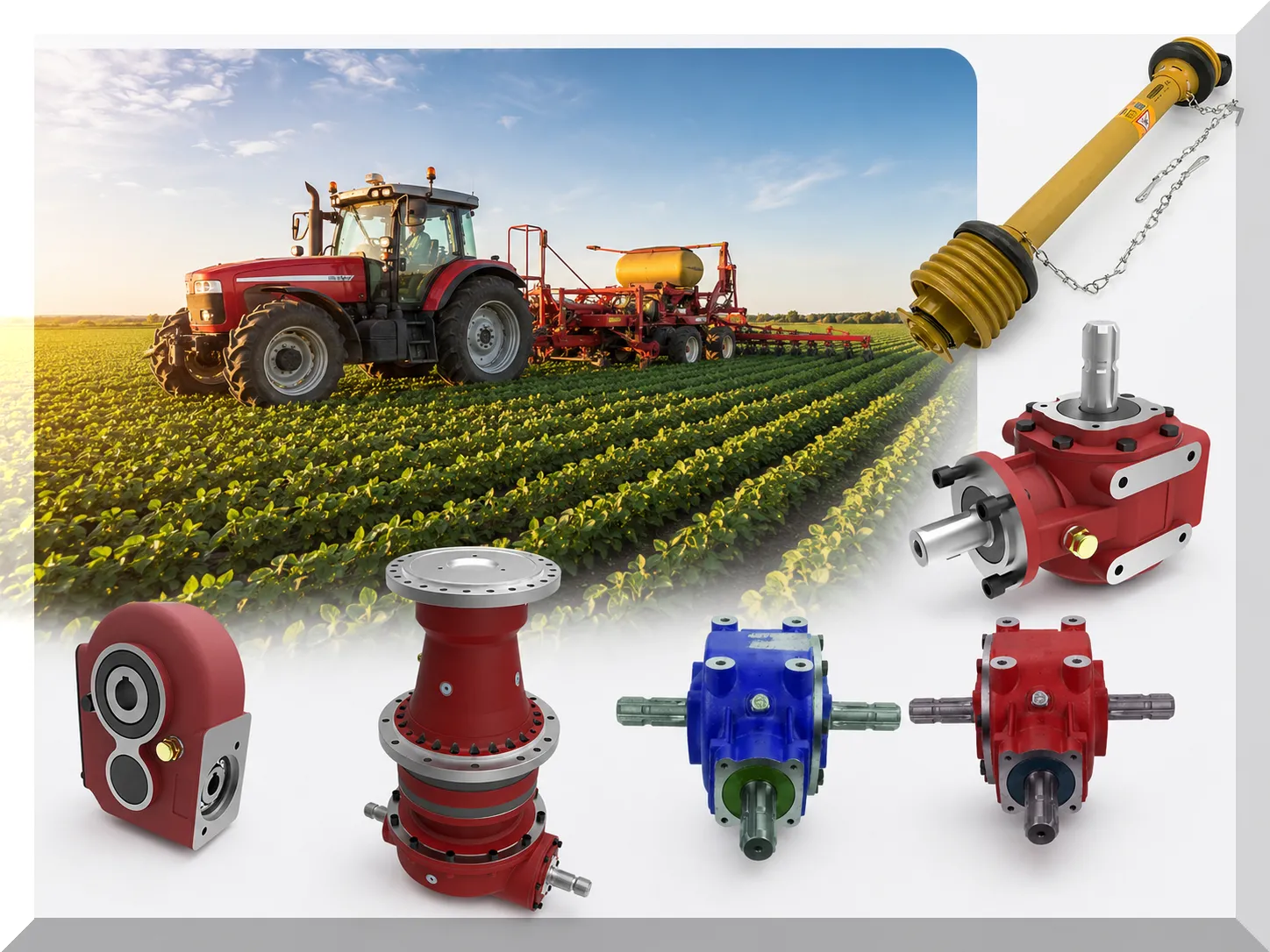
Gearbox torque ratings and PTO shaft standards for the 40–140HP range: Spezifikationen für landwirtschaftliche Getriebe und Zapfwellen
The jump from 50HP to 99HP minimum between spring-tooth and hammer-claw models means a different PTO shaft and coupling specification. Driveshaft length, CV joint angle and slip clutch rating all change between the two tractor classes. Specifications are covered in the Leitfaden zur Dimensionierung von Zapfwellenantriebswellen und Gleichlaufgelenken.
Frequently Asked Questions — Hammer-Claw vs Spring-Tooth Pickup
Choose the Right Pickup System for Your Crops
Spring-tooth models (40–50HP minimum) for clean hay and straw. Hammer-claw models (99HP minimum) for lodged crops, stover and tough residue. Tell us your crop mix and tractor HP and we will confirm the right model.
America Ever-Power Forage Baler Equipment INC. · 1401 21st ST STE R, Sacramento, CA 95811
Herausgeber: Cxm


