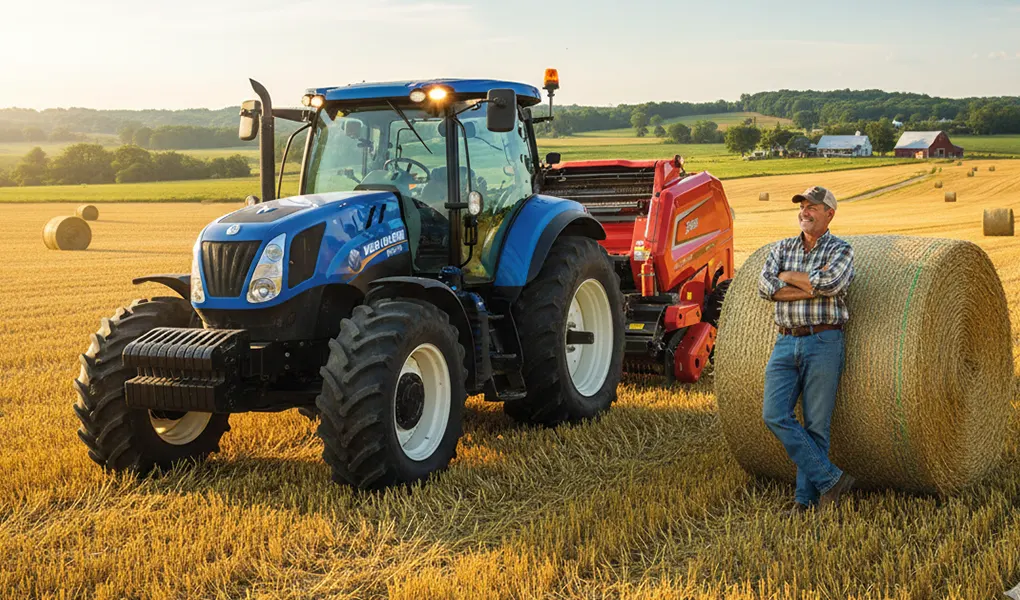
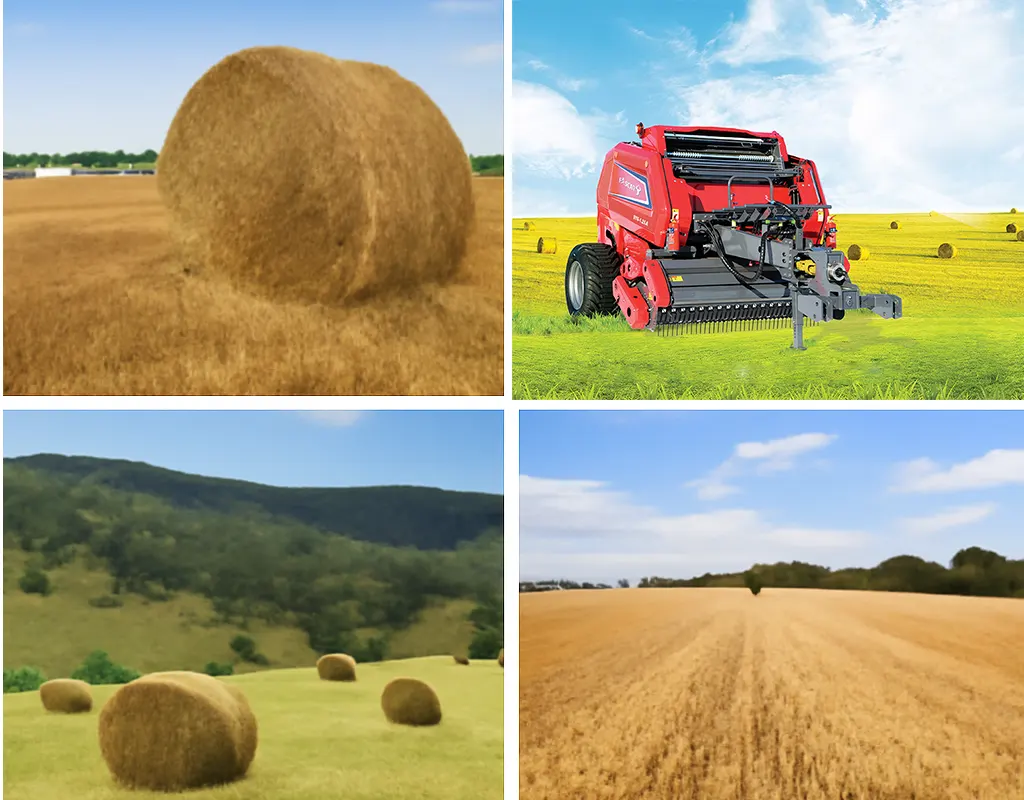
Le pressage transforme les récoltes sur pied en fourrage transportable et stockable. Cependant, il n'arrête pas les processus biologiques et physiques qui dégradent ce fourrage ; il ne fait que les ralentir. Dès la sortie de la balle de la chambre de pressage jusqu'à son ouverture à l'auge, les pertes de matière sèche se poursuivent. Les études montrent régulièrement que les pertes moyennes de matière sèche pour le stockage en plein air des balles rondes se situent entre 15 et 30 %, et peuvent atteindre 35 à 45 % dans les climats humides, pour un stockage à même le sol non couvert. À raison de 1 TP6T80 par balle, une perte de 20 % de matière sèche signifie que 1 TP6T16 de valeur fourragère disparaît par balle avant même que le premier animal ne la consomme. Sur 300 balles, cela représente une perte annuelle invisible de 1 TP6T4 800. Chaque amélioration apportée à stockage de balles rondes La pratique permet de réduire ce nombre, et les améliorations ne sont pas coûteuses.
Où va la matière sèche : les quatre voies de perte liées au stockage des balles rondes
Comprendre où matière sèche Identifier l'origine du problème est la première étape pour le prévenir. Quatre éléments distincts stockage de balles rondes Les mécanismes de perte sont responsables, et chacun réagit à des interventions de gestion différentes :
4 — Dommages causés par les animaux et les machines
Perte de DM 1–8%
Le rongement par les rongeurs, le picage des oiseaux, l'accès des cerfs et les dommages mécaniques lors de la manutention (perforations par les pointes de chargeur, chutes de balles, déchirures des filets d'ensilage) créent des voies d'infiltration d'humidité qui accélèrent simultanément les trois mécanismes de dégradation biologique. Une simple perforation du filet d'ensilage d'une balle d'ensilage par une pointe de chargeur crée un point d'accès à l'oxygène de 4 à 6 cm² pouvant favoriser une zone de détérioration s'étendant de 20 à 30 cm dans toutes les directions à partir de la perforation en 3 à 4 semaines.
Choix du lieu de stockage : six critères qui déterminent l’ampleur de vos pertes
stockage de balles rondes Le choix de l'emplacement est l'intervention la plus efficace. Aucune autre amélioration — qu'il s'agisse de la mise à niveau des filets d'emballage, de la pose de bâches ou de l'alignement des rangs — n'offre un rendement aussi élevé en matière de préservation de matière sèche par dollar investi que le déplacement des balles de sols nus, ombragés et humides vers des emplacements surélevés, bien drainés et ensoleillés. Utilisez la fiche d'évaluation ci-dessous pour évaluer votre site de stockage actuel.
Auto-évaluation de votre site de stockage — Évaluez votre emplacement actuel
| Critère |
✔ Meilleur |
△ Acceptable |
✗ Problème |
| surface du sol |
Couche de gravier ou de pierres concassées, profondeur ≥ 10 cm |
Pierre compactée ou béton |
Sol nu, herbe ou argile |
| Pente de drainage |
≥2% pente s'éloignant des balles dans toutes les directions |
Terrain plat avec drainage périphérique |
Zone basse, flaques d'eau après la pluie |
| Exposition au soleil |
Plein soleil toute la journée — aucune ombre d'arbres ou de bâtiments |
Ombre partielle (moins de 4 heures/jour) |
Ombragé la majeure partie de la journée ; versants exposés au nord |
| Orientation des rangées |
Orientation des rangées nord-sud (les deux côtés sont égaux au soleil) |
±30° de N–S |
Rangées est-ouest (un côté constamment ombragé) |
| espacement des balles |
Contact bout à bout au sein d'une même rangée ; ≥ 1 m entre les rangées |
30 à 50 cm entre les rangs |
Balles se touchant côte à côte entre les rangées adjacentes |
| Exposition aux nuisibles |
Pas de broussailles ni de céréales à proximité ; clôture ou barrière grillagée |
Champ ouvert, faible pression de cerfs et de rongeurs |
À proximité d'une zone boisée ou de silos à grains ; forte activité parasitaire |
Si votre site obtient 4 notes « Problème » ou plus, l'améliorer avant d'ajouter d'autres améliorations de stockage (mise à niveau du filet d'emballage, bâches) permettra de réaliser des économies plus importantes en matière de marketing direct par dollar dépensé.
Filet ou ficelle : comment le choix du système de liage influe sur les pertes liées au stockage extérieur
La ficelle et le filet d'emballage diffèrent pour stockage de balles rondes La plupart des opérateurs ne pensent qu'à l'impact de l'emballage sur la presse à balles : coût par balle, vitesse d'enrubannage, maintien de la forme de la balle. Pourtant, cet impact sur les pertes de matière sèche lors du stockage extérieur est tout aussi important et bien moins souvent évoqué. Le mécanisme est simple : le filet d'enrubannage recouvre une grande partie de la surface de la balle d'une barrière imperméable à l'humidité ; la ficelle, quant à elle, n'en recouvre pratiquement aucune.
Balle ficelée — Stockage extérieur
✗ Balle 0% surface couverte — la balle est entièrement exposée à la pluie, à la rosée et à la dégradation par les UV du soleil
✗ Des canaux d'humidité se forment entre les ficelles — la pluie s'écoule le long de ces rainures à l'intérieur de la balle
✗ Perte de stockage extérieur DM : 15–30% dans les climats humides pendant 6 à 9 mois
✓ coût d'emballage par balle réduit
✓ Convient au foin stocké en grange ou distribué immédiatement.
Balle en filet — Stockage extérieur
✓ Environ 601 TP5T de surface de balles couverte — une barrière en filet continu protège de la pluie par le haut et les côtés
✓ La surface extérieure lisse favorise le ruissellement de l'eau plutôt que son infiltration.
✓ Perte de stockage extérieur DM : 5–15% dans les mêmes conditions
✓ La conservation de la forme des balles améliore la stabilité de l'empilage
△ Coût d'enrubannage par balle plus élevé (+$1,50–3,00 par balle par rapport à la ficelle)
Calcul du retour sur investissement net : Avec une perte de matière sèche de 151 TP5T contre 81 TP5T sur 200 balles de foin de 1 TP6T80, l'enrubannage en filet permet d'économiser environ 1 TP6T1 120 par an (200 × 1 TP6T80 × 0,07 = 1 TP6T1 120). Avec une prime de 1 TP6T2 par balle pour l'enrubannage en filet par rapport à la ficelle, le surcoût est de 1 TP6T400 par an. Économie annuelle nette : 1 TP6T720. L'enrubannage en filet est rentabilisé plus de deux fois pour un programme de stockage extérieur de cette envergure.
Notre gamme complète de modèles de presses à balles rondes à filet est configurée avec des systèmes d'alimentation en filet continu dont la synchronisation d'entraînement est maintenue par le système principal de la presse à balles. boîte de vitesses agricole — en assurant une tension et un chevauchement constants du film d'enroulement sur chaque balle tout au long de la journée de production, et pas seulement sur la première balle après un nouvel enroulement du filet.
Six configurations de stockage : pertes de matière sèche mesurées et compromis pratiques
Recherche sur stockage de balles rondes Les données du Service de recherche agricole de l'USDA, de l'Université du Wisconsin et de Cornell Cooperative Extension montrent systématiquement que la configuration du stockage est le principal facteur contrôlable influençant les pertes de matière sèche des balles rondes. Le tableau ci-dessous résume les mesures effectuées. matière sèche Les pertes varient selon six configurations de stockage courantes, de la pire à la meilleure :
| Configuration du stockage |
Plage de perte de DM |
Dépendance aux conditions météorologiques |
Principal facteur de perte |
| Ficelle, terre nue, ombre |
25–45% |
Extrême |
Contact avec le sol + exposition totale de la surface + pas de séchage aux UV |
| Ficelle, terre nue, soleil direct |
18–30% |
Très élevé |
pertes par contact avec le sol + canaux d'écoulement de la pluie entre les enroulements de ficelle |
| Filet de protection, terre nue, soleil direct |
12–22% |
Haut |
Le contact avec le sol est maintenu ; la surface est protégée par un filet. |
| Filet d'enroulement, tapis de gravier, rangée nord-sud |
6–14% |
Modéré |
Détérioration principalement superficielle ; contact avec le sol éliminé |
| Abri en filet, dalle de gravier, bâche ou abri ouvert |
3–8% |
Faible |
Principalement la respiration ; la protection de surface est en grande partie complète |
| Filet d'emballage, grange fermée, sol sec |
1–4% |
Minimal |
Respiration uniquement ; l'exposition à toutes les conditions météorologiques est éliminée. |
Les pertes de matière sèche varient selon les études agronomiques publiées sur des balles rondes de 1,2 m de diamètre, stockées pendant 6 à 9 mois dans des climats tempérés américains. Filet d'emballage : filet standard en PEBDL stabilisé aux UV de 1,5 m, deux passages avec un chevauchement de 50%.
Rangée simple vs rangée empilée : perte de données, optimisation de l’espace et risque structurel
Une seule rangée bout à bout stockage de balles rondes est systématiquement la meilleure configuration pour matière sèche La tentation d'empiler les balles (en pyramide ou par rangées de deux) est dictée par le manque d'espace : l'empilement double le nombre de balles pouvant être stockées sur une surface donnée. Cependant, cette pratique entraîne une perte de matière sèche qu'il faut mettre en balance avec les économies réalisées sur le coût du terrain.
Rangée simple bout à bout ✔ Meilleure
Vue d'extrémité — une seule couche, balles se touchant
✔ Circulation d'air complète sur toutes les surfaces exposées
✔ Aucune zone de contact entre les balles empilées — aucune accumulation d'humidité aux points de contact
✔ Perte de DM la plus faible de toutes les configurations extérieures
△ Nécessite une plus grande longueur au sol linéaire par balle
Empilement pyramidal à deux niveaux △ Acceptable
Vue de face — pyramide, 1 sur 2
✔ 33% : plus de balles par rangée qu'une seule couche
△ Les zones de contact entre les balles du dessus et du dessous retiennent l'humidité — +3–6% Perte de matière sèche aux points de contact
△ Le filet d'enrubannage supérieur des balles se dégrade plus rapidement sous l'effet d'une exposition complète aux UV.
✗ Nécessite une manutention mécanique — aucun empilage manuel sûr au-dessus d'une seule couche
Niveau 3 ou supérieur ✗ Non recommandé
Vue de face — 3 niveaux, instable
✗ Balles du bas écrasées par la charge statique supérieure — filet déchiré, perte importante de matière sèche dans la zone d'écrasement
✗ Le risque de dévaler la pente devient important au-delà de 2 mètres de hauteur, surtout sur toute pente.
✗ Les balles intérieures empilées en profondeur sont inaccessibles pour inspection de leur état.
Entreposage couvert : quand l'investissement est rentable
La progression depuis les espaces extérieurs à sol nu stockage de balles rondes La construction d'un hangar ouvert de base représente la plus importante amélioration en matière de gestion de la matière sèche (GMS) — réduisant généralement les pertes de 18 à 301 tonnes 500 g à 4 à 81 tonnes 500 g. La rentabilité de cet investissement dépend de la taille de l'exploitation, de la valeur marchande du foin et de la durée d'amortissement du bâtiment. Le calcul est simple :
Coût annuel des pertes de matière sèche — Sol nu extérieur (moyenne 20%)
200 balles × 20% Perte de matière sèche = 40 balles équivalentes perdues
40 × $80 valeur marchande = $3,200/an perte invisible
À 300 balles : $4 800/an perdus
À 400 balles : $6 400/an perdus
Avec hangar ouvert (perte moyenne de 6%) — Même quantité de 200 balles
200 balles × 6% Perte de matière sèche = 12 balles équivalentes perdues
12 × $80 = $960/an perte (épargne) $2,240/an)
Abri ouvert simple pour 50 ballots : coût de construction : $5 000 à 12 000.
Délai de retour sur investissement pour une production de 200 balles par an : 2,2 à 5,4 ans
Le calcul du seuil de rentabilité repose sur une valeur marchande de $80/balle et une différence de perte de matière sèche (MS) de 20% en extérieur contre 6% sous bâche. Le retour sur investissement réel dépend des prix locaux du foin, du climat et des coûts de construction. Pour les exploitations produisant moins de 100 balles par an, les bâches à foin ($300–600 pour la couverture de 20 balles) offrent généralement un meilleur retour sur investissement que la construction d'un bâtiment.
Déplacement des balles vers l'entrepôt : pourquoi le matériel de manutention est important pour la préservation des matières sèches
Chaque événement de traitement dans stockage de balles rondes Entre la chambre de pressage et la zone de stockage, il existe un risque d'endommagement du filet d'enrubannage. Par exemple, une pointe de chargeur frontal enfoncée dans une balle enrubannée pendant… stockage de balles rondes Cela crée un trou physique dans le filet, et chaque épisode de pluie ultérieur canalise l'eau à travers ce trou vers l'intérieur de la balle. Quatre à six semaines après une perforation au milieu de la balle, des zones de détérioration mesurables se forment autour du point de perforation, indépendamment des conditions de stockage par ailleurs optimales.
La méthode de manutention appropriée pour les balles enrobées de filet utilise un équipement qui saisit la balle sans pénétrer la surface du filet : un berceau à balles, une pince à balles ou une pointe à balles qui pénètre par l’extrémité plate de la balle plutôt que par la surface latérale incurvée recouverte de filet. chargeur et transporteur de balles rondes Les modèles de notre gamme utilisent un système de chargement hydraulique par berceau qui soulève et déplace les balles en soutenant la surface extérieure incurvée de la balle — aucune pénétration de pointe, aucun dommage au filet, intégrité totale de la balle du champ au lieu de stockage.
Pour les opérations de transport de plus de 50 balles par coupe vers un site de stockage central, un transporteur de balles dédié permet également de réduire les dommages accidentels causés par les traces de pneus sur les balles stockées, qui s'accumulent lorsque les tracteurs manœuvrent à proximité des rangs existants. Chaque passage de tracteur près des balles stockées crée des ornières et un compactage qui finissent par dévier le drainage de la dalle de gravier vers la base des balles, annulant ainsi l'effet bénéfique du drainage pour lequel la dalle de gravier avait été installée.
Questions fréquentes : Stockage des balles rondes
Quelle est l'importance relative du gravier et des roches concassées pour une dalle de stockage ?+
Les deux méthodes fonctionnent. L'essentiel est un bon drainage et une séparation optimale entre la balle et le sol, et non le matériau en lui-même. Le calcaire concassé #57 (granulats angulaires d'environ 19 mm de diamètre) est l'option la plus courante et la plus économique : sa forme angulaire se compacte moins que le gravier arrondi et conserve une structure poreuse pendant plusieurs saisons. Profondeur minimale : 10 cm pour les balles jusqu'à 500 kg ; 15 cm pour les balles d'ensilage lourdes de plus de 600 kg. Une autre solution consiste à utiliser des traverses de chemin de fer traitées ou peintes, des blocs de béton ou de vieux pneus comme rehausseurs pour créer un espace d'air de 15 à 20 cm sous chaque balle ; cette solution est efficace et ne nécessite aucun investissement si les matériaux sont disponibles.
Puis-je stocker des balles de foin sec emballées dans un filet directement côte à côte, bout à bout ?+
Oui, le contact bout à bout au sein d'une même rangée est une pratique courante et même recommandée, car il empêche l'eau de pluie de stagner dans l'espace concave entre les extrémités des balles adjacentes. Les extrémités plates des balles sont moins bien recouvertes par le filet que leur surface latérale (le filet enveloppe la circonférence, mais les extrémités coupées restent exposées). Par conséquent, tout espace entre les extrémités des balles adjacentes crée une petite zone de collecte des précipitations. Le stockage des balles bout à bout élimine cet espace. Entre les rangées, il est toutefois important de maintenir un dégagement d'au moins 1 mètre pour permettre la circulation de l'air et éviter l'accumulation d'humidité dans la zone de contact latéral où deux rangées se rejoignent.
Comment les bâches à foin se comparent-elles à un hangar ouvert sur les côtés pour la conservation du DM ?+
Une bâche à foin bien entretenue et correctement ancrée permet de limiter les pertes de matière sèche de 5 à 91 tonnes par 5 tonnes, un taux similaire à celui d'un hangar ouvert basique (3 à 81 tonnes par 5 tonnes). La différence réside dans la durabilité : une bâche à foin de qualité dure de 3 à 5 saisons si elle est correctement stockée hors saison et protégée des dommages causés par les UV dus à un mauvais ancrage (qui provoque le flottement et la dégradation des bords). Un hangar ouvert, en revanche, dure de 20 à 30 ans avec un minimum d'entretien. Sur 20 ans, la comparaison des coûts privilégie généralement une structure permanente pour les exploitations produisant plus de 150 balles par an, et les bâches pour les exploitations plus modestes ou lorsque le lieu de stockage change d'une saison à l'autre. La mise en place, l'ancrage et le retrait des bâches nécessitent également de la main-d'œuvre ; le coût annuel de cette main-d'œuvre représente un coût non négligeable.
À quelle perte de matière sèche dois-je m'attendre sur un bon site extérieur dans le Midwest américain ?+
Sur un système bien géré stockage de balles rondes Sur un site d'élevage du Midwest (balles enrubannées, aire de gravier, rangées nord-sud, plein soleil, sans ombre), les pertes de matière sèche (MS) sur une période de stockage de 6 à 9 mois, de la mise en balles en juin à la distribution en mars, varient généralement de 8 à 141 tonnes 500 tonnes. Ceci tient compte d'une période estivale de fortes précipitations et d'une période hivernale avec l'accumulation de neige. Les exploitations qui optimisent la gestion de leurs sites (balles surélevées sur une large aire de gravier, balles en rangées serrées, excellent drainage) peuvent atteindre des pertes de 5 à 81 tonnes 500 tonnes. Les pertes inférieures à 51 tonnes 500 tonnes pour le stockage en plein air dans le Midwest sont rares et nécessitent généralement un stockage couvert. À titre de comparaison, un stockage en bergerie bien géré dans le Midwest enregistre des pertes de MS de 2 à 41 tonnes 500 tonnes par an.
Une balle de foin présente une importante couche de moisissure en surface lorsque je l'ouvre. Est-il encore sans danger pour l'alimentation animale ?+
UN balle ronde Avant de donner du foin présentant une importante moisissure en surface, il convient d'évaluer jusqu'où elle s'étend à l'intérieur. Retirez la couche extérieure abîmée (généralement de 5 à 15 cm) et inspectez l'intérieur. Si l'intérieur est encore clair, sec et exempt de moisissure, le foin peut généralement être donné sans danger aux bovins de boucherie en quantités limitées (moins de 30 lb/100 g de la ration totale). Le foin moisi ne doit en aucun cas être donné aux chevaux, aux reproducteurs ou aux jeunes animaux en raison du risque de mycotoxines. Pour les vaches laitières, le foin fortement moisi présente un risque pour la qualité du fourrage et la teneur en matières grasses du lait ; faites analyser l'intérieur du foin pour détecter la présence de mycotoxines avant de l'incorporer à la ration. En cas de doute, consultez un nutritionniste ou un vétérinaire avant de donner du foin visiblement moisi à des animaux sensibles.
Est-il plus judicieux de déplacer les balles de foin du champ vers un meilleur site de stockage plutôt que de les entreposer sur place ?+
Sur le plan économique : le transport des balles vers un site de stockage centralisé sur aire de gravier coûte généralement de $1 à $4 par balle en temps de machinerie et en carburant. L’amélioration de la préservation de la matière sèche (MS) grâce au transport des balles stockées en plein champ vers un site aménagé sur aire de gravier est généralement de 8 à 15 points de pourcentage. Pour une balle de $80, cela représente de $6 à $12 de valeur fourragère préservée par balle, ce qui permet de rentabiliser les coûts de transport 2 à 3 fois dès la première saison. Le stockage centralisé est presque toujours rentable pour les exploitations produisant plus de 100 balles par an. En dessous de 100 balles, le seuil de rentabilité dépend fortement des conditions spécifiques de votre sol et des précipitations locales. Nos chargeurs et transporteurs de balles sont conçus précisément pour ce cas d’utilisation : un transport économique et sans dommage du champ à l’aire de stockage.
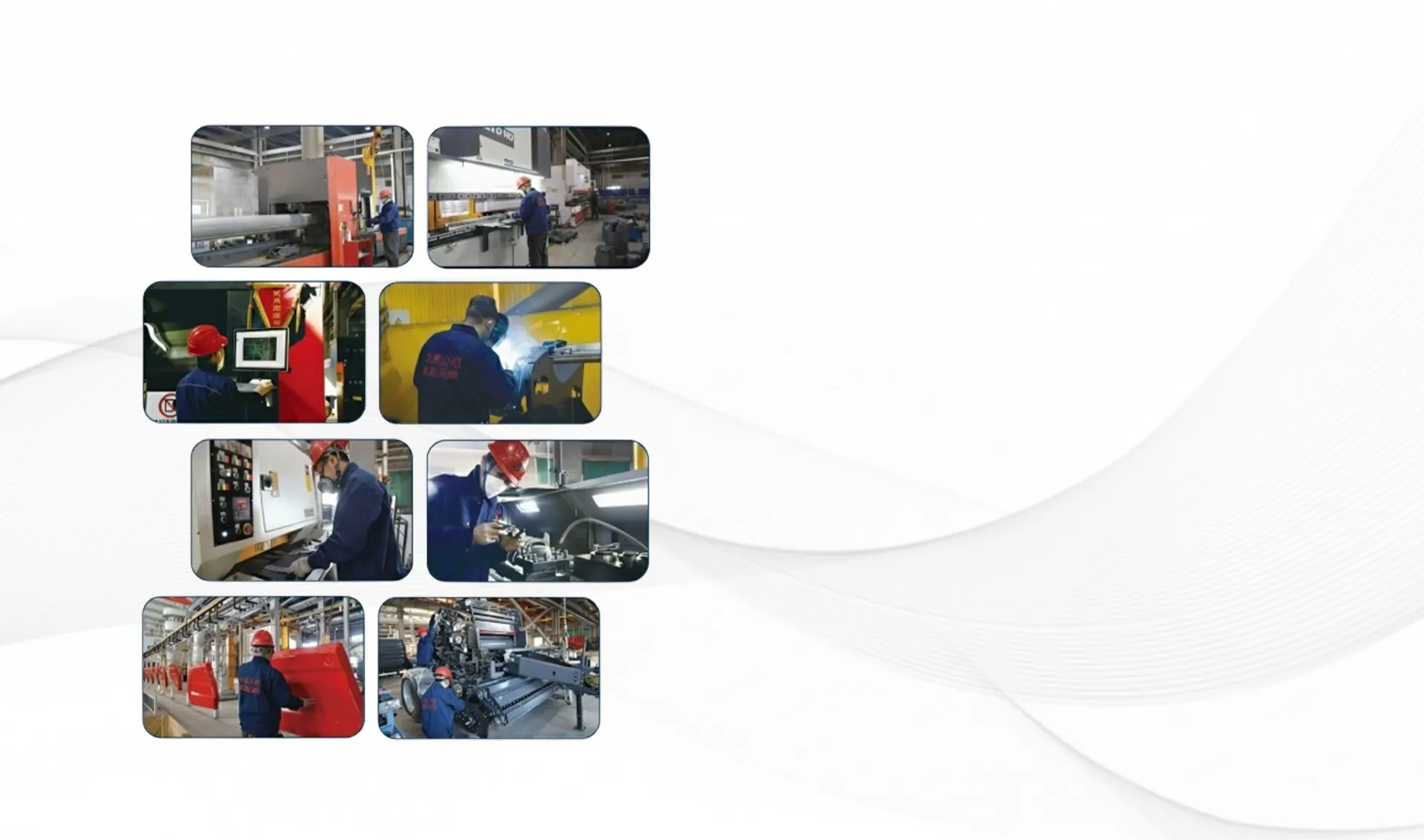
Assistance complète pour le système de foin
Presses à balles en filet, transporteurs de balles et planification du stockage — tout depuis un seul entrepôt américain
Notre équipe californienne vous conseille sur le choix des presses à balles enrobées de filet pour vos programmes de stockage extérieur, adapte la capacité des transporteurs de balles à votre volume annuel de balles et peut vous recommander des améliorations de votre site de stockage en fonction de votre climat et de l'échelle de votre exploitation.
✔ Presses à balles rondes enrobées de filet
Programmation complète, entrepôt californien
✔ Chargeurs et transporteurs de balles
Berceau hydraulique — aucun dommage net
✔ Expédition des pièces le jour même
Filets d'emballage, courroies, roulements en stock
America Ever-Power Forage Baler Equipment INC. | 1401 21st ST STE R, Sacramento, CA 95811
Demande de consultation en entreposage
Éditeur : Cxm