Connaissance comment améliorer la qualité du foin L'approche systématique ne consiste pas à trouver un seul élément à corriger, mais à comprendre lequel des six points de décision de ce processus améliorer la qualité du foin Le système le plus performant de votre programme spécifique doit être optimisé, et il convient d'agir sur ce point plutôt que d'investir dans des améliorations déjà proches de leurs limites. Ce guide associe chaque décision aux paramètres de qualité spécifiques qu'elle influence, en démontre l'ampleur de l'impact et identifie les leviers matériels et agronomiques disponibles à chaque étape.
La carte des leviers de qualité du foin — Six décisions, quatre paramètres de qualité
Dans un programme de production de foin, chaque décision a un impact plus important sur certains paramètres de qualité que sur d'autres. La matrice d'impact ci-dessous met en relation six points de décision majeurs avec les quatre indicateurs de qualité mesurables que les acheteurs valorisent ou pénalisent. Utilisez-la pour identifier les domaines où votre exploitation présente le plus grand potentiel d'amélioration — non pas les recommandations habituelles, mais les points faibles de vos performances spécifiques par rapport à votre potentiel.
Matrice d'impact des leviers de qualité du foin — Décision × Paramètre de qualité
| Décision |
RFV / ADF |
Protéines brutes |
Récupération DM |
palatabilité |
| Étape de découpe |
●●● |
●●● |
●●○ |
●●● |
| Conditionnement (type tondeuse) |
●●● |
●●○ |
●●● |
●●○ |
| timing et technique de ratissage |
●●○ |
●●● |
●●● |
●●○ |
| humidité de pressage |
●●○ |
●●○ |
●●● |
●●● |
| Méthode de stockage |
●●○ |
●○○ |
●●● |
●●○ |
| Variété de culture / âge du peuplement |
●○○ |
●●○ |
●○○ |
●●○ |
●●● Impact élevé
●●○ Impact moyen
●○○ Faible impact
Les indices d'impact représentent la plage typique des effets mesurables dans les conditions de production de foin aux États-Unis. Les résultats peuvent varier d'une exploitation à l'autre. Veuillez vérifier auprès de votre fournisseur.
guide d'analyse fourragère.
Étape de la coupe : la décision la plus avantageuse pour la qualité du foin
Aucune décision prise individuellement dans un amélioration de la qualité du foin Le programme de culture a un impact mesurable plus important sur le RFV et la teneur en protéines brutes que le stade de coupe. Pour la luzerne, les données issues de la recherche universitaire sont cohérentes et quantifiées : chaque retard de 7 jours après le stade de fin de floraison augmente l’ADF d’environ 2 à 3 points de pourcentage et diminue la teneur en protéines brutes de 1,5 à 2,5 points de pourcentage. En termes de RFV, une hausse de 2 points d’ADF réduit le RFV d’environ 8 points. Sur une période de 3 semaines, entre la fin de floraison et la pleine floraison, la baisse totale du RFV est de 20 à 35 points, soit la différence entre la catégorie Premium et la catégorie 2.
Étape de la coupe de la luzerne — Évolution des paramètres de qualité
Bourgeon tardif (bourgeon 10–20%)
RFV 185–210
ADF : 23–27%
CP : 20–22%
TDN : 65–68%
Qualité supérieure
Floraison précoce (10–50% fleurs ouvertes)
RFV 155–185
ADF : 27–31%
CP : 17–20%
TDN : 61–65%
1re année
Pleine floraison (50–100% ouvert)
RFV 120–155
ADF : 31–38%
CP : 15–17%
TDN : 55–61%
Niveau 2 ou inférieur
Les valeurs indiquées correspondent à la luzerne de deuxième coupe dans des conditions typiques aux États-Unis. Les valeurs de première coupe sont inférieures d'environ 5 à 10 points RFV au même stade de croissance en raison d'un rapport tige/feuille plus élevé suite à la sortie de dormance.
Comment repérer le stade de coupe sur le terrain : Parcourez un transect représentatif du champ et examinez 20 à 30 plants sélectionnés au hasard. Comptez le pourcentage de plants présentant des fleurs ouvertes (et non seulement des boutons). Lorsque 10 % des plants présentent des fleurs ouvertes sur le tiers inférieur de la tige principale, la floraison est précoce — le dernier moment opportun pour récolter du foin de qualité supérieure sur la plupart des marchés. Ne vous fiez pas à un calendrier : comptez simplement les fleurs.
Conditionnement : Ajout de 15 à 30 points RFV grâce à un durcissement plus rapide
L'amélioration de la condition physique est le seul équipement qui a l'effet le plus direct sur la façon de améliorer la qualité du foin au cours de la phase de séchage. Le mécanisme est direct : le conditionnement rompt la cuticule cireuse de la tige, exposant ainsi l’intérieur du faisceau vasculaire à l’évaporation. Le foin conditionné sèche 25 à 40 % plus vite que le foin non conditionné ; chaque heure de séchage gagnée permet de préserver les glucides hydrosolubles qui seraient autrement consommés par la respiration de la plante.
La teneur en glucides solubles (WSC) préservée par un séchage plus rapide diminue directement la fraction relative de fibres insolubles dans des détergents acides (ADF) sur matière sèche. Des études comparant la luzerne conditionnée et non conditionnée, récoltées au même stade de croissance, montrent systématiquement une amélioration de 6 à 12 points du coefficient de variation de la teneur en fibres (RFV) grâce au seul conditionnement – ce qui équivaut à une récolte effectuée 5 à 7 jours plus tôt sur la courbe de croissance. Pour les exploitations qui récoltent déjà au stade de fin de bourgeonnement, le conditionnement permet d'atteindre la qualité maximale théorique.
Le retour sur investissement du conditionnement en dollars : Pour 200 balles de luzerne Premium ($90/tonne), une amélioration de 10 points du RFV (rapport valeur ajoutée) entre la catégorie 1 et la catégorie Premium représente un revenu supplémentaire d'environ $12/tonne × 56 tonnes = $672 par saison. Le passage d'une faucheuse à disques classique à une faucheuse-conditionneuse coûte entre $5 000 et $12 000, soit un retour sur investissement en 8 à 18 saisons à cette échelle. Pour un volume de 400 balles ou plus, ce délai est réduit à 4 à 9 saisons.
Humidité lors du ratissage et du pressage : préserver la qualité à l'étape finale de la récolte
Même du foin à valeur protéique élevée (RFV) récolté en fin de floraison peut présenter une dégradation protéique importante à la presse si le fanage a été effectué à un taux d'humidité inadéquat. L'égrenage de la luzerne lors du fanage à un taux d'humidité inférieur à 35 % (TP5T) est le principal mécanisme de dégradation. Chaque point de pourcentage de perte de feuilles par rapport au poids total de la balle entraîne une perte de protéines équivalente à celle d'un poids équivalent de tiges, car les feuilles de luzerne contiennent de 23 à 28 % (TP5T) de protéines brutes, contre 12 à 16 % (TP5T) pour les tiges. Une perte de 5 % (TP5T) de feuilles due à un fanage excessif sur un foin à 20 % (TP5T) de protéines brutes (PB) produit une teneur en PB effective d'environ 18,5 % (TP5T), soit une perte d'un point de qualité.
L'objectif d'humidité pour le pressage foin de haute qualité La production dépend de la méthode de liage et du mode de stockage. Pour le foin enrubanné et stocké en plein air, un taux d'humidité de 14 à 181 TP5T offre le meilleur compromis : suffisamment bas pour prévenir la formation de moisissures, mais suffisamment élevé pour que la couche externe de feuilles conserve sa souplesse lors du ramassage et de la compression dans la chambre. En dessous de 121 TP5T, les feuilles se brisent dans le ramasseur de la presse : le souffleur et les dents du ramasseur détachent physiquement les feuilles sèches des tiges. Cette perte de feuilles lors du pressage est invisible pour l'opérateur, mais se traduit par une diminution du pourcentage de protéines brutes dans l'analyse.
Stockage : Préserver la production des champs
La qualité produite à la récolte est le plafond de tolérance. amélioration de la qualité du foinLe stockage ne peut que préserver ou perdre ce que le champ a produit ; il ne peut pas l’améliorer. Les trois décisions relatives au stockage ayant le plus grand impact sur amélioration de la qualité du foin Après la mise en balles, plusieurs facteurs entrent en jeu : (1) le type d’enrubannage (filet ou ficelle), (2) le drainage et l’exposition au soleil du site de stockage, et (3) l’orientation des balles. Ensemble, ces trois facteurs déterminent la perte de matière sèche (MS) de 6 à 22 points de pourcentage qui distingue les meilleures pratiques de stockage extérieur des mauvaises pratiques au même endroit.
Filet d'emballage (par opposition à ficelle)
Réduction des pertes de matière sèche : 7 à 15 points de pourcentage sur une période de stockage extérieur de 6 à 9 mois. La couverture en filet empêche la pluie de s’infiltrer dans la couche externe du foin, où les moisissures consomment en premier la fraction la plus digestible.
Dalle de gravier + drainage
Réduction des pertes de matière sèche par contact avec le sol : 3 à 10 points de pourcentage. Surélever les ballots au-dessus d’un sol humide élimine la remontée d’humidité qui crée une couche de base saturée de 150 à 300 mm sur les sites mal drainés.
Orientation des rangées nord-sud
Ce système assure une exposition solaire égale des deux côtés de la rangée de balles pour le séchage et la désinfection aux UV. Les rangées orientées est-ouest ombragent en permanence un côté, créant une zone de rétention d'humidité qui accélère la détérioration de surface de 30 à 60% plus rapidement que du côté exposé au soleil.
Le facteur équipement : comment la qualité des machines crée un plafond de qualité
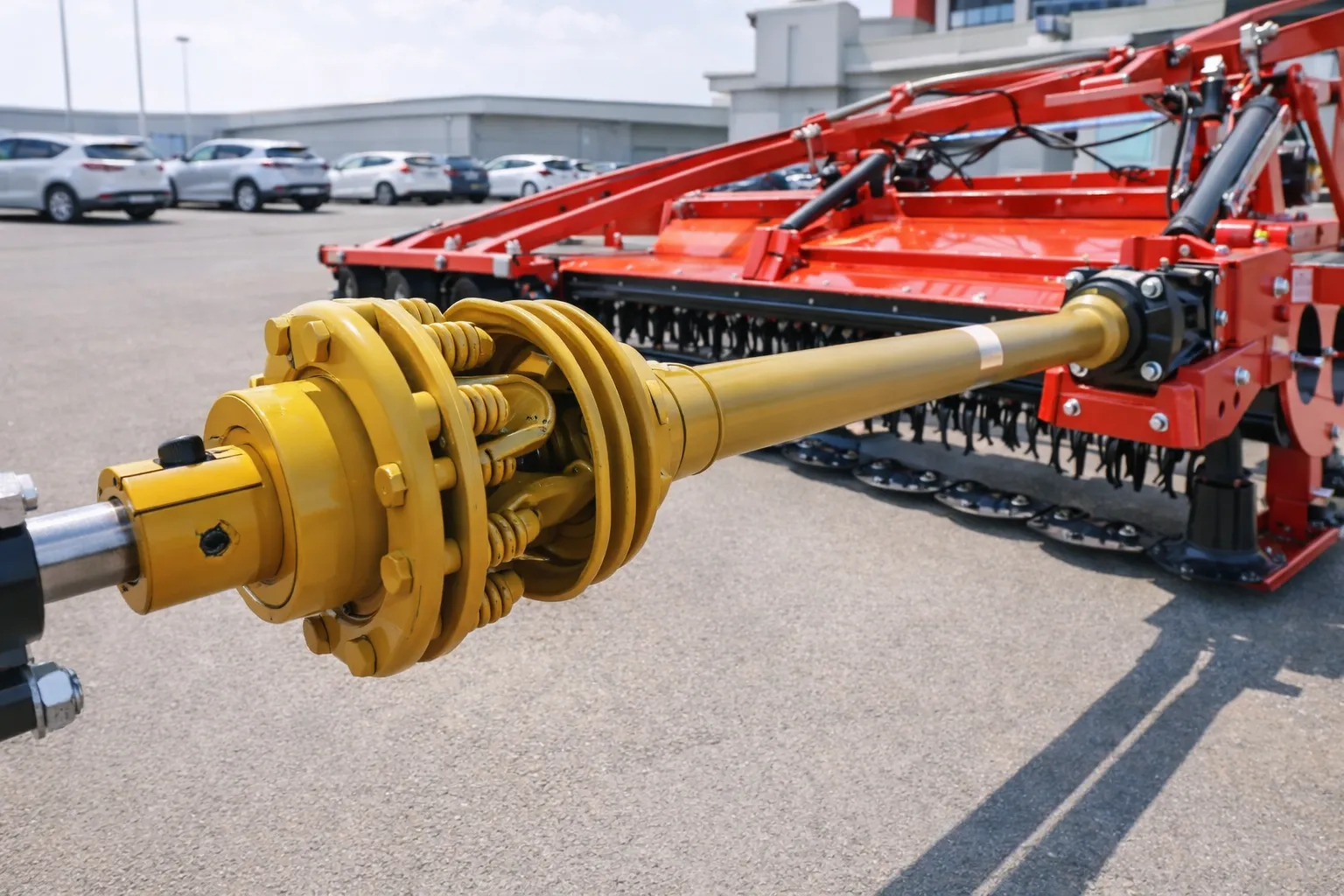
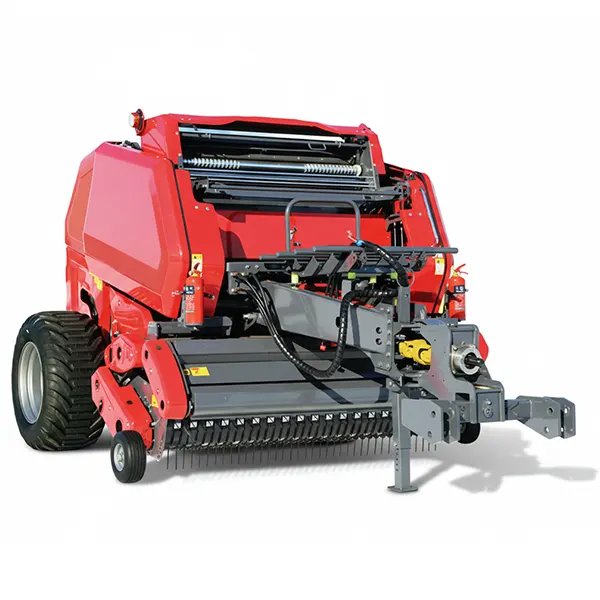
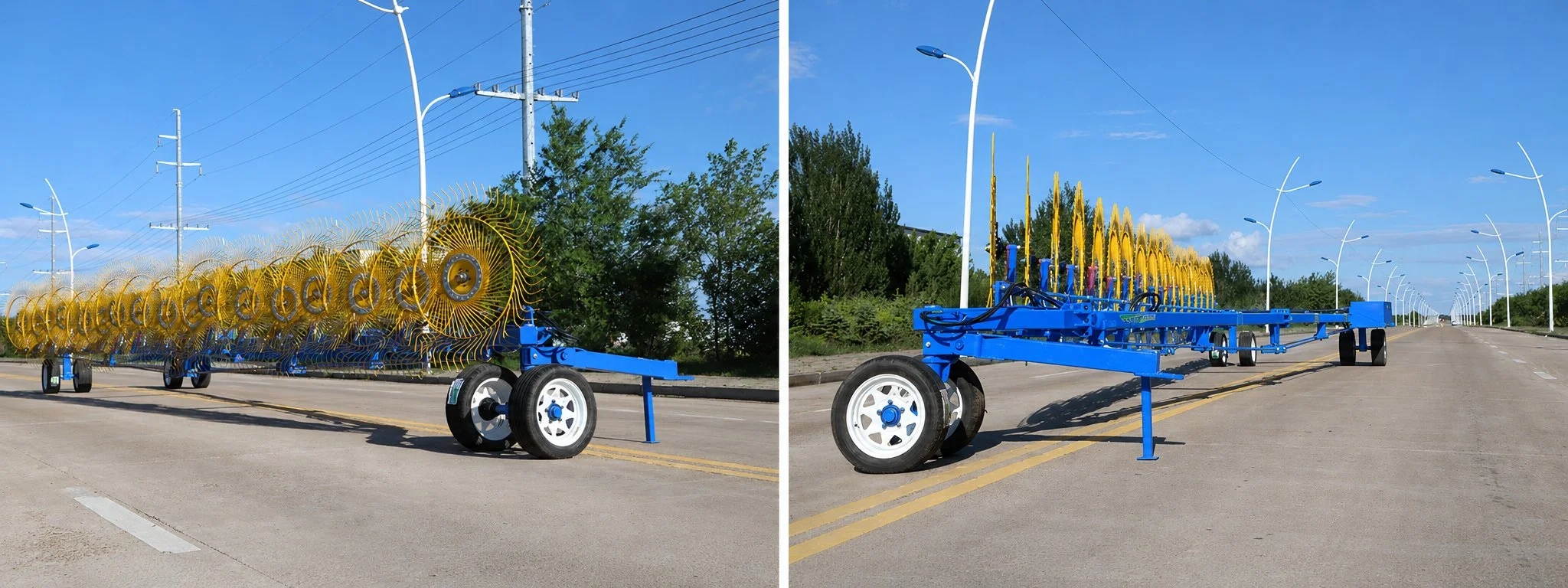
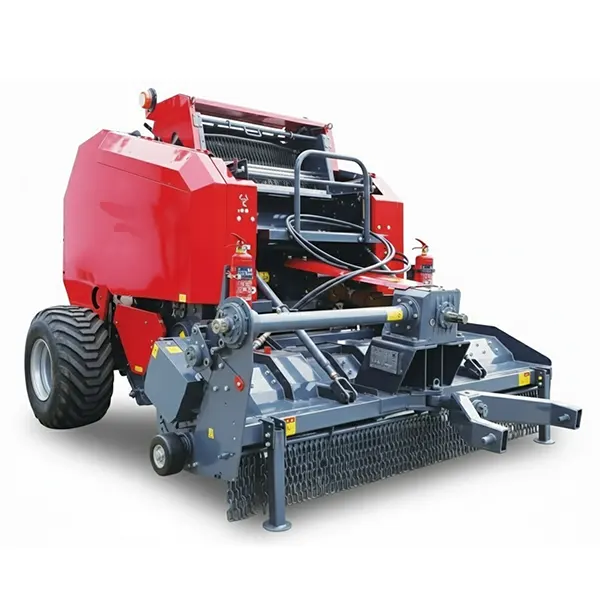
La qualité du matériel ne améliorer la qualité du foin Au-delà de ce que la culture et le calendrier de récolte peuvent offrir, cela détermine la limite de ce qui est réalisable. Une tondeuse qui laisse une coupe irrégulière et contaminée crée un qualité du foin Le rendement maximal du champ est inférieur à sa capacité de production. Une presse à balles dont les dents de ramassage usées passent sur les amas de feuilles, créant ainsi un plancher de pertes foliaires irrécupérable malgré une gestion rigoureuse du calendrier et du stockage. L'équipement constitue la contrainte déterminante du potentiel réel du champ pour la mise en balles.
Limite de qualité des équipements — Les limites de chaque machine
Potentiel de terrain
Un RFV de plus de 200 est possible avec un peuplement bien géré en fin de floraison.
Après la tonte
Tonte conditionnée : RFV préservé à 185–200 | Disque simple : 170–190
Après le ratissage
Bon timing de râteau : −5 RFV | Mauvais timing/agressif : −15 RFV
Après le pressage
Bonne presse à balles : −2–5 RFV | Pick-up usé : −10–15 RFV (perte de feuilles)
Après stockage
Filet d'emballage + coussinet : 160–175 livré | Ficelle pour sol nu : 130–150
Les barres sont proportionnelles et données à titre indicatif. Les valeurs RFV réelles dépendent de la culture, des conditions météorologiques et de l'état spécifique du matériel. Principe clé : chaque étape ne peut que réduire la valeur maximale fixée par l'étape précédente ; elle ne peut pas compenser les pertes supérieures à cette valeur.
Le boîte de vitesses agricole L'entraînement des courroies du ramasseur et de la chambre de la presse est l'élément mécanique qui détermine le plus directement si les performances physiques de la presse correspondent à ses spécifications. L'usure des roulements de la boîte de vitesses entraîne un désalignement de l'arbre, provoquant une vitesse d'entraînement irrégulière des courroies. C'est la cause la plus fréquente des variations de densité et des défauts de ramassage, qui entraînent des pertes de feuilles et une qualité de balle médiocre, quelles que soient les pratiques agronomiques.
Questions fréquentes : Comment améliorer la qualité du foin
J'ai coupé en fin de bourgeonnement et pourtant, l'analyse du fourrage n'a donné que des résultats de grade 2. Qu'est-ce qui m'échappe ?+
Si le stade de coupe est correct mais que les analyses de fourrage indiquent systématiquement une note de 2, examinez les trois causes principales suivantes : (1) Contamination du sol : vérifiez votre rapport d’analyse de fourrage. La teneur en cendres doit être supérieure à 101 TP5T MS ; une valeur supérieure à 101 TP5T indique la présence de sol dans l’échantillon, ce qui dilue les protéines et l’énergie. Augmentez la hauteur de coupe et réduisez l’agressivité des dents du râteau pour y remédier. (2) Dommages causés par la chaleur : vérifiez la teneur en protéines insolubles dans un détergent acide (ADICP) sur votre rapport ; une valeur supérieure à 71 TP5T indique la présence de protéines liées par la chaleur lors du pressage à l’état humide. Abaissez l’humidité cible de pressage à moins de 181 TP5T et améliorez le drainage du site de stockage. (3) Perte de feuilles lors du ratissage : si la teneur en cendres est normale et les dommages causés par la chaleur sont faibles, la cause restante est généralement un ratissage à une humidité insuffisante. Ratissez plus tôt dans la journée (avant 10 h) lorsque la rosée a ramolli les feuilles mais que le soleil a séché l’humidité en surface.
L'application d'engrais a-t-elle une incidence sur les résultats des analyses fourragères ?+
Oui, de manière significative pour l'azote sur le foin de graminées, mais très peu pour la luzerne. Sur le foin de graminées, la fertilisation azotée (au-delà de 80 kg N/ha) augmente sensiblement la teneur en protéines brutes : une augmentation de 1 à 2 points de pourcentage de protéines brutes par 40 kg N/ha supplémentaires constitue une réponse agronomique typique. Attention : cet apport d'azote accroît la teneur en nitrates dans le foin de graminées coupé précocement et fortement fertilisé, ce qui exige une vigilance accrue pour l'alimentation du bétail lorsque les analyses de nitrates dépassent 500 ppm. Sur la luzerne, la fertilisation azotée n'améliore pas la qualité, car la luzerne fixe l'azote atmosphérique grâce à sa symbiose racinaire avec Rhizobium ; un apport supplémentaire d'azote dans le sol inhibe en réalité l'activité des nodules et n'apporte qu'une faible augmentation du rendement et de la qualité. La fertilisation potassique sur la luzerne, en revanche, influence la santé du peuplement et la densité des tiges, ce qui a un impact indirect sur le rapport feuille/tige et la qualité apparente.
Dans quelle mesure la pluie sur le foin coupé affecte-t-elle les résultats de l'analyse du fourrage ?+
La pluie sur le foin coupé provoque des pertes par lessivage des nutriments les plus solubles dans l'eau, principalement les glucides solubles dans l'eau (GSE) et certaines fractions azotées non protéiques. Un seul épisode de pluie de 25 mm sur de la luzerne andainée à un indice d'humidité de 50% peut réduire la teneur en GSE de 3 à 8 points de pourcentage de la matière sèche (MS). Comme les GSE sont la fraction qui détermine l'énergie digestible et présentent une faible teneur en ADF (fibres au détergent acide), cette perte réduit directement la valeur nutritive résiduelle (VNR). L'importance de cette perte dépend de l'intensité et de la durée de la pluie, ainsi que de l'humidité de la culture au moment de l'averse : un foin plus humide (indice d'humidité supérieur à 50%) perd proportionnellement moins d'éléments nutritifs car sa surface sèche par unité de masse exposée au lessivage est plus faible. Le foin sec (indice d'humidité inférieur à 30%) au moment de la pluie représente le pire scénario : la surface sèche de la culture absorbe l'eau puis la libère à l'arrêt de la pluie, entraînant avec elle les sucres dissous présents à la surface de la tige. Si la pluie interrompt votre période de séchage, ajoutez 1 à 3 heures de temps de séchage supplémentaire avant la mise en balles et abaissez votre taux d'humidité cible pour compenser toute humidité résiduelle dans la couche inférieure de l'andain.
Existe-t-il une différence de qualité mesurable entre le foin emballé dans un filet et le foin lié par de la ficelle au moment de la distribution (après stockage) ?+
Oui, et c'est particulièrement marqué dans la couche externe de 75 à 150 mm de la balle. Après 6 à 9 mois de stockage en extérieur, au moment de l'alimentation, une balle ficelée présente généralement une humidité de 15 à 251 TP5T dans sa couche externe, contre 10 à 151 TP5T pour une balle comparable enrubannée et stockée dans les mêmes conditions. La couche externe de la balle ficelée présente également un RFV nettement inférieur (augmentation de l'ADF due à la dégradation des fibres en présence d'une humidité persistante), tandis que l'intérieur est globalement préservé. Concrètement : une balle ficelée présentant un RFV de 150 sur un échantillon composite aura un intérieur de meilleure qualité et un extérieur de qualité nettement inférieure à la moyenne. Les balles enrubannées présentent un profil de qualité plus homogène de l'extérieur vers l'intérieur.
Ma luzerne de troisième coupe donne toujours de moins bons résultats que celle de deuxième coupe, même si je l'ai coupée plus tôt. Pourquoi ?+
La diminution du RFV (taux de renouvellement de la tige) de la luzerne de troisième coupe par rapport à celle de deuxième coupe au même stade s'explique généralement par trois causes principales. Premièrement, la plante constitue des réserves de glucides racinaires pour l'hiver ; la croissance de la troisième coupe privilégie l'allocation de glucides au collet et à la racine pivotante plutôt qu'à l'expansion foliaire, ce qui se traduit par un rapport tige/feuille plus élevé à tout stade de croissance. Deuxièmement, les conditions de séchage en fin de saison peuvent être défavorables (journées fraîches et courtes, rosée matinale persistant jusqu'en milieu de journée), entraînant un séchage plus long et des pertes par respiration plus importantes. Troisièmement, et c'est le plus fréquent : le stress hydrique du sol en plein été provoque une croissance plus courte et plus ramifiée de la troisième coupe avant le stade de la fin du bourgeonnement. Si les plantes plus courtes au même stade sont systématiquement de qualité inférieure, il est conseillé d'ajuster la période de repos avant la troisième coupe afin de favoriser une croissance plus importante ; un repos plus long avec une humidité du sol adéquate permet d'obtenir une troisième coupe plus feuillue et de meilleure qualité dans la plupart des climats américains.
Quelle est la chose la plus importante que je puisse faire aujourd'hui pour améliorer la qualité du foin lors de la prochaine coupe ?+
Si vous ne disposez pas d'une analyse de fourrage certifiée récente de cette saison, veuillez en soumettre une dès aujourd'hui. Cette analyse coûte entre $15 et $25 et vous indique précisément quel paramètre limite votre score de qualité : ADF, NDF, protéines brutes (PB) ou une combinaison de ces paramètres. Sans ces données, tout investissement pour améliorer votre fourrage relève de la conjecture. Si vous disposez déjà d'une analyse récente et que votre ADF est supérieur à 30% : l'action la plus efficace consiste à effectuer la prochaine coupe plus tôt, même si cela implique de couper 5 jours plus tôt que ce que vous jugez approprié. Si votre PB est inférieur à 17% mais que votre ADF est acceptable : la rétention des feuilles lors du fanage est le principal problème ; avancez le fanage dans la journée et réduisez votre vitesse de déplacement de 1 à 2 km/h. Si votre ADF et votre PB sont tous deux acceptables mais que votre RFV semble toujours inférieur aux attentes : envoyez un deuxième échantillon pour confirmation et vérifiez la présence d'une contamination du sol (taux de cendres élevé sur le rapport) car il s'agit du facteur limitant la qualité.
Système complet de contrôle de la qualité du foin — Entrepôt de Californie
Indiquez-nous vos résultats actuels et votre objectif de note — nous vous fournirons l'équipement adapté. Améliorer la qualité du foin Score par score
Faucheuses-conditionneuses, andaineurs, presses à balles rondes et enrubanneuses : tout est adapté à vos exigences de qualité selon le circuit de distribution. Prix direct usine, expédition des pièces le jour même et aucune marge concessionnaire sur aucun modèle de notre gamme.
✔ Analyse de la qualité
Niveau cible adapté à l'équipement
✔ Prix direct usine
Aucune marge concessionnaire sur aucun modèle
foragebaler.com/…uct-category/round-ballerMettre en place un système de qualité du foin
Éditeur : Cxm