Bale Logistics Guide

Round Bale Handling: Transport Equipment, Spears, and Carriers

Every handling event between the baler and the feedbunk is an opportunity for DM loss, silage film puncture, or physical damage that reduces bale value. A well-designed handling system moves bales with the minimum number of contacts, the correct equipment for bale weight and destination, and the practices that prevent the film damage that causes silage spoilage. This guide covers every piece of equipment in the post-baler handling chain and the specifications that matter for each.

Spear Types and Ratings

Bale Spears: The Foundation of Every Round Bale Handling System

A bale spear is a pointed steel probe that penetrates the bale end face to provide the lift point. It is the most basic and most widely used round bale handling attachment — virtually every round bale handling sequence includes at least one spear operation. Selecting the right spear and using it correctly prevents the two most common handling damage events: bale face tearing (which increases storage DM loss for net-wrapped hay) and silage film puncture (which initiates aerobic spoilage for wrapped silage).

Single-tine spear

One large-diameter (2.5–3.5 inch) central tine with a tapered point. The simplest and lowest-cost option. Disadvantage: the single contact point concentrates all bale weight on one penetration, which can allow the bale to spin on the spear during lifting and transport. Best suited for dry hay bales where spinning causes cosmetic damage rather than safety risk. Not recommended for silage bales where a spinning bale could widen the film puncture.

Double-tine and multi-tine spear

Two or three tines mounted on a common base plate, penetrating the bale at separated entry points. The multiple penetrations distribute the bale weight and prevent spinning. Multi-tine spears are the standard for commercial silage bale handling — the anti-rotation quality reduces film tearing at penetration points. The trade-off is more total film penetration per bale (2–3 holes vs 1), but each hole is smaller and less likely to enlarge during transport.

Spear capacity ratings

Every bale spear has a rated lifting capacity — confirm your spear rating exceeds your maximum bale weight. A silage bale at 60% moisture in a 5×5 configuration can weigh 1,400–1,600 lbs. A spear rated at 1,200 lbs is undersized for this application. Operating an undersized spear at or above rated capacity causes bale base tearing and eventual spear tube failure. The loader’s capacity rating also applies — confirm the front-end loader’s maximum lift capacity is appropriate for the heaviest bale type at your operation.

≤6 mph
Maximum transport speed with spear-mounted bale to prevent bale slippage from inertia forces
Never
Transport silage bale on a public road with spear — film integrity risk; use a trailer or grapple for road transport
Patch on removal
Apply silage repair tape immediately over spear holes after placing silage bales in storage

Bale Grapples: The Premium Handling Tool for Silage
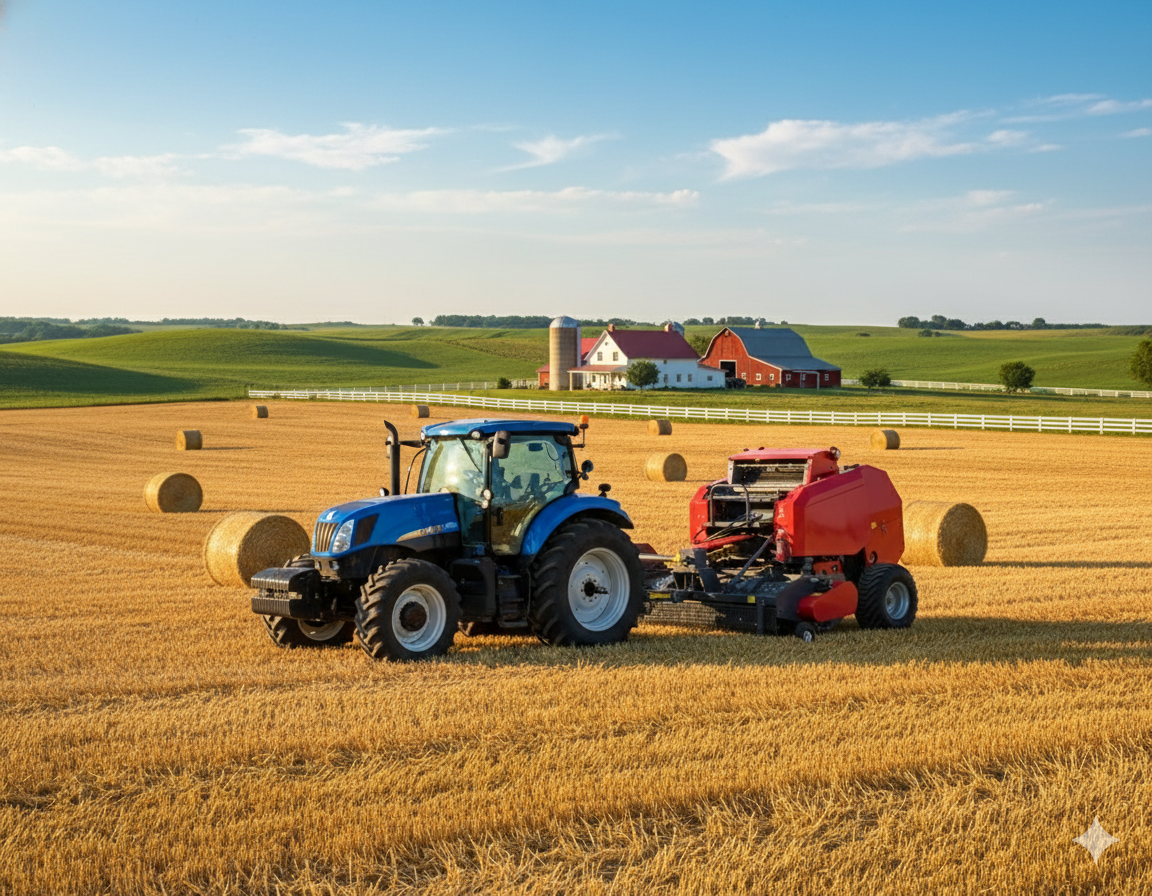
round baler producing silage bales — bale grapple attachments squeeze the bale from the outside without film penetration, making them the preferred handling tool for silage bales where maintaining film integrity is critical to fermentation quality

A bale grapple squeezes the bale from its outer diameter using two or four hydraulically actuated arms — it lifts and carries without penetrating the film at all. For silage bale handling, a grapple is the premium option that eliminates all spear-hole film damage. The downside: higher attachment cost ($800–$2,500 vs $150–$400 for a spear), requires compatible hydraulic remotes on the loader, and gripping pressure must be calibrated — excessive squeeze pressure on a round silage bale can collapse the bale cross-section and rupture the film from compression rather than puncture.

When to choose a grapple over a spear
  • Operations making 100+ silage bales per season where cumulative spear hole patching is time-consuming
  • Premium dairy silage where any film damage risk is unacceptable
  • Large 5×5 or 5×6 bales where the weight-to-spear-capacity margin is tight
  • Operations that also handle net-wrapped dry hay bales — grapple works on both without changing attachments
Grapple operation considerations
  • Calibrate hydraulic pressure to the minimum that lifts the bale — excess pressure risks compression damage to silage film
  • Approach bales squarely from the end — grapples that contact the bale at an angle apply uneven force that can roll the bale off the grapple at height
  • Do not swing a grapple-held bale at speed — inertia forces exceed the grapple’s friction grip at high swing speeds
  • Grapples require two hydraulic remote couplings (open and close) — verify your loader tractor has adequate remote capacity

Bale Carriers Trailers: Field-to-Storage Efficiency

The most labor-intensive phase of round bale handling is the field-to-storage transport — moving dozens or hundreds of bales from where they ejected to where they will be stored or fed. A front-end loader moving bales one at a time (via spear) covers this distance 20–30 times more slowly than a purpose-built bale carrier that moves multiple bales per trip. For operations with long field-to-storage distances or high bale volumes, a bale carrier reduces transport labor by 50–70%.

3-point carrier (rear mount)
A rigid carrier with 2–4 spear positions that mounts on the tractor’s 3-point hitch. Lifts and transports multiple bales simultaneously by spearing each from the end and then travelling to storage. Lower capital cost than a trailer ($800–$2,000). Limitation: the tractor must reverse up to each bale, limiting field speed; rear-mounted carriers reduce tractor visibility rearward; maximum capacity typically 2–4 bales per trip.
Bale trailer (towed)
A towed trailer with loading ramps or pickup arms that allow bales to roll onto the trailer deck. Multiple bales (4–12 depending on size) per trip. Better road transport option than spear — bales are contained on the trailer deck with straps rather than balanced on a spear. Trailer with bale stakes is legal for road transport; spear-held bales are not on most public roads. The trade-off: higher capital cost ($2,000–$8,000); requires sufficient tractor HP to tow a loaded trailer on field terrain.
Self-propelled bale chaser
A dedicated self-propelled machine that follows the baler, picks up ejected bales, and accumulates them until a full load is ready for transport. Most common on large commercial operations in the western U.S. and Midwest where field-to-storage distances are long and bale volumes are high. Dramatically reduces the number of passes needed for field pickup. Capital cost ($18,000–$60,000+) justifies at production volumes above 1,000–2,000 bales per season.

Handling Silage Bales Without Film Damage
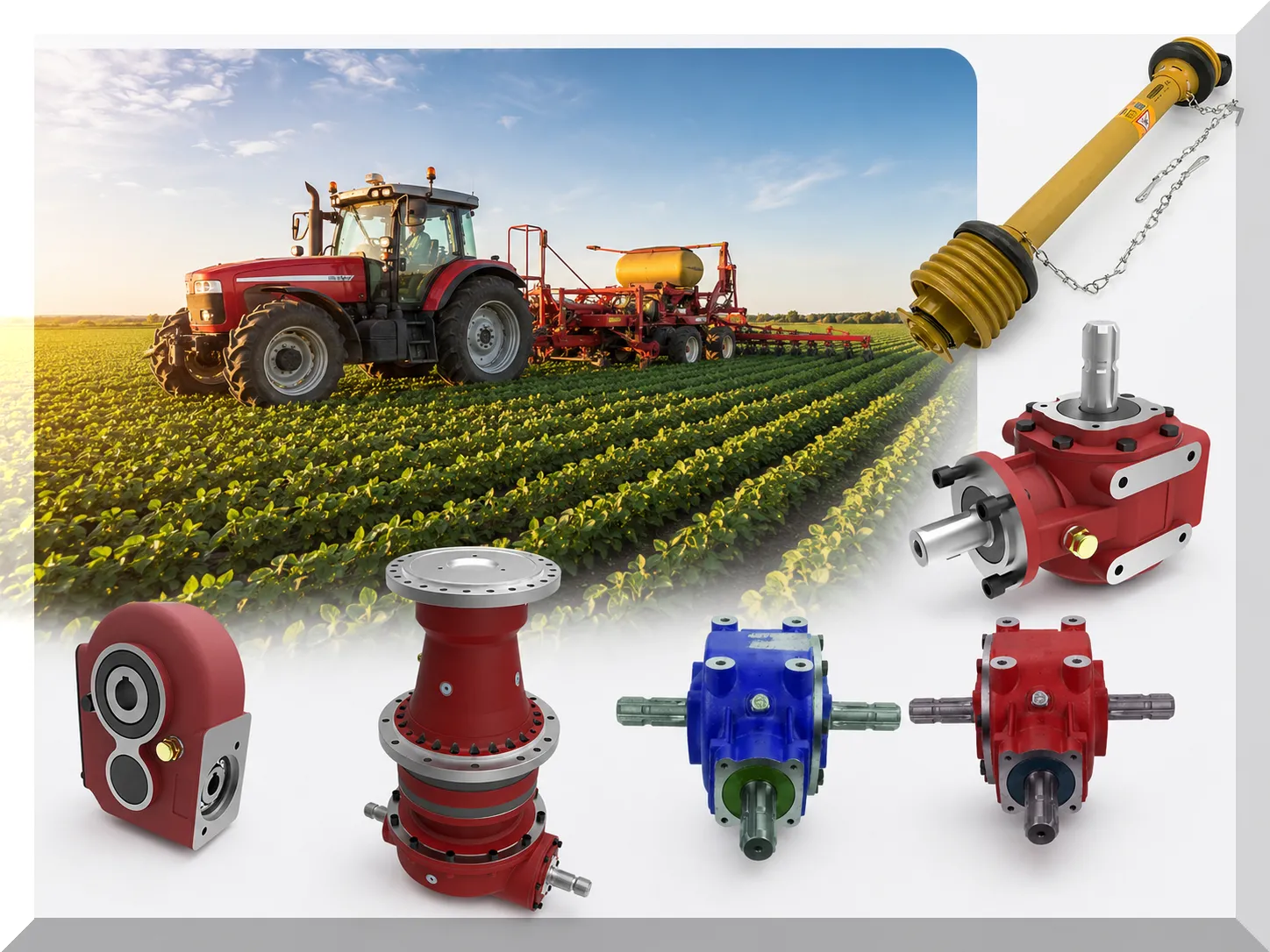
agricultural equipment drive components — bale handling equipment drive components including loader hydraulics must be sized to the peak bale weight and transport distance; undersized hydraulics slow the handling cycle and increase per-bale handling time

Silage bale film integrity from ejection to storage location determines whether the bale undergoes clean anaerobic fermentation or develops aerobic spoilage zones at each film damage event. The goal is to move bales from baler to storage with the minimum number of lift-and-set events and the cleanest film contact at each event.

Ideal storage placement workflow

Place the bale on its storage site in the same operation as the initial field pickup — baler ejects, loader picks up, drives directly to storage site, places bale. This “one-touch” approach requires the storage site to be within loader travel distance from the field. Reducing to one handling event rather than two (field-to-staging-area, staging-to-storage) cuts film damage risk in half.

Surface contact cautions

Silage bales rolling across rough surfaces — concrete with protruding aggregate, gravel, or stubble fields — accumulate surface abrasion damage on the film. Roll bales only on smooth surfaces or with a sacrificial contact layer (a length of conveyor belt on the concrete pad). Never allow a silage bale to contact sharp objects — set in place, don’t roll into position on surfaces with rocks or concrete protrusions.

Immediate repair protocol

Carry silage repair tape and inspect every bale as it is placed. Any visible puncture, scuff, or tear receives a tape patch before leaving that storage position. A 30-second repair at placement is worth 30 minutes of inspection and patching discovered 2 weeks later — and is 100% effective vs partial effectiveness when oxygen infiltration has already begun.

Bale Stack Arrangement and Site Management

How bales are arranged at the storage site affects both the efficiency of daily feedout and the long-term storage DM loss rate. Good site management prevents the ground-moisture infiltration and film damage from stacking that account for a significant proportion of storage losses.

Single-layer vs stacked storage

Single-layer storage on a gravel pad produces the lowest DM loss for outdoor storage — no bale-to-bale contact damage, good drainage under each bale, and easy film inspection. Stacking bales 2+ layers high increases storage density but creates contact zones between bales where net wrap or film damages can develop from compressive load. If stacking is necessary for space reasons, pyramid-stack with the bottom layer on a clean, gravel pad and inspect the contact zones at each placement.

Row orientation for access

Orient rows to allow end-access with the loader for FIFO (first-in, first-out) feedout. Bales stored in rows with no end-access require moving other bales to reach the oldest bales — additional handling events that add film damage risk. Plan row length and orientation before placing the first bale of the season so the complete stack arrangement serves both maximum storage and easy access through the feeding season.

The selection of the bale transporter attachment type — including single-bale rear-mount, multi-bale trailer, and self-loading configurations — with capacity and cost specifications is in the round bale transporter selection guide. The storage pad specifications, row spacing recommendations, and outdoor DM loss data by storage method are in the round bale storage guide. The loader hydraulic system specifications that determine handling cycle speed are in spécifications des composants de la boîte de vitesses agricole et de la prise de force.

Handling Efficiency: Calculating Labor Cost per Bale Handled

Handling Labor Cost Comparison — 500 Bales per Season, Field to Storage Site 0.5 Mile Away
Spear one at a time:
3 min/bale × 500 bales = 25 hrs × $22/hr = $550/season
3-point 3-bale carrier:
5 min/trip × 167 trips = 14 hrs × $22/hr = $308/season — 44% labor saving
8-bale trailer:
12 min/trip × 63 trips = 13 hrs × $22/hr = $286/season — plus trailer capital cost amortized over 10 yr

Handling labor is significant but often invisible in farm cost accounting — it rarely appears as a separate line item. Tracking it reveals that handling system upgrades often pay back quickly on moderate-volume operations.

Loader Tractor Selection for Bale Handling: Matching Lift Capacity to Bale Weight
commercial hay production facility — the loader tractor used for bale handling must be sized to lift the heaviest bale type the operation produces; running loader hydraulics at or near the rated limit accelerates pump wear and creates tip-over risk when loads are carried at height

The loader tractor’s rated lift capacity at full reach — not at the loader pivot — is the critical number for bale handling operations. Loader manufacturers publish “maximum lift capacity at pivot” and “at full reach” as separate specifications; the at-full-reach number is always lower and is the correct reference for carrying bales at the loader’s extended position during transport and stacking.

Minimum loader sizing by bale type
  • Dry hay 4×5 (700–900 lbs): loader rated at 1,200 lbs at full reach minimum
  • Dry hay 5×5 (900–1,200 lbs): loader rated at 1,600 lbs at full reach minimum
  • Silage 4×5 (1,000–1,400 lbs): loader rated at 1,800 lbs at full reach minimum
  • Silage 5×5 (1,200–1,600 lbs): loader rated at 2,200 lbs at full reach minimum
Stability margin at height

Carrying a bale at maximum loader height shifts the tractor’s effective center of gravity forward and upward, reducing rear-axle-to-front-axle weight ratio. Never carry bales at maximum height while travelling on sloped terrain — lower the loader to transport height (12–18 inches above ground) before moving more than 50 feet. The tractor’s tip-over risk is highest when a heavy bale is at maximum height on a side slope.

Round Bale Handling FAQs

How many times can I spear a silage bale before the film is too compromised to preserve properly?+
Each spear penetration creates a hole that must be sealed with repair tape to prevent O2 infiltration. The practical limit is not the number of penetrations per se — it is the cumulative area of unsealed film. A properly taped single-tine spear hole (15–20mm diameter) allows negligible O2 infiltration if patched immediately. Three such holes, properly patched, are also acceptable. Where problems arise: multiple spear penetrations near each other that tear or enlarge each other’s margins, and unpatch holes that accumulate. The rule for silage handling: every spear entry gets patched before the bale is left unattended. With this discipline, 2–3 spear events per bale across its handling life from field to feedout can be managed without significant fermentation compromise. Without patching discipline, even one spear hole initiates a spoilage zone within 48–72 hours in warm weather.
Can I move round bales with a skid steer loader, or does it require a full-size tractor loader?+
Skid steers are capable of handling round bales with appropriate attachments — a rated bale spear or grapple sized for the bale weight. Confirm the skid steer’s rated operating capacity and tipping load: a standard 2,000 lb rated operating capacity skid steer is adequate for dry hay 4×5 bales (700–900 lbs) but marginal for heavy silage 5×5 bales (1,400–1,600 lbs). The stability advantage of a skid steer’s low center of gravity makes it preferable to high-mast articulating loaders on uneven storage pad terrain. The primary limitation is speed — skid steer field speed is typically 6–8 mph vs 15–20 mph for a tractor loader, making field-to-storage transport slower on any significant distance. For storage yard handling on a concrete pad, skid steers are excellent. For cross-field transport, tractor loaders are faster.
What is the correct technique for loading bales onto a flat-bed trailer without a loading ramp?+
Loading round bales onto a flatbed trailer without a loading ramp is a two-person operation using a loader — one person operates the loader and one person manages the bale on the trailer deck. The loader lifts the bale and positions it over the trailer, then lowers it gently to the deck while the trailer-side person guides the bale end into position. The key technique: lower the bale to the trailer deck with the bale axis parallel to the trailer length (end-on to the trailer direction of travel) — bales stored this way are more stable under road transport because their axis of rotation is aligned with the direction of potential roll. Bales placed with their axis perpendicular to the trailer (cross-loaded) roll more easily under braking or cornering. Secure with bale stakes or ratchet straps rated for the bale weight regardless of transport distance.
My spear is rated at 1,200 lbs but my silage bales are weighing in at 1,400 lbs. What are my options?+
Three options: replace the spear with a higher-rated model (most straightforward — spears are relatively inexpensive at $150–$400); switch to a grapple attachment that grips the bale circumference and is rated for your bale weight; or reduce bale weight by adjusting the baler’s bale size setting to produce lighter bales. The first and third options are the most practical for most operations. Operating the existing spear at 117% of rated capacity (1,400/1,200) risks spear tube bending or weld failure at peak lift — particularly when the bale is at the loader’s maximum height where the moment arm is longest. This is not a minor safety margin issue — spear failures at height drop the bale suddenly and can damage the loader or present a safety hazard. Replace the spear before the next handling season.
What causes round bales to fall off the spear during transport?+
Bale loss from a spear during transport has three common causes: excessive transport speed (the bale’s inertia force during bumps or direction changes exceeds the friction grip of the spear); insufficient spear penetration depth (the spear did not fully penetrate to the specified depth, leaving less bearing contact to resist lateral forces); and wet bale face (silage or very fresh hay has less friction grip on the spear because the wet surface reduces the coefficient of friction between bale and steel). Prevention: limit transport speed to 6 mph on rough terrain; confirm full spear penetration at each pickup (the spear base plate should be in contact with the bale face); and if transport speeds or terrain is unavoidable at higher force levels, use a spear with a retention ring or bale-stop feature that prevents the bale from sliding back along the spear shaft.
How do I handle round bales during feeding without damaging a silage bale’s film before feedout?+
The film should not be cut or removed until the moment the bale is placed at the feedbunk for immediate consumption — not the day before, not several hours before. When the storage row is organized for FIFO access, lift the oldest bale with the grapple or spear (accepting one more film penetration), carry it to the feedbunk, lower it, and cut the film as you lower to allow the bale to settle at the feedbunk. Removing film and placing an unwrapped silage bale at the feedbunk hours before feeding allows aerobic deterioration to begin — especially in warm weather — reducing palatability and nutrient density of the first layer of silage the animals consume. If the operation’s feeding system requires removing film in advance (e.g., large TMR mixers that feed from pre-opened bales), limit the pre-open time to 2–4 hours maximum in summer conditions.
foragebaler.com round baler and silage system — complete baling and handling system guidance for each production volume and storage configuration

Get Handling System Recommendations for Your Bale Volume and Storage Setup

Tell us your annual bale volume, bale size, field-to-storage distance, and current loader equipment. We recommend the spear or grapple specification and carrier system that handles your bales with minimum damage and maximum efficiency.

Get Handling System Guidance

Éditeur : Cxm