
IL camera fissa vs pressa per balle rotonde a camera variabile Il dibattito è l'aspetto che più di ogni altro distingue gli acquirenti che fanno la scelta giusta da quelli che se ne pentono. È anche l'aspetto che riceve il trattamento più superficiale nella maggior parte degli articoli sulle attrezzature, dove la risposta viene solitamente ridotta a "fisso = dimensione della balla costante, variabile = diametro regolabile" e lasciata lì.
Tale inquadratura è tecnicamente accurata ma operativamente inutile. Le differenze reali, quelle che si manifestano nella qualità giornaliera delle balle, nei costi di manutenzione annuali e nel costo totale di proprietà quinquennale, vanno ben oltre il diametro delle balle. Questa guida copre tutto ciò che un'azienda rotopressa L'acquirente deve valutare attentamente la questione. Questa guida le affronta tutte.
La realtà meccanica: cosa descrivono realmente "fisso" e "variabile"
La tipologia di camera di pressatura non è una categoria di marketing. Descrive la struttura fisica della geometria di formazione delle balle. Comprendere tale geometria, anche a livello concettuale, permette di individuare immediatamente il modello più adatto alle diverse condizioni del campo, senza bisogno di spiegazioni da parte di un venditore.
Come una camera fissa crea densità nelle balle
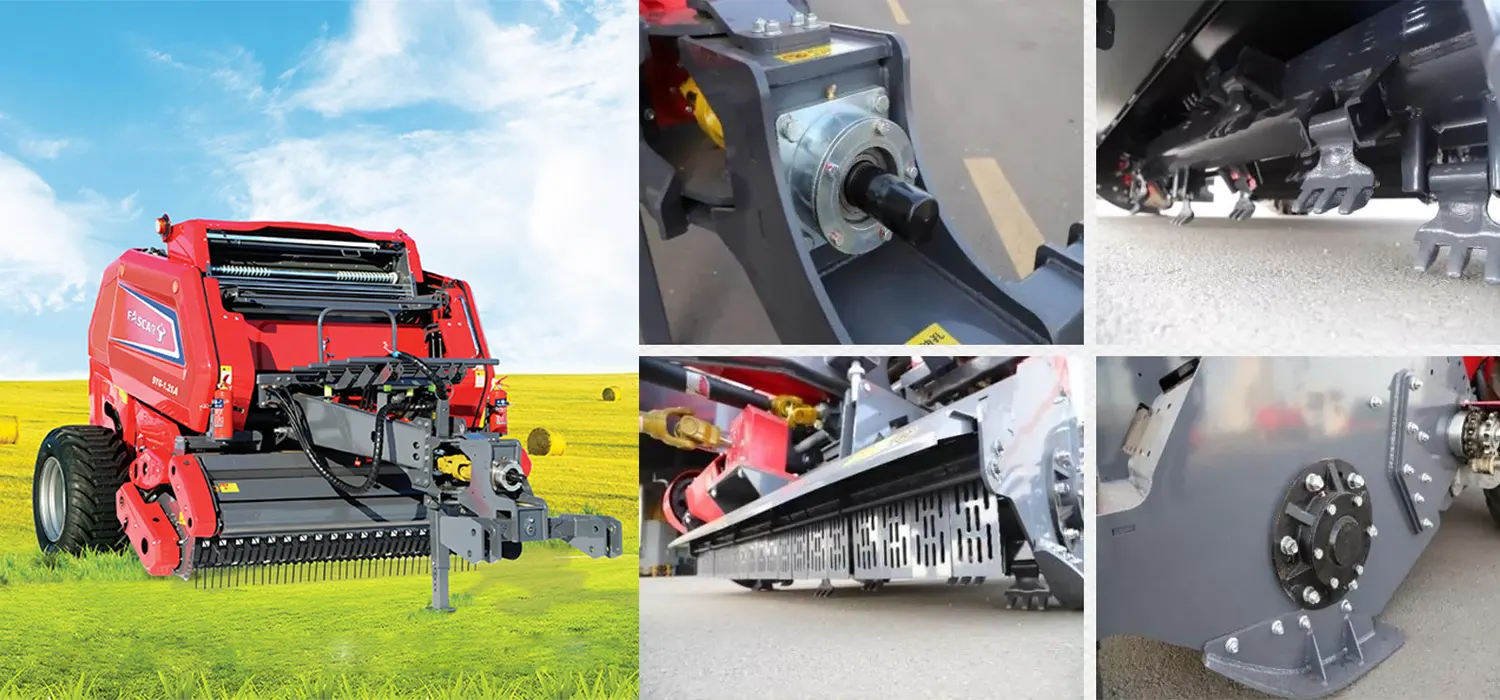
In un pressa a camera fissaLa geometria del sistema nastro-rulli è statica. La distanza tra la superficie interna della camera di pressatura (formata da un nastro ad anello che scorre attorno a una serie di rulli fissi) e l'asse centrale della balla in formazione non cambia durante la crescita della balla. Il materiale vegetale entra nella camera, il nastro lo avvolge e inizia una compressione progressiva man mano che la massa che si accumula preme verso l'esterno contro il nastro, che viene mantenuto in posizione interna dalla tensione della molla del tendicinghia o del cilindro idraulico.
Il risultato è una balla che costruisce prima la densità del nucleo. Poiché il materiale al centro della camera viene compresso prima che vengano aggiunti gli strati esterni, una tensione corretta pressa per balle rotonde a camera fissa Produce una balla con un centro duro e denso e un guscio esterno progressivamente meno denso. Questa gradazione non è un difetto, bensì un vantaggio strutturale per lo stoccaggio all'aperto, poiché il nucleo denso resiste all'assorbimento di umidità e gli strati esterni meno compressi forniscono un certo grado di isolamento termico attorno al nucleo durante gli eventi atmosferici.
→ Guscio
esterno progressivo
Come una camera variabile crea diametro e densità regolabili
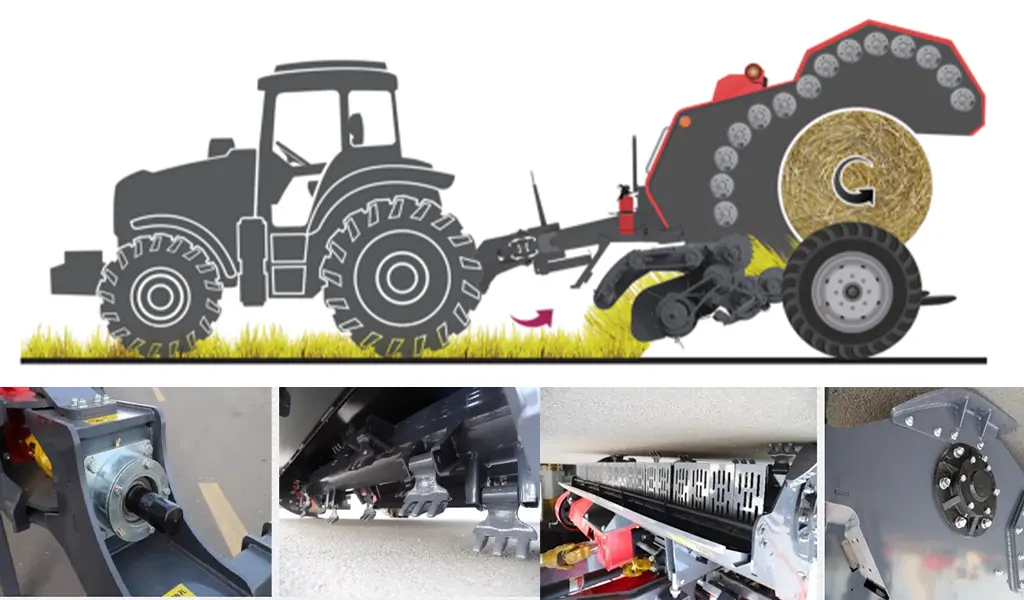
UN pressa a camera variabile Utilizza un nastro trasportatore che si espande attivamente man mano che la balla cresce. I rulli che definiscono il confine della camera interna non sono fissi, ma sono montati su bracci pivotanti o telai flottanti che si muovono verso l'esterno quando il materiale di scarto si accumula e preme contro la superficie interna del nastro. Questa espansione è regolata da un meccanismo a molla o idraulico che l'operatore può adattare per controllare sia il diametro della balla al momento dell'espulsione, sia la sua densità.
Poiché la camera si espande man mano che la balla si forma, il profilo di densità della balla in un pressa per balle rotonde a camera variabile La costruzione avviene in modo diverso rispetto a una camera fissa. Gli strati esterni vengono compressi fino a raggiungere approssimativamente la stessa densità degli strati interni, poiché la resistenza alla compressione del foraggio rimane pressoché costante durante la crescita della balla. Il risultato è una balla con una densità più uniforme dal nucleo alla superficie esterna, il che è preferibile per la conservazione dell'insilato ad alto contenuto di umidità (fermentazione uniforme in tutta la sezione trasversale della balla), ma produce una superficie esterna leggermente meno resistente alla penetrazione dell'umidità in condizioni di stoccaggio all'aperto su fieno secco.
Per tutto
Il problema del nucleo morbido: perché l'umidità del raccolto influenza le prestazioni della camera fissa
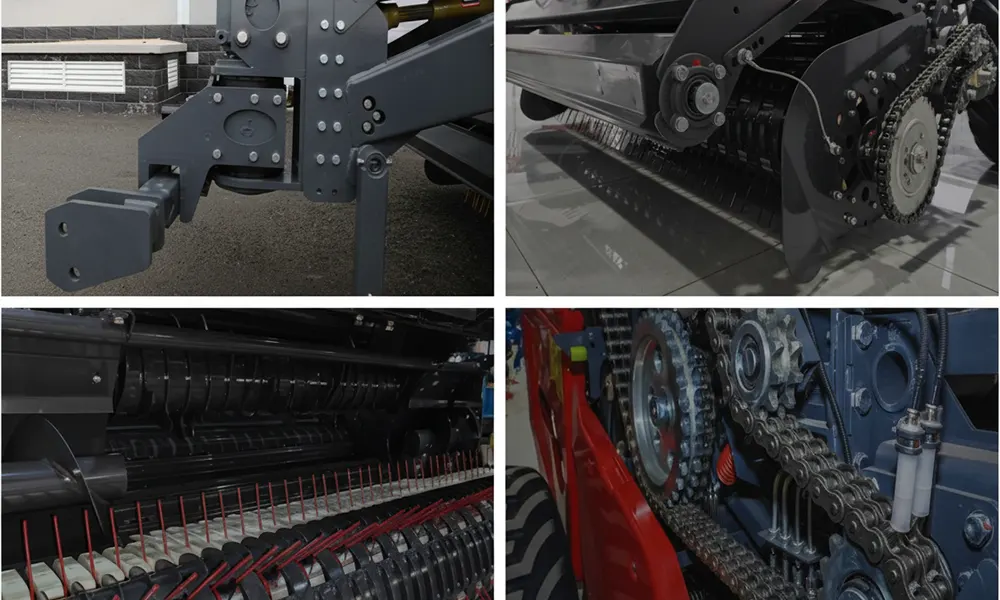
Esiste una modalità di guasto tecnico associata quasi esclusivamente a presse a camera fissa Operando ad alto contenuto di umidità, e raramente menzionata nei confronti tra attrezzature, la balla a nucleo morbido è un elemento fondamentale. Capire il suo funzionamento spiega perché il contenuto di umidità è la variabile più importante nella scelta del tipo di camera e perché il consiglio di "utilizzare una camera fissa per il fieno secco" non è casuale.
Costo totale di proprietà su cinque anni: ecco i numeri reali.
La decisione tra un camera fissa e un pressa per balle rotonde a camera variabile È sempre opportuno includere una proiezione dei costi di proprietà su 5 anni, non solo il prezzo di acquisto. Le macchine a camera variabile presentano un costo iniziale più elevato a parità di capacità produttiva, ma i costi operativi variano significativamente a seconda del caso d'uso. Il modello seguente utilizza come riferimento un'azienda agricola commerciale di medie dimensioni, con una superficie produttiva di 150-300 acri/anno.
| Categoria di costo | Pressa a camera fissa (es. 9YG-1.25) |
Camera variabile (es. 9YG-1.25A) |
Note |
|---|---|---|---|
| Prezzo di acquisto (relativo) | Base | +15–25% premium | Il meccanismo di espansione e l'idraulica aggiuntiva sono i principali fattori che incidono sui costi. |
| Costo annuale della cintura (300 ac) | Inferiore | Comparabile | I tassi di usura delle cinghie sono simili; le cinghie a camera variabile potrebbero avere una durata leggermente inferiore nell'utilizzo per l'insilato. |
| Servizio annuale del meccanismo di espansione | Nessuno | Cuscinetti del braccio di articolazione, controlli dei sensori, guarnizioni idrauliche (~$80–$150/anno) | Vantaggio della camera fissa: l'assenza di un meccanismo di espansione significa un minor numero di interventi di manutenzione annuali. |
| Risparmio di valore della sostanza secca (utilizzo insilato) | — | $300–$700/anno a 200 balle | La camera a volume variabile evita la differenza di perdita di sostanza secca 5–12% nelle balle ad alto contenuto di umidità con nucleo morbido; un reale vantaggio economico per i programmi di insilamento |
| Valore di flessibilità del mercato (dimensione della balla) | Nessuno | Specifico per l'acquirente | Gli appaltatori personalizzati che possono adattare le dimensioni delle balle ai caricatori dei diversi clienti applicano tariffe premium; il diametro fisso limita questo |
| differenziale di rivendita a 5 anni | Divario minore al momento della rivendita | Valore residuo più elevato | I modelli a camera variabile mantengono una percentuale maggiore del prezzo di acquisto a 5 anni grazie al premio di versatilità sul mercato dell'usato. |
Raccomandazioni specifiche per ogni coltura: cosa scelgono realmente gli agronomi e i contoterzisti
Pressa per balle rotonde Le raccomandazioni relative al tipo di camera di pressatura variano a seconda della coltura, poiché la struttura della coltura, l'umidità e il comportamento di compattazione durante la pressatura differiscono a sufficienza da modificare il vantaggio in termini di prestazioni. Le schede seguenti riflettono quanto riportato costantemente dagli operatori esperti che gestiscono ciascuna coltura su scala commerciale, e non obiettivi di progettazione teorici.
Confronto tecnico completo: tutte le variabili che contano nella pratica
La tabella seguente riassume tutte le variabili prestazionali e operative che i produttori di fieno commerciali e i contoterzisti specializzati nella pressatura del fieno con esperienza ritengono rilevanti per le decisioni, e non solo le sei specifiche che compaiono nelle tabelle comparative standard.
| Variabile | Camera fissa | Camera variabile |
|---|---|---|
| Controllo del diametro delle balle | Definito dalla geometria: coerente, non regolabile. | Regolabile dall'operatore, in genere da 0,9 a 1,8 m |
| Profilo di densità delle balle | Nucleo denso, guscio esterno progressivo | Anche attraverso la sezione trasversale |
| Consistenza della forma della balla | Eccellente: la geometria è invariante | Buono — varia in base all'impostazione dell'umidità |
| Prestazioni dell'insilato ad alto contenuto di umidità (>55%) | Rischio soft-core: qualità ridotta del DM | Progettato per questa applicazione |
| Fieno secco (<20% di umidità) | Ottimale: massimo beneficio della densità con nucleo centrale in primo piano | Funziona bene, ma non offre vantaggi specifici. |
| Compatibilità con la rilegatura a rete | Sistema di avvolgimento a rete standard | Avvolgimento a rete e/o spago sulla maggior parte dei modelli |
| Complessità della manutenzione annuale | Inferiore — nessun meccanismo di espansione | Più in alto: giunti di dilatazione, sensori, guarnizioni |
| Prezzo di acquisto (stessa classe di output) | Inferiore | +15–25% premium |
| mantenimento del valore di rivendita per 5 anni | Moderare | Maggiore versatilità: premio nel mercato dell'usato |
| Flessibilità del tipo di coltura | Ideale per le coltivazioni monocolturali | Multicoltura, multistagione, multimercato |
| Versatilità di imballaggio personalizzata | Limitato — dimensione fissa della balla | Alto — si adatta alle attrezzature di carico di ogni cliente |
La nostra gamma: quale modello utilizza quale camera e perché è stato progettato in quel modo
| Modello | Tipo di camera | Bale Range | HP | Motivazione della progettazione |
|---|---|---|---|---|
| 9YG-1.0C | Fisso | 1,0 × 1,0 m | ≥ 40 CV | Modello compatto per piccole aziende e trattori compatti: la camera fissa mantiene costi e complessità adeguati alle dimensioni. |
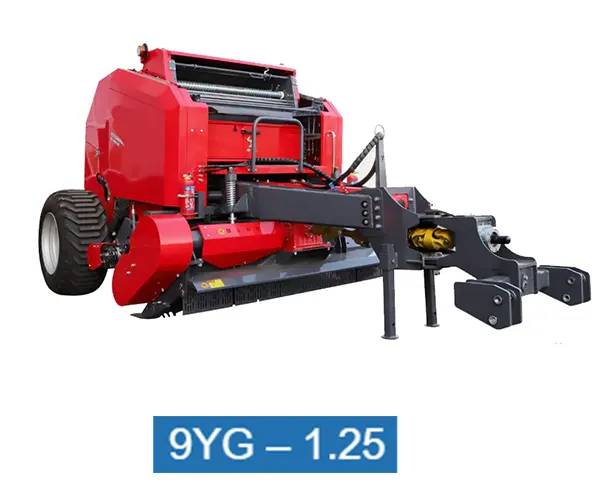
| 9YG-1,25 | Fisso | 1,25 × 1,25 m | 60–80 CV | La configurazione di pressa per fieno monocoltura più diffusa nella fascia media; forma della balla uniforme, bassa manutenzione, ideale per i programmi di fienagione di erba medica. |
| 9YG-1.25A | Variabile | 0,9–1,5 × 1,25 m | 75–100 CV | Progettata per programmi di coltivazione multipla o di insilato più fieno: ideale per gli operatori che necessitano di un'unica macchina per gestire sia la stagione del fieno che quella dell'insilato. |
| 9YG-2.24D Base/Classic | Variabile | Fino a 2,24 m di diametro. | 100–130 CV | Categoria commerciale: fieno per l'allevamento di bovini da latte, esportazione, pressatura personalizzata. Camera a volume variabile necessaria per gestire in modo affidabile l'intera gamma di umidità dei programmi di fienagione commerciali ad alta produttività giornaliera. |
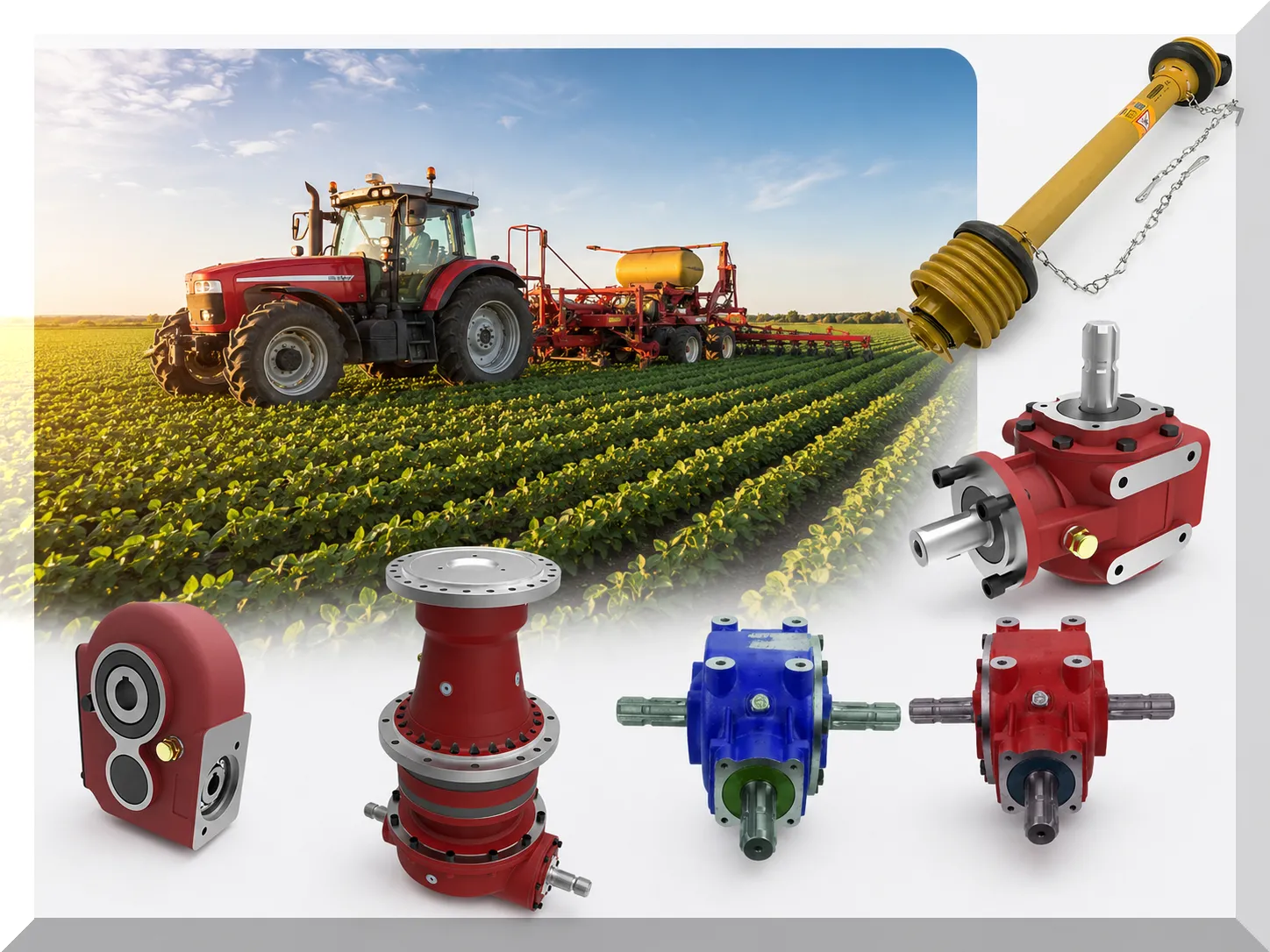
Una nota tecnica sulla trasmissione: camera variabile rotopressa Le macchine con potenza nominale commerciale (100+ CV) impongono picchi di coppia PTO istantanei più elevati rispetto alle macchine a camera fissa della stessa potenza nominale, perché la resistenza del meccanismo di espansione cambia con la crescita della balla. Una potenza nominale corretta riduttore a camera variabile È necessario adattarsi a queste variazioni dinamiche di carico: la stessa coppia nominale continua che funziona su una macchina a camera fissa potrebbe essere al limite su un'applicazione a camera variabile alla stessa potenza. Verificare le specifiche di coppia del riduttore rispetto alla richiesta di picco della presa di forza della pressa, non solo alla sua potenza media nominale.
Consulta le schede tecniche complete e la disponibilità attuale di tutti i modelli nel nostro modelli di presse rotopresse pagina. Se la configurazione del rastrello e le dimensioni dell'andana non sono ancora ottimizzate per il modello che stai considerando, la nostra attrezzatura per rastrellare il fieno Questa sezione illustra come abbinare la larghezza di lavoro in modo da evitare che il raccolto rimanga a terra a causa di una discrepanza tra andana e raccoglitore.
Due scenari operativi reali: la risposta corretta è diversa per ciascuno

Coltivate erba medica per la rivendita a un negozio di mangimi a $90–$110 per balla. Effettuate tre tagli all'anno, per un totale di 2.200–2.500 balle. Utilizzate un trattore John Deere 5075E da 75 CV. Imballate a secco: il primo taglio a 14–18%, il secondo e il terzo a 16–20%.
Per una rivendita di fieno pulito e asciutto, è sufficiente che le balle abbiano un peso e una forma uniformi. La camera fissa consente di ottenere questo risultato a costi iniziali inferiori, con una manutenzione annuale ridotta e una resistenza agli agenti atmosferici equivalente o superiore a quella del fieno a nucleo denso, se conservato all'aperto. La camera a umidità variabile, invece, complica la situazione senza apportare alcun beneficio qualitativo a questo livello di umidità.
Ti occupi della pressatura per 18 aziende agricole clienti, producendo fieno di erba medica, insilato d'erba, stocchi di mais e segale invernale come coltura di copertura. Il contenuto di umidità varia da 14% a 72% a seconda del cliente e della stagione. Utilizzi una mietitrebbia Case IH Farmall 105C. I clienti desiderano balle di dimensioni adatte alle forche del loro caricatore.
La sola variabilità dell'umidità esclude la camera fissa: i clienti che utilizzano insilati con un'umidità superiore a 55% necessitano di una camera variabile per una qualità adeguata delle balle. La regolazione del diametro consente di adattare l'attrezzatura di carico a ciascun cliente e di applicare un sovrapprezzo per il servizio. La versatilità in più stagioni compensa ampiamente il sovrapprezzo di acquisto in tre stagioni.
Autovalutazione pre-acquisto: cinque domande che determineranno la tua risposta
Se rispondi Sì a una qualsiasi delle prime tre domande, una camera variabile rotopressa è la scelta corretta per la tua operazione. Se rispondi No a tutte e tre e Sì a entrambe le ultime due, la camera fissa è la scelta più conveniente.
Imballate colture con un contenuto di umidità superiore a 50% durante l'anno?
Ciò include insilato d'erba, fieno insilato, erba medica ad alto contenuto di umidità, insilato di mais a pianta intera, segale invernale e qualsiasi coltura di copertura imballata fresca. Una stagione di insilamento con una macchina a camera fissa comporta il rischio di insilato a nucleo morbido descritto sopra. Se la risposta è Sì, la camera variabile non è un'opzione.
Eseguite l'imballaggio per più clienti con diverse configurazioni di caricatori o movimentatori di balle?
Se le aziende agricole dei clienti utilizzano sia caricatori per balle grandi che movimentatori per balle piccole, una camera a diametro fisso produce un diametro che funziona bene per alcuni clienti e male per altri. Una camera a diametro variabile consente di impostare il diametro della balla all'inizio di ogni lavoro per il cliente.
Avete intenzione di aumentare la superficie coltivata o la diversità delle colture nella vostra azienda nei prossimi 5 anni?
Una macchina a camera fissa acquistata oggi per l'insilato di erba medica essiccata diventa un limite se si aggiunge un programma di insilamento al terzo anno. Acquistare ora una macchina a camera variabile consente di gestire questa crescita senza dover sostituire la macchina.
L'intera vostra attività si basa su un'unica coltura di fieno secco con umidità prevedibile?
Le aziende agricole monocolturali specializzate nella produzione di fieno secco, con un'umidità costante al momento della pressatura, rappresentano l'ambiente ottimale per la pressa a camera fissa. In questo contesto, tutti e quattro i vantaggi della pressa a camera fissa – uniformità della forma delle balle, semplicità di manutenzione, costo di acquisto e densità con il nucleo in primo piano – sono attivi simultaneamente.
Il vostro deposito è coperto, oppure le balle sono impilate con il contatto del pavimento limitato?
Il vantaggio della camera fissa con nucleo denso è più prezioso per lo stoccaggio all'aperto. Se lo stoccaggio avviene in un capannone coperto o in un piazzale con barriere a terra, il vantaggio della resistenza agli agenti atmosferici esterni si riduce e altre variabili diventano determinanti nella decisione.
Domande frequenti
Ottieni la raccomandazione corretta per la tua specifica coltura e attività
Non sai quale tipo di camera sia quello giusto?
Comunicaci la tua coltura principale, il livello di umidità al momento dell'imballaggio e la superficie annua coltivata: ti daremo una risposta diretta.
Il nostro team con sede in California analizza il tipo di coltura, il profilo di umidità, la potenza del trattore e il volume annuo di balle prodotte, e ti indica direttamente quale tipo di camera di pressatura – e quale modello specifico – è economicamente più vantaggioso per la tua attività. Nessuna indicazione generica e semplicistica, nessuna strategia di vendita orientata esclusivamente al profitto.
Camera fissa o variabile, adattata al tuo intervallo di umidità
HP, gancio di traino, PTO verificati dal tuo modello e numero di serie
Nessun intermediario, documentazione ISO 9001.
Documentazione di fatturazione per la deduzione delle spese del primo anno
Redattore: Cxm


