Mowing Equipment Reference

Hay Mower Cutting Height and Blade Wear: Setup and Seasonal Guide

Cutting height is the most consequential mower adjustment you make, and most operators never change it from whatever the previous owner set. Too low: blades contact soil, contaminating hay with ash that fails elevator specifications and ruins forage test results. Too high: significant yield is left standing, and alfalfa crown buds are exposed to damage. The correct height is specific to your mower type, your crop, and the field condition each season — and it needs verification at the start of every cutting season.

Height Setting Guide

Why Cutting Height Affects Both Quality and Stand Longevity

The cutting height of a hay mower determines two outcomes simultaneously: the yield captured in each cutting, and the long-term health of the stand being harvested. These two outcomes pull in opposite directions — lower cutting height captures more yield per acre, while higher cutting height preserves more crown tissue and reduces soil contamination. The management task is to find the cutting height that maximizes total season yield and quality across multiple cuttings over multiple years, not just the yield from a single pass.

For alfalfa specifically — the crop most sensitive to cutting height — the crown and upper root zone contain the meristematic tissue from which all regrowth emerges after each cutting. Blades that cut within 1 inch of the soil surface contact and damage these crown buds, progressively reducing the stand’s capacity for vigorous regrowth. The yield advantage of a 1-inch cut over a 3-inch cut in a single season is 5–10%; the stand-life cost over five seasons from consistently cutting too low can be 30–40% reduction in productive stand life. The math strongly favors the higher cut for alfalfa in almost all commercial scenarios.

2–4 in
Correct cutting height range for most alfalfa stands on well-prepared seedbeds
+2–5%
Ash content increase per inch of cutting height below 2 inches on average silt-loam soil
5–15×
Greater stand loss rate in alfalfa cut consistently below 1.5 in vs 3 in over a 5-year period

Correct Cutting Height by Mower Type and Crop
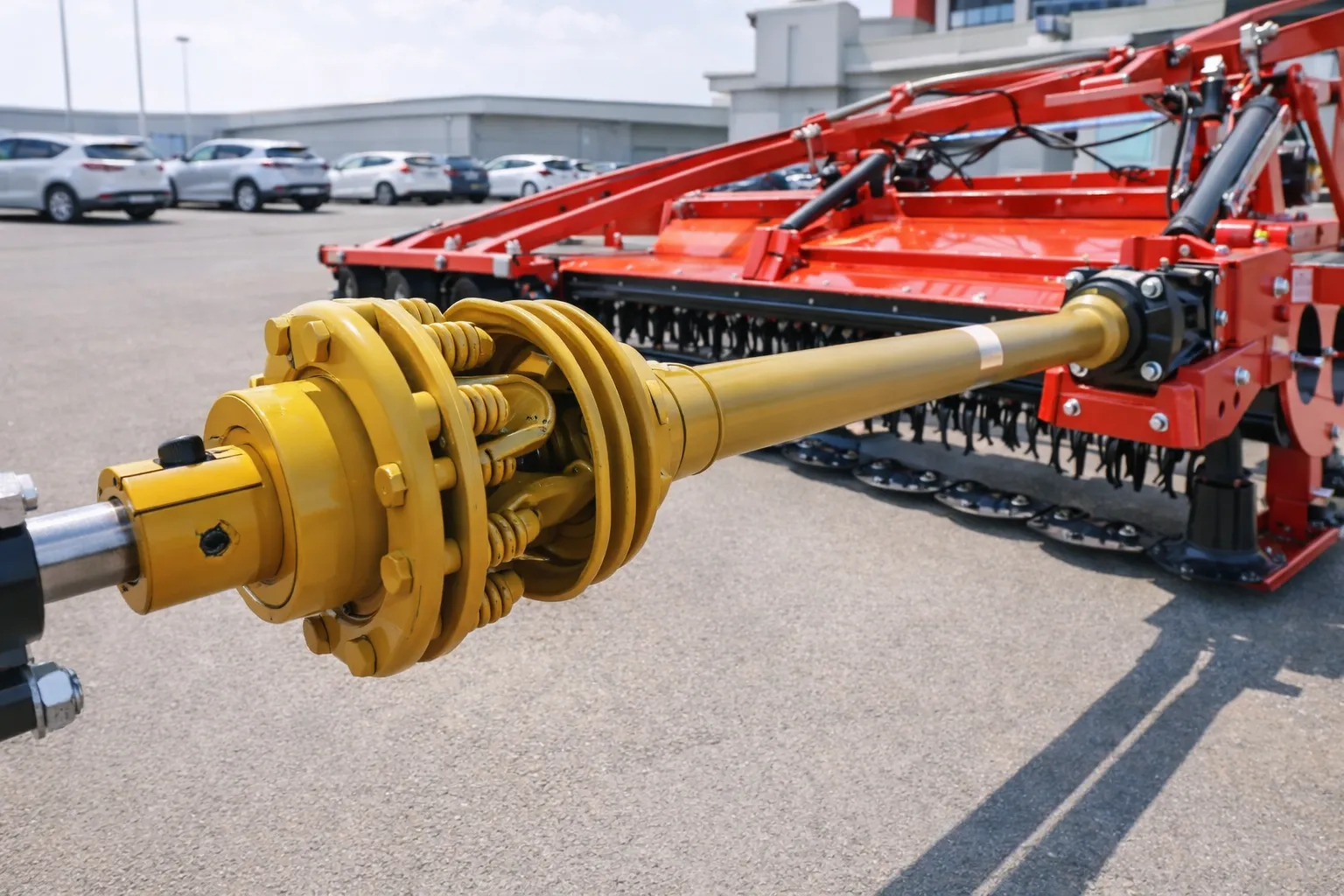
mower conditioner cutterbar and skid detail — cutterbar height is set by the skid shoe or gauge wheel adjustment and must be verified against actual stubble height after the first pass

Different mower types use different height-setting mechanisms, and the nominal setting on the adjustment indicator does not always correspond precisely to actual cutting height in the field — especially on uneven or soft ground. The critical check is always the actual stubble height measured in the field after the first 100-foot pass, not the setting on the adjustment scale.

Mower type Recommended height
(alfalfa)
Recommended height
(grass hay)
Height setting mechanism Key field verification
Disc mower-conditioner 2.5–3.5 in 2–3 in Skid shoe height or cutterbar lift cylinder adjustment. Skid shoes wear and raise effective cutting height over time. Measure stubble height after first pass; check skid shoe wear annually
Sickle bar mower 2–3 in 2–3 in Shoe or skid plate adjustment at the cutterbar ends. Ground-following ability is limited; height varies with terrain more than disc mowers. Measure at multiple points across field; height is less consistent than disc mower
Rotary mower (flail) 3–4 in 2.5–3.5 in Rear roller or skid shoe height; many models have limited fine adjustment below 3 in due to ground clearance design. Check for soil contact marks on flail tips; any soil contact visible = height too low
Mower-conditioner
(roller type)
2.5–3.5 in 2–3 in Header float and skid shoe combination. Header float setting affects how aggressively the cutterbar follows ground contours; improper float causes height variation on rolling terrain. Verify header float allows ground following without scalping knolls
The stubble height measurement rule: After the first 100-foot pass of every new season, stop and measure actual stubble height at 5 points across the cut width and at 5 intervals along the pass. Average the 25 measurements. This average is your actual cutting height — not the setting on the adjustment lever. Skid shoes wear 0.1–0.3 inches per season, gradually raising the cutterbar above the nominal setting and producing higher-than-intended stubble. After a full season, the “2.5-inch” setting may actually be producing 3.2-inch stubble because the skid shoes have worn down.

Cutting Height and Ash Content: The Direct Quality Connection
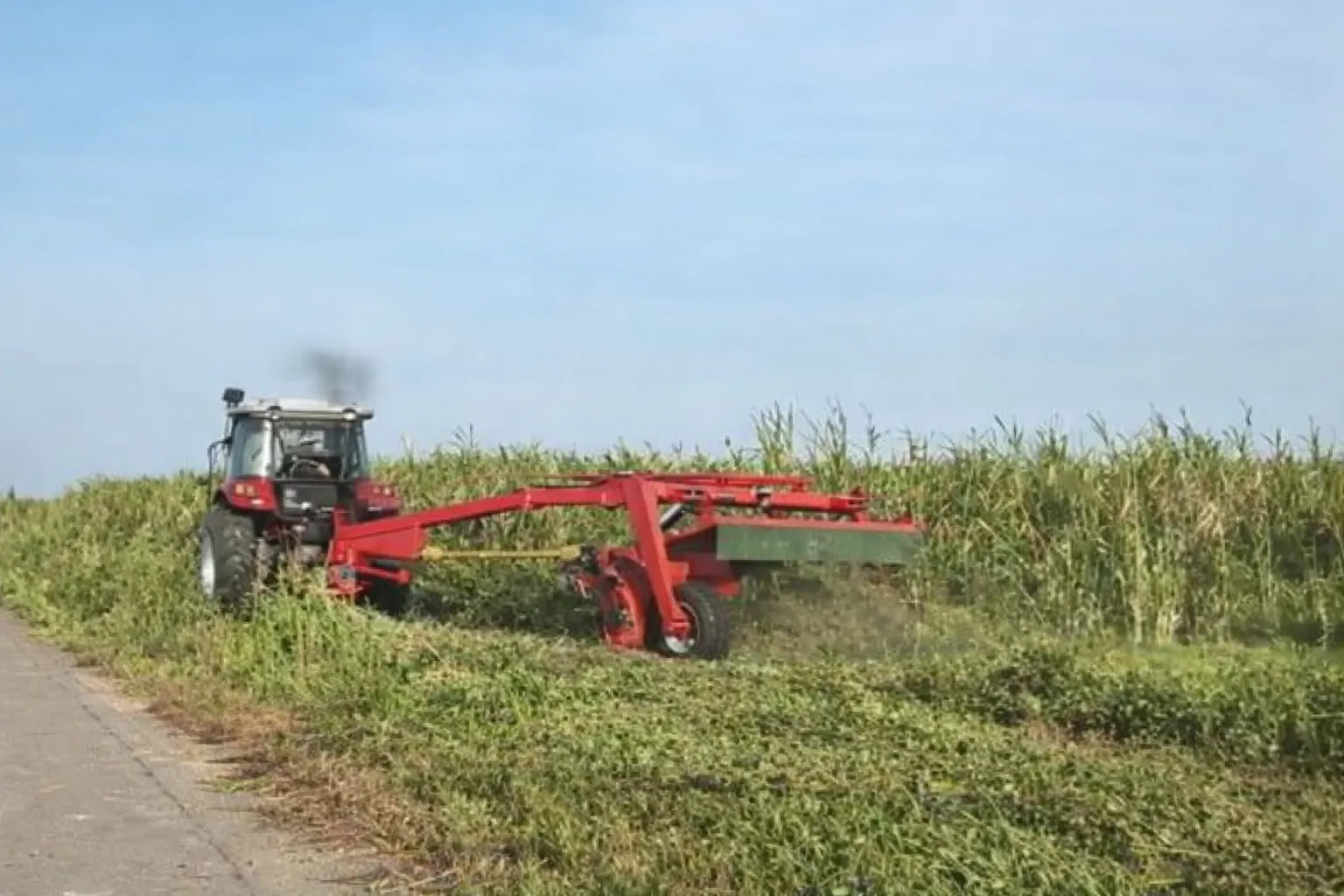
mower conditioner in field operation — cutting height below 2 inches brings blades into contact with soil particles that contaminate hay with mineral ash that reduces digestibility and fails elevator specifications

The relationship between cutting height and ash content in the finished hay is direct and measurable. Blade tips that contact or approach the soil surface carry a boundary layer of suspended soil particles upward into the cut swath with each revolution. This soil contamination is distributed throughout the swath during the cutting pass and cannot be removed by any subsequent field operation — it remains in the hay through raking and baling.

Ash content by cutting height

Research comparing ash content in alfalfa cut at different heights on silt-loam soil shows:

  • 4-inch cut: 7–9% ash (plant mineral only)
  • 3-inch cut: 9–11% ash (minimal soil contact)
  • 2-inch cut: 11–15% ash (measurable soil pickup)
  • 1-inch cut: 15–22% ash (significant soil contamination)
  • Sub-inch cut: 20–30%+ ash (unacceptable in any market)
Market consequences of high ash

Export market (Japan/Korea): Ash specifications are typically 7–10% maximum. Hay above 10% ash fails export specification entirely and must be redirected to domestic markets at lower prices.

Dairy elevator: Most premium dairy elevators discount heavily above 12% ash — it reduces effective energy content and dilutes the protein in ration calculations.

Feed value: Each percentage point of ash above the plant mineral baseline (8–10%) represents indigestible mineral that displaces digestible nutrients — effectively reducing the nutritional value per pound of hay delivered.

The interaction between cutting height, blade condition, and soil type also matters. On sandy-textured soils, fine particles are entrained in the air flow around spinning disc blades at lower concentrations than on heavy clay soils — sand is heavier and falls back to the surface faster. On silty or fine-textured soils, the suspended particle concentration in the blade boundary layer is much higher, meaning the ash penalty for running even slightly below the recommended height is proportionally greater. The complete context for how mowing affects hay quality across all parameters is in the Guida alla qualità per la falciatura e la manutenzione.

Blade Wear: Indicators, Measurement, and Replacement Timing

Mower blades wear progressively on their leading and tip edges from contact with stems, occasional soil contact, and abrasive crop material. A blade at 60% of its original edge profile cuts less efficiently — requiring more HP per acre, producing a rougher cut surface that slows conditioning, and generating more vibration in the cutterbar. At 40% original profile, the blade may begin to tear and fold stems rather than cutting cleanly, reducing conditioning quality and leaving visible torn-stem ends in the swath.

1
Thumbnail edge test

Run your thumbnail perpendicular to the blade edge. A sharp, properly worn blade has a distinct edge that catches the thumbnail cleanly. A blade with rounded or rolled edge feels smooth — the cutting geometry has been lost. This is the same test used for hay knives and works reliably for mower blades as well. Any blade that passes as smooth should be replaced or resharpened before the next cutting.

2
Blade profile measurement

Measure the width of the blade from the inner mounting hole to the outermost tip. Compare to the new-blade dimension from the parts book or a new blade of the same part number. A blade worn to 85% of original tip-to-center dimension still cuts acceptably. A blade worn below 80% should be replaced — the reduced tip velocity at the smaller effective cutting radius reduces cut quality and increases HP demand per ton of hay processed.

3
Vibration and balance indicator

Disc mowers with uneven blade wear develop cutterbar vibration that is detectable from the tractor cab as a resonant buzzing or rhythmic shake. When this vibration increases between cuttings without any obvious cause (no rock impact, no blade missing), it indicates that blades within the same disc position have worn to different lengths — creating an imbalance. Immediately remove all blades from each disc and measure them. All blades on the same disc should be within 2 grams of the same weight (most replacement blade sets include matched-weight pairs or sets for this reason).

4
Impact crack inspection

Any blade that has sustained a rock or debris impact should be inspected for microcracks at the mounting hole and at any point of visible impact damage. Microcracks are not visible to the naked eye in most cases — inspect under bright light with a magnifying lens, or simply replace any blade that has taken a visible impact. A blade with an internal crack can fragment at blade-tip velocity (180–220 mph), creating a shrapnel hazard to anyone near the mower. The cost of a replacement blade set is always less than the consequence of a fragmentation event.

Seasonal Height Adjustments: When to Change From Your Baseline
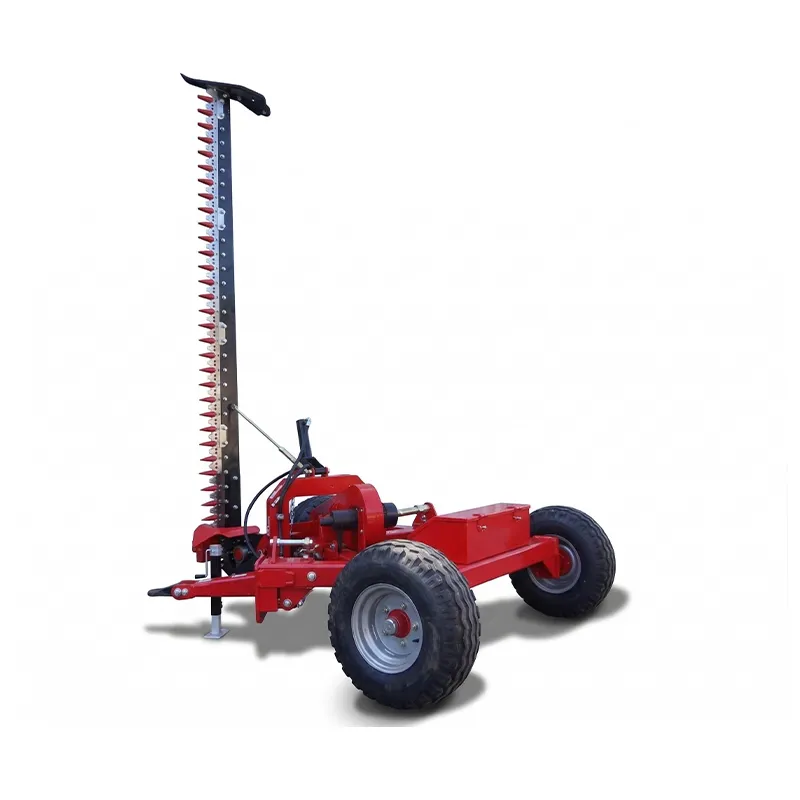
hay mower in field — seasonal cutting height adjustments for first cut vs subsequent cuts, wet soil conditions, and stand health management are separate from the fixed baseline height setting

The baseline cutting height — typically 2.5 to 3.5 inches for alfalfa — is not the only height you use throughout the season. Four conditions should trigger a deliberate height adjustment from your baseline:

First cut, spring
Raise height 0.5–1 inch above baseline. First-cut stems include the previous year’s stubble regrowth with coarse, partially-mineralized base material at the soil surface. Cutting at baseline height cuts through this coarser base zone and picks up significantly more soil mineral than subsequent cuttings on the same stand. Raising the cutting height in spring reduces this first-cut ash penalty without meaningfully reducing marketable yield.
Wet/soft field surface
Raise height 0.5 inch. On wet soils, the mower header sinks deeper into the surface layer than on firm ground, effectively bringing the blades 0.3–0.5 inch lower than the nominal setting. Compensate by raising the nominal height to maintain actual stubble height. Mowing on wet soils below the recommended actual height also increases crown contact damage, exacerbating the stand stress from wet-season operations.
Stressed or thin stand
Raise height to 4–5 inches. A stand showing visible thinning (below 4 stems/sq ft) or slow regrowth from the previous cutting needs maximum crown protection. Raising the cutting height to 4 or 5 inches reduces crown bud contact and preserves the maximum proportion of lower-stem leaf area that accelerates early photosynthesis and carbohydrate recovery after cutting.
Export-grade production
Maintain height at 3–4 inches minimum. Export specifications typically require ash below 9%. Achieving this on any soil type requires maintaining at least 3 inches of stubble to keep blades clear of the soil contact zone. In sandy soils, 3 inches is usually sufficient. In silt-loam soils, 3.5–4 inches may be needed to consistently meet the ash specification across all field conditions.

Skid Shoes and Wear Components: What Controls Your Actual Height

On disc mowers, the actual cutting height is controlled not by the frame adjustment alone, but by the combination of frame height setting and the thickness of the skid shoes or skid plates that bear on the soil surface. As skid shoes wear, they become thinner — which lowers the cutterbar relative to the frame — effectively reducing cutting height without any visible change to the adjustment indicator. This wear is gradual and invisible in daily operation, but cumulative over a season it can reduce actual cutting height by 0.3 to 0.5 inches from the beginning-of-season measurement.

Skid shoe inspection

Measure the thickness of each skid shoe at its contact face. A new skid shoe is typically 20–30mm thick at the bearing surface. Replace when thickness is below 60% of new dimension (12–18mm depending on model). Measure both shoes on each disc head — shoes on opposite sides of the cutterbar wear at different rates based on which side contacts the soil more frequently on sloped terrain.

Height recalibration after skid shoe replacement

After installing new skid shoes, the effective cutting height will increase by the thickness of the new shoes minus the worn shoes — often 5–10mm. If you had compensated for worn shoes by lowering the frame adjustment, you must raise the frame back up after replacing shoes or you will cut 5–10mm lower than intended on the first pass. Always perform a stubble height field verification after any skid shoe replacement before resuming normal mowing.

For the full disc mower vs. sickle bar comparison including blade replacement intervals, operating speed by crop, and the conditioning system comparison that affects drying rate after cutting, see the disc mower vs sickle bar comparison guide. The gearbox and driveline specifications that determine maximum blade tip speed and sustained power delivery are in Specifiche dei componenti del cambio agricolo e della presa di forza.

Pre-Season Mower Height and Blade Checklist

Blade inspection (15 min)
  • Thumbnail test every blade; note any that pass smooth
  • Measure each blade width against new-blade specification
  • Inspect each blade for impact cracks (bright light + magnifier)
  • Weigh blades on same disc to confirm matched set
  • Check all blade mounting bolts for thread condition
Skid shoe measurement (10 min)
  • Measure all skid shoe thicknesses
  • Compare to new-shoe specification in parts manual
  • Replace any shoe below 60% of new thickness
  • After replacing shoes: re-verify stubble height at first pass
Field verification (10 min)
  • Make 100-foot mowing pass at start of first field
  • Stop; measure stubble height at 5 points × 5 across width
  • Calculate average; compare to target height
  • Adjust skid shoe or frame height to correct
  • Re-measure before continuing full-field operation

Mower Cutting Height FAQs

My hay forage tests consistently show ash above 14% even though I am not cutting particularly low. What else causes elevated ash?+
Elevated ash from sources other than mowing height: (1) rake tine-to-soil contact during raking — the rake running too low picks up soil particles from the soil surface, particularly on sandy or loose soils; (2) baler pickup height too low — tines contacting or approaching the soil surface pick up mineral material with every revolution, which accumulates throughout the bale; (3) field surface disturbance from equipment traffic before mowing — tractor tire tracks that break up the soil crust create loose material that is more easily entrained in the mowing air flow; (4) mowing after rain on soft soils — wet soil conditions increase soil particle adhesion to the cut stem surfaces and increase entrainment in the blade air flow. Diagnose which stage is contributing by comparing ash in hay sampled directly from the swath (before raking) vs. hay sampled from the finished bale. If swath ash is normal but bale ash is elevated, the contamination is occurring at the rake or baler, not the mower.
How do I know if my disc mower blades need replacing vs. resharpening?+
The decision is based on three criteria: remaining blade width, edge condition, and impact history. Blades at 85%+ of original width with only edge wear (no impact cracks) are good candidates for resharpening. Restore the original bevel angle on the cutting edge using an angle grinder with a thin cutting disc or a dedicated blade sharpener, keeping the blade cool to avoid drawing the temper. Blades at below 80% of original width should be replaced even if the edge can be restored — the reduced tip velocity at the smaller effective cutting radius is a permanent performance disadvantage that resharpening cannot correct. Any blade with a visible impact scar or that has experienced a confirmed rock strike should be replaced regardless of width — the risk of a hairline crack from the impact is too high to justify reuse. Keep a set of spare blades and a torque wrench with the correct blade bolt specification in the tractor cab to allow blade changes in the field without interrupting the mowing day.
Does cutting alfalfa lower than 3 inches actually increase yield, or is that a misconception?+
It increases yield from individual cuttings, but reduces total season and multi-year yield — and total multi-year yield is what matters economically. A cutting-by-cutting comparison: cutting at 1.5 inches versus 3 inches captures approximately 5–8% more biomass per individual cutting because you are harvesting the material between 1.5 and 3 inches above the ground. Over a 4-cutting season, that is roughly 5–8% more total annual yield. However, the stand thinning that results from consistent low cutting — 15–25% higher annual stand loss rate in research comparisons — means the stand requires renovation 2–3 years earlier. Stand establishment costs $150–$300/acre or more depending on tillage, seed, and inoculation. The yield gain from cutting low for 5 seasons before early stand failure is substantially less than the yield gain from cutting at the correct height for 8–9 seasons on the same stand before normal stand renewal. Cut at the right height and manage for stand longevity — the economics strongly favor this approach over squeezing a few extra pounds per cutting.
My disc mower is cutting unevenly — some sections higher and some lower across the width. What causes this?+
Uneven cutting height across the mower width has four common causes: (1) differential skid shoe wear — shoes on one side of the cutterbar have worn more than the other, lowering the effective height on that side; measure all skid shoes and replace uneven-wear pairs; (2) cutterbar frame twist — a frame that has been bent by a rock or debris impact is no longer planar, causing one end to run higher or lower than the other; visually sight across the cutterbar and check for visible warp; (3) header float spring imbalance — on mowers with header float springs on both sides, if one spring has weakened or broken, that side of the header drops under its own weight rather than floating freely; (4) transport damage — repeated transport at road speeds on trailers or under high vibration can gradually distort the cutterbar mounting geometry. Correcting frame twist or spring imbalance typically requires a dealer alignment and spring replacement — it cannot be compensated by adjusting only the height setting.
What is the risk of mowing when the soil surface is very dry and dusty?+
Mowing on extremely dry, dusty soils increases the ash contamination risk at any cutting height, because dry fine-textured soil particles are more easily suspended in the blade air flow than moist particles that cling together. In prolonged drought conditions where the field surface has dried to powder, raising the cutting height by 0.5 to 1 inch above your normal setting reduces dust entrainment somewhat, but cannot eliminate the effect entirely. You can observe whether dust is a significant problem by watching the swath behind the mower — visible dust plumes rising from the swath indicate significant airborne soil particle suspension that will be deposited in the hay. If you can smell or taste dust when standing near the mowing operation, the particle concentration is sufficient to elevate ash content meaningfully. Mowing in morning conditions when slight surface moisture reduces dust suspension, or waiting for more favorable conditions, will produce better ash results than mowing in peak afternoon drought-soil conditions.
How does mowing speed affect cutting height consistency and blade wear?+
Higher mowing speeds increase the rate at which the header encounters terrain changes. On smooth, level ground, speed has minimal effect on cutting height consistency — the header follows the terrain without difficulty at 6–8 mph. On rolling or uneven terrain, however, higher speeds reduce the header’s ability to track the soil surface changes because the float mechanism cannot react quickly enough to large terrain changes at high speed. The result: the header “bridges” from high point to high point rather than following the contours, creating sections of cutting that are higher than nominal on ridges and lower than nominal in hollows. Reduce speed by 1–2 mph on irregular terrain to restore cutting height consistency. Higher mowing speed also increases the frequency of debris impacts on blades — at 8 mph there are more ground-contact events per unit time than at 5 mph. Blade wear rate accelerates approximately proportionally with speed on any field that has occasional debris.
foragebaler.com hay production equipment including mower-conditioners with skid shoe specifications and blade replacement schedules documented before delivery

Get Mower Height Setup and Blade Specifications for Your Operation

Tell us your primary crop, soil type, target ash specification, and mower type. We confirm the correct cutting height setting, skid shoe inspection interval, and blade replacement schedule that keeps your hay below the ash threshold your market requires.

Get Mower Setup Support

Redattore: Cxm