Het verschil tussen stro en hooi – en waarom dat alles verandert.
Stro is het stengelresidu dat overblijft na de graanoogst — tarwe-, gerst-, haver-, rogge- en rijststro zijn de meest voorkomende soorten die in de VS worden geperst. In tegenstelling tot hooi is bij stro het voedingsrijke graan en het grootste deel van het bladmateriaal al door de maaidorser verwijderd. Wat overblijft is voornamelijk cellulose en lignine — een koolstofrijk, stikstofarm structureel materiaal met heel andere fysische eigenschappen dan voederhooi.
Deze fysieke verschillen hebben direct invloed op elk aspect van de werking van de ronde balenpers. Strostengels zijn stijver en brozer dan hooistengels bij een gelijk vochtgehalte. De holle stengelstructuur van graanstro comprimeert anders in de balenkamer, waardoor een hogere bandspanning nodig is om dichte, stabiele balen te verkrijgen. Het lage vochtgehalte bij de oogst – doorgaans 8–141 TP5T voor tarwestro achter een maaidorser – betekent dat de stengels niet buigen en samenklitten zoals hooi; strobalen hebben de neiging een lossere, veerkrachtigere structuur te krijgen, tenzij de dichtheid wordt gemaximaliseerd. En het fijne kaf en stof dat door stro wordt gegenereerd, zorgt voor een groter risico op verontreiniging per persuur dan bij hooi in schone veldomstandigheden.
8–14%
Het typische vochtgehalte van tarwestro achter een maaidorser is veel lager dan het veilige vochtgehalte voor het persen van hooi.
Maximale dichtheid
Doelstelling voor de dichtheid van stro bestemd voor de biomassa-, export- of paddenstoelensubstraatmarkt.
3–5×
Hogere vervuilingsgraad van lagers door strostof in vergelijking met hooi — vaker smeren
Instellingen voor de strobalenpers: Wat is de verandering ten opzichte van hooibalenpersen?
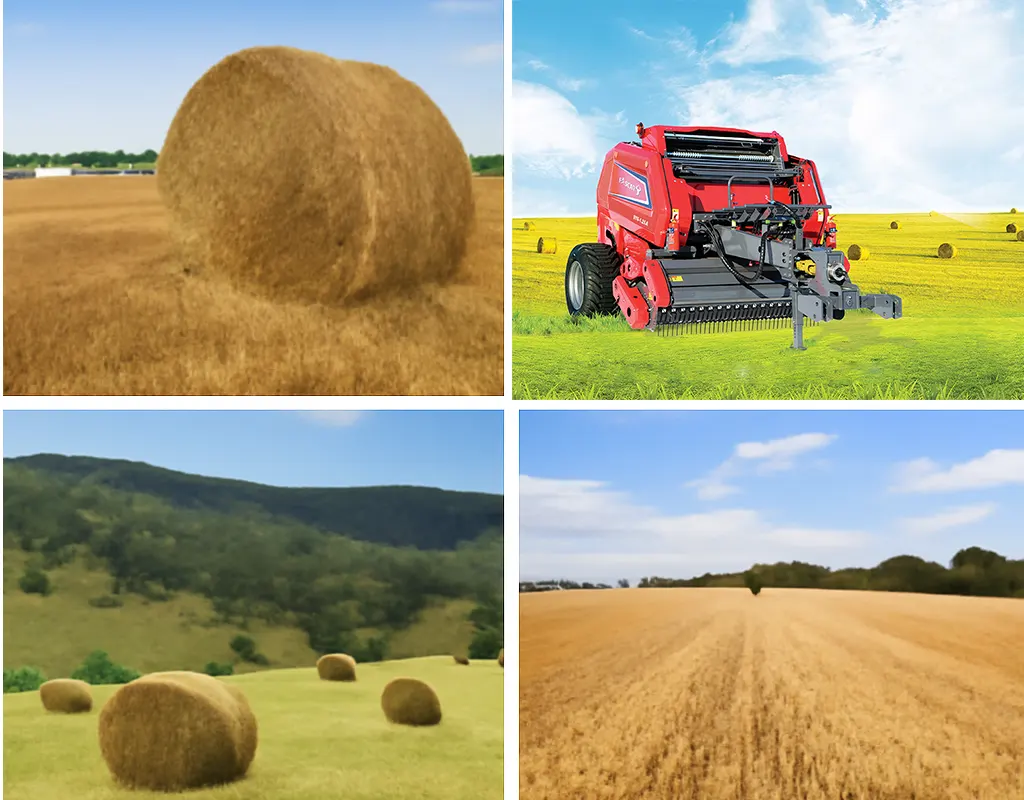
Wanneer u de balenpers van het hooiveld naar het stroveld achter de maaidorser verplaatst, moeten vier instellingen worden gecontroleerd en waarschijnlijk aangepast. Het gebruik van hooi-instellingen in een stroveld resulteert ofwel in te lage balen die tijdens de opslag uit elkaar vallen, ofwel in een te hoog vermogen dat de werkzaamheden onnodig vertraagt.
Dichtheidsinstelling
Verhoog tot 85–95% van het maximum Voor alle stromarkten. De veerkrachtige celstructuur van stro vereist een hogere compressie dan hooi om een stabiele baal te produceren. Een strobaal die met dezelfde dichtheid als luzerne is gemaakt, heeft een 15–25% lagere dichtheid – los genoeg om te verschuiven en te vervormen bij opslag in de buitenlucht, en te licht om te voldoen aan de minimumgewichtseisen voor biomassa- en exportmarkten. De enige uitzondering: het persen van stro voor klanten die los strooisel gebruiken en specifiek de voorkeur geven aan lichtere balen die gemakkelijker met de hand te breken zijn.
Hoogte van de ophaalactie
Verhoog de dichtheid met 0,5–1 stand boven de basislijn voor hooi. De strozwaden van de maaidorser liggen plat en dicht tegen het veldoppervlak aan — de stromat na het maaidorsen heeft een lager profiel dan een hooizwad. Door de pick-up te verhogen, wordt contact tussen de tanden en de grond aan de randen van de strozwaden voorkomen, terwijl de volledige breedte van het stro toch wordt opgevangen. Bovendien bevatten strozwaden van de maaidorser vaak kafballen en dichte klonten die de pick-up bij hooisnelheden kunnen blokkeren; het verlagen van de rijsnelheid met 15–20% is vaak productiever dan alleen het aanpassen van de pick-uphoogte.
Netfolie revoluties
Verhoog het toerental met 1-2 omwentelingen boven de hooistand. Dichte strobalen oefenen direct na het uitwerpen een hoge interne veerdruk uit op het net; de samengeperste stengels duwen krachtiger naar buiten dan hooi. Extra omwentelingen van het net bieden extra bescherming tegen terugvering, waardoor het net in de eerste 24 uur na het persen kan scheuren, vooral bij warm weer dat de elasticiteit van het stro verhoogt.
Voorgesneden messen
Schakel de volledige bank in voor biomassa; schakel hem uit voor strooisel. Voor stro bestemd voor biomassaketels of pelletfabrieken zorgt maximale mesinschakeling voor kortere deeltjes, wat de bulkdichtheid tijdens transport en de verbrandingsefficiëntie verbetert. Voor stro dat als strooisel dient – met name voor paardenstallen – geven kopers vaak de voorkeur aan langere stengels, die zorgen voor betere demping en gemakkelijker uitmesten. Controleer de specifieke eisen van uw stro-koper voordat u een mesinschakelingsinstelling voor het seizoen vastlegt.
Vochtvensters per strotype: het kritische balenbereik
Het vochtgehalte van stro tijdens het persen is binnen een smaller bereik dan bij hooi. Het brandgevaar bij het persen van stro met een vochtgehalte boven 20% is reëel en aanzienlijk groter dan bij hooi. De hoge koolstof-stikstofverhouding van stro creëert ideale omstandigheden voor thermofiele bacteriën die spontaan kunnen ontbranden in een slecht geventileerde stapel balen. Onder 8% wordt stro extreem broos en stoffig, waardoor het risico op ademhalingsproblemen voor werknemers toeneemt en er te veel kaf ontstaat dat lagerconstructies vervuilt.
| Stro-type |
Optimaal balenbereik |
Maximale veilige vochtigheid |
Wanneer na de oogst balen? |
| Tarwestro |
10–16% |
18% |
Kan binnen enkele uren na het oogsten worden geperst op droge dagen; test vóór het persen bij vochtig weer of na ochtenddauw. |
| Gerststro |
10–16% |
17% |
Gerststro neemt doorgaans sneller omgevingsvocht op dan tarwestro; pers het stro indien mogelijk op dezelfde dag als waarop u het oogst. |
| Haverstro |
11–18% |
20% |
Haverstro heeft een hoger celwatergehalte dan tarwe; het is iets beter bestand tegen een hoger vochtgehalte tijdens het balen voordat er brandgevaar ontstaat. |
| maïsstengel |
15–25% |
30% |
Kan met een hoger vochtgehalte geperst worden dan stro van kleine graangewassen; laat het stro 2-5 dagen na de eerste vorst op het veld drogen voordat u het perst voor het beste resultaat. |
| Rijststro |
12–18% |
20% |
Het hoge silicagehalte zorgt voor uitzonderlijke slijtage van de messen — controleer en vervang de messen twee keer zo vaak als bij het persen van tarwestro. |
Let op: hoge luchtvochtigheid in de ochtend is een waarschuwing. Strohopen absorberen snel vocht uit de ochtenddauw — een strohoop die de dag ervoor om 16.00 uur een vochtigheidsgraad van 12% had, kan de volgende ochtend om 8.00 uur al een waarde van 18–22% bereiken. Test de vochtigheid van het stro altijd op het moment van persen, niet op basis van de meting van de vorige dag. De veiligste aanpak in vochtige klimaten: begin niet eerder dan 10-11 uur met het persen van het stro en controleer de vochtigheid gedurende de dag continu.
Stromarkten: Wat elke koper nodig heeft en wat hij ervoor betaalt
De stro-markt is gevarieerder dan de hooi-markt, en de specificaties die bepalen of een markt het product accepteert, verschillen aanzienlijk per koperscategorie. Door de eisen van elke markt te begrijpen vóór het persen – en niet erna – kunt u de balenpers correct instellen voor de bestemmingsmarkt en de kwaliteitsproblemen voorkomen die ontstaan door het produceren van balen volgens de verkeerde specificaties.
Strooisel voor vee
Wat kopers nodig hebben: Droog (onder 161 TP5T), vrij van onkruidzaden en stofarm. Kopers van strooisel voor paarden zijn het meest selectief wat betreft kwaliteit; kopers van strooisel voor runderen tolereren een matige kwaliteitsvariatie.
Specificaties van de baal: Een constante baalgrootte voor het vullen van stallen; een lager gewicht (270-360 kg) heeft vaak de voorkeur vanwege het gemakkelijke hanteren; een langere stengel heeft de voorkeur van kopers van paardenstrooisel.
Prijs: $30–$70/ton FOB veld, afhankelijk van regio en kwaliteit.
Biomassa / Energie
Wat kopers nodig hebben: Maximale dichtheid (brandstofwaarde schaalt met bulkdichtheid); laag asgehalte; consistente baalgrootte voor geautomatiseerde verwerking in de fabriek.
Specificaties van de baal: 4×5 of 4×4, de strakst mogelijke dichtheidsinstelling; voorgesneden messen ingeschakeld voor een kortere deeltjeslengte, wat de bulkdichtheid per transporteenheid verbetert.
Prijs: $25–$55/ton; volumecontracten met energiecentrales zorgen voor de meest stabiele inkomsten.
Paddenstoelensubstraat
Wat kopers nodig hebben: Specifiek tarwe- of roggestro; vrij van pesticidenresten; constant laag vochtgehalte (onder 14%); schoon — geen onkruid, geen bodemverontreiniging.
Specificaties van de baal: Consistente balen van 4x5 meter, maximale dichtheid; sommige bedrijven vereisen een specifiek baalgewicht vanwege de capaciteit van hun pasteurisatieapparatuur.
Prijs: $45–$85/ton — de hoogste prijs voor stro op de markt voor in aanmerking komend product.
Erosiebestrijding / Mulch
Wat kopers nodig hebben: Onkruidvrij (cruciaal — stro-mulchstrooiers kunnen onkruidzaden niet tegenhouden); matige vochtigheid acceptabel; consistent gewicht voor kalibratie van hydraulische zaaimachines.
Specificaties van de baal: Elke ronde baal heeft een uniforme afmeting; een onkruidvrij certificaat is vaak vereist door aannemers voor toepassingen op snelwegen of bouwplaatsen.
Prijs: $35–$65/ton; gecertificeerd onkruidvrij stro levert een premie op van 20–40%.
Veelvoorkomende problemen bij het persen van stro en hun specifieke oplossingen
Het persen van stro levert een aantal specifieke operationele problemen op in vergelijking met hooi. De fysieke eigenschappen van stro – droog, stijf, stofrijk en de neiging tot terugveren – beïnvloeden de systemen van de balenpers op een manier die specifieke probleemoplossingsmethoden vereist. Het volledige operationele probleemoplossingskader voor ronde balenpersen is te vinden in de Handleiding voor het oplossen van problemen met balenpersenHet volgende behandelt de problemen die specifiek zijn voor de verwerking van stro en zware reststoffen.
1
Storingen in de netwikkeling — baal rolt uit na het uitwerpen
Oorzaak: De terugvering van een dichte strobaal is groter dan de treksterkte van het net. Het samengeperste stro wordt naar buiten gedrukt wanneer de banddruk tijdens het uitwerpen afneemt, waardoor het net verder wordt uitgerekt dan het kan breken. Repareren: Verhoog het aantal omwentelingen van de wikkel met 2; controleer of de remspanning van de netwikkel op maximaal staat; overweeg over te schakelen naar een dikkere netwikkel, geschikt voor strobalen met een hoge dichtheid. Met touw omwikkelde strobalen zijn minder gevoelig voor terugvering, omdat het touw onder belasting iets uitrekt in plaats van plotseling te breken.
2
Ophoping van kaf — verstoppingen in de opraapinrichting van dichte maaidorserzwaden
Oorzaak: Moderne maaidorsers verdelen het kaf over de volledige breedte van de maaibalk in veel dichtere zwaden dan oudere maaidorsers produceerden. De dichte kafmat blokkeert de opvangopening voordat de balenkamer het volume kan absorberen. Repareren: Verlaag de rijsnelheid tot 5-6 km/u in zones met veel kaf; overweeg om het zwad van de maaidorser breder te spreiden door de strooier van de maaidorser aan te passen vóór het persen; controleer of de opraaprollen vrij zijn van opgehoopt kaf van eerdere balen.
3
Lagerdefecten — voortijdig in het stroseizoen
Oorzaak: Strostof en kafdeeltjes zijn fijner dan hooideeltjes en dringen gemakkelijker door lagerafdichtingen heen, waardoor het smeervet vervuild raakt en als schuurmiddel werkt. Bij werkzaamheden met hooi moet er elke 25 uur gesmeerd worden, bij stro moet dit elke 8 uur gebeuren. Repareren: Smeer alle lagerposities aan het begin van elke strobalendag in; controleer de lagerafdichtingen op ophopingen van vuil door kaf; gebruik lithiumcomplexvet met een goede penetratie om kaf uit de smeerkanalen te spoelen.
4
Inconsistentie in de dichtheid van de balen — sommige balen zijn te licht, andere juist.
Oorzaak: De dichtheid van de zwaden in de maaidorser varieert over de lengte ervan: dichter in het midden van de maaibalk en dunner op de natuurlijke samenvloeiingspunten van de zwaden. De balenpers vult sneller in dichte gedeelten en langzamer in dunne gedeelten, waardoor balen met een variabele dichtheid ontstaan wanneer de dichtheid de brand bij verschillende vulsnelheden activeert. Repareren: Houd de dichtheidsindicator in stro continu in de gaten (dit is belangrijker dan in hooi); pas de rijsnelheid actief aan om een constante voortgang van de dichtheidsindicator te behouden in plaats van met een vaste snelheid te rijden; overweeg om twee maaidorserzwaden met een hark samen te voegen vóór het balen om een gelijkmatigere zwaddichtheid te creëren.
Maïsmeelpersen: het speciale geval voor zware reststoffen
Maïsresten – de stengels, bladeren, kolven en kaf die overblijven na de maïsoogst – stellen de meest veeleisende omstandigheden voor het persen van ronde balenpersen van alle gangbare gewassen. De stengels met grote diameter verzetten zich meer tegen compressie dan welk graanstro dan ook; het vochtgehalte bij de oogst kan hoog zijn als het veld wordt geperst voordat het voldoende is gedroogd; en de variabele deeltjesgrootte van versnipperde stengels versus intacte kolven zorgt voor een ongelijkmatige balenvorming, wat leidt tot dichtheidsverschillen binnen de baal.
Stooktijd en vochtigheid
Wacht 5 tot 7 dagen na de eerste vorst voordat het stro tot een vochtgehalte van minder dan 251 TP5T is gedroogd. Bij een vochtgehalte boven 251 TP5T warmt het stro in de opslag sterk op door ademhaling en schimmelvorming, en de fermentatie ervan produceert ammoniak, wat de voedingswaarde voor veevoer vermindert. Het persen van stro met een vochtgehalte onder 201 TP5T levert stabiele balen op die 12 maanden of langer goed bewaard kunnen worden zonder significant verlies aan droge stof.
Overwegingen bij het ophalen van afval bij Stover
Het door de maaidorser versnipperde maïsstro zorgt voor een lastige opnameomgeving – de mix van fijne bladsnippers, lange stengels en hele kolfdelen stroomt niet gelijkmatig door de overgangszone van de opneeminrichting. Gebruik een voorgesneden messenbank, ingeschakeld op stand 50%, om lange stengeldelen die de opneemopening blokkeren te verminderen; verhoog de opneemhoogte met 1 stand boven de hooibasislijn; verlaag de snelheid tot 5-7 km/u bij zwaar maïsstro. Voor de koppelwaarden van de aftakas die de maximale opneemsnelheid van maïsstro bepalen die het aandrijfsysteem aankan, zie Specificaties van componenten voor landbouwversnellingsbakken en aftakas-aandrijflijnen.
Onderhoud van de balenpers na het seizoen, na intensief strogebruik
Een balenpers die het seizoen afsluit met het persen van stro, vereist na afloop meer onderhoud dan een balenpers die alleen hooi verwerkt. Het fijne, silica-houdende stof van graanstro is schurend voor alle lager- en afdichtingsoppervlakken; opgehoopt kaf in de balenkamer vormt een brandrisico als de machine wordt opgeslagen zonder te worden gereinigd; en de hogere riemspanning die nodig is voor dichte strobalen zorgt ervoor dat de riem sneller uitrekt dan bij het persen van hooi bij een gelijk aantal balen.
Reinigen (45-60 min)
- Blaas vóór opslag alle kaf en stof uit de binnenkant van de kamer met perslucht; opgehoopt droog kaf vormt een brandgevaar.
- Reinig alle vlakken van de lagerhuizen; ophopingen van vuil op de lagerafdichtingen versnellen de slijtage tijdens het laagseizoen.
- Verwijder alle aangekoekte kafdeeltjes van de kettingen voordat u de olielaag voor het laatste seizoen aanbrengt.
- Verwijder al het stro-omwikkelingsmateriaal van de beschermkap van de aftakas.
Lagerinspectie (30 min)
- Test alle lagerposities direct na de laatste stro-persbeurt op hitte en vergelijk de resultaten met de basislijn van het hooi-seizoen; het stro-seizoen brengt vaak lagers aan het licht die tijdens het hooi-seizoen niet belast zijn.
- Vervang elk lager dat 30°F (14,4°C) warmer wordt dan de basistemperatuur — vervuiling door strokaf versnelt de overgang van "warm" naar "defect".
- Spoel alle smeernippels door met vers vet om eventueel met kaf verontreinigd vet te verwijderen voordat u ze opbergt.
Riemmeting (20 min)
- Meet alle bandomtrekken aan het einde van het stroseizoen - de hogere dichtheid die stro vereist, versnelt de bandverlenging in vergelijking met het gebruik van alleen hooi.
- Noteer de afmetingen en vergelijk ze met de metingen na het hooioogstseizoen. De extra verlenging door het strogebruik geeft aan hoeveel stroseizoenen er nog mee kunnen voordat het stro vervangen moet worden.
- Bestel nu vervangende riemen als er riemen zijn die de +2%-rekgrens hebben overschreden.
Voor de complete handleiding voor het persen van strobalen, inclusief gewasspecifieke zwadenkenmerken, maaidorserinstellingen die de strokwaliteit beïnvloeden en regionale marktinformatie per Amerikaanse productieregio, kunt u terecht bij de volgende website: Handleiding voor het persen van strobalen voor tarwe, gerst en haver Dit omvat de volledige context.
Veelgestelde vragen over het persen van stro en restmateriaal
Kan ik dezelfde ronde balenpers gebruiken voor zowel hooi als stro zonder deze tussendoor opnieuw in te stellen?+
Ja, maar met de aanpassingen die in deze handleiding worden beschreven. De minimale checklist voor de overgang van hooi naar stro: (1) verhoog de dichtheidsinstelling; (2) verhoog de oppakhoogte met 0,5–1 stand; (3) verhoog het aantal omwentelingen van het net met 1–2; (4) verlaag de rijsnelheid met 15–20%; (5) stel een herinnering in om dagelijks te smeren in plaats van elke 25 uur. Om van stro terug naar hooi te gaan, moeten deze aanpassingen worden teruggedraaid — met name de dichtheidsinstelling, omdat de maximale dichtheidsinstelling voor stro in lichte hooizwaden extreem harde balen kan opleveren die het net beschadigen tijdens het uitwerpen en moeilijk te hanteren zijn met standaard balenvorken. De overgang duurt ongeveer 10 minuten als u de instellingen van het vorige gebruik hebt opgeschreven.
Mijn strobalen hebben een eivorm in plaats van een cilindrische vorm. Waardoor komt dit?+
Eivormige of elliptische strobalen worden veroorzaakt door terugvering na het uitwerpen – het samengeperste stro oefent een ongelijkmatige naar buiten gerichte kracht uit die de cilinder in de eerste uren na het persen tot een ovaal vervormt. Dit komt het meest voor wanneer: (1) het net onvoldoende gespannen of met te weinig omwentelingen is aangebracht; (2) de bandspanning onvoldoende was voor de strodichtheid – de baal werd niet gelijkmatig samengeperst in de perskamer; (3) de achterklep opende voordat de wikkelcyclus volledig was voltooid, waardoor gedeeltelijke terugvering mogelijk was voordat het net was vastgezet; of (4) de balen direct na het uitwerpen op een oneffen ondergrond werden geplaatst en het gewicht van de baal zich op een hoekpunt concentreerde voordat het net zich had vastgezet. De oplossing is meestal een combinatie van het verhogen van het aantal omwentelingen van het net (2 extra), het controleren van de remspanning van het net en het direct na het uitwerpen op een vlakke ondergrond plaatsen van de balen, in plaats van ze op een gebogen zijoppervlak te laten rusten.
Hoe lang kan ik strohopen maximaal laten liggen voordat ik ze ga balen, zonder kwaliteitsverlies?+
Strozwaden die op het veld achterblijven, worden beïnvloed door twee tegengestelde krachten: verder drogen (gunstig tot een vochtgehalte van ongeveer 10–121 TP5T) en heropname van vocht (schadelijk als ochtenddauw het vochtgehalte boven de 181 TP5T brengt). In droge zomeromstandigheden kan stro 2 tot 5 dagen in het zwad blijven liggen zonder significant kwaliteitsverlies, hoewel het zwad na 3 dagen of langer compacter wordt en moeilijker schoon op te rapen is. In vochtige omstandigheden (staten aan de Golfkust, Pacific Northwest in de herfst) moet stro binnen 24 uur na het maaien worden geperst – de ochtenddauw zorgt ervoor dat het vochtgehalte in het zwad boven het veilige niveau voor persen komt als het zwad 's ochtends blijft staan. Voor strooiselstro verbetert een langere verblijftijd in het zwad in droge omstandigheden de kwaliteit juist doordat het vochtgehalte verder daalt. Voor biomassa-brandstofstro zorgt het direct persen na het maaien ervoor dat de fysieke structuur van het zwad behouden blijft en dat er minder vochtverlies optreedt door wind en verkeer over het zwad.
Beschadigt het stro de stengels als de strohakselaar van de maaidorser wordt gebruikt in vergelijking met het in zwaden leggen voor het persen?+
De keuze tussen spreiden en zwaden van het stro heeft een aanzienlijke invloed op de efficiëntie van het persen, maar niet op de intrinsieke kwaliteit van het stro. In de zwadenmodus wordt het stro geconcentreerd in een smallere strook die gemakkelijker in één keer door de balenpers kan worden opgepakt. In de spreidmodus wordt het kaf over de volledige breedte van de maaibalk verdeeld, wat kan leiden tot zwaden met een lagere dichtheid die moeilijker te persen zijn en waar de balenpers in één keer moeite mee heeft. Als uw maaidorser is geconfigureerd voor een brede verspreiding van het kaf, voegt het gebruik van de hark om het verspreide stro samen te voegen en tot een zwad te vormen vóór het persen een extra handeling toe, maar verbetert dit de persefficiëntie en de consistentie van de balen aanzienlijk. Veel strobedrijven gebruiken de maaidorser specifiek in de zwadenmodus wanneer het stro bestemd is voor het persen, en schakelen over naar de spreidmodus voor velden waar geen stro wordt geoogst.
Is het in mijn regio de moeite waard om te streven naar een certificering voor onkruidvrij stro?+
Gecertificeerd onkruidvrij stro levert een prijsverhoging op van 20 tot 401 ton in markten waar de bestrijding van schadelijk onkruid gereguleerd is – nationale parken, staatsparken, wegenbouw en landschapsarchitectuurbedrijven die contractueel verboden zijn om niet-gecertificeerd plantmateriaal te gebruiken. Certificering wordt afgegeven door de ministeries van landbouw van de staten of door particuliere certificeringsinstanties en vereist een inspectie van het veld vóór de oogst en laboratoriumonderzoek van een baalmonster. De kosten van certificering bedragen doorgaans 1,6 tot 200 ton per veld per seizoen, afhankelijk van de certificeringsinstantie. Of het financieel gerechtvaardigd is, hangt af van de vraag of u consistent toegang heeft tot schone velden (velden met gedocumenteerde onkruidbestrijdingsprogramma's die consequent voldoen aan de onkruidvrije norm) en of de gecertificeerde markt in uw regio toegankelijk is. In het bergachtige westen, de Pacific Northwest en de Great Plains is er een gevestigde markt voor gecertificeerd onkruidvrij stro; in het zuidoosten en het midwesten is de markt minder ontwikkeld, maar groeit deze naarmate aannemers in de wegenbouw en de bouwsector steeds vaker gecertificeerd materiaal specificeren.
Welke invloed heeft het persen van stro tot balen op de bodemgezondheid van het veld op de lange termijn?+
Het verwijderen van stro van een veld onttrekt de primaire koolstofinput die anders als organische stof in de bodem zou worden opgenomen door afbraak. Onderzoek toont aan dat het consequent persen van stro gedurende 5-10 jaar de hoeveelheid organische stof in de bodem gemiddeld met 0,2-0,51 TP5T vermindert in vergelijking met het inwerken van stro. Dit effect is groter op zandgronden met een laag organisch-stofgehalte dan op kleigronden met een hoger organisch-stofgehalte. Deze vermindering van organische stof vermindert na verloop van tijd het waterhoudend vermogen en de microbiële activiteit in de bodem. De agronomische compensatiestrategieën die worden toegepast door telers die regelmatig stro persen, omvatten: het terugbrengen van mest naar het veld in een hoeveelheid die gelijk is aan de koolstof die met het stro is verwijderd; het afwisselen van jaren waarin stro wordt geperst met jaren waarin stro wordt ingewerkt; het planten van dekgewassen na de graanoogst in jaren waarin stro wordt geperst; en het toepassen van compost of andere organische bodemverbeteraars om de verwijderde koolstof te compenseren. De economische waarde van het verwijderde stro moet worden afgewogen tegen de kosten voor de bodemproductiviteit op lange termijn bij het nemen van de beslissing om stro te persen voor elk specifiek veld en elke specifieke vruchtwisseling.
Redacteur: Cxm